Rome Roman Forum, Palatine Hill Tour Exclusive Full Pass
Active
2h - 3h
For a full refund, cancel at least 24 hours before the scheduled departure time.
Instant confirmation
Mobile or paper ticket accepted
About this experience
Explore the heart of ancient Rome at your own pace.
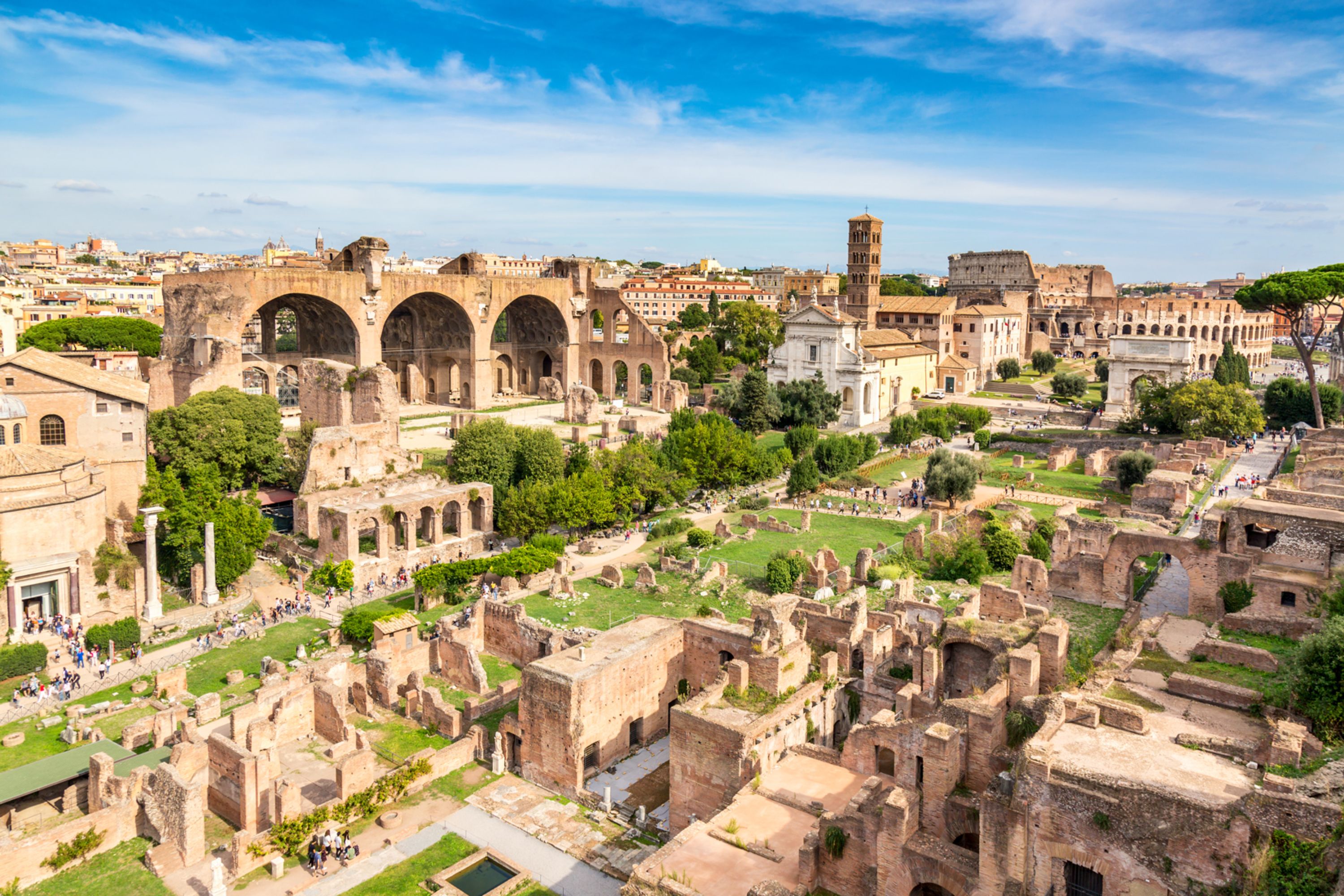
Start from the entrance to the Roman Forum at Trajan's Column and enjoy visiting the markets and the splendid Trajan's Column. After passing through an underground tunnel, you reach the Forum of Julius Caesar. Over the centuries, the emperors have left their mark with impressive buildings for different uses and destinations, making this place unique for the quality and quantity of monuments present.
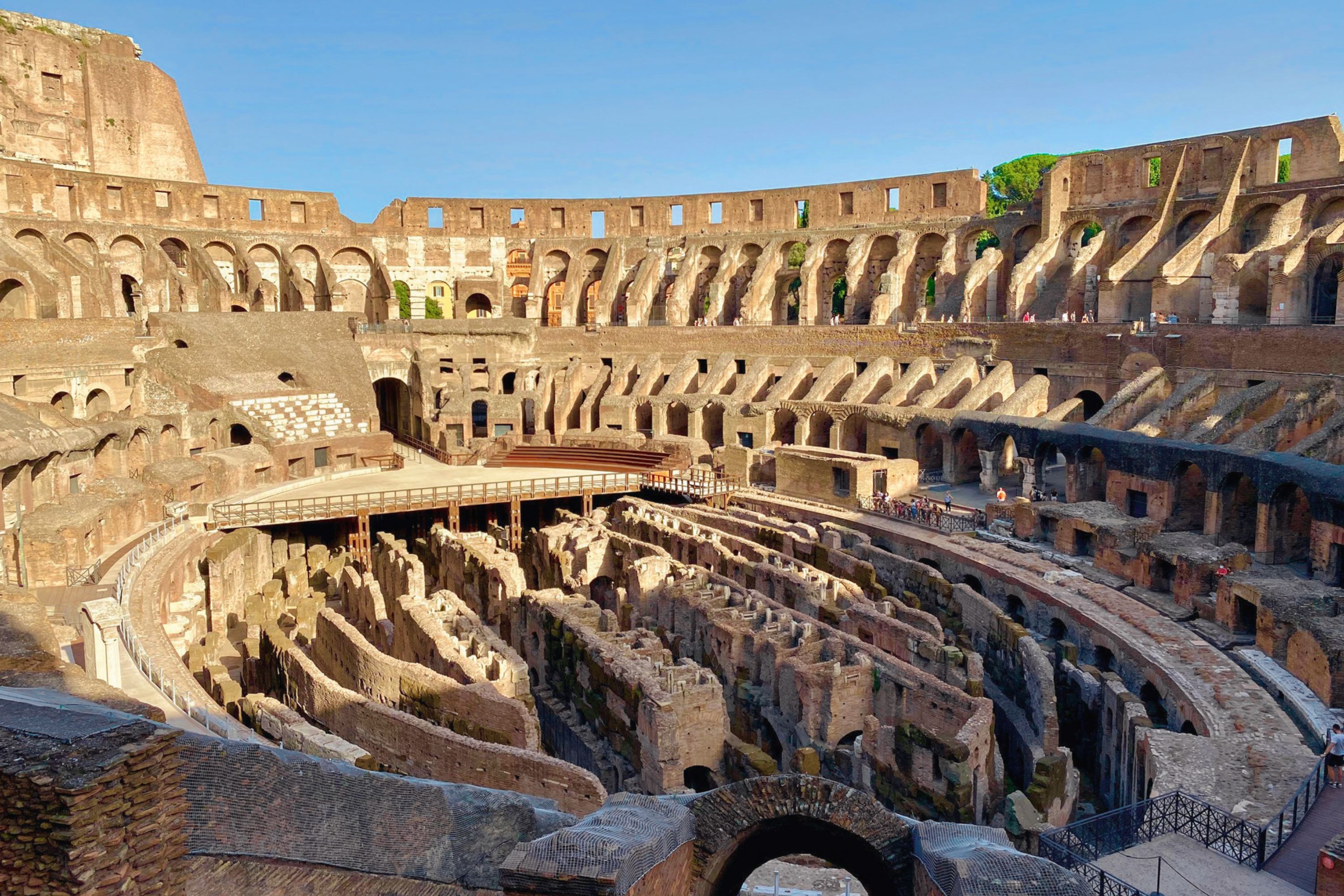
Walk through the rooms of the Domus Tiberina and reach the Palatine Hill on which Rome was founded in 753 BC. From the top of the hill, enjoy the spectacular views and admire the ruins of the Imperial Palaces. Walk on the 2,500-year-old Via Sacra and pass the Arch of Titus to reach the Arch of Constantine and admire the best-preserved part of the Colosseum. Discover the secrets, history, and construction techniques of this building and the stories of the bloody and spectacular fights between gladiators, wild animals, and naval battles.
Available options
ANCIENT ROME SELFGUIDED TOURS
What's included
Self Audio Guided Tour APP
Multilingual audioguide in English/Chinese/German/French/Italian/Spanish with 44 points of interest
Unlimited use for the duration of your stay
Unlimited access to all self-guided features
Skip the line Tickets Trajan Forum, Roman Forum, Palatine Hill and Imperial Forum
Detailed itinerary
1
It was obtained by cutting the Quirinale and the Campidoglio slopes, connected by a mountain saddle. The excavation works were probably started under Domitian, in parallel with the arrangement of the Forum of Nerva. The undertaking, which had to be interrupted after the death of this emperor, murdered in a conspiracy in 96 AD, was continued by Trajan and financed with the booty obtained from the conquest of Dacia (now Romania), conducted in two subsequent military campaigns (101 -102 and 105-106 AD) and ended with the defeat and submission of the Dacians and the death of their king Decebalus. The architect of the work was Apollodorus of Damascus, a military engineer who had accompanied the emperor in the victorious war.
The plan of Trajan's Forum was more articulated and complex than that of its predecessors: it included a vast square flanked by porticoes with exedras behind them, dominated on one side by the imposing Basilica Ulpia, behind which stood the Trajan's Column.
2
Stop 2
Trajan's Column narrates in images the two military campaigns of 101-102 and 105-106 AD. with which the emperor Trajan (98-117 AD) conquered Dacia, mainly corresponding to present-day Romania. Thanks to the extraordinary war booty, Trajan was able to build the most majestic of the Forums of Rome, which took its name from him and was inaugurated in 112 AD. The Column was erected in the center of a courtyard delimited by the monumental entrance to the Forum by the Basilica Ulpia and by the two libraries to the east and west.
It rests on a base decorated with bas-reliefs depicting stacks of weapons. The shaft, 100 Roman feet high (30 meters), is composed of 17 colossal rocks of white Carrara marble, with a diameter of almost 4 meters. Inside is a spiral staircase of 185 steps leading to the top. The frieze is arranged around the shaft, imagined as a spirally wrapped scroll, approximately 200 meters long in total and densely animated with scenes with about 2,500 characters.
3
Stop 3
Roman Forum, Latin Forum Romanum, the most important forum in ancient Rome, is situated on low ground between the Palatine and Capitoline hills. The Roman Forum was the scene of public meetings, law courts, and gladiatorial combats in republican times and was lined with shops and open-air markets. Under the empire, when it primarily became a centre for religious and secular spectacles and ceremonies, it was the site of many of the city’s most imposing temples and monuments.
Among the structures surviving in whole or in part are the Temple of Castor and Pollux, the Temple of the Deified Caesar, the Mamertine Prison, the Curia (senate house), the Temple of Saturn, the Temple of Vesta, the Temple of Romulus, the Arch of Titus, the Arch of Septimius Severus, and the Cloaca Maxima.
4
Stop 4
The Palatine Hill, (/ˈpælətaɪn/; Latin: Collis Palatium or Mons Palatinus; Italian: Palatino [palaˈtiːno]) which is the centremost of the Seven Hills of Rome, is one of the most ancient parts of the city and has been called "the first nucleus of the Roman Empire." The site is now mainly a large open-air museum while the Palatine Museum houses many finds from the excavations here and from other ancient Italian sites.
Imperial palaces were built here, starting with Augustus. Before imperial times the hill was mostly occupied by the houses of the rich.
The hill originally had two summits separated by depression; the highest part was called Palatium and the other Germalus (or Cermalus). Using the Forma Urbis its perimeter enclosed 63 acres (25 ha); while the Regional Catalogues of the 4th century enclose 131 acres (53 ha).
5
Stop 5
The Arch of Constantine is a triumphal arch in Rome dedicated to the emperor Constantine the Great. The arch was commissioned by the Roman Senate to commemorate Constantine's victory over Maxentius at the Battle of Milvian Bridge in AD 312. Situated between the Colosseum and the Palatine Hill, the arch spans the Via Triumphalis, the route taken by victorious military leaders when they entered the city in a triumphal procession. Dedicated in 315, it is the largest Roman triumphal arch, with overall dimensions of 21 m (69 ft) high, 25.9 m (85 ft) wide and 7.4 m (24 ft) deep. It has three bays, the central one being 11.5 m (38 ft) high and 6.5 m (21 ft) wide and the laterals 7.4 m (24 ft) by 3.4 m (11 ft) each. The arch is constructed of brick-faced concrete riveted in marble.
Though dedicated to Constantine, much of the sculptural decoration consists of reliefs and statues removed from earlier triumphal monuments dedicated to Trajan (98–117), Hadrian (117–138) and Marcus Aurelius (161)
6
Stop 6
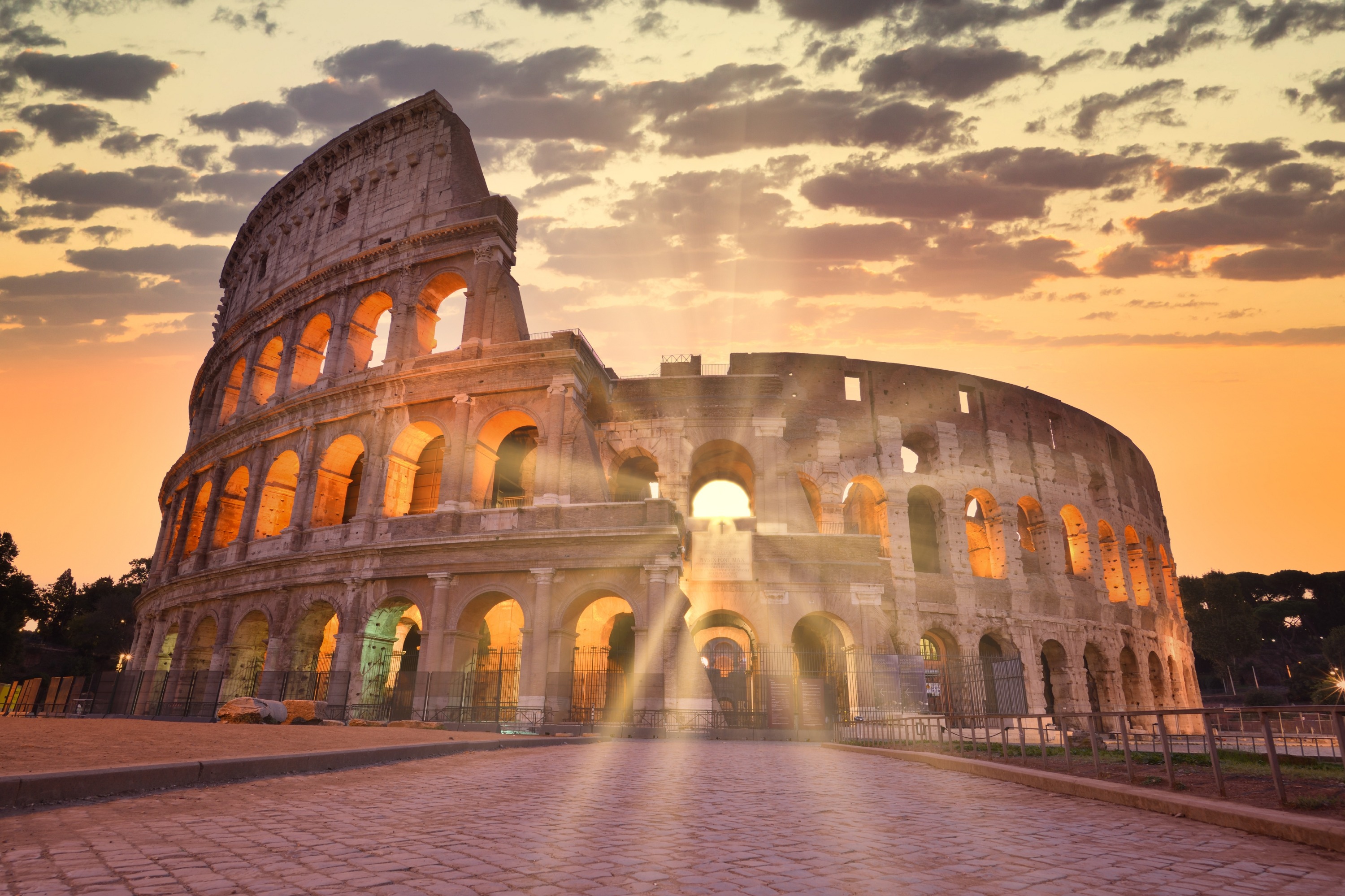
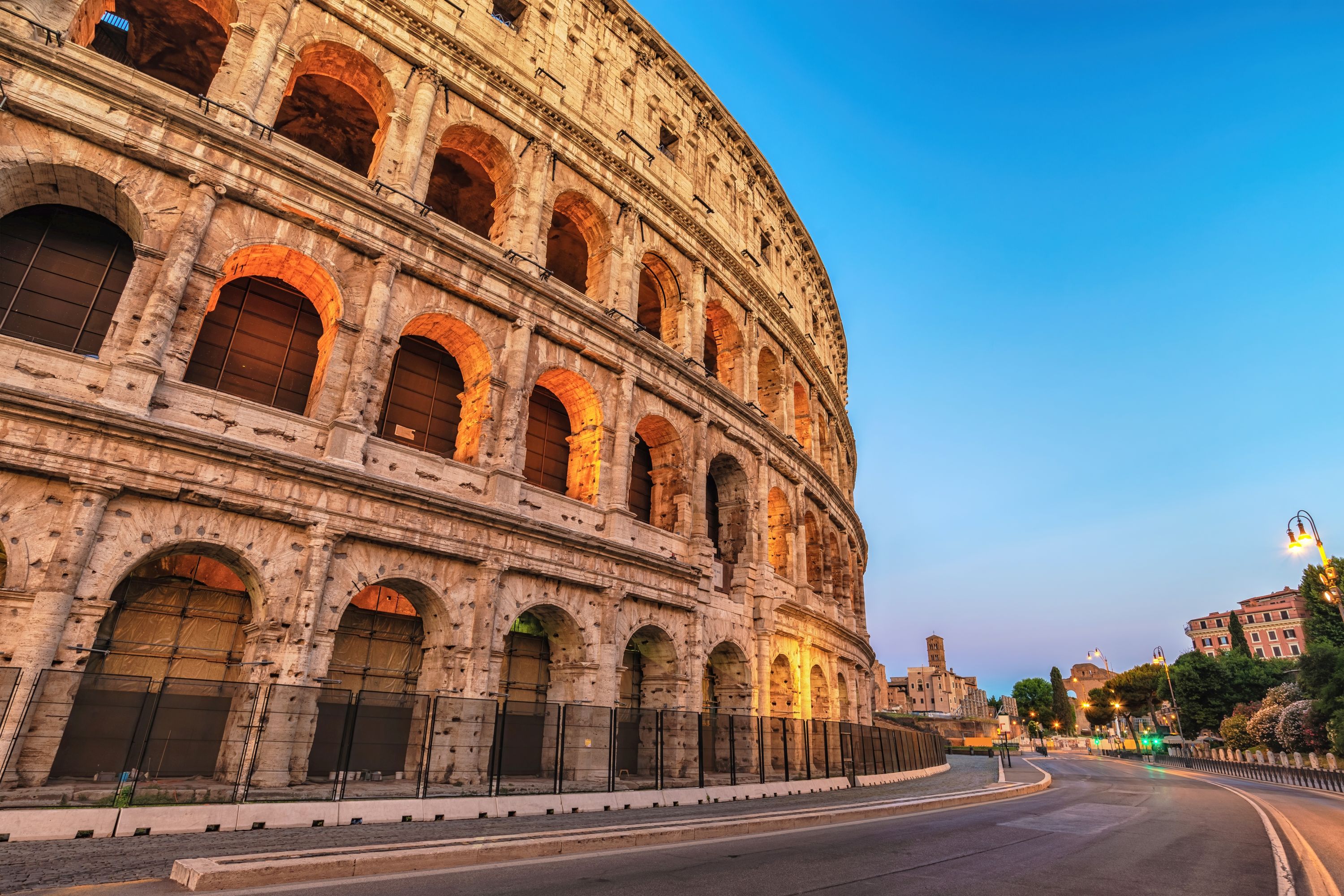
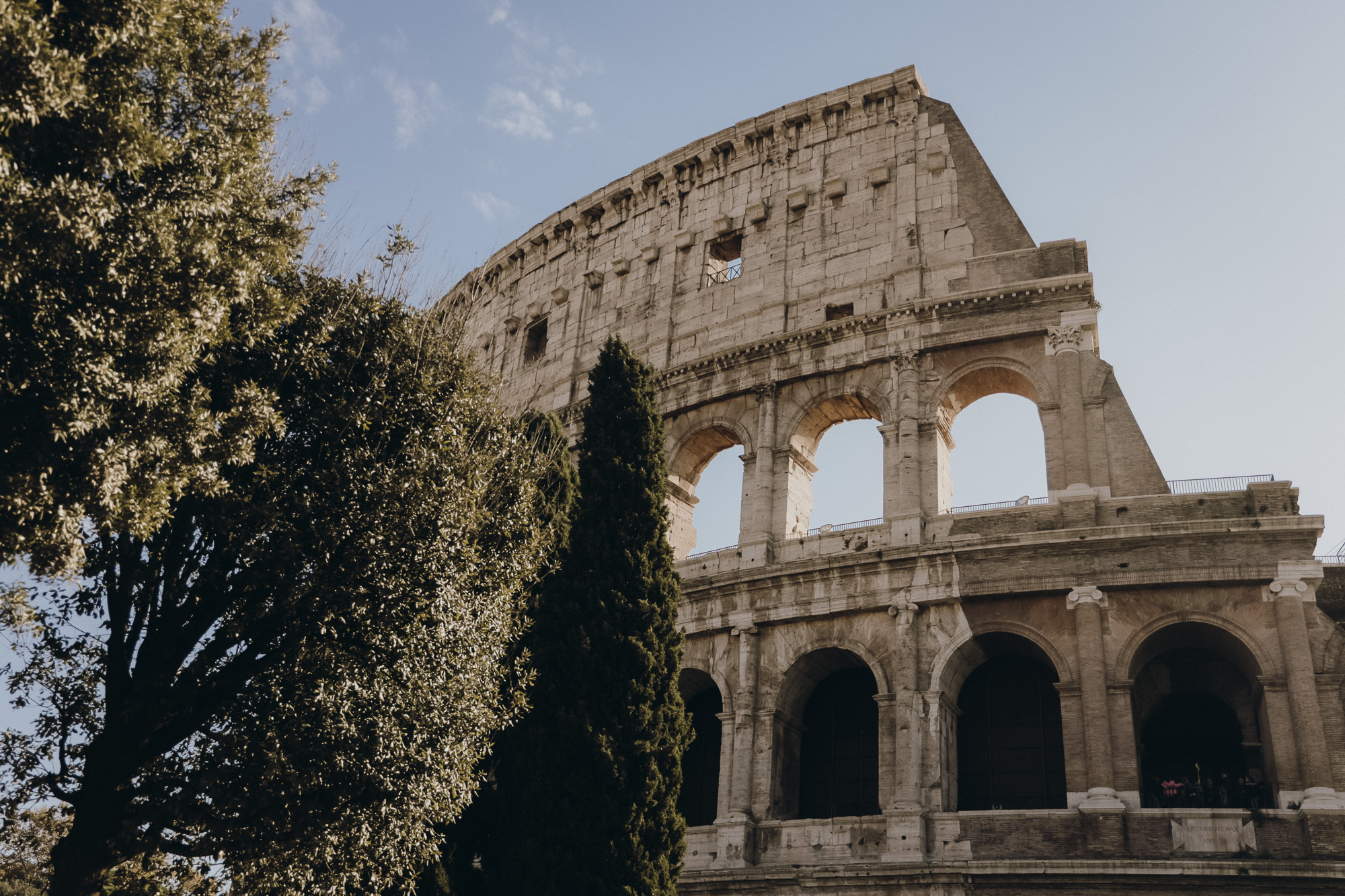
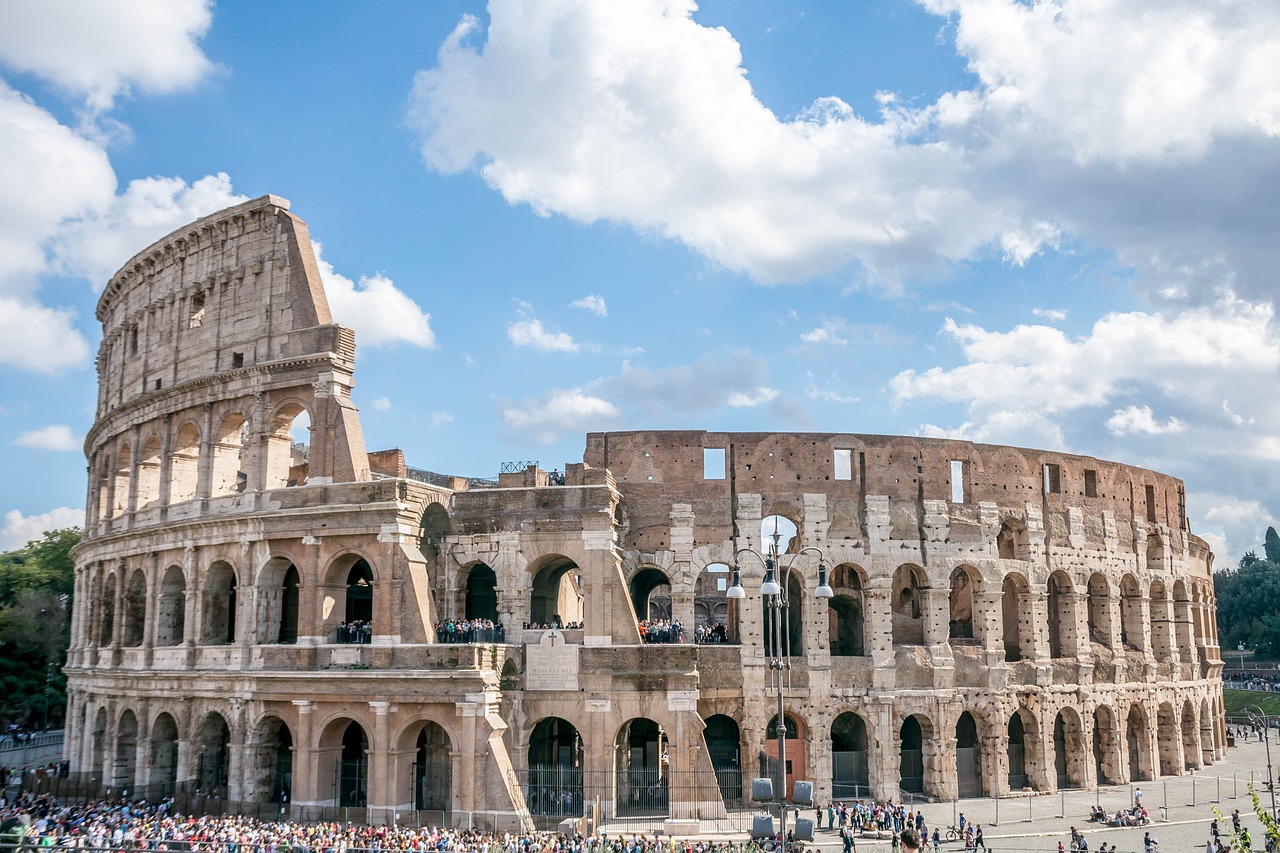
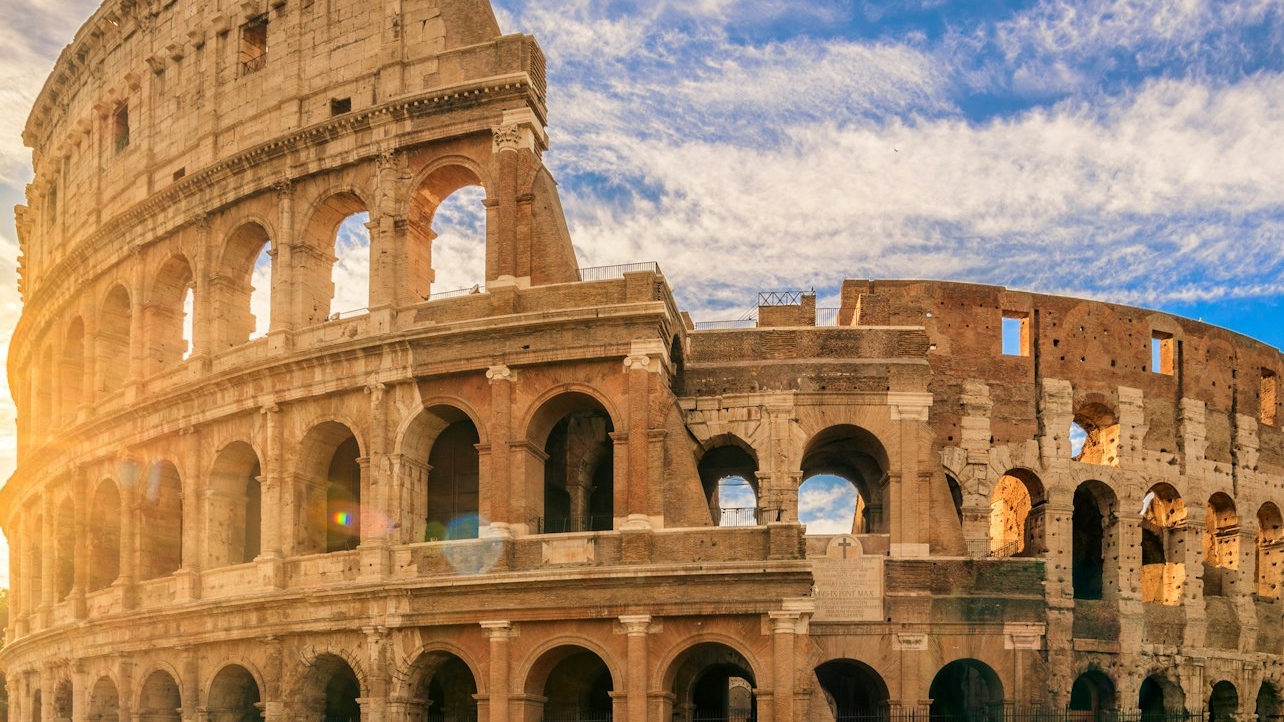
Your guide will show you the best-preserved part of the Colosseum, entertain you with tales of sea battles, and tell you about the Gladiator's combats and animal fights. Imagine the roar of the crowd as their blood-lust was met. Called by the ancient Romans "Anphitheatrum Flavlum" (Flavian Amphitheatre), the Colosseum is the most famous and impressive monument of ancient Rome and the largest amphitheater in the world.
The name is undoubtedly linked to the large size of the building but derives above all from the fact that nearby, there was a colossal statue of Nero and bronze.
In 1990, the Colosseum, along with all the historical centre of Rome, the Vatican extraterritorial zones in Italy and the Basilica of St. Paul Outside the Walls, was listed as a World Heritage Site by UNESCO, while in July 2007 was included among the New seven Wonders of the World.
7
Roman Forum The new Museum of the Roman Forum The House of the Vestals Palatine Palatine Museum Nymphaeum of the Rain Domus Tiberiana Museum of the Domus Tiberiana Deposits on Display 2024
The first true Imperial residence.
With the consolidation of the power of the Julio-Claudian family during the course of the 1st century AD, the private home of Tiberius Claudius Nero (father of the future emperor Nero) in which Germanicus, Claudius and Caligula (who was killed in a cryptoporticus of the domus in 41 AD) also lived, following the devastating fire of 64 AD, began its transformation into a true imperial palace.
What's not included
Hotel pick-up and drop-off
Food and drinks, unless specified
Gratuities (recommended)
Colosseum Tickets
Available languages
Audio guide
DE
EN
ZH-CN
IT
FR
ES
Reviews breakdown
Viator
3.5
2 reviews
5★
0
4★
1
3★
1
2★
0
1★
0
Tripadvisor
4.5
6 reviews
5★
4
4★
1
3★
1
2★
0
1★
0
Important information
Infants and small children can ride in a pram or stroller
Public transportation options are available nearby
Suitable for all physical fitness levels
At the time of booking, travelers must provide their full name and date of birth. Security will prevent you from entering the site if the information provided is not accurate and/or don't match the one on your ID.
Each traveler must present a valid passport or ID document that matches the name provided at the time of booking for successful entry to the Colosseum and Roman Forum.
For security reasons all visitors and their luggage shall be screened.
For the Self Audio Guided Tour Option,s Smartphones to download the App for the audioguide must be of the latest generation (No older than the year 2020)
Forbidden objects inside the Roman Forum: bottles and glasses containers, alcoholic beverages and aerosols, backpacks, camping, bulky bags and luggage / trolley, knives, selfie sticks
Can be introduced medium and small size backpacks to shoulder, which must be checked, as any other bag, with metal detectors, opened and visually inspected by the Urbe Security Institute, responsible for the entrance inspection
Please notice that the Roman Forum Administration, which depends on the Ministry of Cultural Assets and Activities has the faculty to close the Roman Forum, or parts of it, with or without notice, for events, strikes, heavy rain, or any other reason. In which case, we will offer an alternative itinerary as it seems fit and offer a partial refund
Activity subject to favorable weather conditions. If canceled due to poor weather conditions, you will be given the option of an alternative date or full refund.
Changes on the bookings will not be accepted within 24hrs of the starting time of the tour. In that instance, no refund will be issued.
Pets are not allowed, unless they have a service animal certification
The Management does not distribute individual tickets. We will have one group ticket for the entire group. For this reason, we are not able to give tickets to late arrivals that missed the tour!
Every refund request MUST be done within and not later 48 hours from the day of the tour
Customers have a mandatory meeting time stated 20 minutes prior to the scheduled departure time due to managing and organizational reasons.
Please note that the service includes an exterior tour of Colosseum.
The itinerary may vary depending on weather conditions (ice, rain, or high temperatures) or other events beyond the travel agency's control.
We kindly inform you that any kind of disability (visual impairment, hearing impairment,... ) or anything that might prevent you to regularly join the tour, MUST BE communicate in advance to our staff.
Meeting point
SELF-AUDIO GUIDED TOUR Meet our staff at our Travel Agency at Via Labicana, 96 (300 meters from the Roman Forum). Our staff will give you the Colosseum/Palatine Hill/Roman Forum tickets and the QR code to download the audioguide app on your SmartPhone.
Important notes
READ IT CAREFULLY
The starting, ticket redemption, and meeting points are in the same place: Meet our staff at our Travel Agency at Via Labicana, 96 (300 meters from the Colosseum entrance). Our staff will give you the
Palatine Hill/Roman Forum tickets and the QR code to download the audioguide app on your SmartPhone.
For the Self-Audio Guided Tour Option, Smartphones used to download the App for the audioguide must be of the latest generation (no older than 2020), and headsets are suggested for better listening.
PLEASE NOTE: All visitors must provide A VALID ID CARD (Kids included)!! Without a valid ID (Student Cards are not considered Valid IDs), ticket control operators will deny entry to the Roman Forum. Children's discount is applicable only if a valid ID card is provided.
Due to management and organizational reasons, the mandatory meeting time is at least 20/30 minutes before the scheduled departure time.
Late arrivals can only join the tour or be rescheduled if paying again for the activity.
BE AWARE the group may need to leave from the meeting point 30 minutes before the tour booked time. PLEASE BE ON TIME!
Tickets are timed, dated, and not refundable.
About Rome
Rome, the capital of Italy, is a city of ancient ruins, artistic masterpieces, and vibrant culture. Known as the Eternal City, it is a living museum where every corner tells a story of its rich history spanning over 2,500 years.
Top Attractions
Colosseum
The Colosseum is an iconic symbol of Rome and one of the most famous ancient amphitheaters in the world. It was used for gladiatorial contests and public spectacles.
Historical
1-2 hours
€16 (combined ticket with Roman Forum and Palatine Hill)
Vatican City
Vatican City is an independent city-state enclaved within Rome. It is the spiritual and administrative center of the Roman Catholic Church.
Religious
Half day
€17 (Vatican Museums and Sistine Chapel), Free (St. Peter's Basilica)
Roman Forum
The Roman Forum was the political, commercial, and legal hub of the Roman Republic and Empire. It is a sprawling ruin of temples, basilicas, and arches.
Historical
1-2 hours
€16 (combined ticket with Colosseum and Palatine Hill)
Pantheon
The Pantheon is a former Roman temple, now a church, known for its large dome and oculus. It is one of the best-preserved ancient buildings in Rome.
Historical
30 minutes to 1 hour
Free
Trevi Fountain
The Trevi Fountain is a Baroque masterpiece and the largest fountain in Rome. It is a popular spot for visitors to throw coins and make wishes.
Architecture
15-30 minutes
Free
Must-Try Local Dishes
Cacio e Pepe
A simple yet delicious pasta dish made with Pecorino Romano cheese and black pepper.
Pasta
Vegetarian
Carbonara
A rich pasta dish made with eggs, Pecorino Romano, guanciale (cured pork cheek), and black pepper.
Pasta
Contains pork and eggs
Supplì
Fried rice balls filled with mozzarella and tomato sauce.
Snack
Vegetarian (some variations may contain meat)
Carciofi alla Romana
Artichokes braised with garlic, mint, and olive oil.
Vegetable
Vegetarian
Popular Activities
Hiking in the Appian Way Regional Park
Biking along the Tiber River
Rock climbing in the nearby mountains
Picnicking in Villa Borghese Gardens
Boating on Lake Albano
Enjoying a spa day at a luxury hotel
Visiting the Vatican Museums
Attending an opera at the Teatro dell'Opera di Roma
Best Time to Visit
April to June, September to October
Spring and fall offer pleasant weather and fewer crowds compared to the summer peak. Ideal for sightseeing and outdoor activities.
15-30°C
59-86°F
Practical Information
Language
- Official: Italian
- Widely spoken: English, Spanish, French
- English: Moderately spoken
Currency
Euro (EUR)
Time Zone
GMT+1 (CET), GMT+2 (CEST during daylight saving time)
Electricity
230VV, 50HzHz
Safety Information
Overall Safety Rating: Generally safe
Rome is generally safe for tourists, but pickpocketing and scams can be a problem in crowded areas. Be aware of your surroundings and take precautions to protect your belongings.
Important Precautions:
- • Keep valuables secure and out of sight
- • Use official taxis or ride-sharing services
- • Be cautious of strangers approaching you with petitions or bracelets
Getting there
By air
- Leonardo da Vinci International Airport • 35 km from city center
- Ciampino Airport • 15 km from city center
By train
Roma Termini, Roma Tiburtina
By bus
Tiburtina Bus Station, Roma Termini
Getting around
Public transport
The metro system is efficient and covers major tourist areas. It operates from 5:30 AM to 11:30 PM.
Taxis
Available • Apps: Uber, FreeNow
Rentals
Car, Bike, Scooter
Neighborhoods
Trastevere
Monti
Prancipio
Testaccio
Day trips
Ostia Antica
30 km from Rome • Half day
An ancient Roman port city with well-preserved ruins, including a theater, baths, and mosaics. It offers a glimpse into daily life in ancient Rome.
Tivoli
30 km from Rome • Full day
A picturesque town known for its stunning villas and gardens, including the famous Villa d'Este with its elaborate fountains and gardens.
Orvieto
120 km from Rome • Full day
A charming hilltop town known for its stunning cathedral, underground caves, and local wine. It offers a mix of history, culture, and scenic views.
Festivals
Natale di Roma • April 21
Festa de' Noantri • July
Rome Film Festival • October
Pro tips
- Visit major attractions early in the morning or late in the afternoon to avoid crowds
- Use public transport or walk instead of taking taxis to save money and experience the city like a local
- Try local specialties and ask for recommendations from locals and restaurant staff
- Dress modestly when visiting religious sites and be respectful of local customs and traditions
- Be aware of pickpockets and scams, especially in crowded areas and tourist hotspots
From $25
per person
Price varies by option
Secure booking
Free cancellation available
Instant confirmation