Assisi Walking Tour by Local Guide with St. Francis Basilica
Active
2h
For a full refund, cancel at least 24 hours before the scheduled departure time.
Instant confirmation
Mobile or paper ticket accepted
About this experience
Guided by a local expert, your tour begins in the winding streets of Assisi, where the soul of the town is revealed through its stone houses, ancient archways, and scenic views of the Umbrian countryside. As you wander through the town, the guide shares captivating stories of Assisi’s rich history, from its Roman roots to its transformation into one of Christianity’s most important pilgrimage sites.
Throughout the tour, your guide weaves together the threads of Assisi’s past and present, revealing how St. Francis’ legacy continues to shape the town’s identity today. Whether you are visiting Assisi as a pilgrim, a history enthusiast, or simply a traveler in search of beauty, this walking tour is a meaningful way to explore one of Italy’s most treasured towns.
Available options
Assisi Walking Tour by Local Guide with St. Francis Basilica
What's included
Tickets to St. Francis Basilica
Local expert guide
Detailed itinerary
1
Stop 1
The Basilica of St. Clare in Assisi, Italy, is a beautiful Gothic church dedicated to St. Clare, a close companion of St. Francis of Assisi and the founder of the Poor Clares. Built in the 13th century, the basilica houses her tomb and relics. Its striking pink and white stone façade, majestic arches, and serene interior reflect the simplicity and devotion of St. Clare’s life. The church is also home to the original San Damiano Cross, which played a key role in St. Francis' spiritual journey.
2
Stop 2
The Chiesa Nuova in Assisi is a 17th-century Baroque church built on the site traditionally believed to be the birthplace of St. Francis. Commissioned by King Philip III of Spain, the church stands near the town center and features a central dome and elegant interior. It honors St. Francis' early life and family, with a small adjoining museum offering insights into his upbringing and the house where he lived before dedicating his life to God.
3
The Temple of Minerva in Assisi is an ancient Roman structure dating back to the 1st century BCE. Originally dedicated to the goddess Minerva, the temple’s well-preserved Corinthian columns and façade dominate the Piazza del Comune. In the 16th century, it was converted into the Church of Santa Maria sopra Minerva, blending classical Roman architecture with a Baroque interior. The temple remains a remarkable symbol of Assisi’s ancient history and cultural evolution.
4
Stop 4
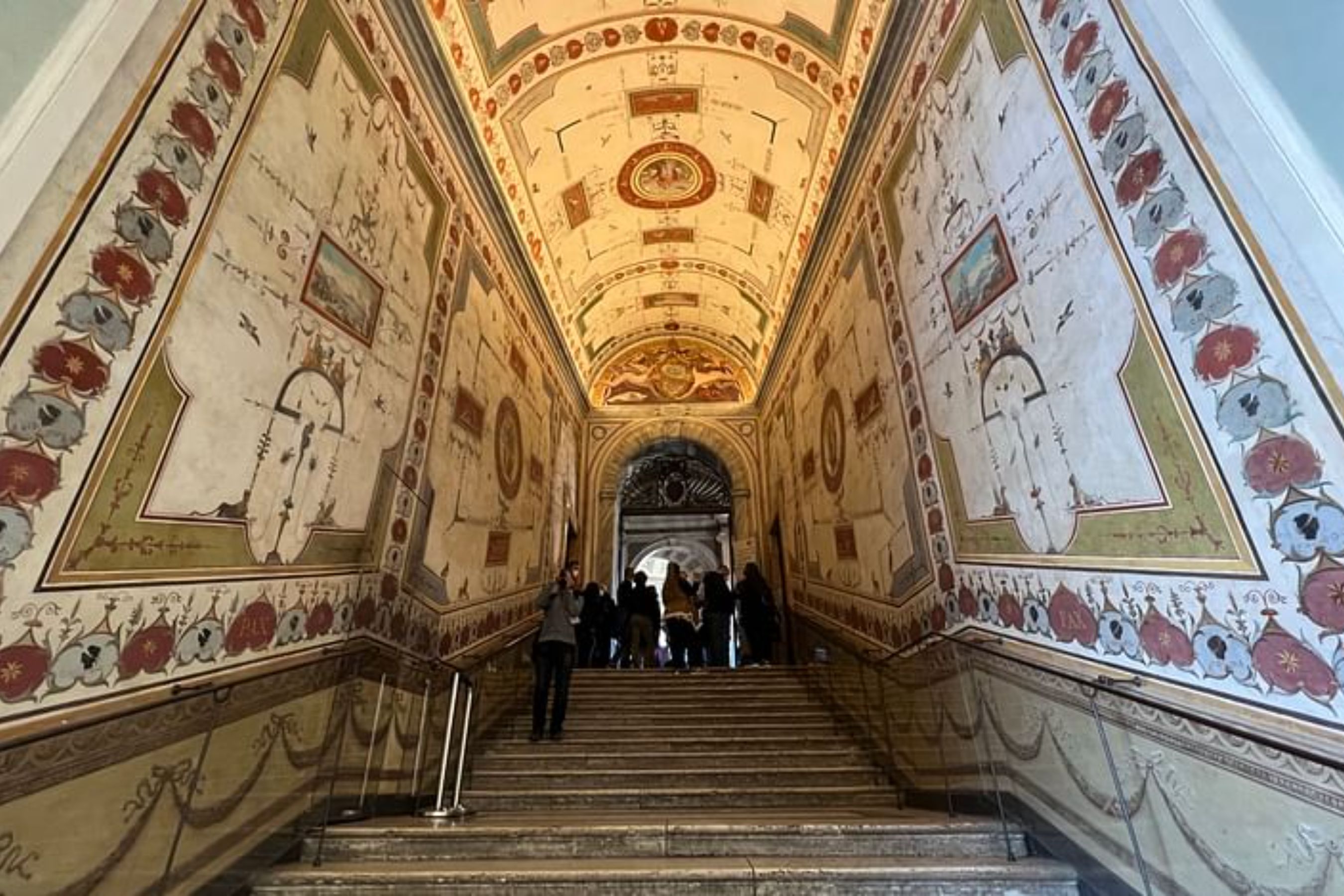
The highlight of the tour is a visit to the magnificent Basilica of St. Francis, a UNESCO World Heritage site and the final resting place of St. Francis of Assisi, the beloved saint and founder of the Franciscan order. The basilica, with its striking two levels—Upper and Lower Church—boasts some of the finest examples of medieval art, including frescoes by Giotto and Cimabue that depict the life of St. Francis. As you step inside, the guide offers deep insights into the spiritual and artistic significance of these masterpieces, helping you connect with the stories they tell and the devotion they inspire.
What's not included
Tips
Available languages
Guide guide
EN
Reviews breakdown
Tripadvisor
5.0
2 reviews
5★
2
4★
0
3★
0
2★
0
1★
0
Important information
Infants and small children can ride in a pram or stroller
Public transportation options are available nearby
Suitable for all physical fitness levels
on Sundays, big Catholic holidays (also 3 and 4 October) and National holidays, guided tours inside the Basilica of St. Francis ar forbidden. Your guide will explain to you the church from outside, and you will enter alone on silence.
Due to the exposition of the remains of St. Francis, guided tours of the basilica will be suspended from February 15, 2026, to April 6, 2026. The guide will provide an explanation from outside, and then visitors will be able to enter on their own.
Meeting point
In front of the ticket office, below the map of Assisi
Important notes
Due to the exposition of the remains of St. Francis, guided tours of the basilica will be suspended from February 15, 2026, to April 6, 2026.
The guide will provide an explanation from outside, and then visitors will be able to enter on their own.
About Assisi
Assisi is a picturesque medieval town in the Umbria region of Italy, nestled in the hills of the Apennine Mountains. It is renowned as the birthplace of St. Francis, the patron saint of animals and the environment, and is home to stunning religious architecture, including the iconic Basilica of San Francesco. The town's charm lies in its well-preserved medieval streets, vibrant art scene, and the serene atmosphere that permeates its historic center.
Top Attractions
Basilica of San Francesco
The Basilica of San Francesco is a UNESCO World Heritage Site and one of the most important religious sites in Italy. It consists of two churches, an upper and lower basilica, adorned with stunning frescoes by Giotto and Cimabue.
Religious/Historical
1-2 hours
Free (donations welcome)
Basilica of Santa Chiara
This basilica is dedicated to St. Clare, a contemporary of St. Francis. It features a beautiful rose window and a simple, elegant interior with a large crucifix attributed to St. Francis.
Religious/Historical
30 minutes to 1 hour
Free (donations welcome)
Rocca Maggiore
This medieval fortress offers panoramic views of Assisi and the surrounding countryside. The fortress was built by the Germans in the 12th century and later used by various rulers, including the Papal States.
Historical
1 hour
€4
Temple of Minerva
This ancient Roman temple, built in the 1st century BC, is one of the best-preserved Roman buildings in Italy. It was later converted into a church and now serves as a significant historical landmark.
Historical/Architectural
30 minutes
Free (donations welcome)
Eremo delle Carceri
This hermitage is located in the woods above Assisi and is believed to be where St. Francis and his followers retreated for prayer and meditation. It offers a peaceful and spiritual atmosphere amidst beautiful natural surroundings.
Religious/Nature
1-2 hours (including the hike)
Free (donations welcome)
Must-Try Local Dishes
Truffle Pasta
A classic Umbrian dish made with fresh pasta and shaved black truffles, often served with a simple tomato or cream sauce
Main Course
Contains gluten (pasta), can be made vegetarian
Wild Boar Stew (Cinghiale in Umido)
A rich and flavorful stew made with wild boar, tomatoes, onions, and herbs, often served with polenta or crusty bread
Main Course
Contains meat, can be made gluten-free with appropriate sides
Olive All'Ascolana
Large green olives stuffed with a mixture of meat, breadcrumbs, and herbs, then fried until crispy
Appetizer
Contains meat and gluten, not suitable for vegetarians or those with gluten allergies
Torta al Testo
A traditional Umbrian flatbread made with flour, water, and salt, often served with cured meats, cheeses, or vegetables
Main Course
Contains gluten, can be made vegetarian
Popular Activities
Hiking in the surrounding mountains
Rock climbing
Mountain biking
Wine tasting
Spa treatments
Strolling through the historic center
Visiting museums and art galleries
Attending local festivals and events
Best Time to Visit
May to September
This is the warmest and most popular time to visit Assisi, with pleasant weather ideal for exploring the town and its surrounding countryside. The town is lively with tourists and cultural events.
18°C to 30°C
64°F to 86°F
Practical Information
Language
- Official: Italian
- Widely spoken: English, French, German, Spanish
- English: Moderately spoken in tourist areas, limited in more remote locations
Currency
Euro (EUR)
Time Zone
GMT+1 (Central European Time, CET), GMT+2 (Central European Summer Time, CEST) during daylight saving time
Electricity
230VV, 50HzHz
Safety Information
Overall Safety Rating: Generally safe
Assisi is generally a safe destination for travelers, with low crime rates and a welcoming atmosphere. However, as with any destination, it's important to be aware of your surroundings and take basic precautions to ensure a safe and enjoyable trip.
Important Precautions:
- • Be aware of your surroundings, especially in crowded areas
- • Keep valuables secure and out of sight
- • Use licensed taxis or public transportation
Getting there
By air
- Perugia San Francesco d'Assisi Airport • 15 km from Assisi
- Rome Ciampino Airport • 200 km from Assisi
By train
Assisi Station
By bus
Assisi Bus Terminal
Getting around
Public transport
The bus system is efficient and affordable, with frequent services connecting major points of interest. Buses are a convenient way to get around, especially for those staying in the town center.
Taxis
Available • Apps: MyTaxi
Rentals
Car, Bike, Scooter
Neighborhoods
Borgo di San Pietro
Piazza del Comune
San Francesco
Day trips
Spoleto
30 km from Assisi • Half day to full day
Spoleto is a charming medieval town known for its well-preserved architecture, rich history, and vibrant cultural scene. It hosts the annual Festival dei Due Mondi, a renowned arts festival featuring opera, theater, and music.
Montefalco
20 km from Assisi • Half day to full day
Montefalco is a picturesque hilltop town known for its stunning views, rich history, and excellent wine. It is the birthplace of the Sagrantino grape, and the town is home to several renowned wineries.
Gubbio
40 km from Assisi • Full day
Gubbio is a beautiful medieval town nestled in the Apennine Mountains, known for its well-preserved architecture, rich history, and stunning natural surroundings. It is also famous for its annual Palio della Balestra, a historic crossbow competition.
Festivals
Calendimaggio • Late April to early May
Assisi International Festival • July to August
Feast of St. Francis • October 4th
Pro tips
- Visit the Basilica of San Francesco early in the morning or late in the afternoon to avoid crowds and enjoy a more peaceful experience
- Explore the town's medieval streets and hidden alleys to discover local shops, art galleries, and charming cafes
- Try local specialties like truffle pasta, wild boar stew, and olive all'ascolana for a true taste of Umbrian cuisine
- Take a day trip to nearby towns and cities like Spoleto, Montefalco, or Gubbio to explore the region's rich history and cultural heritage
- Attend local festivals and events, such as the Calendimaggio or the Assisi International Festival, for a unique and unforgettable experience
From $25
per person
Price varies by option
Secure booking
Free cancellation available
Instant confirmation