Private City Tour with Local Gastronomy
Active
4h
For a full refund, cancel at least 24 hours before the scheduled departure time.
Instant confirmation
Mobile or paper ticket accepted
About this experience
Buenos Aires Private: History, Flavors and Culture with Local Guide
Experience Buenos Aires at your own pace with this private tour accompanied by a passionate local guide who will show you the best of the city, combining history, culture and the most authentic flavors of Argentina.
On this exclusive tour you will discover the most emblematic neighborhoods, such as San Telmo, La Boca, Recoleta and Palermo, making special stops to enjoy the best of local cuisine:
️ San Telmo Market – Try a Creole patty fresh from the oven, in one of the most traditional markets in the city.
Porteño grill – I lived the experience of the classic Argentine choripán with chimichurri, as enjoyed by the locals.
Boutique wine bar – Close the tour with a guided tasting of Argentine wines, selected especially for you.
All in a comfortable, relaxed environment adapted to your interests. Ideal for those looking for an authentic experience, without rush or large groups.
Available options
CITY + LOCAL GASTRONOMY
Private<br/>Duration: 4 hours<br/>Food from Buenos Aires<br/>Exclusive, luxury vehicle. <br/>Pickup included
What's included
Private transportation
Soda/Pop
Bilingual guide throughout the tour providing information
Air-conditioned vehicle
Parrilla Argentina is a historic place
Argentine wine tasting included
Detailed itinerary
1
Stop 1
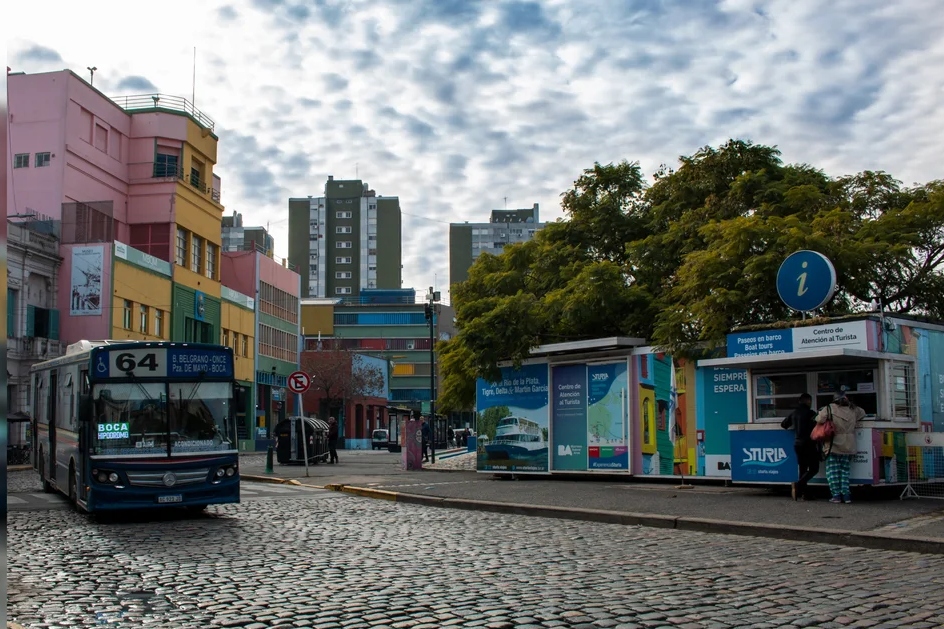
Caminito is the most famous pedestrian street in Buenos Aires. It is one of the most popular tourist attractions in the city due to its colorful houses and its deep historical and cultural significance.
Caminito is located in the popular La Boca neighborhood, on the coast of the Riachuelo River and just 400 meters from La Bombonera, the Boca Juniors stadium. It is a curved pedestrian promenade 150 meters long where important artistic works can be seen.
2
Stop 2
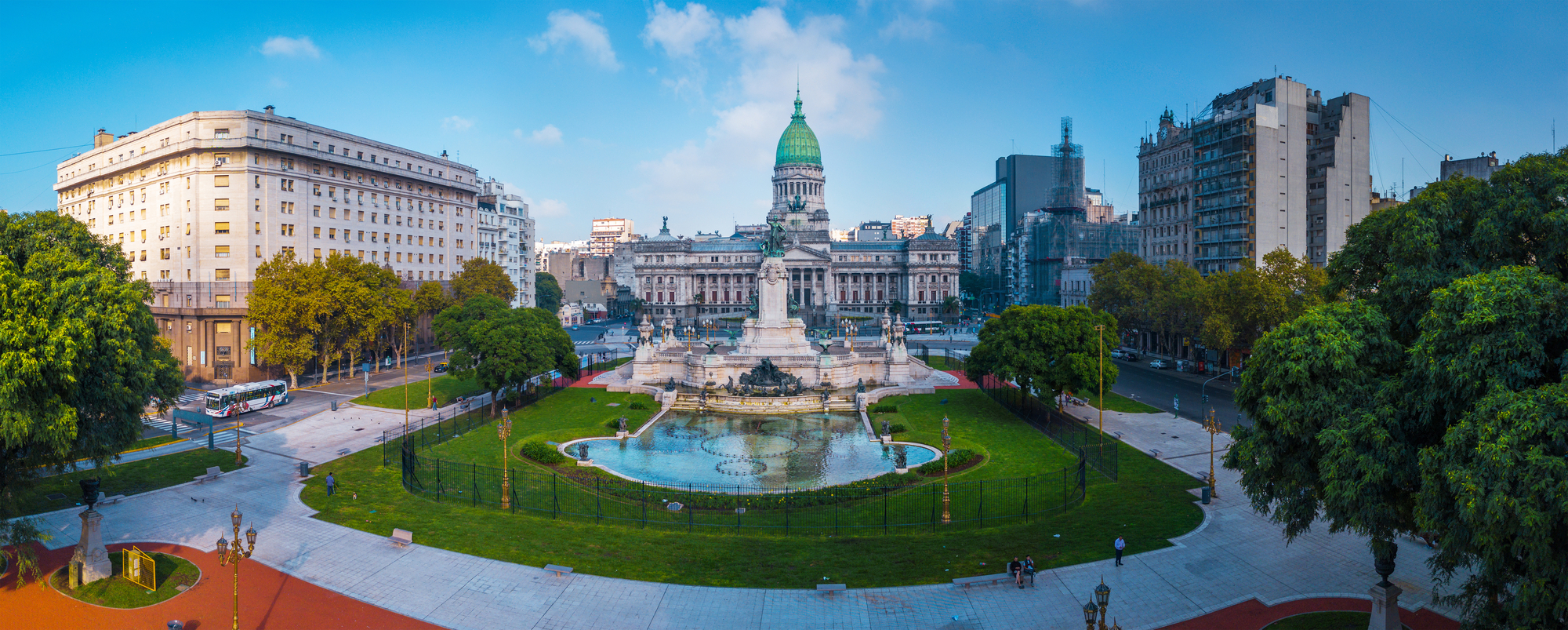
Inspired by Madrid's Gran Vía, Avenida de Mayo is one of the largest and most important arteries in Buenos Aires. Tour the city from Plaza de Mayo with the Casa Rosada on one end, to the National Congress building on the other. Officially opened in 1894, it is worth going through, as it is like taking a trip through the entire history of the city.
3
It is a large indoor market that is located in the San Telmo neighborhood. Although it preserves old shops selling vegetables and meat, today it is a tourist place and antique dealers abound. The old stalls "in the neighborhood" that have been preserved for several decades coexist with antique dealers, more recent and related as the tourist boom in San Telmo. The building also includes some premises that have their own entrance from the street, including greengrocers, liquor stores, a restaurant and two notable bars: "San Pedro Telmo", and "La Coruña" .1
4
Stop 4
The Puente de la Mujer, one of the emblems of the Puerto Madero neighborhood, is the first work in Latin America by the renowned Spanish architect Santiago Calatrava and represents another example of the City permanently seeking to position itself at the forefront of art and architecture in the entire region. It is a revolving pedestrian bridge with one of the largest turning mechanisms in the world, designed to allow the passage of sailing vessels that navigate the docks of Puerto Madero. The work, made in Spain and donated to the City by a private individual, represents the image of a couple dancing tango, where the white pole symbolizes the man and the curved silhouette of the bridge is the woman.
5
It is the main seat of the Catholic Church of Argentina. In addition to being located in a key area of the City of Buenos Aires, it has a long history of disappointments in its construction. The current building is the sixth construction that has been carried out in this place since the second foundation of the City of Buenos Aires. Its final structure is neoclassical and has a profile rarely used in cathedrals, giving it a closer resemblance to a Greek temple than to the classic Catholic building.
6
Stop 6
It is located in the exclusive neighborhood of Recoleta, which owes its name to the fact that the convent of the Recoleta monks was located there, to which the neighboring Basilica Nuestra Señora del Pilar also belonged (the cemetery was built in the old monks' garden. ).
It is the most visited in the city, due to its numerous and imposing mausoleums and vaults, belonging to many of the main protagonists of Argentine history, such as that of Eva Perón (Evita), one of the most visited tombs. Likewise, it is worth a visit for its architectural value, since it is a sample of the times when the country was an emerging economic power and the main families of the city competed to build splendid pantheons. Many of the vaults and mausoleums are the work of important architects and are adorned with marble and sculptures; More than 90 vaults have been declared National Historic Monuments.
7
The Athenaeum Grand Splendid was chosen by the British newspaper The Guardian as the second largest bookstore in the world. Built on the former Grand Splendid movie theater in the Recoleta neighborhood, it retains its former splendor and elegance, with the frescoed cupola, original railings, and intact decor. On the old stage - with the velvet curtain ajar - there is a bar that invites you to sit book in hand. You can also take advantage of the armchairs that are on both sides of the main room or be located in the exclusive boxes that work as small reading rooms. In the basement there is a sector dedicated to children's books, and the upper floor is dedicated to samples and exhibitions.
8
Stop 8
This imposing 20-meter-high sculpture that dominates the United Nations square was donated to the City of Buenos Aires by its author, the Argentine architect Eduardo Catalano. It is made of stainless steel and aluminum and weighs 18 tons. It is the first sculpture in movement controlled by a hydraulic system and photoelectric cells.
The work was inaugurated on April 13, 2002. Its name, "Floralis Generica", is a tribute to all the flowers. It is about the projection of a dream of its creator, that of building a large-scale structure that reflects the dynamism of our time.
- At each tourist point they will go down and have between 15 and 20 minutes to take photos.
-the guide will be with you at all times and will help you in each photo
-I will tell you all the history of Buenos Aires and how it developed over the years.
-know the most beautiful bookstore in the world
What's not included
Gratuities
Available languages
Guide guide
DE
PT
EN
IT
ES
Reviews breakdown
Viator
5.0
3 reviews
5★
3
4★
0
3★
0
2★
0
1★
0
Tripadvisor
5.0
16 reviews
5★
16
4★
0
3★
0
2★
0
1★
0
Important information
Specialized infant seats are available
Service animals allowed
Infants and small children can ride in a pram or stroller
All areas and surfaces are wheelchair accessible
Wheelchair accessible
Suitable for all physical fitness levels
Alcoholic beverages for those over 18 years of age
About Buenos Aires and The Pampas
Buenos Aires, the vibrant capital of Argentina, is known for its European-influenced architecture, rich cultural scene, and passionate tango. The Pampas, a vast fertile plain, offers a glimpse into Argentina's gaucho (cowboy) culture and stunning landscapes. Together, they provide a unique blend of urban sophistication and rural charm.
Top Attractions
Recoleta Cemetery
A famous cemetery where Eva Perón is buried, featuring ornate mausoleums and a rich history.
Historical
1-2 hours
Free
La Boca
A colorful neighborhood known for its vibrant street art, tango performances, and the famous Caminito street.
Cultural
2-3 hours
Free to explore, paid shows
The Pampas
A vast fertile plain offering a glimpse into Argentina's gaucho culture, with estancias (ranches) and beautiful landscapes.
Nature
Full day or overnight
Varies by estancia (ARS 1,000-5,000 approx. USD 13-65)
Teatro Colón
One of the world's most famous opera houses, known for its stunning architecture and acoustics.
Cultural
1-2 hours (tour), longer for performances
Tour: ARS 1,200 (approx. USD 16), Performances: ARS 500-5,000 (approx. USD 6.50-65)
San Telmo Market
A historic market offering antiques, collectibles, and local crafts, with a lively Sunday market atmosphere.
Market
1-3 hours
Free to explore, varies for purchases
Must-Try Local Dishes
Asado
Argentine barbecue featuring various cuts of beef, sausages, and other meats, cooked over an open fire.
Dinner
Not vegetarian or vegan
Empanadas
Savory pastries filled with various ingredients like beef, chicken, or cheese.
Snack or Lunch
Can be vegetarian or vegan
Milanesa
Breaded and fried meat cutlet, similar to schnitzel, often served with mashed potatoes or salad.
Lunch or Dinner
Not vegetarian or vegan
Dulce de Leche
A sweet, caramel-like spread made from milk and sugar, used in various desserts.
Dessert
Vegetarian
Popular Activities
Horseback riding in The Pampas
Kayaking in Tigre Delta
Hiking in Sierra de la Ventana
Wine tasting in Palermo
Spa day in Recoleta
Strolling through Bosques de Palermo
Tango shows in La Boca
Visiting museums in Recoleta
Best Time to Visit
Spring (September to November) and Fall (March to May)
Pleasant weather, fewer crowds, and vibrant city life. Ideal for outdoor activities and exploring both the city and the Pampas.
15-25°C
59-77°F
Practical Information
Language
- Official: Spanish
- Widely spoken: English, Italian, French
- English: Moderately spoken in tourist areas, limited elsewhere
Currency
Argentine Peso (ARS)
Time Zone
GMT-3
Electricity
220VV, 50HzHz
Safety Information
Overall Safety Rating: Exercise caution
Buenos Aires is generally safe for tourists, but petty crime like pickpocketing and scams can occur, especially in crowded areas. Be aware of your surroundings and take precautions.
Important Precautions:
- • Keep valuables secure
- • Avoid flashing expensive items
- • Use reputable taxi services or app-based taxis
Getting there
By air
- Ministro Pistarini International Airport • 35 km from city center
- Aeroparque Jorge Newbery • 4 km from city center
By train
Retiro Station
By bus
Retiro Bus Terminal, Constitución Bus Terminal
Getting around
Public transport
Efficient and affordable, with six lines connecting major neighborhoods.
Taxis
Available • Apps: Uber, Cabify
Rentals
Car, Bike, Scooter
Neighborhoods
Palermo
Recoleta
La Boca
San Telmo
Day trips
Estancia Santa Susana
100 km from Buenos Aires • Full day
A traditional estancia offering horseback riding, gaucho shows, and authentic Argentine asado.
Colonia del Sacramento
100 km from Buenos Aires (by ferry) • Full day
A charming colonial town in Uruguay with cobblestone streets, historic buildings, and a relaxed atmosphere.
Tigre Delta
35 km from Buenos Aires • Half day to full day
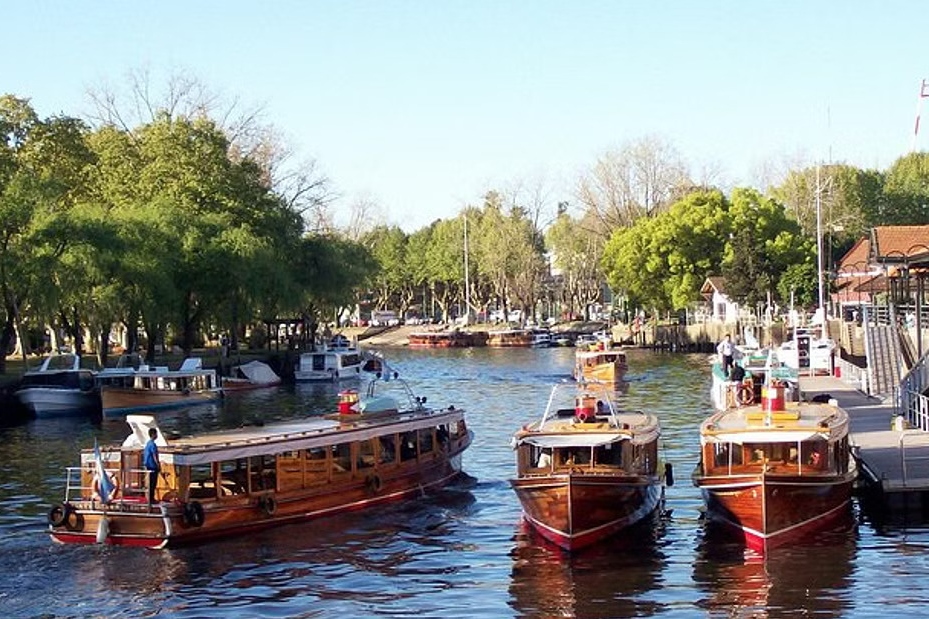
A network of islands and waterways offering boat tours, kayaking, and nature walks.
Festivals
Carnaval de Buenos Aires • February or March (dates vary)
Festival Internacional de Cine Independiente de Buenos Aires (BAFICI) • April (dates vary)
La Noche de los Museos • November (dates vary)
Pro tips
- Use the SUBE card for convenient and discounted public transport
- Learn a few basic Spanish phrases to enhance your experience and connect with locals
- Explore beyond the tourist hotspots to discover the city's hidden gems
- Try local specialties like empanadas, milanesa, and dulce de leche
- Visit during the shoulder seasons (spring and fall) for pleasant weather and fewer crowds
From $25
per person
Price varies by option
Secure booking
Free cancellation available
Instant confirmation