Rome: Vatican Museums and Colosseum Private Tour with Transfers
Active
8h
For a full refund, cancel at least 24 hours before the scheduled departure time.
Instant confirmation
Mobile or paper ticket accepted
About this experience
A professional Blue Badge Guide will meet you at your centrally located accommodation and together you will start your full-day tour with the visit of the Vatican Museums and the Sistine Chapel.
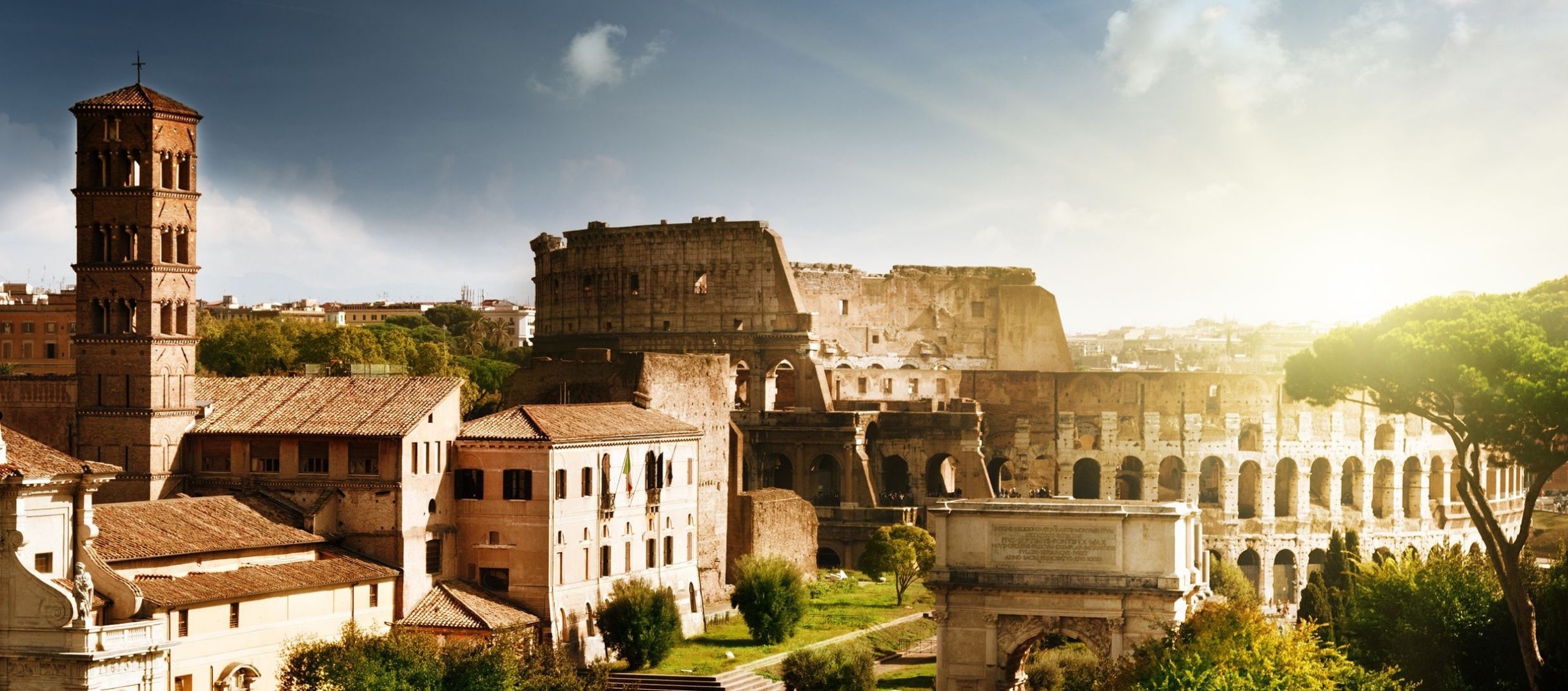
After a quick lunch break, you’ll head to the ancient part of the city, discovering the Great Colosseum and the Roman Forum, walking through their timeless ruins.
Available options
Full day in Rome
A full immersion in the Eternal City. Skip the line tickets included.Hotel Pick up 9:30AM-Vatican Museums-lunch break(30-min)-Colosseum and Roman Forum -Hotel Drop off<br/>Pickup included
What's included
Vatican Museums Tickets
Blue Badge guide
Colosseum reservation fee (valued at €2 per person)
Hotel pick-up, drop-off and transportation between sites with private vehicle
Colosseum entrance fees (valued at €18 per person)
Please note: Colosseum fees as above. The remaining cost of the experience covers other services.
Colosseum and Roman Forum Entrance Fees
Detailed itinerary
1
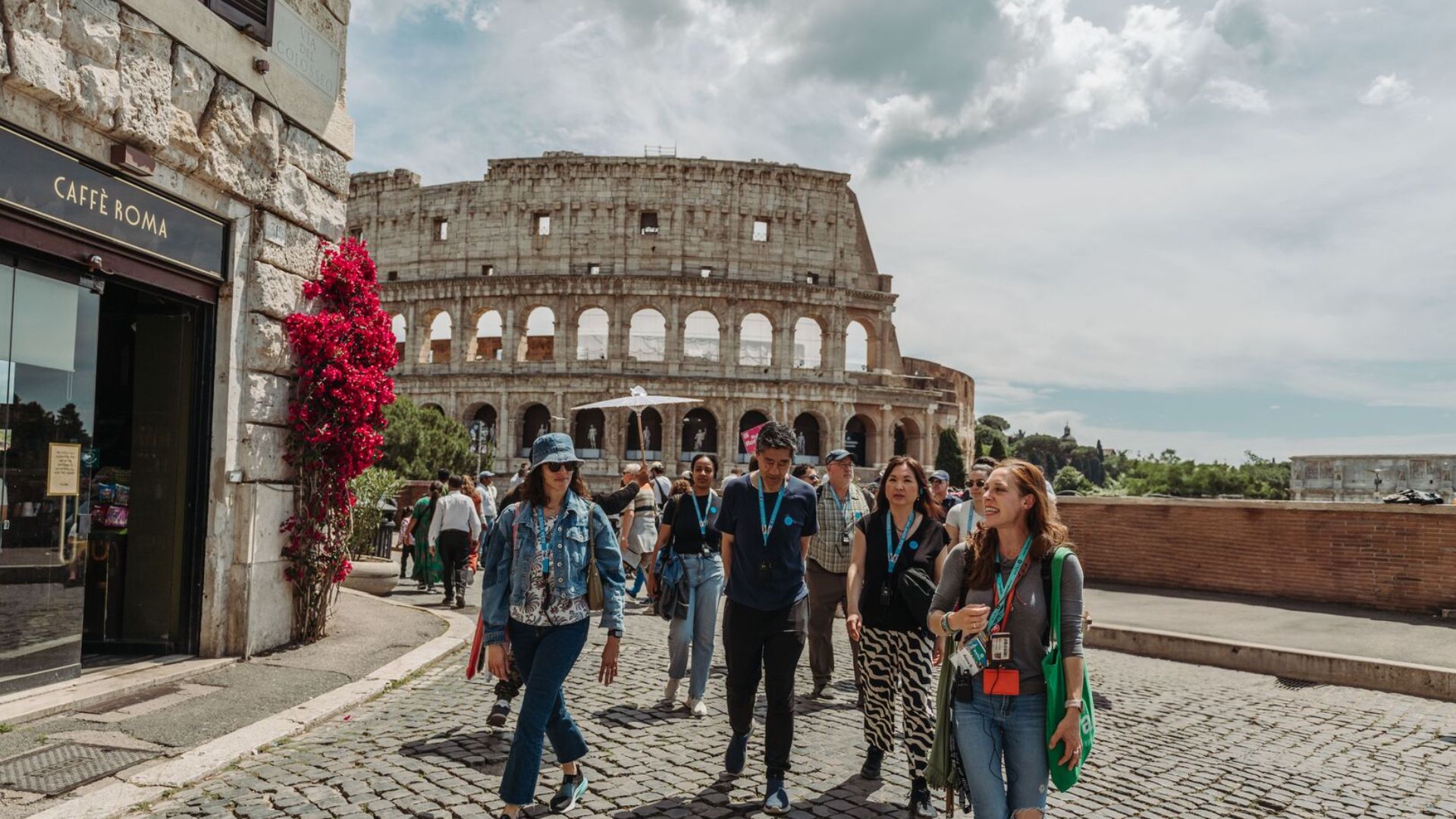
You will walk along this Piazza in order to access the Colosseum and the Roman Forum.
Nothing was added from the time of the Roman Empire, what you see, is more or less the view that the romans had in the past.
2
Stop 2
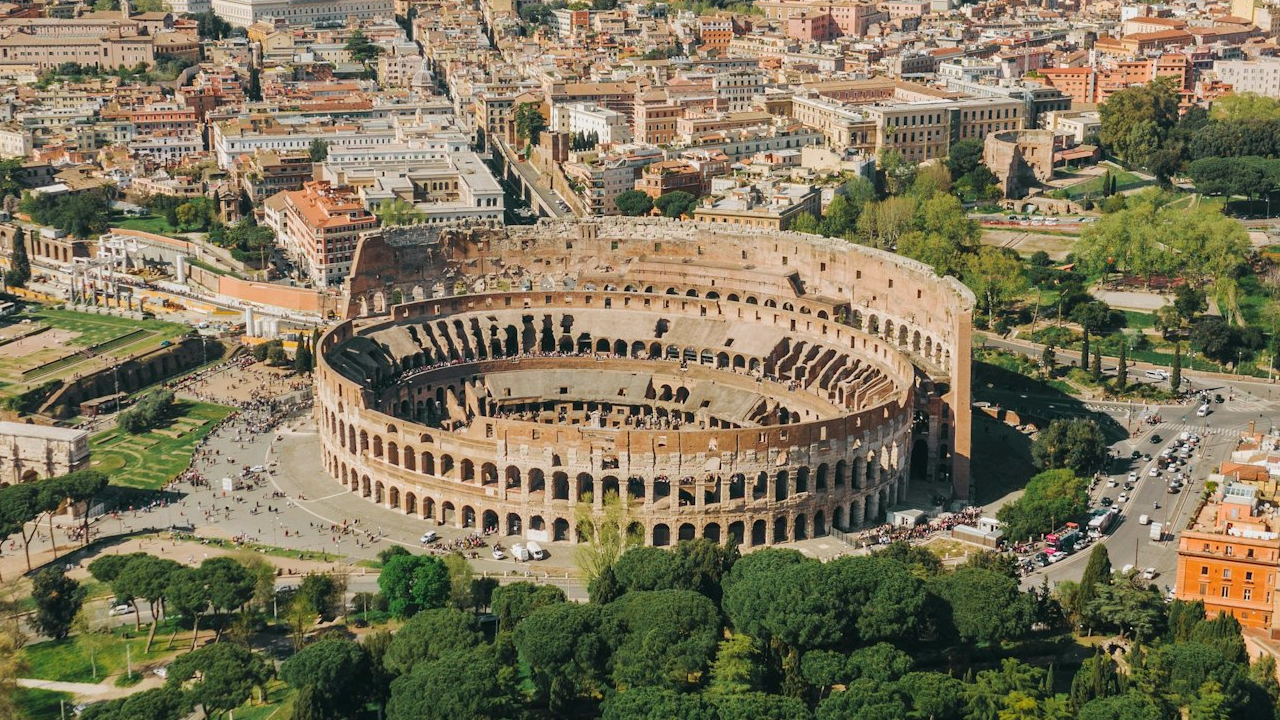
Visit the Colosseum, one of the largest structures of the ancient world, where Romans once gathered to watch the gladiator games, battles with wild beasts, and according to legend, sea battles. Discover how the Colosseum, a massive stone amphitheater which seated an estimated 60,000 spectators, was built in only 8 years. Your guide will unlock fascinating stories of the design and construction, the political benefit, the fighters, and the eventual end of the games at the Colosseum.
3
Stop 3
At the Roman Forum, your guide will bring to life the mythology, the popular celebrations of the time, and the gods of ancient Rome, which are reflected in the star signs in contemporary astrology. Learn how the pagan holiday Saturnalia influenced the unfolding of Christmas on the 25th of December today. Listen to the story of the Lapis Niger (Latin for ‘black stone’), the most ancient Latin text ever discovered in the world - which is housed in the foundation of a column in the Forum.
Discover the Temple of the Vestal Virgins. They worked in the temple for a period of 30 years under different emperors and were regarded almost as goddesses in status. Their foremost duty was maintaining the sacred fire of Vesta which represented the heart of Rome. As legend has it - as long as the sacred flame burned, Rome would endure and be victorious.
4
Stop 4
Pass by
Admire the view of the most important Triumphal Arch of Rome dedicated to the Famous Emperor Costantine.
This Arch represents a turning point of the Roman History and Art, a dividing line between the rise of the Christians and the decline of the Roman Empire.
5
Stop 5
Treat yourself with a customized private tour of the Vatican Museums and St. Peter's Basilica. Visit some hidden gems of the museums and explore rooms closed to the general public at all times. Meet your guide at your hotel where you will be picked-up and travel together to the Vatican Museums. Skip the line for fast-track entry to the world famous Vatican museum complex, made up of galleries with an impressive number of artwork and masterpieces from antiquity to present day.
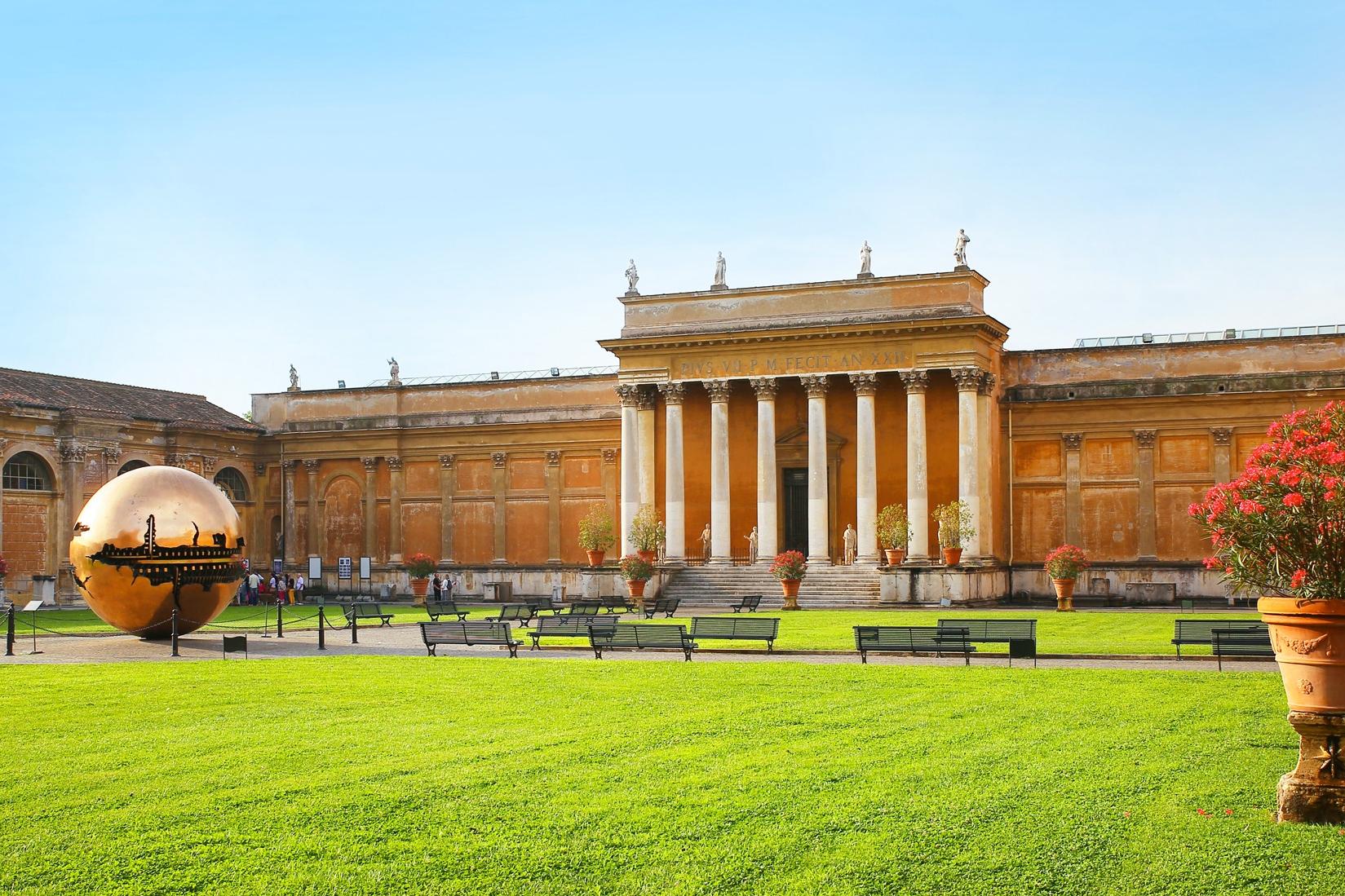
During your visit you will have a chance to see one of the world’s finest collections of sculptures, carvings, frescoes and paintings. Enjoy the impressive Belvedere Courtyard and then stroll through the most interesting rooms and galleries of the museum complex. Marvel at the famous Lacoon and the Belvedere Torso at the sculpture museum, deeply revered by Michelangelo and other Renaissance artists.
6
The Cortile della Pigna, or "Court of the Pine Cone," is a tranquil courtyard within the Vatican City, named after a colossal bronze pine cone that dates back to Ancient Rome. This pine cone, once a fountain, stands as the centerpiece of the courtyard, symbolizing enlightenment and eternal life. The courtyard, nestled between the Vatican Museums' Belvedere Palace and the Apostolic Palace, is an embodiment of the Renaissance spirit, blending art, nature, and history in a serene setting.
7
Stop 7
The Vatican Museums' Gallery of Tapestries showcases stunning 15th and 16th-century tapestries, intricately woven with scenes from biblical and historical narratives. Inspired by designs from Raphael’s school, this gallery highlights the artistic sophistication and storytelling of the Renaissance.
8
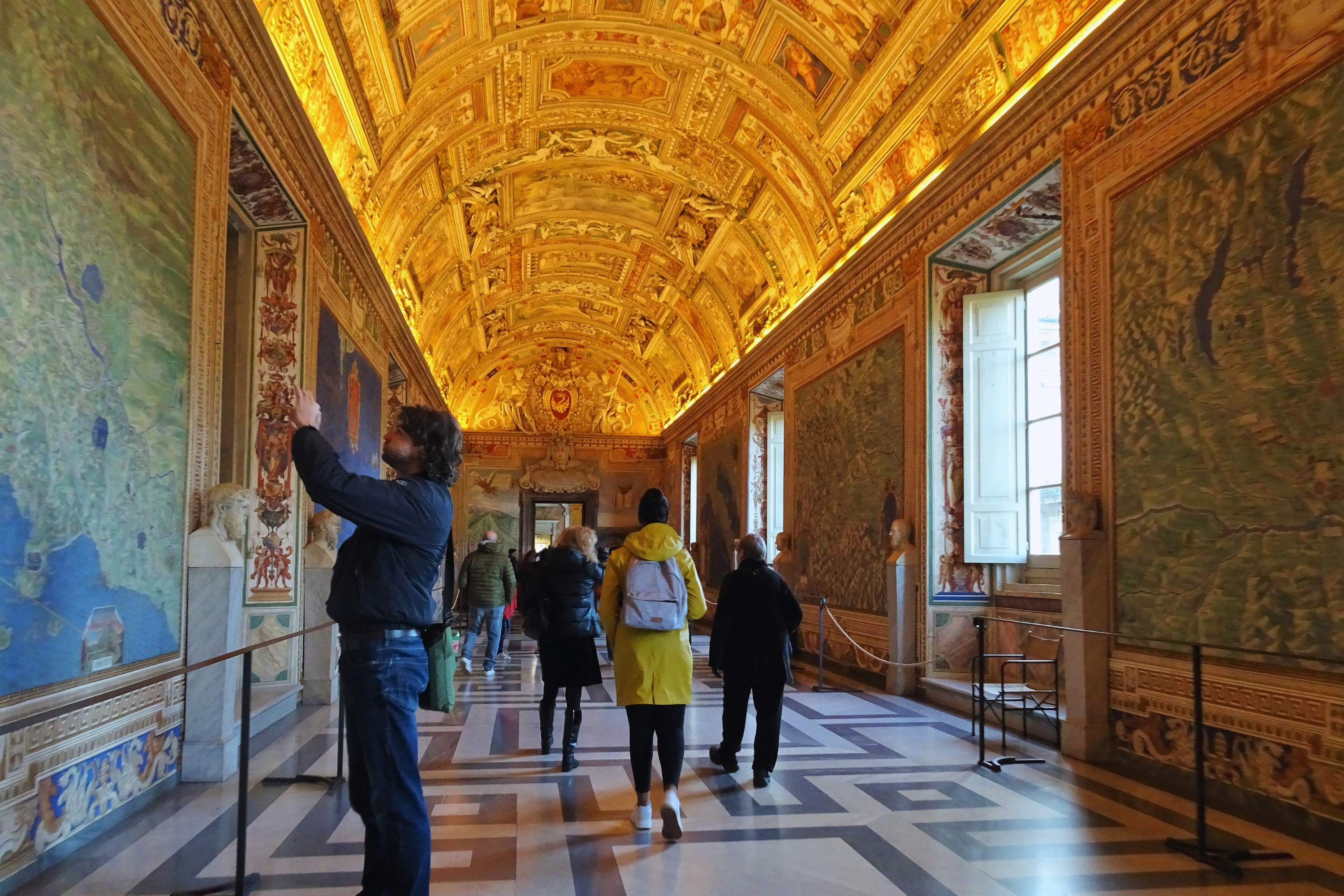
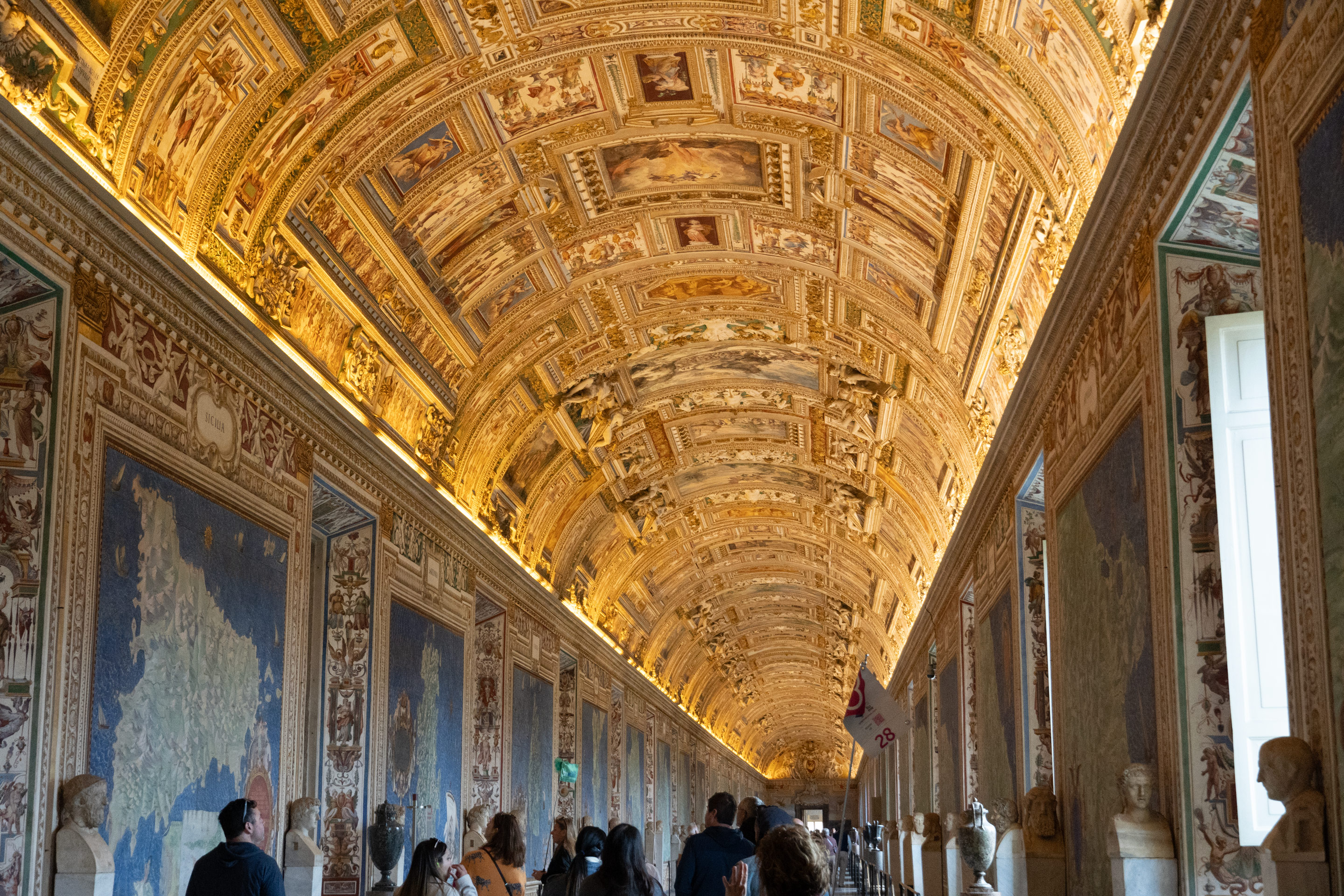
The Gallery of Maps, inside the Vatican Museums, displays a stunning collection of topographical maps of Italy. Created in the 16th century under Pope Gregory XIII, these beautifully painted maps span 120 meters, offering a unique geographical snapshot of the Italy of the past.
9
Stop 9
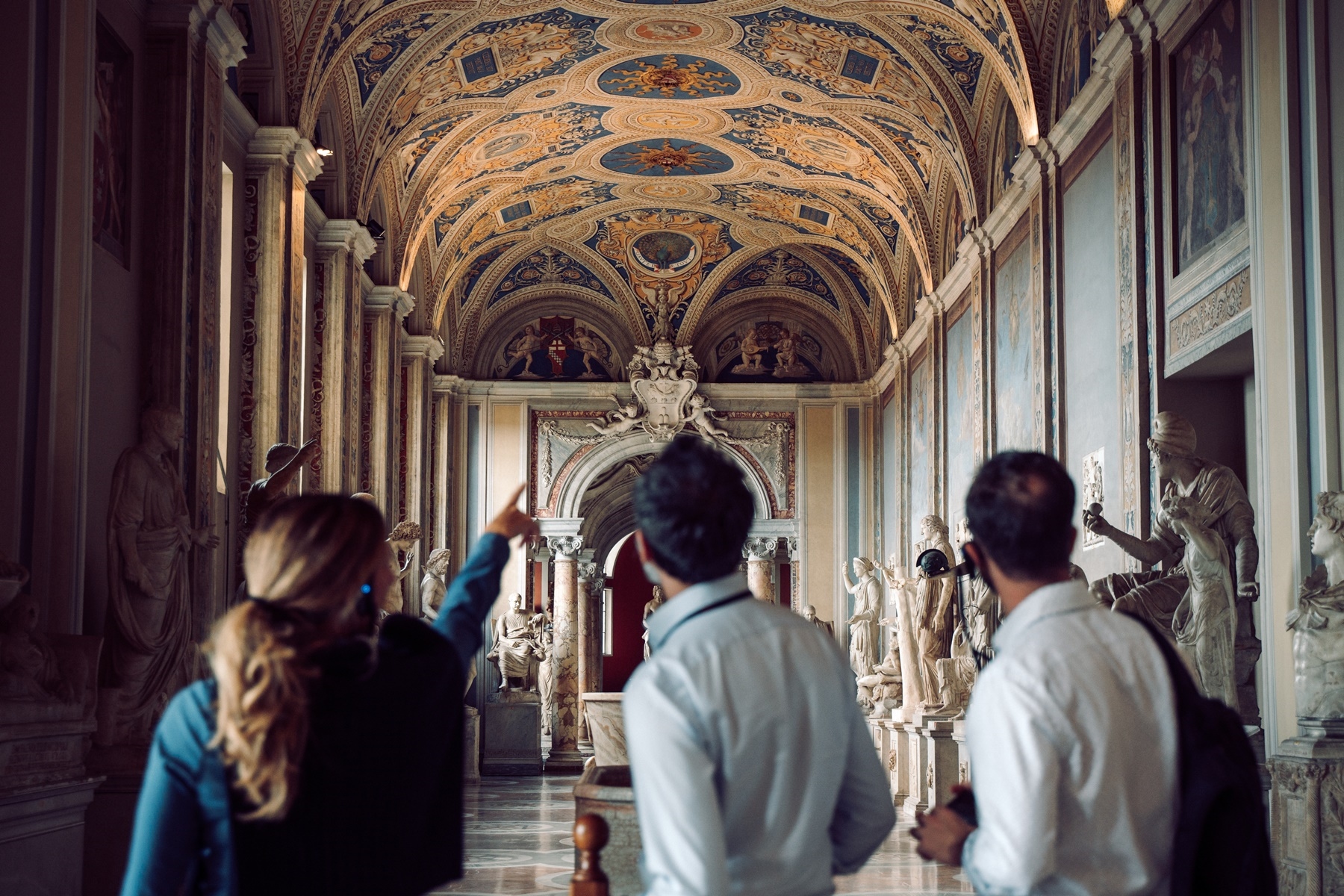
The Gallery of the Candelabra is a part of the Vatican Museums, showcasing a rich collection of Greek and Roman statues, sarcophagi, and reliefs. It is named for the grand marble candelabra that decorate it, dividing the gallery into thematic sections. Set up in the late 18th century, the gallery merges ancient art with stunning architectural details, providing visitors a journey through history and beauty.
10
Stop 10
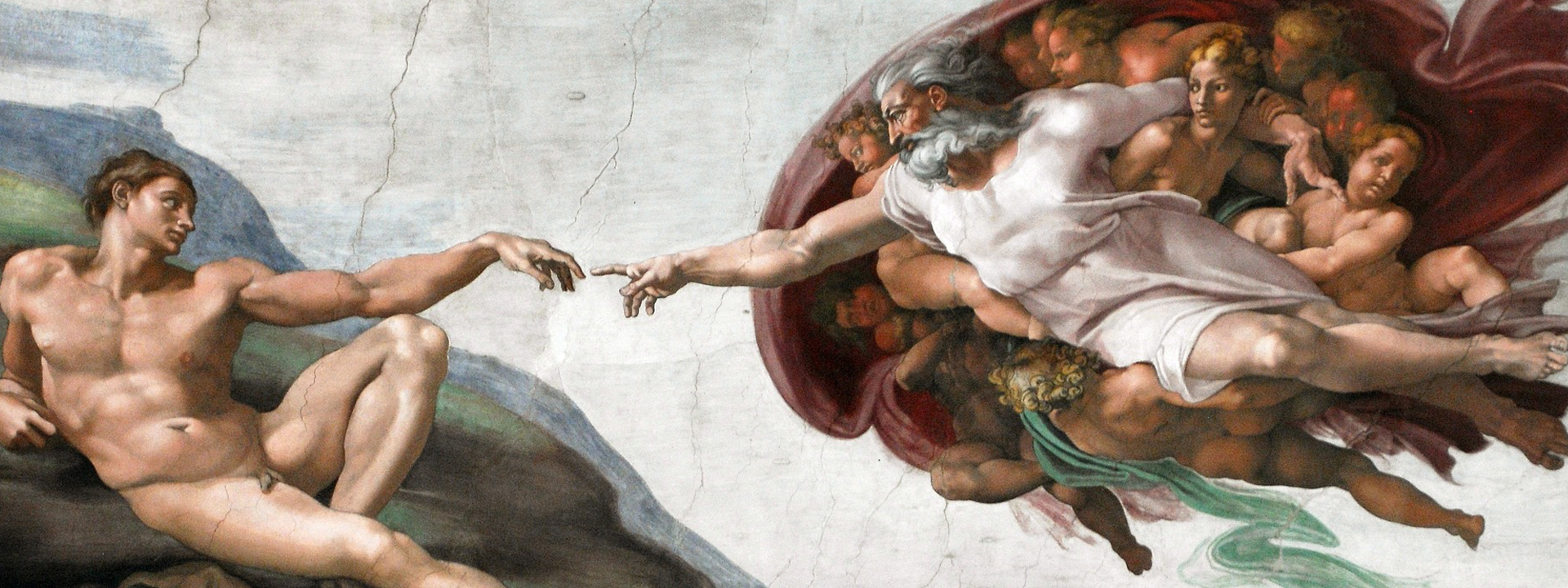
The Sistine Chapel takes its name from Pope Sixtus IV della Rovere (pontiff from 1471 to 1484) who had the old Cappella Magna restored between 1477 and 1480. It is known throughout the world both for being the place where the conclave and other official ceremonies of the Pope are held (in the past also some papal coronations), and for being decorated with one of the most famous and celebrated works of art of artistic civilization the frescoes by Michelangelo
11
Stop 11
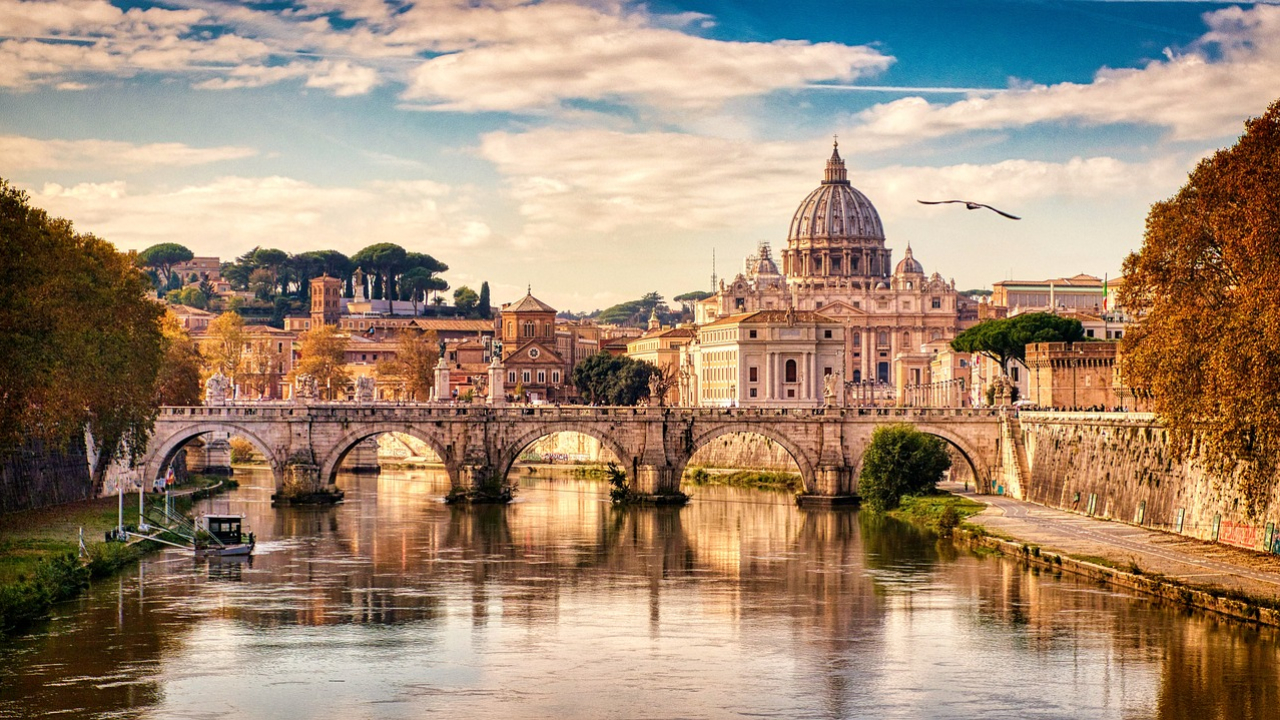
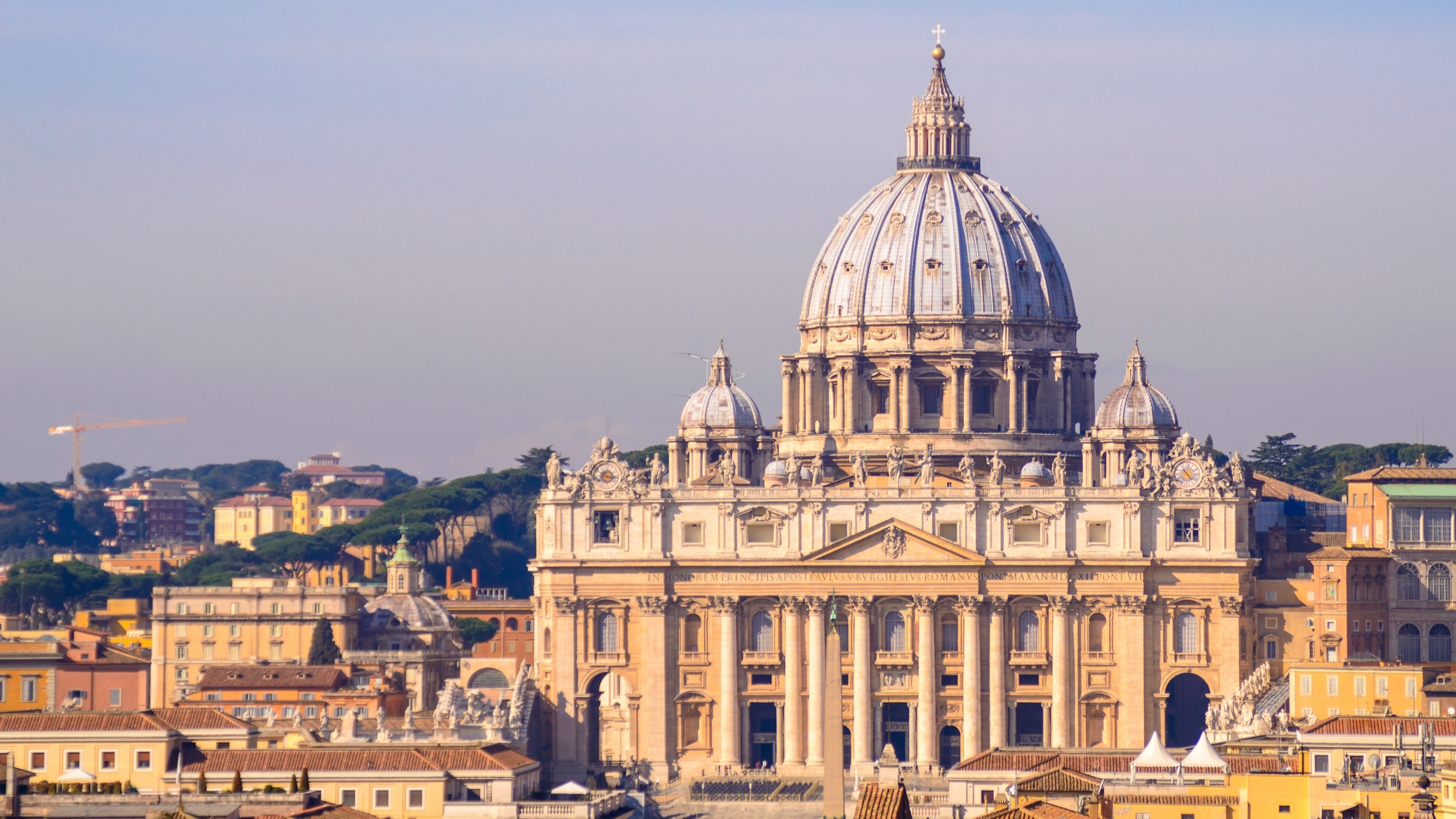
St. Peter's Basilica in Vatican City is a renowned architectural masterpiece and an iconic symbol of the Catholic faith. Built over what is traditionally considered the tomb of Saint Peter, the first Pope, its construction involved legendary figures like Bramante, Michelangelo, and Bernini. The basilica is famous for its majestic dome, ornate interiors, and the significant role it plays in Catholic traditions.
12
Stop 12
Pass by
The Baldachin in St. Peter's Basilica is a breathtaking masterpiece of art and architecture. Designed by the renowned Baroque sculptor and architect Gian Lorenzo Bernini, it stands as a magnificent bronze canopy over the high altar of the basilica. This ornate structure, adorned with intricate details and towering over 90 feet tall, serves as a symbol of the grandeur of the Catholic Church and a focal point of the basilica's interior. It is a true marvel that captivates visitors with its beauty and historical significance.
13
Stop 13
Pass by
The Pietà (1498–1499) is a work of Renaissance sculpture by Michelangelo Buonarroti, housed in St. Peter's Basilica, Vatican City.
14
Stop 14
Pass by
St. Peter's Square, or Piazza San Pietro, is a large plaza located in front of St. Peter's Basilica in Vatican City. Designed by Gian Lorenzo Bernini from 1656 to 1667, the square embodies the grandeur and embrace of the Baroque style. The square features a double colonnade and a central obelisk flanked by two large fountains. As a religious and architectural symbol, the square often serves as the gathering point for thousands of Catholics during papal addresses.
What's not included
Food, Drinks, Lunch
Available languages
Guide guide
DE
EN
IT
FR
ES
Reviews breakdown
Viator
5.0
7 reviews
5★
7
4★
0
3★
0
2★
0
1★
0
Tripadvisor
5.0
28 reviews
5★
28
4★
0
3★
0
2★
0
1★
0
Important information
Wheelchair accessible
Transportation options are wheelchair accessible
Suitable for all physical fitness levels
A dress code is required to enter places of worship and selected museums. No shorts or sleeveless tops allowed. Knees and shoulders MUST be covered for both men and women. You may risk refused entry if you fail to comply with these dress requirements
Please provide the full names of all travelers when booking. Failure to present a voucher with all travelers' full names at the ticket office prior to entry may result in denied entry to the Colosseum and Roman Forum.
Please advise in case of mobility issues - wheelchair partly accessible
Each traveler must present a valid passport or photo ID document that matches the name provided at the time of booking for successful entry to the Colosseum and Roman Forum.
A moderate amount of walking is involved - comfortable shoes are recommended
Closed-toe, non-slip shoes are required for safety. Access to the Colosseum may be denied without proper footwear.
Due to the Jubilee, some monuments may be under restoration or closed due to extraordinary celebrations. Please pay attention to any messages we may send regarding potential changes
Be prepared to climb uneven steps and explore an archaeological site
Important notes
•A dress code is required to enter places of worship and selected museums. No shorts or sleeveless tops allowed. Knees and shoulders MUST be covered for both men and women. You may risk refused entry if you fail to comply with these dress requirements
• Comfortable walking shoes are recommended
• Be prepared to climb uneven steps and explore an archaeological site - wear good shoes. Anticipate Rome's intense heat in the summer - you may want to bring a small umbrella to block the sun as well as unexpected, sudden rainfall
• Large bags and backpacks are not allowed inside the Colosseum
- Important notice: The Basilica of St Peter's might close for last minute ceremonies or mass
About Rome
Rome, the capital of Italy, is a city of ancient ruins, artistic masterpieces, and vibrant culture. Known as the Eternal City, it is a living museum where every corner tells a story of its rich history spanning over 2,500 years.
Top Attractions
Colosseum
The Colosseum is an iconic symbol of Rome and one of the most famous ancient amphitheaters in the world. It was used for gladiatorial contests and public spectacles.
Historical
1-2 hours
€16 (combined ticket with Roman Forum and Palatine Hill)
Vatican City
Vatican City is an independent city-state enclaved within Rome. It is the spiritual and administrative center of the Roman Catholic Church.
Religious
Half day
€17 (Vatican Museums and Sistine Chapel), Free (St. Peter's Basilica)
Roman Forum
The Roman Forum was the political, commercial, and legal hub of the Roman Republic and Empire. It is a sprawling ruin of temples, basilicas, and arches.
Historical
1-2 hours
€16 (combined ticket with Colosseum and Palatine Hill)
Pantheon
The Pantheon is a former Roman temple, now a church, known for its large dome and oculus. It is one of the best-preserved ancient buildings in Rome.
Historical
30 minutes to 1 hour
Free
Trevi Fountain
The Trevi Fountain is a Baroque masterpiece and the largest fountain in Rome. It is a popular spot for visitors to throw coins and make wishes.
Architecture
15-30 minutes
Free
Must-Try Local Dishes
Cacio e Pepe
A simple yet delicious pasta dish made with Pecorino Romano cheese and black pepper.
Pasta
Vegetarian
Carbonara
A rich pasta dish made with eggs, Pecorino Romano, guanciale (cured pork cheek), and black pepper.
Pasta
Contains pork and eggs
Supplì
Fried rice balls filled with mozzarella and tomato sauce.
Snack
Vegetarian (some variations may contain meat)
Carciofi alla Romana
Artichokes braised with garlic, mint, and olive oil.
Vegetable
Vegetarian
Popular Activities
Hiking in the Appian Way Regional Park
Biking along the Tiber River
Rock climbing in the nearby mountains
Picnicking in Villa Borghese Gardens
Boating on Lake Albano
Enjoying a spa day at a luxury hotel
Visiting the Vatican Museums
Attending an opera at the Teatro dell'Opera di Roma
Best Time to Visit
April to June, September to October
Spring and fall offer pleasant weather and fewer crowds compared to the summer peak. Ideal for sightseeing and outdoor activities.
15-30°C
59-86°F
Practical Information
Language
- Official: Italian
- Widely spoken: English, Spanish, French
- English: Moderately spoken
Currency
Euro (EUR)
Time Zone
GMT+1 (CET), GMT+2 (CEST during daylight saving time)
Electricity
230VV, 50HzHz
Safety Information
Overall Safety Rating: Generally safe
Rome is generally safe for tourists, but pickpocketing and scams can be a problem in crowded areas. Be aware of your surroundings and take precautions to protect your belongings.
Important Precautions:
- • Keep valuables secure and out of sight
- • Use official taxis or ride-sharing services
- • Be cautious of strangers approaching you with petitions or bracelets
Getting there
By air
- Leonardo da Vinci International Airport • 35 km from city center
- Ciampino Airport • 15 km from city center
By train
Roma Termini, Roma Tiburtina
By bus
Tiburtina Bus Station, Roma Termini
Getting around
Public transport
The metro system is efficient and covers major tourist areas. It operates from 5:30 AM to 11:30 PM.
Taxis
Available • Apps: Uber, FreeNow
Rentals
Car, Bike, Scooter
Neighborhoods
Trastevere
Monti
Prancipio
Testaccio
Day trips
Ostia Antica
30 km from Rome • Half day
An ancient Roman port city with well-preserved ruins, including a theater, baths, and mosaics. It offers a glimpse into daily life in ancient Rome.
Tivoli
30 km from Rome • Full day
A picturesque town known for its stunning villas and gardens, including the famous Villa d'Este with its elaborate fountains and gardens.
Orvieto
120 km from Rome • Full day
A charming hilltop town known for its stunning cathedral, underground caves, and local wine. It offers a mix of history, culture, and scenic views.
Festivals
Natale di Roma • April 21
Festa de' Noantri • July
Rome Film Festival • October
Pro tips
- Visit major attractions early in the morning or late in the afternoon to avoid crowds
- Use public transport or walk instead of taking taxis to save money and experience the city like a local
- Try local specialties and ask for recommendations from locals and restaurant staff
- Dress modestly when visiting religious sites and be respectful of local customs and traditions
- Be aware of pickpockets and scams, especially in crowded areas and tourist hotspots
From $25
per person
Price varies by option
Secure booking
Free cancellation available
Instant confirmation