World Heritage Sigiriya and Dambulla Day Tour
Active
10h - 12h
For a full refund, cancel at least 24 hours before the scheduled departure time.
Instant confirmation
Mobile or paper ticket accepted
About this experience
Travel with us for an unforgettable tour with 15+ years experienced guides. If you book us once you will book us again for sure. You would be able to see the difference between us and others.
Available options
Tuk Tuk
Tuk Tuk<br/>Pickup included
Van
Van<br/>Pickup included
Car
Car<br/>Pickup included
What's included
Private transportation
Bottled water
Experienced Guide
Air-conditioned vehicle
Detailed itinerary
1
The current temple was built in 1874, funded by the Nattukkottai Chettiar. This temple is used by both Hindus and Buddhists. The temple was originally a small statue under a tree prayed to by the Hindu people but has been developed by the people in Matale. The first Kumbhabhishekham of the temple was held in 1960.
2
The Aluvihare Rock Temple (also called Matale Alu Viharaya) is a sacred Buddhist temple located in Aluvihare, Matale District of Sri Lanka. Surrounded by hills, the Aluvihara cave temple is situated 30 km north of Kandy on the Matale-Dambulla road. The history of Aluvihare Rock Temple is traced back to the 3rd Century B.C to the reign of King Devanampiyatissa. It is believed that the king built the dagoba, planted the Bo sapling and founded the temple after the introduction of Buddhism to the country during his reign.
Aluvihare Rock Temple was the historic location where the Pāli Canon was first written down completely in text on ola (palm) leaves. Many monastery caves, some of which exhibit frescoes are situated near this temple.
3
Around an hour’s drive north of Kandy, the Ranweli Spice Garden is situated in Kawudupelella in Matale and pays homage to the long history of Sri Lankan spices. Herbs and spices play a major role in Sri Lankan cuisine, believed to add flavour to food whilst also boosting healthy compounds that fight inflammation and reduce damage to the body’s cells. Herbs are derived from the leaves of a plant, while spices are generally made from its seeds, berries, bark or root. Several of these plants that are key to traditional Sri Lankan cooking can be found at the Ranweli Spice Garden.
4
Nalanda Gedige is designed on the lines of a Hindu temple with a mandapa, an entrance hall (originally roofed), a short passage to a bare cello, and an ambulatory round the holy centre. A limited number of the original Hindu deity statuettes exist within the temple, however, a statue of the God Kubera appears on the south side of the tympanum over the sanctuary, a feature that can only be seen in Sri Lanka.
The richly decorated facade sections, laboriously reassembled in 1975, are predominantly in the South Indian style. Although they cannot be precisely dated, they are believed to have originated sometime between the 8 to 11th centuries
5
Stop 5
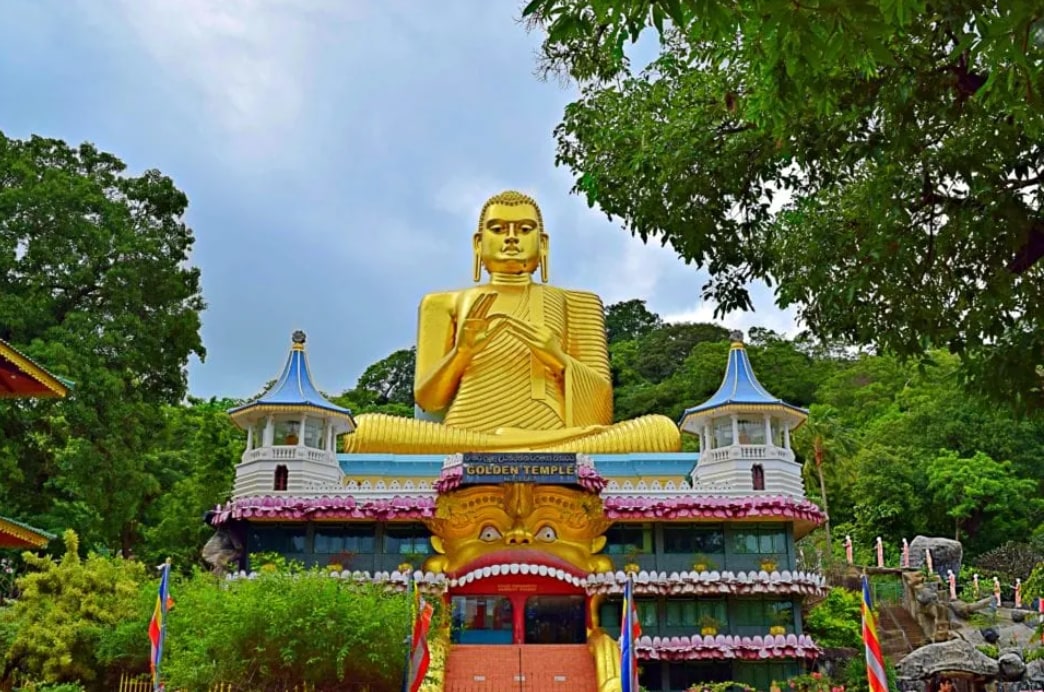
Dambulla is the largest and best-preserved cave temple complex in Sri Lanka. The rock towers 160 m over the surrounding plains. There are more than 80 documented caves in the surrounding area. Major attractions are spread over five caves, which contain statues and paintings. These paintings and statues are related to Gautama Buddha and his life. There are a total of 153 Buddha statues, three statues of Sri Lankan kings and four statues of gods and goddesses. The latter include Vishnu and the Ganesha. The murals cover an area of 2,100 square metres (23,000 sq ft). Depictions on the walls of the caves include the temptation by the demon Mara, and Buddha's first sermon.
6
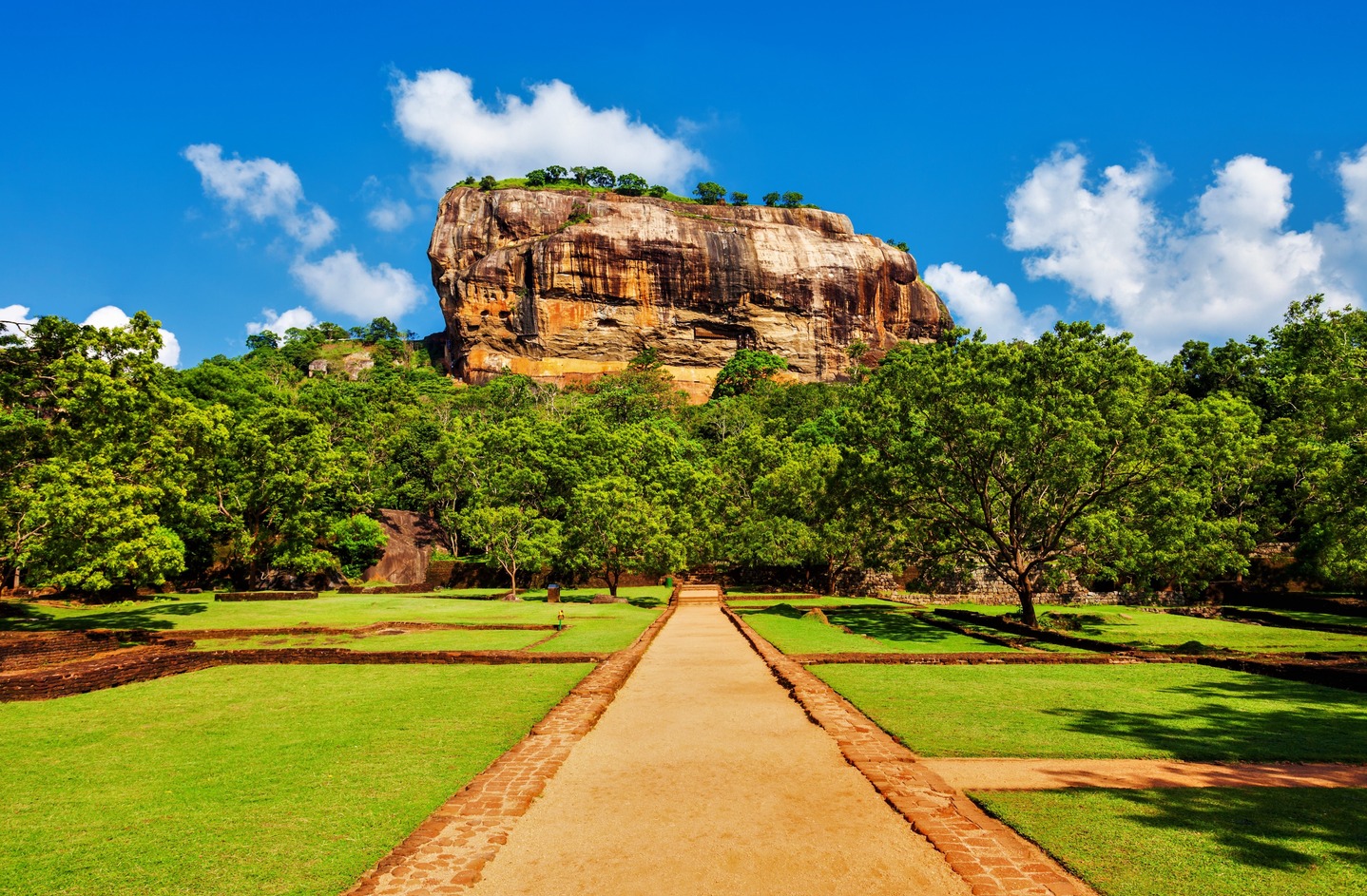
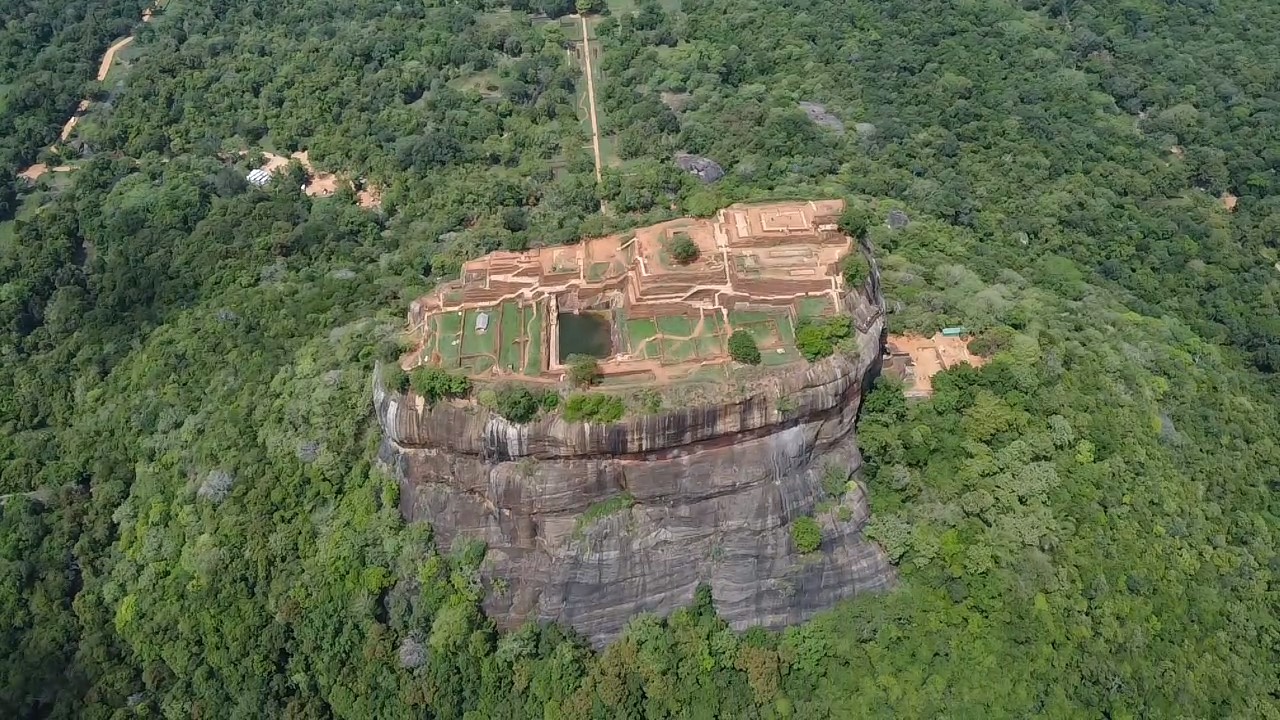
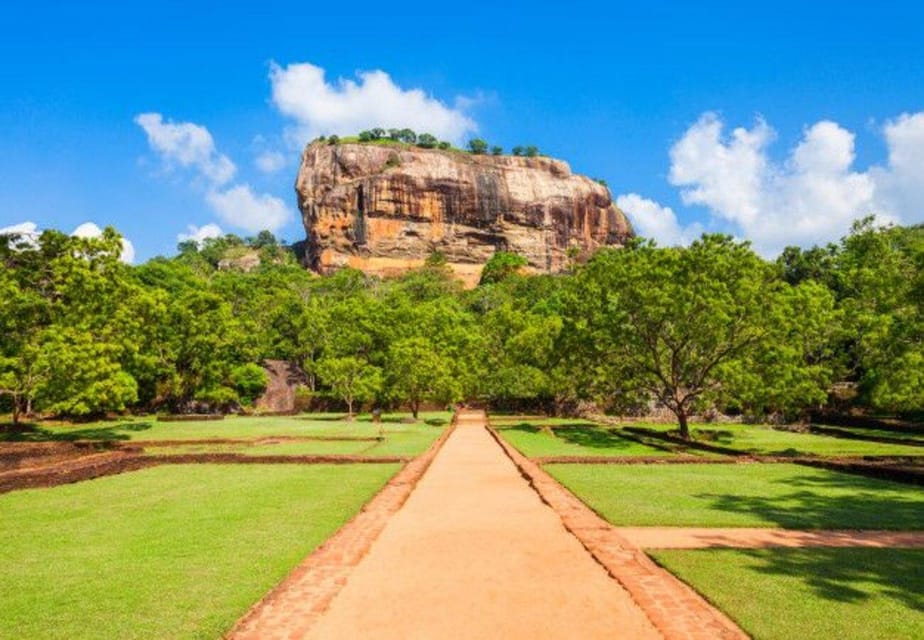
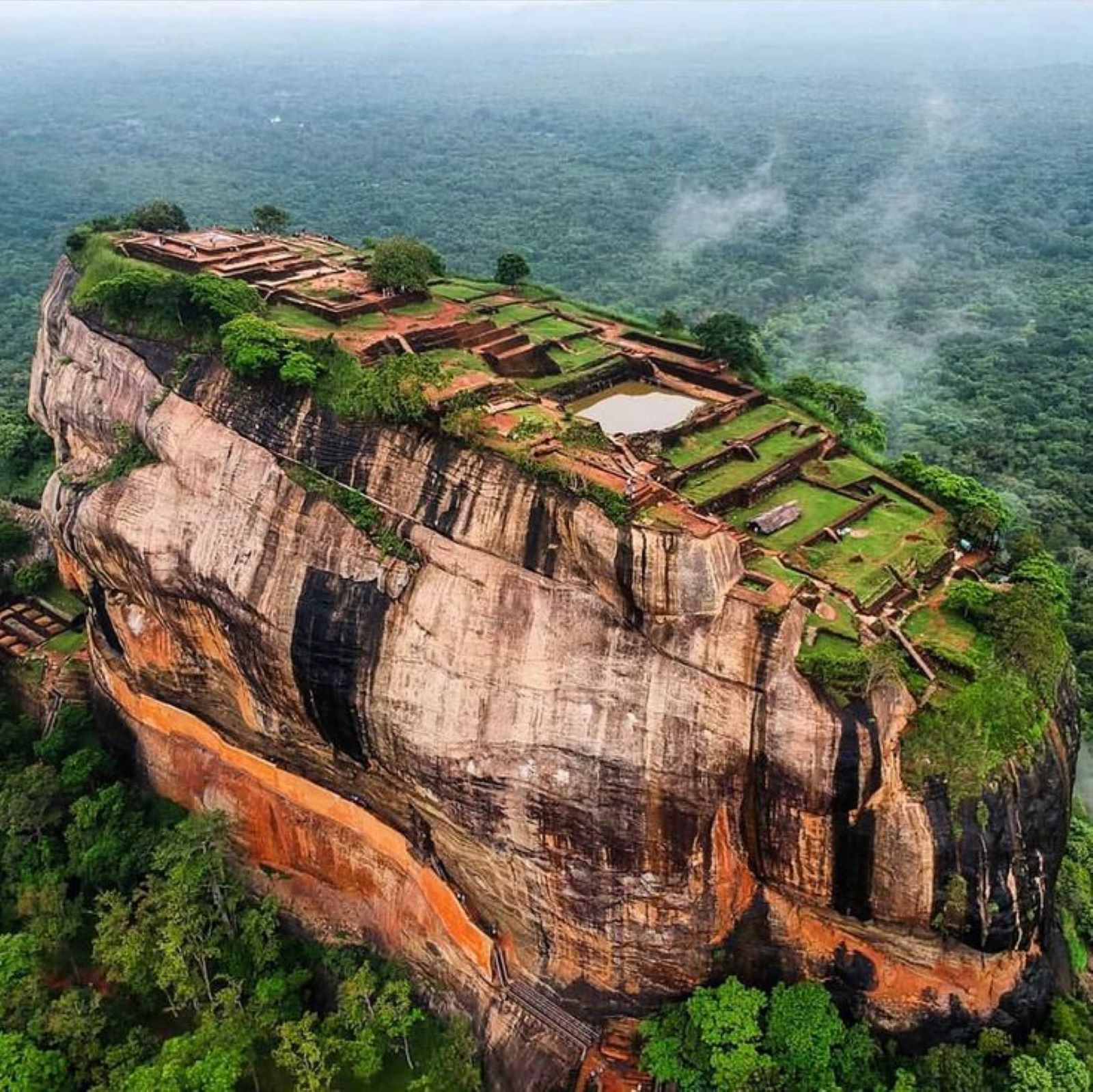
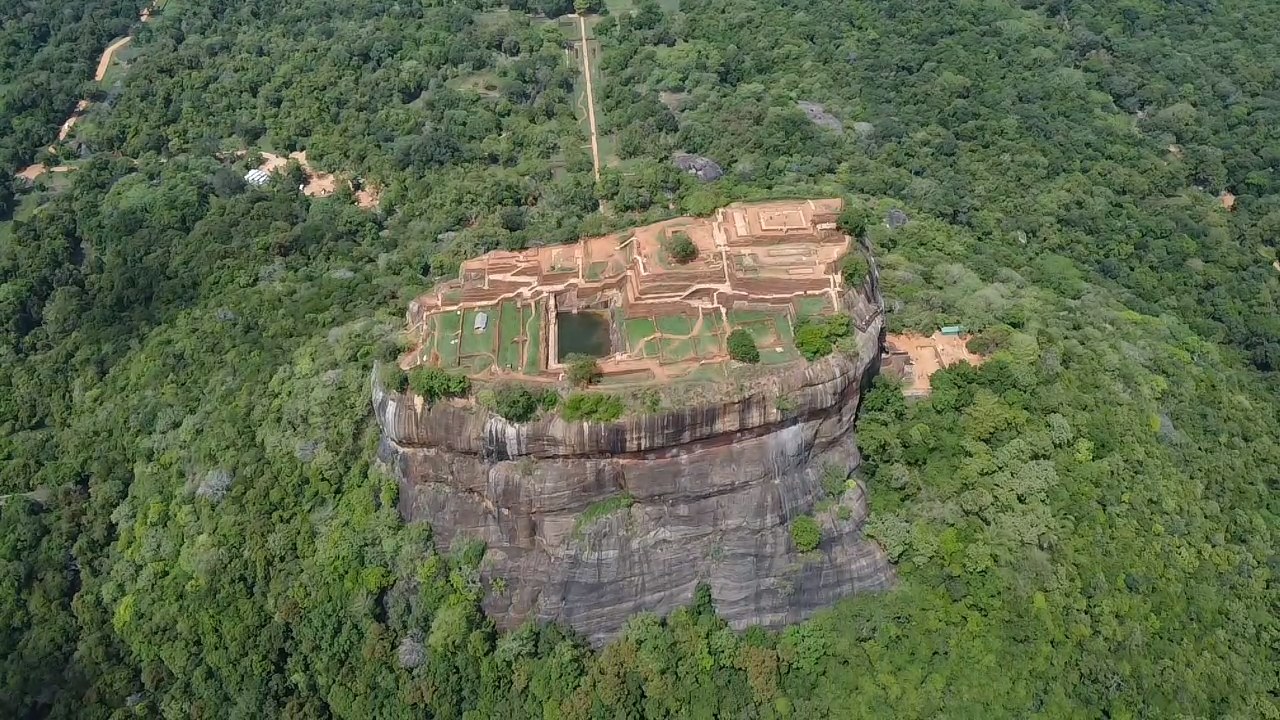
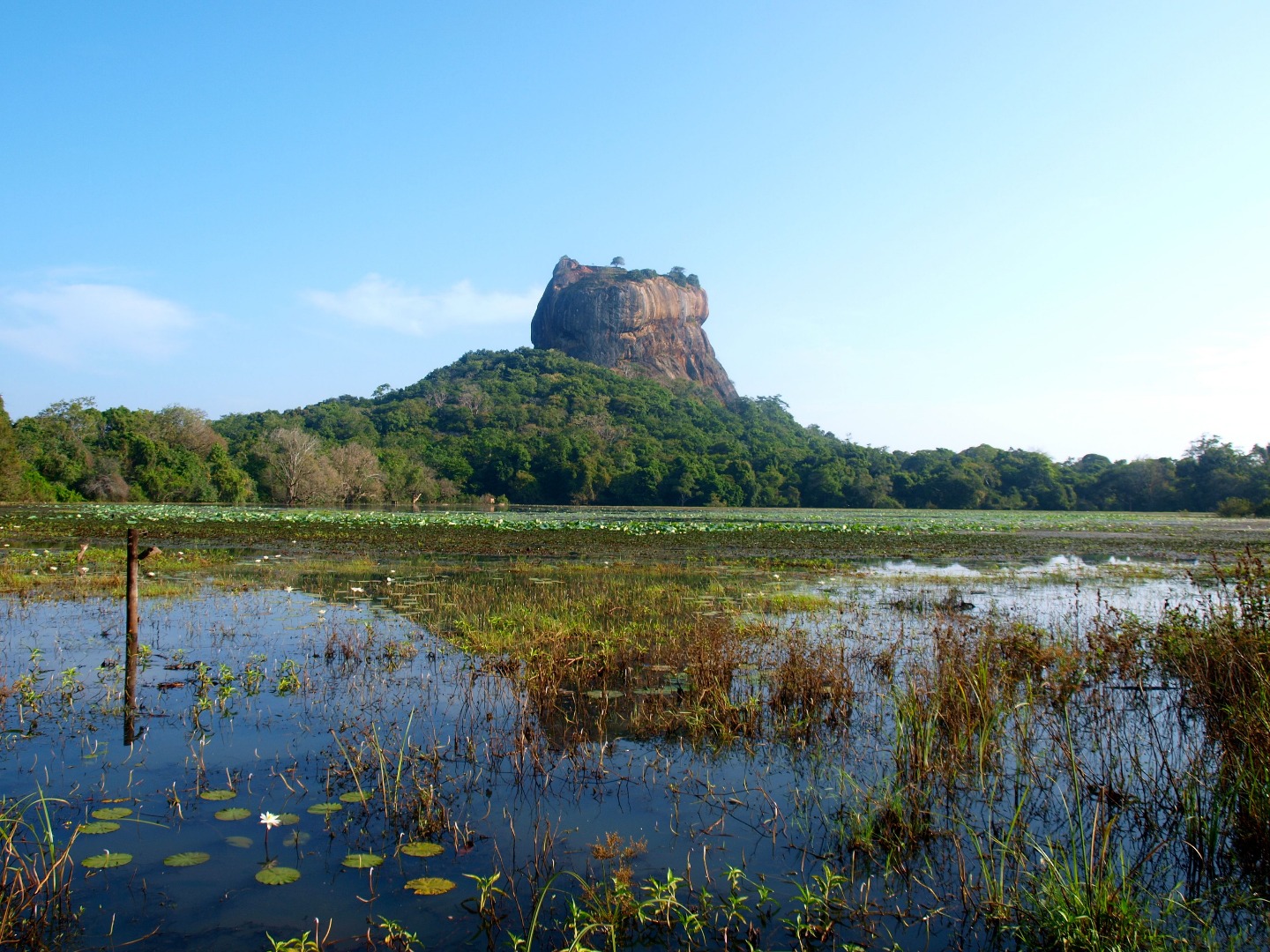
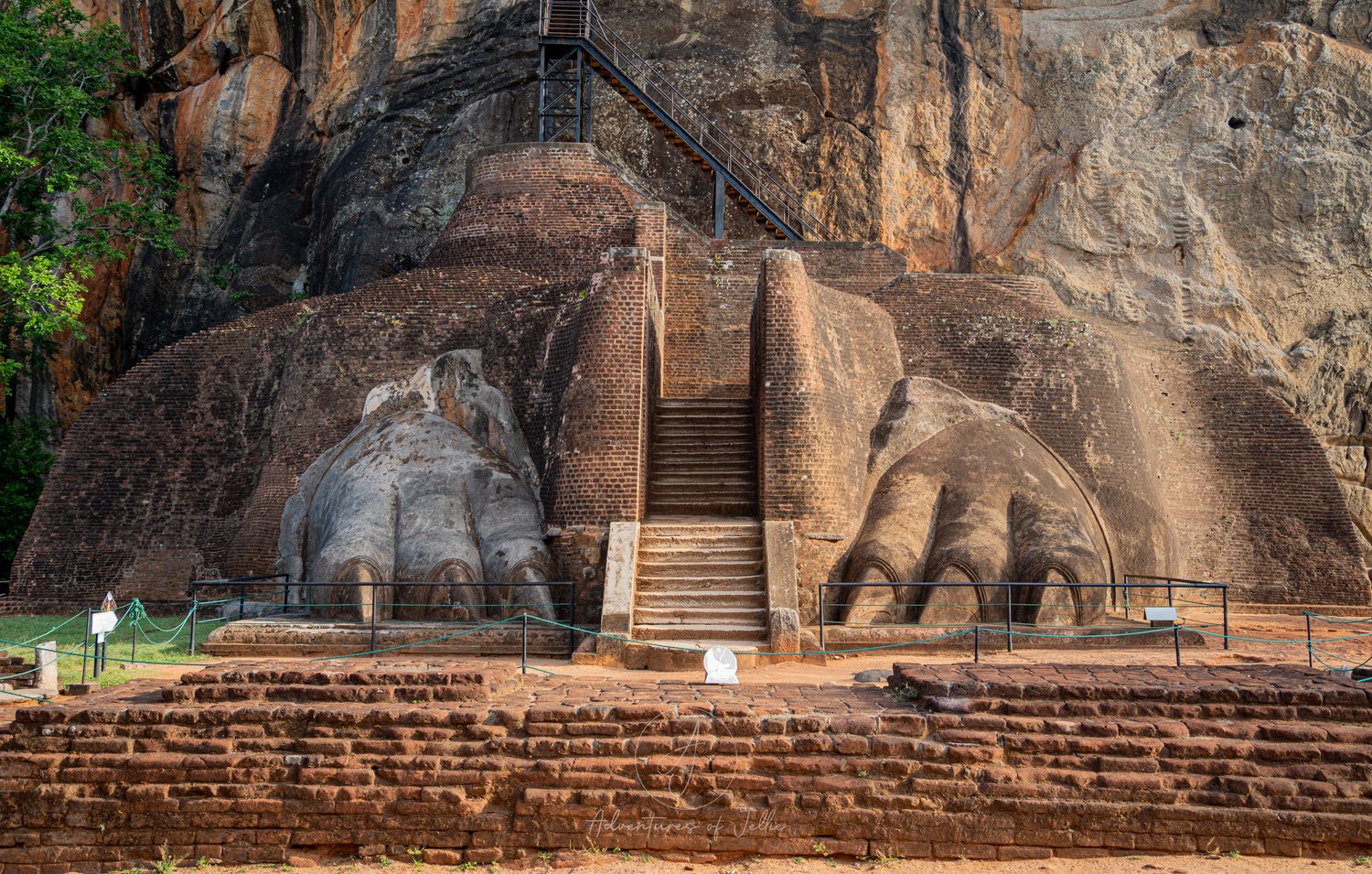
According to the ancient Sri Lankan chronicle the Cūḷavaṃsa, this area was a large forest, then after storms and landslides it became a hill and was selected by King Kashyapa (AD 477–495) for his new capital. He built his palace on top of this rock and decorated its sides with colourful frescoes. On a small plateau about halfway up the side of this rock he built a gateway in the form of an enormous lion. The name of this place is derived from this structure; Sinhagiri, the Lion Rock.
The capital and the royal palace were abandoned after the king's death. It was used as a Buddhist monastery until the 14th century. Sigiriya today is a UNESCO listed World Heritage Site. It is one of the best preserved examples of ancient urban planning
7
It was built by using unshaped boulders to about 20 ft high. Each stone is broad and thick and some of them are about 10 ft high and about 4 ft wide. It is believed that it was built before the time of usage of metal tools. Arthur Maurice Hocart noted that cyclopean style stone walls were used for the fortress, and square hammered stones were used for the ramparts of the citadel. However, his note suggests metal (iron) tools were used for construction. Excavations work in this areas found a few stone forges, which proved Hocart's claim on the usage of metal tools.
8
It is believed that the history of Pidurangala Vihara goes back beyond to the first and second century BC. From those days Pidurangala was used as a Buddhist monastery but became a prominent place during the reign of King Kashyapa (473–495 AC).
Pidurangala Temple
Inscriptions in early Brahmi script
According to ancient chronicles, Prince Kashyapa had killed his father King Dhatusena and fled to Sigiriya to find out a more secure place to prevent retaliation attacks from his half-brother, Mugalan. With the arrival of King Kashyapa, the Bhikkus who were meditated there were requested move to the nearby Pidurangala. In a sort of compensation, King Kashyapa refurbished the temple and made it a prominent place.
What's not included
All Fees and Taxes
Available languages
Guide guide
EN
Reviews breakdown
Tripadvisor
5.0
10 reviews
5★
10
4★
0
3★
0
2★
0
1★
0
Important information
Specialized infant seats are available
Not recommended for travelers with poor cardiovascular health
Travelers should have at least a moderate level of physical fitness
About Kandy
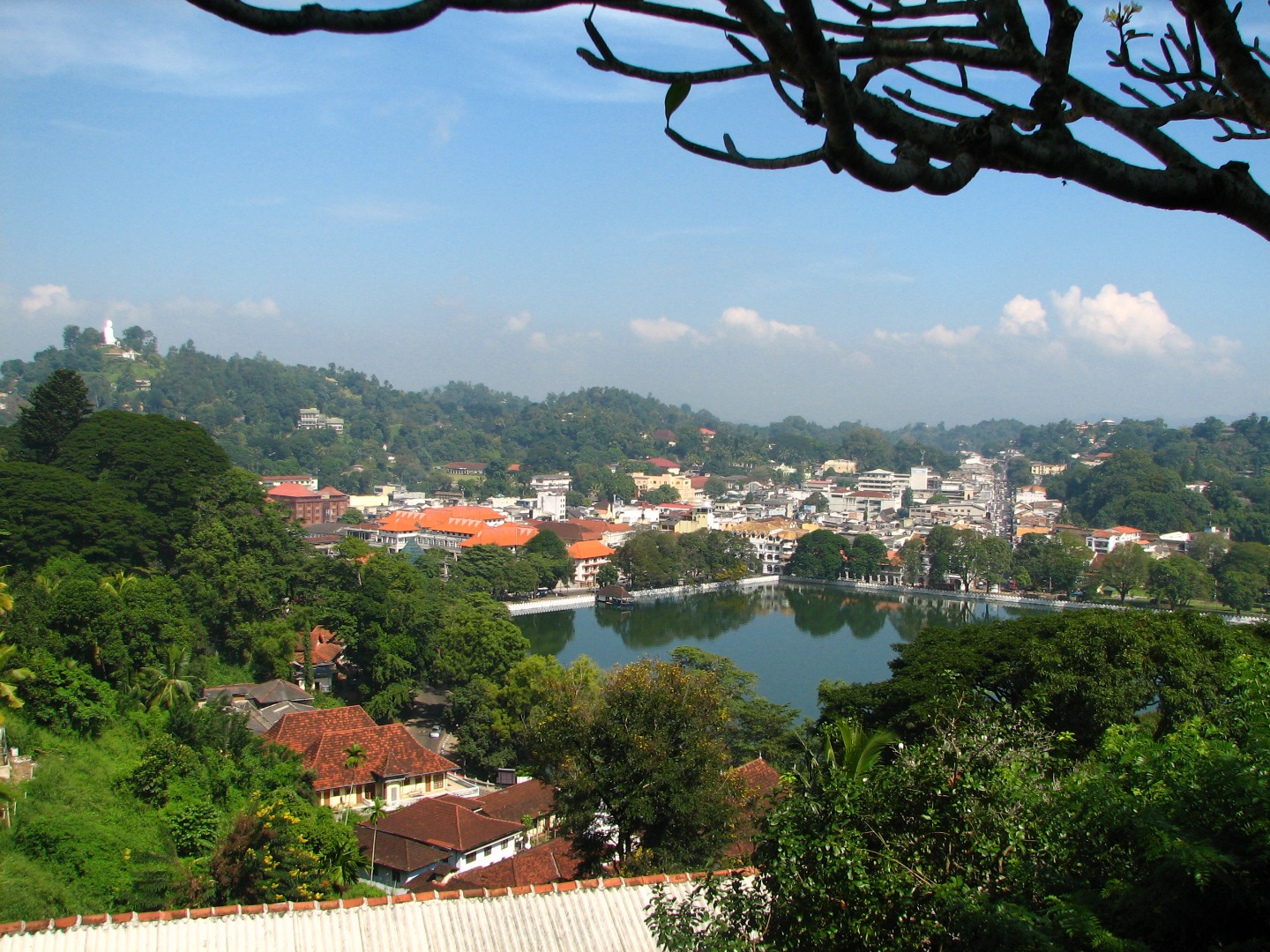
Kandy, the last royal capital of the ancient kings' era of Sri Lanka, is a UNESCO World Heritage Site known for its rich history, vibrant culture, and the sacred Temple of the Tooth Relic. Nestled in the hills, it offers a cooler climate and lush landscapes, making it a must-visit destination.
Top Attractions
Temple of the Sacred Tooth Relic (Sri Dalada Maligawa)
This temple houses the sacred tooth relic of Lord Buddha and is one of the most sacred Buddhist sites in the world. It's a major attraction for both locals and tourists.
Religious
1-2 hours
Free (donations welcome)
Kandy Lake (Bogambara Lake)
A picturesque lake in the heart of Kandy, perfect for a leisurely stroll or a boat ride. The lake is surrounded by beautiful gardens and historic sites.
Nature
30 minutes to 1 hour
Free (boat rides may have a small fee)
Royal Botanical Gardens, Peradeniya
One of the largest and most beautiful botanical gardens in Asia, featuring a vast collection of plants, trees, and flowers. It's a great place for nature lovers and photographers.
Nature
2-3 hours
Moderate
Udawatta Kele Sanctuary
A forest reserve adjacent to the Temple of the Tooth, offering a peaceful retreat with walking trails, wildlife, and birdwatching opportunities.
Nature
1-2 hours
Free (small fee for guided tours)
Kandy Esala Perahera
A grand festival held annually in August, featuring a vibrant procession of dancers, drummers, and elegantly decorated elephants. It's one of the most famous cultural events in Sri Lanka.
Cultural
Multiple days
Free (special seating may have a fee)
Must-Try Local Dishes
Kottu Roti
A popular street food made with chopped flatbread, vegetables, and meat or seafood, stir-fried with spices.
Dinner
Vegetarian and non-vegetarian options available.
Rice and Curry
A traditional Sri Lankan meal consisting of steamed rice served with a variety of curries, including vegetable, meat, and fish curries.
Lunch/Dinner
Vegetarian and non-vegetarian options available.
Hoppers (Appa)
A bowl-shaped pancake made from fermented rice flour and coconut milk, often served with an egg cooked in the center.
Breakfast/Dinner
Vegetarian and non-vegetarian options available.
String Hoppers (Idiyappa)
A traditional dish made from rice flour and coconut milk, steamed to form a bowl-like shape, often served with coconut sambal.
Breakfast/Lunch
Vegetarian.
Popular Activities
Hiking
Elephant watching
Tea plantation tours
Boat rides on Kandy Lake
Tea tasting
Spas and wellness centers
Visiting temples and historic sites
Attending cultural performances
Best Time to Visit
January to April
This period offers pleasant weather with clear skies, making it ideal for sightseeing and outdoor activities. The Esala Perahera festival in August is a major highlight.
15-30°C
59-86°F
Practical Information
Language
- Official: Sinhala, Tamil
- Widely spoken: English
- English: Moderately spoken
Currency
Sri Lankan Rupee (LKR)
Time Zone
GMT+5:30
Electricity
230VV, 50HzHz
Safety Information
Overall Safety Rating: Generally safe
Kandy is generally safe for tourists, but it's important to stay aware of your surroundings and take common-sense precautions to avoid petty crime and scams.
Important Precautions:
- • Use reputable tour operators and taxis
- • Keep valuables secure and out of sight
- • Be cautious of strangers offering unsolicited help or services
Getting there
By air
- Bandaranayake International Airport • 100 km
By train
Kandy Railway Station
By bus
Central Bus Station
Getting around
Public transport
Buses are the most common form of public transport in Kandy. They are affordable but can be crowded and uncomfortable for long journeys.
Taxis
Available • Apps: PickMe
Rentals
Car, Bike, Scooter
Neighborhoods
Central Kandy
Peradeniya
Daluwala
Day trips
Nuwara Eliya
65 km • Full day
Known as 'Little England' for its colonial architecture and cool climate, Nuwara Eliya is a picturesque town surrounded by tea plantations and waterfalls. It's a popular destination for nature lovers and those seeking a cooler climate.
Sigiriya
100 km • Full day
Home to the ancient rock fortress of Sigiriya, a UNESCO World Heritage Site. The climb to the top offers stunning views and a glimpse into Sri Lanka's rich history.
Dambulla
80 km • Full day
Home to the Dambulla Cave Temple, a UNESCO World Heritage Site featuring five beautifully decorated caves with numerous Buddha statues and murals.
Festivals
Esala Perahera • August
Vesak • May (date varies)
Kandy Perehera • August (following the Esala Perahera)
Pro tips
- Visit the Temple of the Tooth Relic early in the morning or late in the afternoon to avoid crowds and heat.
- Take the scenic train journey from Colombo to Kandy for a memorable experience.
- Try local street food like kottu roti and wood apple juice for an authentic culinary experience.
- Hire a local guide for a deeper understanding of Kandy's history and culture.
- Attend a cultural dance show to experience the rich traditions and heritage of the region.
From $25
per person
Price varies by option
Secure booking
Free cancellation available
Instant confirmation