Private 3 Hour Spy Taxi Tour of London
Active
3h
For a full refund, cancel at least 24 hours before the scheduled departure time.
Instant confirmation
Mobile or paper ticket accepted
About this experience
London has long been a global capital of espionage, and where espionage legends are made. Home to double agents, covert operations, and some of the most dramatic spy stories in modern history. London is the city of spies. From the headquarters of MI5 and MI6 to hidden dead drop sites, safe houses, and assassination scenes, our Spy Taxi Tour can take you deep into the heart of London’s real-life spycraft. You’ll trace the footsteps of Cold War moles, learn how British intelligence masterminded operations from anonymous buildings, and explore the history of the oldest intelligence agencies in the world.
Led by a knowledgeable and passionate guide, and taken in an iconic London black cab, you will be able to visit more sites linked to the intelligence community than you would if you just walked or took public transport. This tour is the perfect way to explore London's secret spy history in half a day.
Available options
Private 3 Hour Spy Taxi Tour of London
Pickup included
What's included
Private transportation
Detailed itinerary
1
Stop 1
Pass by
Our tour begins with a drive by the site of the first headquarters of the Secret Intelligence Service (MI6) and the Intelligence Service (MI5) on Victoria Street. Founded in 1909 opposite what was the Army and Navy store, this headquarters was so secretive that the head of the organisation could receive no guests, letters, or even phone
2
Stop 2
54 Broadway in the heart of St James was the headquarters of MI6 during its most difficult period of operation, the Second World War. Tasked with defeating the Nazi regime and Germany's allies, MI6 at this time was not only responsible for foreign intelligence but also the code code-breaking, code-making, and running what would become the most famous code-breaking organisation in the world, Bletchley Park. Originally taking up a whole floor of this building and known as 'The Government Code & Cypher School' or as 'GC & CS', they led Western code-breaking efforts during the Second World War and laid the foundations for modern intelligence organisations such as GCHQ and the American NSA.
While here at 54 Broadway, you will learn all about how signals intelligence became vital to the Allies during World War II, and how today signals intelligence organisations and more broadly signals intelligence are becoming a major source of intelligence and concern for spy agencies across the world.
3
Stop 3
23 Queen Anne's Gate was the home of Adml Sir Hugh Sinclair, the one-time director of Naval intelligence, and second head of MI6. Responsible for the purchase of Bletchley Park, which became synonymous with the Allied attempts to break the Enigma and Lorenz cyphers, Sinclair supposedly paid for the costs of purchasing Bletchley Park himself. But is all as it seems when it comes to this purchase? Find out on this tour.
4
Stop 4
No public space in London is so closely associated with espionage, spies, and their handlers as St James Park. Notorious during the Cold War as the location where Soviet assets within the British government and civil service would meet their handlers or leave dead drops, St James's Park was a safe and convenient place to meet. Why were British traitors and defectors able to meet their KGB bosses with such ease in such a central London location, and could you follow in their footsteps? Find out at this location.
During your time in St James Park you will also discover why MI5, GCHQ, and MI6, are all warning government workers to avoid this park which was once a safe place for spies.
5
Stop 5
Pass by
The St Erman's hotel in central London is linked to one of Britain's most secretive spy organisations, the Special Operations Executive. Founded by Sir Winston Churchill to set Europe ablaze, train resistance fighters, and assassinate high-level Nazis, the Special Operations Executive or SOE as it is more widely known, was a highly effective organisation that is linked with the assassination of Reinhard Heydrich in Czechoslovakia and the destruction of the Nazi atomic programme in Norway. While we only catch a brief glimpse of where the organisation was founded, as the tour continues, the impressive history of SOE will be revealed to you, including how the organisation was established due, in part, to a major failure by MI6.
6
We will not be visiting Victoria Palace Theatre, but we will be driving past it, as this theatre is the closest publicly known landmark to the new headquarters of the British National Cyber Security Centre, the NCSC. Part of the Government Communication Headquarters or GCHQ, the NCSC is responsible for ensuring that national critical infrastructure, the public sector and industry are protected from online threats, including malware attacks, ransom attacks, and blackouts, which could cripple the nation or one of our major pieces of infrastructure such as the NHS, or air traffic control.
As we drive by, your guide will point out the building which houses the NCSC, and you can see if you can spot a spy, or as they are known in the UK, a 'Spook'.
7
Stop 7
Pass by
1 Bessborough Gardens is widely believed to have been the former home of the British Spy School. Owned by the UK Government Communications Bureau, who also own the building that houses MI6.
Opened by the then Prince of Wales, Prince Charles, it is said that whilst this building was used spy school, local people made multiple complaints that their radios, TVs, mobile phones, and Wi-Fi were not working properly.
As we drive past Bessborough Gardens, your guide will also reveal how the local council may have given foreign intelligence services all they needed to know about the building by accidentally publishing the building's floor plans on their website.
8
Stop 8
From Riverside Walk Gardens, we can see the London home of the Secret Intelligence Service (MI6). From this location, you will learn about MI6's current role within the UK and wider intelligence community, the reason for MI6 moving in the 1990's and how one of the world's oldest spy agencies has kept up with the times, becoming a top recruiter of LGBT, and neurodiverse people
No stop at MI6 would be complete without hearing about how the real MI6 building was used in the EON James Bond Films. While here, you will discover how it took the minister in charge of MI6, the Foreign Secretary, to make EON's dreams of using the real MI6 HQ come true.
9
Stop 9
Pass by
Thames House is the real home of MI5, the Security Service. Charged with keeping Britain safe from foreign agents and terrorist threats. Originally founded to hunt down German Agents before the First World War, MI5's role in security has changed over the years to include countering Islamic extremism, to now focusing on the rise of the domestic far-right.
But does MI5 always keep us safe? Critics of the organisation point to recent scandals where officers from the Security Service have been caught lying in court to protect their assets. Learn more about this developing scandal and what it means for the Security Service on this tour.
10
Stop 10
Unveiled in 2009, the monument to the SOE agents as a memorial to the 13,000 people who worked for the Special Operations Executive across the world. Some of the most famous and successful SOE agents were women, which is why the bust on this memorial is that of Violette Szabo, an iconic Anglo-French agent whose story of heroism, ingenuity, and bravery will be explained here.
11
Stop 11
The Perspective Building, formerly known as Century House, was the headquarters of the Secret Intelligence Service MI6, between 1964 and 1994. During its 30-year tenure as headquarters of Britain's foreign intelligence agency, Century House was the home of British foreign spying during the height of the Cold War. Eventually condemned in the National Audit Office report, it is said that bus conductors on the local bus service would stop outside this building and declare "spies corner" hoping to see who would get off.
Whilst here, your guide will explain why this building was condemned, how recruits in the 1980s refused to believe that this was MI6 headquarters, and how a very famous actor's mother was revealed to have worked here but 'just went to the office'.
Before you leave, you will also find out why the Secret Intelligence Service had to move when they realised there was a giant bomb in the basement!
12
As you travel across Waterloo Bridge, with its sweeping views of the Thames, your guide will explain how this bridge hides a dark tale beneath its elegance. In 1978, this iconic London landmark with views of Parliament and St Paul's Cathedral became the setting for one of the Cold War’s most chilling assassinations. Bulgarian dissident writer Georgi Markov was waiting for a bus on Waterloo Bridge when he felt a sharp sting in his leg—caused by a poison-tipped umbrella. Within days, he died from ricin poisoning, a deadly toxin. Believed to be the work of the Bulgarian secret service, allegedly with support from the KGB, Markov’s death remains a haunting reminder of the era’s espionage and political intrigue. Today, the bridge stands as both a scenic vantage point and a silent witness to one of London’s most infamous spy stories.
13
Gordon Square is the location of a memorial to the SOE agent Madeleine, who was the first female wireless operator to be sent from the UK into occupied France to aid the French resistance during the Second World War. The descendant of Tipu Sultan, the ruler of Mysore and an enemy of the British, the true story of the woman behind Madeleine is interesting as it is tragic.
An ardent pacifist who wished 'some Indians would win high military distinction in this war' so bring the Indian and British people close together, Madeleine was executed at Dachau concentration camp and was posthumously awarded the George Cross and the Croix de Guerre in 1949, getting her wish that an indian would gain high military honours.
The real name, exploits, and famous siblings of Agent Madeleine will be revealed here as will the very important role that Commonwealth subjects played in intelligence and espionage during and after both world wars.
14
Stop 14
While Baker Street is world-famous as the fictional home of Sherlock Holmes, it also played a vital role in real-world espionage during World War II. At 64 Baker Street, the headquarters of the Special Operations Executive (SOE) buzzed with covert activity. This top-secret British intelligence agency was tasked with sabotage, subversion, and supporting resistance movements across Nazi-occupied Europe. Nicknamed the "Baker Street Irregulars"—a nod to Holmes’s streetwise informants—SOE's senior staff worked here to plan some of the most daring Spy missions of the Second World War.
One of their most daring operations was the Telemark Raids in Nazi-occupied Norway. Orchestrated by SOE and carried out by Norwegian commandos, these missions targeted a heavy water plant vital to Hitler’s atomic bomb ambitions. During your time at Baker Street, your guide will explain why the Telemark Raid was so vital to the Allied War Effort and how part of the raid went terribly wrong!
15
Stop 15
Portman Square was the one-time home of Anthony Blunt. The Director of the Courtauld Institute of Art (which was located in the Square at that time), Blunt, was also the Surveyor of the King's (and later Queen's) Pictures. Having worked for MI5 during the war, Blunt was revealed in the 1970s to have been a Soviet asset and the 4th man in the Cambridge Spy Ring. Once considered a 'triple agent' by the KGB due to the volume and quality of information Blunt had access to, he remains to this day one of the most fascinating, prolific, and unapologetic Soviet spies to compromise British intelligence and the Royal Family.
16
Stop 16
This grand hotel was where Alexander Litvinenko was served tea poisoned with Polonium-210. The former KGB and FSB officer was an outspoken critic of the Russian regime and was working with British Intelligence when he met two ex-KGB in the Hotel's Bar.
What happened next was one of the most shocking spy stories to happen in London. Find out more when you take this tour!
Available languages
Guide guide
EN
Important information
Wheelchair accessible
Infants and small children can ride in a pram or stroller
Service animals allowed
Public transportation options are available nearby
Infants are required to sit on an adult’s lap
Transportation options are wheelchair accessible
Suitable for all physical fitness levels
About London
London, the capital of England and the United Kingdom, is a vibrant, multicultural metropolis known for its rich history, iconic landmarks, and dynamic cultural scene. From the ancient Tower of London to the modern Shard, the city offers a blend of the old and the new, making it a fascinating destination for travelers from around the world.
Top Attractions
Tower of London
A historic castle located on the north bank of the River Thames. It has served as a royal palace, prison, armory, and treasury. The Crown Jewels are also housed here.
Historical
2-3 hours
£28 (adult ticket)
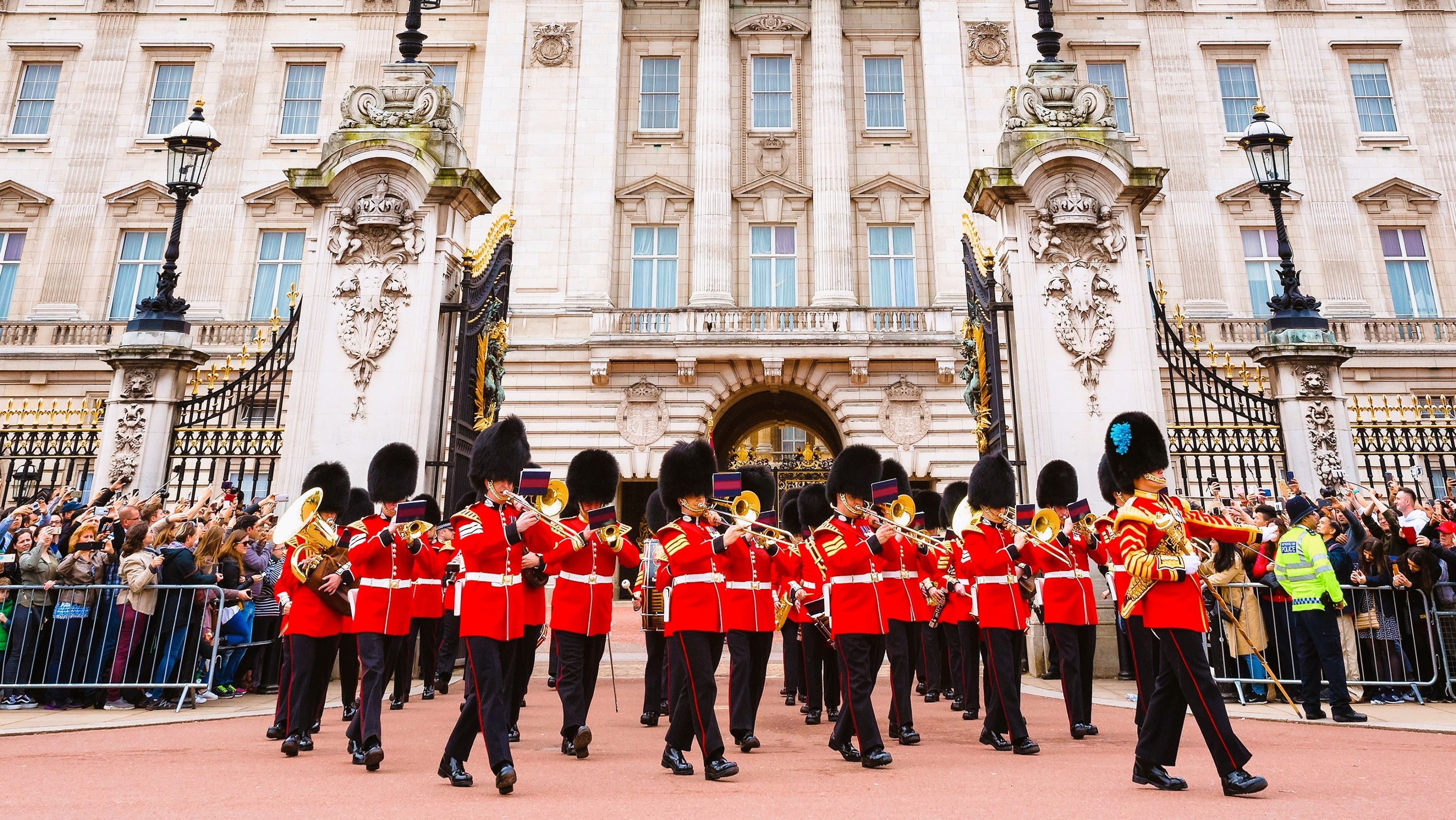
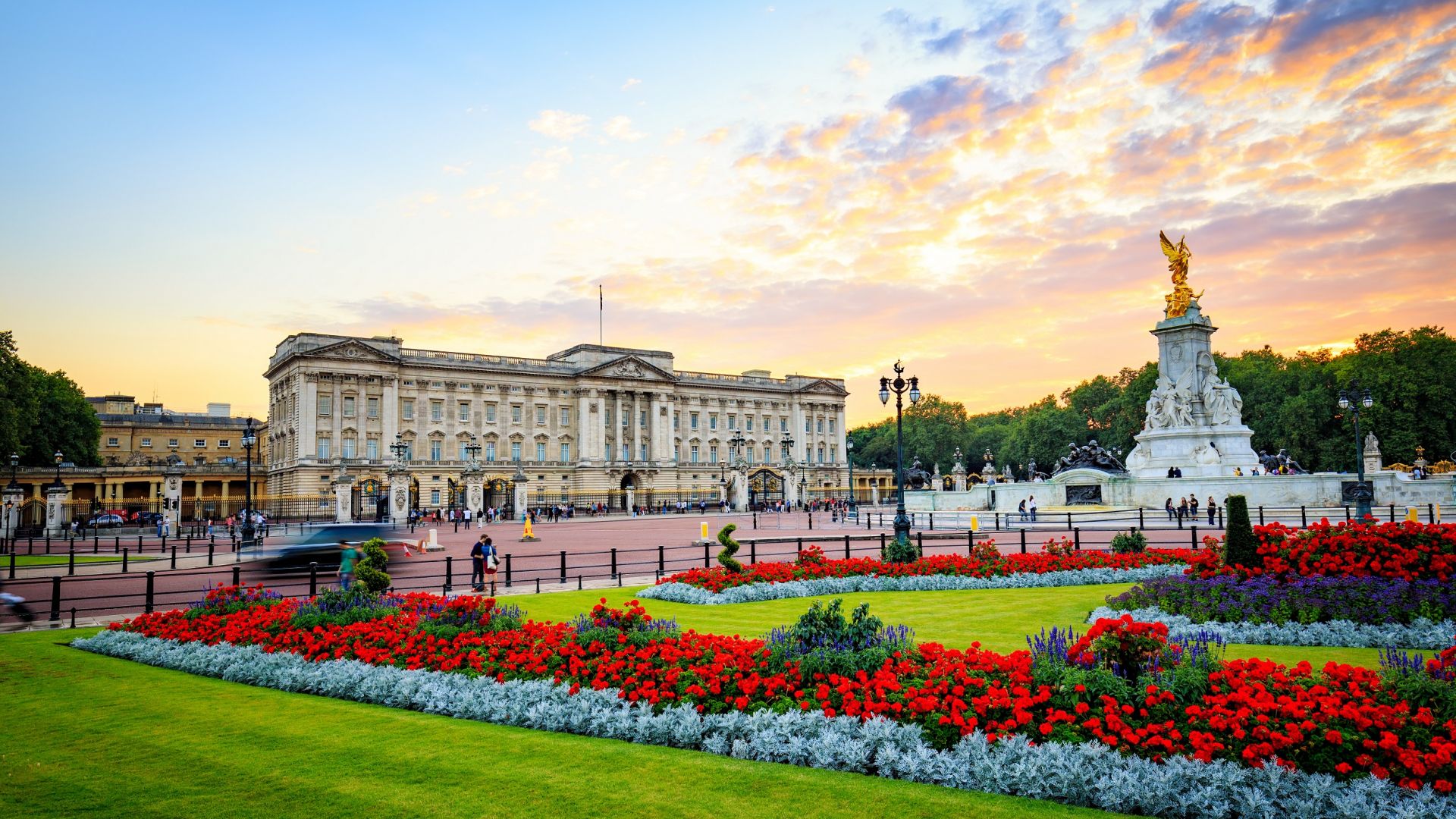
Buckingham Palace
The official residence of the British monarch. Visitors can watch the Changing of the Guard ceremony and tour the State Rooms during the summer.
Historical
1-2 hours
£27.50 (adult ticket for State Rooms)
The British Museum
One of the world's largest and most comprehensive museums, housing a vast collection of artifacts from around the globe.
Museum
2-3 hours
Free (special exhibitions may have a charge)
The London Eye
A giant Ferris wheel on the South Bank of the River Thames, offering panoramic views of the city.
Entertainment
30 minutes
£27-£33 (adult ticket)
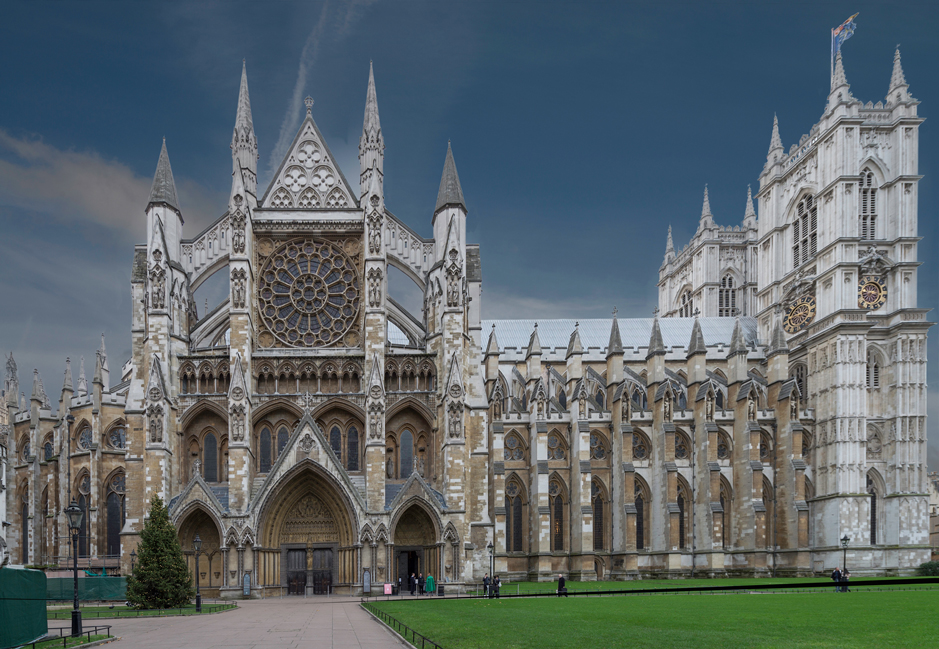
Westminster Abbey
A large, mainly Gothic abbey church just to the west of the Palace of Westminster. It is one of the most notable religious buildings in the UK and the traditional place of coronation and burial for English and, later, British monarchs.
Religious
1-2 hours
£27 (adult ticket)
Tower Bridge
An iconic symbol of London, this combined bascule and suspension bridge spans the River Thames. Visitors can explore the bridge's walkways and the Tower Bridge Exhibition.
Architecture
1-2 hours
£11 (adult ticket for the exhibition)
Must-Try Local Dishes
Fish and Chips
A classic British dish consisting of battered and fried fish, usually cod or haddock, served with thick-cut chips (fries).
Dinner
Contains gluten and fish
Full English Breakfast
A hearty breakfast consisting of eggs, bacon, sausages, baked beans, grilled tomatoes, mushrooms, black pudding, and toast.
Breakfast
Contains meat and gluten
Afternoon Tea
A quintessential British tradition involving a selection of finger sandwiches, scones with clotted cream and jam, and a variety of pastries, all served with tea.
Snack
Can be adapted for vegetarian, vegan, and gluten-free diets
Sunday Roast
A traditional British meal served on Sundays, featuring roasted meat (usually beef, lamb, or chicken), Yorkshire pudding, roast potatoes, vegetables, and gravy.
Dinner
Contains meat and gluten
Popular Activities
Rock climbing
Kayaking on the Thames
Cycling tours
Afternoon tea
Spas and wellness centers
Punting on the River Cam
Museum visits
Theater performances
Best Time to Visit
June to August
Summer is the peak tourist season in London, with long daylight hours and a variety of festivals and events. The weather is generally pleasant, though it can be unpredictable.
15°C to 25°C
59°F to 77°F
Practical Information
Language
- Official: English
- Widely spoken: English
- English: Widely spoken
Currency
British Pound (GBP)
Time Zone
GMT (UTC+0) or BST (UTC+1) during daylight saving time
Electricity
230VV, 50HzHz
Safety Information
Overall Safety Rating: Generally safe
London is generally safe for travelers, but like any major city, it's important to be aware of your surroundings and take precautions to protect yourself and your belongings.
Important Precautions:
- • Keep your belongings secure and be aware of your surroundings
- • Avoid carrying large amounts of cash
- • Use licensed taxis or ride-sharing services
Getting there
By air
- Heathrow Airport • 23 km from city center
- Gatwick Airport • 40 km from city center
By train
London Waterloo, London King's Cross
By bus
Victoria Coach Station, Earls Court, Farringdon
Getting around
Public transport
The Tube is the fastest and most efficient way to get around London. It operates from early morning until late at night and covers all major attractions.
Taxis
Available • Apps: Uber, Bolt
Rentals
Car, Bike, Scooter
Neighborhoods
Westminster
Camden Town
Soho
Notting Hill
Shoreditch
Greenwich
Day trips
Windsor Castle
34 km from London • Half day to full day
Windsor Castle is the oldest and largest occupied castle in the world, and it's one of the official residences of the British monarch.
Stonehenge
130 km from London • Full day
Stonehenge is a prehistoric monument consisting of a ring of standing stones, located in the English county of Wiltshire.
Brighton
80 km from London • Full day
Brighton is a vibrant coastal city known for its beaches, lively atmosphere, and eclectic mix of shops, restaurants, and attractions.
Festivals
Notting Hill Carnival • Last Sunday and Monday of August
London Film Festival • October
New Year's Eve Fireworks • December 31
Pro tips
- Use an Oyster card or contactless payment for cheaper and more convenient public transportation
- Book tickets in advance for popular attractions to skip the queue and save money
- Explore the city's neighborhoods and markets for a unique and authentic experience
- Try the local street food and international cuisine at markets like Borough Market and Camden Market
- Visit the city's parks and gardens for a peaceful escape from the bustling streets
From $25
per person
Price varies by option
Secure booking
Free cancellation available
Instant confirmation