Ephesus Small Group Day Tour from Selcuk
Active
8h
For a full refund, cancel at least 24 hours before the scheduled departure time.
Instant confirmation
Mobile or paper ticket accepted
About this experience
Step back thousands of years on this small-group guided tour of Ephesus from Selcuk. Start off in Selcuk, exploring the many ancient archeological sites, and then move on to Ephesus, once one of the most important cities in Asia Minor. Stroll among the millennia-old ruins, many of which have only been excavated in the last century. See the remains of the Temple of Artemis and visit the supposed house of the Virgin Mary before stopping by a famous 14th-century mosque.
Available options
Spanish Guided Tour
Spanish Guided Tour<br/>Pickup included
English Guided Tour
Pickup included
What's included
Hotel pickup and drop-off
Professional guide
All taxes, fees and handling charges
Lunch
Fuel surcharge
Transport by air-conditioned minivan
Detailed itinerary
1
Stop 1
The House of the Virgin Mary (or Meryem Ana Evi in Turkish) is a place where, according to the beliefs of many people Mary, the mother of Jesus, spent the last years of her life. She was supposed to arrive at Ephesus together with St. John and lived there in the years 37-45 CE until her Assumption (according to Catholic doctrine) or Dormition (according to Orthodox belief).
2
Stop 2
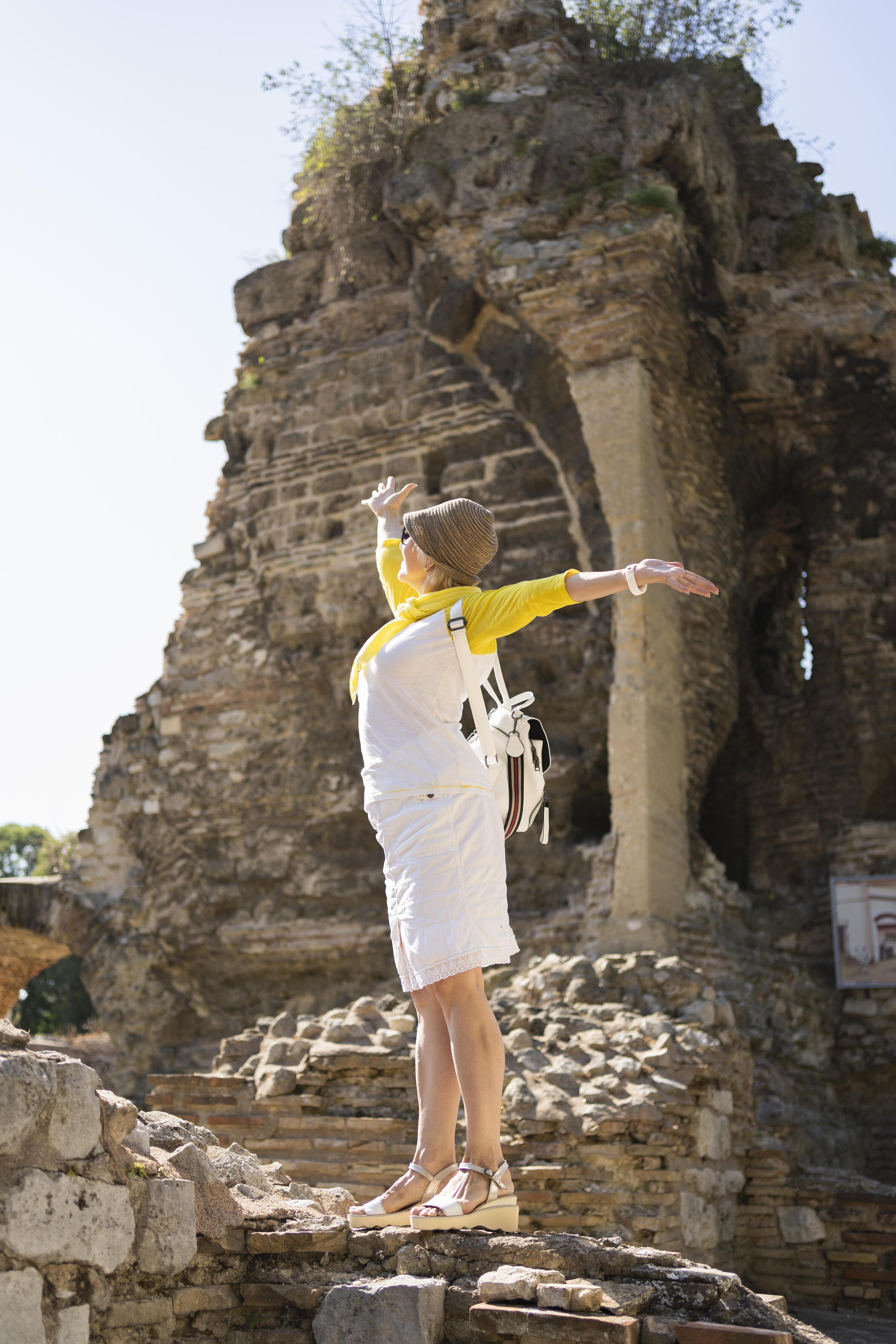
Of Turkey's hundreds of ancient cities and classical ruins, Ephesus is the grandest and best preserved. Indeed, it's the best place on the Mediterranean to get a feel for what life was like in ancient times. Ancient Ephesus was a great trading city and a centre for the cult of Cybele, the Anatolian fertility goddess.
3
The Odeion of Ancient Ephesus is a small, semi-circular theater originally constructed in the 2nd century A.D and financed by PubliusVedius Antonius and his wife FlaviaPaiana. The building would have served as a space for political meetings, social events, concerts and theatrical performances.
4
Stop 4
This temple dedicated to the Emperor Hadrian is considered one of the best preserved and most beautiful structures on Curetes Street. It was constructed in the beginning of the 2nd century AD by P. Quintilius to celebrate Hadrian visiting the city from Athens.
5
Stop 5
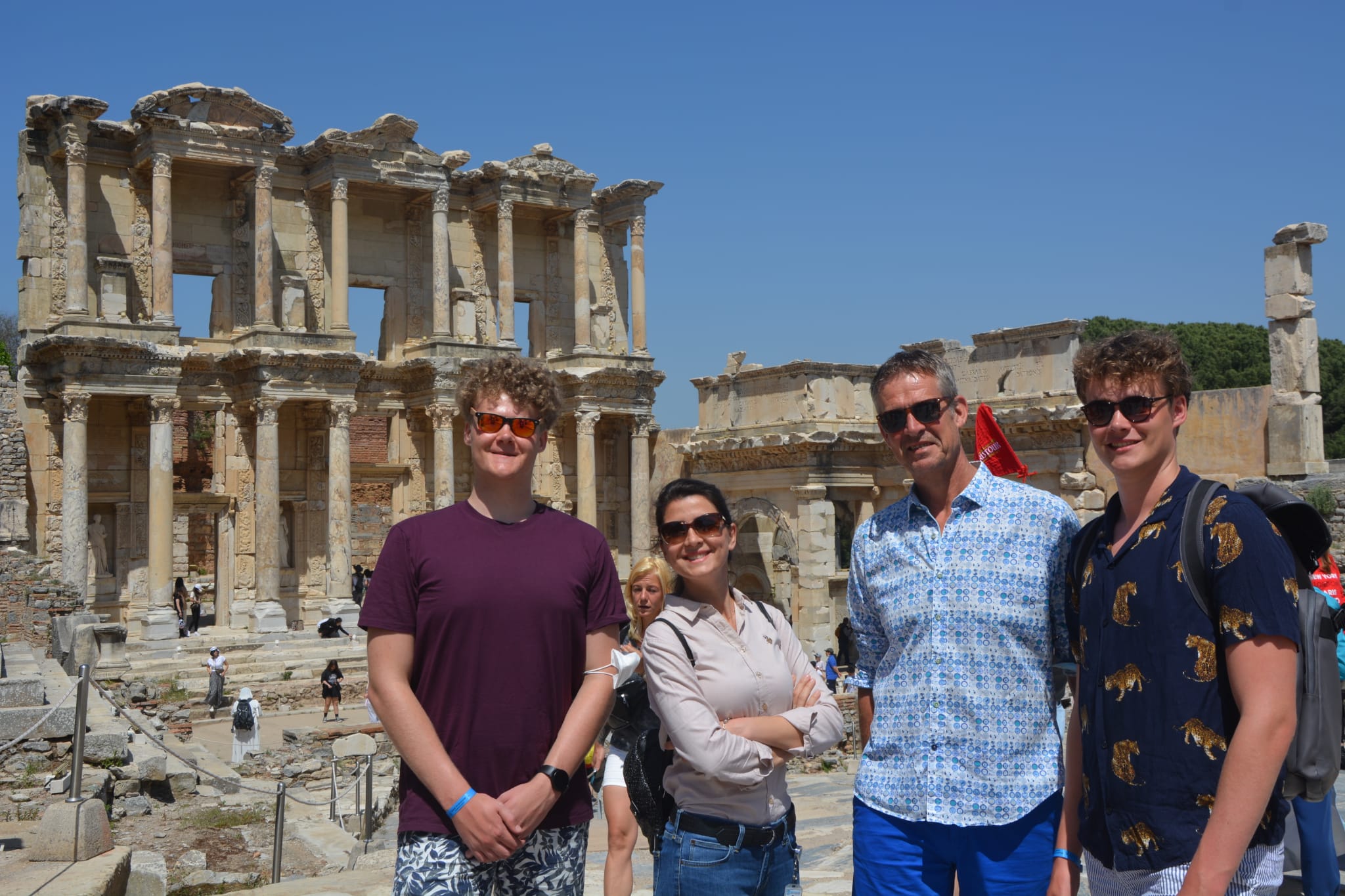
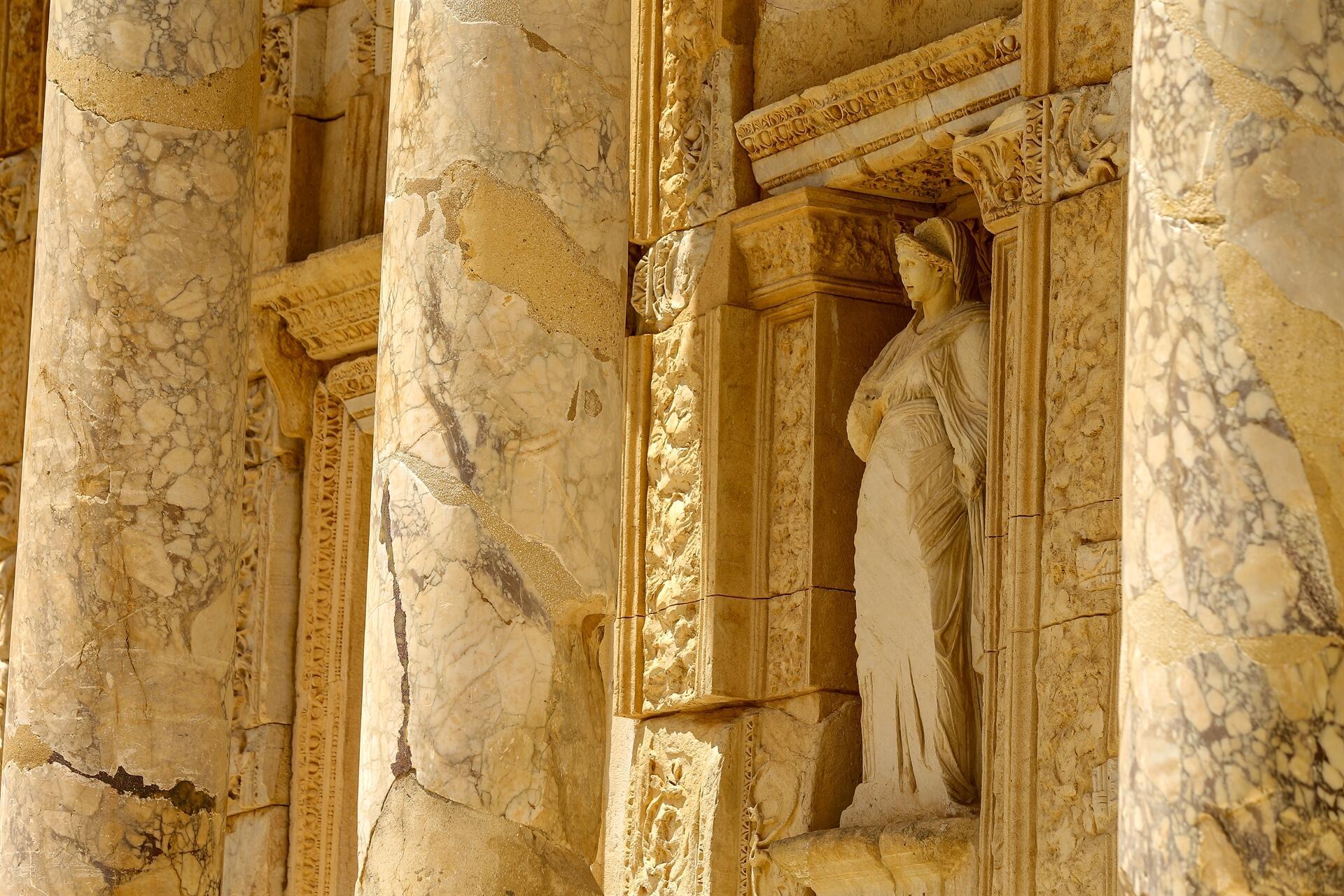
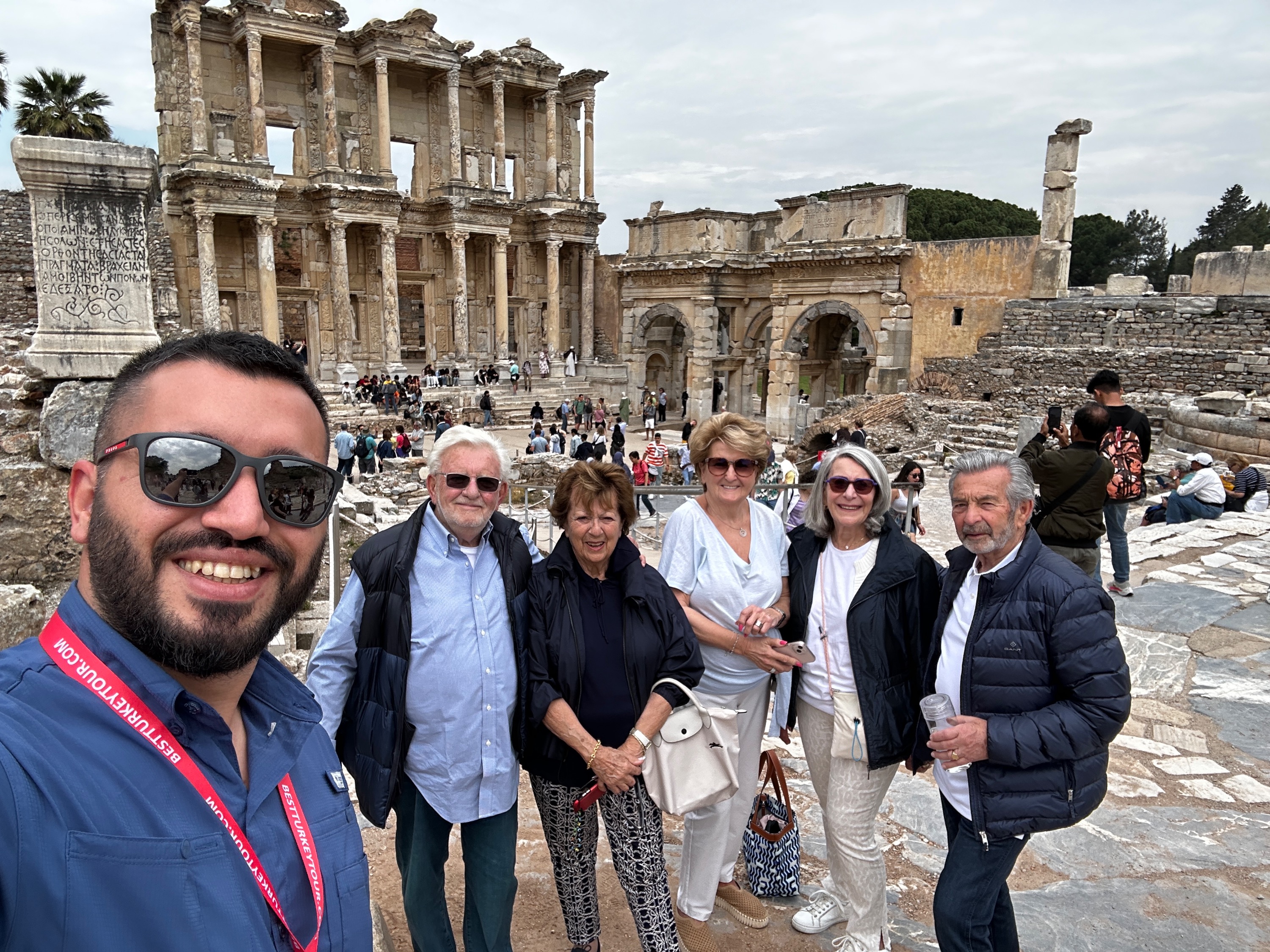
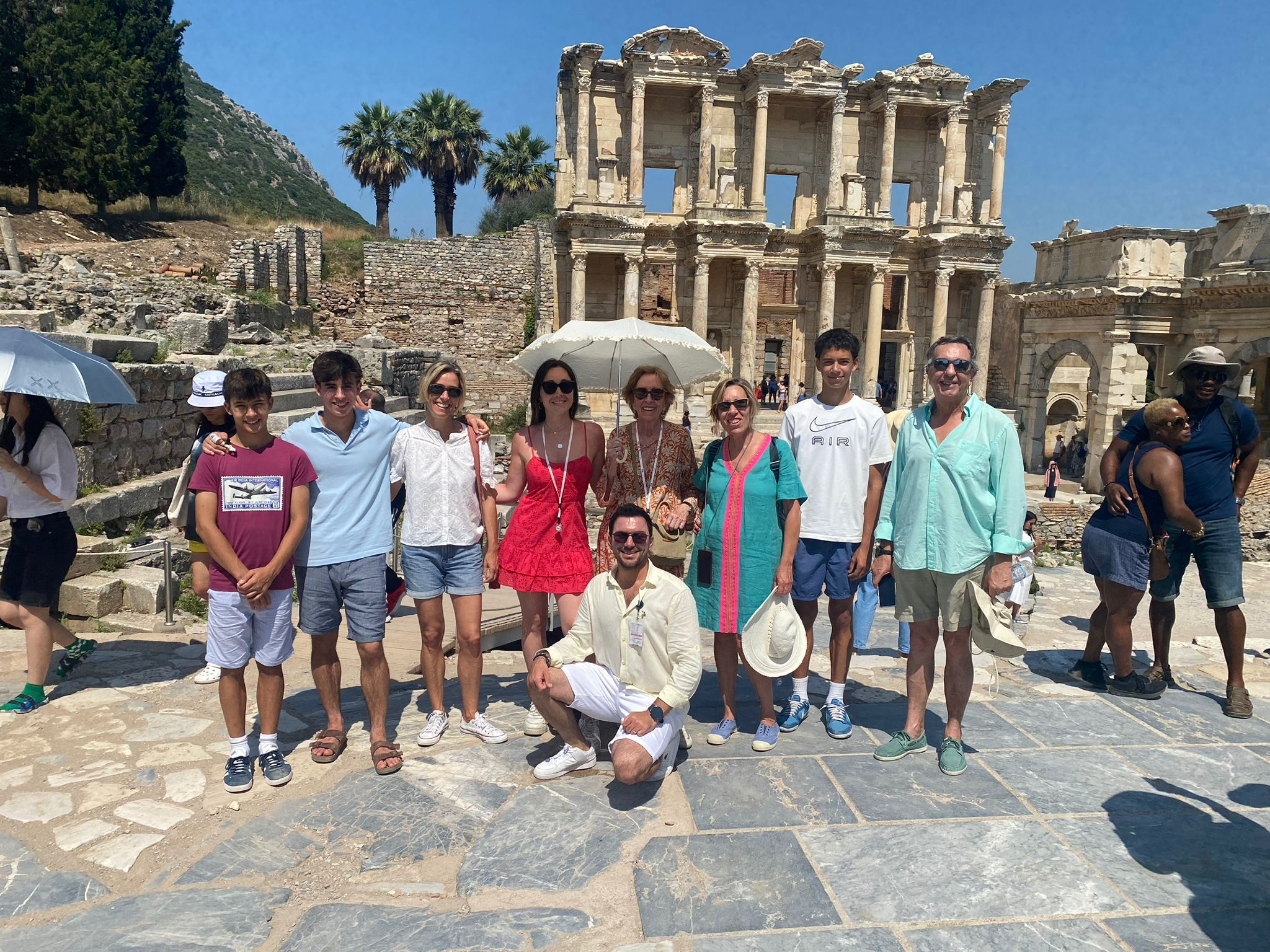
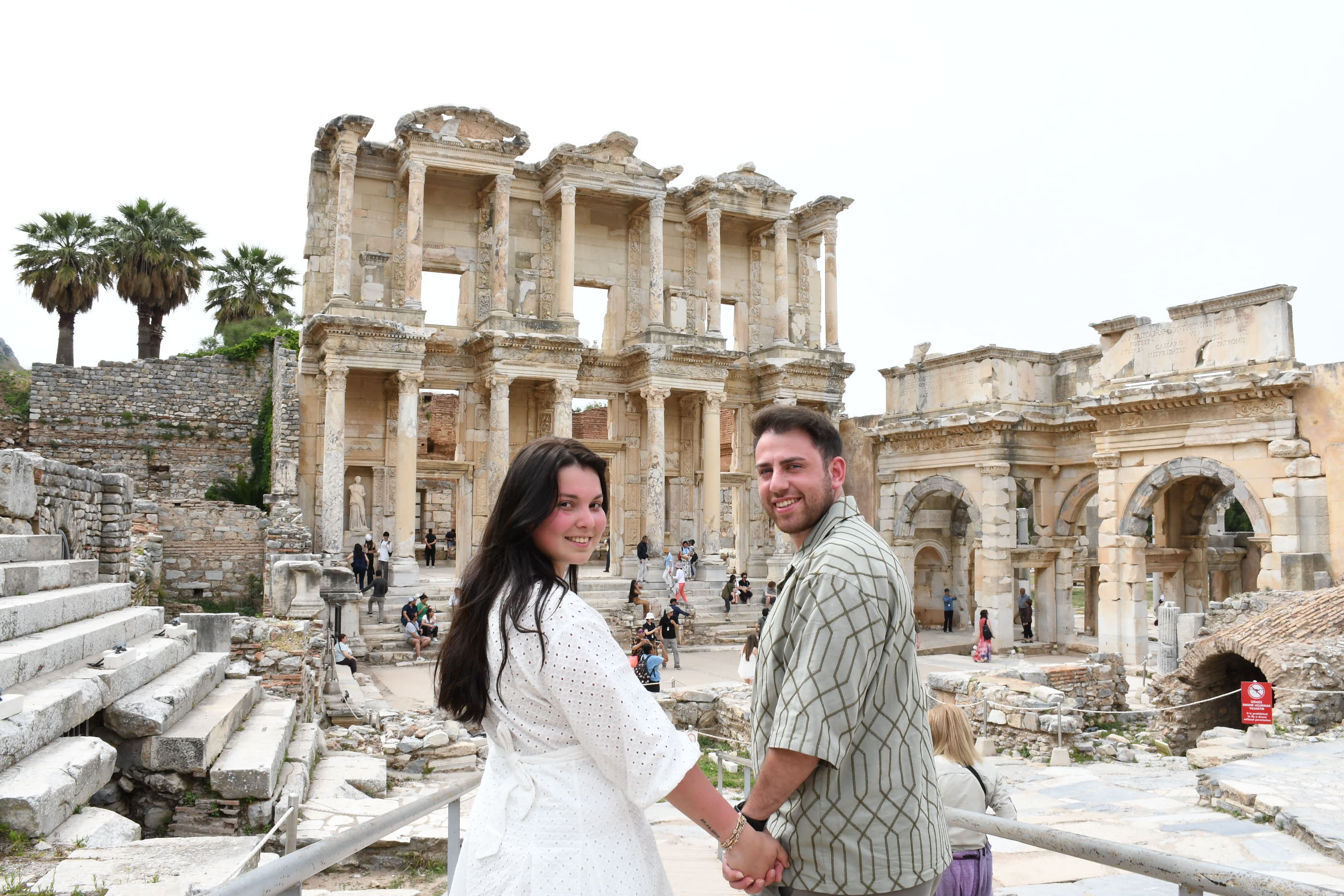
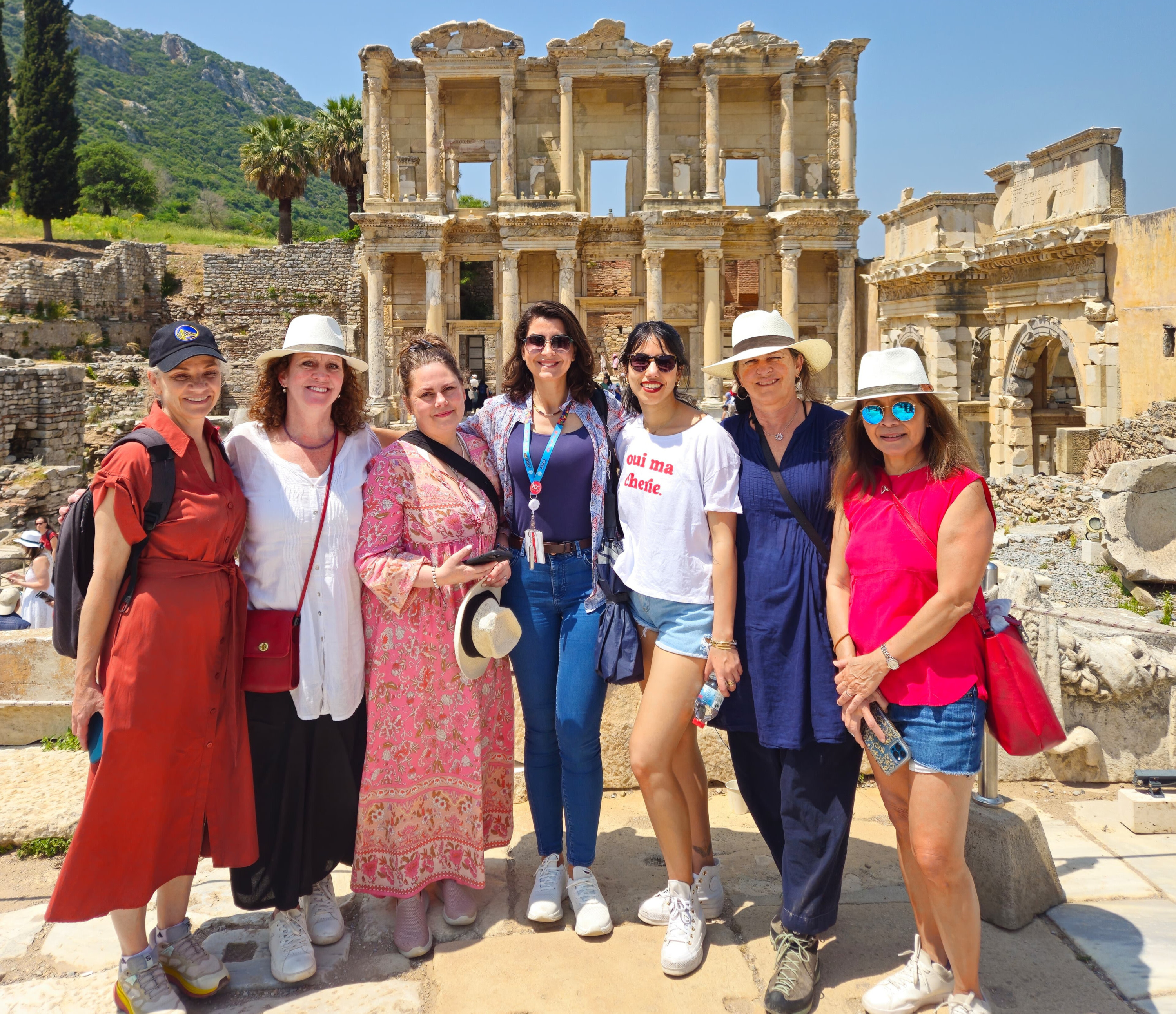
Bibliotheque de Celsus, Selcuk, Turkey
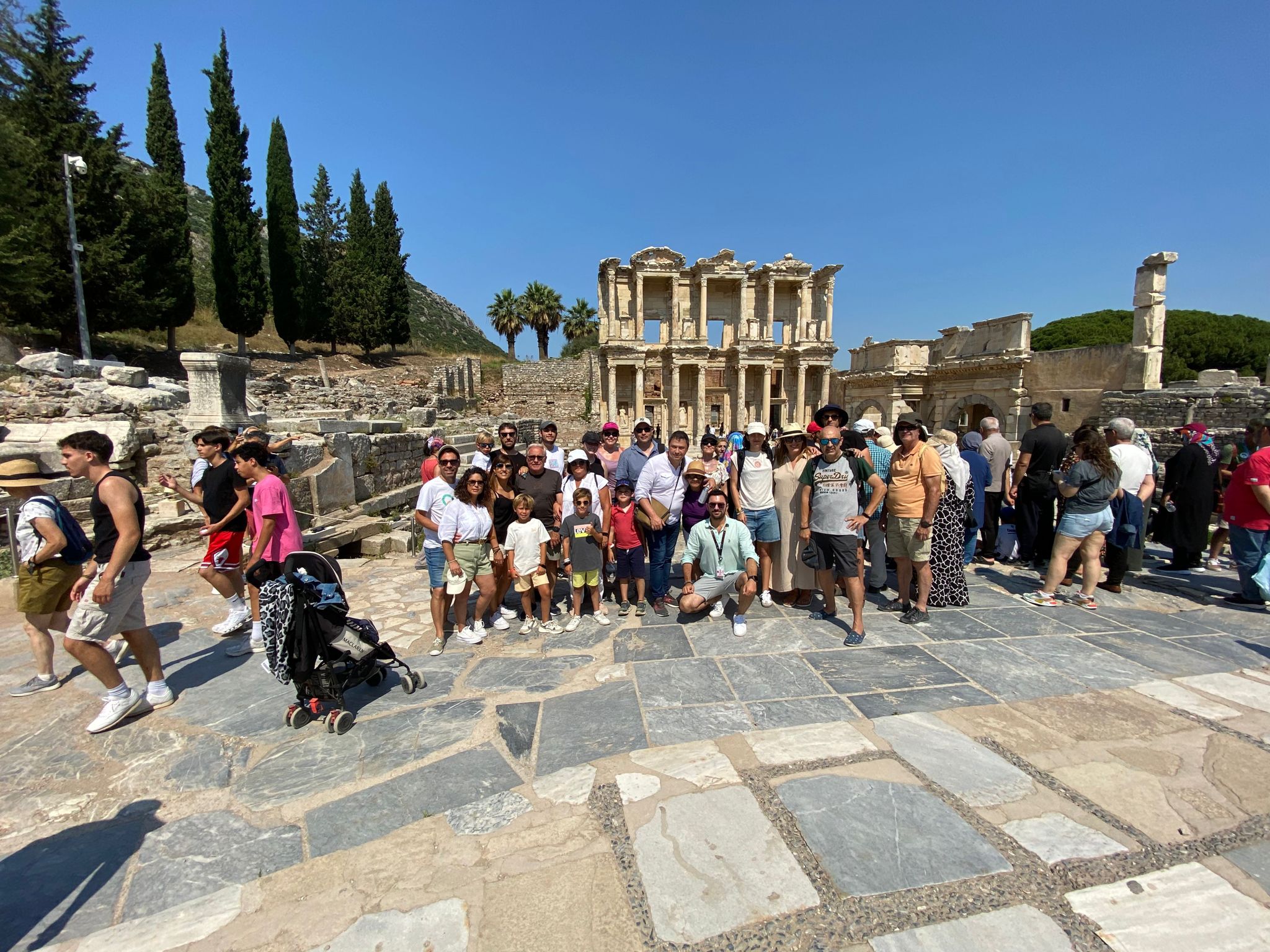
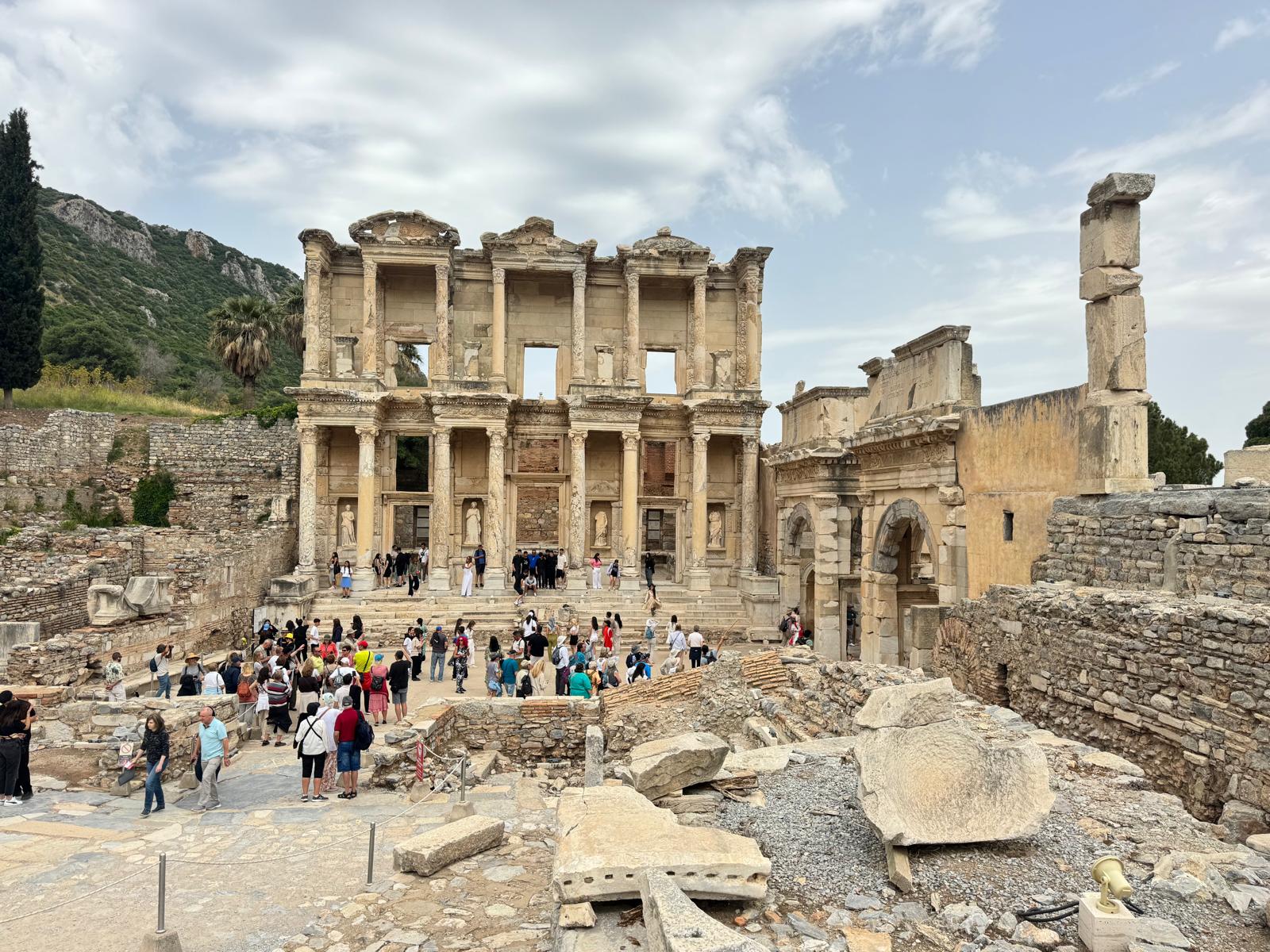
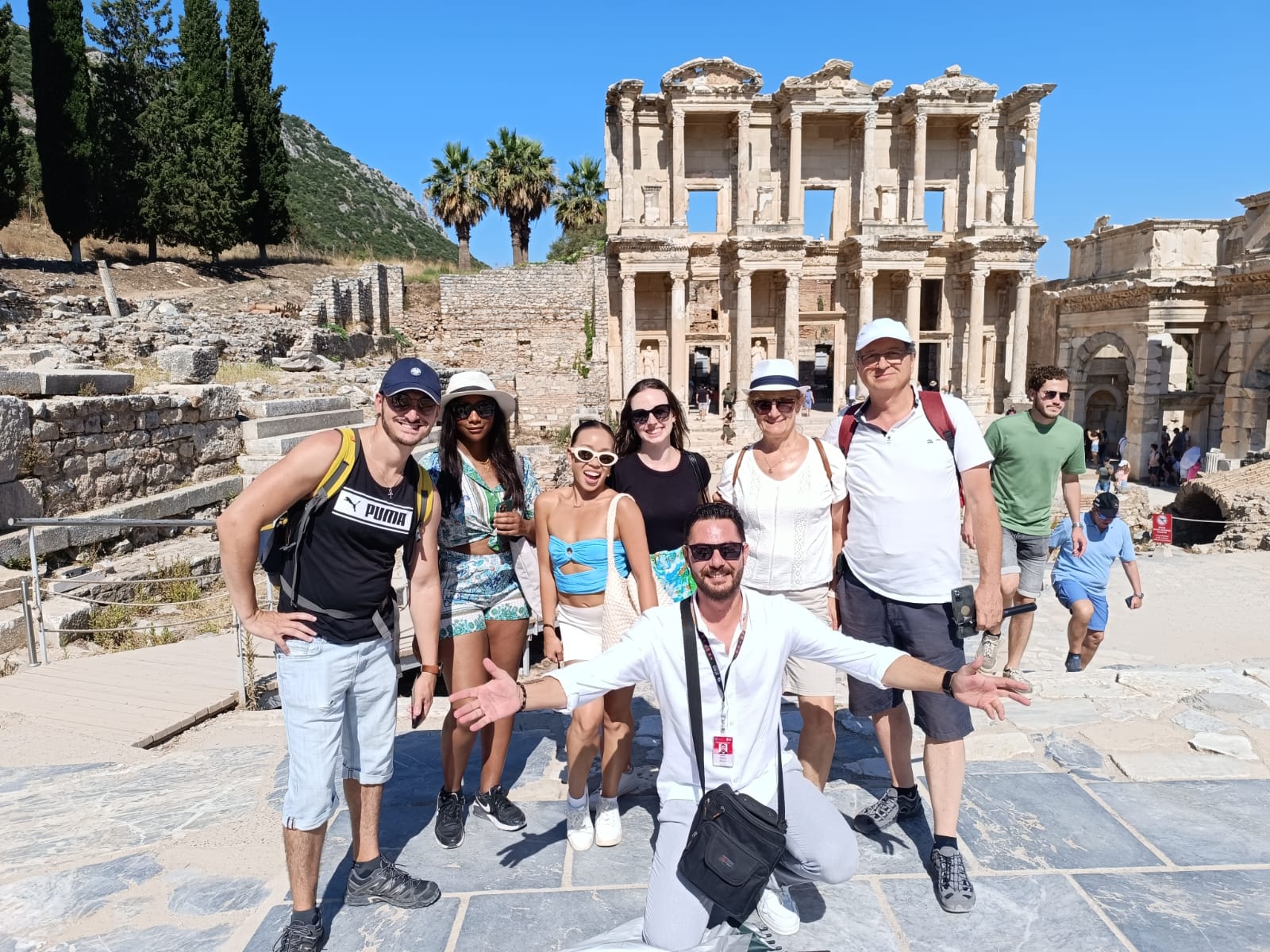
This magnificent library dating from the early 2nd century AD, the best-known monument in Ephesus, has been extensively restored. Originally built as part of a complex, the library looks bigger than it actually is: the convex facade base heightens the central elements, while the middle columns and capitals are larger than those at the ends. Facade niches hold replica statues of the Four Virtues. From left to right, they are Sophia (Wisdom), Arete (Goodness), Ennoia (Thought) and Episteme (Knowledge).
6
Stop 6
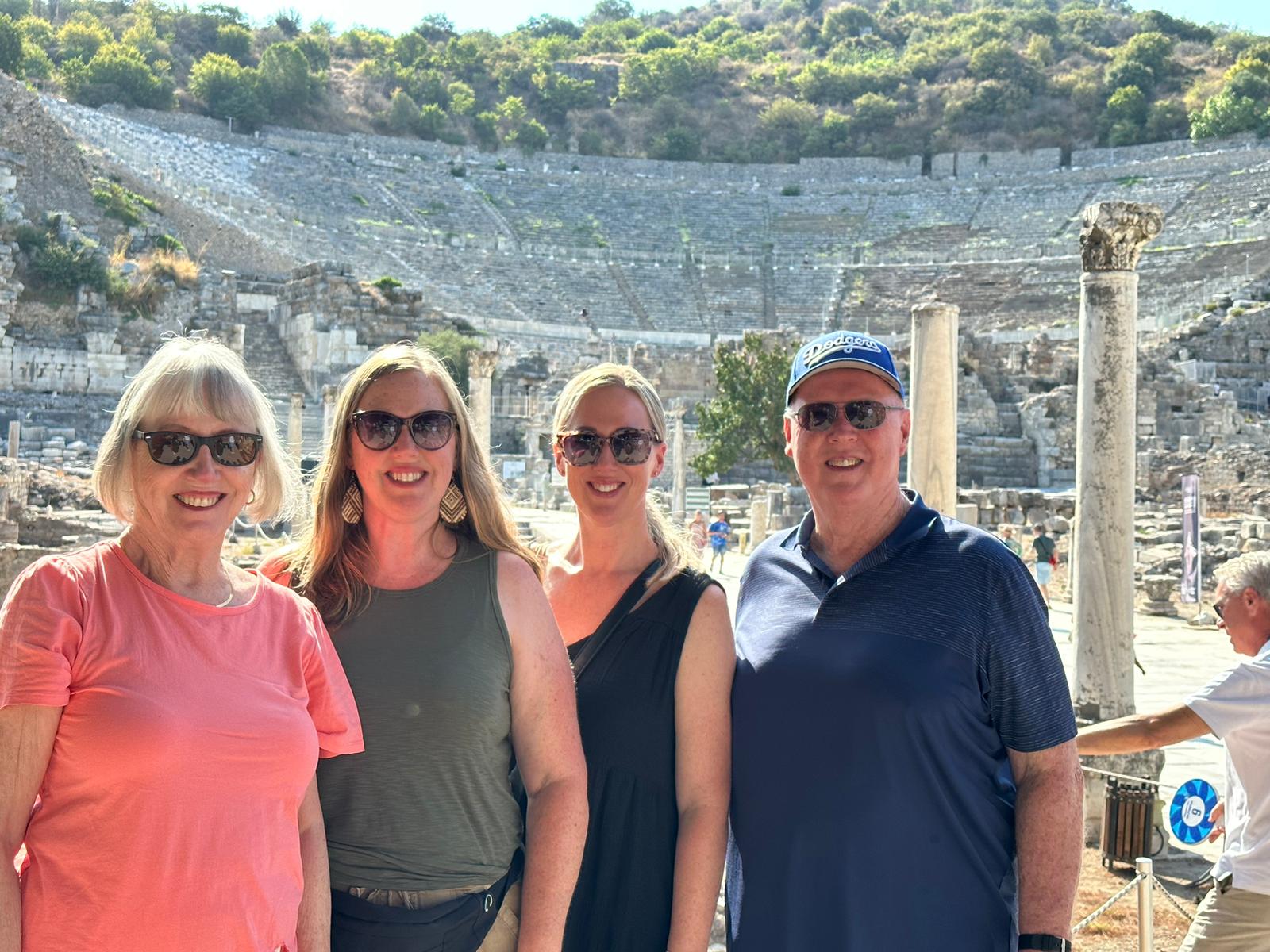
The great theater of Ephesus is a splendidly preserved and very impressive building. This structure, built of marble, has a width of 145 meters, and its audience once reached up to 30 meters. In its heyday, it could accommodate up to 24,000 spectators. The construction of the theater began in Hellenistic times.
7
Stop 7
Temple of Artemis (or Artemision), one of the Seven Wonders of the Ancient World. In an empty field to the west of the centre, this lone reconstructed pillar is all that remains of the massive Temple of Artemis (or Artemision) At its zenith, the temple counted 127 columns.
8
Stop 8
Isabey mosque was built in a post-Seljuk/pre-Ottoman transitional style, when Selcuk was capital of the Aydin Emirate. An inscription in Arabic above the main entrance states that it was built in 1375.
What's not included
Drinks
Alcoholic drinks (available to purchase)
Gratuities
Available languages
Guide guide
EN
ES
Reviews breakdown
Viator
4.0
5 reviews
5★
3
4★
1
3★
0
2★
0
1★
1
Tripadvisor
4.8
40 reviews
5★
36
4★
3
3★
0
2★
0
1★
1
Important information
Infants are required to sit on an adult’s lap
Infants and small children can ride in a pram or stroller
Public transportation options are available nearby
Suitable for all physical fitness levels
Child rate applies only when sharing with 2 paying adults
Infant meals not included
Important notes
• Comfortable walking shoes are recommended
Hotel pickups commence approximately 30 - 60 minutes prior to this time, exact pickup time will be advised on reconfirmation.
About Selçuk
Selçuk is a charming town in Turkey's Aegean Region, renowned as the gateway to the ancient city of Ephesus. With its rich history, vibrant culture, and proximity to stunning natural sites, Selçuk offers a unique blend of archaeological wonders and authentic Turkish hospitality.
Top Attractions
Ephesus
Ephesus is one of the most famous ancient cities in the world, known for its well-preserved ruins, including the Library of Celsus, the Great Theatre, and the Temple of Artemis.
Historical
Half to full day
Moderate (Entrance fee around 20 USD)
Selçuk Basilica
The Selçuk Basilica is an ancient Christian church with well-preserved mosaics and architectural details, offering insights into the region's early Christian history.
Historical
1-2 hours
Free
İsa Bey Mosque
İsa Bey Mosque is a 14th-century Ottoman mosque with beautiful Seljuk architecture, featuring intricate tile work and a serene courtyard.
Historical
30 minutes to 1 hour
Free
Şirince Village
Şirince is a picturesque village known for its traditional stone houses, local wines, and olive oil. It's a great place to experience authentic Turkish village life and sample local produce.
Cultural
Half day
Free to explore, budget for food and wine tastings
Ephesus Museum
The Ephesus Museum houses a collection of artifacts from the ancient city of Ephesus, including sculptures, mosaics, and coins.
Museum
1-2 hours
Moderate (Entrance fee around 5 USD)
Must-Try Local Dishes
Çökertme Kebap
A traditional dish made with minced lamb or beef, onions, and spices, cooked on a skewer over an open flame.
Main Course
Contains meat, can be spicy
Karnıyarık
A stuffed eggplant dish made with minced meat, onions, tomatoes, and peppers, topped with a rich tomato sauce.
Main Course
Contains meat, can be spicy
Şakşuka
A traditional dish made with green peppers, tomatoes, and onions, cooked with minced meat and topped with a yogurt sauce.
Main Course
Contains meat, can be spicy
Midye Dolma
Stuffed mussels filled with a mixture of rice, pine nuts, and spices, served with a lemon wedge.
Snack
Contains seafood, can be spicy
Popular Activities
Hiking in the surrounding countryside
Horseback riding
Mountain biking
Beach relaxation in Kuşadası
Spa treatments in Pamukkale
Wine tasting in Şirince Village
Exploring ancient ruins
Visiting local museums
Best Time to Visit
April to June, September to October
The best time to visit Selçuk is during the spring and autumn when the weather is pleasant, and the crowds are manageable. These seasons offer ideal conditions for exploring the ancient sites and enjoying the local cuisine.
15°C to 30°C
59°F to 86°F
Practical Information
Language
- Official: Turkish
- Widely spoken: English, German, Russian
- English: Moderately spoken in tourist areas, limited in rural areas
Currency
Turkish Lira (TRY)
Time Zone
GMT+3
Electricity
220VV, 50HzHz
Safety Information
Overall Safety Rating: Generally safe
Selçuk is generally a safe destination for travelers, with low crime rates and a welcoming atmosphere. However, as with any destination, it's important to be aware of your surroundings and take precautions to ensure a safe and enjoyable trip.
Important Precautions:
- • Use licensed taxis or ride-hailing apps to avoid overcharging.
- • Keep valuables secure and be cautious of pickpockets in crowded areas.
- • Be wary of fake petitions or surveys, as they may be a distraction for thieves.
Getting there
By air
- Izmir Adnan Menderes Airport • 80 km
By train
Selçuk Railway Station
By bus
Selçuk Bus Terminal
Getting around
Public transport
Local buses are the primary mode of public transportation in Selçuk, connecting the town center to major attractions and nearby towns.
Taxis
Available • Apps: BiTaksi
Rentals
Car, Bike, Scooter
Neighborhoods
Town Center
Ephesus Area
Şirince Village
Day trips
Pamukkale
150 km • Full day
Pamukkale is a natural wonder known for its white travertine terraces and thermal springs. The site is a UNESCO World Heritage Site and a popular day trip from Selçuk.
Kuşadası
20 km • Half day
Kuşadası is a popular coastal town known for its beaches, nightlife, and shopping. It's a great day trip for those looking to relax on the beach or explore the town's many shops and restaurants.
Priene, Miletus, and Didyma
50-60 km • Full day
Priene, Miletus, and Didyma are ancient cities located near Selçuk, offering a glimpse into the region's rich history. These sites are less crowded than Ephesus and offer a unique opportunity to explore ancient ruins.
Festivals
International Selçuk Ephesus Culture and Art Festival • May
International Selçuk Ephesus Jazz Festival • July
Selçuk Wine Festival • September
Pro tips
- Visit the ancient city of Ephesus early in the morning or late in the afternoon to avoid the midday heat and crowds.
- Try the local specialties, such as Çökertme Kebap and Şakşuka, at traditional restaurants like Dünyayla Otel Restaurant or Selçuk Pidecisi.
- Explore the charming village of Şirince for a glimpse into traditional Turkish village life, with its stone houses, local wines, and olive oils.
- Take a day trip to Pamukkale to experience the natural wonders of the travertine terraces and thermal springs.
- Visit the Ephesus Museum to learn more about the ancient city and its rich history, with a collection of artifacts that includes sculptures, mosaics, and coins.
From $25
per person
Price varies by option
Secure booking
Free cancellation available
Instant confirmation