Laodicea & Pamukkale Tour
Active
8h
For a full refund, cancel at least 24 hours before the scheduled departure time.
Instant confirmation
Mobile or paper ticket accepted
About this experience
Discover and visit Laodicea and Pamukkale in one day private tour. You will enjoy the traventines and get to know about the history of Laodicea and Hierapolis.
Available options
Laodicea & Pamukkale Tour
Pickup included
What's included
Local guide
Hotel pickup and drop-off
Round-trip private transfer
Lunch
Transport by air-conditioned minivan
Detailed itinerary
1
The first visit of your private tour to the Church of Laodicea. It is one of the seven revelation church and it is a very important site for the Christians ho would like to be “Christian pilgrim”. The next visit will be to the Grand Theatre of Laodicea. It is situated on the north-east side of the ancient city which was built in 3rd C BC as the Greek theater and it was expanded during the reign of Nero so the capasity reached up 20.000 seats as the second biggest amphi-theatre after Ephesus. Continue to the Stadium and Gymnasium of Laodicea. It is located in the South-west of the city and lies in the east-west axis. It was constructed as a whole with additional buildings of Gymnasium. The stadium was completed in 79 AD with length of 350 meters, 60 meters in wide and has 24 rows of seats. Gymnasium was built in 2nd C AD by proconsul Antonius Gargilius and his wife Sabina and was dedicated to Emperor Hadrian.
2
Visit the National Park of Pamukkale. You will see the Necropolis (cemetery) of Hierapolis which is one of the biggest ancient cemeteries in Anatolia with 1.200 graves, Roman Bath, Domitian Gate, and the Main Street, Byzantium Gate.
3
Stop 3
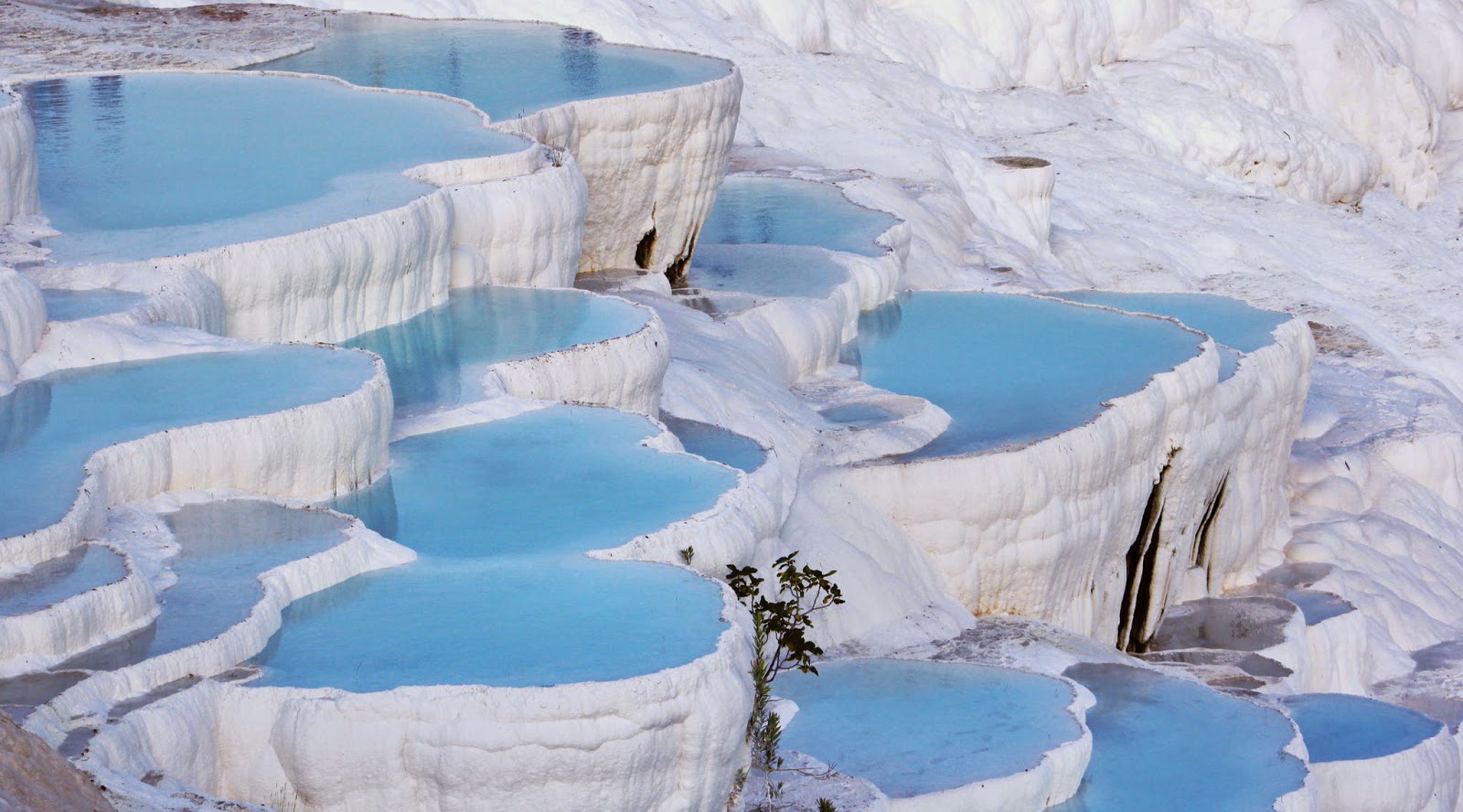
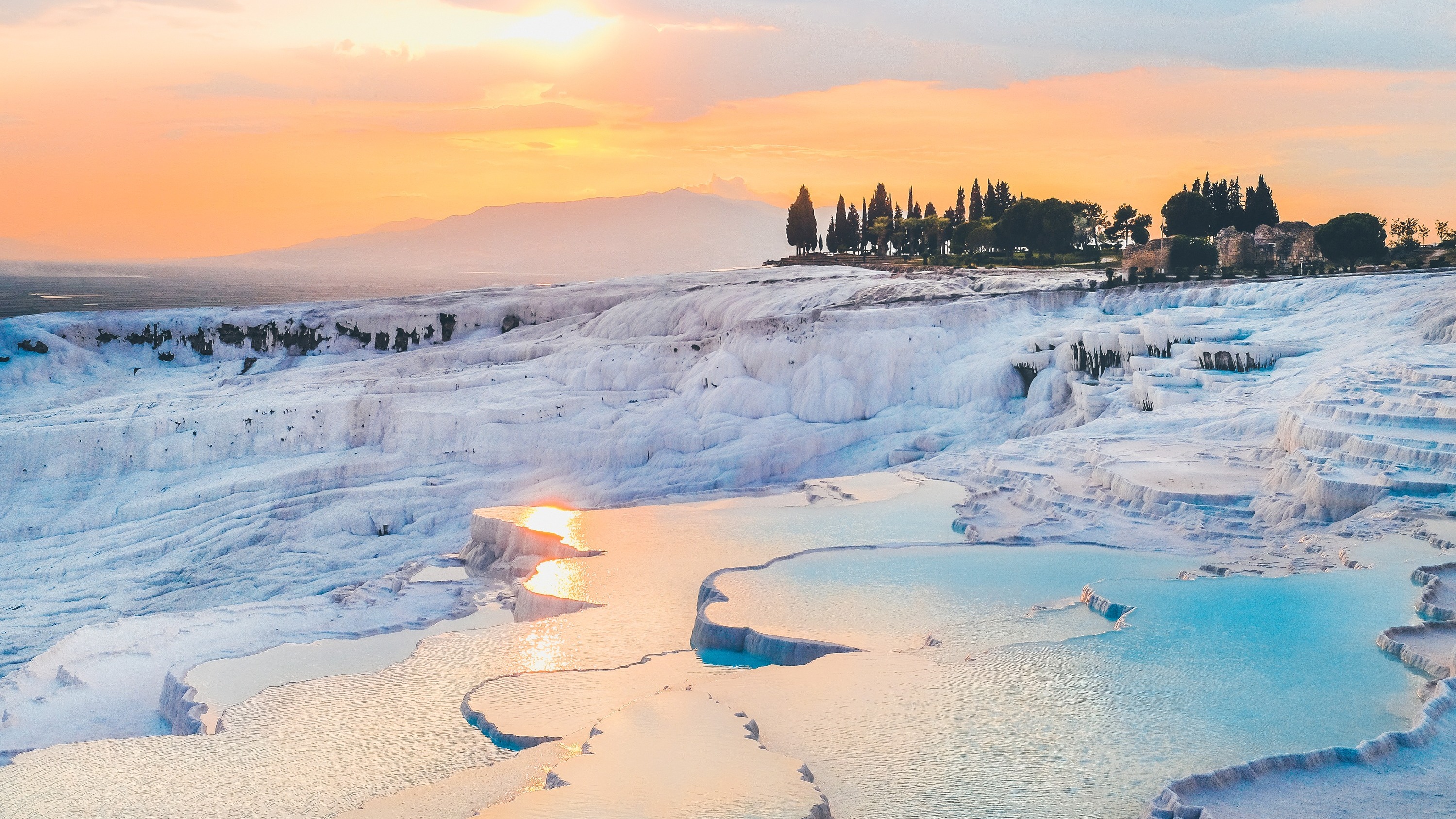
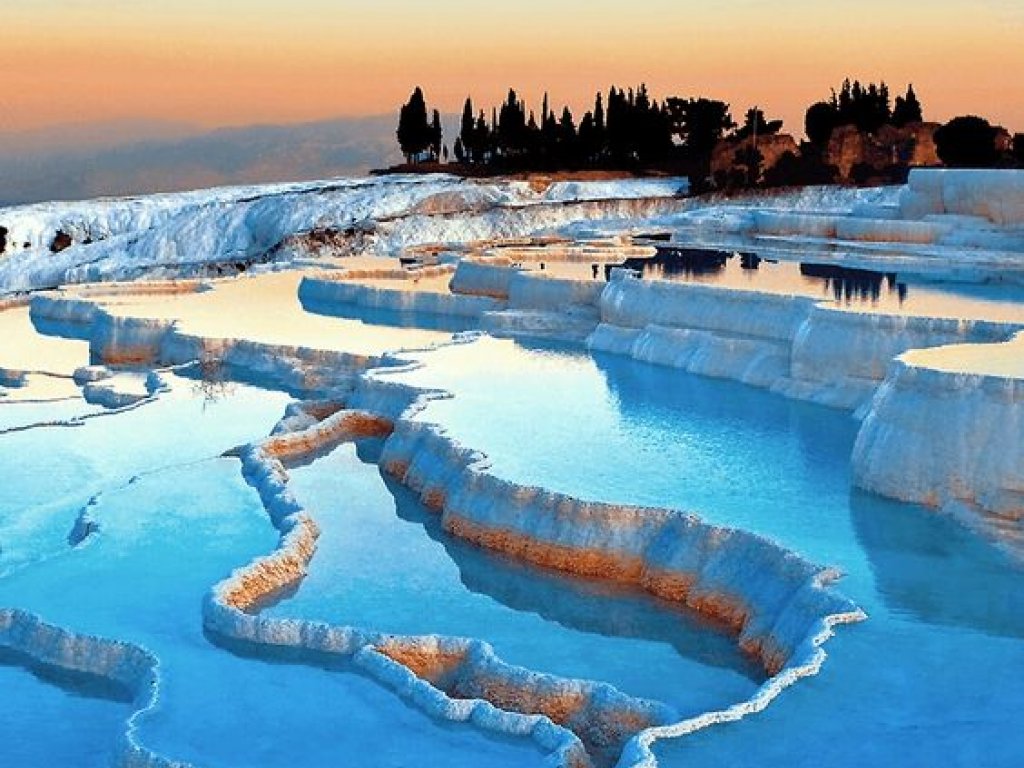
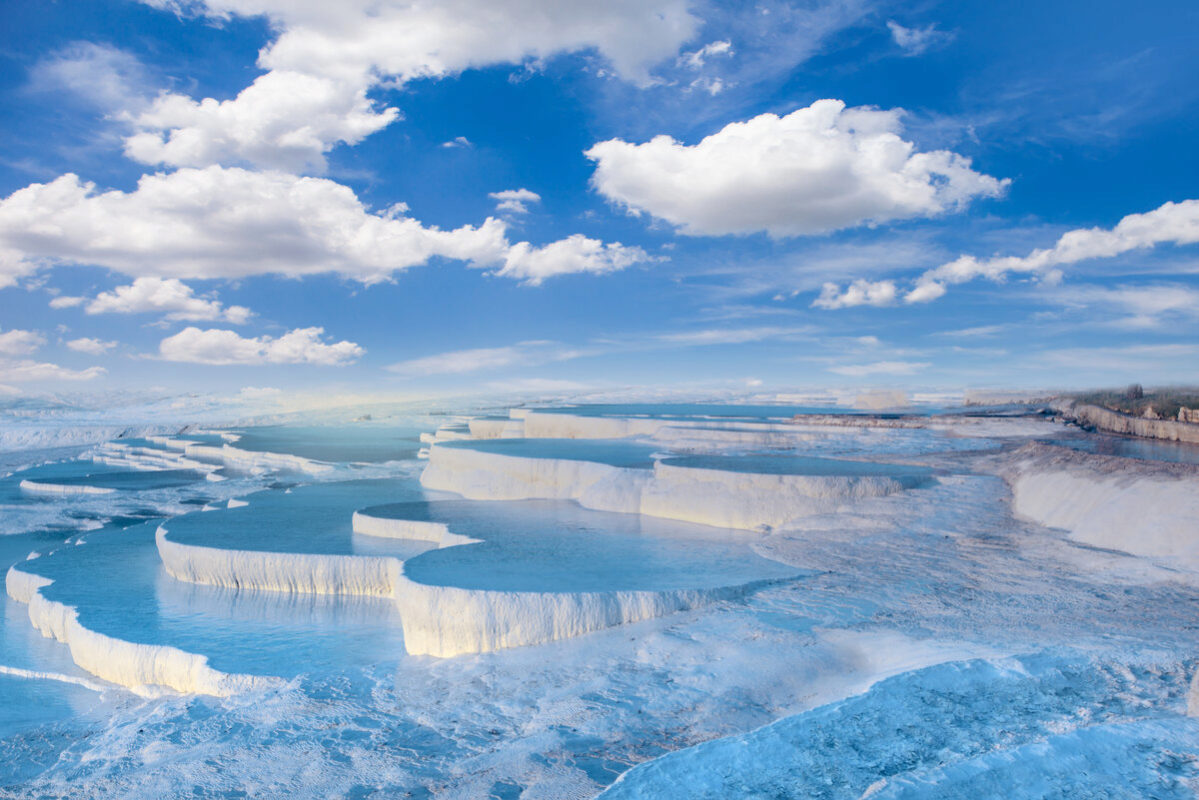
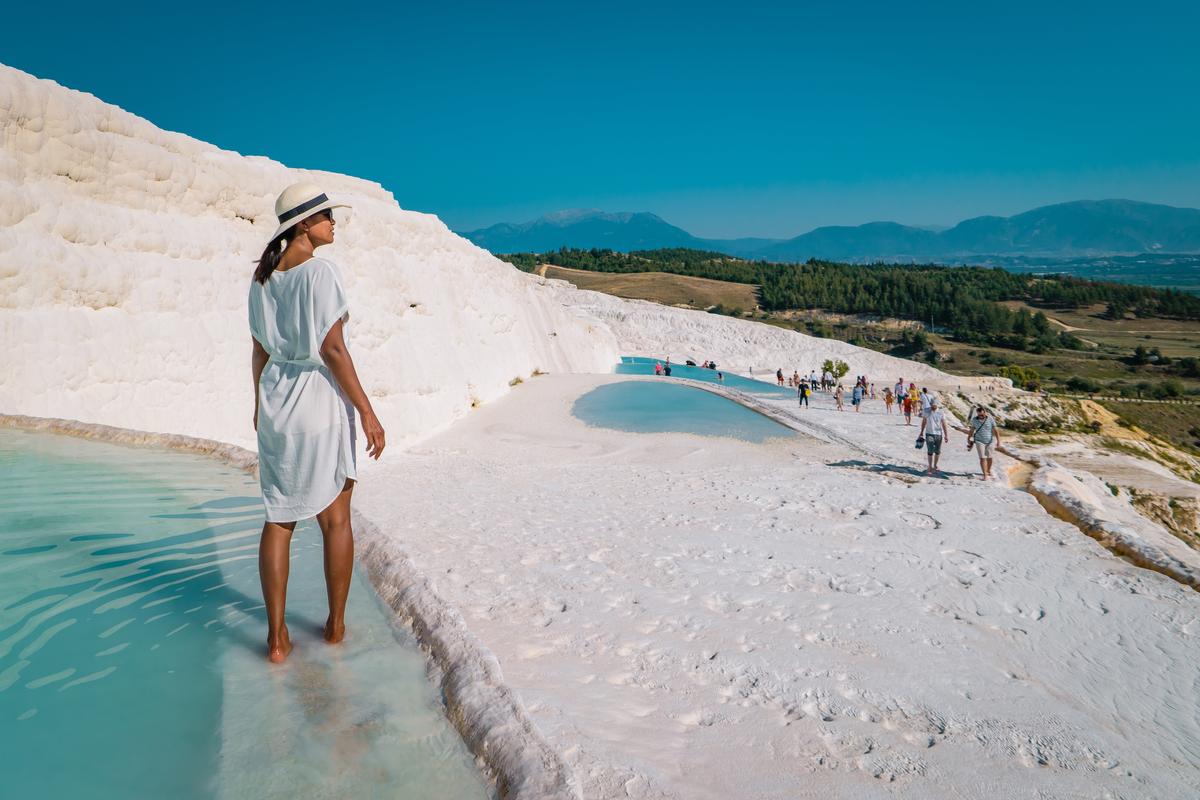
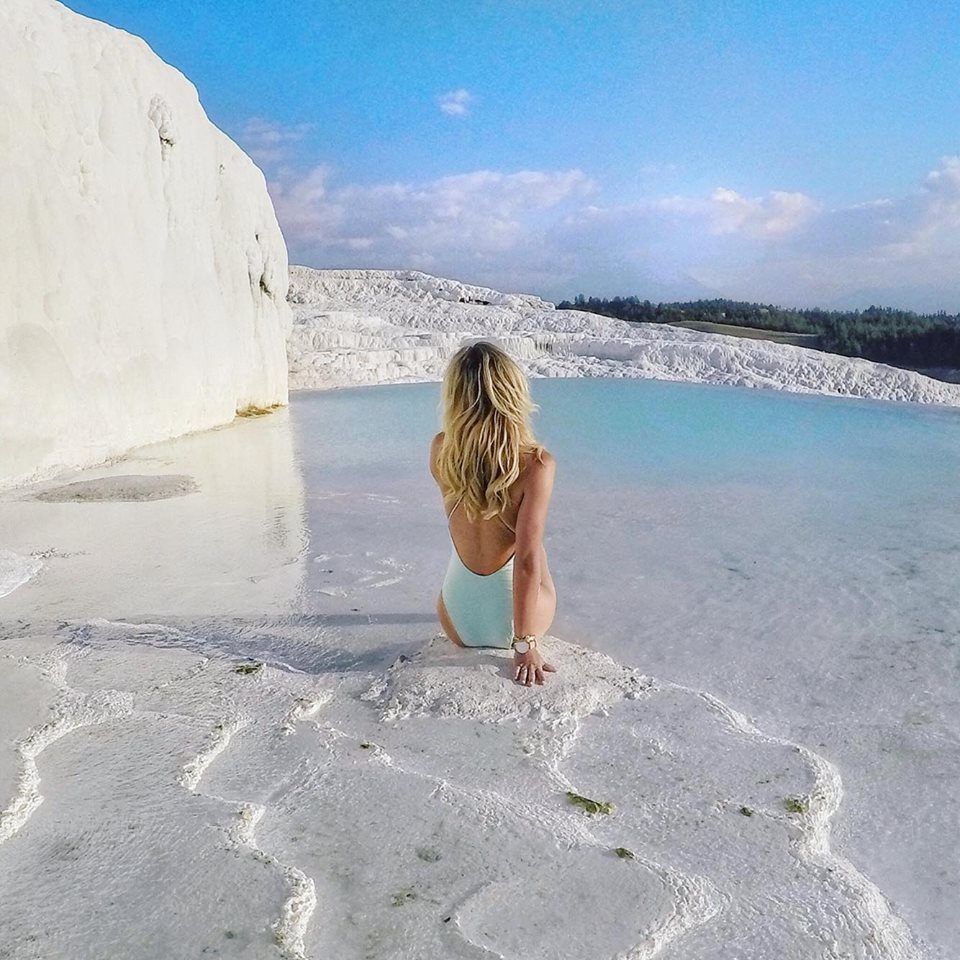
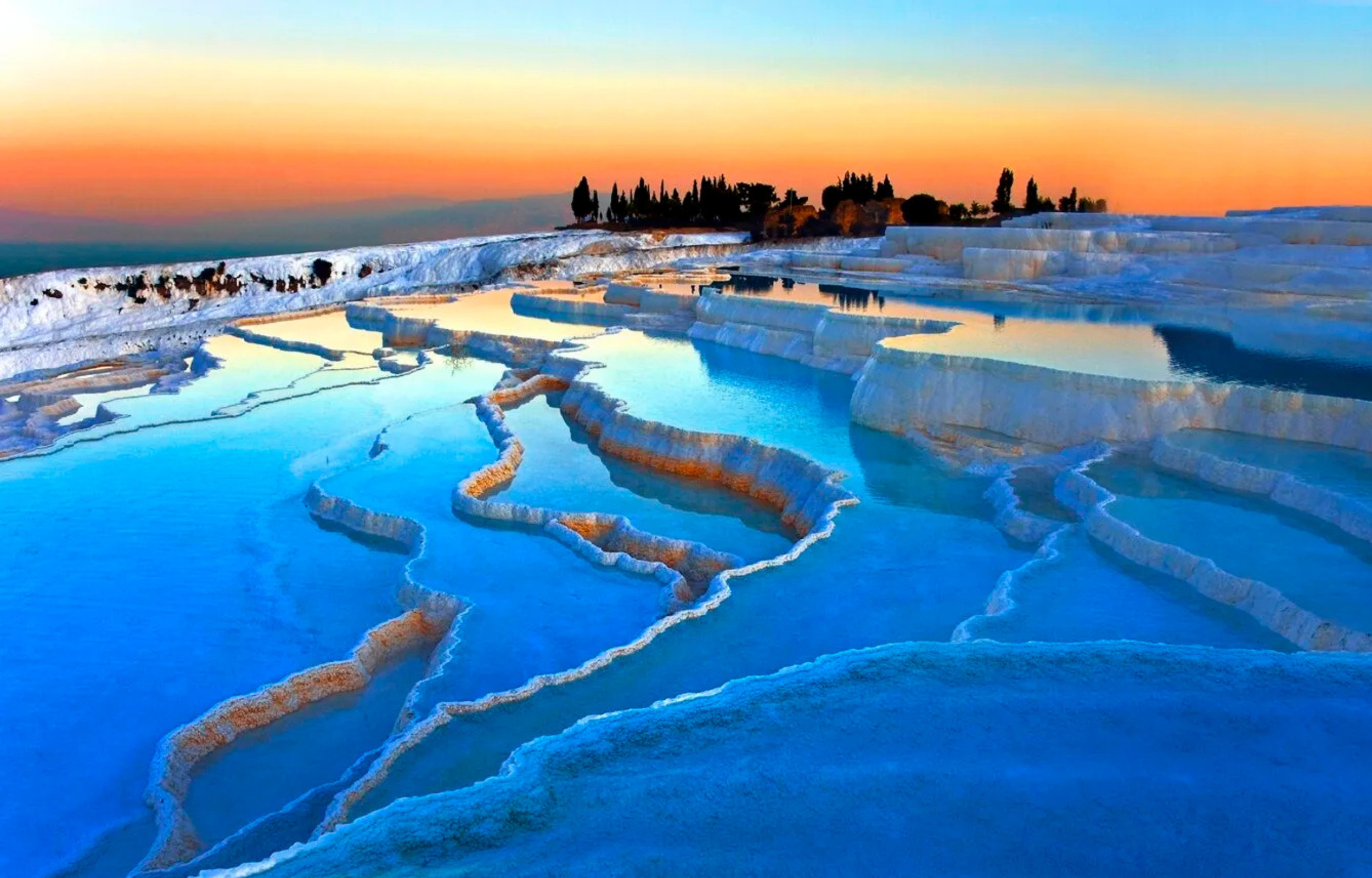
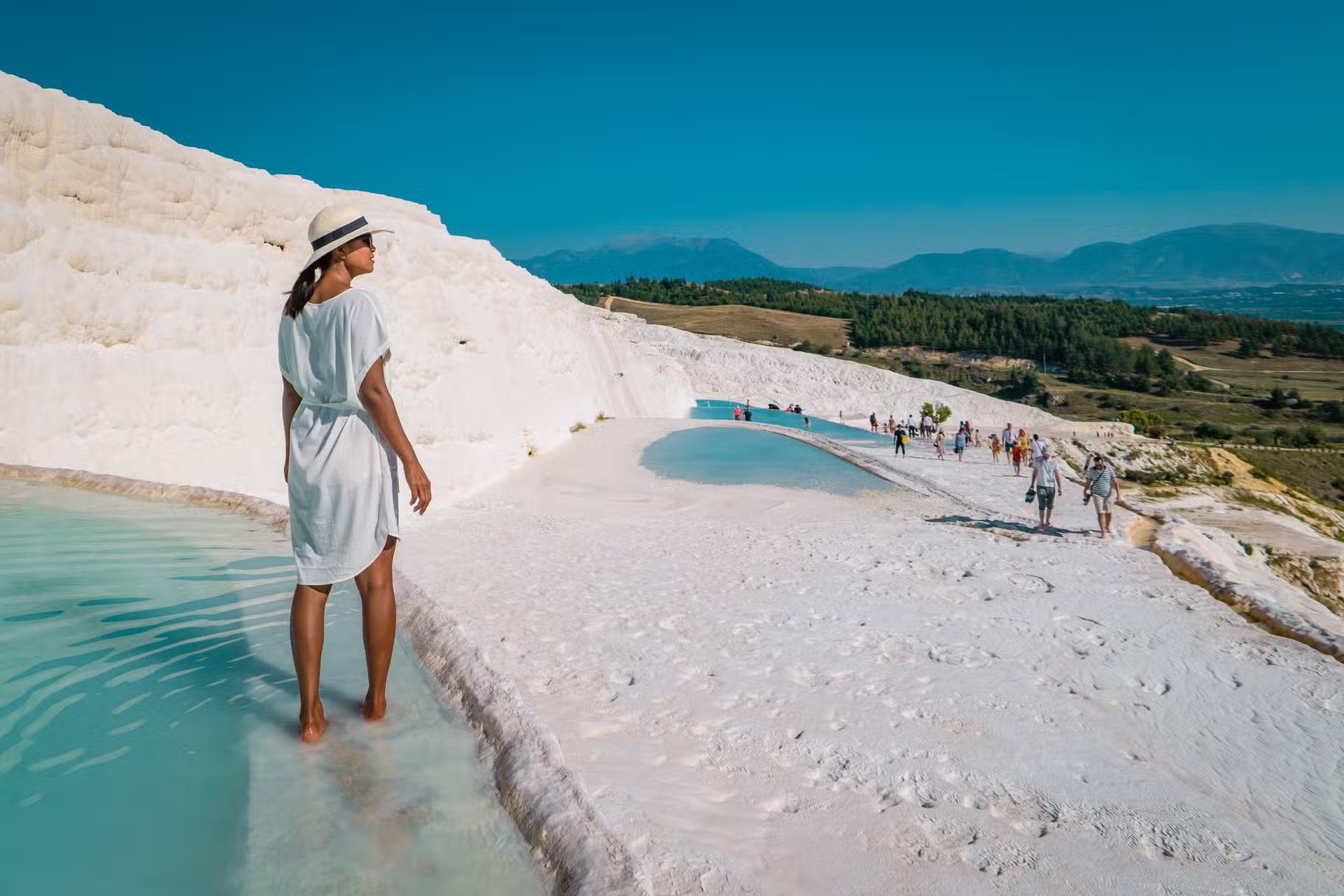
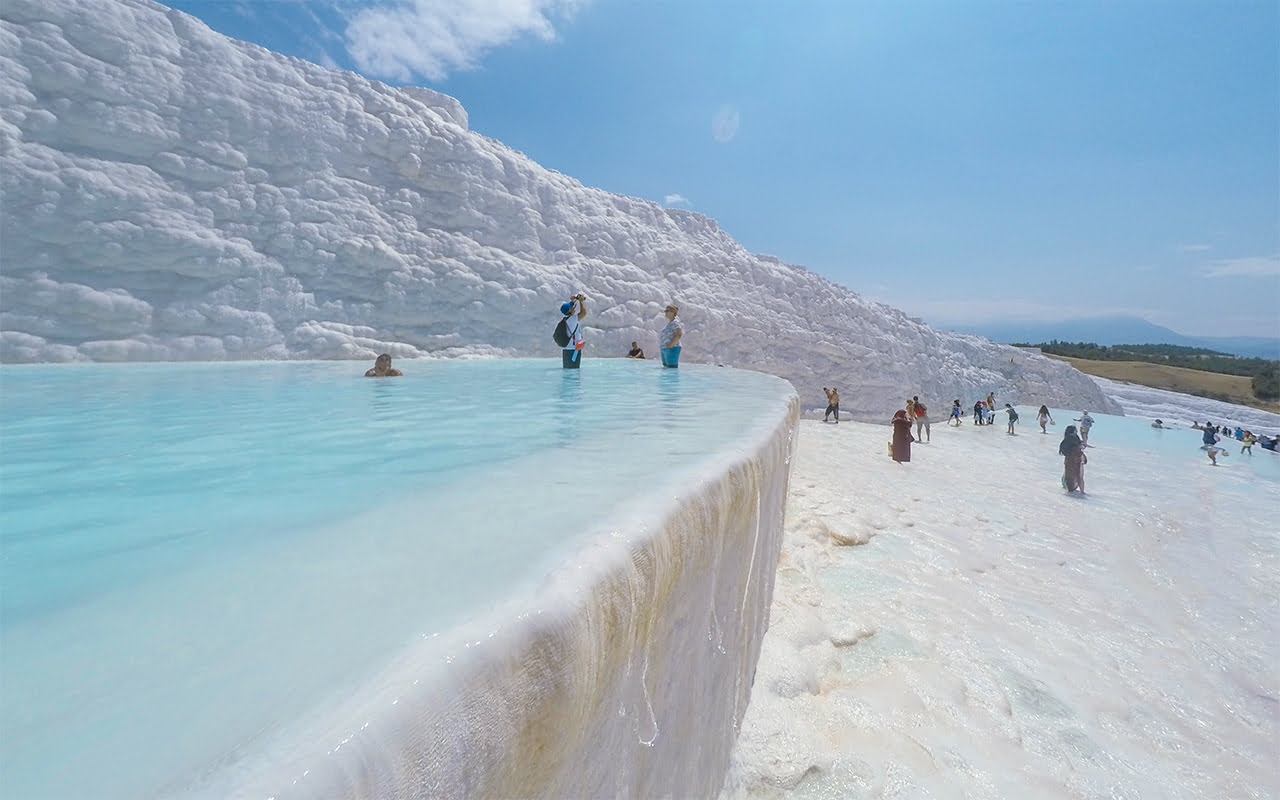
you walk to the natural warm water terraces which were formed by running warm water that contains calcium. The temperature of the water is about 35. You can see the gleaming white travertine terraces of Pamukkale, located next to the ruins of Hierapolis. The extraordinary effect is created when water from the hot springs loses carbon dioxide as it flows down the slopes, leaving deposits of limestone. The layers of white calcium carbonate, built up in steps on the plateau, gave the site the name Pamukkale (cotton castle).
4
Stop 4
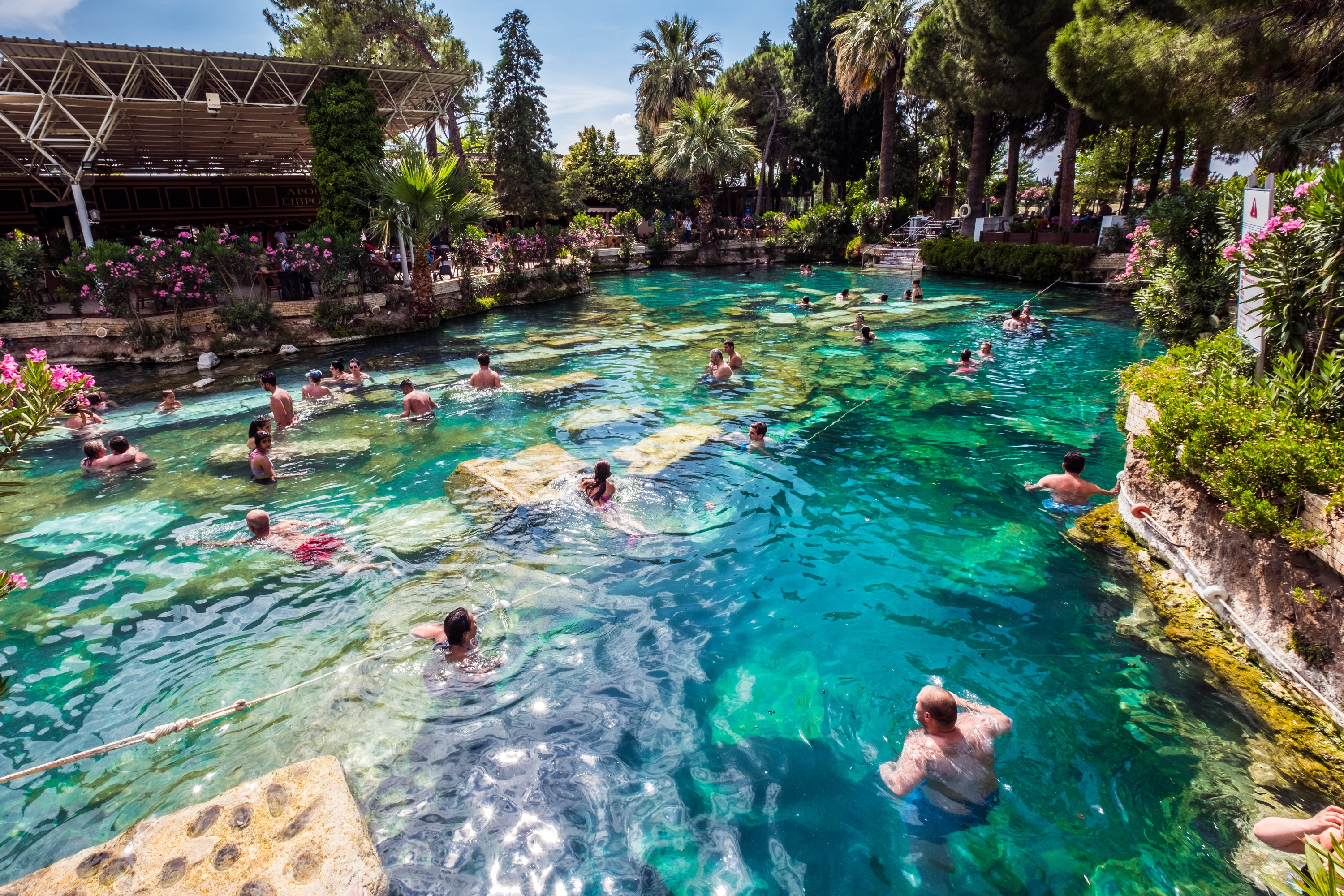
If you like to swim in the Ancient Pool which is also called Cleopatra s Pool they charge extra entrance fee. The Cleopatra Pool is warmed by hot springs and littered with underwater fragments of ancient marble columns. Possibly associated with the Temple of Apollo, the pool provides today's visitors a rare opportunity to swim with antiquities! During the Roman period, columned porticoes surrounded the pool; earthquakes toppled them into the water where they lie today.
What's not included
Drinks
Gratuities
Ancient Pool Entrance
Available languages
Guide guide
EN
ES
Important information
Not recommended for travelers with spinal injuries
Not recommended for pregnant travelers
Not recommended for travelers with poor cardiovascular health
Travelers should have at least a moderate level of physical fitness
Vegetarian option is available, please advise at time of booking if required
Passport name, number, expiry and country is required at time of booking for all participants
Important notes
• Not recommended for participants with heart complaints or other serious medical conditions
• Not recommended for participants with back problems
• Not recommended for pregnant women
Minimum drinking age is 18 years
About Denizli
Denizli is a vibrant city in southwestern Turkey, famous for its stunning natural wonders, particularly the travertine terraces of Pamukkale, often referred to as the 'Cotton Castle'. The city is rich in history, culture, and natural beauty, offering a unique blend of ancient ruins, thermal springs, and modern amenities.
Top Attractions
Pamukkale
Pamukkale is a natural wonder known for its white travertine terraces and thermal springs. The terraces are formed by calcium-rich mineral deposits left behind by the flowing water, creating a stunning white landscape.
Nature
Half to full day
Free (entry to Pamukkale), 80 TL (entry to Hierapolis)
Hierapolis
Hierapolis is an ancient Roman city built on top of the Pamukkale terraces. It features well-preserved ruins, including a theater, necropolis, and ancient pools.
Historical
2-3 hours
80 TL
Denizli Archaeology Museum
This museum houses a collection of artifacts from the ancient cities of Hierapolis, Laodikeia, and other nearby sites. It provides a fascinating glimpse into the region's rich history.
Museum
1-2 hours
20 TL
Laodikeia
Laodikeia is an ancient city located near Denizli, known for its well-preserved ruins and historical significance. It was one of the seven churches of Asia mentioned in the Book of Revelation.
Historical
2-3 hours
Free
Salda Lake
Salda Lake, often referred to as 'Turkey's Maldives', is a stunning lake known for its crystal-clear waters and white sandy beaches. It is a popular spot for swimming, sunbathing, and relaxing.
Nature
Full day
Free (entry to the lake)
Must-Try Local Dishes
Denizli Kebap
A traditional kebab made with tender lamb or beef, marinated in a blend of spices and grilled to perfection.
Main Course
Contains meat, can be made with lamb or beef
Gözleme
A savory or sweet filled pastry, similar to a pancake, often filled with cheese, potatoes, or spinach.
Snack
Vegetarian options available
Biber Salatası
A refreshing pepper salad made with a variety of peppers, onions, and tomatoes, dressed with olive oil and lemon juice.
Side Dish
Vegetarian, vegan
Sütlaç
A creamy rice pudding, often topped with cinnamon or caramelized sugar.
Dessert
Vegetarian, contains dairy
Popular Activities
Hiking in Pamukkale
Swimming in Salda Lake
Exploring ancient ruins
Soaking in thermal pools
Sunbathing at Salda Lake
Enjoying Turkish tea in a café
Visiting the Denizli Archaeology Museum
Exploring Hierapolis
Best Time to Visit
April to October
This is the best time to visit Denizli for warm weather and outdoor activities. The travertine terraces and thermal springs are particularly enjoyable during this period.
20°C to 35°C
68°F to 95°F
Practical Information
Language
- Official: Turkish
- Widely spoken: English (in tourist areas), German (in some tourist areas)
- English: Moderately spoken in tourist areas, limited elsewhere
Currency
Turkish Lira (TRY)
Time Zone
GMT+3
Electricity
220VV, 50HzHz
Safety Information
Overall Safety Rating: Generally safe
Denizli is generally a safe destination for travelers, with low crime rates and a welcoming atmosphere. However, as with any destination, it's important to be aware of your surroundings and take basic precautions to ensure a safe and enjoyable trip.
Important Precautions:
- • Use licensed taxis or ride-hailing apps
- • Keep valuables secure in crowded areas
- • Be cautious of strangers offering unsolicited help or services
Getting there
By air
- Denizli Çardak Airport • 10 km from city center
By train
Denizli Station
By bus
Denizli Otogar
Getting around
Public transport
City buses are the primary mode of public transportation in Denizli. They are affordable and frequent, with routes covering most parts of the city.
Taxis
Available • Apps: BiTaksi, Yandex.Taxi
Rentals
Car, Bike, Scooter
Neighborhoods
City Center
Pamukkale
Yeşilova
Day trips
Salda Lake
60 km • Full day
Salda Lake, known as 'Turkey's Maldives', offers stunning natural beauty with its crystal-clear waters and white sandy beaches. It is a perfect spot for swimming, sunbathing, and relaxing.
Buldan
50 km • Half to full day
Buldan is a charming town known for its traditional houses, local markets, and delicious pistachios. It offers a glimpse into rural Turkish life and is a great spot for sampling local produce.
Tavas
30 km • Half to full day
Tavas is an ancient town with a rich history, featuring well-preserved ruins and a museum. It is a great spot for history enthusiasts and those interested in archaeology.
Festivals
Denizli International Culture and Art Festival • June to July
Pamukkale Night Show • Year-round, typically in the evening
Denizli Pistachio Festival • September
Pro tips
- Visit Pamukkale early in the morning or late in the afternoon to avoid crowds and the heat
- Wear waterproof shoes for walking on the Pamukkale terraces, as they can be slippery
- Try the local specialty, Denizli Kebap, at a traditional restaurant in the city center
- Explore the local markets for authentic souvenirs and unique finds
- Take a day trip to Salda Lake for a relaxing and scenic experience
From $25
per person
Price varies by option
Secure booking
Free cancellation available
Instant confirmation