Cagliari: Castelsardo and the Sardinian Pyramide
Active
10h - 12h
For a full refund, cancel at least 24 hours before the scheduled departure time.
Instant confirmation
Mobile or paper ticket accepted
About this experience
Enjoy a relaxing full-day private tour of fascinating Castelsardo. Walkthrough its alleys and visit ancient craft shops. Discover Monte D'Accoddi; this site consists of a massive raised stone platform thought to have been an altar.
Available options
Private Tour
Enjoy a relaxing full-day private tour of fascinating Castelsardo. Walk through its alleys and visit ancient craft shops. Discover Monte D'Accoddi, the Sardinian Pyramide.<br/>Pickup included
What's included
Private tour
Free wifi on board
Hotel pickup and drop-off
Bottled water
Round-trip private transfer
Transport by air-conditioned minivan
Detailed itinerary
1
Full day tour departing from Cagliari, drive for 2.5 hours in a minivan through the amazing Sardinian countryside towards the northwest of the island.
2
It may have been the legendary Tibula of Roman times. Still, by the Middle Ages, it was already an impenetrable centuries-old fortress protected by thick walls and 17 towers, until the advent of modern weaponry. The original nucleus of Castelsardo grew up around the castle of the Dorias, which tradition dates to 1102, although it was probably constructed in the late XIII century. Today it is the seat of the lovely Museo dell’Intreccio Mediterraneo (or Museum of the Crossroads of the Mediterranean), one of the most visited museums in all of Sardinia. In the early XVI century, the castle was renamed Castillo Aragonés and became the seat of the diocese
3
In the early XVI century, the castle was renamed Castillo Aragonés and became the seat of the bishopric until the Cathedral of Sant’Antonio Abate was built in 1586. This fantastic building has a bell tower perched over the sea, is graced with a gleaming ceramic dome and houses crypts in the basement, which in turn are home to the Maestro di Castelsardo museum.
4
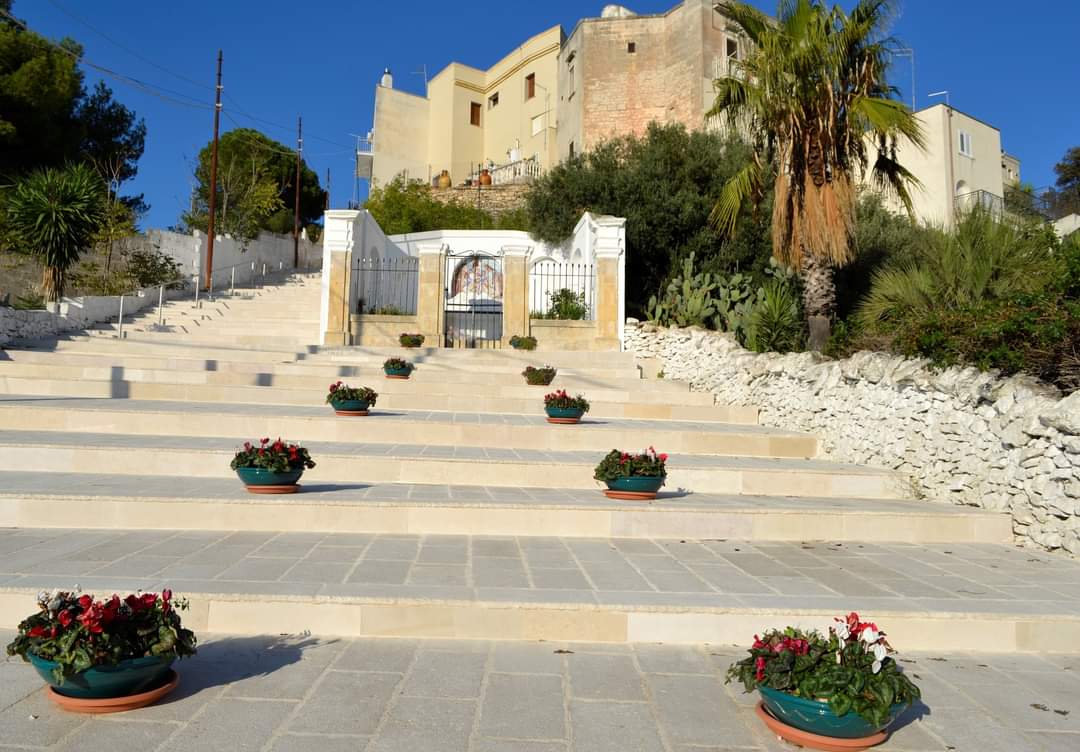
During the reign of the Savoy dynasty, the town was given the name it has today. It belongs to the Most Beautiful Towns of Italy Association and its great fortifications – the bastions and steep stairs – remain intact. The city tour includes not-to-be-missed visits of its religious and historical buildings, like the Church of Santa Maria delle Grazie, the Benedictine monastery, the diocese, palazzo La Loggia, which since 1111 has served as City Hall, and the Palazzo Eleonora d’Arborea.
The town’s most exclusive events take place during Holy Week when religious rites with a Spanish flair involve just about everyone. Lunissanti, on the Monday after Palm Sunday, is heartfelt and picturesque, especially at dawn, when a long procession heads towards the Basilica of Nostra Signora di Tergu. After sundown, the town is illuminated by torches, and sacred chanting fills the air. The Prucissioni that takes place on Holy Thursday and the Lu Lcravamentu on Friday are also not to be missed. The town celebrates its patron saint, St. Anthony, on 17 January with great bonfires.
Artistic handicraft is an intrinsic and distinctive feature of Sardinia. Weaving represents one of its main components, thanks to the skillful hands that have been able to perfect the art of wicker basket-making over the centuries. Their shapes vary according to the type of material and place in which they are made: in Flussio, Montresta, Ollolai, and Sennori.
Asphodelus is the raw materials par excellence, while in lowland localities, near ponds or by the sea, like Castelsardo, San Vero Milis, and Sinnai, rushes, grain or Mediterranean dwarf palm are used for making baskets. All the towns share an ancient and exciting tradition: women have been able to pass down the secrets of weaving, creating different shapes based on the function of the wicker containers, mixing colored inserts, extraordinary designs, and traditional patterns.
5
Elephant Rock is comprised of a large mass of trachyte stone in the shape of an elephant, which is located standing beside State Road 134, just outside Castelsardo. The rock was originally a part of the rocky complex of Monte Casteddazzu before it broke off and rolled down the valley along the road. As erosion took place and as the popular imagination decreed it because more and more people added to the idea, the rock came to be seen as in the shape of an elephant with its trunk turned towards the road. Thus, it was given its name and became a local attraction. However, Elephant Rock is also known as Sa Pedra Pertunta, the perforated rock, for obvious reasons due to its appearance, which is punctuated by openings and holes.
Inside, two Domus de Janas (typically Sardinian chamber tombs) from the Neolithic period was established, inside of which there are relevant and exciting reliefs and primitive symbols from the animal and plant worlds. Inside the rock, there are numerous openings, almost all of which also have antechambers.
The walls of these irregularly shaped chambers have relief decorations, cow horns, and bullheads on a low base formed in the rock. Elephant Rock, therefore, is not merely a natural curiosity but also intimately intertwined with local history and prehistory.
6
Although there is no direct relationship, it is identical to the contemporary Mesopotamian temples and embodies the ‘oriental’ creed of the union between heaven and earth - the sacred areas on top of reliefs were considered the meeting point between man and divinity. The temple of Monte d'Accoddi (from the archaic Kodi, ‘stone’), dating back five thousand years, is a ziqqurat that is unique in Europe due to its singularity of architectural types. It was discovered in the mid-20th century, digging into a small hill that appeared to be ‘artificial,’ rising in the middle of a plain. It was a pyramid altar covered with earth, perhaps dedicated to a female deity, carved in a granite stele alongside the monument. According to legend, it was built by a prince-priest who had fled from the Middle East. It had one extraordinary feature: the ziqqurat is the temple of the Sun, in turn, dedicated to the Moon.
The pre-Nuragic sanctuary stands in the center of Nurra, along the ‘old’ State Highway 131 (heading towards Porto Torres), in the territory of Sassari, eleven kilometers from the capital of the north of the island. The monument played a central role in society of the time, is the culmination of the evolution of a complex developed from the second half of the 4th millennium BC.
The altar is the superimposition of two phases, that of the ‘red temple,’ in the final Neolithic period (3500-2900 BC), and the following ‘terraced temple’, in the Aeneolithic period (about 2700 BC), as part of the Abealzu-Filigosa culture. In the first phase, several villages of quadrangular huts were part of a ceremonial hub, including a Domus de Janas necropolis and alongside the Santuario, in their original positions, are an elongated menhir (four and a half meters high), an enormous slab with seven holes (perhaps use to tie up victims) and boulders of spheroidal stone, one of five meters in circumference. All the rocks served a specific purpose in the sacrificial rituals. At the end of the final Neolithic period, the people of the Ozieri culture built a platform in the shape of a pyramidal trunk, with sides at the base extending 27 meters, above which stood a rectangular room with surfaces plastered and painted in ochre and traces of yellow and black. Of the sacred area remain the floor and remnants of a perimeter wall. Around 2800 BC, the structure of the ‘red temple,’ abandoned for about two centuries, was buried under a large filling of earth, stones, and limestone marlstone, in turn ‘covered’ with large blocks of stone. A new sizeable terraced pyramidal platform was built, with sides more extended than the previous one and accessible from a ramp that was forty meters long and thirteen to seven meters wide. The second sanctuary is reminiscent of the ziqqurat with an ‘open-air’ altar. The structure occupies 1,600 square meters, rising almost six meters (initially perhaps eight). Inside is an unexplored room. Probably, as in Mesopotamia, it contains the sacred bed where the ritual of regeneration of life and fertility of the earth was carried out. Around are the remains of a village, where ceramics were found almost intact. To be admired are finds safeguarded in the Sanna archaeological museum, along with a model of the altar in its earliest form. The building retained its religious function for a millennium. At its base, remains of sacred meals and objects used in propitiatory rituals were discovered. The site was abandoned at the beginning of the ancient Bronze Age (1800 BC) and occasionally reused for burials.
7
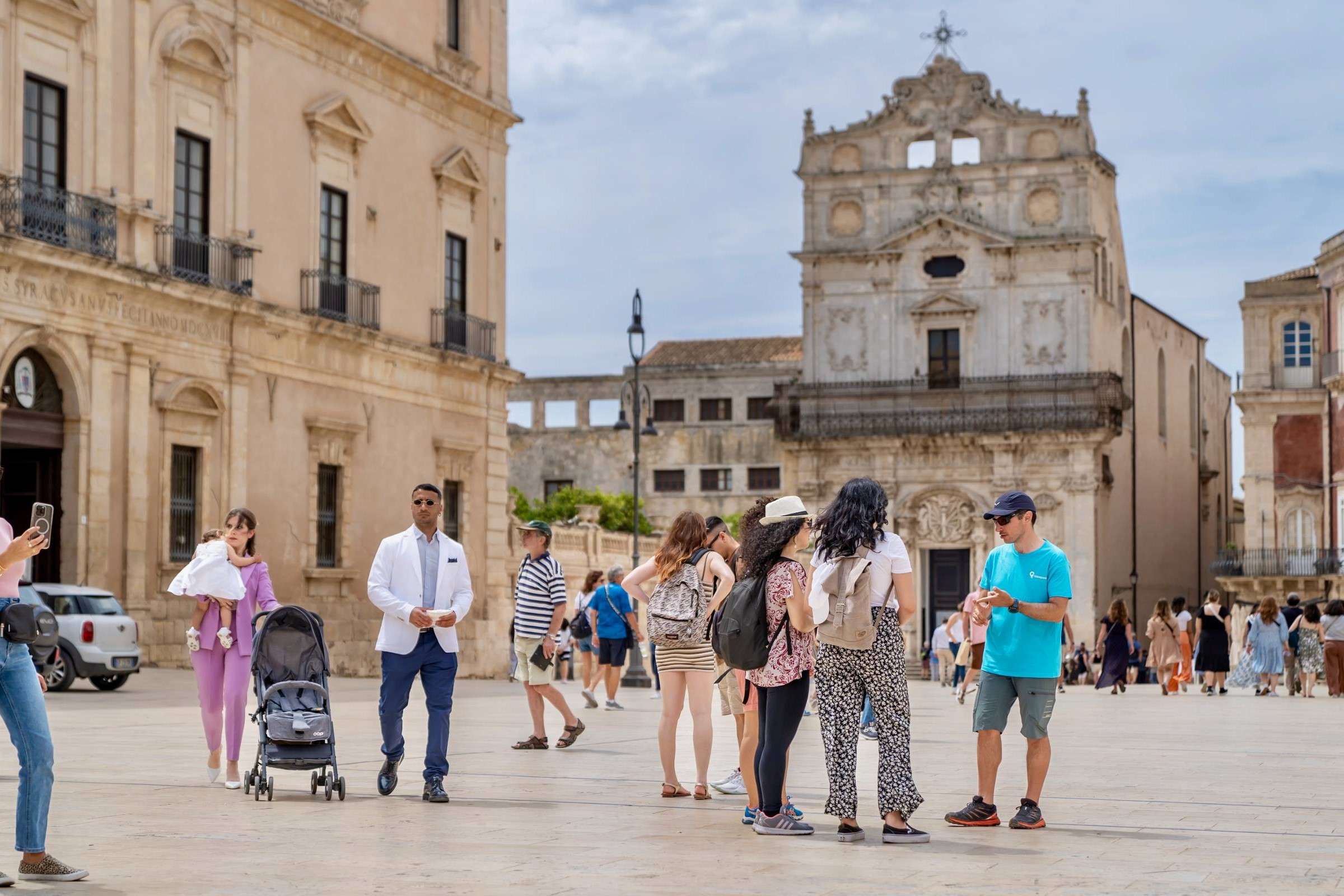
Your local guide will be keen to make the tour as personal as possible. He will assist you with his expertise and recall amusing anecdotes for you before driving you back to your hotel.
What's not included
Gratuities
Available languages
Guide guide
PT
EN
IT
FR
Reviews breakdown
Tripadvisor
4.0
1 reviews
5★
0
4★
1
3★
0
2★
0
1★
0
Important information
Specialized infant seats are available
Not recommended for travelers with spinal injuries
Infants and small children can ride in a pram or stroller
Suitable for all physical fitness levels
Children must be accompanied by an adult
Due to availability, please be aware that for groups of more than 8 participants vehicles used in the excursions may be different from description and vary at the management's discretion.
Please be aware that beyond the time limit of the cancellation policy, it is not possible to amend or cancel bookings in any way, including health conditions. The only exception for changing dates is only with a certificate of positivity of Sars Covid 2.
About Cagliari
Cagliari, the vibrant capital of Sardinia, is a captivating blend of ancient history, stunning Mediterranean landscapes, and a lively local culture. Known for its rich archaeological sites, bustling markets, and breathtaking coastal views, Cagliari offers a unique travel experience that combines the charm of a historic city with the allure of a seaside destination.
Top Attractions
Bastione di Saint Remy
A historic bastion offering panoramic views of the city and the Mediterranean Sea. It's a great spot for a leisurely stroll and enjoying the sunset.
Historical
1-2 hours
Free
Poetto Beach
One of the most popular beaches in Cagliari, known for its white sand and clear waters. It's a great spot for swimming, sunbathing, and water sports.
Beach
Half day to full day
Free
Cagliari Cathedral
A stunning example of Pisan-Romanesque architecture, the cathedral is a must-visit for its historical significance and beautiful interior.
Religious
1 hour
Free entry, donations welcome
San Benedetto Market
A bustling market offering a variety of fresh produce, local specialties, and traditional crafts. It's a great place to experience the local culture and cuisine.
Cultural
1-2 hours
Free entry, prices vary
Cittadella dei Musei
A complex of museums housing a variety of collections, including archaeology, natural history, and art. It's a great place to learn about Sardinia's rich history and culture.
Museum
2-3 hours
€7 for full access to all museums
Must-Try Local Dishes
Bottarga
Salted and cured fish roe, typically from mullet or tuna, served in thin slices.
Dish
Contains fish
Pecorino Sardo
A hard, sharp cheese made from sheep's milk, often served with honey or local bread.
Dish
Contains dairy
Porceddu
Suckling pig roasted with myrtle berries, a traditional Sardinian dish.
Dish
Contains pork
Culurgiones
Stuffed pasta filled with potatoes, mint, and pecorino cheese, similar to ravioli.
Dish
Contains dairy
Popular Activities
Hiking
Caving
Water sports
Sunbathing
Beach walks
Spa treatments
Visiting museums
Exploring historic sites
Best Time to Visit
June to September
The peak season in Cagliari is characterized by warm, sunny weather and vibrant outdoor activities. This is the best time to enjoy the beaches, explore the city, and attend local festivals.
20-35°C
68-95°F
Practical Information
Language
- Official: Italian
- Widely spoken: Italian, Sardinian, English
- English: Moderately spoken in tourist areas
Currency
Euro (EUR)
Time Zone
GMT+1 (CET), GMT+2 (CEST) during daylight saving time
Electricity
230VV, 50HzHz
Safety Information
Overall Safety Rating: Generally safe
Cagliari is generally safe for travelers, with low crime rates and a welcoming atmosphere. However, as with any destination, it's important to be aware of your surroundings and take precautions to ensure a safe and enjoyable trip.
Important Precautions:
- • Be aware of your surroundings, especially in crowded areas
- • Keep valuables secure and out of sight
- • Use licensed taxis or ride-sharing apps
Getting there
By air
- Cagliari Elmas Airport • 7 km from city center
By train
Cagliari Centrale
By bus
Viale Bonaria, Piazza Matteotti
Getting around
Public transport
The CTM bus system covers the entire city and is the most convenient way to get around. Buses are frequent and affordable.
Taxis
Available • Apps: FreeNow, ItTaxi
Rentals
Car, Bike, Scooter
Neighborhoods
Castello
Marina
Stampace
Poetto
Day trips
Chia
35 km • Full day
A beautiful coastal area known for its stunning beaches, clear waters, and historic towers.
Nora
35 km • Full day
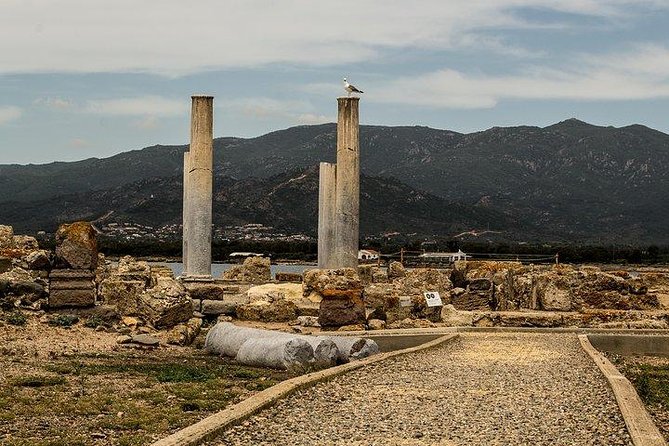
An ancient Roman city with well-preserved ruins, including a theater, temples, and baths.
Villasimius
50 km • Full day
A picturesque coastal town known for its stunning beaches, clear waters, and natural parks.
Festivals
Fiera di Sant'Efisio • May 1st
Cagliari International Jazz Festival • September
Autunno in Barbagia • September to October
Pro tips
- Visit the Bastione di Saint Remy for the best panoramic views of the city and the Mediterranean Sea
- Explore the historic Castello neighborhood for a glimpse into Cagliari's rich history and culture
- Try local specialties like bottarga, pecorino cheese, and seadas at the San Benedetto Market
- Take a day trip to the stunning beaches and ancient ruins of Nora or Chia for a taste of Sardinia's natural beauty and history
- Experience the vibrant nightlife and dining scene in the Marina neighborhood, with its mix of historic and modern attractions
From $25
per person
Price varies by option
Secure booking
Free cancellation available
Instant confirmation