Cagliari: Full-Day Private Tour of Prehistoric Sardinian from Chia
Active
7h - 8h
For a full refund, cancel at least 24 hours before the scheduled departure time.
Instant confirmation
Mobile or paper ticket accepted
About this experience
Full-day private tour to discover the prehistoric Sardinian, from the final neolithic to the bronze age visiting necropolis, giant tomb, and nuraghe.
Available options
Full Day Tour
Full day tour to discover the prehistoric sardinian, from the final neolithic to the bronze age visiting necropolis, giant tomb and nuraghe.<br/>Pickup included
What's included
Professional guide
Bottled water
Hotel/port pickup and drop-off only for Chia area
Guaranteed to skip the long lines
Private experience
Insurance
Detailed itinerary
1
With this full-day private tour, you will go through the beautiful panoramic Chia-Teulada coastal road (departing from Chia), already traveled by the ancient Romans and Carthaginian population, passing through little towns like Teulada, Santadi e Villaperuccio. The transfer to the archaeological site takes around 80 minutes with our jeep (no air conditioning).
2
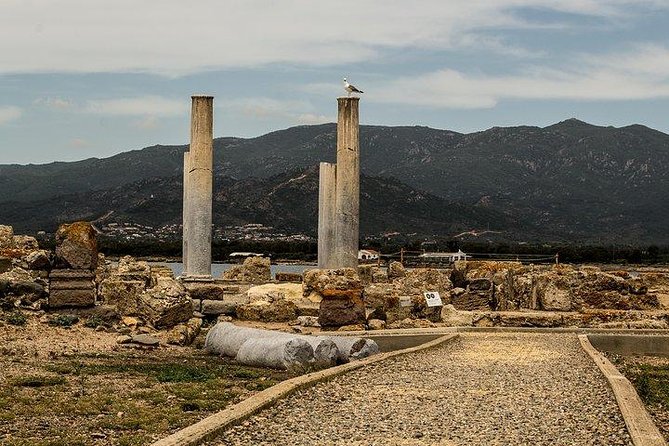
You will visit this prehistorical ancient necropolis of about 2 kilometers of extension.
There are more than 40 tombs of various shapes and sizes. Two of the Domus are especially crucial as they contain Neolithic religious symbols. One has a bull symbol sculpted on the entrance wall and other symbols, including the eyes and breasts of the Goddess Mother and a false door representing the passage to the other world. The other tomb has horns of various shapes, referring to the cult of the bull god, sculpted into the ceiling and on the step leading to the entrance of the Domus. The pottery found during excavations bears witness to the continued use of the necropolis in the Final Neolithic and the Recent Aeneolithic up to the Early Bronze Age. To reach the tombs, we need to climb 120 steps. We recommend doing it between July and August if you are used to it.
3
After you discover the fantastic Giant Tomb, this name given by local people and archaeologists to a type of Sardinian megalithic gallery grave built during the Bronze Age by the Nuragic civilization, they were collective tombs. They can be found throughout Sardinia, with 800 being discovered there. To reach the tomb is necessary to hike up for 1 km. We recommend visiting between the hottest months if you are used to it.
4
The Nuraghe is the primary type of ancient megalithic edifice found in Sardinia, developed during the Nuragic Age between 1900 and 730 BCE. Today it has come to be the symbol of Sardinia and its distinctive culture, the Nuragic civilization. More than 7000 nuraghes have been found, though archeologists believe that initially, there were more than 10,000.
5
Your local guide will be keen to make the tour as personal as possible. He will assist you with his expertise and recall amusing anecdotes for you before driving you back to your hotel.
What's not included
Gratuities
Available languages
Guide guide
PT
EN
IT
FR
Important information
Not recommended for travelers with poor cardiovascular health
Not recommended for travelers with spinal injuries
Not recommended for pregnant travelers
Travelers should have at least a moderate level of physical fitness
Due to availability, please be aware that vehicles used in the excursions may be different from description and vary at the management's discretion.
About Cagliari
Cagliari, the vibrant capital of Sardinia, is a captivating blend of ancient history, stunning Mediterranean landscapes, and a lively local culture. Known for its rich archaeological sites, bustling markets, and breathtaking coastal views, Cagliari offers a unique travel experience that combines the charm of a historic city with the allure of a seaside destination.
Top Attractions
Bastione di Saint Remy
A historic bastion offering panoramic views of the city and the Mediterranean Sea. It's a great spot for a leisurely stroll and enjoying the sunset.
Historical
1-2 hours
Free
Poetto Beach
One of the most popular beaches in Cagliari, known for its white sand and clear waters. It's a great spot for swimming, sunbathing, and water sports.
Beach
Half day to full day
Free
Cagliari Cathedral
A stunning example of Pisan-Romanesque architecture, the cathedral is a must-visit for its historical significance and beautiful interior.
Religious
1 hour
Free entry, donations welcome
San Benedetto Market
A bustling market offering a variety of fresh produce, local specialties, and traditional crafts. It's a great place to experience the local culture and cuisine.
Cultural
1-2 hours
Free entry, prices vary
Cittadella dei Musei
A complex of museums housing a variety of collections, including archaeology, natural history, and art. It's a great place to learn about Sardinia's rich history and culture.
Museum
2-3 hours
€7 for full access to all museums
Must-Try Local Dishes
Bottarga
Salted and cured fish roe, typically from mullet or tuna, served in thin slices.
Dish
Contains fish
Pecorino Sardo
A hard, sharp cheese made from sheep's milk, often served with honey or local bread.
Dish
Contains dairy
Porceddu
Suckling pig roasted with myrtle berries, a traditional Sardinian dish.
Dish
Contains pork
Culurgiones
Stuffed pasta filled with potatoes, mint, and pecorino cheese, similar to ravioli.
Dish
Contains dairy
Popular Activities
Hiking
Caving
Water sports
Sunbathing
Beach walks
Spa treatments
Visiting museums
Exploring historic sites
Best Time to Visit
June to September
The peak season in Cagliari is characterized by warm, sunny weather and vibrant outdoor activities. This is the best time to enjoy the beaches, explore the city, and attend local festivals.
20-35°C
68-95°F
Practical Information
Language
- Official: Italian
- Widely spoken: Italian, Sardinian, English
- English: Moderately spoken in tourist areas
Currency
Euro (EUR)
Time Zone
GMT+1 (CET), GMT+2 (CEST) during daylight saving time
Electricity
230VV, 50HzHz
Safety Information
Overall Safety Rating: Generally safe
Cagliari is generally safe for travelers, with low crime rates and a welcoming atmosphere. However, as with any destination, it's important to be aware of your surroundings and take precautions to ensure a safe and enjoyable trip.
Important Precautions:
- • Be aware of your surroundings, especially in crowded areas
- • Keep valuables secure and out of sight
- • Use licensed taxis or ride-sharing apps
Getting there
By air
- Cagliari Elmas Airport • 7 km from city center
By train
Cagliari Centrale
By bus
Viale Bonaria, Piazza Matteotti
Getting around
Public transport
The CTM bus system covers the entire city and is the most convenient way to get around. Buses are frequent and affordable.
Taxis
Available • Apps: FreeNow, ItTaxi
Rentals
Car, Bike, Scooter
Neighborhoods
Castello
Marina
Stampace
Poetto
Day trips
Chia
35 km • Full day
A beautiful coastal area known for its stunning beaches, clear waters, and historic towers.
Nora
35 km • Full day
An ancient Roman city with well-preserved ruins, including a theater, temples, and baths.
Villasimius
50 km • Full day
A picturesque coastal town known for its stunning beaches, clear waters, and natural parks.
Festivals
Fiera di Sant'Efisio • May 1st
Cagliari International Jazz Festival • September
Autunno in Barbagia • September to October
Pro tips
- Visit the Bastione di Saint Remy for the best panoramic views of the city and the Mediterranean Sea
- Explore the historic Castello neighborhood for a glimpse into Cagliari's rich history and culture
- Try local specialties like bottarga, pecorino cheese, and seadas at the San Benedetto Market
- Take a day trip to the stunning beaches and ancient ruins of Nora or Chia for a taste of Sardinia's natural beauty and history
- Experience the vibrant nightlife and dining scene in the Marina neighborhood, with its mix of historic and modern attractions
From $25
per person
Price varies by option
Secure booking
Free cancellation available
Instant confirmation