Cagliari Sightseeing Half-day Private Tour
Active
4h
For a full refund, cancel at least 24 hours before the scheduled departure time.
Instant confirmation
Mobile or paper ticket accepted
About this experience
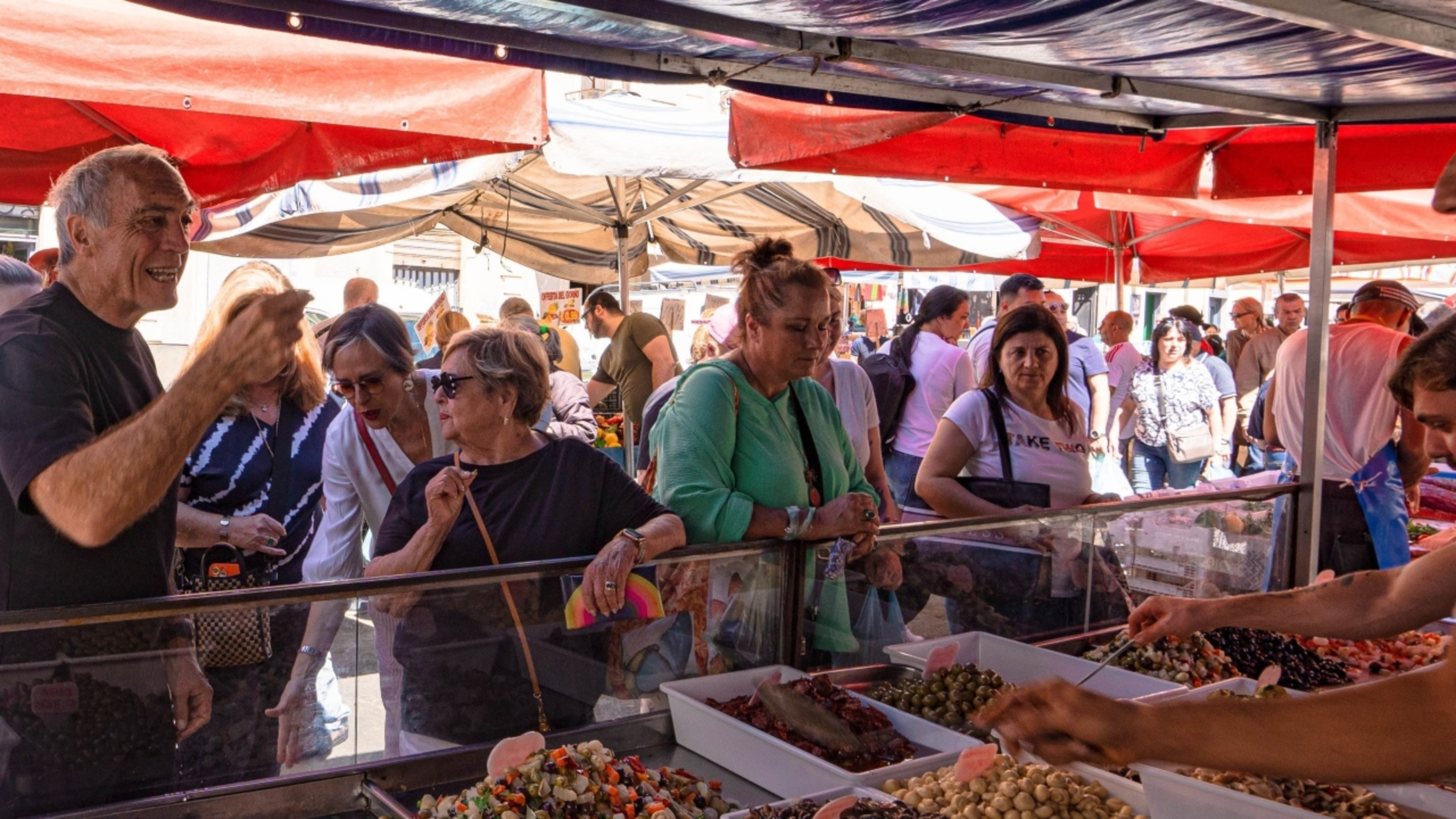
Wonderful 4 hours experience in the ancient medieval city of Cagliari. Our guide will take you for a walk through Cagliari's old streets like Palazzo Regio (the Royal Palace), the Cathedral, and the towers; these are just some examples of the main attractions that Cagliari's old quarter offers. In Sardinian language this area is called Castle quarter. This excursion also includes a walk through the shopping streets and Cagliari's main markets, in which it's possible to taste some delicious Sardinian products. If you choose the 5 hours underground, you will have a striking and unexpected experience, a journey through the history of Cagliari between the cavities of the underground city. In an atmosphere full of charm, we will visit the underground areas that tell the history, mysteries and legends of Cagliari.
Available options
Private experience 7 people
7 people<br/>Pickup included
Cagliari + Underground 7p
Duration: 5 hours<br/>Underground experience 7 peop.<br/>Pickup included
Cagliari + Underground
Duration: 5 hours<br/>Underground Experience: A striking and unexpected experience, a journey through the history of Cagliari between the cavities of the underground city<br/>Pickup included
Private Experience
During this experience, Bitan guides allow you to go for a walk through Cagliari’s ancient streets.<br/>Pickup included
What's included
Transport by air-conditioned minivan with free wifi service, due to availability, please be aware that vehicles used in the excursions may be different from description and vary at the management's discretion.
Tickets
Bottled water
Round-trip private transfer
Private experience
Insurance
Professional Tour Guide
Detailed itinerary
1
Join this tour during which you will visit the historic districts of this town rich in culture and history. Start the walking tour of about 2 hours, from the top of the hills down to the alleys. A guide will accompany you to visit the monuments, churches, and most important places, such as the Royal Palace, the Dome of Cagliari, and other small churches, the Pisan Walls and Towers.
In Cagliari, monuments and historic sites aren't open to visitors every day. The opening times may vary from place to place, and some of these monuments may be closed without prior notice, due to exclusive events or essential ceremonies.
Upon previous request, we will be able to drive you to Poetto Beach and the picturesque San Benedetto's Market (in this case, the tour of the city center will be shorter).
The same itinerary is also offered by the car, as a hop on and hop off tour for the ones that prefer not to walk (in this case it won't be possible to visit the monuments inside with our guide).
2
The building dates back to the fourteenth century, and it became the seat of the Viceroy since 1337, on orders of Peter IV of Aragon. The palace underwent several changes, the Piedmontese engineers de Guibert and de Vincenti, who built the main staircase leading to the first floor. In 1735, Della Vallea was the author of the first floor's restoration works (“piano nobile”). The façade overlooking west, with the main gate perfectly aligned to the staircase, was restored in 1769, the same date written in the inscription on the French window's lunette that opens onto the central balcony. The royal family, exiled from Turin, which was occupied by Napoleon, settled there from 1799 to 1815. In 1885, the building became the representative seat of the Province, which immediately began the renovation works. The Council Room's decorative works were committed respectively to Domenico Bruschi from Perugia for the frescoes and to Angeletti for the stuccoes.
3
At the beginning of the fourteenth century, Pisa, in response to the threatening Aragon rise in the Mediterranean Sea, erected impressive towers to reinforce its stronghold in the south of Sardinia. In 1535, Charles V, the powerful sovereign of the Holy Roman Empire, included them among Europe's best military works.
Completed in 1307, with its walls of thick limestone blocks, its narrow loopholes, and its heavy gates, the Elephant Tower protected the south-western side of Castello; developed on four levels with a total height of more than thirty meters, it was also an excellent lookout station against any possible attack from the sea.
Even today, it is one of the most striking accesses to Castello, while in the past, it was also used as a powder magazine, armory, and prison.
Restored to its original appearance, nowadays, the Elephant Tower is open to visitors by the entrance at the right side of the church of St. Joseph.
4
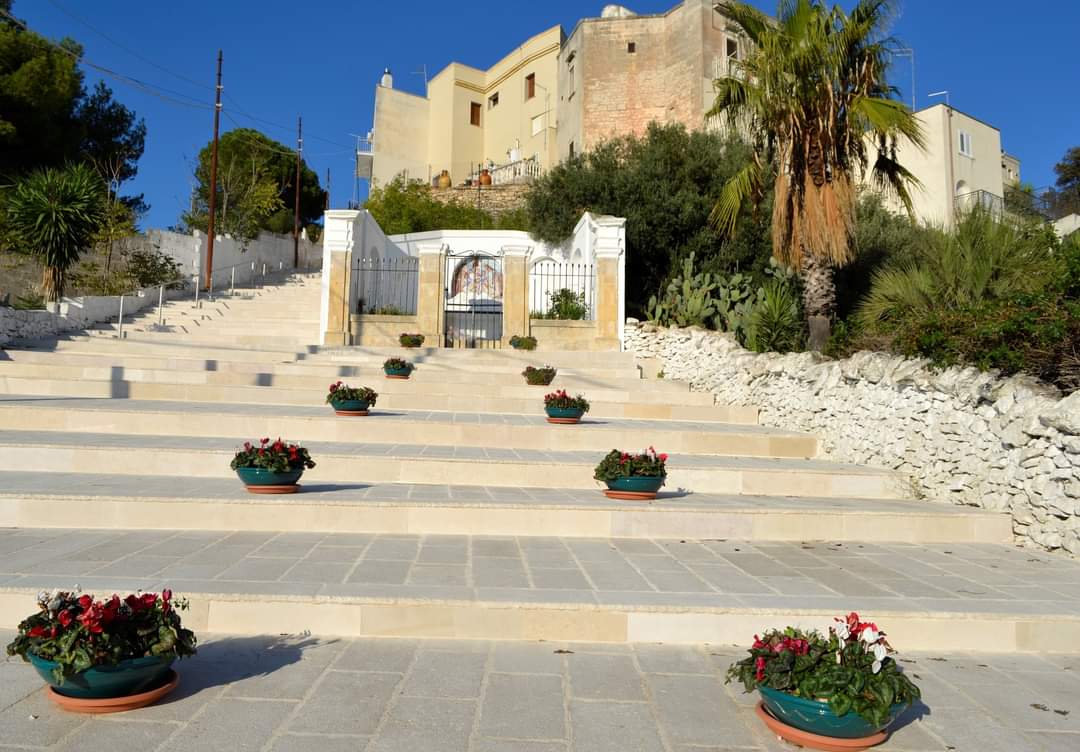
The Saint Remy Rampart is to be numbered among Cagliari's most valuable monumental complexes. Built on the medieval boundary walls' ancient defensive curtains, it owes its name to the first Piedmontese Viceroy, Baron of Saint Remy. The majestic panoramic terrace and the underlying gallery was known as Passeggiata Coperta, was designed in 1896 by Giuseppe Costa e Fulgenzio Setti. The imposing structure, built in a classic style, with white and yellow limestone columns and corinthian capitals, was inaugurated in 1902. In 1943, the double flight of steps and the triumphal arch were gravely damaged by World War II bombings, but later, the destroyed parts were accurately reconstructed. Over time, the Passeggiata Coperta housed several activities. At first, the gallery was used as a banquet hall, but in the war, period served as an infirmary and later as a shelter for people displaced by the bombings.
In 1948, it housed the first edition of the International Trade Fair of Sardinia.
5
Porta Cristina is an access gate to the Castello district that connects Buoncammino Avenue to Arsenale Square.
It was built according to the Porta Angelica model in Rome and is dedicated to Maria Cristina of Bourbon, wife of King Carlo Felice di Savoia.
In neoclassical style, according to a project by Count Carlo Pilo Boyl, approved by the king. Its lines present the open access arch between two pilasters that support an entablature delimited by two projecting cornices, within which it is placed a semi-circular lunette that has this dedicatory inscription:
“Karolus Felix Rex
viam planiorem brevioremque a Castro Caralis
ad portam arcis regiam aperuit
Maria Cristina Regina
Portae egressus in apertam viam nomen suum imposuit
MDCCCXXV
Januario Rotario regni praeside”
What's not included
Gratuities
Underground experience (optional)
Available languages
Guide guide
PT
EN
IT
FR
Reviews breakdown
Viator
4.8
6 reviews
5★
5
4★
1
3★
0
2★
0
1★
0
Tripadvisor
5.0
2 reviews
5★
2
4★
0
3★
0
2★
0
1★
0
Important information
Specialized infant seats are available
Not recommended for travelers with spinal injuries
Not recommended for travelers with poor cardiovascular health
Infants and small children can ride in a pram or stroller
Suitable for all physical fitness levels
Children must be accompanied by an adult
Due to availability, please be aware that for groups of more than 8 participants, vehicles used in the excursions may be different from description and vary at the management's discretion.
Please be aware that there could be exceptional closures at Cagliari attractions. This information is correct at the time of issue and is subject to change at short notice, at the discretion of the attraction.
Not recommended for travelers with mobility issues
Important notes
• Dress code is smart casual
• A dress code is required to enter places of worship and selected museums. No shorts or sleeveless tops allowed. Knees and shoulders MUST be covered for both men and women. You may risk refused entry if you fail to comply with these dress requirements
• Not recommended for participants with heart complaints or other serious medical conditions
• Not recommended for participants with back problems
• Free service pickup/dropoff only for Domus de Maria and Chia area
• Russian and german guide there's a surcharge
About Cagliari
Cagliari, the vibrant capital of Sardinia, is a captivating blend of ancient history, stunning Mediterranean landscapes, and a lively local culture. Known for its rich archaeological sites, bustling markets, and breathtaking coastal views, Cagliari offers a unique travel experience that combines the charm of a historic city with the allure of a seaside destination.
Top Attractions
Bastione di Saint Remy
A historic bastion offering panoramic views of the city and the Mediterranean Sea. It's a great spot for a leisurely stroll and enjoying the sunset.
Historical
1-2 hours
Free
Poetto Beach
One of the most popular beaches in Cagliari, known for its white sand and clear waters. It's a great spot for swimming, sunbathing, and water sports.
Beach
Half day to full day
Free
Cagliari Cathedral
A stunning example of Pisan-Romanesque architecture, the cathedral is a must-visit for its historical significance and beautiful interior.
Religious
1 hour
Free entry, donations welcome
San Benedetto Market
A bustling market offering a variety of fresh produce, local specialties, and traditional crafts. It's a great place to experience the local culture and cuisine.
Cultural
1-2 hours
Free entry, prices vary
Cittadella dei Musei
A complex of museums housing a variety of collections, including archaeology, natural history, and art. It's a great place to learn about Sardinia's rich history and culture.
Museum
2-3 hours
€7 for full access to all museums
Must-Try Local Dishes
Bottarga
Salted and cured fish roe, typically from mullet or tuna, served in thin slices.
Dish
Contains fish
Pecorino Sardo
A hard, sharp cheese made from sheep's milk, often served with honey or local bread.
Dish
Contains dairy
Porceddu
Suckling pig roasted with myrtle berries, a traditional Sardinian dish.
Dish
Contains pork
Culurgiones
Stuffed pasta filled with potatoes, mint, and pecorino cheese, similar to ravioli.
Dish
Contains dairy
Popular Activities
Hiking
Caving
Water sports
Sunbathing
Beach walks
Spa treatments
Visiting museums
Exploring historic sites
Best Time to Visit
June to September
The peak season in Cagliari is characterized by warm, sunny weather and vibrant outdoor activities. This is the best time to enjoy the beaches, explore the city, and attend local festivals.
20-35°C
68-95°F
Practical Information
Language
- Official: Italian
- Widely spoken: Italian, Sardinian, English
- English: Moderately spoken in tourist areas
Currency
Euro (EUR)
Time Zone
GMT+1 (CET), GMT+2 (CEST) during daylight saving time
Electricity
230VV, 50HzHz
Safety Information
Overall Safety Rating: Generally safe
Cagliari is generally safe for travelers, with low crime rates and a welcoming atmosphere. However, as with any destination, it's important to be aware of your surroundings and take precautions to ensure a safe and enjoyable trip.
Important Precautions:
- • Be aware of your surroundings, especially in crowded areas
- • Keep valuables secure and out of sight
- • Use licensed taxis or ride-sharing apps
Getting there
By air
- Cagliari Elmas Airport • 7 km from city center
By train
Cagliari Centrale
By bus
Viale Bonaria, Piazza Matteotti
Getting around
Public transport
The CTM bus system covers the entire city and is the most convenient way to get around. Buses are frequent and affordable.
Taxis
Available • Apps: FreeNow, ItTaxi
Rentals
Car, Bike, Scooter
Neighborhoods
Castello
Marina
Stampace
Poetto
Day trips
Chia
35 km • Full day
A beautiful coastal area known for its stunning beaches, clear waters, and historic towers.
Nora
35 km • Full day
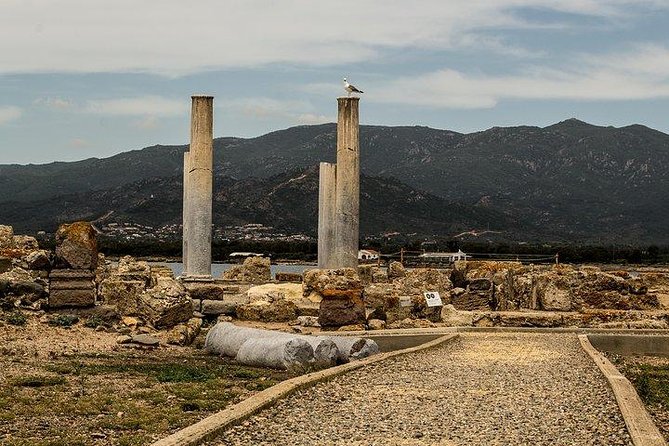
An ancient Roman city with well-preserved ruins, including a theater, temples, and baths.
Villasimius
50 km • Full day
A picturesque coastal town known for its stunning beaches, clear waters, and natural parks.
Festivals
Fiera di Sant'Efisio • May 1st
Cagliari International Jazz Festival • September
Autunno in Barbagia • September to October
Pro tips
- Visit the Bastione di Saint Remy for the best panoramic views of the city and the Mediterranean Sea
- Explore the historic Castello neighborhood for a glimpse into Cagliari's rich history and culture
- Try local specialties like bottarga, pecorino cheese, and seadas at the San Benedetto Market
- Take a day trip to the stunning beaches and ancient ruins of Nora or Chia for a taste of Sardinia's natural beauty and history
- Experience the vibrant nightlife and dining scene in the Marina neighborhood, with its mix of historic and modern attractions
From $25
per person
Price varies by option
Secure booking
Free cancellation available
Instant confirmation