Historic Medina Walking tour: Uncover Tangier's Secrets
Active
2h - 4h
For a full refund, cancel at least 24 hours before the scheduled departure time.
Instant confirmation
Mobile or paper ticket accepted
About this experience
Discover Tangier, Morocco, on a unique journey where history, literature, cinema, and art come alive. Explore the ancient medina's narrow streets and bustling markets, and walk in the footsteps of literary giants at the Phoenician tombs with stunning views of the Strait of Gibraltar. Visit iconic film locations and dive into the vibrant art scene with hidden galleries and street murals.
Guided by a passionate storyteller, you'll uncover Tangier's rich history and cultural influences. Book now for an unforgettable cultural adventure that transcends time.
Available options
Historic Medina Walking tour: Uncover Tangier's Secrets
Pickup included
What's included
Entry fee for Kasbah Museum
Entry fee for Tangier American Legation Museum
Coffee and/or Tea
Local tour guide in Tangier
Detailed itinerary
1
Starting the tour from The Grand Socco, short for Grand Socco Square, is a lively and historically important public square situated in the heart of Tangier, Morocco. The name "Socco" comes from the Arabic word "Souk," which means market. For many years, the Grand Socco has been a central hub for commerce and cultural exchange. Serving as a gateway between the old medina and the modern city, this bustling intersection is where locals and visitors gather to experience its dynamic atmosphere. The square is notable for its open space, a mix of traditional and colonial architecture, and the constant flow of people. It is not only a commercial center but also a meeting point for different cultures and communities. Its significance extends beyond its physical space, as it has played a role in various cultural and political events throughout history. Notably, it was here that King Mohammed V of Morocco declared the country's independence in 1947.
2
Stop 2
Steeped in history, the Tangier Casbah stands as a testament to the city's rich and diverse past. Dating back to medieval times, this ancient fortress has witnessed the ebb and flow of various civilizations, from Phoenician and Roman influences to Arab and Andalusian contributions. The Casbah's architecture is a mosaic of these cultural legacies.
Perched on the highest point of the city, the Casbah served as a strategic stronghold against invaders. Its towering walls and narrow, winding streets tell tales of battles fought and victories won. Over the centuries, it has been a melting pot of cultures, fostering a unique blend of traditions that is distinctly Tangier.
As we explore the Casbah, we will encounter architectural wonders such as the Dar el-Makhzen palace, showcasing Moroccan craftsmanship and elegance, and the Kasbah Mosque, with its ornate details reflecting the city's Islamic heritage.
3
Our tour continues to the Museum of Dar El Makhzen, housed in the former sultan's palace. This museum focuses on the history of the area from prehistoric times to the 19th century, with well-presented exhibits in French and Arabic.
Begin by working your way anticlockwise around the first courtyard before heading inside to explore the rest of the displays. Don't miss a stroll through the charming Andalusian garden. Highlights include the mosaic of Venus from Volubilis, various statues, and two giant replica maps. The first map tracks trade routes from Phoenician metal trade to 21st-century electronic goods, while the second is a beautiful map of the known world made in Tangier in 1154 (note: it's upside down from the viewer's perspective).
The museum is located inside the medina. Follow the perimeter to the western end, ascend to the highest part of the city, enter through the Bab Kasbah gate, and follow the road to the museum.
4
Our next stop is the old medina, which writer W. Burroughs famously referred to as the "switchboard zone." This maze of narrow alleys and ancient secrets has long captivated artists and writers. Within its labyrinth, you’ll find a sensory symphony: the aroma of spices wafting through bustling markets, and the call to prayer blending with vibrant street life.
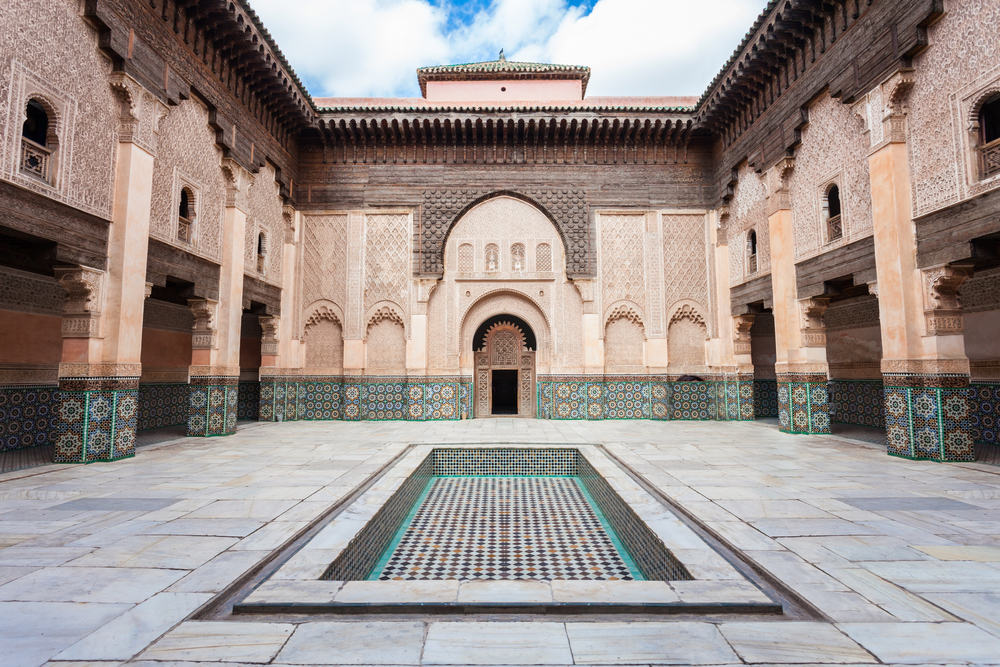
The medina's vivid colors, intricate patterns, and hidden courtyards create a visual feast, reflecting the bohemian spirit cherished by many. Amidst the ancient architecture, discover a sense of liberation and refuge from monotony. The medina's timeless charm fuels creativity, offering a sanctuary where unconventional beauty and the quest for soulful existence converge.
Today, the air is thick with the fragrance of exotic spices, and the sounds of street life harmonize with the distant call to prayer. In the medina, you can explore various galleries showcasing a diverse range of artwork.
5
The American Legation in Tangier holds a unique and significant place in the city's history. Established in 1821, it is the first property acquired abroad by the United States government and is recognized as the oldest American diplomatic property in the world. One of the most notable events associated with the American Legation is the signing of the Moroccan-American Treaty of Friendship in 1786, which predates the U.S. Constitution and marks the beginning of diplomatic relations between the two nations. This treaty emphasizes the longstanding and amicable connection between the United States and Morocco.
Today, the American Legation serves as a museum and cultural center, showcasing exhibitions that celebrate the historical, cultural, and artistic ties between the United States and Morocco. It stands as a testament to the enduring diplomatic relationship and symbolizes the shared values and mutual respect between the two nations. The admission fee is 5 USD per person.
6
Our last stop before the drop-off is the Nahon Synagogue, located on a dead-end street off the rue des Synagogues in the Beni Idir quarter of the Tangier medina. Constructed in the 19th century by Moïse Nahon, a prominent educator and scholar from an influential Jewish family in Tangier, this synagogue ceased activity in the second half of the 20th century and subsequently fell into disrepair. It was restored in 1994 and now functions as a museum, preserving and showcasing the rich Jewish heritage of Tangier.
Available languages
Guide guide
EN
FR
ES
Reviews breakdown
Tripadvisor
5.0
1 reviews
5★
1
4★
0
3★
0
2★
0
1★
0
Important information
Service animals allowed
Public transportation options are available nearby
Suitable for all physical fitness levels
About Tangier
Tangier is a vibrant port city in northern Morocco, where African and European influences blend seamlessly. Known for its rich history, stunning Mediterranean coastline, and unique cultural heritage, it offers a captivating mix of old-world charm and modern allure.
Top Attractions
Kasbah Museum
Housed in the former sultan's palace, this museum offers a glimpse into Tangier's rich history and cultural heritage.
Historical
1-2 hours
50 MAD
Cave of Hercules
A legendary cave with a unique natural formation that resembles the map of Africa, linked to the myth of Hercules.
Historical
1-2 hours
Free
Grand Socco
A bustling square at the entrance to the medina, serving as a hub for locals and tourists alike.
Cultural
30 minutes to a few hours
Free
Tangier Beach
A popular beach for swimming, sunbathing, and water sports, offering beautiful views of the Strait of Gibraltar.
Beach
A few hours to a full day
Free (rentals and activities may have fees)
Must-Try Local Dishes
Tangine
A slow-cooked savory stew made with meat, vegetables, and spices, traditionally cooked in a ceramic pot called a tangine.
Main Dish
Vegetarian and vegan options available
Couscous
Steamed semolina grains served with vegetables and meat, a staple of Moroccan cuisine.
Main Dish
Vegetarian and vegan options available
Harira
A hearty soup made with lentils, chickpeas, tomatoes, and spices, often served during Ramadan.
Soup
Vegetarian and vegan options available
Msemen
A flaky, layered pancake or flatbread, often served with honey or jam.
Breakfast
Vegetarian and vegan options available
Popular Activities
Hiking in the nearby mountains
Water sports at Tangier Beach
Boat tours to nearby islands
Sunbathing and swimming at Tangier Beach
Enjoying a traditional hammam (spa)
Sipping mint tea at a café with a view
Exploring the medina and its markets
Visiting historic sites and museums
Best Time to Visit
Spring (March to May) and Fall (September to November)
Spring and fall offer pleasant weather with mild temperatures and fewer tourists, making it ideal for exploring the city and its attractions.
18°C to 25°C
64°F to 77°F
Practical Information
Language
- Official: Arabic
- Widely spoken: French, Spanish, English
- English: Moderately spoken in tourist areas
Currency
Moroccan Dirham (MAD)
Time Zone
GMT+1 (UTC+1)
Electricity
220VV, 50HzHz
Safety Information
Overall Safety Rating: Exercise caution
Tangier is generally safe for tourists, but petty crime and scams can occur, especially in crowded areas. Be aware of your surroundings and take precautions to protect your belongings.
Important Precautions:
- • Be cautious of your belongings in crowded areas
- • Use common sense and stay aware of your surroundings
- • Avoid walking alone late at night, especially in less touristy areas
Getting there
By air
- Tangier Ibn Battuta Airport • 14 km (8.7 miles) from city center
By train
Tangier Ville Station
By bus
Tangier Bus Station
Getting around
Public transport
Affordable and convenient, with routes covering major attractions and neighborhoods.
Taxis
Available • Apps: Careem, Heetch
Rentals
Car, Bike, Scooter
Neighborhoods
Medina
Ville Nouvelle
Kasbah
Day trips
Chafarinas Islands
40 km (25 miles) • Full day
A group of small islands with unique flora and fauna, offering opportunities for birdwatching and nature walks.
Asilah
30 km (18.6 miles) • Half day to Full day
A charming coastal town known for its well-preserved medina, colorful buildings, and vibrant arts scene.
Chefchaouen
100 km (62.1 miles) • Full day to Overnight
A picturesque mountain town known for its blue-washed buildings, narrow streets, and stunning natural surroundings.
Festivals
Tangier International Festival of the Mediterranean • July
Mawazine World Rhythms • May to June
Pro tips
- Visit the medina early in the morning or late in the afternoon to avoid the heat and crowds
- Hire a local guide to explore the medina and its hidden gems, as it can be disorienting and overwhelming for first-time visitors
- Try a traditional hammam (spa) for a relaxing and authentic Moroccan experience
- Sample the local cuisine at street food stalls and markets, but be cautious of food safety and choose busy stalls with high turnover
- Bargain politely when shopping in markets, as it is expected and can be a fun and interactive experience
From $25
per person
Price varies by option
Secure booking
Free cancellation available
Instant confirmation