5 Cemeteries of New Orleans - Anne Rice's & other famous graves
Active
2h
For a full refund, cancel at least 24 hours before the scheduled departure time.
Instant confirmation
Mobile or paper ticket accepted
About this experience
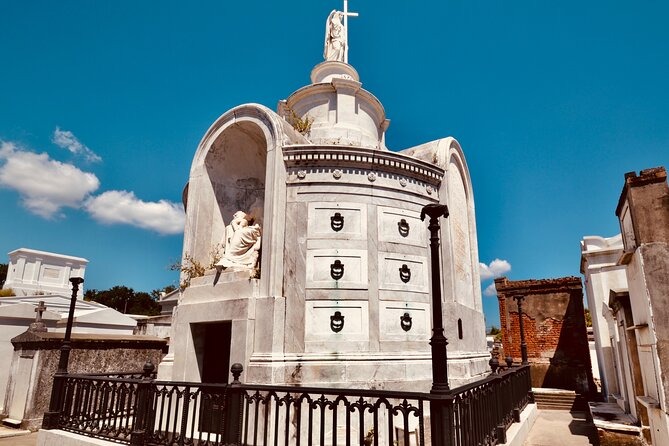
We'll go to FIVE CEMETERIES in New Orleans, including METAIRIE CEMETERY, dubbed by many as "the most beautiful cemetery in America." Don't worry - they are all next to one another, so this is a very leisurely walk. This is perhaps the only tour in New Orleans that covers such a variety of cemeteries and religions: we'll visit a non-denominational cemetery (Metairie Cemetery, where ANNE RICE, author of INTERVIEW WITH A VAMPIRE is buried), a Catholic cemetery; a Jewish cemetery; a Protestant cemetery; and a cemetery for the Katrina Hurricane victims and for yellow fever patients. We will visit celebrity graves in these cemeteries (authors, actors, musicians, politicians). The tour is FULLY NARATED, and guests get to hear the history of the different communities, and how and why New Orleans buries its loved ones so differently than the rest of the USA.
Available options
5 Cemeteries of New Orleans - Anne Rice's & other famous graves
What's included
The fascinating burial procedures of New Orleans, and a visit to six unique cemeteries
tour guide is included
Detailed itinerary
1
There are 3 cemeteries in this sub-heading. Our first cemetery on the tour is GREENWOOD CEMETERY - a stunningly beautiful cemetery with imposing graves and statues. We will visit several celebrity graves here. Guests will hear fascinating stories of how and why burial procedures in New Orleans are different than anywhere else in the United States. After Greenwood, we will visit CYPRESS GROVE CEMETERY, a Protestant graveyard, where we will visit more celebrity graves, and the two largest and most monumental graves in all of New Orleans. Guests will here the fascinating (and funny) story of the feud between the two families that built these two graves. We will also visit the GATES OF JUHAD CEMETERY - a Jewish cemetery, where guests will hear how Jewish burial practices in New Orleans differ than Catholic and Protestant burial practices.
2
Stop 2
Really known as METAIRIE CEMETERY, it is dubbed by many as THE MOST BEAUTIFUL CEMETERY IN AMERICA. We'll see the grave of ANNE RICE - the author of INTERVIEW W A VAMPIRE; the grave of Louie Prima (rock-and-roll musician), graves of actors, and some mafiosos as well.
3
This sub-category is actually THREE different cemeteries. In SAINT PATRICK #1 CEMETERY, guests will see the oldest Irish Catholic Cemetery in the city - a cemetery that was started by immigrants who escaped the Irish Potato Famine. It was the first generation of Irish New Orleanians, and because they were impoverished, they built modest graves in a haphazard manner. Across the street, we'll visit ST. PATRICK #2 CEMETERY, built a generation later, and guests will be see what new money in the Irish-American community meant in terms of a cemetery (imposing, monumental, and very ornate graves). Guests will also hear the story of the struggles of the Irish community in the early days of our city. Next door, we'll also visit CHARITY HOSPITAL CEMETERY - which is a mass burial ground strictly used in the past for victims of YELLOW FEVER. Guests we'll hear the sinister and macabre history of how and why yellow fever was so prevalent in New Orleans.
4
Stop 4
This is not only a beautiful hurricane victims' memorial, but also serves at a cemetery for 80 locals who tragically lost their lives in the 2005 hurricane. Guests will hear the touching story of their lives, and also fascinating detective story of how their bodies were "lost" by the local authorities, only to be "re-discovered" a few years later in an obscure local massive freezer, after which their received a beautiful burial, with all the respect and dignity that they deserved.
What's not included
Alcoholic Beverages
Lunch
Available languages
Guide guide
EN
Reviews breakdown
Viator
5.0
6 reviews
5★
6
4★
0
3★
0
2★
0
1★
0
Tripadvisor
4.9
8 reviews
5★
7
4★
1
3★
0
2★
0
1★
0
Important information
Public transportation options are available nearby
Not recommended for pregnant travelers
Suitable for all physical fitness levels
Meeting point
Right in front of Morning Call Coffee Stand, on Canal Blvd, in New Orleans. Bathroom access is free. The beignets and the New Orleans traditional cafe-au-lait coffee are phenomenal at this location.
Important notes
We keep it simple: giving the tour guide the name of the person who booked the tour for your whole group is usually enough for checking you in. The tour guide will already have that information from the system.
About New Orleans
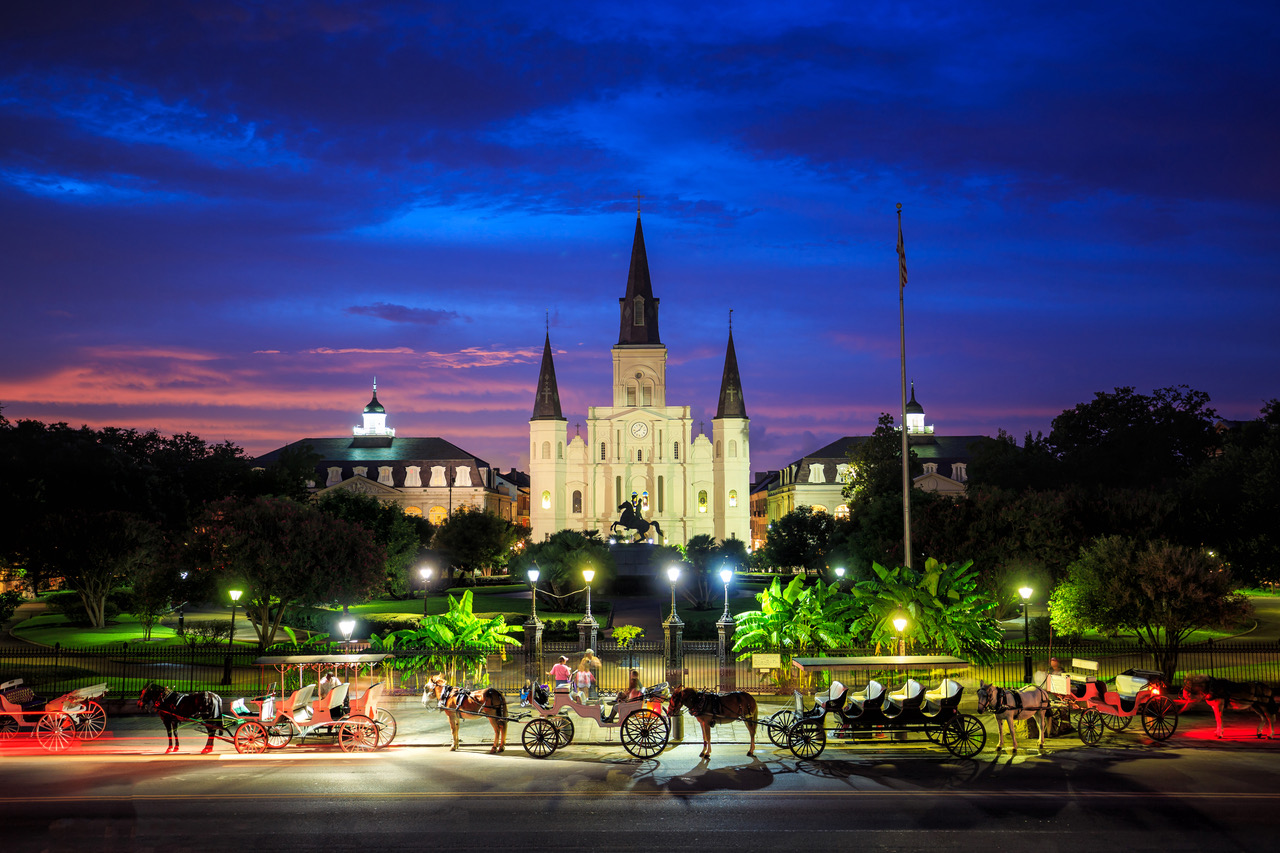
New Orleans is a vibrant city known for its rich cultural heritage, vibrant music scene, and unique Creole and Cajun cuisine. It's famous for its annual Mardi Gras festival, historic French Quarter, and the lively atmosphere of Bourbon Street.
Top Attractions
French Quarter
The heart of New Orleans, the French Quarter is known for its vibrant nightlife, historic architecture, and cultural landmarks.
Historical
Half day to full day
Free to explore, attractions vary
Garden District
A picturesque neighborhood known for its antebellum mansions, oak-lined streets, and historic cemeteries.
Historical
Half day
Free to explore, tours available
National WWII Museum
A world-class museum dedicated to the history of World War II, featuring immersive exhibits and personal stories.
Museum
2-3 hours
Moderate to expensive
City Park
A vast urban park featuring lush gardens, walking paths, and cultural attractions.
Nature
Half day
Free to enter, attractions vary
Frenchmen Street
A lively street known for its live music venues, art galleries, and vibrant nightlife.
Entertainment
Evening
Varies by venue
Must-Try Local Dishes
Gumbo
A rich and flavorful stew made with a dark roux, meat or seafood, and the 'holy trinity' of vegetables (onions, bell peppers, and celery).
Main Course
Can be made with chicken, sausage, or seafood, and may contain gluten and dairy.
Jambalaya
A one-pot dish made with rice, meat or seafood, and the 'holy trinity' of vegetables, seasoned with a variety of spices.
Main Course
Can be made with chicken, sausage, or seafood, and may contain gluten and dairy.
Beignets
A deep-fried pastry dusted with powdered sugar, often served with café au lait.
Dessert
Contains gluten and dairy.
Po' Boy
A classic New Orleans sandwich made with French bread, filled with fried seafood, meat, or vegetables, and topped with lettuce, tomatoes, and mayo.
Sandwich
Can be made with various fillings, and may contain gluten and dairy.
Popular Activities
Swamp tours
Kayaking
Biking
Spa treatments
Park picnics
Café hopping
Museum visits
Historic site tours
Best Time to Visit
February to April
This is the best time to visit New Orleans, with pleasant weather and major events like Mardi Gras. The city is lively, but also more crowded and expensive.
15-25°C
60-77°F
Practical Information
Language
- Official: English
- Widely spoken: French, Spanish, Vietnamese
- English: Widely spoken
Currency
United States Dollar (USD)
Time Zone
Central Time Zone (CT) (GMT-6)
Electricity
120VV, 60HzHz
Safety Information
Overall Safety Rating: Exercise caution
New Orleans is generally safe for tourists, but visitors should be aware of their surroundings and take precautions to avoid theft and other crimes.
Important Precautions:
- • Keep valuables secure and out of sight
- • Use licensed taxis and rideshare services
- • Be cautious of strangers offering services or assistance
Getting there
By air
- Louis Armstrong New Orleans International Airport • 15 miles (24 km) from downtown
By train
New Orleans Union Passenger Terminal
By bus
Greyhound Bus Station, Megabus Stop
Getting around
Public transport
The bus system is affordable and covers most of the city, but can be slow due to traffic.
Taxis
Available • Apps: Uber, Lyft
Rentals
Car, Bike, Scooter
Neighborhoods
French Quarter
Garden District
Warehouse District
Faubourg Marigny
Mid-City
Day trips
Plantation Country
30-40 miles (48-64 km) • Full day
Explore the historic plantations of Louisiana, with tours and exhibits showcasing the region's complex history.
Swamp and Bayou Tours
30-50 miles (48-80 km) • Half day to full day
Take a boat tour through the Louisiana swamps and bayous, with opportunities to see alligators, birds, and other wildlife.
Baton Rouge
80 miles (129 km) • Full day
Explore the capital of Louisiana, with its historic sites, museums, and universities.
Festivals
Mardi Gras • February or March (varies by year)
Jazz & Heritage Festival • Late April to early May (two weekends)
French Quarter Festival • April (four days)
Pro tips
- Visit during the off-peak season for fewer crowds and lower prices
- Explore the city's diverse neighborhoods, each with its own unique character and attractions
- Try local cuisine and support local businesses and restaurants
- Use public transportation, such as buses and streetcars, to get around the city and save money
- Be cautious of your surroundings and take precautions to avoid theft and other crimes
From $25
per person
Price varies by option
Secure booking
Free cancellation available
Instant confirmation