Shore Excursion: Buenos Aires PREMIUM City Tour for small groups
Active
5h
For a full refund, cancel at least 24 hours before the scheduled departure time.
Instant confirmation
Mobile or paper ticket accepted
About this experience
We will start in the north where we will find wide green spaces and beautiful French style mansions. In this area we will have our first stops: the emblematic Floralis Generica and the famous cemetery of Recoleta where we will visit the Mausoleum of Eva Peron. In the center of the city we will pass through 9 de Julio Avenue, we will observe some of the most important points of interest such as the Colon Theater and the Obelisk. Upon reaching Plaza de Mayo, the Casa Rosada, the Cabildo and we will enter the Cathedral. The tour continues to the south visiting San Telmo, and La Boca, where you can feel the passion for football in the famous Bombonera. We will observe the colorful tenements, home to the Italian immigrants of the late 19th. century, the picturesque Caminito street that gives name to Carlos Gardel’s famous tango. The tour ends in the modern neighborhood of Puerto Madero, the most varied gastronomic area of Buenos Aires. You can aquire premium or classic service.
Available options
Premium city tour with lunch
Get to know the fantastic Buenos Aires from our hand , with lunch in Puerto Madero area.<br/>Pickup included
Premiun City Tour
Pickup included
City premium with lunch
Pickup included
What's included
Bilingual Tour Guide
Transfers from the PORT - Puerto Madero Port
Buenos Aires City Tour
Lunch (If option is selected)
Detailed itinerary
1
Stop 1
The Metropolitan Cathedral of Buenos Aires is the main Catholic temple in Argentina, the main headquarters of the Catholic Church of Argentina
2
Stop 2
The Plaza de Mayo is the oldest in Buenos Aires and is the scene par excellence of all the most important political events in Argentine history, with the exception of the Declaration of Independence.
Its name is a tribute to the Revolution of May 25, 1810, which occurred in this same square and that began the quest for Argentine independence, from which they began to choose a form of government of their own. It is also the place where the city was founded for the second time, on June 11, 1580 by Juan de Garay. In the center of the square is the May Pyramid, a monument built in 1811 to celebrate the centenary of the Revolution and that was reformed in 1856 by the artist and architect Prilidiano Pueyrredón. The monument to Manuel Belgrano, creator of the national flag, is located between the May Pyramid and the Government House.
3
Stop 3
The Casa Rosada is the seat of the Executive Power of the Argentine Republic. Within it is the office of the president of the Argentine Nation. This building is located in 50 Balcarce Street, in the neighborhood of Monserrat in the City of Buenos Aires, in front of the historic Plaza de Mayo
4
Stop 4
It was the first avenue that the City of Buenos Aires had and the backbone of the historical and civic center of the metropolis. It connects the historic Plaza de Mayo with the Plaza del Congreso in an extension of ten blocks. He was born opulent and majestic, with great Spanish influence. It was transformed, over time, into the scene of Buenos Aires social demonstrations.
5
Stop 5
San Telmo is an old neighborhood with bohemian touch thanks to its temporary art galleries, night bars and street murals. The Defensa street, full of antique shops and bustling brasseries, passes through the Dorrego square, where many tourists come on Sundays to see the street market and street performances. Winding roads run through Lezama Park among jacaranda trees. Here is also the National Historical Museum, Italianate style. The neighborhood is full of exclusive restaurants with tango shows.
6
Stop 6
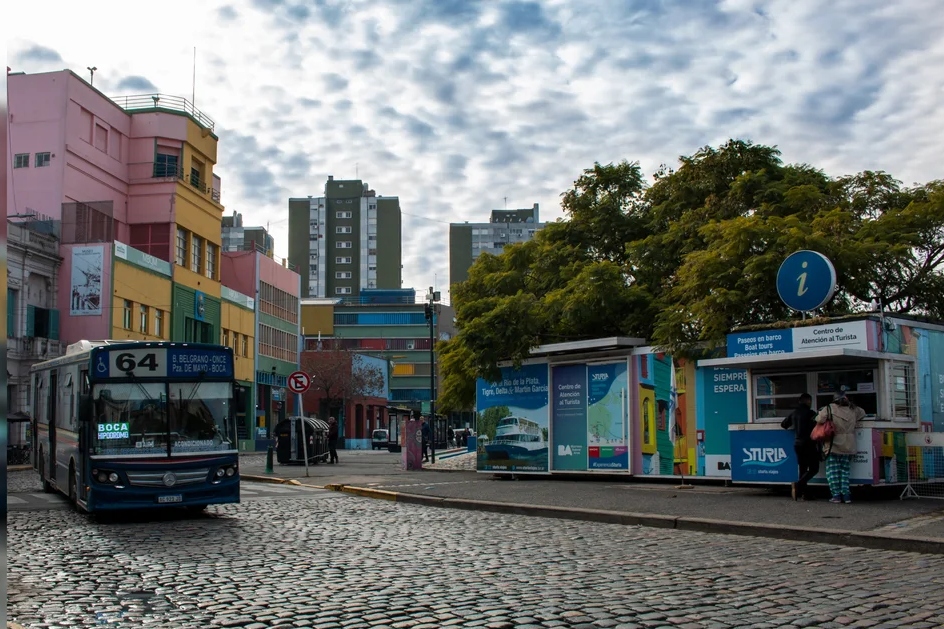
La Boca is a working class neighborhood that has several attractions next to the Riachuelo. Asadores and street artists mark the entire Caminito, a narrow alley flanked by brightly colored zinc houses that evoke its origin as an immigrant neighborhood.
7
Stop 7
The Alberto J. Armando Stadium, better known as La Bombonera, is a football stadium owned by Club Atlético Boca Juniors. It is located in the neighborhood of La Boca in the city of La Boca
8
Stop 8
Caminito is one of the most emblematic promenades of the city and of the unmissable attractions for those who visit it. With its typical sheet metal tenements in the neighborhood of La Boca, which show its walls painted in different colors, it is also an open-air museum of almost 150 meters in length. Its sinuous layout is due to the fact that it follows the course of a stream that flowed until the beginning of the 20th century
9
The San Telmo Market is a large indoor market located in the San Telmo neighborhood of the city of Buenos Aires, Argentina. Although it retains old shops selling vegetables and meats, nowadays it is a tourist place and antiques abound.
10
Stop 10
Pass by
ONLY IF YOU AQUIRE PREMIUM CITY TOUR OPTION - The Teatro Colón is an opera house in the city of Buenos Aires. Due to its size, acoustics and trajectory, it is considered one of the five best in the world.
11
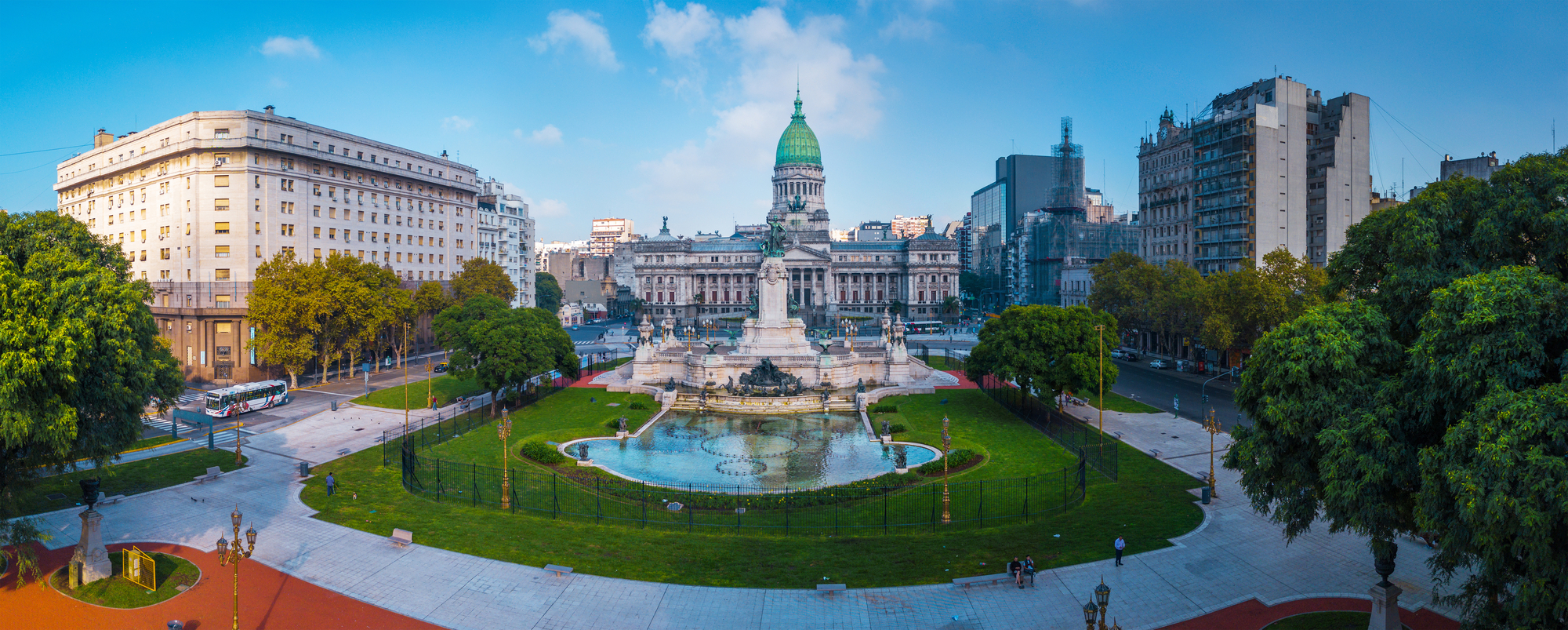
The Palace of the Congress of the Argentine Nation is the building where the Congress of the Argentine Nation develops its activities, it is one of the largest congresses in the world
12
Stop 12
ONLY IF YOU AQUIRE PREMIUM CITY TOUR OPTION - It is the most visited in the city, for its numerous and imposing mausoleums and vaults, belonging to many of the main protagonists of Argentine history, such as Eva Perón (Evita), one of the busiest tombs.
13
Born in the neighborhood of Puerto Madero and ends in Chacarita. Throughout its 70 blocks, it crosses the neighborhoods of Balvanera, all closely linked to the history of Tango and culture. Being one of the main cultural axes of the city, the Avenue owes its name to the first city of the interior of the country that supported the Argentine Independence.
Because of its nightlife it is known as "the street that never sleeps" and this is mainly due to the fact that, around the Obelisk, it has the largest concentration of bookstores, theaters, pizzerias and bars in Buenos Aires, some of them considered "Notables" "Downtown area
14
Stop 14
Pass by
Downtown areaFor its 140 meters wide, it is known as "the widest avenue" in the world. It goes through the center of the city from Constitución to Av. Del Libertador. It was inaugurated in 1937 and originally designed by the prestigious landscaper Carlos Thays. It has 1000 jacarandas, ceibos and cherry trees, many of them donated by Japan. The challenge of those who cross it usually is to do it walking from one end to the other in a single attempt and without the traffic lights interrupting.
15
Stop 15
Pass by
The Museum of Latin American Art (MALBA) is one of the most interesting in the City: it houses the art collection of the Costantini Foundation, with approximately 400 works, the modern building that houses the Malba, covered with limestone and with ample surfaces of glass and steel, was made in 1997. Malba is a dynamic and participatory cultural space in which temporary exhibitions of diverse nature are presented (often along with other museums around the world, international collections and related foundations) and samples of contemporary Argentine and Latin American art.
16
Stop 16
Pass by
Downtown areaThe Obelisk of Buenos Aires is a historical monument considered an icon of the city of Buenos Aires, built in 1936 on the occasion of the fourth centenary of the so-called first foundation of the city by Pedro de Mendoza
17
Stop 17
Pass by
Puerto Madero is a renovated neighborhood that faces the bay. Its renovated redbrick buildings house exclusive grills frequented by tourists and businessmen at lunchtime. There are also modern skyscrapers with multinationals and luxury apartments. The lakes in the area are surrounded by trails, as is the ecological reserve Costanera Sur, very popular with runners and families. The elegant suspension bridge of the Woman connects the ports.
What's not included
Entrance tickets to the Museum of Boca Jrs
Alcoholic Beverages
Gratuities
Available languages
Guide guide
PT
EN
ES
Reviews breakdown
Viator
3.0
2 reviews
5★
1
4★
0
3★
0
2★
0
1★
1
Important information
Wheelchair accessible
Transportation options are wheelchair accessible
Suitable for all physical fitness levels
Children must be accompanied by an adult
Stops for Premium service city tour: • Floralis Generica Photo stop - 5 minutes • Recoleta Cemetery - Tomb of Evita - Church Ntra. Sra. Del Lujan - 30 minutes • GalleryBairesGallery-15minutes • Plaza de Mayo. Visiting interior of the Cathedral and tour of the Square-20 minutes. • Caminito, La Boca. - 30 minutes
Premium service city tour duration: 5 hours
About Buenos Aires and The Pampas
Buenos Aires, the vibrant capital of Argentina, is known for its European-influenced architecture, rich cultural scene, and passionate tango. The Pampas, a vast fertile plain, offers a glimpse into Argentina's gaucho (cowboy) culture and stunning landscapes. Together, they provide a unique blend of urban sophistication and rural charm.
Top Attractions
Recoleta Cemetery
A famous cemetery where Eva Perón is buried, featuring ornate mausoleums and a rich history.
Historical
1-2 hours
Free
La Boca
A colorful neighborhood known for its vibrant street art, tango performances, and the famous Caminito street.
Cultural
2-3 hours
Free to explore, paid shows
The Pampas
A vast fertile plain offering a glimpse into Argentina's gaucho culture, with estancias (ranches) and beautiful landscapes.
Nature
Full day or overnight
Varies by estancia (ARS 1,000-5,000 approx. USD 13-65)
Teatro Colón
One of the world's most famous opera houses, known for its stunning architecture and acoustics.
Cultural
1-2 hours (tour), longer for performances
Tour: ARS 1,200 (approx. USD 16), Performances: ARS 500-5,000 (approx. USD 6.50-65)
San Telmo Market
A historic market offering antiques, collectibles, and local crafts, with a lively Sunday market atmosphere.
Market
1-3 hours
Free to explore, varies for purchases
Must-Try Local Dishes
Asado
Argentine barbecue featuring various cuts of beef, sausages, and other meats, cooked over an open fire.
Dinner
Not vegetarian or vegan
Empanadas
Savory pastries filled with various ingredients like beef, chicken, or cheese.
Snack or Lunch
Can be vegetarian or vegan
Milanesa
Breaded and fried meat cutlet, similar to schnitzel, often served with mashed potatoes or salad.
Lunch or Dinner
Not vegetarian or vegan
Dulce de Leche
A sweet, caramel-like spread made from milk and sugar, used in various desserts.
Dessert
Vegetarian
Popular Activities
Horseback riding in The Pampas
Kayaking in Tigre Delta
Hiking in Sierra de la Ventana
Wine tasting in Palermo
Spa day in Recoleta
Strolling through Bosques de Palermo
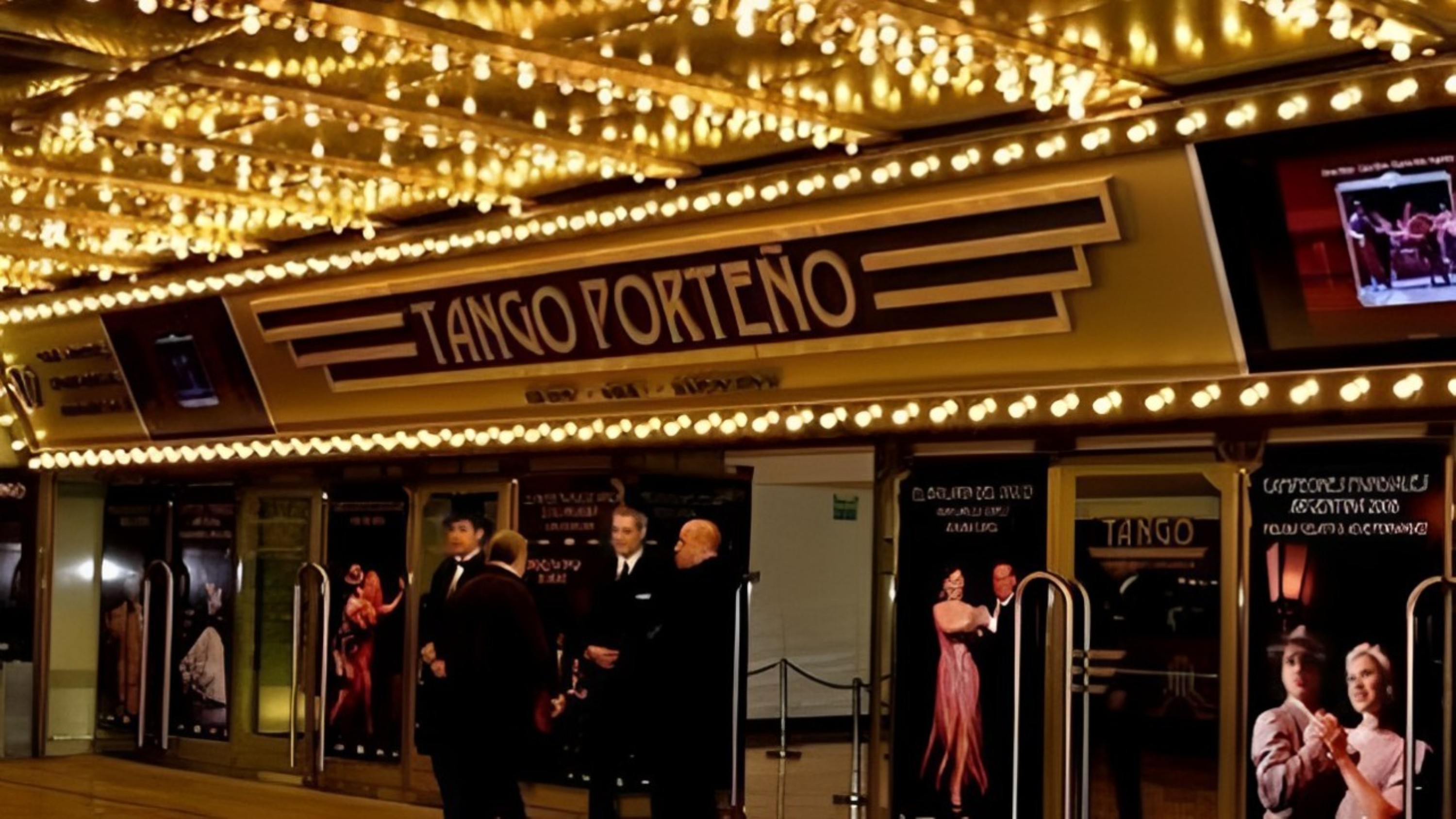
Tango shows in La Boca
Visiting museums in Recoleta
Best Time to Visit
Spring (September to November) and Fall (March to May)
Pleasant weather, fewer crowds, and vibrant city life. Ideal for outdoor activities and exploring both the city and the Pampas.
15-25°C
59-77°F
Practical Information
Language
- Official: Spanish
- Widely spoken: English, Italian, French
- English: Moderately spoken in tourist areas, limited elsewhere
Currency
Argentine Peso (ARS)
Time Zone
GMT-3
Electricity
220VV, 50HzHz
Safety Information
Overall Safety Rating: Exercise caution
Buenos Aires is generally safe for tourists, but petty crime like pickpocketing and scams can occur, especially in crowded areas. Be aware of your surroundings and take precautions.
Important Precautions:
- • Keep valuables secure
- • Avoid flashing expensive items
- • Use reputable taxi services or app-based taxis
Getting there
By air
- Ministro Pistarini International Airport • 35 km from city center
- Aeroparque Jorge Newbery • 4 km from city center
By train
Retiro Station
By bus
Retiro Bus Terminal, Constitución Bus Terminal
Getting around
Public transport
Efficient and affordable, with six lines connecting major neighborhoods.
Taxis
Available • Apps: Uber, Cabify
Rentals
Car, Bike, Scooter
Neighborhoods
Palermo
Recoleta
La Boca
San Telmo
Day trips
Estancia Santa Susana
100 km from Buenos Aires • Full day
A traditional estancia offering horseback riding, gaucho shows, and authentic Argentine asado.
Colonia del Sacramento
100 km from Buenos Aires (by ferry) • Full day
A charming colonial town in Uruguay with cobblestone streets, historic buildings, and a relaxed atmosphere.
Tigre Delta
35 km from Buenos Aires • Half day to full day
A network of islands and waterways offering boat tours, kayaking, and nature walks.
Festivals
Carnaval de Buenos Aires • February or March (dates vary)
Festival Internacional de Cine Independiente de Buenos Aires (BAFICI) • April (dates vary)
La Noche de los Museos • November (dates vary)
Pro tips
- Use the SUBE card for convenient and discounted public transport
- Learn a few basic Spanish phrases to enhance your experience and connect with locals
- Explore beyond the tourist hotspots to discover the city's hidden gems
- Try local specialties like empanadas, milanesa, and dulce de leche
- Visit during the shoulder seasons (spring and fall) for pleasant weather and fewer crowds
From $25
per person
Price varies by option
Secure booking
Free cancellation available
Instant confirmation