

Private Budapest TukTuk Tour: Custom Route, Hotel Pickup
Active
2h
For a full refund, cancel at least 24 hours before the scheduled departure time.
Instant_then_manual confirmation
Mobile or paper ticket accepted
About this experience
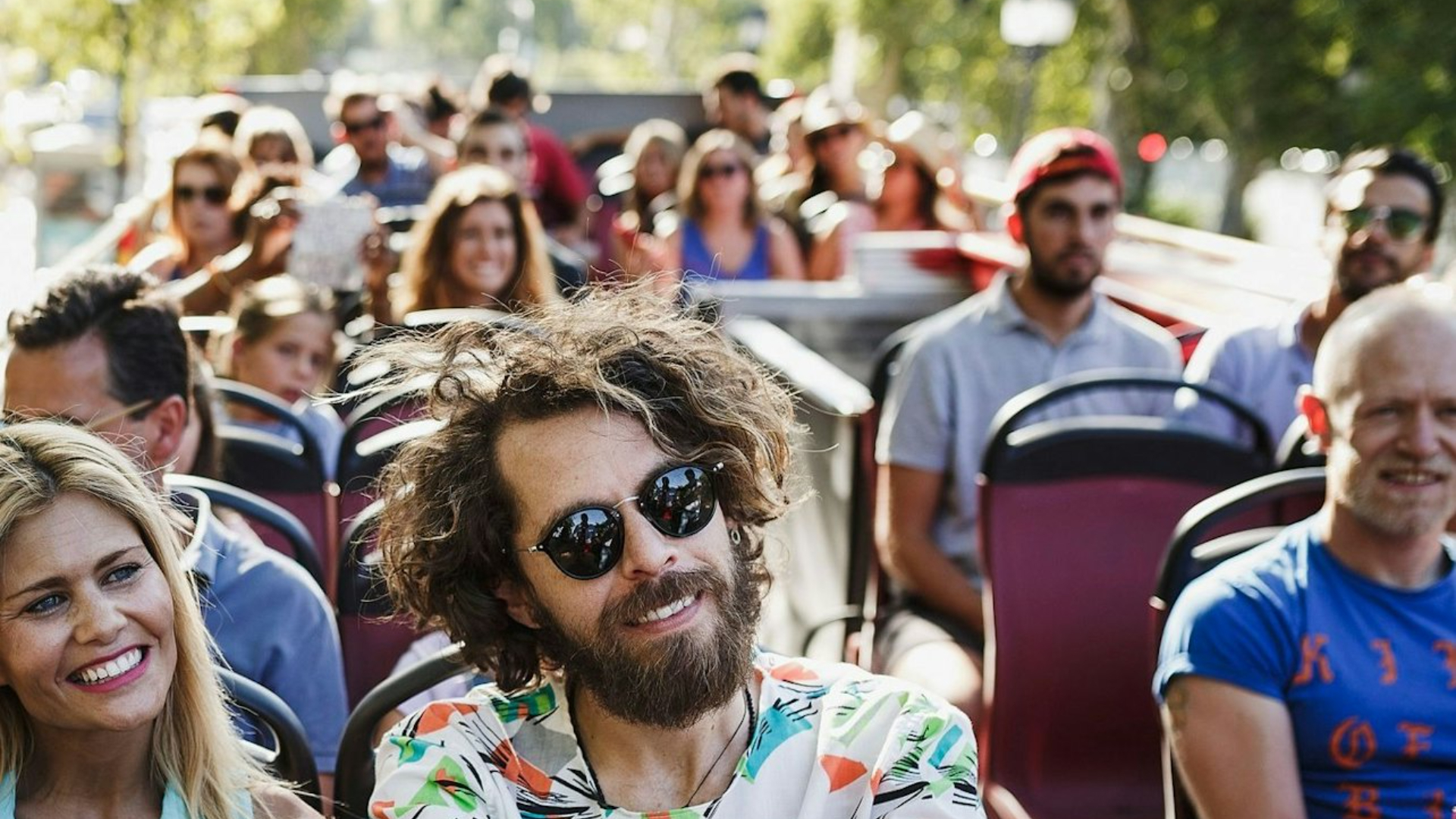
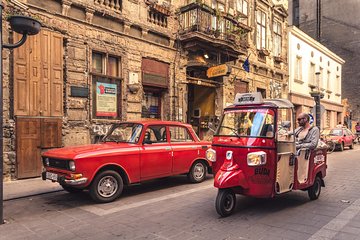
Discover Budapest the fun and effortless way with our modern 2-seaterTukTuks on this private 2.5-hour open-air tour.
Your driver-guide leads you through iconic landmarks, panoramic viewpoints, and hidden streets that buses and cars can’t reach, while sharing local stories and legends that bring the city to life.
Enjoy flexible routing, plenty of photo stops, hotel pickup, and all-weather comfort with warm blankets and rain protection.
Quiet, comfortable, and customisable, this TukTuk experience lets you explore Budapest’s highlights and secret spots without crowds, stress, or exhaustion.
A unique, personal, and unforgettable way to see the city.
Available options
+ River Cruise on the Danube
River Cruise<br/>Pickup included
English language guidance
Enjoy the sightseeing tour with English guidance.<br/>Pickup included
What's included
Complete flexibility
Informative and friendly private guide for a more personalised experience
Danube Sightseeing Cruise if option selected
Free pick-up / drop-off in the wider downtown area
Perfect introduction for first-time visitors
English guide
Detailed itinerary
1
Stop 1
Pass by
Andrássy Avenue is a boulevard in Budapest, Hungary, dating back to 1872. It links Erzsébet Square with the Városliget. Lined with spectacular Neo-renaissance mansions and townhouses featuring fine facades and interiors, it was recognised as a World Heritage Site in 2002.
2
Stop 2
Pass by
The Hungarian State Opera House (Hungarian: Magyar Állami Operaház) is a neo-Renaissance opera house located in central Budapest, on Andrássy út. Originally known as the Hungarian Royal Opera House, it was designed by Miklós Ybl, a major figure of 19th-century Hungarian architecture.
3
Stop 3
Heroes' Square is one of the major squares in Budapest, Hungary, noted for its iconic statue complex featuring the Seven chieftains of the Magyars and other important Hungarian national leaders, as well as the Memorial Stone of Heroes, often erroneously referred as the Tomb of the Unknown Soldier.
4
Stop 4
Pass by
The Széchenyi Medicinal Bath in Budapest is the largest medicinal bath in Europe. Its water is supplied by two thermal springs, their temperature is 74 °C (165 °F) and 77 °C (171 °F).
5
Part of the "party quarter", crowded with restaurants bars and cultic places, with low traffic but many pedestrians. It is the northwestern boundary of the historic Jewish Quarter.
6
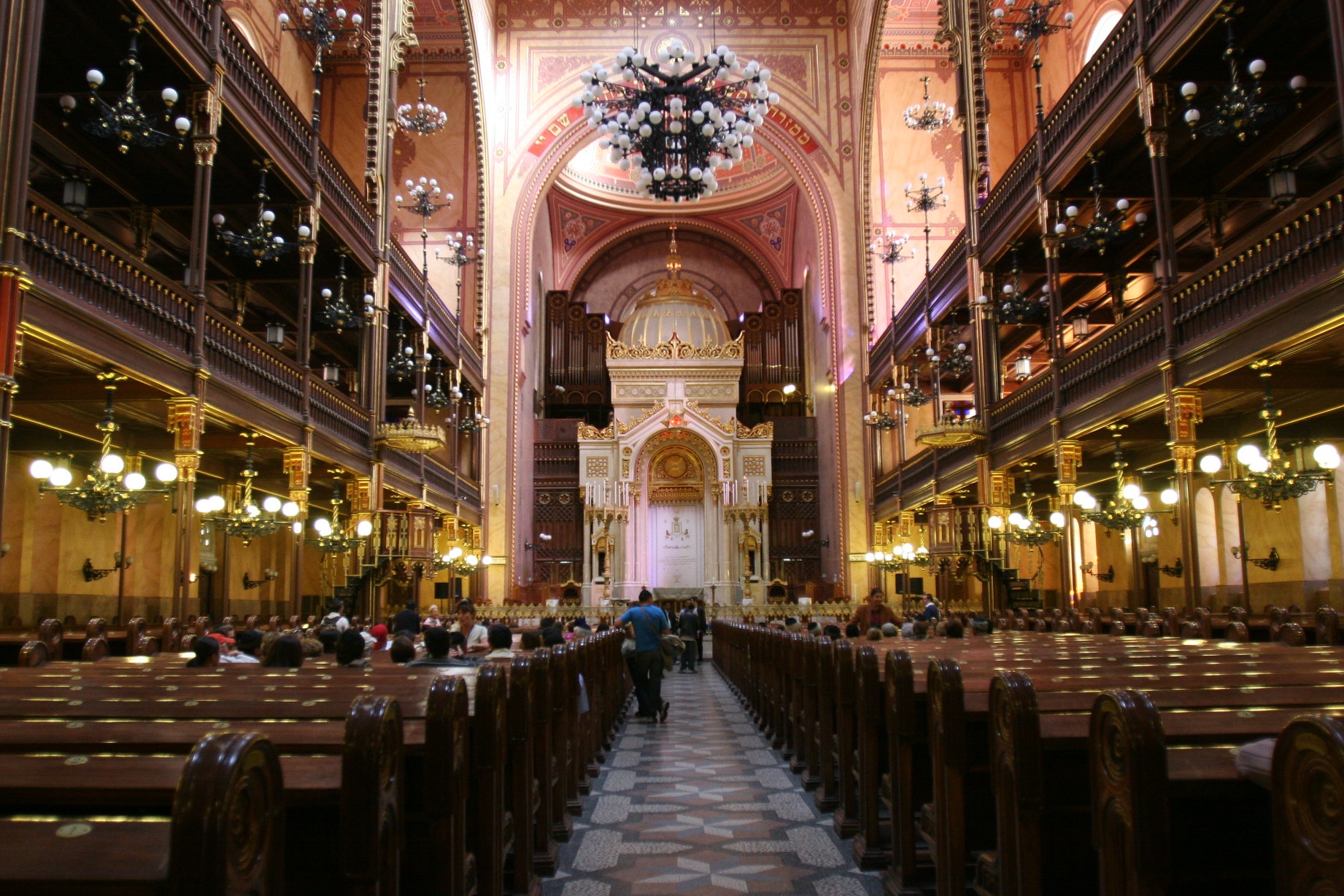
The Dohány Street Synagogue, also known as the Great Synagogue is a historical building in Erzsébetváros, the 7th district of Budapest, Hungary. It is the largest synagogue in Europe, seating 3,000 people and is a centre of Neolog Judaism.
7
Stop 7
Pass by
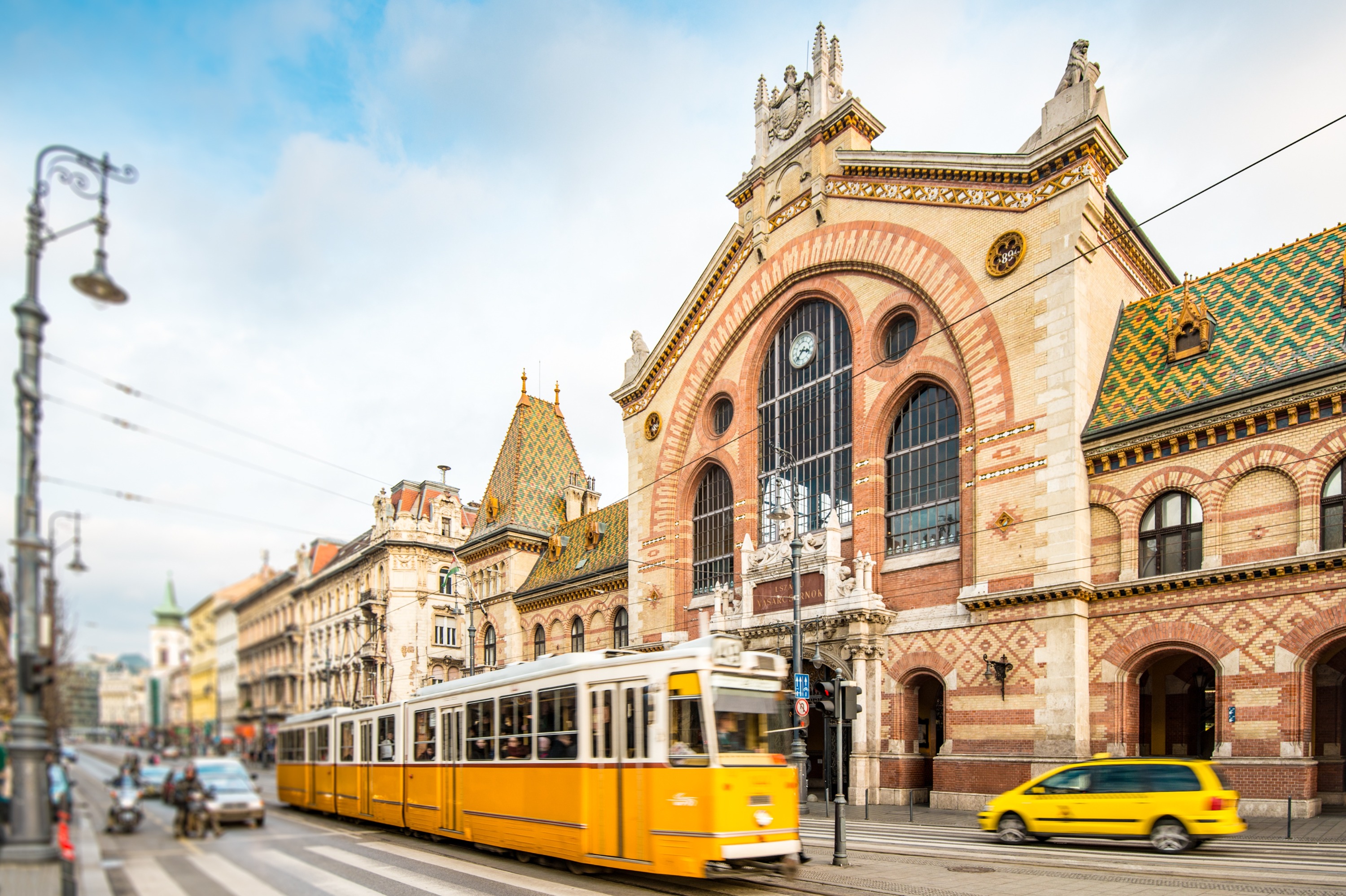
The Great Market Hall or Central Market Hall (Hungarian "Nagyvásárcsarnok") is the largest and oldest indoor market in Budapest, Hungary.
8
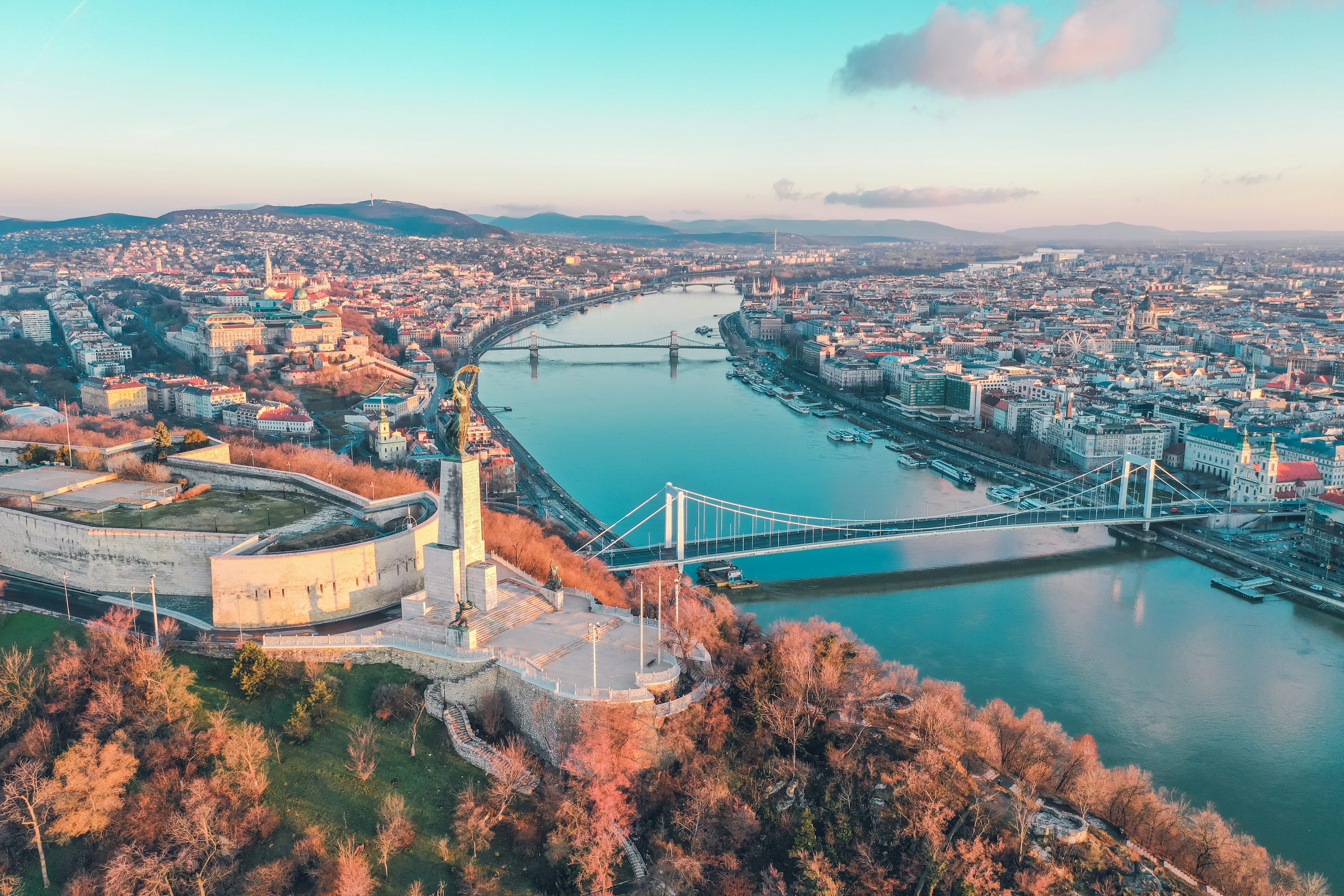
The Liberty Bridge connects Buda and Pest across the River Danube. It is the third southernmost public road bridge in Budapest, located at the southern end of the City Centre. It was originally named Franz Joseph Bridge.
9
Stop 9
Part of the famous Hotel Gellért in Buda, the Gellért Thermal Baths and Swimming Pool (also known as the Gellért Baths or in Hungarian as the Gellért fürdő) is a bath complex in Budapest, Hungary.
10
Stop 10
The Citadella is the fortification located upon the top of Gellért Hill in Budapest, Hungary. Citadella is the Hungarian word for citadel, a kind of fortress. The word is exclusively used by other languages to refer to the Gellért Hill citadel which occupies a place which held strategic importance in Budapest's military history.
11
The Liberty Statue or Freedom Statue (Hungarian: Szabadság-szobor) is a monument on the Gellért Hill in Budapest, Hungary. It commemorates those who sacrificed their lives for the independence, freedom, and prosperity of Hungary.
12
OPTIONAL STOP, as an alternative panorama point and photo op, instead of the Citadel.
Above the reservoir below the Gellért Hill, there lays the Garden of Philosophers, where there are fewer tourists, but there is also a wonderful view of Budapest. One of the specialties of the place is a group of philosophers, where Jesus Christ and Buddha meet, for example, for a better understanding of one another (as can be seen on the pedestal).
13
The Castle Garden is Budapest's unique jewelery box where art and nature complement each other. It is a distinctive work of architecture capable of offering an experience of history, culture and nature all at the same time, which makes it the perfect venue for entertainment, leisure and cultural events.
14
Stop 14
Pass by
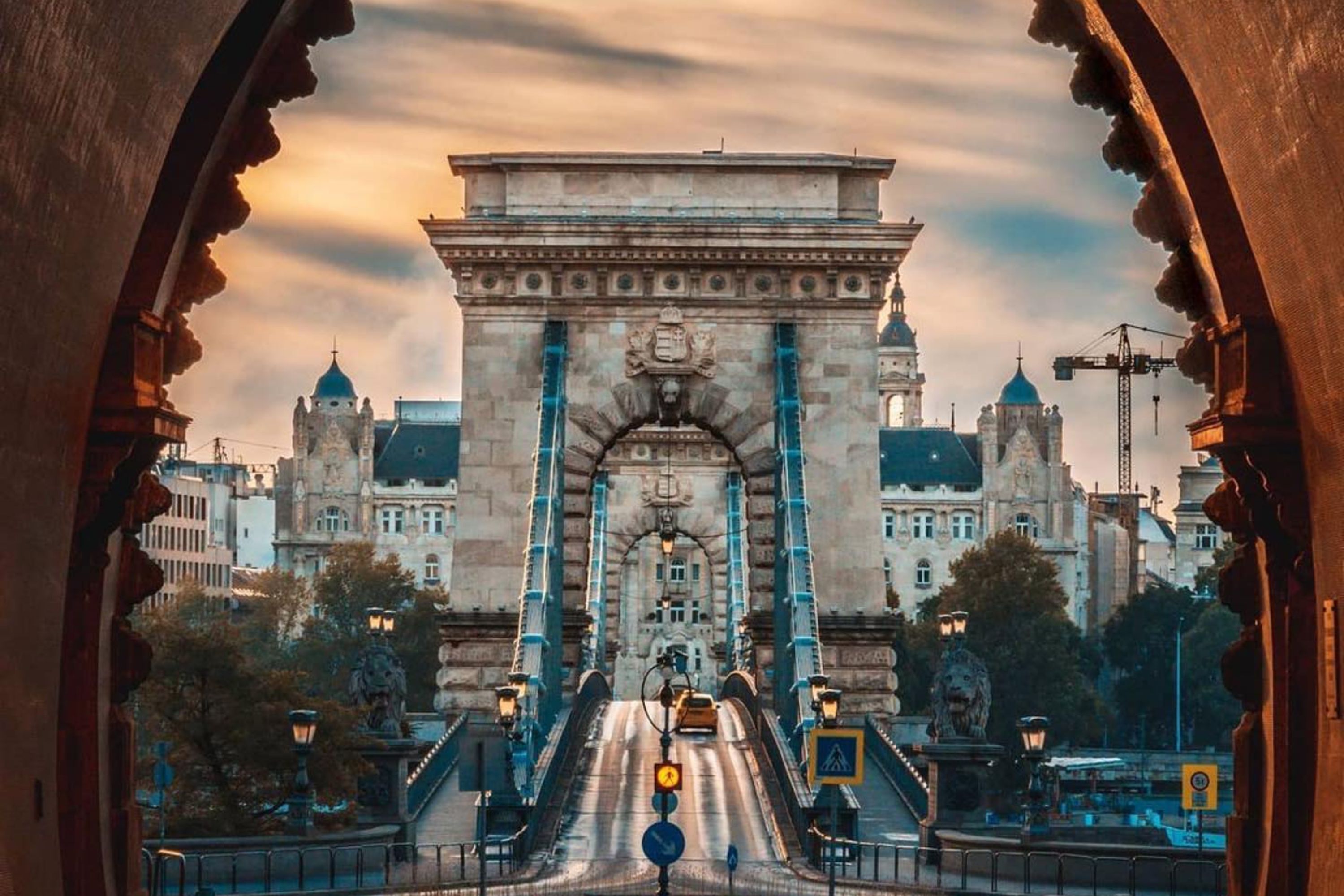
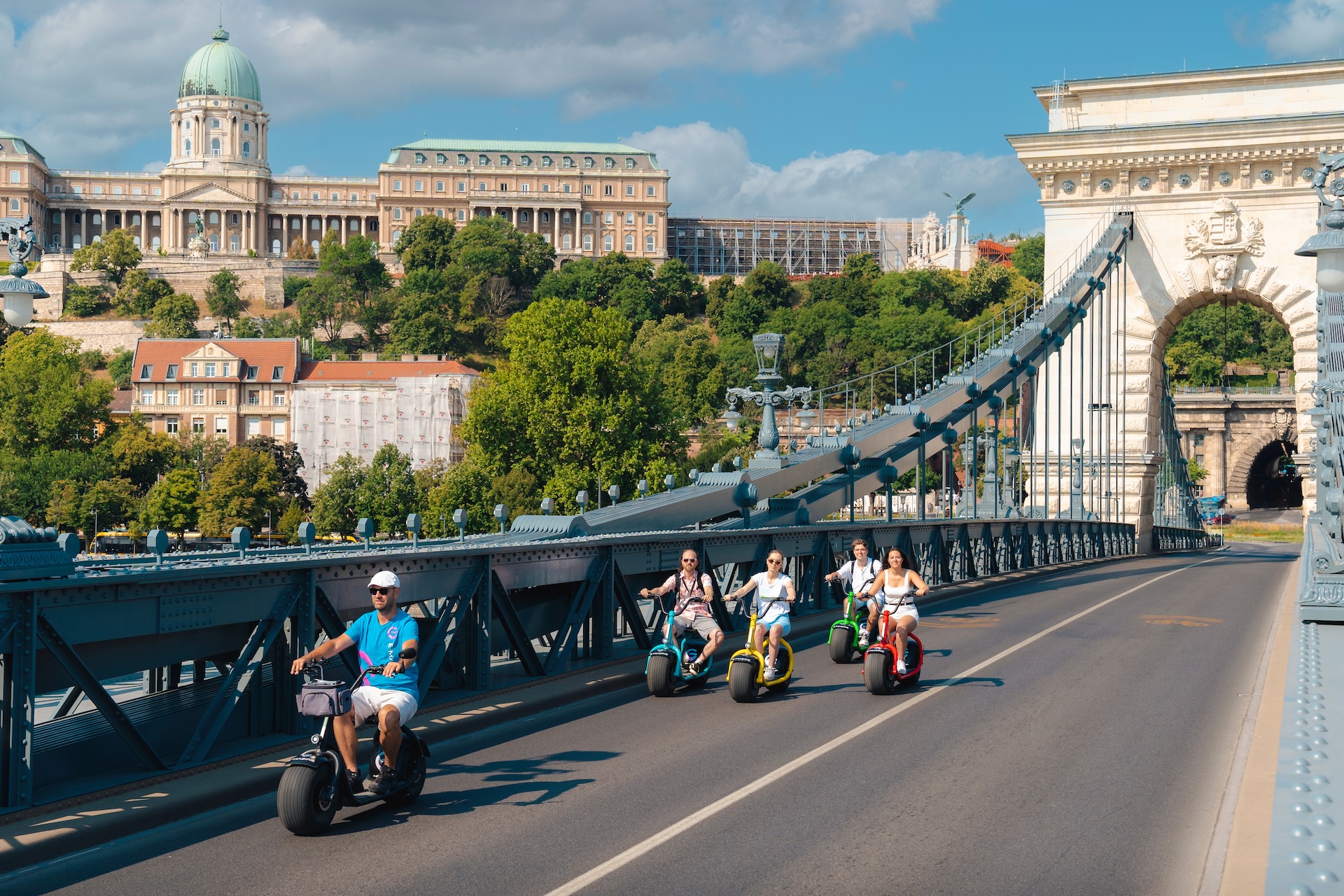
The Széchenyi Chain Bridge is a suspension bridge that spans the River Danube between Buda and Pest, the western and eastern sides of Budapest, the capital of Hungary. Designed by the English engineer William Tierney Clark and built by the Scottish engineer Adam Clark, it was the first permanent bridge across the Danube in Hungary. It was opened in 1849.
15
Castle Hill is a kilometre-long limestone plateau towering 170m above the Danube. It contains some of Budapest’s most important medieval monuments and museums and is a Unesco World Heritage Site. Below it is a 28km-long network of caves formed by thermal springs.
16
The Halászbástya or Fisherman's Bastion is a terrace in neo-Gothic and neo-Romanesque style situated on the Buda bank of the Danube, on the Castle hill in Budapest, around Matthias Church. It was designed and built between 1895 and 1902 on the plans of Frigyes Schulek.
17
Stop 17
Matthias Church (Hungarian: Mátyás-templom) is a Roman Catholic church located in Budapest, Hungary, in front of the Fisherman's Bastion at the heart of Buda's Castle District. According to church tradition, it was originally built in Romanesque style in 1015, although no archaeological remains exist.
18
Stop 18
Pass by
Margaret Bridge is a three-way bridge in Budapest, Hungary, connecting Buda and Pest across the Danube and linking Margaret Island to the banks. It is the second-northernmost and second-oldest public bridge in Budapest.
19
Stop 19
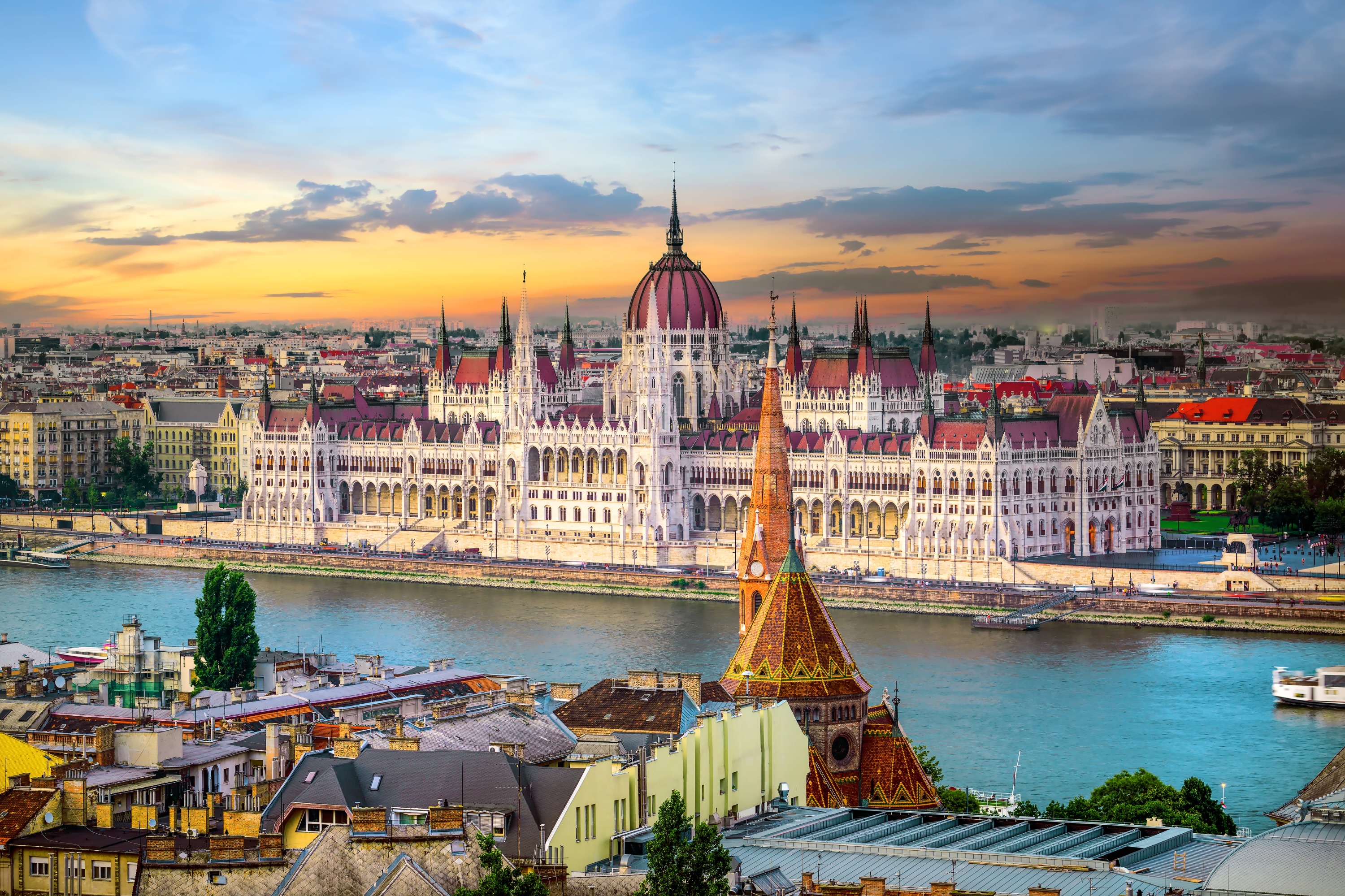
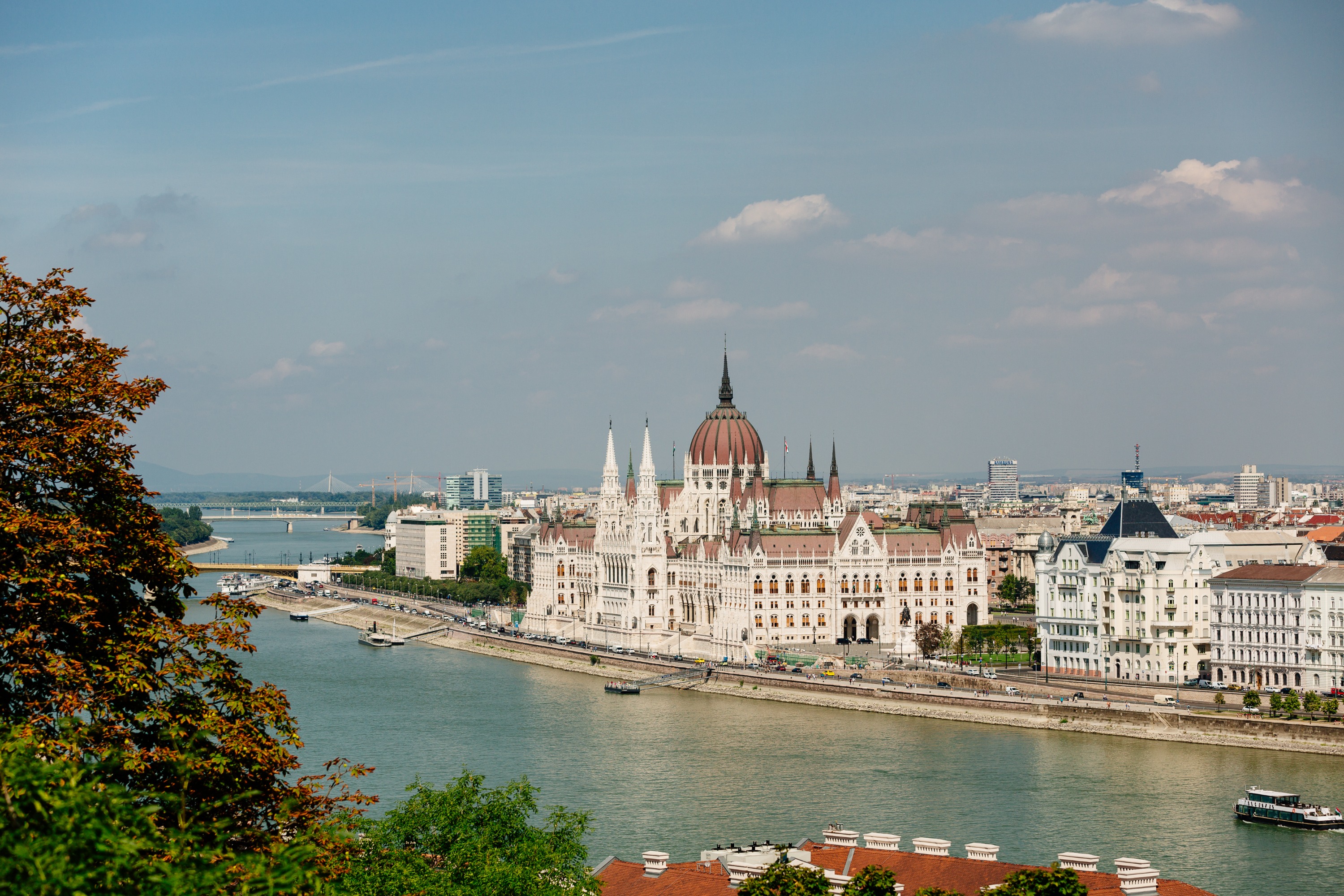
The Hungarian Parliament Building (Hungarian: Országház, pronounced) , which translates to House of the Country or House of the Nation, also known as the Parliament of Budapest after its location, is the seat of the National Assembly of Hungary, a notable landmark of Hungary and a popular tourist destination in Budapest.
This tour does not include the visit of the Parliament's interior.
What's not included
Food and drinks
Gratuities
Entry tickets (For the other stops)
Available languages
Guide guide
DE
EN
FR
Reviews breakdown
Viator
4.9
514 reviews
5★
491
4★
17
3★
2
2★
2
1★
2
Tripadvisor
5.0
790 reviews
5★
765
4★
19
3★
3
2★
3
1★
0
Important information
Service animals allowed
Public transportation options are available nearby
Infants are required to sit on an adult’s lap
Not recommended for travelers with poor cardiovascular health
Suitable for all physical fitness levels
Please note: the advertised time may be subject to change, the maximal change is 1 hr.
This Itinerary is a basic outline to our tours which may be subject to change. Changes may be made in order to personalize the experience.
Tour must be booked 6 hours in advance to ensure confirmation
Please dress accordingly to the weather
Subject to favorable weather conditions. If canceled due to poor weather, you will be given the option of an alternative date.
Accessible for wheelchair users, although there is not sufficient space to transport a wheelchair in a TukTuk
Minimum of 2 people is required
One TukTuk is comfortable for 2-3 people. If you have odd number of people in your group, please specify if you would like to seat one traveler in an another TukTuk
Important notes
If you will not be arriving at your destination within the specified reconfirmation period, please reconfirm with the local service provider prior to travel, or upon arrival at your destination. Please note that departure times and locations may vary slightly.
About Budapest
Budapest, the capital of Hungary, is a vibrant city known for its rich history, stunning architecture, and thermal baths. Straddling the Danube River, it offers a unique blend of Eastern and Western European cultures, making it a captivating destination for travelers.
Top Attractions
Budapest Parliament Building
The Hungarian Parliament Building is a stunning example of neo-Gothic architecture and a symbol of Hungary.
Architecture
1-2 hours
€20-30
Buda Castle
Buda Castle is a historical castle and palace complex that offers panoramic views of the city.
Historical
2-3 hours
Free to explore, €3-5 for museums
Széchenyi Thermal Bath
Széchenyi Thermal Bath is one of the largest thermal baths in Europe, offering a relaxing experience in historic surroundings.
Relaxation
2-3 hours
€15-20
Fisherman's Bastion
Fisherman's Bastion is a neo-Gothic and neo-Romanesque structure offering panoramic views of the Danube and Pest.
Architecture
1 hour
Free (€3 for the tower)
Heroes' Square
Heroes' Square is a significant monument and a major landmark in Budapest, commemorating the heroes of Hungary's history.
Historical
1 hour
Free
Must-Try Local Dishes
Goulash
A traditional Hungarian soup made with beef, vegetables, and paprika.
Dinner
Contains beef, gluten (from bread or flour)
Lángos
A deep-fried dough topped with sour cream, cheese, and garlic.
Snack
Contains dairy, can be made gluten-free
Chimney Cake (Kürtőskalács)
A sweet, cylindrical pastry cooked over an open fire and coated with sugar and cinnamon.
Dessert
Contains wheat, sugar, can be made gluten-free
Töltött Káposzta
Cabbage rolls stuffed with minced pork and rice, cooked in a tomato sauce.
Dinner
Contains pork, gluten (from tomato sauce)
Popular Activities
Hiking in the Buda Hills
Cycling along the Danube
Kayaking on the Danube
Visiting thermal baths
Strolling along Andrássy Avenue
Relaxing in City Park
Visiting museums and galleries
Attending classical music concerts
Best Time to Visit
May to September
This is the best time to visit Budapest for warm weather and outdoor activities. The city is lively with festivals and tourists.
18°C to 30°C
64°F to 86°F
Practical Information
Language
- Official: Hungarian
- Widely spoken: English, German
- English: Moderately spoken
Currency
Hungarian Forint (HUF)
Time Zone
GMT+1 (Central European Time)
Electricity
230VV, 50HzHz
Safety Information
Overall Safety Rating: Generally safe
Budapest is generally safe for travelers, but petty crime and scams can occur, especially in tourist areas.
Important Precautions:
- • Be cautious with valuables in crowded areas
- • Use official taxis or app-based services
- • Check bills carefully at restaurants and bars
Getting there
By air
- Budapest Ferenc Liszt International Airport • 16 km from city center
By train
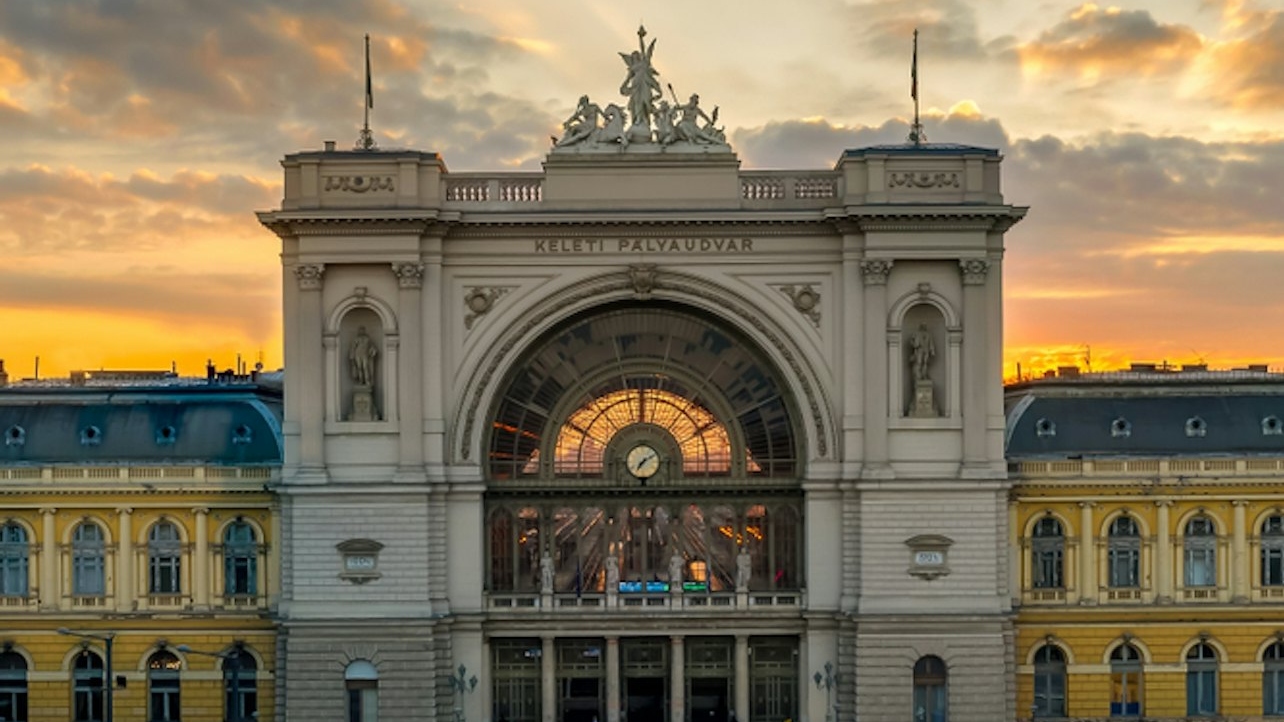
Budapest-Keleti Railway Station, Budapest-Nyugati Railway Station
By bus
Népliget Bus Station, Árpád Bridge Bus Station
Getting around
Public transport
The metro system is efficient and easy to use, with four lines connecting major attractions.
Taxis
Available • Apps: Bolt, Főtaxi
Rentals
Car, Bike, Scooter
Neighborhoods
District V (Belváros)
District VII (Jewish Quarter)
District VIII (Józsefváros)
District IX (Ferencváros)
Day trips
Szentendre
20 km from Budapest • Half day
A charming town known for its museums, galleries, and colorful houses.
Esztergom
50 km from Budapest • Full day
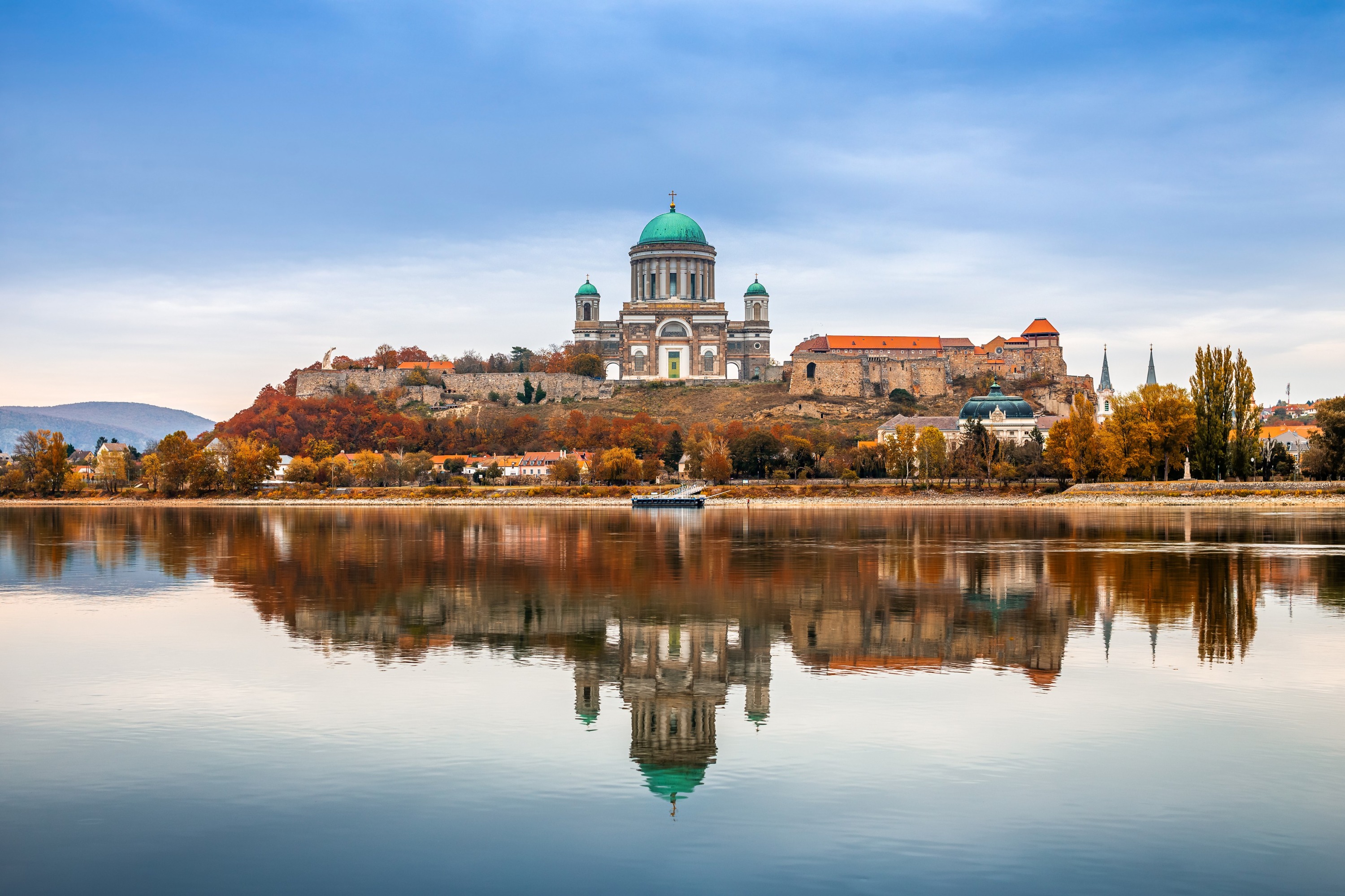
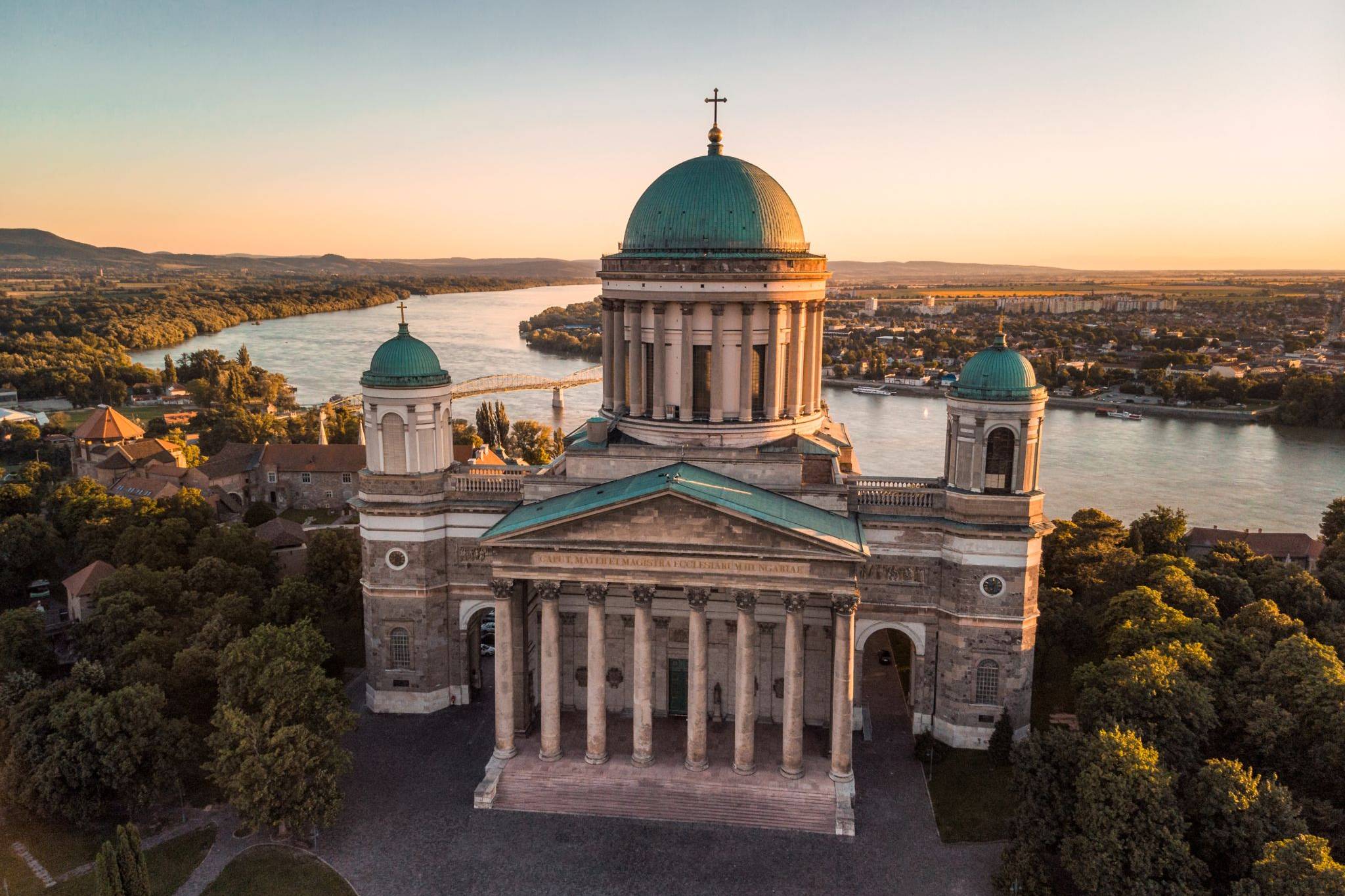
A historic town with a stunning basilica and a rich history.
Visegrád
40 km from Budapest • Full day
A historic town with a royal palace and scenic views of the Danube Bend.
Festivals
Budapest Christmas Market • Late November to early January
Budapest Spring Festival • March
Sziget Festival • August
Pro tips
- Use the Budapest Card for free public transport and discounts on attractions
- Take a Danube River cruise for stunning views of the city
- Visit the thermal baths early in the morning or late in the evening to avoid crowds
- Explore the Jewish Quarter for its vibrant nightlife and historic sites
- Try local street food, such as lángos and kürtőskalács, for an authentic taste of Budapest
From $25
per person
Price varies by option
Secure booking
Free cancellation available