Petropolis City Tour + Bohemia Brewery + Lunch
Active
13h
For a full refund, cancel at least 24 hours before the scheduled departure time.
Instant confirmation
Mobile or paper ticket accepted
About this experience
Our City Tour to Petrópolis stands out POR offering a complete, comfortable and carefully planned experience. We work with premium transportation, experienced accredited guides and optimized routes, ensuring you get the most out of each stop — no rushes and no unnecessary queues.
We are experts in experiences in the Serrana Region and we offer four versions of the same tour, allowing you to choose the format i DE al for your travel style: with or without lunch, with a visit to the Bohemia Cervejaria or the full all-inclusive tour.
In addition, we pick up the passengers directly in their hotels in Rio, follow the entire journey and offer comprehensive support, making the ride safe, practical and perfect for all ages. It is the option DE all for those who wish to know the charming Imperial City in an organized, authentic and unforgettable way.
Available options
City Tour Petrópolis + Lunch
Includes lunch<br/>Not included Brewery<br/>Pickup included
City Tour Petrópolis
Not included lunch<br/>Not included Brewery<br/>Pickup included
Petropolis + Brewery
Not included lunch<br/>Includes Brewery<br/>Pickup included
City Tour Petropolis + Brewery Bohemia + Lunch
Includes lunch<br/>Includes Brewery<br/>Pickup included
What's included
Pick-up and drop-off in hotels in the main tourist regions
Accredited Tourism Guide (Cadastur) accompanying the entire tour
Transport back and forth from Rio DE Janeiro in an executive vehicle with air conditioning
Entrance to Imperial Museum
Optional lunch, according to the selected variation
Optional entry DA Bohemia Brewery, according to the selected variation
Guided tour to the main points DE Petrópolis
Detailed itinerary
1
Stop 1
PETRÓPOLIS + BOHEMIA + LUNCH
FREQUENCY: Tuesday to Sunday
APPROXIMATE DURATION (including travel): 12h
BOARDING TIMES From 07h45 to 09h30
BOARDING PLACES: South and Center Zone (to consult)
WHAT INCLUDES:
Executive Transportation
Accredited Tourism Guide
Lunch
Imperial Museum ticket
Bohemia Brewery ticket with three tastings
WHAT DOES NOT INCLUDE:
Drinks and desserts
Tickets and items from Casa do Alemão and Chocolateria Katz
SCRIPT:
German House
Quitandinha Palace
Imperial Palace
São Pedro de Alcântara Cathedral
Crystal Palace
Katz Chocolate House
Santos Dumont House
Bohemia brewery.
2
The Quitandinha Palace is one of the most beautiful and impressive tourist attractions in the city of Petrópolis:
Its construction began in 1941 and was completed in 1944 by entrepreneur Joaquim Rolla to become one of the largest casino-hotels in South America. The palace has 440 apartments, 13 halls measuring up to 10 meters high and a dome in the Mauá Hall measuring 30 meters high and 50 meters in diameter. In addition to the enormous construction, the Quitandinha Palace has a large lake in front of its façade in the shape of a map of Brazil. In the construction of the lake, much of the sand was brought from Copacabana beach.
During its period of operation, the hotel welcomed many famous people, such as Henry Fonda, Carmen Miranda, Walt Disney, and politicians such as Getúlio Vargas and Evita Perón.
After the ban on casinos in Brazil in 1946, the palace ceased its activities as a casino and operated solely as a hotel.
3
Stop 3
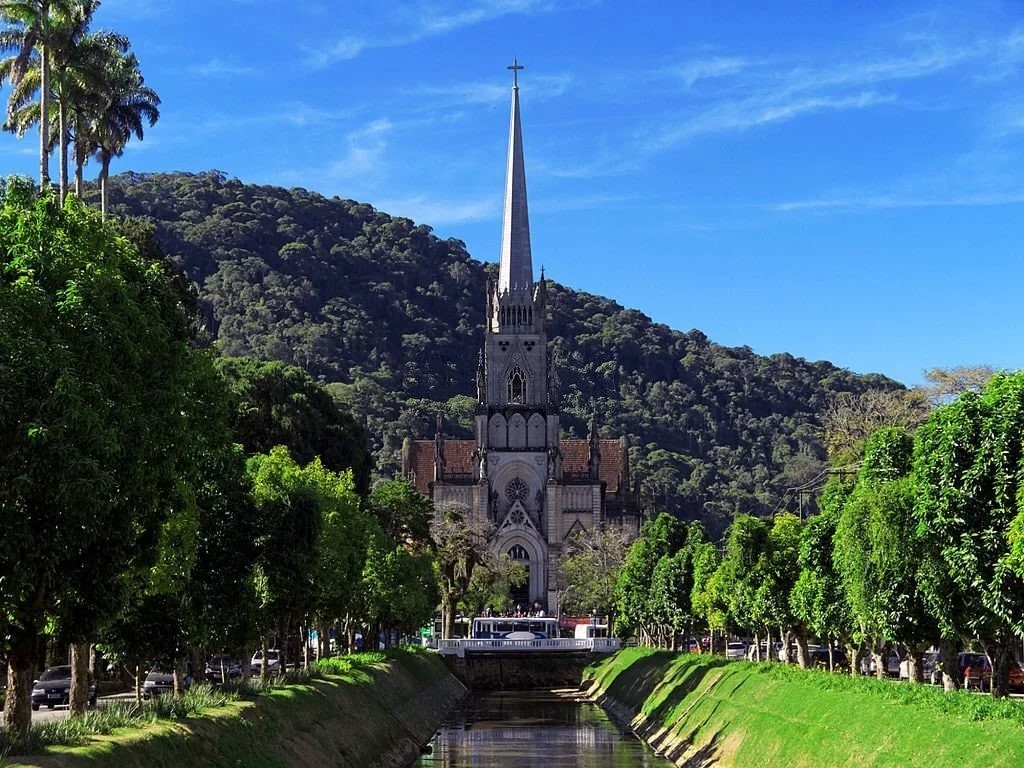
The pointed side towers and ogival windows of the Cathedral of São Pedro de Alcântara are typical of French and German Gothic. Inside, beautiful stained glass windows depict images of saints, Christ and the Holy Family.
Via Crucis, of patinated plaster, is French, as is the image of São Pedro de Alcântara, carved in Carrara marble.
But the main attraction of the sanctuary is the Imperial Mausoleum: on the tombstones of Dom Pedro II, Dona Teresa Cristina, Conde d’Eu and Princesa Isabel, life-size sculptures represent them. Notice that, due to an optical illusion, the emperor's chest seems to move, as if he is still breathing.
4
Stop 4
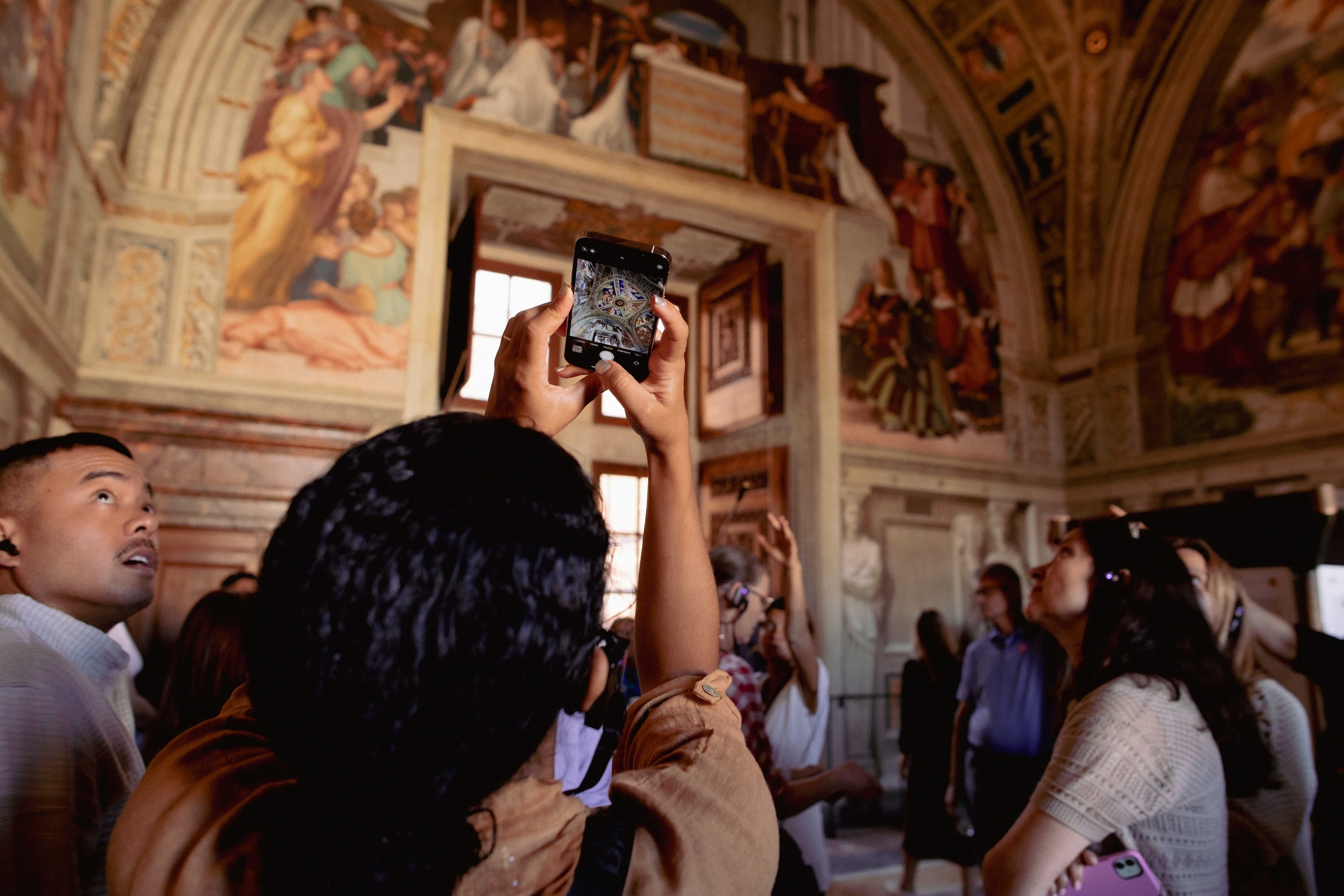
The Imperial Museum, in Petrópolis, was the refuge of the imperial family in the summer. Walking through the palace halls is like moving into a history book. Everything seems intact, as if Dom Pedro II and his family still frequented the place.
Walking through the halls of the Imperial Museum's palace is like traveling inside a history book. One of the thrones used by Dom Pedro II is in the State Room, the feeling is that the emperor can enter there at any time.
It gathers relics such as furniture, jewelry and documents from the Second Reign (1840/1889). In the attached hall, there are carriages and the locomotive that made the route Rio de Janeiro-Juiz de Fora by the Estrada de Ferro Mauá. The garden values construction even more.
In the jewelry room. It is impossible not to be impressed with the scepter made for the consecration of D. Pedro I, with the crown of diamonds and pearls of D. Pedro II or with the gold and ruby feather used by Princess Izabel to sign the abolition of slavery.
5
Stop 5
It was opened in 1884 to house exhibitions of flowers, birds and agricultural products. Its precast structure, in cast iron, was commissioned from a foundry in France by Count D`Eu, being assembled in Petrópolis by engineer Eduardo Bonjean. Today it hosts cultural events and exhibitions.
Its most beautiful party was held on Easter Sunday, 1888, in which Princess Isabel, along with her children, delivered letters of freedom to slaves, most of whom compensated their masters with a remarkable campaign developed in the city.
Listed by the National Historical and Artistic Heritage Institute, it is part of the architectural and landscape complex of the former Praça da Confluência.
6
Stop 6
It was the summer residence of Alberto Santos Dumont, the Father of Aviation, and is known as “The Enchanted House”. The museum has a collection of objects, books, letters and furniture, as well as the shower and the entrance staircase, with racket-shaped steps, which can only be accessed by starting with the right foot.
The Enchanted House reveals much of Santos Dumont's personality. A large room served as both a library and office; on the lower floor, his workshop and laboratory; on the upper floor, his bathroom and bedroom. On the terrace, embedded in the tin roof, is the observatory where he spent hours admiring the stars. The building is a French Alpine-style chalet.
An interesting fact about the house is that it had no kitchen and all meals were brought from the Palace Hotel, currently the building of the Catholic University of Petrópolis, next to the Flower Clock.
The staircase cut in the shape of a racket draws the visitor's attention, which forces anyone who wants to climb it to always start with the right foot.
7
Pause to have lunch and enjoy a free buffet.
8
Stop 8
Whoever enters Cervejaria Bohemia, immediately falls in love with the universe of beer. The visit offers the most complete brewing experience in Latin America. The Tour presents the history of beer, its production process and ingredients that lead visitors to unique sensory experiences and exclusive tastings.
The brewing experience center is a journey through the history, art and science of brewing. Discover everything about this drink from antiquity to the present day. Taste Bohemia straight from the source and live this whole experience in a modern and interactive environment.
The tour continues at the Restaurant and Bar, with the best of harmonized cuisine with exclusive beers and draft beer.
What's not included
Optional tickets not selected in the tour variation
Drinks and desserts at the restaurant (for those who choose a variation with lunch)
Personal expenses
Souvenirs, photos or extra consumptions
Transport outside THE pick-up area defined by activity
Any item not mentioned as included
Available languages
Guide guide
PT
EN
ES
Reviews breakdown
Viator
4.2
10 reviews
5★
5
4★
4
3★
0
2★
0
1★
1
Tripadvisor
3.7
3 reviews
5★
1
4★
1
3★
0
2★
1
1★
0
Important information
Infants are required to sit on an adult’s lap
Service animals allowed
Public transportation options are available nearby
Infants and small children can ride in a pram or stroller
Transportation options are wheelchair accessible
Suitable for all physical fitness levels
Wheelchair accessible
About Rio de Janeiro
Rio de Janeiro, known as the 'Marvelous City,' is famous for its natural settings, Carnival, samba, bossa nova, and Balneario beaches such as Copacabana and Ipanema. It's a vibrant city with a rich cultural heritage and stunning landscapes, including the iconic Christ the Redeemer statue and Sugarloaf Mountain.
Top Attractions
Christ the Redeemer
One of the New Seven Wonders of the World, this iconic statue offers breathtaking views of Rio de Janeiro.
Historical/Religious
2-3 hours
R$84 (including train ticket)
Sugarloaf Mountain
A famous peak offering stunning views of Rio de Janeiro and its beaches.
Nature
2-3 hours
R$88 (round-trip cable car)
Copacabana Beach
One of the most famous beaches in the world, known for its vibrant atmosphere and beautiful sunsets.
Beach
Half day or full day
Free
Tijuca National Park
The world's largest urban forest, offering hiking trails, waterfalls, and diverse wildlife.
Nature
Half day or full day
Free (some attractions may have fees)
Santa Teresa
A historic and bohemian neighborhood known for its cobblestone streets, art galleries, and scenic views.
Cultural
Half day
Free to explore
Must-Try Local Dishes
Feijoada
A hearty stew made with black beans and various cuts of pork, often served with rice, collard greens, and orange slices.
Dinner
Contains pork, not suitable for vegetarians or vegans.
Pão de Queijo
Cheese bread made with tapioca flour, giving it a unique texture and flavor.
Snack
Vegetarian, but contains dairy.
Moqueca
A traditional fish stew cooked in coconut milk and dendê oil, with various seafood and vegetables.
Dinner
Can be made vegetarian or vegan with vegetable broth and tofu.
Açaí
A thick, creamy fruit pulp from the açaí palm, often served with granola and condensed milk.
Dessert/Drink
Can be made vegan with plant-based milk.
Popular Activities
Hiking in Tijuca National Park
Surfing in Arpoador
Paragliding in Pedra Bonita
Beach lounging in Ipanema
Spa treatments in Copacabana
Yoga in Botafogo
Visiting museums in Centro
Attending a samba show
Best Time to Visit
December to March
This is the peak tourist season with warm weather and the famous Carnival in February/March. Expect crowded beaches and higher prices.
25-30°C
77-86°F
Practical Information
Language
- Official: Portuguese
- Widely spoken: English (limited)
- English: Limited
Currency
Brazilian Real (BRL)
Time Zone
GMT-3 (Brasília Time)
Electricity
110V/220VV, 60HzHz
Safety Information
Overall Safety Rating: Exercise caution
Rio de Janeiro is generally safe for tourists, but petty crime and violence can occur. Exercise caution, especially in less touristy areas and at night.
Important Precautions:
- • Avoid walking alone at night in unsafe areas
- • Use common sense and stay alert to your surroundings
- • Keep valuables secure and out of sight
Getting there
By air
- Rio de Janeiro-Galeão International Airport • 20 km (12 miles) from city center
- Santos Dumont Airport • 12 km (7.5 miles) from city center
By train
Central do Brasil
By bus
Rodoviária Novo Rio, Terminal Rodoviário da Gavea
Getting around
Public transport
Efficient and air-conditioned, the metro is a great way to avoid traffic.
Taxis
Available • Apps: Uber, 99 Taxis
Rentals
Car, Bike, Scooter
Neighborhoods
Copacabana
Ipanema
Santa Teresa
Lapa
Botafogo
Day trips
Petrópolis
65 km (40 miles) • Full day
A charming colonial town in the mountains, known for its historic architecture and cool climate.
Paraty
170 km (105 miles) • Full day or overnight
A historic coastal town with cobblestone streets, colonial architecture, and beautiful beaches.
Búzios
170 km (105 miles) • Full day or overnight
A picturesque beach town known for its stunning beaches, clear waters, and vibrant nightlife.
Festivals
Carnival • February/March (dates vary)
Rio Carnival Samba Parade • February/March (dates vary)
New Year's Eve (Réveillon) • December 31
Pro tips
- Visit Christ the Redeemer early in the morning to avoid crowds and enjoy the best views
- Take a helicopter tour for a unique perspective of the city
- Explore the less touristy neighborhoods like Santa Teresa and Botafogo for a more authentic experience
- Try local street food like pão de queijo and coxinha for a taste of Brazilian flavors
- Learn some basic Portuguese phrases to enhance your interactions with locals
From $25
per person
Price varies by option
Secure booking
Free cancellation available
Instant confirmation