Madrid Welcome Tour with Local Guide in Eco Tuk Tuk Private
Active
1h - 4h
For a full refund, cancel at least 24 hours before the scheduled departure time.
Instant confirmation
Mobile or paper ticket accepted
About this experience
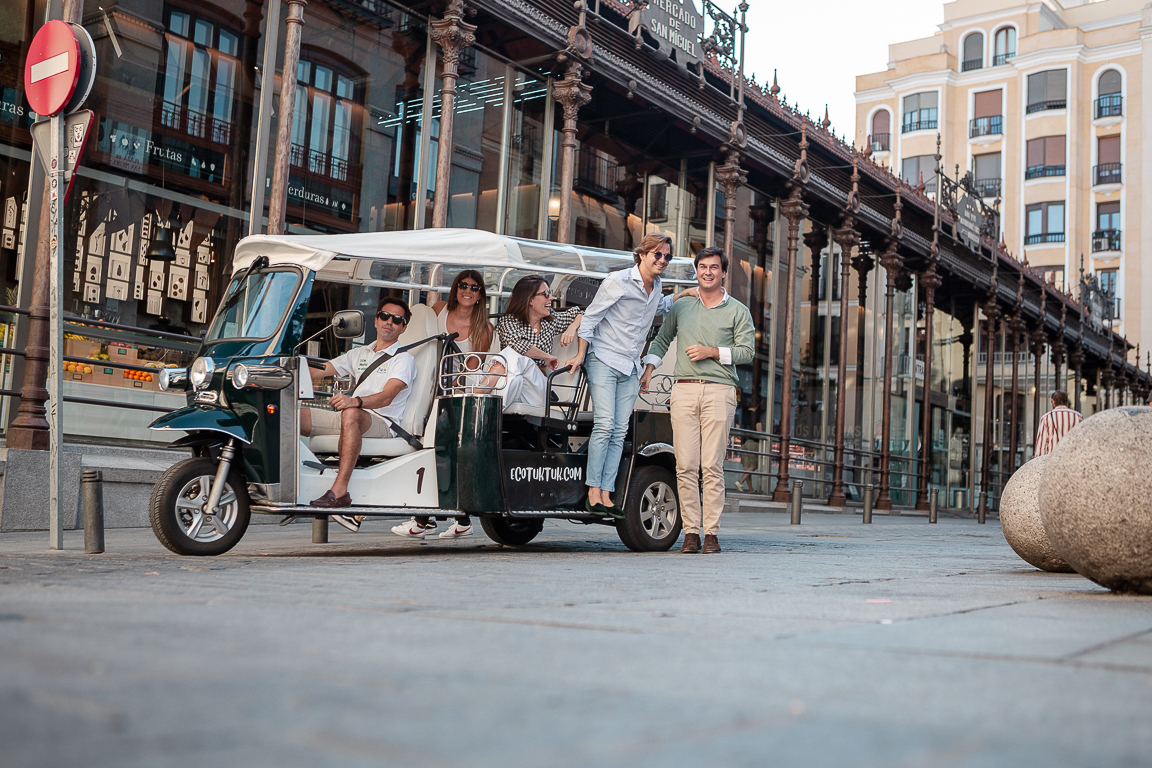
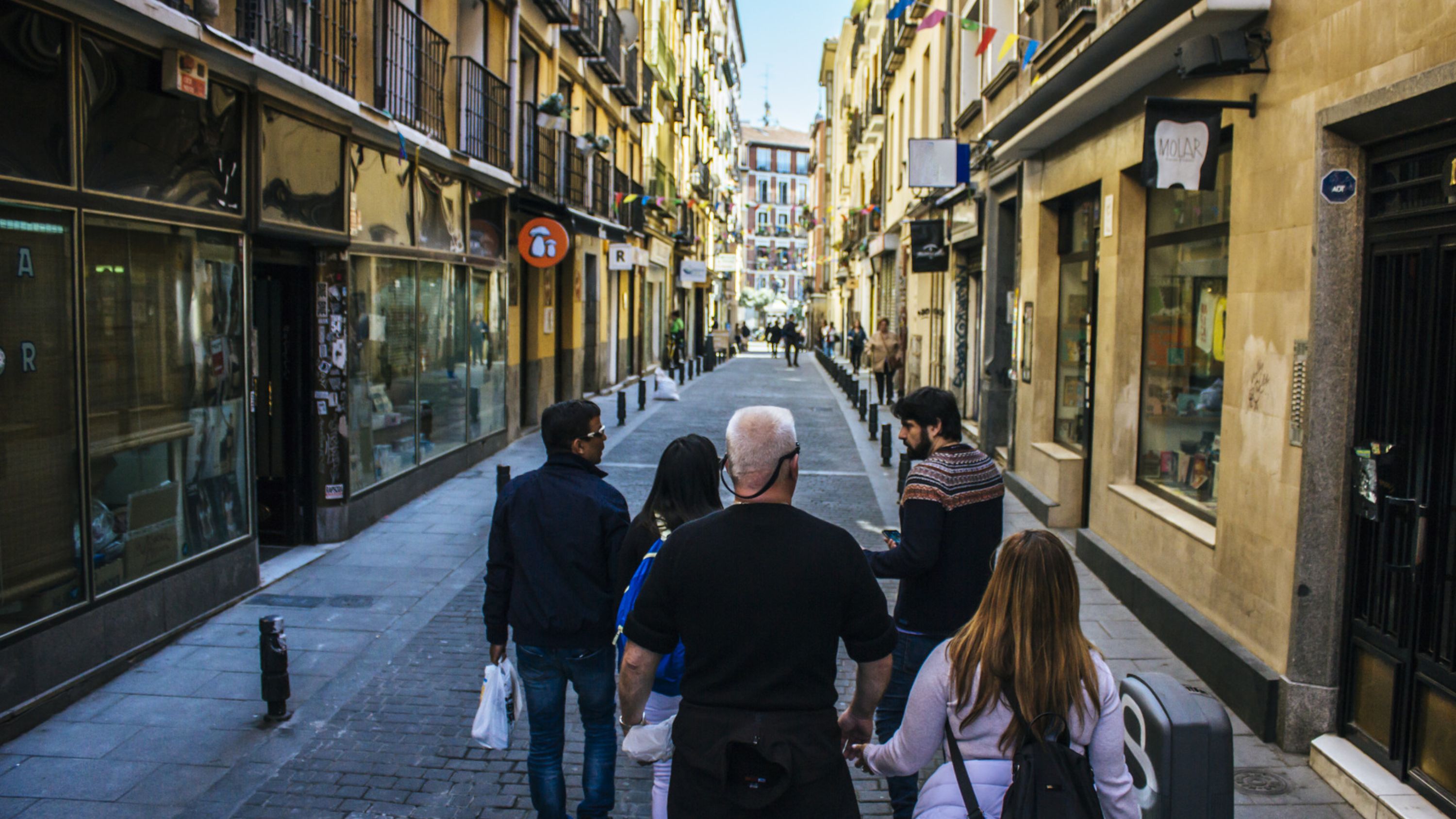
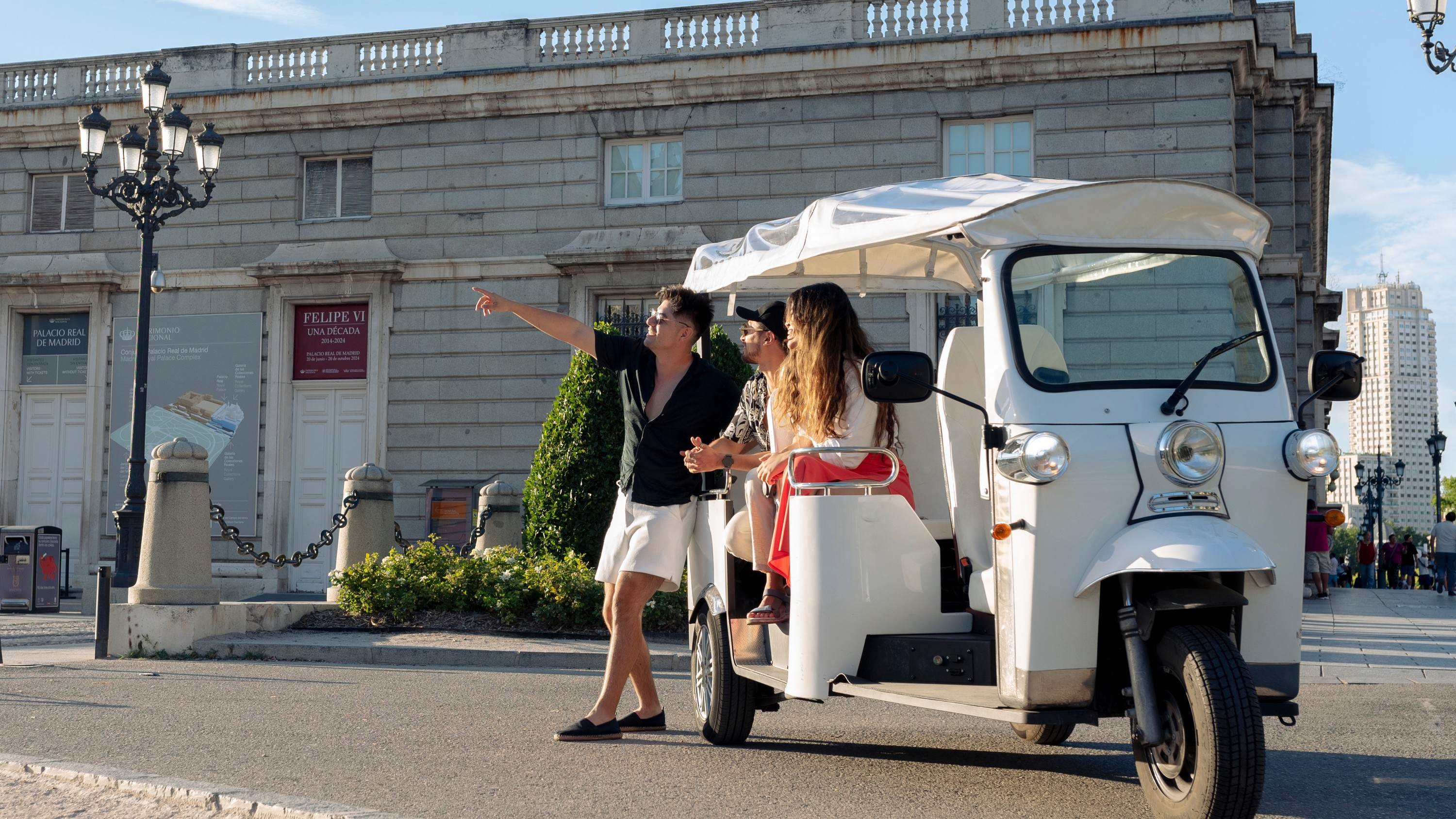
Eco Tuk Tuk offers you a 120-minute drive through Madrid. A contact with the capital of Spain where you can see the most relevant areas of the city and discover its secrets. It’s a perfect way to get a broad idea of everything you can enjoy in the city on your travel days.
Available options
Expert Tour : 3 hours
Duration: 3 hours<br/>Expert Tour: This option will pass through all the points of the route, and also through the Santiago Bernabeu Stadium
Express Tour: 1 hour
Duration: 1 hour<br/>Express Tour: This option will pass through all points of the route except for Sabatini Gardens, Basilica of S.F. the Great, and T. Debod.
Tour Welcome : 2 hours
Expert Tour Plus : 4 hours
Duration: 4 hours<br/>Expert Tour Plus: This option will also pass through Las Ventas and Santiago Bernabeu Stadium, having more time to visit some sites.
What's included
Tour starts without queues or waiting
100% electric and sustainable vehicle
Expert Companion Guide Driver
Private vehicle for your group only
Blankets and protective layers against rain and wind to avoid cold weather
Pre-selected stops for photographing
Detailed itinerary
1
Stop 1
Pass by
Covered market from around 1916 with local food, delis and events in an elegant atmosphere.
2
Stop 2
Pass by
The Royal Basilica of San Francisco the Great, officially Basilica of Our Lady of the Angels, is a Roman Catholic church in Madrid, in the Palace district, within the historic center of the capital of Spain.
3
Atocha railway station is a railway complex located near Emperor Charles V Square in Madrid, Spain. It acts as a railway node, making it the busiest passenger station in the country, as well as one of the main ones in Europe.
4
The Palace of the Spanish Courts was erected on the site of the former convent of the Holy Spirit that was used as the seat of Congress between 1834 and 1841.
On the main facade, a staircase ascends to the neoclassical portico, with six imposing striated columns, of Corinthian order, on which the triangular pediment decorated with reliefs of Pontian Ponzano stands. The iconic lions flanking the entrance are the work of the same sculptor and were cast with the iron of the cannons captured during the African war. Under the pediment, the chiseled bronze door opens only on very marked occasions.
Among the rooms of the building, symmetrical in plan, the well-known Session Hall stands out, but also the library or the Conference Hall, better known as the hall of "the lost steps".
5
Stop 5
Pass by
Both gods occupy prominent positions within the Greek mythological hierarchy and rival the sporting field, as the fans of Atletico Madrid celebrate their victories in the square of the god of the sea, while that of Real Madrid celebrates in that of Cibeles.
As part of Ventura Rodríguez’s original project, both fountains were initially facing each other, looking at each other on one side of Paseo del Prado. Both Cibeles and Neptune underwent restructuring and relocation at the end of the 19th century, eventually occupying the center of the squares of Cibeles and Canovas del Castillo, respectively.
6
Stop 6
Pass by
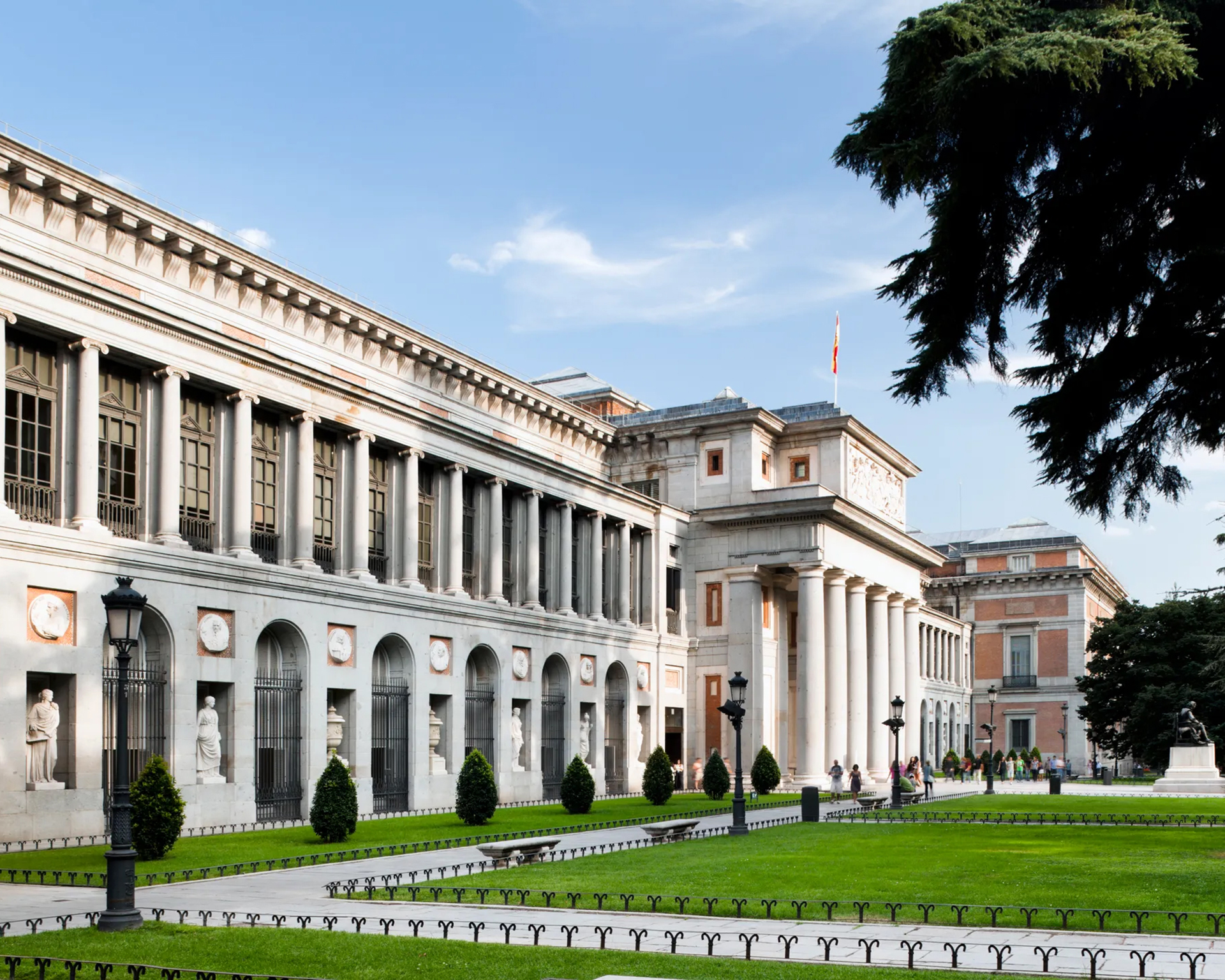
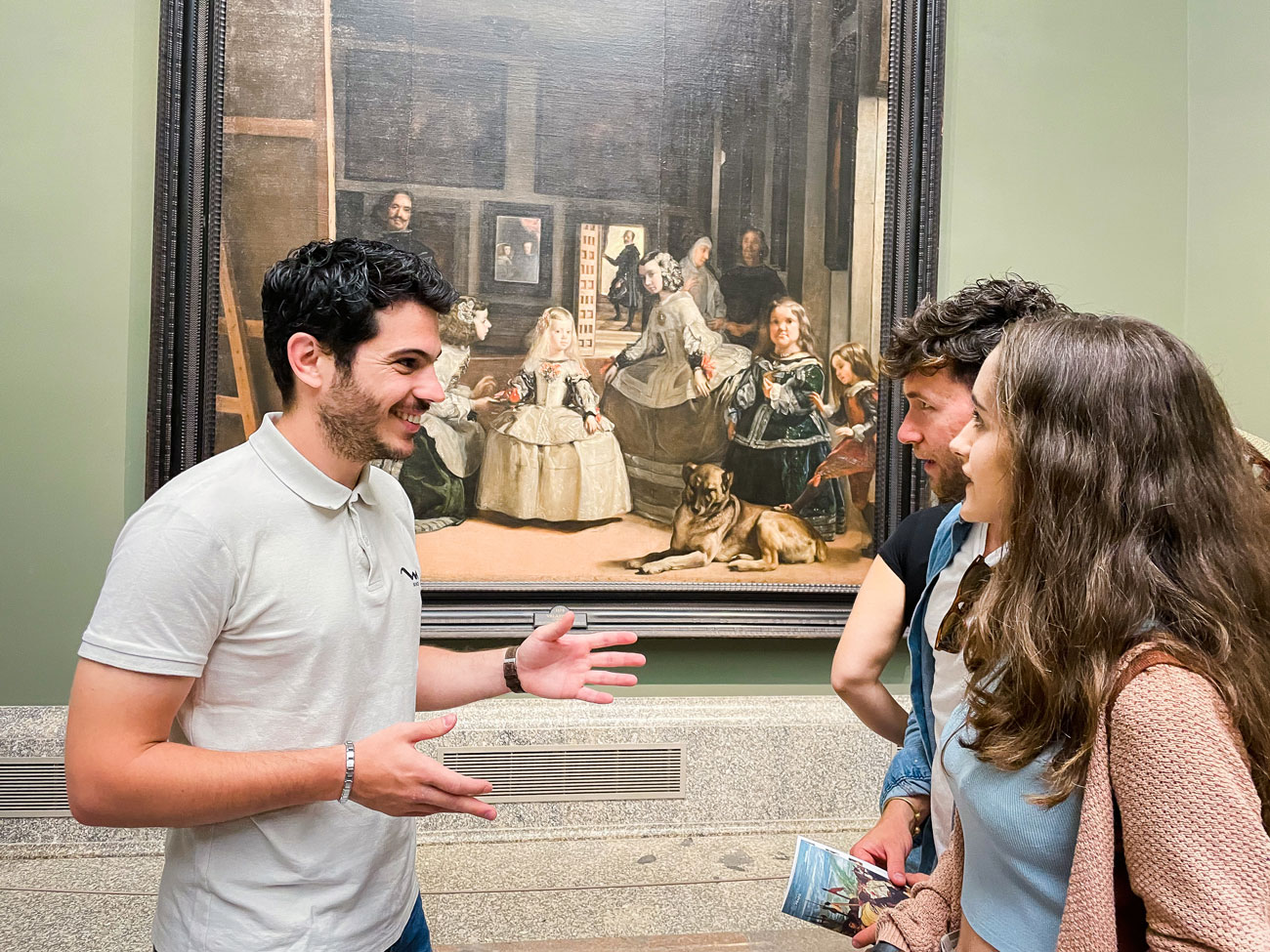
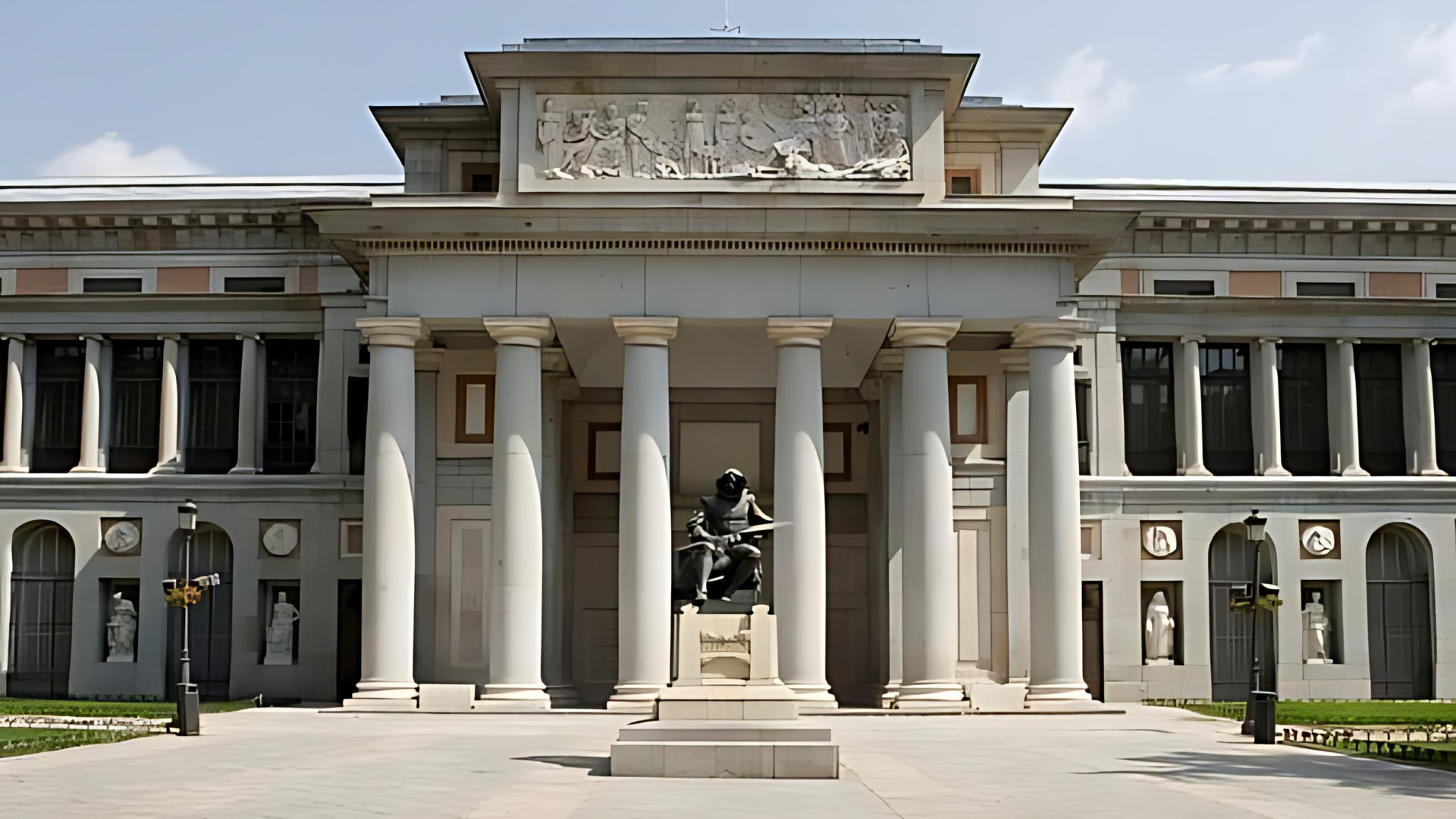
Uniquely rich in paintings by European masters from the 16th to the 19th centuries, according to art historian and Hispanicist Jonathan Brown, “few would dare to doubt that it is the most important museum in the world in European painting.”
Its main attraction lies in the wide presence of Velázquez, El Greco, Goya (the most extensive artist represented in the museum), Titian, Rubens and Bosco, of which it has the best and most extensive collections that exist worldwide, to which must be added outstanding sets of authors as important as Murillo, Ribera, Zurbarán, Fra Angelico, Rafael, Veronese, Tintoretto, Patinir, Antonio Moro, Van Dyck or Poussin, to name but a few of the most relevant.
7
The ancient monastery of Saint Jerome el Real, popularly known as “Los Jerónimos”, was one of the most important monasteries in Madrid, originally governed by the Order of Saint Jerome. Next to it existed the so-called Royal Room, then expanded as the Palace of the Good Retreat in the time of Philip IV.
8
Stop 8
Pass by
The Puerta de Alcalá is one of the five old royal gates that gave access to the city of Madrid, located in the center of the Independence Square roundabout.
9
Stop 9
Pass by
Surrounded by the buildings of the Palacio de Buenavista (Army Headquarters), Palacio de Linares (House of America), Palacio de Comunicaciones (formerly the headquarters of the Post Office and now the Madrid City Council) and Banco de España.
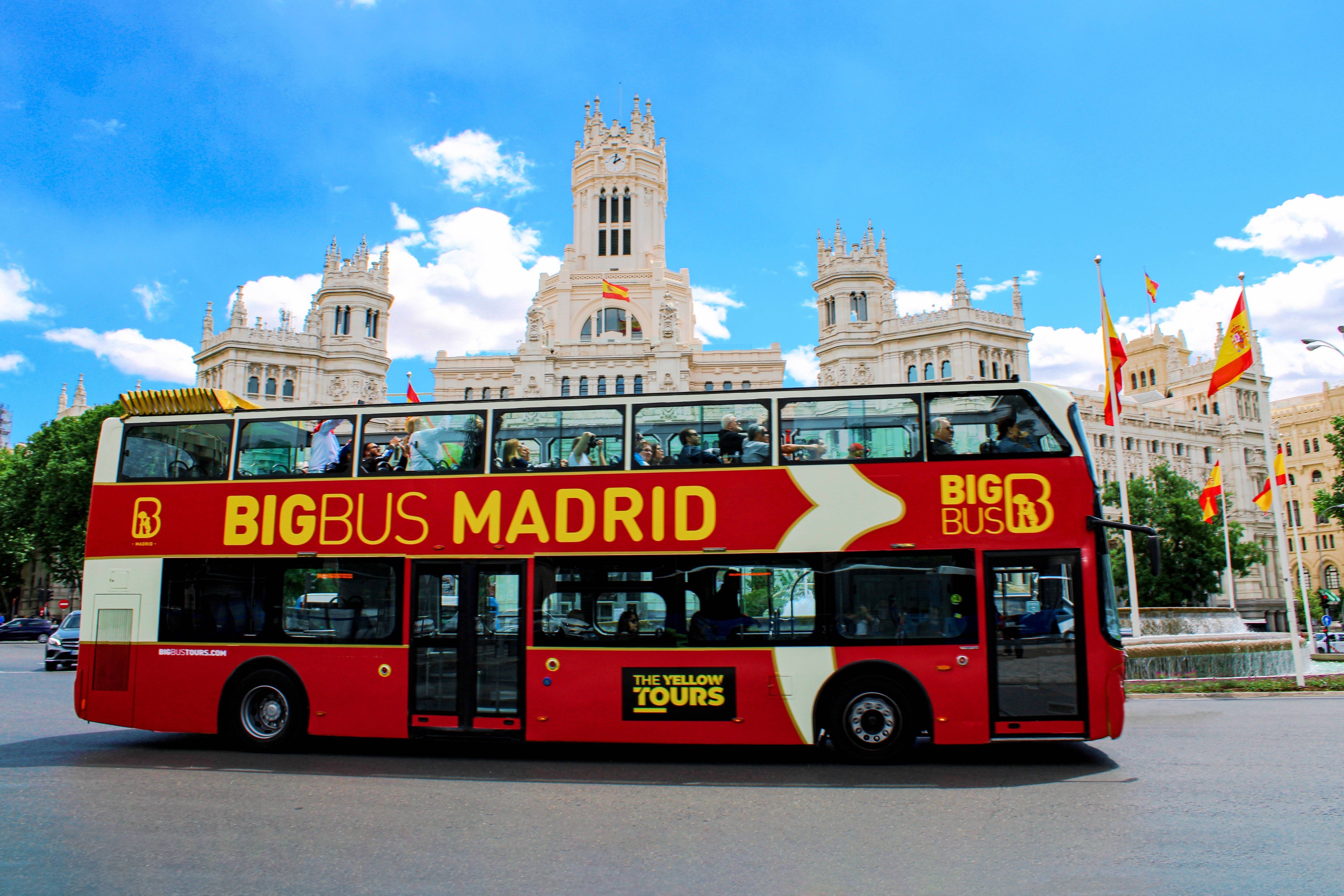
The fountain depicts the Roman goddess Cybele, symbol of land, agriculture and fertility, on a cart drawn by two lions, the mythological characters Hippomenes and Atalanta. The goddess and the lions were carved from marble and the rest from stone. The sculpture of the goddess is the work of Francisco Gutierrez. The two lions have been sculpted by the French Roberto Michel.
The goddess is an icon for supporters of the Real Madrid football team, as it celebrates the titles of the Madrid team, as well as the successes of the Spanish national football team.
10
Quite a decorative waste, awarded at the National Exhibition of Fine Arts of 1884. The building was built with the aim of providing the National Bank with a headquarters more in line with the importance of its functions, such as the single issue of coins and banknotes for the entire Spanish territory.
The interior of the building can only be visited by groups of educational establishments and universities. Exceptionally, also by cultural entities and non-profit associations.
11
Plaza de Santa Ana is an open space in the Cortes district of Madrid. It dates from 1810 and throughout its history has undergone numerous urbanization processes that have changed its appearance with varying fortunes.
12
Stop 12
Pass by
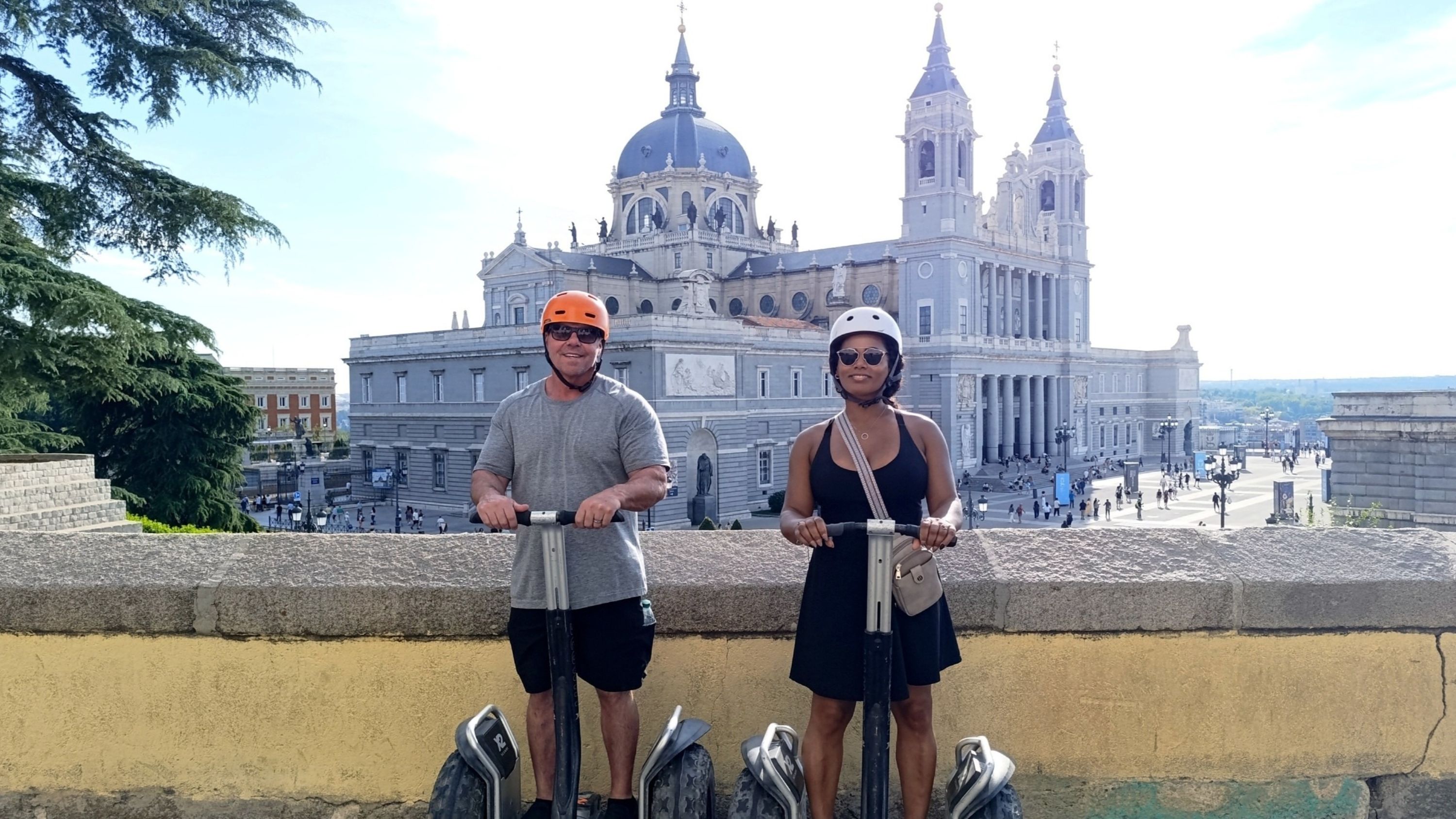
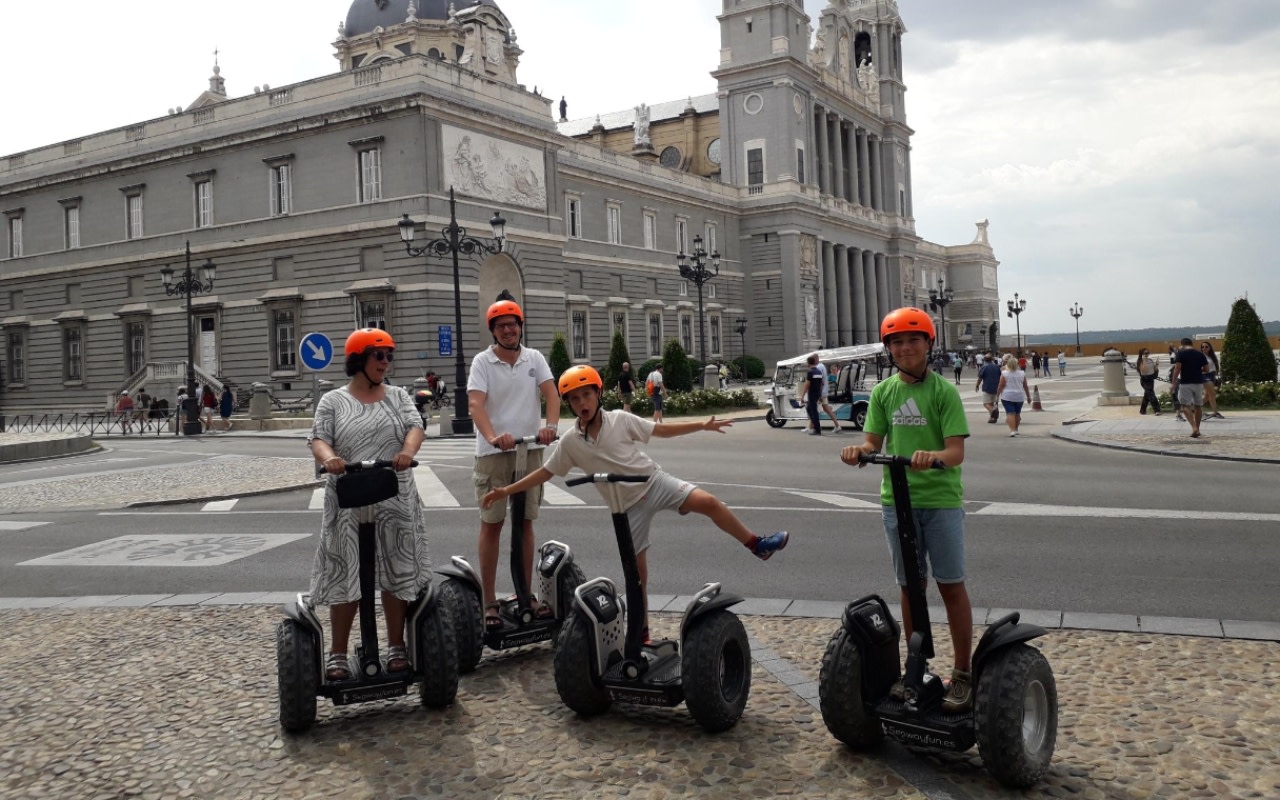
Almudena Cathedral is the most important religious building in Madrid. On June 15, 1993, it was consecrated by Pope John Paul II, becoming the first cathedral consecrated outside Rome.
The Museum of the Cathedral of the Almudena gathers dozens of objects that narrate the history of the diocese of Madrid. In the twelve rooms with the museum you will see everything from mosaics to episcopal shields and ornament.
13
Stop 13
Pass by
The Royal Palace of Madrid, also called the Royal Palace of the East, is the official residence of the King of Spain; however, the current kings do not live in it, but in the Palace of the Zarzuela, so it is used for state ceremonies and solemn acts.
14
Stop 14
Pass by
Sabatini Gardens are located opposite the northern facade of the Royal Palace of Madrid, between Bailén Street and the San Vicente Coast. They occupy an area of 2.66 hectares.
15
Stop 15
The Temple of Debod is an ancient Egyptian building currently located in the Spanish city of Madrid. It is located west of the Spanish Steps, next to the Paseo del Pintor Rosales, on a high where the Mountain Barracks was located.
What's not included
Tips to the Driver Guide
Hotel pickup and drop-off (not legal)
Transfers outside the tour route (not legal)
Available languages
Guide guide
EN
ES
Reviews breakdown
Viator
4.8
1,212 reviews
5★
1046
4★
90
3★
41
2★
12
1★
23
Tripadvisor
4.9
1,709 reviews
5★
1609
4★
71
3★
15
2★
7
1★
7
Important information
Specialized infant seats are available
Public transportation options are available nearby
Suitable for all physical fitness levels
Minimum age two (2) years (babies not allowed)
Minimum weight required: 9 kg
In case of customer delay the activity will be reduced according to the lost time, which may cause a change in the route set. The activity will be cancelled if the delay is longer than 15 minutes and no refund of the amount paid will be made
Tour itinerary may vary by closed streets or demonstrations on the day of the tour
Tuk-tuks are reserved privately, and the price is set according to the number of tuk-tuks needed for the group, being the legal maximum of 4 passengers per tuk-tuk.
Tuk-tuks do not have trunks, so you can not carry strollers, wheelchairs, suitcases or large packages.
For security reasons, pets and pets are not allowed.
Tours take place in rain or heat, and can only be cancelled under extreme conditions.
Tours cannot be modified, nor can stops for photographs. These stops will be made in the prearranged places.
The vehicles are suitable for older people, and our drivers will help them get on if necessary.
The pick-up point is located in the bus station (underground) of the Plaza de Oriente, right next to the Royal Palace. Although there is no number 4 on Calle Bailén (28013), searching for “Calle Bailén 4” or “Puerta del Príncipe” on Google Maps will mark the exact location of the “Puerta del Príncipe”. Just opposite the “Prince’s Gate”, you will find the stairs to access the station. There, you will see our Eco Tuk Tuk signage to get to the exact pickup point. You can contact us by phone or write to us by WhatsApp (+34 696 99 78 89) at any time.
In case of mobility problems, to go downstairs from the pick-up point, please contact us by phone or WhatsApp (+34 696997889), or by email (hello@ecotuktuk.com) so that we can help you access the meeting point by elevator.
Meeting point
It is held at the Plaza de Oriente bus station (underground), next to the Royal Palace. There is no 4 on Bailén Street, but searching it on Google Maps indicates the exact location of the Prince's Gate. Directly opposite you will find EcoTukTuk access stairs and signs.
From $25
per person
Price varies by option
Secure booking
Free cancellation available
Instant confirmation