Romantic Berlin Rickshaw City and Photo Tour - incl. pick-up
Active
1h - 2h
For a full refund, cancel at least 24 hours before the scheduled departure time.
Instant confirmation
Mobile or paper ticket accepted
About this experience
Romantic city tour that reveals the hidden beauties and romantic corners of the city.
Immerse yourself in the beating heart of Berlin as we guide you through picturesque neighborhoods lined with charming boutiques and cozy cafés. Discover the fascinating world of Berlin street art and be inspired by the hidden gems of the urban art scene.
Enjoy a relaxed and environmentally friendly ride in our lovingly designed rickshaws and let your personal guide lead you through the city streets. Experience Berlin from a new perspective, far away from the crowded tourist trails.
Discover romantic bridges along the picturesque Spree and be enchanted by the breathtaking views of the glittering city lights. This tour promises you unforgettable moments of togetherness and lets you experience the romantic side of Berlin to the fullest.
Available options
2.5 hour tour
Duration: 2 hours<br/>Pickup included
90 min. tour
Pickup included
What's included
Travel guide
Private transportation
Warm blanket
WiFi on board
Alcoholic Beverages
photographer
Music on request
Detailed itinerary
1
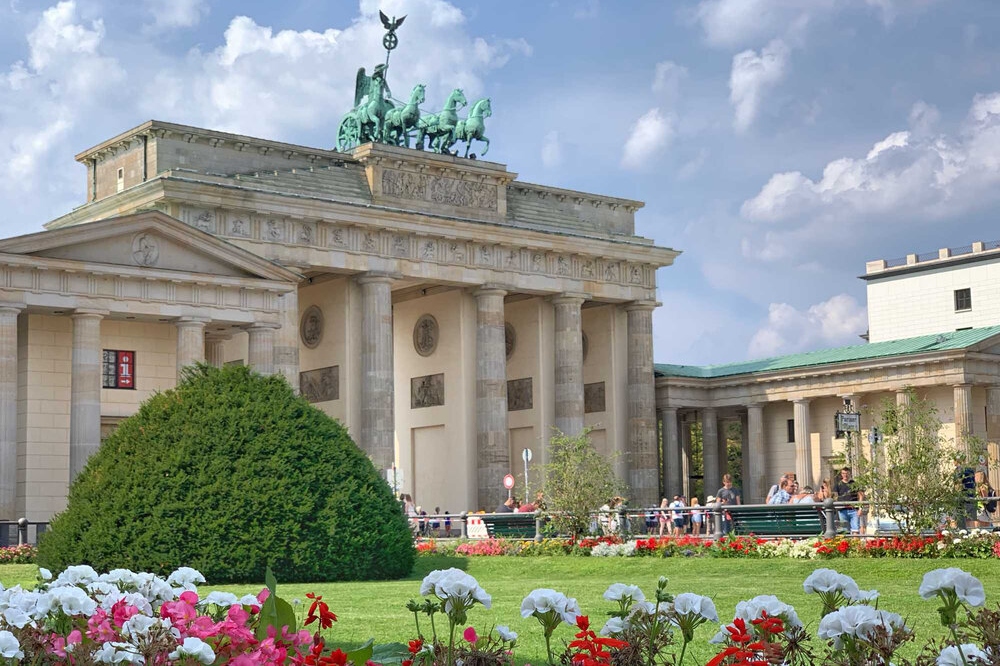
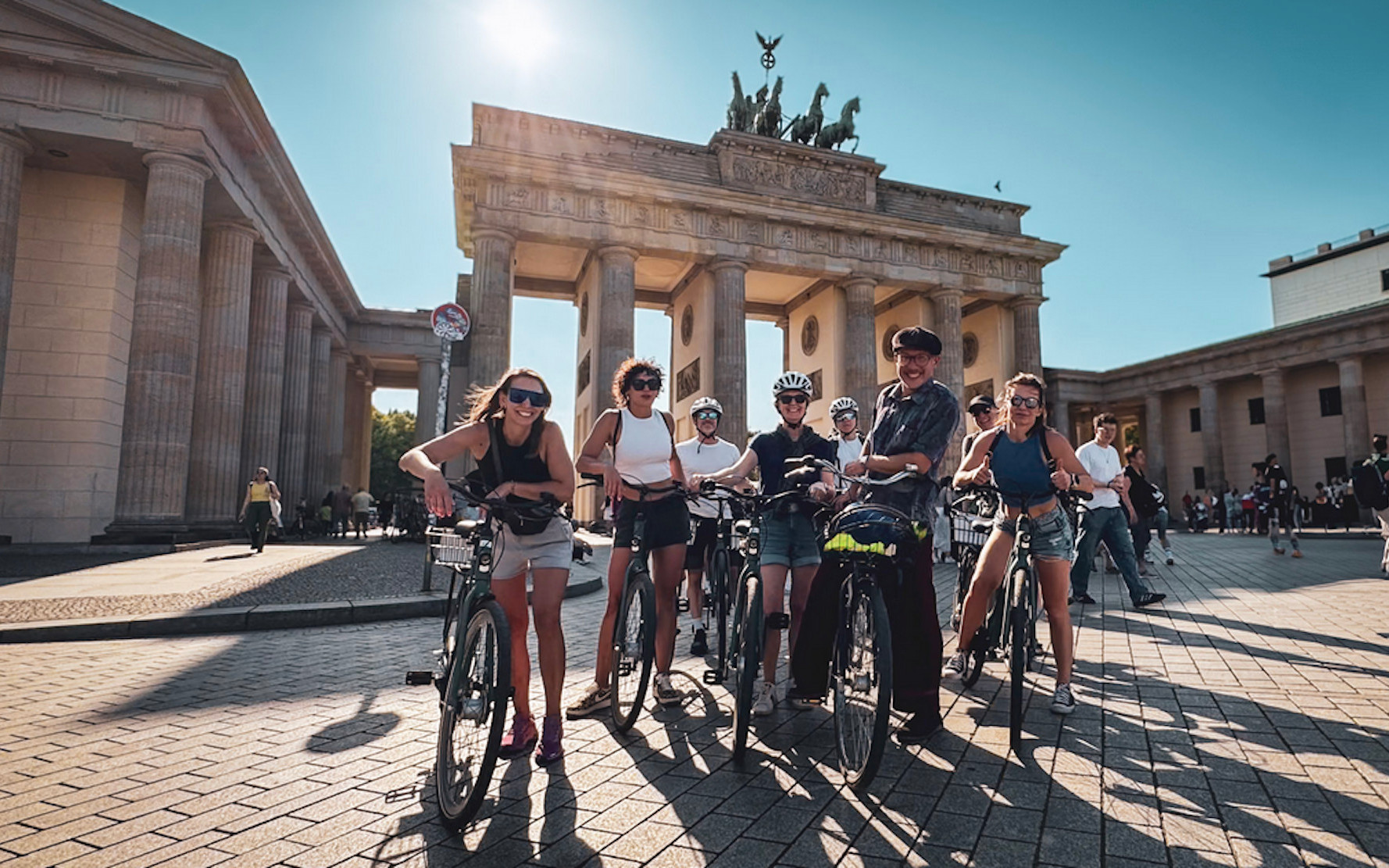
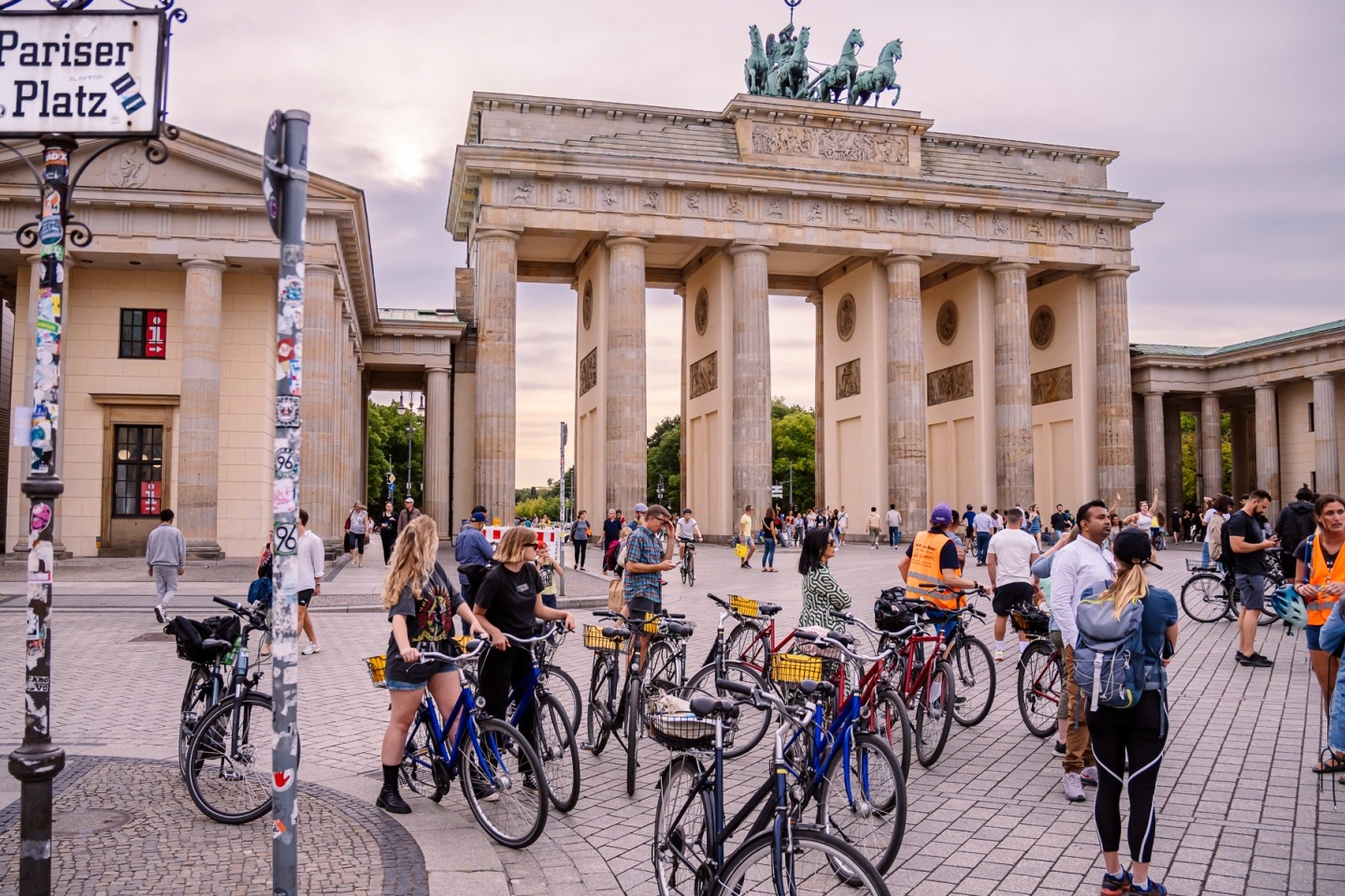
The Brandenburg Gate made of sandstone is one of the largest and most beautiful creations of German classicism. It was created between 1788 and 1791 based on designs by Carl Gotthard Langhans the Elder, who was heavily based on the Propylaea of the Athens Acropolis. King Friedrich Wilhelm II had previously ordered the construction of the Brandenburg Gate, as he was looking for a worthy architectural finish for the boulevard Unter den Linden.
2
Stop 2
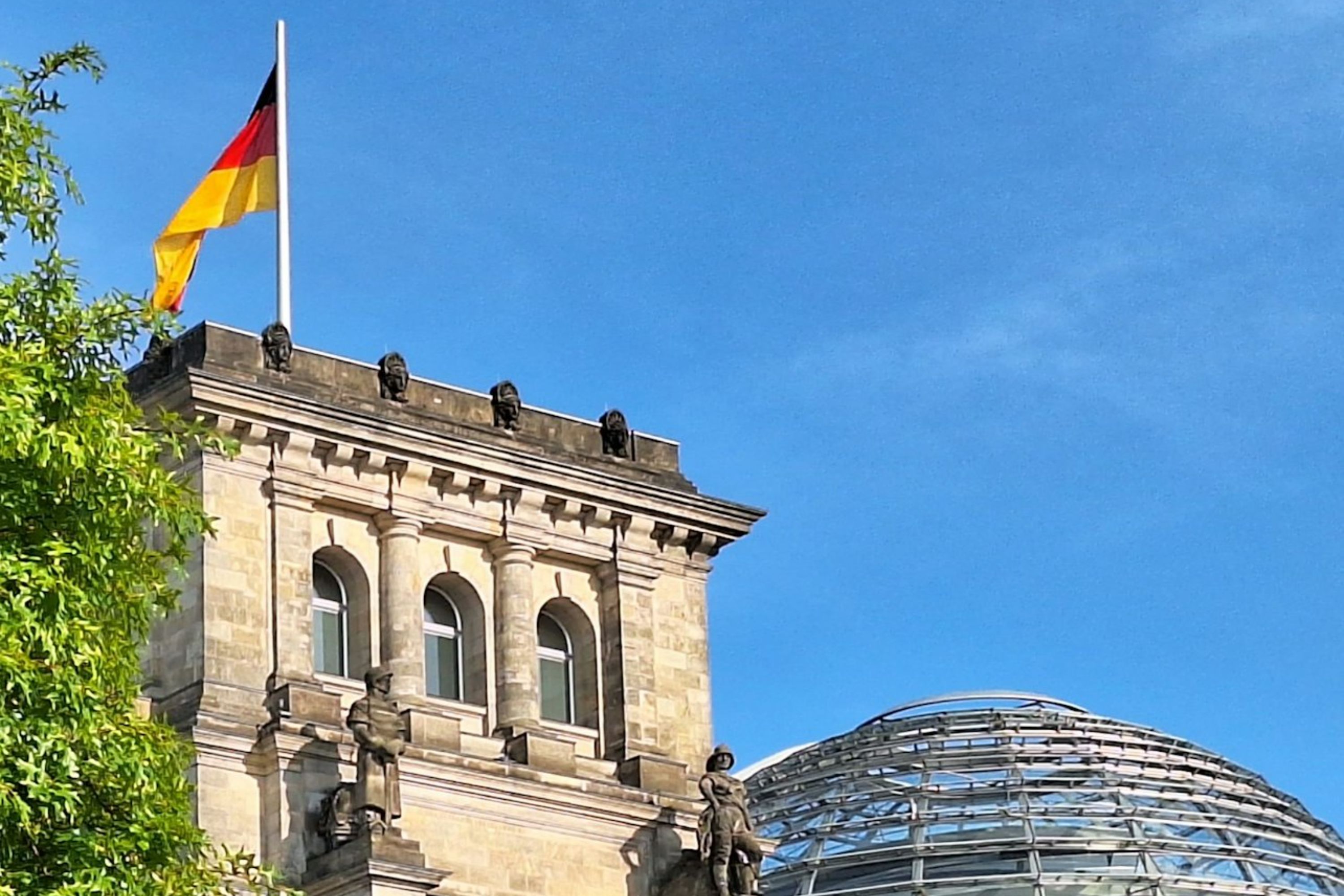
Significant turning points and events in German history are connected to the Reichstag building. On November 9, 1918, the SPD politician Philipp Scheidemann proclaimed the republic from the balcony at the west portal. On the evening of February 27, 1933, the "Reichstag fire" occurred. The plenary hall and the dome were completely destroyed. A red flag of the Soviet Union, hoisted on April 30, 1945 by two Red Army soldiers, symbolized the victory over the "Third Reich".
3
Stop 3
Pass by
Flanked by two "T 34" tanks, a bronze statue of a Red Army soldier with his rifle on his shoulder stands in the middle of the square. Texts with the names of fallen Soviet soldiers are attached to the pillars behind. In the rear part of the memorial are the graves of around 2500 soldiers
4
Stop 4
Pass by
History of the zoo At the end of the 17th century, Elector Friedrich III. Create a "pleasure park for the population" from the former hunting ground. Over time, the park was redesigned based on several models, including the zoo was transformed into an English public park between 1833 and 1838 by the famous landscape designer Peter Joseph Lenné. Sights in the zoo It is not just trees, bushes and green spaces that define the face of the zoo, which covers around 200 hectares. Many sights such as monuments and memorials, bridges, the Victory Column, the Federal President's Office, the House of World Cultures or the English Garden invite you to take a day stroll through the park. The English Garden, which is laid out around a pond, gives an insight into English landscape architecture and is now one of the most beautiful corners of the zoo.
5
Stop 5
Potsdamer Platz was planned by architects as a whole district. With success - the cafes, cinemas and shops between the futuristic skyscrapers are used by Berliners and tourists alike. The plan of the city planners has paid off: The Berliners have accepted the cafés, cinemas and the large shopping arcade of the new Daimler City very well. A completely new district was created on 6.8 hectares between Potsdamer Platz and Reichpietschufer.
6
Stop 6
The area, known as the "Topography of Terror" from 1987 onwards, was the central location for the planning and control of most Nazi crimes. Between 1933 and 1945, the most important institutions of the National Socialist terrorist apparatus of the SS and police were housed here with the Secret State Police Office, the Reich Leadership SS and the Reich Security Main Office.
7
The Martin-Gropius-Bau is dedicated to cultural history, contemporary art and photography.
8
Stop 8
Pass by
Wall
9
Stop 9
During the division of Berlin, the former military checkpoint Checkpoint Charlie was the most famous border crossing of the three border points controlled by the Americans, along with the Glienicke Bridge. The others were the border control points Helmstedt-Marienborn (Checkpoint Alpha) and Dreilinden-Drewitz (Checkpoint Bravo). The passage was only allowed to be used by foreigners and employees of the permanent representation of the FRG in the GDR as well as by GDR functionaries.
10
Stop 10
Pass by
he Friedrichstrasse runs through Berlin as a north-south axis. A popular shopping mile emerged between Checkpoint Charlie and Friedrichstrasse station after the fall of the Wall.
11
Stop 11
The square was built at the end of the 17th century according to plans by Johann Arnold Nering. At that time, French immigrants, mainly French Protestants (Huguenots), settled in this quarter. The market square was initially called Esplanade, then in chronological order Lindenmarkt, Friedrichstädtischer Markt and Neuer Markt. Finally it was renamed Gendarmenmarkt in 1799, because from 1736 to 1782 the guard and the stables of the guard regiment "Gens d´armes" were located there.
12
Stop 12
Pass by
The permanent exhibition "Ways - Irrwege - Detours" in the German Cathedral shows the historical development of liberal parliamentary democracy in Germany on a total of five floors.
13
The concert hall on Gendarmenmarkt is a masterpiece of classical architecture and is one of Karl Friedrich Schinkel's main works. As early as 1776, at the instigation of Frederick the Great, a small comedy house was opened at this location, which was built according to the plans of the Prussian senior building director Johann Bouman the Elder. was built. The renaming to the Royal National Theater in 1787 highlighted the rise to one of the leading theaters in the country
14
Stop 14
Pass by
In the middle of the museum center of Berlin, Bebelplatz gives an idea of how a beautiful city was imagined almost 300 years ago. The Nazis desecrated the place with the burning of books, of which a memorial today commemorates. On May 10, 1933, the National Socialists had over 20,000 books burned on Bebelplatz. They were of the opinion that the volumes they had selected were "of a non-German spirit". This included books by Erich Kästner, the Mann family, Magnus Hirschfeld, Lion Feuchtwanger, Karl Marx, Else Lasker-Schüler and almost 400 other authors. Heinrich Heine's books were also burned. If you had read it instead, you would have come across Heine's remark that where you burn books you also have people.
15
Stop 15
Right next to the armory, which now houses the German Historical Museum, is the rather small Neue Wache. It was built between 1816 and 1818 according to the designs by Karl Friedrich Schinkel and has been the central memorial in the Federal Republic of Germany for the victims of war and tyranny since 1993.
16
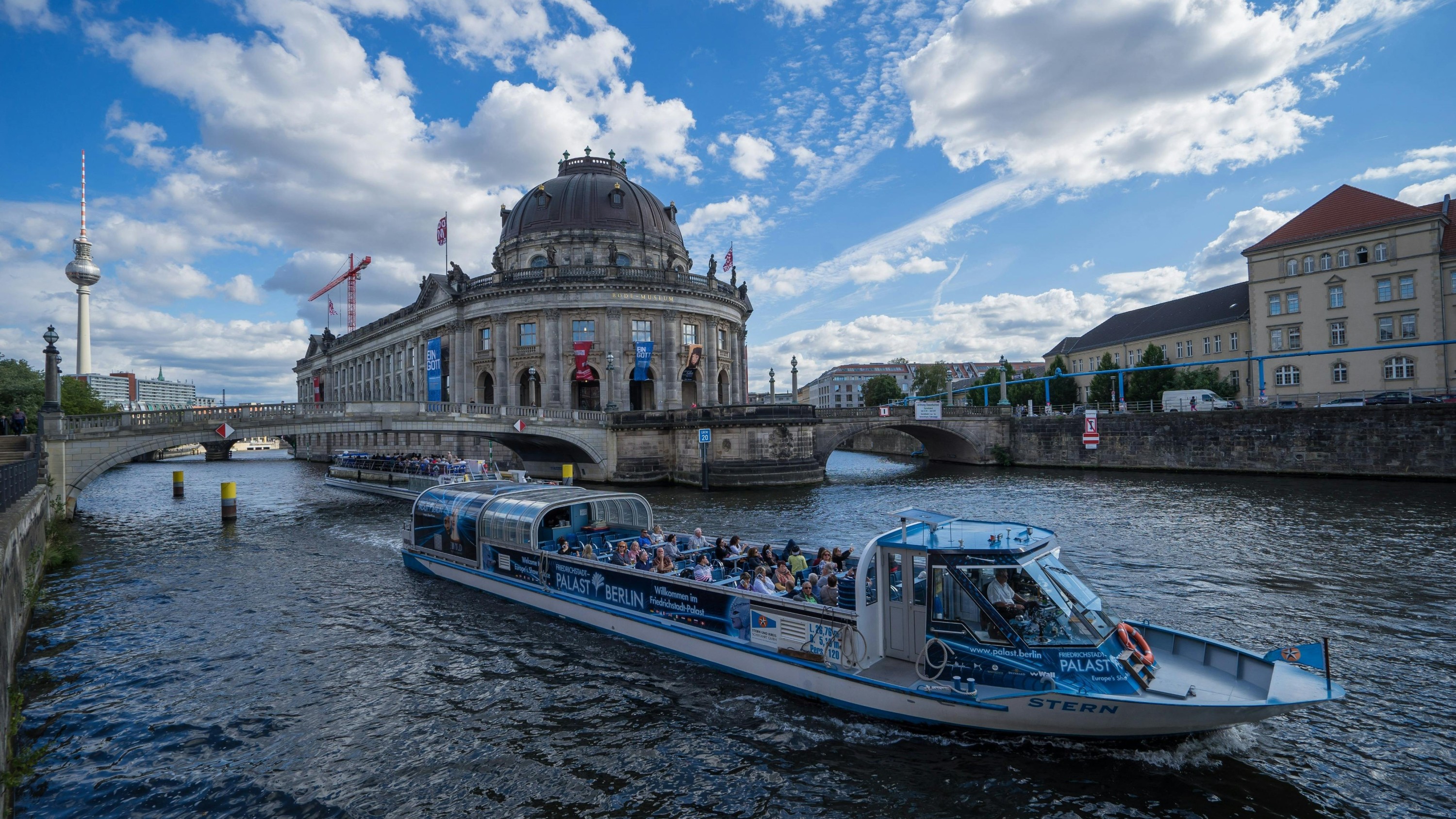
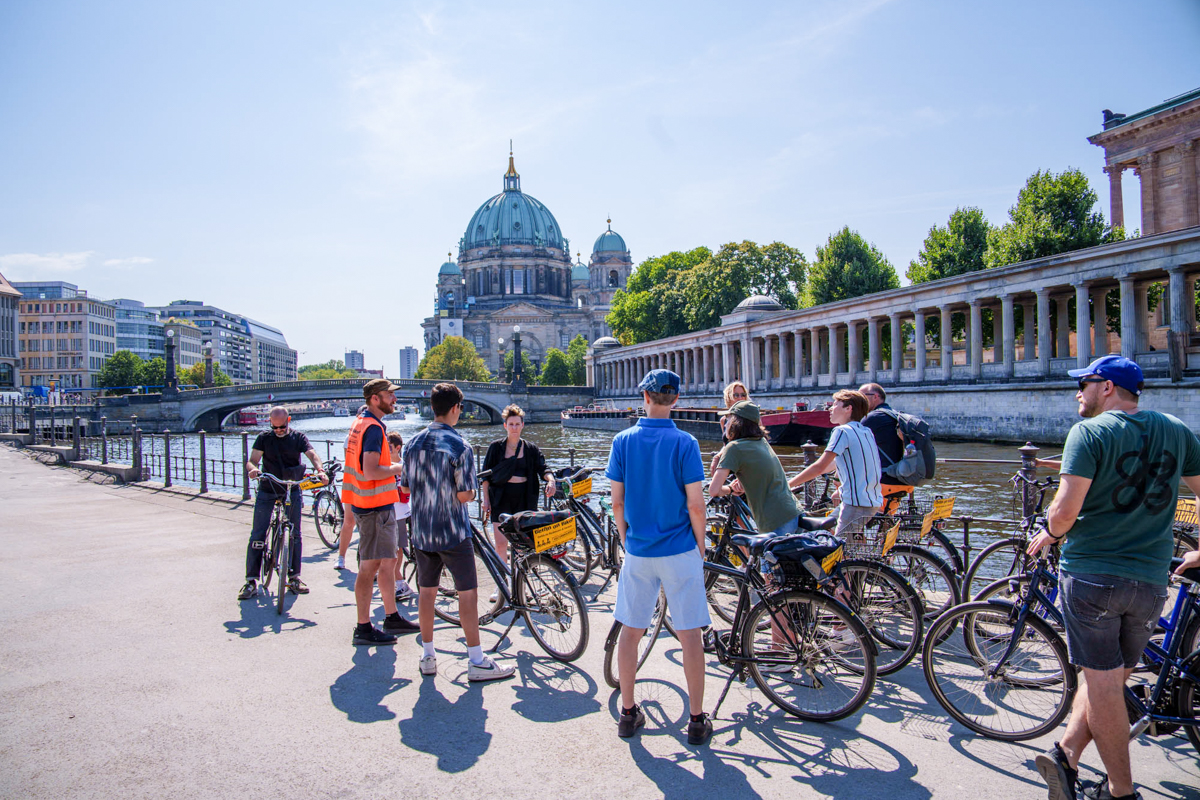
The Museum Island in the center of Berlin is one of the outstanding museum complexes in Europe and is a UNESCO World Heritage Site.
17
Stop 17
Pass by
With its distinctive design features, the Berlin Cathedral is a must for every church lover and visitor to the city.
18
The Lustgarten on Museum Island once belonged to the Berlin City Palace. The spacious square is now a popular place with Berliners and tourists.
19
Stop 19
Pass by
What was left of it shines all the brighter today: The New Synagogue on Oranienburger Strasse. It was once the largest and most important synagogue in Germany.
20
Stop 20
Pass by
The Nikolaiviertel is Berlin's first and therefore oldest residential area. In addition to the Nikolaikirche, the district offers old town flair with historic houses, restaurants and coffee shops.
21
Stop 21
Pass by
Whether in the 1920s, in GDR times or today: the famous Alexanderplatz was and remains one of the liveliest squares in Berlin.
What's not included
Gratuities
Available languages
Guide guide
DE
EN
IT
PL
FR
TR
ES
Reviews breakdown
Viator
4.7
3 reviews
5★
2
4★
1
3★
0
2★
0
1★
0
Tripadvisor
3.7
6 reviews
5★
3
4★
1
3★
0
2★
1
1★
1
Important information
Wheelchair accessible
Infants and small children can ride in a pram or stroller
Service animals allowed
Suitable for all physical fitness levels
Meeting point
Brandenburg Gate at Starbucks
About Berlin
Berlin, Germany's capital and largest city, is a vibrant metropolis known for its rich history, diverse culture, and dynamic nightlife. The city's eclectic mix of modern and historic architecture, world-class museums, and thriving arts scene make it a must-visit destination in Europe.
Top Attractions
Brandenburg Gate
A neoclassical monument and one of Berlin's most iconic landmarks, the Brandenburg Gate was built in the 18th century and has been a symbol of the city's history and reunification.
Historical
30 minutes to 1 hour
Free
Berlin Wall Memorial and East Side Gallery
The Berlin Wall Memorial and the East Side Gallery are important historical sites that commemorate the division of Berlin during the Cold War and the fall of the Wall in 1989.
Historical
1-2 hours
Free
Museum Island
A UNESCO World Heritage site, Museum Island is home to five world-renowned museums, including the Pergamon Museum, the Neues Museum, and the Alte Nationalgalerie.
Museum
Half-day to full day
€19 (Museum Island Day Ticket) or individual museum tickets
Reichstag Building
The Reichstag Building is the seat of the German Bundestag (parliament) and a symbol of German democracy. The glass dome on top offers panoramic views of the city.
Historical
1-2 hours
Free (but advance registration is required)
Potsdamer Platz
Potsdamer Platz is a major public square and traffic intersection in the heart of Berlin. It is known for its modern architecture, shopping, and entertainment options.
Architecture
1-2 hours
Free to explore, costs vary for shopping and dining
Must-Try Local Dishes
Currywurst
A popular Berlin street food, currywurst is a sliced sausage served with a curry ketchup sauce and often topped with curry powder.
Snack
Contains pork, vegetarian and vegan options available
Boulette
A German-style meatball, usually served with potato salad or mashed potatoes and a creamy sauce.
Main Course
Contains beef or pork, vegetarian and vegan options available
Döner Kebab
A Turkish dish popularized in Berlin, consisting of seasoned meat (usually lamb, beef, or chicken) cooked on a vertical rotisserie and served in flatbread with vegetables and sauces.
Main Course
Contains meat, vegetarian and vegan options available
Berliner Pfannkuchen
A jelly-filled doughnut, similar to a Berlin-style donut, often eaten during Carnival season.
Dessert
Contains wheat, dairy, and egg, vegan options available
Popular Activities
Cycling
Hiking
Boat tours
Rock climbing
Spa and wellness
Picnicking in parks
Café hopping
Boat tours on the Spree River
Best Time to Visit
June to August
This is the warmest time of the year with long daylight hours, making it ideal for outdoor activities and festivals. The city is lively with tourists and locals enjoying the summer weather.
20°C to 25°C (68°F to 77°F)
68°F to 77°F
Practical Information
Language
- Official: German
- Widely spoken: English, French, Turkish, Arabic, Russian
- English: Widely spoken
Currency
Euro (EUR)
Time Zone
GMT+1 (CET), GMT+2 (CEST during daylight saving time)
Electricity
230VV, 50HzHz
Safety Information
Overall Safety Rating: Generally safe
Berlin is generally a safe city for travelers, with low crime rates and a welcoming atmosphere. However, as with any major city, it's important to be aware of your surroundings and take precautions to protect yourself and your belongings.
Important Precautions:
- • Be aware of your surroundings and keep an eye on your belongings, especially in crowded areas and on public transportation.
- • Use licensed taxis or ride-sharing services, and agree on the fare before starting your journey.
- • Keep your passport and valuables in a safe place, and carry a copy of your passport and important documents.
Getting there
By air
- Berlin Brandenburg Airport • 18 km (11 miles) from city center
By train
Berlin Hauptbahnhof
By bus
Berlin Central Bus Station (ZOB)
Getting around
Public transport
The U-Bahn is a fast and efficient way to get around Berlin, with 10 lines serving 173 stations. It operates from early morning to late at night.
Taxis
Available • Apps: Uber, FreeNow
Rentals
Car, Bike, Scooter
Neighborhoods
Mitte
Kreuzberg
Prenzlauer Berg
Friedrichshain
Charlottenburg
Day trips
Potsdam
35 km (22 miles) from Berlin • Half-day to full day
Potsdam is a charming city near Berlin, known for its stunning palaces, parks, and lakes. It was the former residence of Prussian kings and German emperors and is a UNESCO World Heritage site.
Spreewald
100 km (62 miles) from Berlin • Full day
Spreewald is a picturesque region of forests, lakes, and canals, known for its traditional wooden houses, pickles, and gondola rides. It is a popular destination for outdoor activities and relaxation.
Sachsenhausen Concentration Camp Memorial
35 km (22 miles) from Berlin • Half-day
The Sachsenhausen Concentration Camp Memorial is a somber and important historical site, dedicated to the victims of the Nazi regime. The memorial includes the preserved camp buildings, a museum, and a memorial cemetery.
Festivals
Berlin International Film Festival (Berlinale) • February
Berlin Carnival of Cultures (Karneval der Kulturen) • Late May to early June
Berlin Festival • September
Pro tips
- Learn a few basic phrases in German, as it's appreciated by locals and can enhance your travel experience.
- Consider purchasing a Berlin WelcomeCard for unlimited public transportation and discounts at attractions.
- Explore the city's diverse neighborhoods, each with its own unique character and attractions.
- Visit Berlin's many parks and green spaces, which offer a peaceful and relaxing escape from the bustling city.
- Be open to trying new foods and culinary experiences, as Berlin's diverse food scene offers something for everyone.
From $25
per person
Price varies by option
Secure booking
Free cancellation available
Instant confirmation