Munich WWII and Dachau Concentration Camp Private Tour with Licensed Guide
Active
9h
For a full refund, cancel at least 24 hours before the scheduled departure time.
Manual confirmation
Mobile or paper ticket accepted
About this experience
The atrocities of the Nazi dictatorship must never be forgotten...
With this exclusive private tour you will get unique insights into the inglorious past of the former "capital of the movement". Your professional and experienced guide will not only show you and explain all the relics from 1933-1945 in Munich's old town, but thanks to the trips in our luxurious Mercedes minivans you will also see all other Nazi buildings or memorials in the outskirts that cannot be reached on foot be able.
At the Dachau Concentration Camp Memorial Site, your licensed guide will provide you with shockingly authentic insider knowledge about the inhumane conditions that the concentration camp inmates were subjected to during the 12 years of Nazi rule in the Dachau concentration camp on an approximately 2-hour tailor-made private tour from your licensed guide.
Of course, we also visit the "normal" sights of Munich, so that you no longer need an extra city tour!
Available options
WWII Tour in Luxury Minivan
Duration: 9 hours 30 minutes: including Prof. and licensed Guide<br/>Pickup included
8 - 19 people
Rides in the comfort coach: For 16-19 people, please select "15 people". Duration: 9.5 hours - incl. Prof. Chauffeur & licensed tour guide<br/>Pickup included
What's included
Licensed professional tour guide for Munich and the Dachau Concentration Camp Memorial
No hidden costs!
Mineral water
Trips in the new luxurious VW or Mercedes minivan (a/c) - only your group takes part!
Visit to the Dachau concentration camp memorial with a licensed guide
Visit to all Nazi buildings and memorials in Munich's old town and the outskirts
Detailed itinerary
1
Stop 1
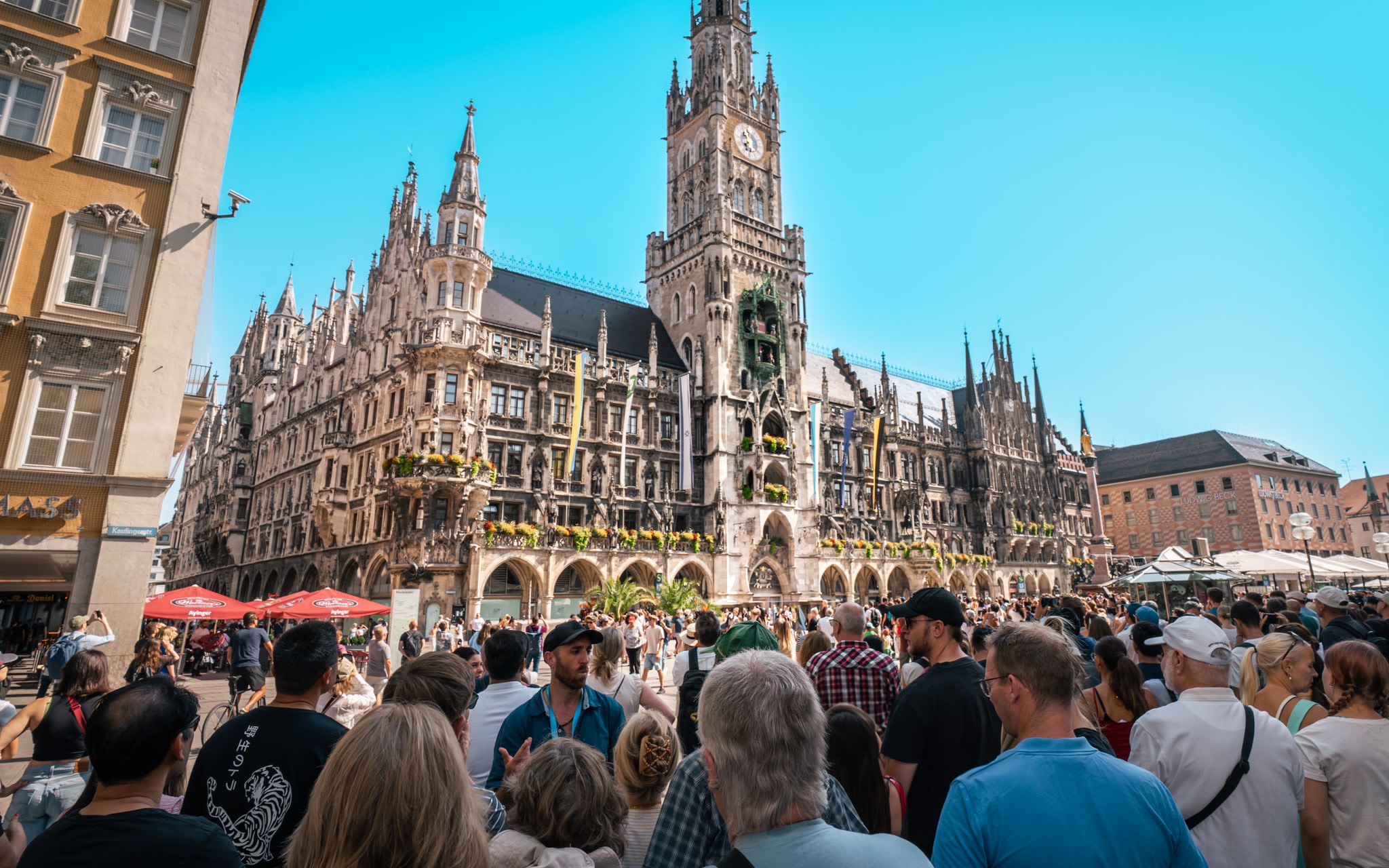
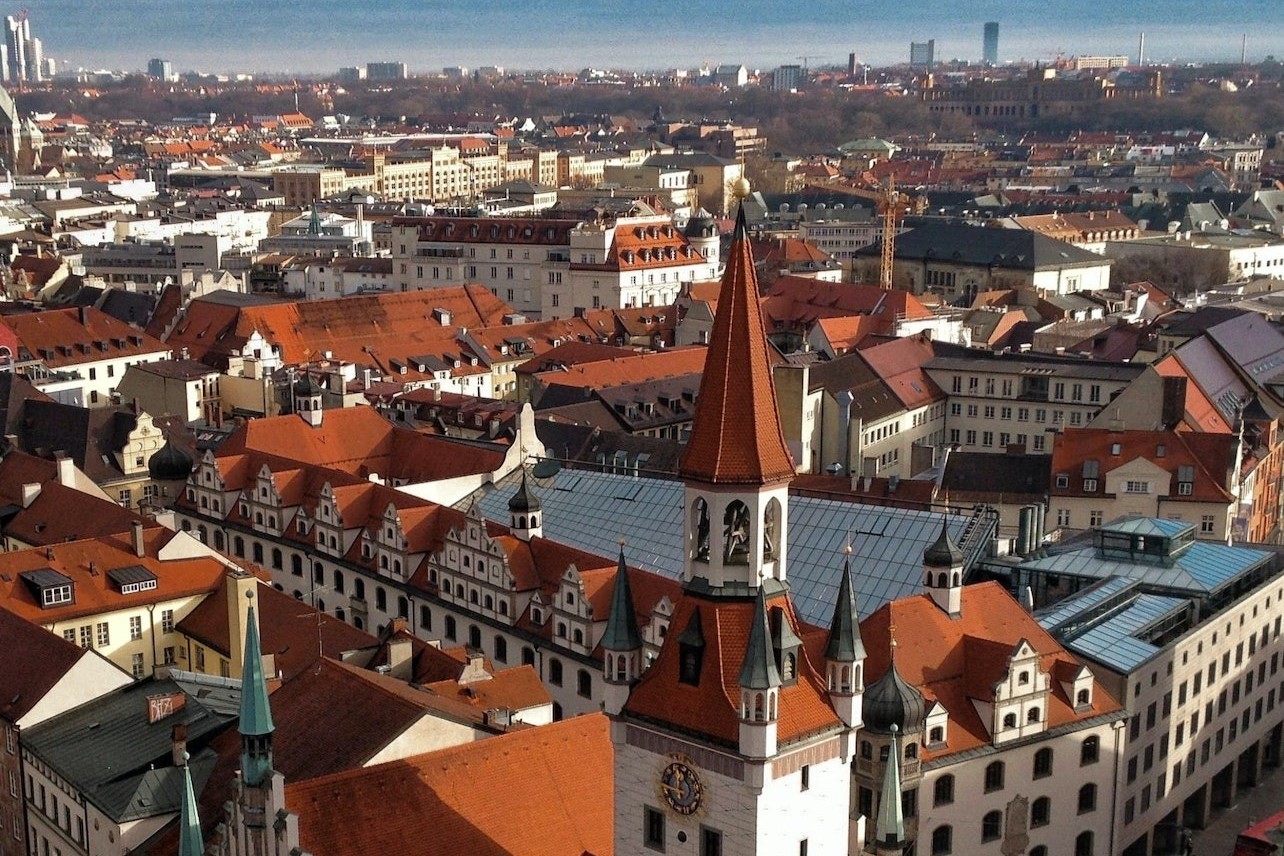
After your guide has picked you up from your hotel / address in Munich in a minivan with a chauffeur (or, if your group consists of more than 7 people, in a small coach - of course also with a driver), you will be driven to Marienplatz, where your 'Munich in the 3rd Reich "tour can begin with an approx. 1-hour tour of the old town. ***** Marienplatz has been the bourgeois center of the city since the city was founded in the 12th century; until 1852 it was called' Schrannenplatz ' At the time of the National Socialists, the neo-Gothic town hall was provided with swastika flags, in order to take account of the increasing traffic, the old town hall from the 15th century was also provided with an extra-wide passage.
2
Stop 2
Using the late Gothic Munich Frauenkirche (built at the end of the 15th century in just 20 years!), We would like to illustrate the destruction caused by numerous Allied bombings and some changes during the reconstruction - supported by historical images.
3
The second largest barrel vault in the world is located in St. Michael's Church, which was built just 100 years later - in Mannerist style! Supported by historical images, we also show you the destruction caused by numerous Allied bombing raids and, in some cases, changes during the reconstruction.
4
Stop 4
In 1933, SS Brigade Leader Christian Weber set up his residence in one of the largest and most magnificent city residences in Europe. Tour the huge building complex with its 7 large inner courtyards from the outside and let your guide explain the different stylistic epochs to you, as well as the importance of petting one (or all) of the lions at the side entrances.
5
Your guide will be happy to tell you why this little street was called "Drückebergergäßchen"!
6
Stop 6
At this southern Point du Vue on the historic Ludwigstrasse, which was built on behalf of King Ludwig I, the attempted Hitler putsch in 1923 came to a bloody end. Here, at the point where Munich's northern city gate, the "Schwabinger Tor", stood until 200 years ago, your chauffeur will be waiting for you in his vehicle - the other sights are driven to by minivan / coach.
7
Erected in 1985 on the site of the destroyed Schiller memorial, an eternal flame burns in a symbolic dungeon as a symbol of freedom.
8
At the Ludwig Maximilians University, moved from Ingolstadt to Munich in 1826, the "White Rose" resistance group was formed with its members Hans and Sophie Scholl, Christoph Probst, Alexander Schmorell, Willi Graf and Professor Kurt Huber Caretakers were murdered in 1943. ***** Visit the memorial with your guide.
9
Stop 9
In the former artists' quarter, Hitler liked to stop off at the "Osteria Italiana" that still exists today. The editorial house "Völkischer Beobachter" and "Heinrich Hoffmann. Verlag National Socialist Pictures" were also located in the most popular part of Munich today. In 1929, Adolf Hitler met his future wife Eva Braun in the later "Photohaus Hoffmann".
10
Here, in a niche on the first floor of the Munich Hofbräuhaus, Hitler and his entourage particularly enjoyed meeting. If you want to follow our recommendation for a hearty lunch (not included in the tour price), you can take a seat on the ground floor, in the "Schwemme" or - if the weather is suitable - in the beautiful inner courtyard with its romantic outdoor dining area. Even if you don't want to eat anything, you should definitely take a look at the "most famous inn in the world".
11
Stop 11
With a main front of 225 meters, the building erected in 1937 by Hermann Göring's Reich Aviation Ministry for a new Luftgaukommando V building is one of the most monumental in Munich from this dark era. Swastikas on window grilles and steel helmets on house walls leave no doubt about who was once the builder here!
12
Stop 12
The first representative Nazi building in Munich, jokingly called "Weißwurst-Allee" due to its seemingly endless row of bright granite columns, was called "House of German Art" in Hitler's time and shows works of artists conforming to the Nazi regime. See goosebumps-inducing swastika decor today!
13
Stop 13
In the immediate vicinity you can forget the horrors of Hitler's time for a moment by watching the famous Eisbach surfers on "the best inner-city standing wave in the world" as they more or less successfully conquer the artificially generated wave.
14
Stop 14
Visit the house of Adolf Hitler in the noblest district of Munich, where he moved into a luxurious, 317 sqm 9-room apartment in 1929 (today the police station, can only be viewed from the outside).
Not far away, embedded in the Bogenhauser villa district, which was built at the beginning of the 19th century, you can see the property on which Eva Braun has lived in a villa since 1936. This house was demolished a few years ago.
15
Stop 15
In this boulevard, named after Prince Regent Luitpold, see an extremely curious Nazi building: an apartment building with flanking air raid shelters, built for the National Socialist upper class. It was to serve as a model for numerous other buildings of this type - but due to World War II this is the only one that was ever completed.
16
Stop 16
Here you can see a "model settlement" built by the Nazis, in which in 1934 almost 200 settlement houses with their own gardens were built for "German national comrades". It was supposed to serve as a model for other settlements and is now a listed building.
17
Stop 17
In 1943 the members of the "White Rose" Hans and Sophie Scholl, Christoph Probst, Alexander Schmorell, Willi Graf and Professor Kurt Huber were guillotined in the penal institution in Stadelheim.
Their graves are located in the nearby cemetery in the Perlacher Forest.
18
Stop 18
The historical area between Karolinenplatz and Königsplatz (both 19th century) soon became the party center of the NSDAP with numerous administrative buildings, but also the "Führerbau". Almost all Nazi buildings survived the bombing attacks unscathed. The NS Documentation Center, which opened in 2015, was built on the site of the destroyed "Brown House".
19
Stop 19
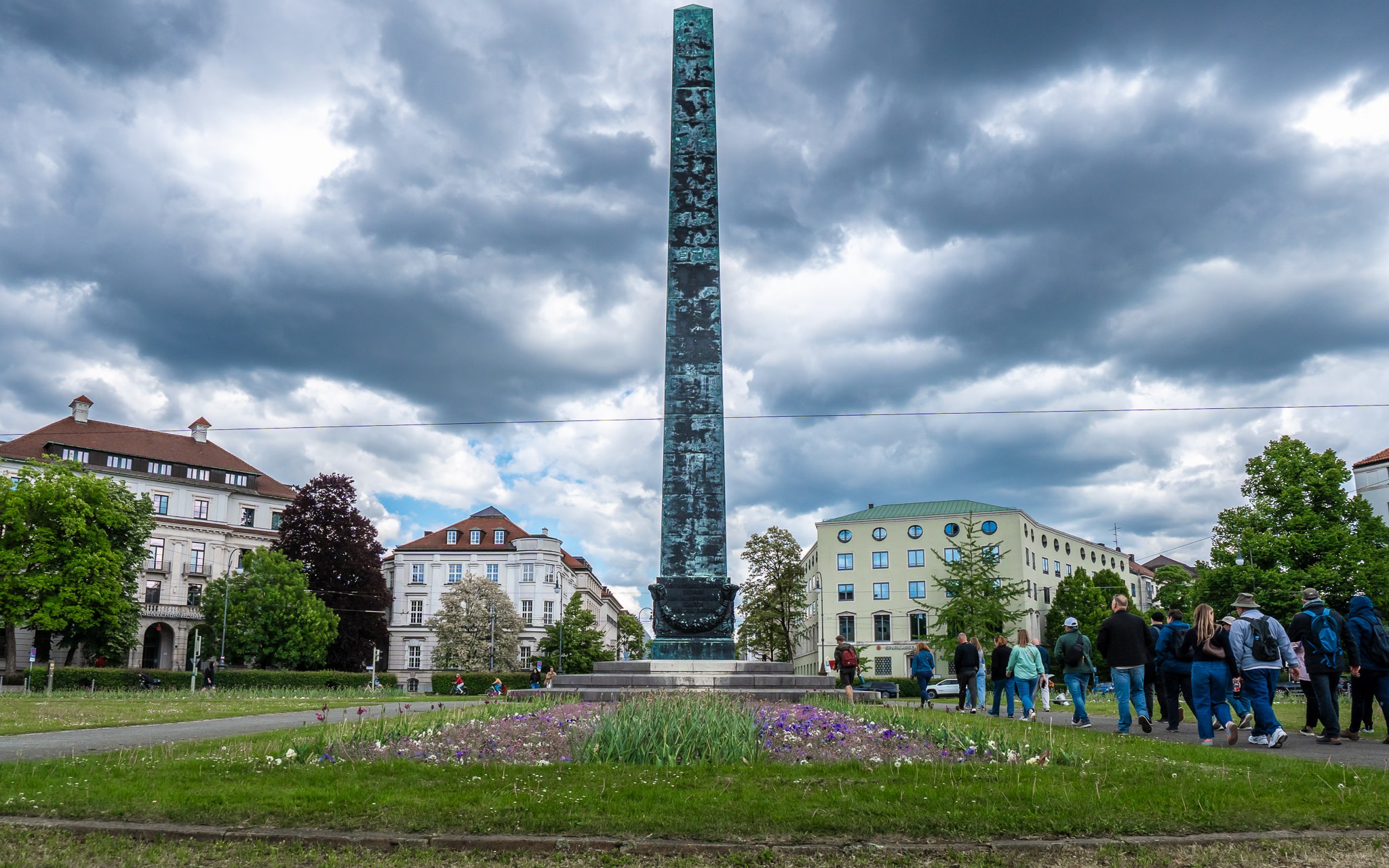
Exactly 100 years later, the center of power of the NSDAP (see also "Königsplatz") was built around the obelisk, which was built in 1833 by order of King Ludwig I.
20
Stop 20
Here you can see the now renovated apartment house, in which Adolf Hitler shared a shabby room with the Austrian Rudolf Häusler after he moved from Vienna to Munich as an unsuccessful postcard painter in May 1913.
In addition, your guide will show you the location of the mausoleum planned by Hitler himself with the adjoining "Hall of the Party". Hitler was stimulated during his visit to Paris in 1940, when he reverently saw Napoleon's sarcophagus in the Invalides.
21
Stop 21
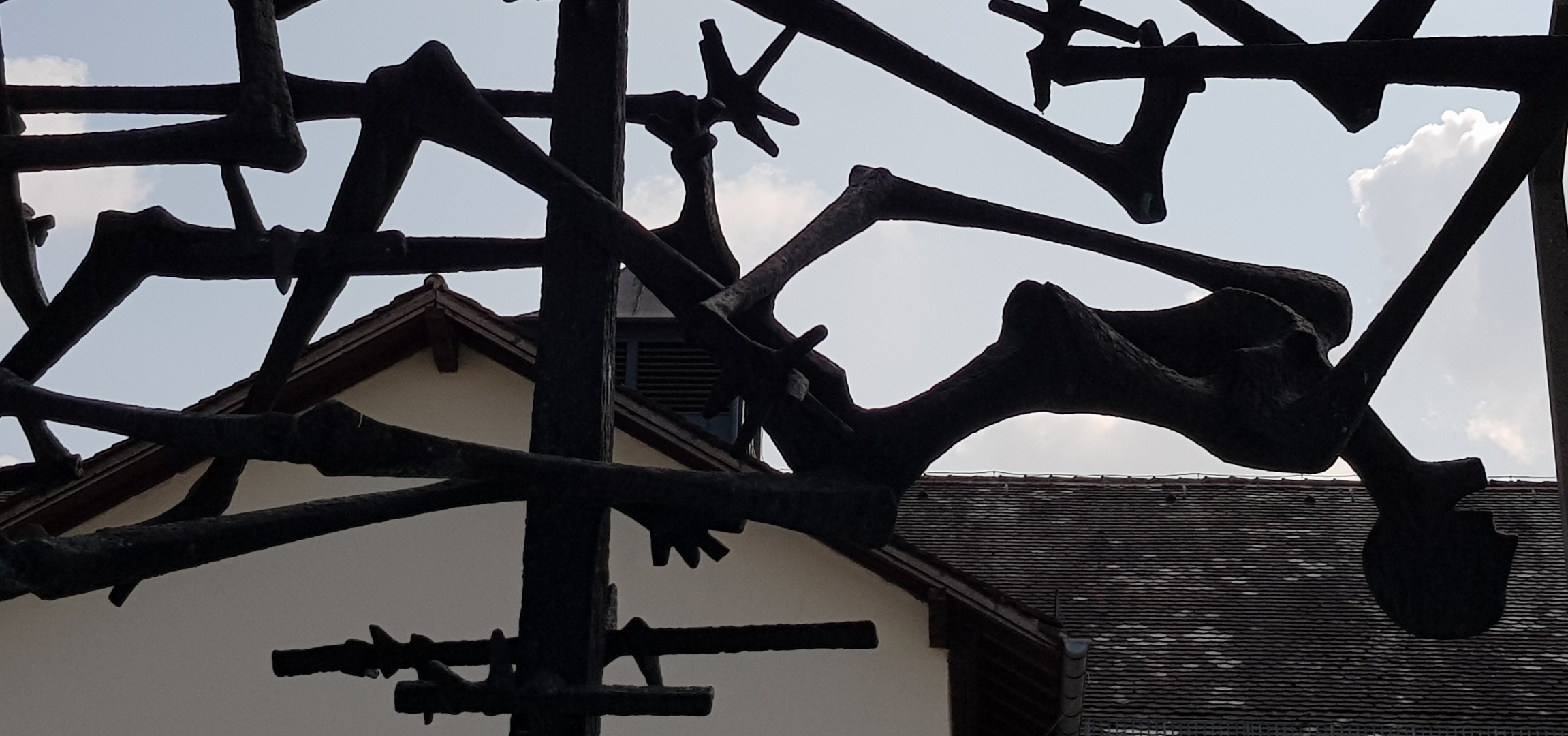
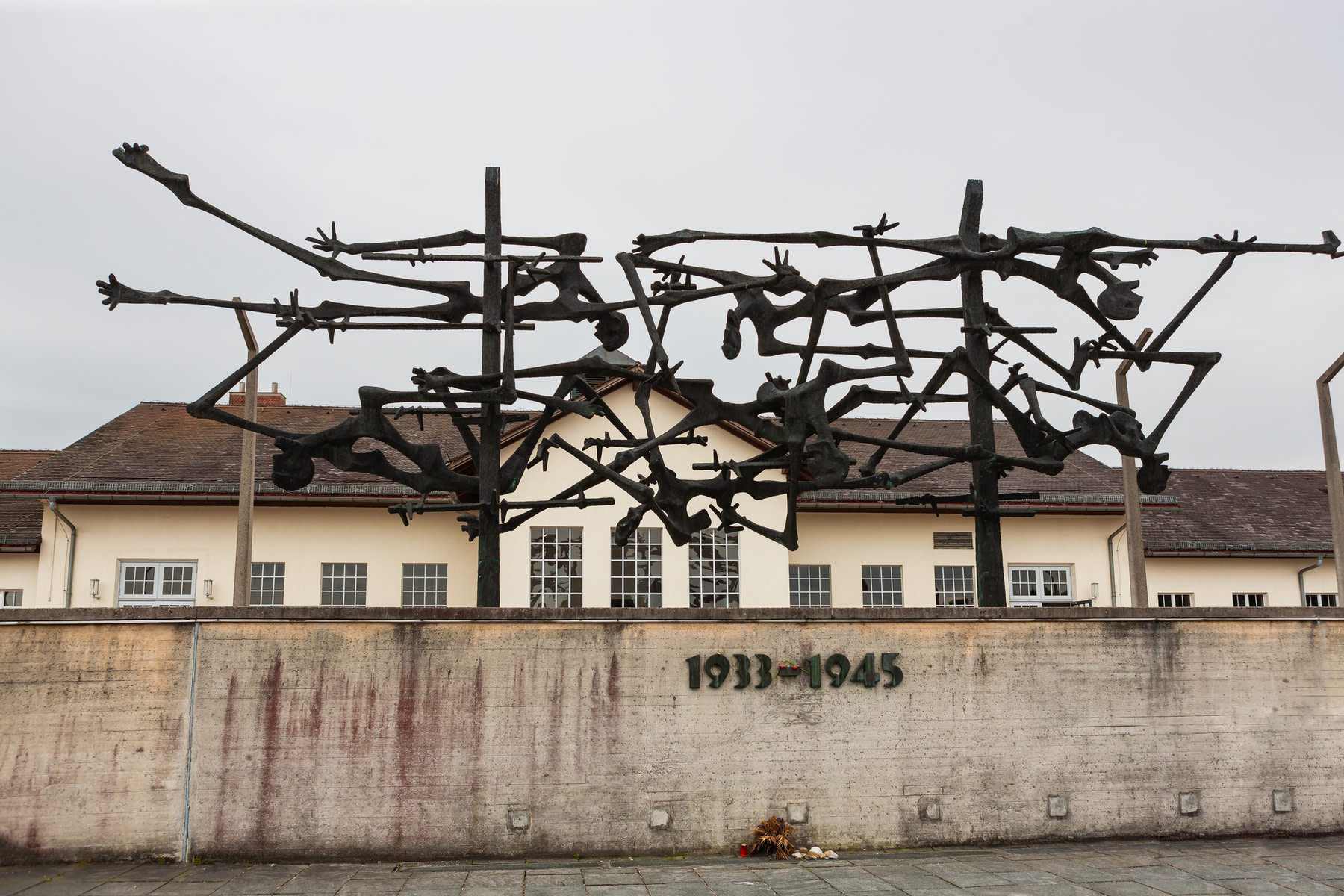
Visiting the Dachau Concentration Camp Memorial Site alongside your licensed guide will far exceed your imagination of humanly possible atrocities! In the 12 years of its existence, over 200,000 people were imprisoned here. 41,500 were murdered. Unspeakable suffering continues to this day from this concentration camp, which was opened just 6 weeks after Hitler was appointed Chancellor.
Before you start touring the memorial, we will show you some of the luxurious villas on the former SS grounds.
Experience has shown that the average length of stay at the memorial is 1.5 to 2.5 hours.
Since some of the footpaths consist of coarse pebbles, we recommend suitable footwear.
What's not included
Having lunch
Tips
Available languages
Guide guide
DE
EN
Reviews breakdown
Viator
5.0
1 reviews
5★
1
4★
0
3★
0
2★
0
1★
0
Tripadvisor
5.0
2 reviews
5★
2
4★
0
3★
0
2★
0
1★
0
Important information
Specialized infant seats are available
Not recommended for travelers with poor cardiovascular health
Infants and small children can ride in a pram or stroller
Suitable for all physical fitness levels
Visiting the Dachau Concentration Camp Memorial is not recommended for people under 12 years of age
About Munich
Munich, the vibrant capital of Bavaria, is renowned for its rich history, stunning architecture, and lively cultural scene. Home to world-famous beer halls, opulent palaces, and lush green parks, Munich offers a unique blend of tradition and modernity, making it a must-visit destination in Germany.
Top Attractions
Marienplatz
Marienplatz is the heart of Munich, home to the iconic New Town Hall (Neues Rathaus) and its famous Glockenspiel. This bustling square is a must-visit for its historic significance and vibrant atmosphere.
Historical
1-2 hours
Free
Englischer Garten
One of the world's largest urban parks, the Englischer Garten offers lush greenery, scenic walking paths, and recreational activities. It's a perfect spot for relaxation and outdoor fun.
Nature
Half-day
Free
Nymphenburg Palace
Nymphenburg Palace is a stunning Baroque palace with beautiful gardens and historic interiors. It offers a glimpse into the opulent lifestyle of Bavarian royalty.
Historical
2-3 hours
€11-€14
BMW Museum
The BMW Museum showcases the history and innovation of the iconic German car brand. It's a must-visit for car enthusiasts and those interested in automotive design.
Museum
1-2 hours
Free
Hofbräuhaus
Hofbräuhaus is one of the world's most famous beer halls, offering traditional Bavarian food, live music, and a lively atmosphere. It's a quintessential Munich experience.
Cultural
1-2 hours
Moderate
Must-Try Local Dishes
Weißwurst
A traditional Bavarian white sausage made from veal and parsley, typically served with sweet mustard and pretzels.
Breakfast
Contains meat
Schnitzel
A breaded and fried cutlet, usually made from pork or veal, served with lemon and potato salad or fries.
Lunch/Dinner
Contains meat, gluten (breadcrumbs)
Bretzel (Pretzel)
A traditional Bavarian bread product made from dough twisted into a knot shape, often served with mustard or cheese.
Snack
Vegetarian, contains gluten
Apfelstrudel
A delicious pastry filled with apples, raisins, sugar, and cinnamon, baked until golden and crispy.
Dessert
Vegetarian, contains gluten
Popular Activities
Hiking in the Bavarian Alps
Cycling in Englischer Garten
Surfing at Eisbach Wave
Beer garden visits
Spa treatments
Park picnics
Museum visits
Opera and theater performances
Best Time to Visit
June to August
Summer is the peak tourist season in Munich, with warm weather and numerous outdoor festivals and events. It's the best time for exploring the city's parks, beer gardens, and cultural attractions.
15°C to 25°C
59°F to 77°F
Practical Information
Language
- Official: German
- Widely spoken: English, French, Italian
- English: Widely spoken in tourist areas
Currency
Euro (EUR)
Time Zone
CET (UTC +1), CEST (UTC +2 during daylight saving time)
Electricity
230VV, 50HzHz
Safety Information
Overall Safety Rating: Very safe
Munich is generally a very safe city with low crime rates. However, as with any major city, it's important to be aware of your surroundings and take basic precautions to ensure a safe and enjoyable visit.
Important Precautions:
- • Be aware of your surroundings, especially in crowded areas and on public transport
- • Keep valuables secure and out of sight
- • Be cautious when using ATMs, especially at night
Getting there
By air
- Munich Airport • 35 km from city center
By train
Munich Central Station, Munich East Station
By bus
Munich Central Bus Station, Munich East Bus Station
Getting around
Public transport
The S-Bahn is efficient and connects major stations and attractions. Trains run frequently and are a convenient way to get around.
Taxis
Available • Apps: FreeNow, Uber
Rentals
Car, Bike, Scooter
Neighborhoods
Altstadt (Old Town)
Maxvorstadt
Schwabing
Haidhausen
Day trips
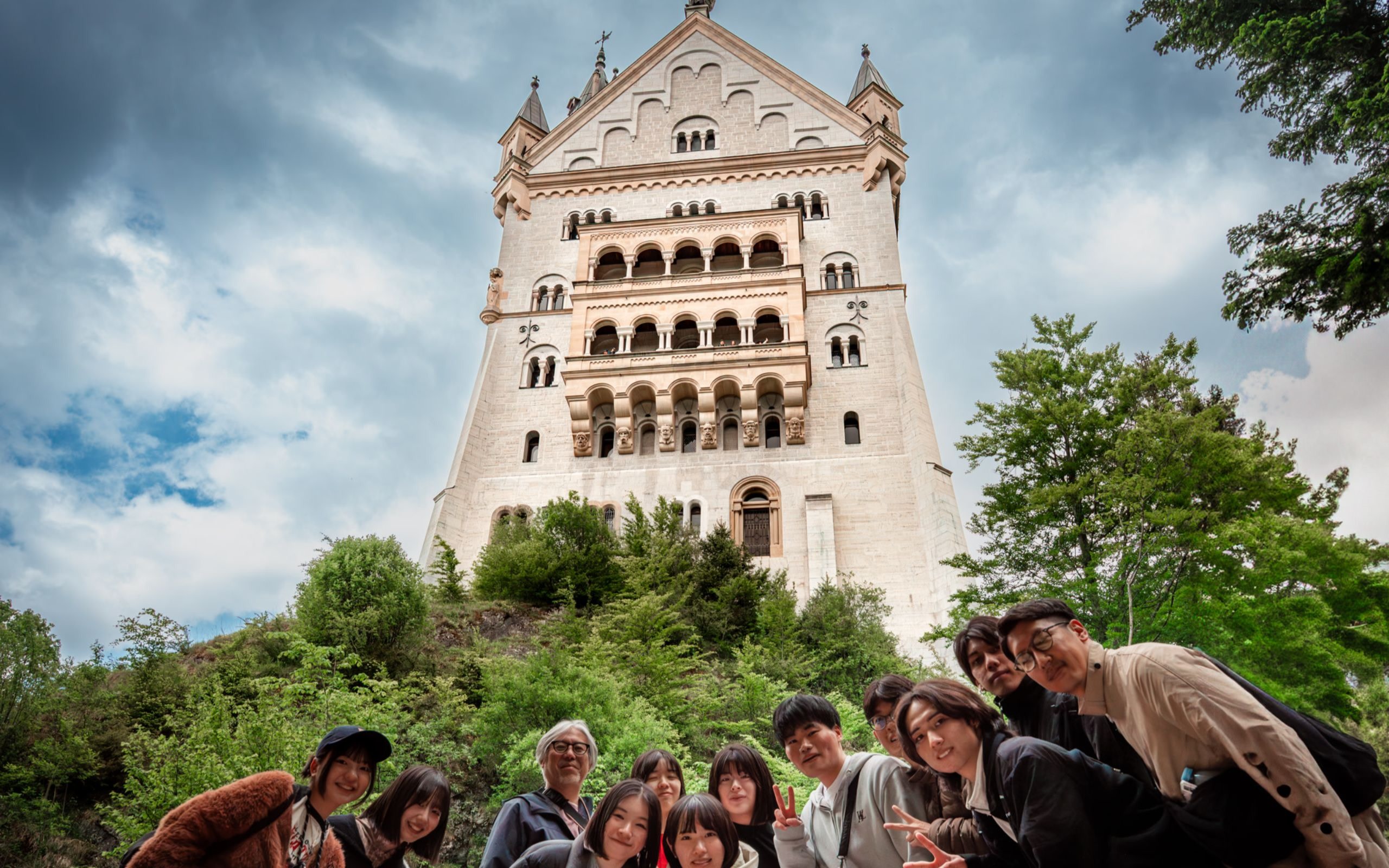
Neuschwanstein Castle
120 km from Munich • Full day
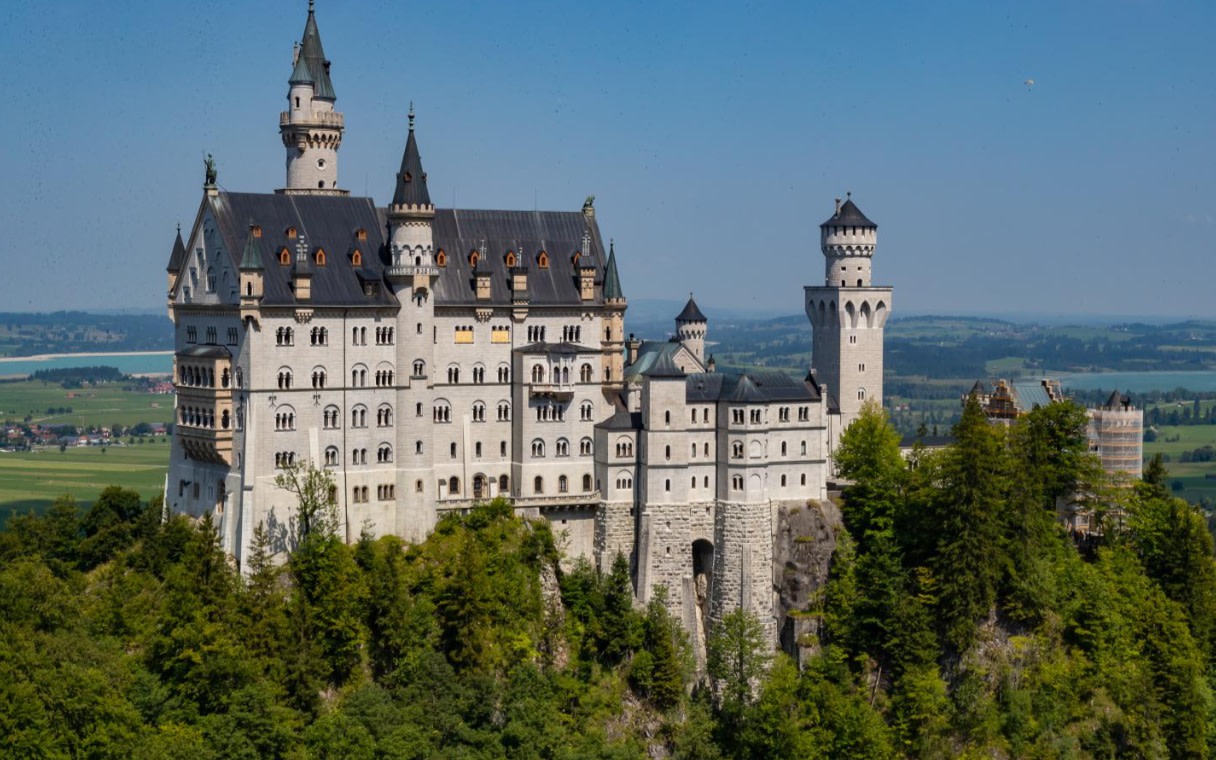
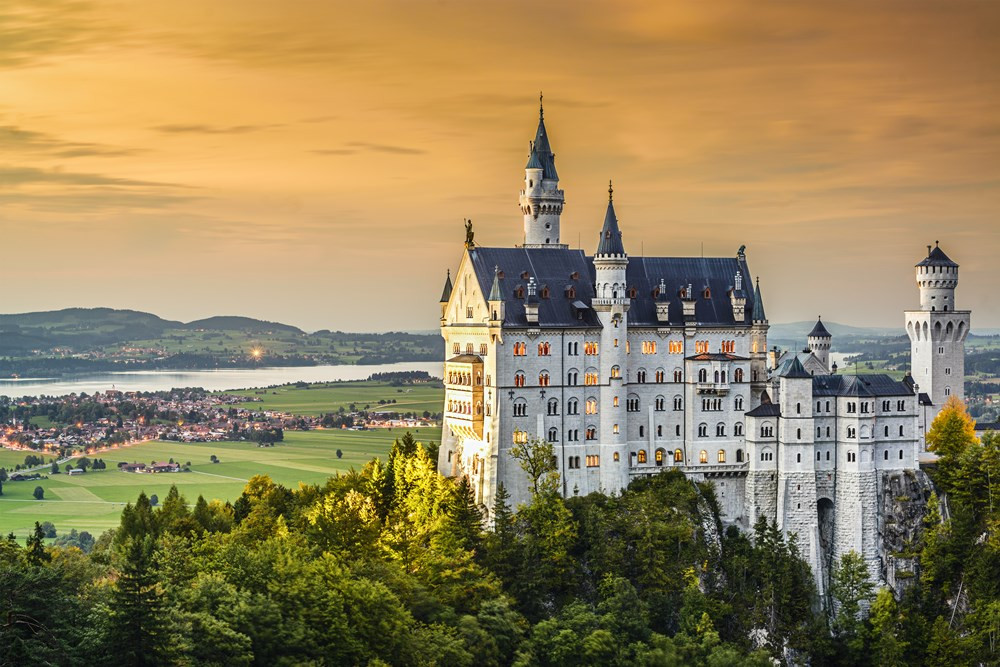
Neuschwanstein Castle is a fairytale-like castle nestled in the Bavarian Alps. It's one of Germany's most famous landmarks and offers stunning views and a glimpse into the life of King Ludwig II.
Salzburg, Austria
150 km from Munich • Full day
Salzburg is a beautiful Austrian city known for its historic old town, stunning architecture, and musical heritage. It's a great day trip for history and culture lovers.
Dachau Concentration Camp Memorial Site
20 km from Munich • Half day
The Dachau Concentration Camp Memorial Site is a poignant and important historical site that offers a sobering reminder of the Holocaust and the atrocities committed during World War II.
Festivals
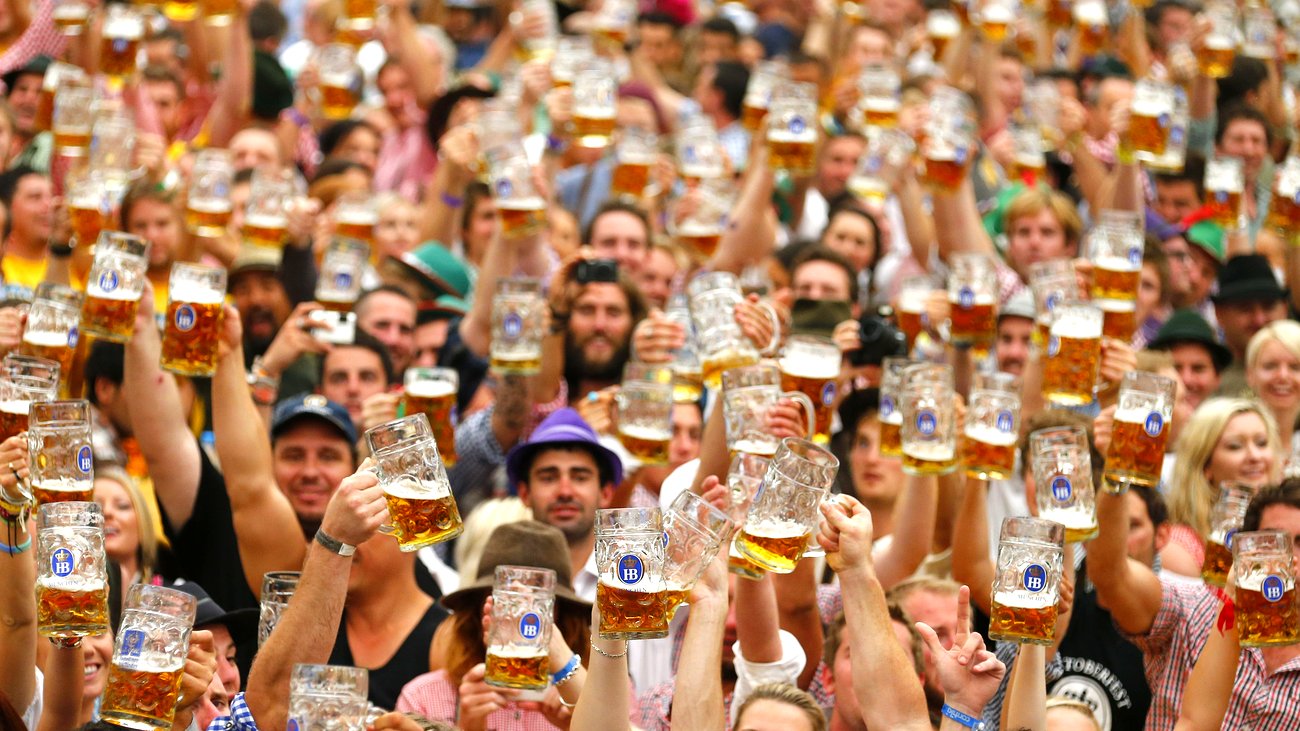
Oktoberfest • Late September to early October
Munich Christmas Markets • Late November to late December
Starkbierfest • Mid-March to early April
Pro tips
- Consider purchasing a Munich City Pass or similar discount card for savings on attractions and transport
- Learn a few basic German phrases to enhance your experience and connect with locals
- Visit popular attractions early in the morning or late in the afternoon to avoid crowds
- Explore the city's vibrant neighborhoods, each with its own unique character and attractions
- Take advantage of the city's extensive public transport system, including the U-Bahn, S-Bahn, trams, and buses
From $25
per person
Price varies by option
Secure booking
Free cancellation available