Walk the Walls of Medieval Dublin - Private Group Tour
Active
2h - 3h
For a full refund, cancel at least 24 hours before the scheduled departure time.
Instant confirmation
Mobile or paper ticket accepted
About this experience
Dublin is not only a vibrant city, but it is also steeped in a long history dating to Viking times and before. This walking tour, led by a local "Dub" and qualified guide, will bring to life the medieval city, where you will discover interesting facts and hear fascinating stories right where they happened. As you go, your guide will point out useful landmarks and answer any questions you have. Subject to opening times (Apr - Oct), you will visit a medieval church where there has been services continuously for more then 800 years, included for free as part of the tour.
As a unique point of difference, your guide can also provide you with a unique video route map, complete with captioned photos, video clips and music, sent to you after the tour via a secure personalised link as souvenir to share with friends and family and for memories to cherish!
Available options
Walk the Walls of Medieval Dublin - Private Group Tour
What's included
Live commentary with a qualified local guide
Entrance to medieval church and visitor centre (subject to opening times)
Detailed itinerary
1
Stop 1
Pass by
Our first landmark building is Dublin's City Hall. Built in the 18th century as the Royal Exchange, it later became the headquarters of Dublin Corporation, the city authority, before they relocated. Today, as well as hosting local government meeting, this fine building is a multipurpose venue, hosting anything from weddings to movie shoots!
2
Stop 2
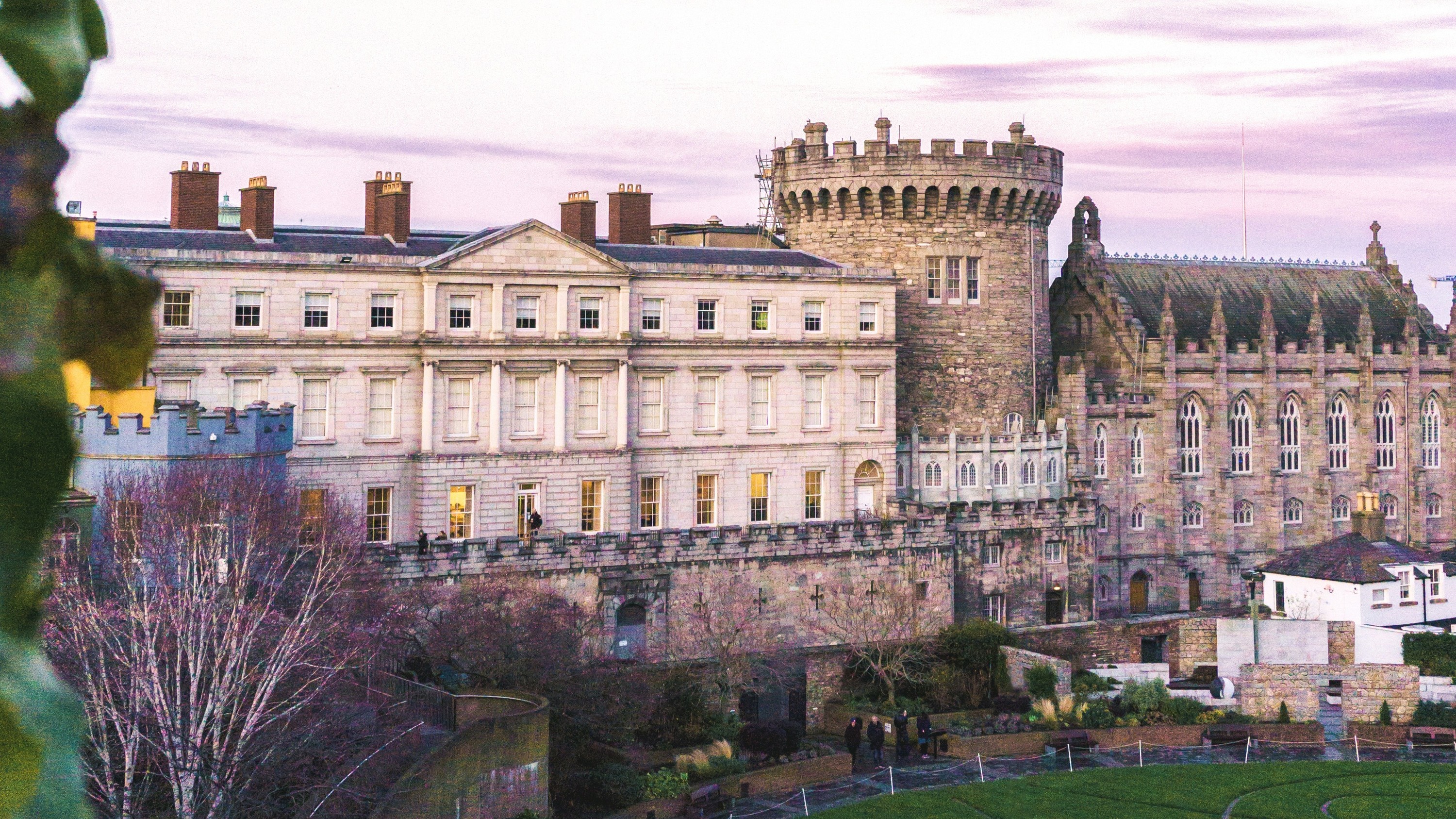
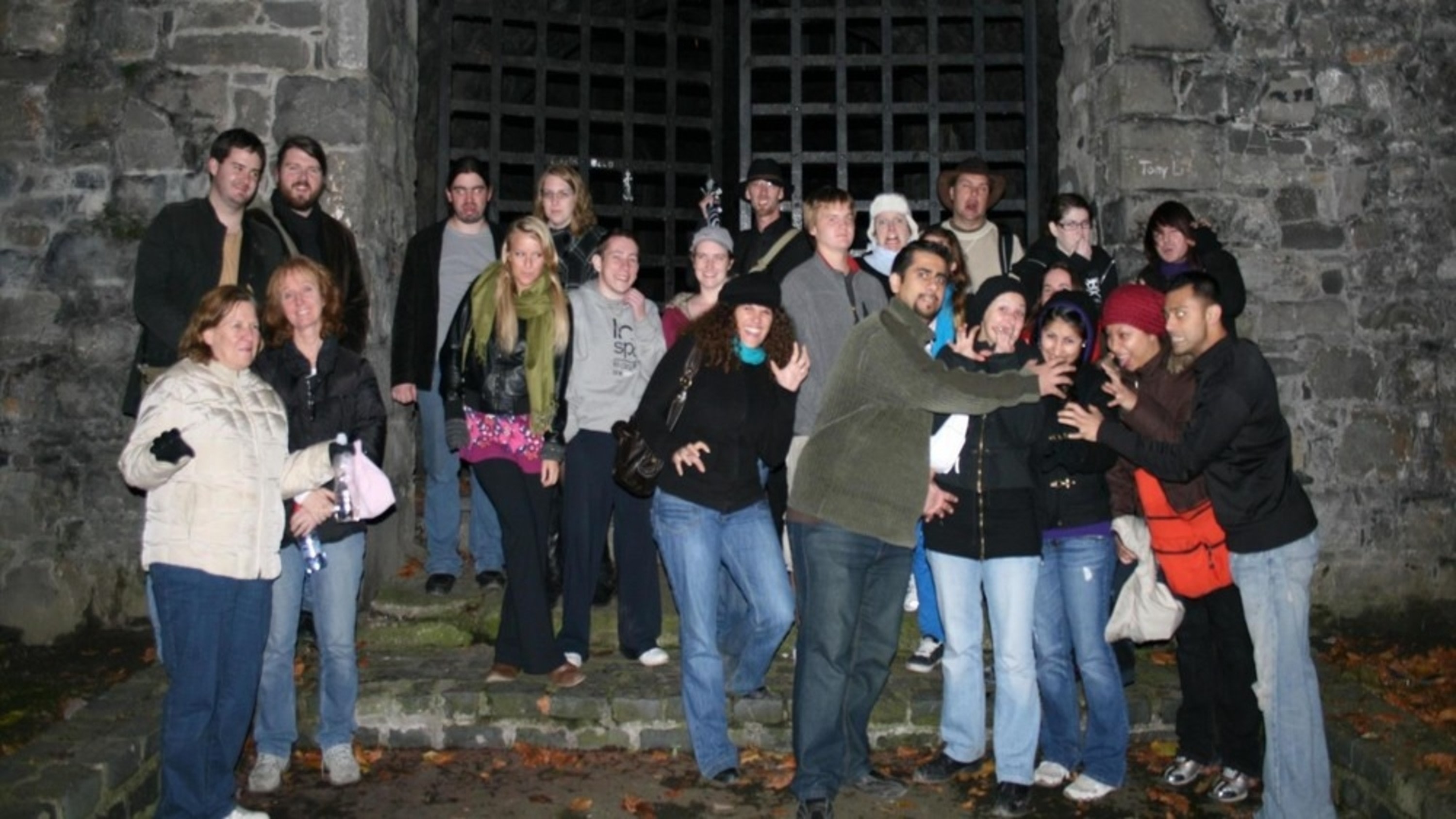
Rounding the corner an up the cobblestoned Castle Street, we enter the upper courtyard of Dublin Castle, the nerve centre of power and centre of government administration in Ireland for more than 700 years from the Anglo Norman conquest to the end of was under British rule in 1922. While taking a brief break from commentary in compliance with local regulations, you can take some keepsake photos as you Marvel at the juxtaposition of 18th and 12th century architecture where remnants of early Norman rule remain. As we exit the courtyard, you'll listen to the story of the great 16th century escape of the last of the Gaelic chiefs from the still fully intact Record Tower, and learn about the famous 19th century writer who once worked here.
3
Proceeding to the rear of the castle, we visit the circular garden that was once the "dark pool" which gives Dublin its name. Here, we will pass such stored landmarks as the Garda Memorial, David & Goliath Statue, the Coachouse, the Special Olympics tribute and the Chester Beatty Museum and Library.
Located where once was the black pool (Dubh Linn) from which Dublin gets its name, you'll here stories spanning the medieval Viking times right up to the present day.
There is an opportunity here for comfort and refreshment breaks, picture taking, and perhaps making a note to return at another time to delve deeper into free admission exhibits here.
4
Our first fully intact section of Norman walls, this time forming the southern perimeter of the medieval city. Stories and anecdotes abound at arguably Dublin's most interesting street corner.
Orientate yourself with the creative maps of the medieval walls engraved into the stone pillar mounted metal plates, and gaze along our first intact section of the original walls forming part of the outer perimeter of Medieval Dublin.
We'll stand beneath the plaque bearing the name of Jonathan Swift, the famous 18th century writer, philanthropist and Dean of St. Patrick's Cathedral who was born close to this spot.
We are now in an area once known as Little Italy, having been home to many Italian migrants on the 19th century. You'll hear some peculiar anecdotes about mis-translated street names and suffragette protests.
5
Stop 5
The rival to Christchurch Cathedral, stop off to take in the views of the majestic cathedral and gardens, where we'll trace the turbulent history from the Vikings, through to the Normans, the reformation, Oliver Cromwell, Guinness, and to the fine cathedral and gardens that we admire and enjoy today.
An outdoor cafe and plentiful garden seating may tempt, if weather and time permit.
6
As we leave the looming spectre of St. Patrick's Cathedral behind us, we cross Patrick St to pass through an arched alleyway to enter one of Dublin's most renowned and historic neighbourhood, The Liberties.
Indeed, the name itself originates from medieval times when parcels of land called "liberties" were created, free from the laws and taxes which those within the city walls were subject to.
Here you will learn about the Clo-Gaelach, the old Irish script visible on the street signs, as we stroll along a 19th century streetscape lined with the red brick terraced houses that were originally built as homes for Guinness workers.
We'll pass the church of St. Nicholas of Myra, the once thriving Iveagh Market, and streets named after such luminaries as Dean Swift, John Dillon, and Thomas Davis; just some of the famous characters associated with the area.
As we exit The Liberties, you will be rewarded with the striking structure that is our second section of medieval walls on Lamb Alley.
7
Stop 7
We continue our medieval journey to St. Audoen's Church , the capital's only remaining medieval parish church still in use. Dedicated to St. Ouen, its 15th-century bell tower houses the oldest church bells in Ireland!
Ambling through St. Audoen's Park, a truly historic green space, have some fun at the "Singing Hollow" and other sensory play pieces, before exiting via a stone arch.
Turning along Cook Street, which gets its name from the medieval bakers who placed their ovens outside the city walls to prevent fires, we walk alongside our third medieval wall section, magnificently restored, and the ominous St. Audoen's Arch, the last surviving gate in the original city walls.
We reach Winetavern Street, a tell-tale name revealing its function as the hub for wine merchants and a busy trade route from the quays, where King's Gate once stood.
8
Ascending Winetavern Street, you walk the line of a former Viking market street, famous for its taverns and now defined by the stunning Christ Church Cathedral towering above. We'll pass under the iconic, neo-Gothic covered bridge arching overhead, connecting the Cathedral to the medieval Synod Hall (now the Dublinia Museum).
Rounding the front, the grand Victorian restoration work becomes clear, contrasting with the remnants of the Viking and Norman foundations beneath. As we pass, peer into the ruins of the original Chapter House before exiting onto Fishamble Street, the site of Dublin’s oldest, forever famous as the location for the 1742 premiere of Handel's Messiah.
The entire circuit is steeped in Viking, Norman, and cultural history.
9
Fishamble Street is so named for the market that was once a thriving hub. See where George Friedrich Handel first performed his Messiah and hear the macabre tale of the execution fo Darkey Kelly in the 18th Century, as we wind our way down to the River Liffey into the shadow of the 20th century local government office block that is Wood Quay. The engraved metal slabs set into conventional pavement, remind us that we stand on the site of one of the largest Viking settlements ever found outside of Scandinavia.
We'll pass a famous theatre that was first opened in the 17th century, and a Viking longboat another reminder of the Viking past here, before exiting via the west end along Essex Gate, a cobblestone street that takes its name from what was once an entrance into the medieval walled city of Dublin.
10
Stop 10
Pass by
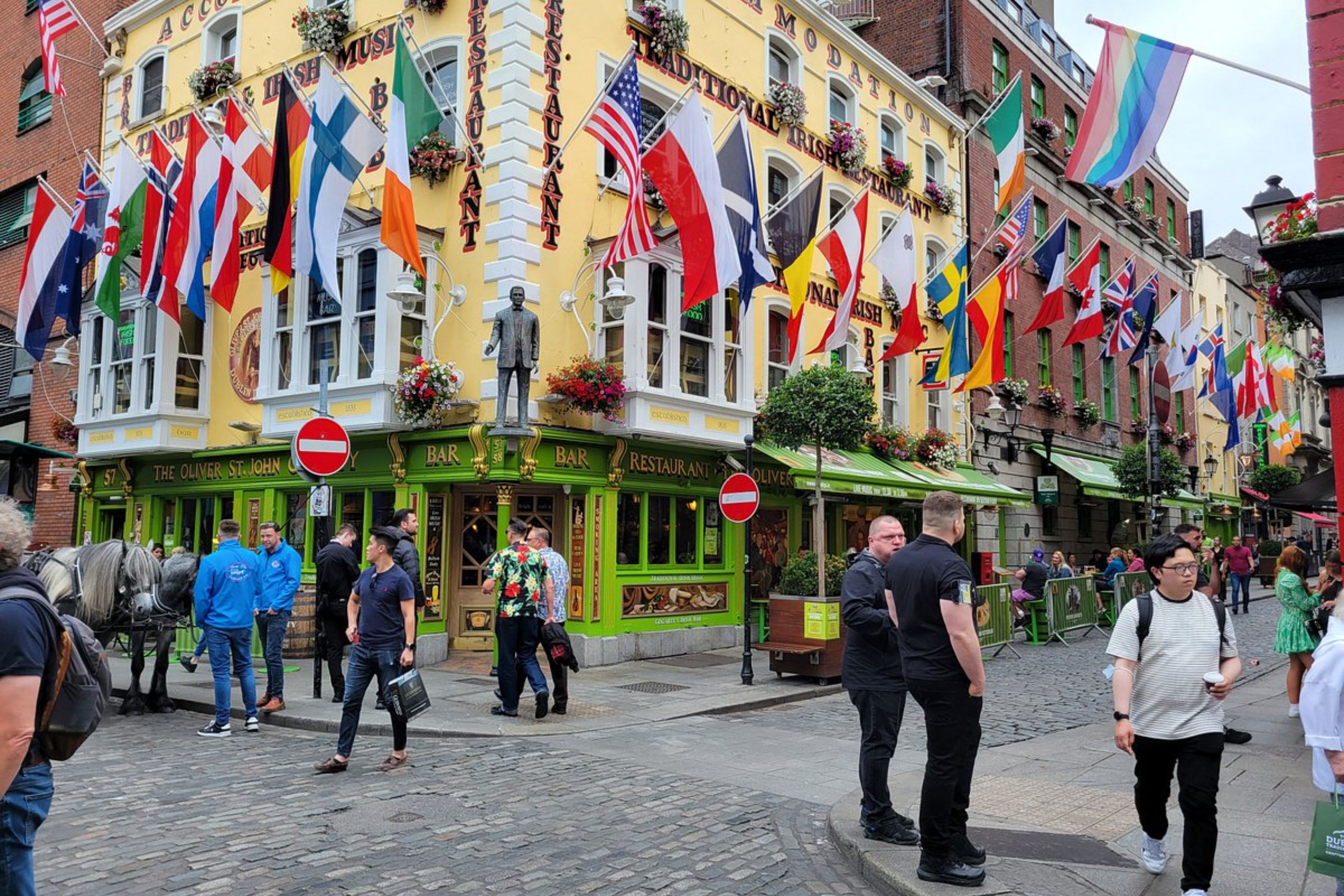
As we crossing Parliament St., to our right behind an olive green facade is a quaint cafe, once a 17th century shop with an interesting connection with the Guinness family. Continuing along the cobblestoned street we are now in Temple Bar, the cultural quarter famed for its "ceol, ol agues craic" (music, drink and fun). Learn about the history of this popular district, the origin of its name, and the bizarre way in which it evolved into what it is today.
We exit Temple Bar and cross over Dublin's main river, the Liffey. Following the boardwalk on the river's north side, we'll take a moment to linger and gaze at a rather ugly looking gap in the south quay wall covered by a timber grill. This is the modern intersection of the Liffey and Poddle rivers, the latter which once contained the famous black pool.
Passing the sleek Millennium Bridge, we arrive at the last but by no means least stop of our tour.
11
Stop 11
A quintessential Dublin landmark, the Ha'penny Bridge is more than just a crossing; it's a piece of history! Officially the Liffey Bridge, this elegant cast-iron pedestrian bridge opened in 1816. Its famous nickname, Ha'penny Bridge, originates from the half-penny toll charged to cross it until 1919, replacing a ferry service.
What better place to end our tour than at this iconic landmark, to take a photo with this unmistakable Dublin backdrop, and where the medieval and modern cities meet.
What's not included
Snacks, refreshments, drinks are not included
Gratuities
Available languages
Guide guide
EN
Reviews breakdown
Tripadvisor
5.0
60 reviews
5★
60
4★
0
3★
0
2★
0
1★
0
Important information
Not recommended for travelers with spinal injuries
Not recommended for travelers with poor cardiovascular health
Service animals allowed
Public transportation options are available nearby
Infants and small children can ride in a pram or stroller
Transportation options are wheelchair accessible
Wheelchair accessible
Suitable for all physical fitness levels
Walking time for the attractions is already included in the total duration time
Meeting point
Meet at the entrance to the tourist information centre on Barnardo Square, Dame St, Dublin 2
About Dublin
Dublin, the capital of Ireland, is a vibrant city rich in history, culture, and charm. Known for its welcoming atmosphere, literary heritage, and lively pub scene, Dublin offers a unique blend of medieval architecture, modern amenities, and stunning coastal landscapes.
Top Attractions
Trinity College and the Book of Kells
Trinity College is Ireland's oldest university and home to the famous Book of Kells, a beautifully illustrated manuscript from the 9th century.
Historical
1-2 hours
€16 (Book of Kells exhibition)
Guinness Storehouse
The Guinness Storehouse is a seven-story interactive experience dedicated to the history and brewing process of Ireland's most famous beer.
Cultural
2-3 hours
€25-€30
Kilmainham Gaol
Kilmainham Gaol is a former prison that played a significant role in Irish history, particularly during the struggle for independence.
Historical
1-2 hours
€8
Dublin Castle
Dublin Castle has been a symbol of British rule in Ireland for centuries and is now a major government complex and tourist attraction.
Historical
1-2 hours
€10-€12
St. Patrick's Cathedral
St. Patrick's Cathedral is one of Dublin's most impressive churches, known for its stunning architecture and historical significance.
Religious
1 hour
€7.50
Phoenix Park
Phoenix Park is one of the largest urban parks in Europe, offering a peaceful escape from the city with its lush greenery and wildlife.
Nature
2-3 hours
Free
Must-Try Local Dishes
Irish Stew
A hearty dish made with lamb or beef, potatoes, carrots, and onions, slow-cooked to perfection.
Main Course
Contains meat, can be made vegetarian
Boxty
A traditional Irish potato pancake made with grated and mashed potatoes, flour, and buttermilk.
Side Dish
Vegetarian
Coddle
A comforting dish made with sausages, bacon, potatoes, and onions, slow-cooked in a rich broth.
Main Course
Contains meat
Soda Bread
A traditional Irish bread made with flour, baking soda, and buttermilk, known for its dense texture and slightly tangy flavor.
Bread
Vegetarian
Popular Activities
Hiking in the Wicklow Mountains
Kayaking on the River Liffey
Rock climbing at Dublin Rock Climbing Centre
Spa day at a luxury hotel
Strolling through St. Stephen's Green
Enjoying a pint in a cozy pub
Visiting museums and galleries
Attending a traditional music session
Best Time to Visit
June to August
Summer is the peak tourist season with the warmest weather and longest daylight hours. This is the best time for outdoor activities and festivals.
15°C to 20°C
59°F to 68°F
Practical Information
Language
- Official: Irish, English
- Widely spoken: English
- English: Widely spoken
Currency
Euro (EUR)
Time Zone
GMT (UTC+0) or GMT+1 during daylight saving time
Electricity
230VV, 50HzHz
Safety Information
Overall Safety Rating: Generally safe
Dublin is generally safe, with low levels of violent crime. However, petty crime such as pickpocketing and bag snatching can occur, especially in tourist areas and on public transport.
Getting there
By air
- Dublin Airport • 10 km (6 miles) north of the city center
By train
Heuston Station, Connolly Station
By bus
Busáras Central Bus Station
Getting around
Public transport
Dublin Bus offers a comprehensive network covering the entire city and surrounding areas.
Taxis
Available • Apps: Free Now, Uber
Rentals
Car, Bike, Scooter
Neighborhoods
Temple Bar
Dublin 2 (City Center)
Dublin 4 (Ballsbridge and Sandymount)
Dublin 7 (Smithfield and Stoneybatter)
Dublin 8 (The Liberties)
Day trips
Howth
13 km (8 miles) from Dublin • Half day to full day
A charming coastal village known for its scenic cliffs, fishing harbor, and fresh seafood.
Malahide Castle and Gardens
14 km (9 miles) from Dublin • Half day
A historic castle and beautiful gardens offering a glimpse into Ireland's medieval past.
Glendalough
50 km (31 miles) from Dublin • Full day
A scenic monastic site and glacial valley in the Wicklow Mountains, known for its ancient ruins and hiking trails.
Festivals
St. Patrick's Festival • March 17
Dublin Theatre Festival • September-October
Temple Bar Traditional Music Festival • March
Pro tips
- Visit the Guinness Storehouse for a complimentary pint and stunning views of the city
- Explore the historic Trinity College and the Book of Kells, but book tickets in advance to avoid long queues
- Take a stroll through St. Stephen's Green, a beautiful urban park in the heart of the city
- Experience traditional Irish music in a cozy pub, such as The Brazen Head or The Cobblestone
- Try Irish stew, a hearty and comforting dish made with lamb or beef, potatoes, and onions
From $25
per person
Price varies by option
Secure booking
Free cancellation available
Instant confirmation