Segway Flexible Private Tour in Barcelona
Active
5m - 3h
For a full refund, cancel at least 24 hours before the scheduled departure time.
Instant confirmation
Mobile or paper ticket accepted
About this experience
❤️Discover Barcelona on Segway !❤️
Maximum group size is 6 people per guide!
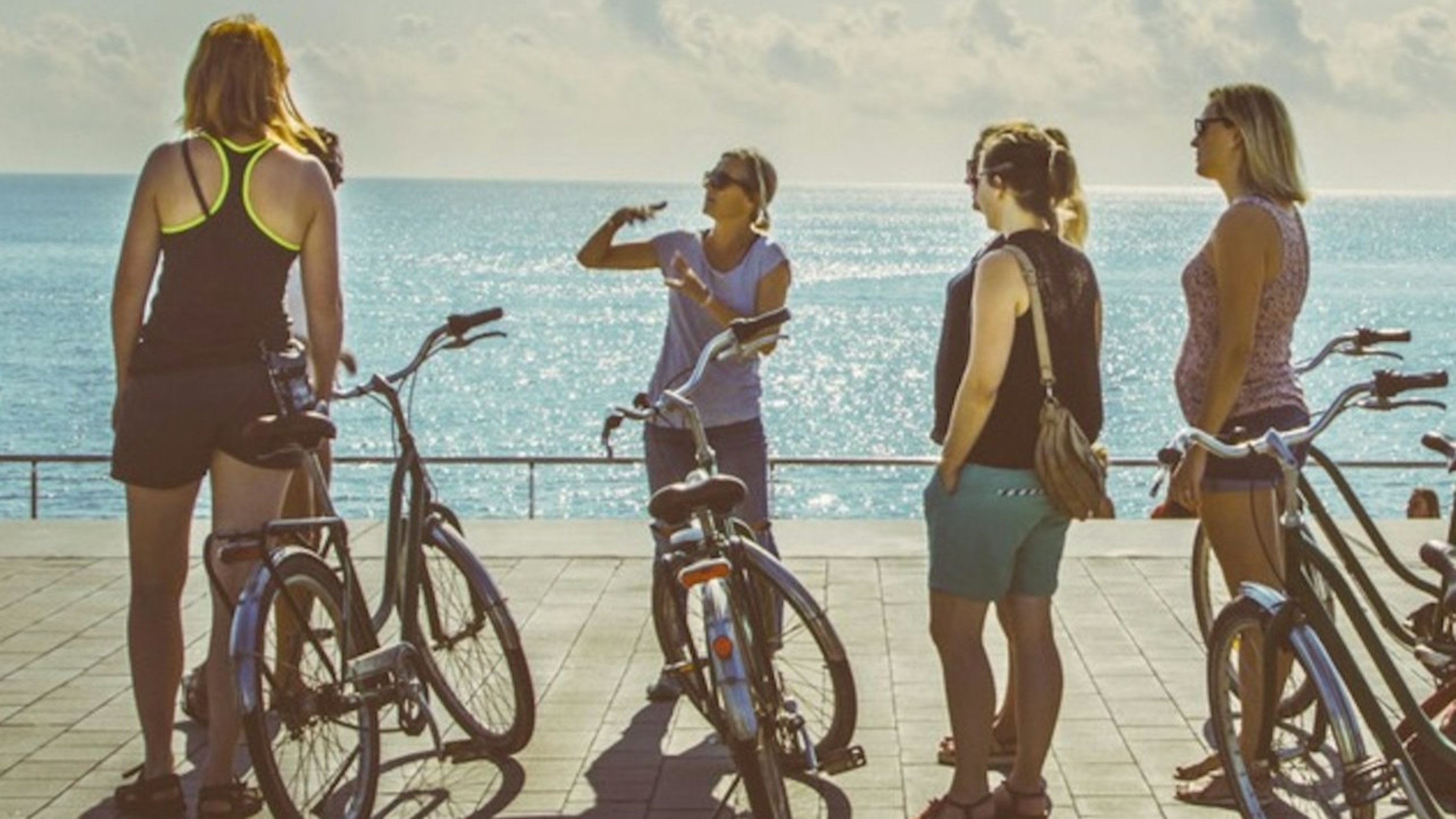
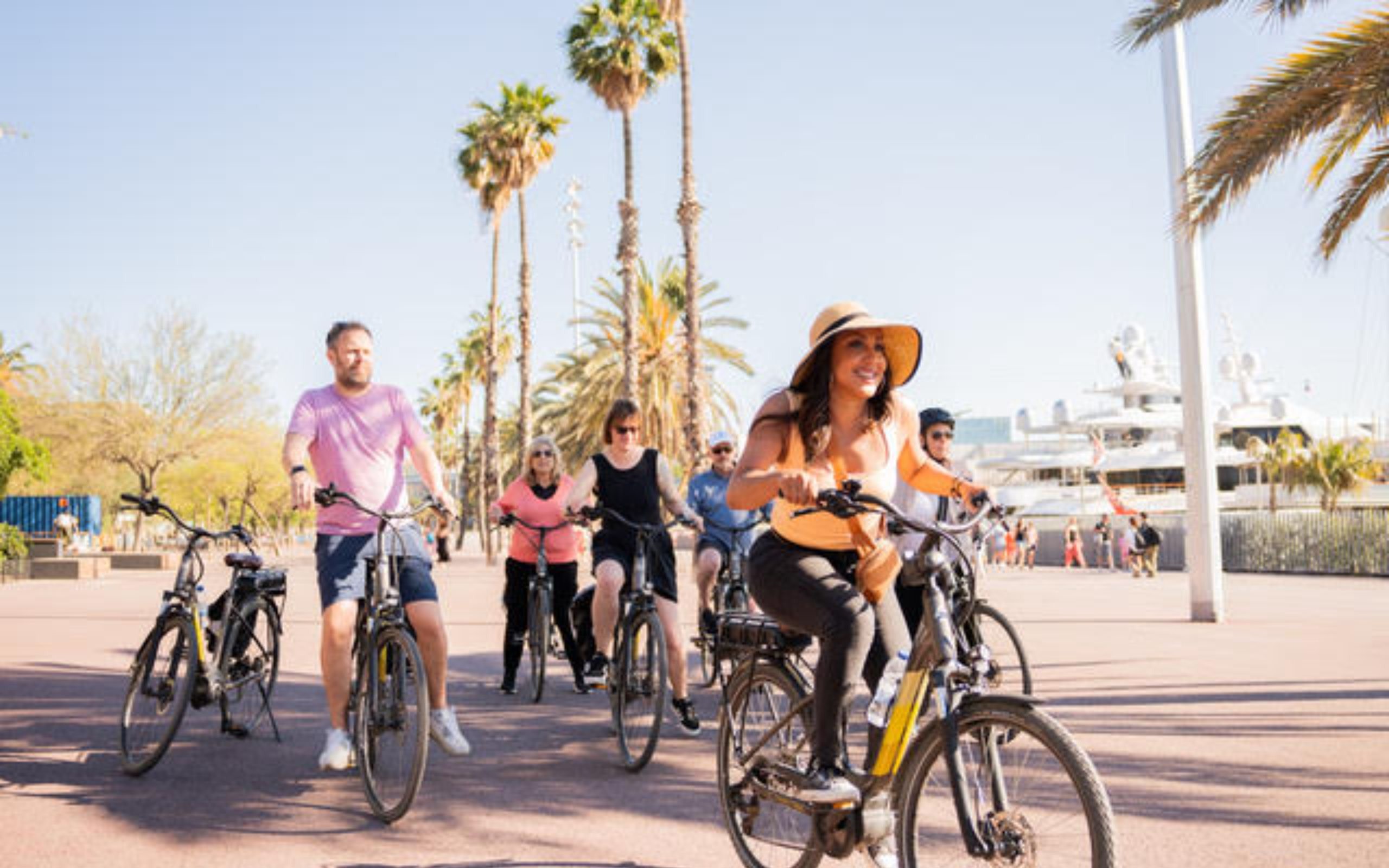
Cruise the magical city of Barcelona and get acquainted to the local atmosphere while having fun gliding the state-of-the-art Segway through exquisite avenues or amazing Mediterranean sights. Get a full experience of Barcelona and custumize the route to your interests - we guarantee the best service and assistance from our friendly guides. We will make this tour your best experience in Barcelona!
- This Tour has Customized Private options - discuss to your guide on the spot plan your Segway Tour unique route.
- We recommend you book your Segway tour in advance - groups are small and limited to guarantee a better service to each of our guests.
- Join us in this entertaining and educational adventure and get privileged personalized attention from your guide.
-Please note that on a normal group tour, you will not be able to see all points of interest. Most of the locations are included in private custom tours.
Available options
3-Hour Private Tour on Segway
3 Hour Private Tour on Segway: See the old and new parts of Barcelona by Segway, ride past the exotic plants of Parc de la Ciutadella, explore the former fishing village of Barceloneta, go to the ornate Arc de Triomf.
2 Hour Open Group Tour on Segway
2 hour open group tour on Segway: Economy option - join an open group tour (not more than 6 people per guide).
2-Hour Private Tour on Segway
2 Hour Private Tour on Segway: Experience the beauty of Barcelona by Segway on a 2-hour tour of its old and new neighborhoods, including the modern developments built for the 1992 Olympic Games.
What's included
Private Costomized Tour
Bottled water
Helmet (Mandatory) - we provide all sizes
Use of Segway
Raincoats (in case of bad weather)
Guide/Instructor
Detailed itinerary
1
The Torre Romana dates back to the 4th century AD and is part of Barcelona’s ancient Roman walls. It stands as a reminder of the city’s origins as the Roman colony of Barcino.
2
Stop 2
Pass by
Leaving from the ancient Roman Wall we head out to the marina of Port Vell, the old harbor of Barcelona.
3
Stop 3
The old port is a modern marina nowadays, welcoming all the visitors arriving from the sea.
4
**Cara de Barcelona** is a striking, multicolored sculpture created by artist **Roy Lichtenstein** in 1992 for the Barcelona Olympics. Inspired by **Pop Art** and **Cubism**, the piece features bold shapes and comic book-style dots, symbolizing Barcelona’s artistic spirit. Located near **Port Vell**, it stands as a vibrant tribute to the city's cultural fusion and modernist influences.
5
The Monument a Colom is a 60-meter column at the end of La Rambla, built in 1888. It is topped with a statue of Christopher Columbus pointing towards the sea and is one of Barcelona’s iconic landmarks.
6
The Les Drassanes Reials (Royal Shipyards) are a 13th-century Gothic complex in Barcelona, once used to build and repair ships. Today, it houses the Maritime Museum, showcasing the city’s rich naval history.
7
Stop 7
Pass by
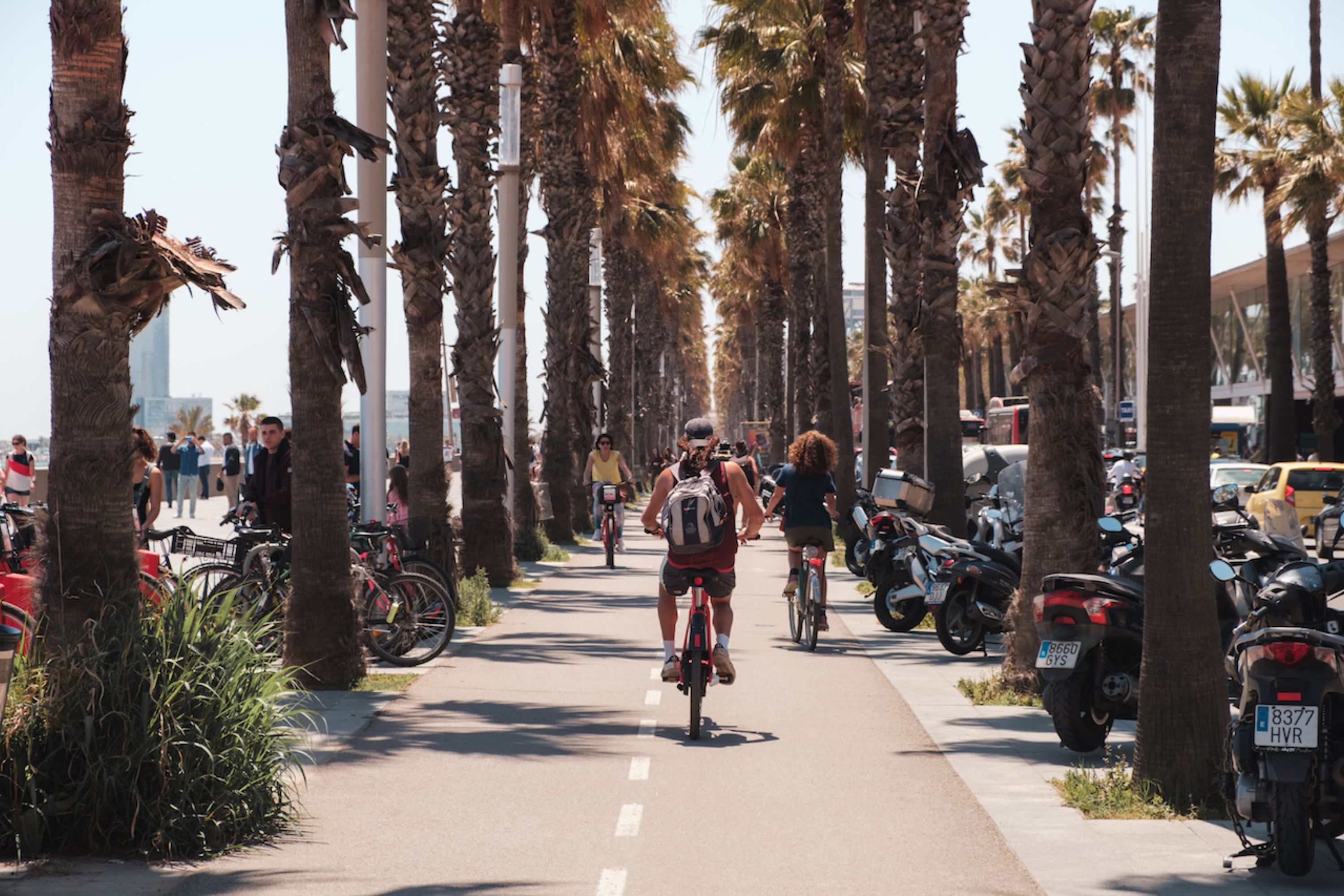
Las Ramblas is Barcelona’s most famous boulevard, stretching from Plaça de Catalunya to the Port. Lively and colorful, it is lined with shops, cafés, flower stalls, and street performers, making it a popular spot for both locals and visitors.
8
Stop 8
Between beautiful beaches we can find one of the main stages of the Olympics in 1992
9
Stop 9
Pass by
Barceloneta is a historic seaside neighborhood in Barcelona, once a fishing quarter. Today, it is famous for its sandy beach, lively promenade, and seafood restaurants, making it one of the city’s most vibrant areas.
10
Stop 10
Pass by
La Monumental is a former bullring in Barcelona, built in 1914. With its striking mix of Moorish and Byzantine architectural styles, it once hosted bullfights and major events. Today, it is used for concerts, exhibitions, and cultural activities.
11
Stop 11
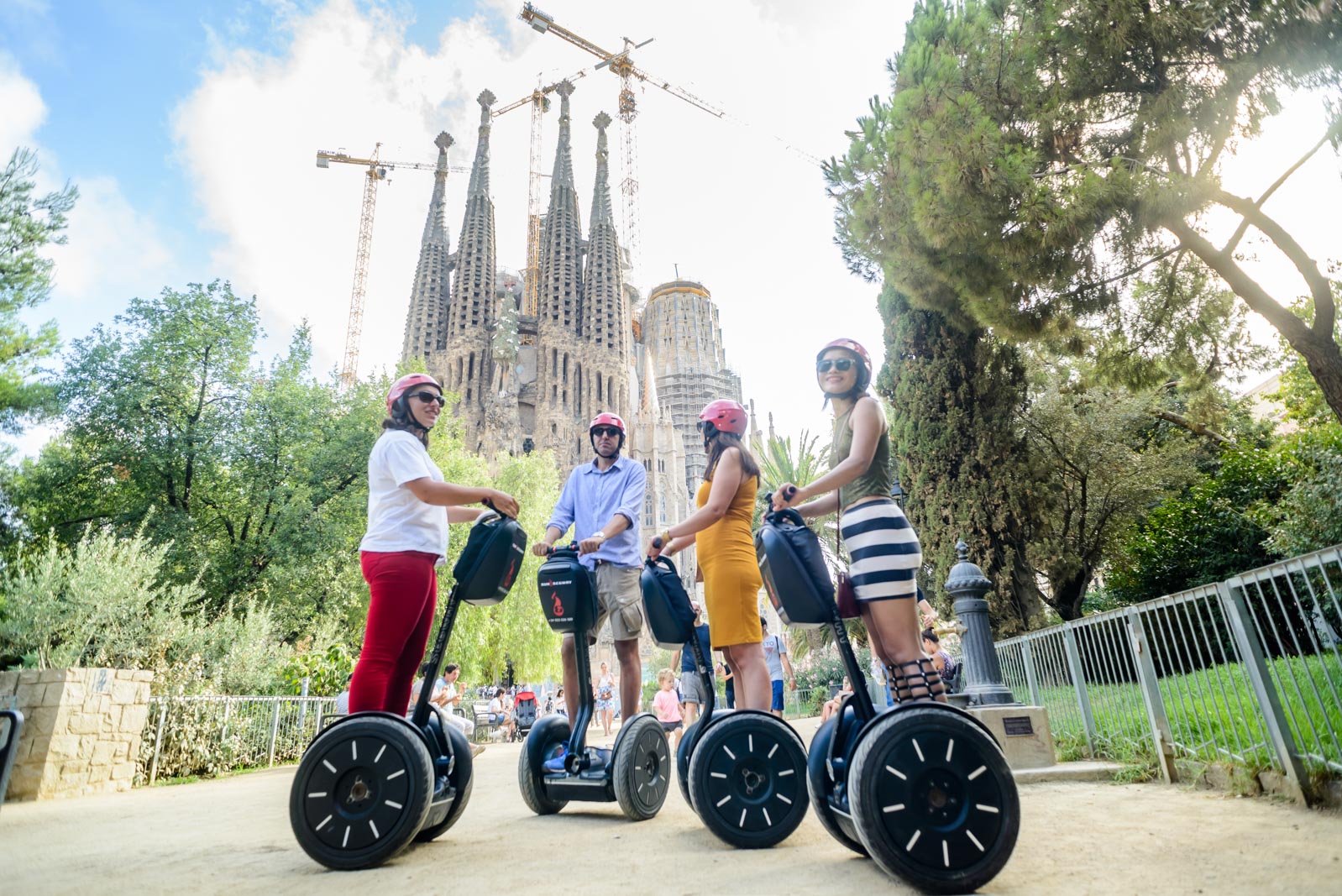
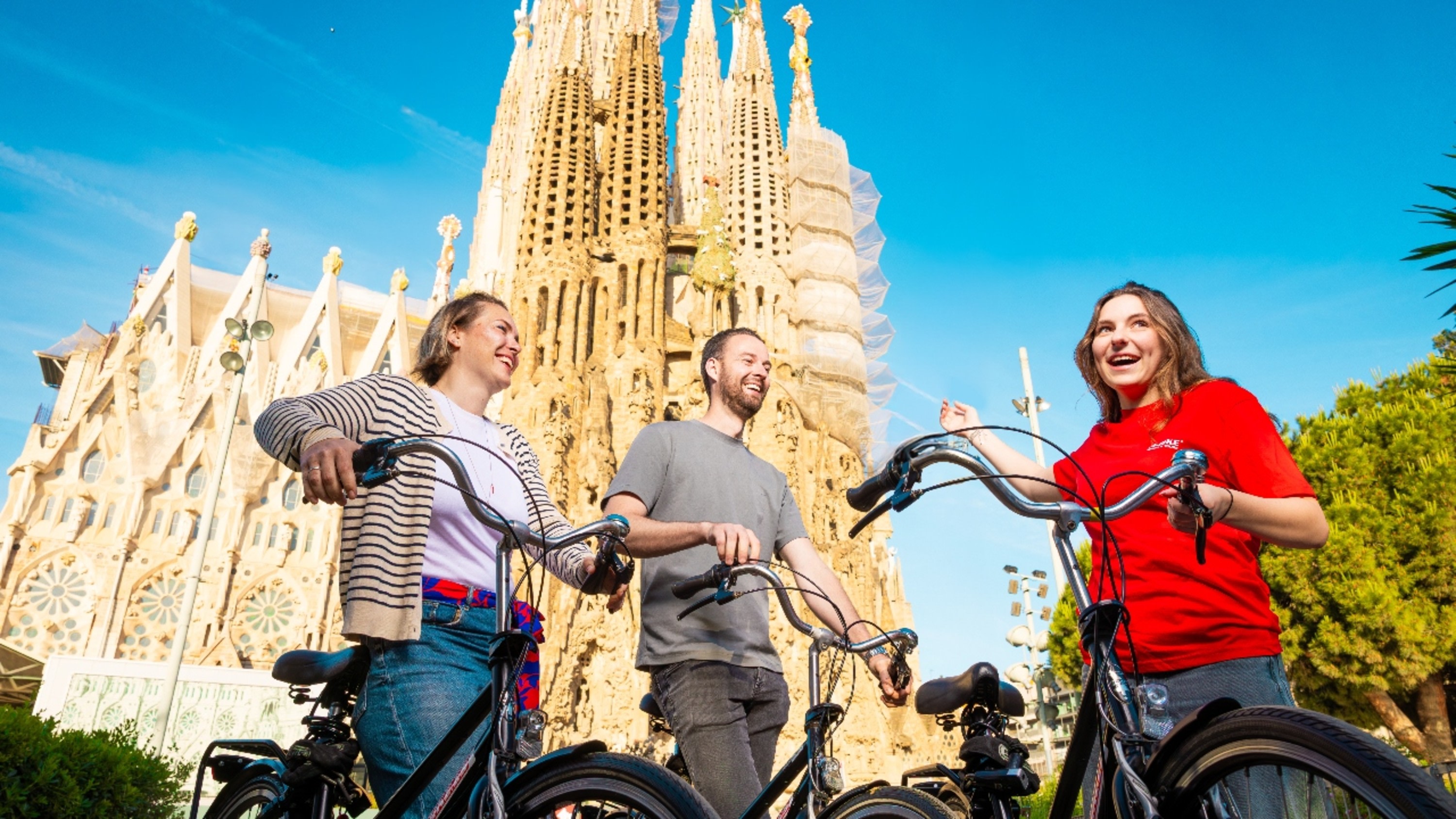
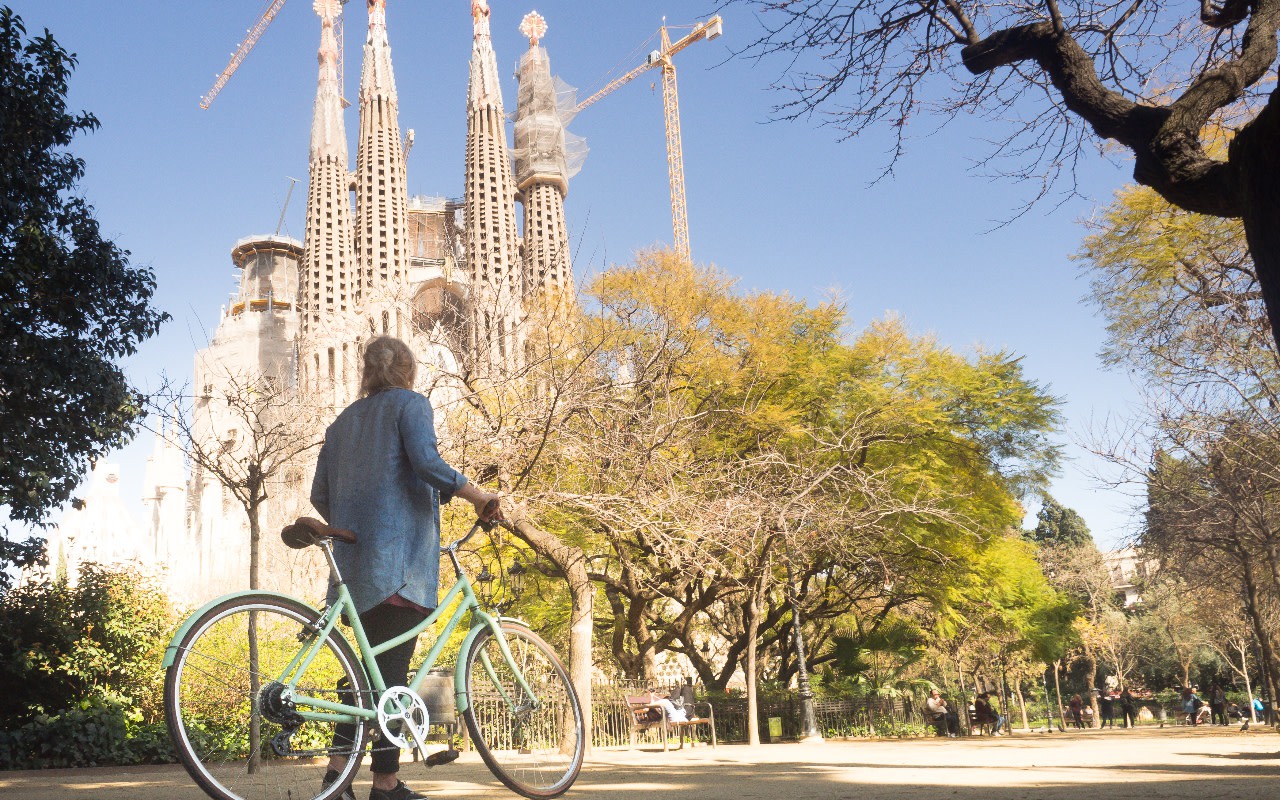
The Basílica de la Sagrada Família is Barcelona’s most iconic landmark, designed by Antoni Gaudí. Construction began in 1882 and continues today, blending Gothic and Modernist styles. Its towering spires and intricate façades make it a masterpiece of world architecture and a UNESCO World Heritage Site.
12
Plaça de Gaudí is a peaceful park located next to the Sagrada Família. With its pond, green areas, and views of Gaudí’s masterpiece, it offers one of the best spots to relax and admire the basilica’s impressive architecture.
13
Plaça de la Sagrada Família is a large square and park located in front of Gaudí’s famous basilica. It offers open green spaces, walking paths, and excellent views of the church’s Nativity façade, making it a favorite spot for photos and relaxation.
14
Palau Macaya is a Modernist building in Barcelona, designed by Josep Puig i Cadafalch and completed in 1901. Known for its elegant white façade and decorative sculptures, it now hosts cultural events and exhibitions, while remaining a fine example of Catalan Modernism.
15
Casa de les Punxes is a striking Modernist building in Barcelona, designed by Josep Puig i Cadafalch and completed in 1905. Its castle-like appearance, with pointed towers and decorative details, makes it one of the city’s most iconic architectural landmarks.
16
Palau del Baró de Quadras is a Modernist palace in Barcelona, designed by Josep Puig i Cadafalch and built in 1904. The building is notable for its ornate façade, combining Gothic and Plateresque elements, and today houses cultural institutions and exhibitions.
17
Stop 17
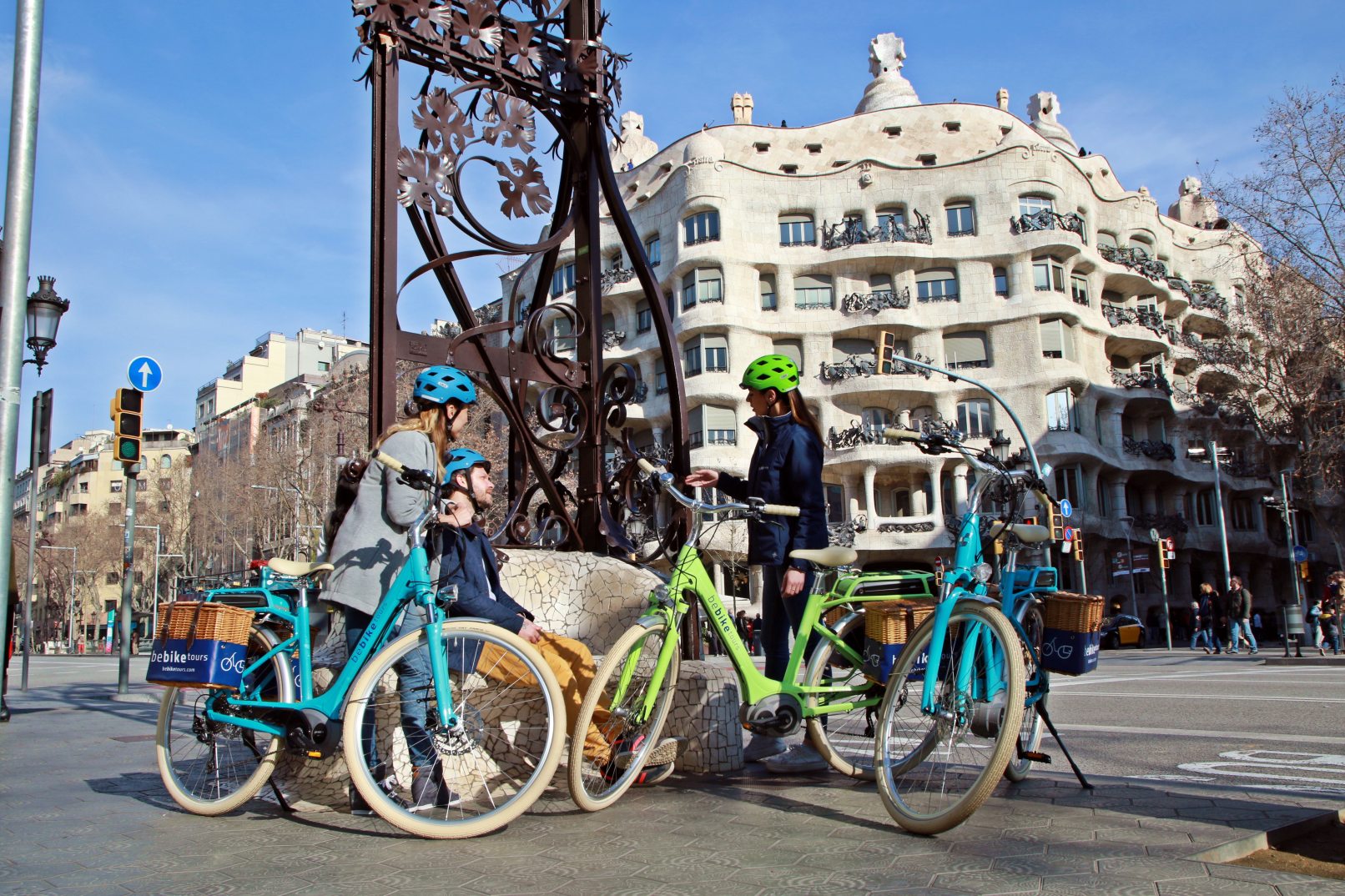
La Pedrera, also known as Casa Milà, is a Modernist masterpiece by Antoni Gaudí, completed in 1912. Famous for its undulating stone façade, wrought-iron balconies, and sculptural rooftop chimneys, it is a UNESCO World Heritage Site and one of Barcelona’s most iconic architectural landmarks.
18
Stop 18
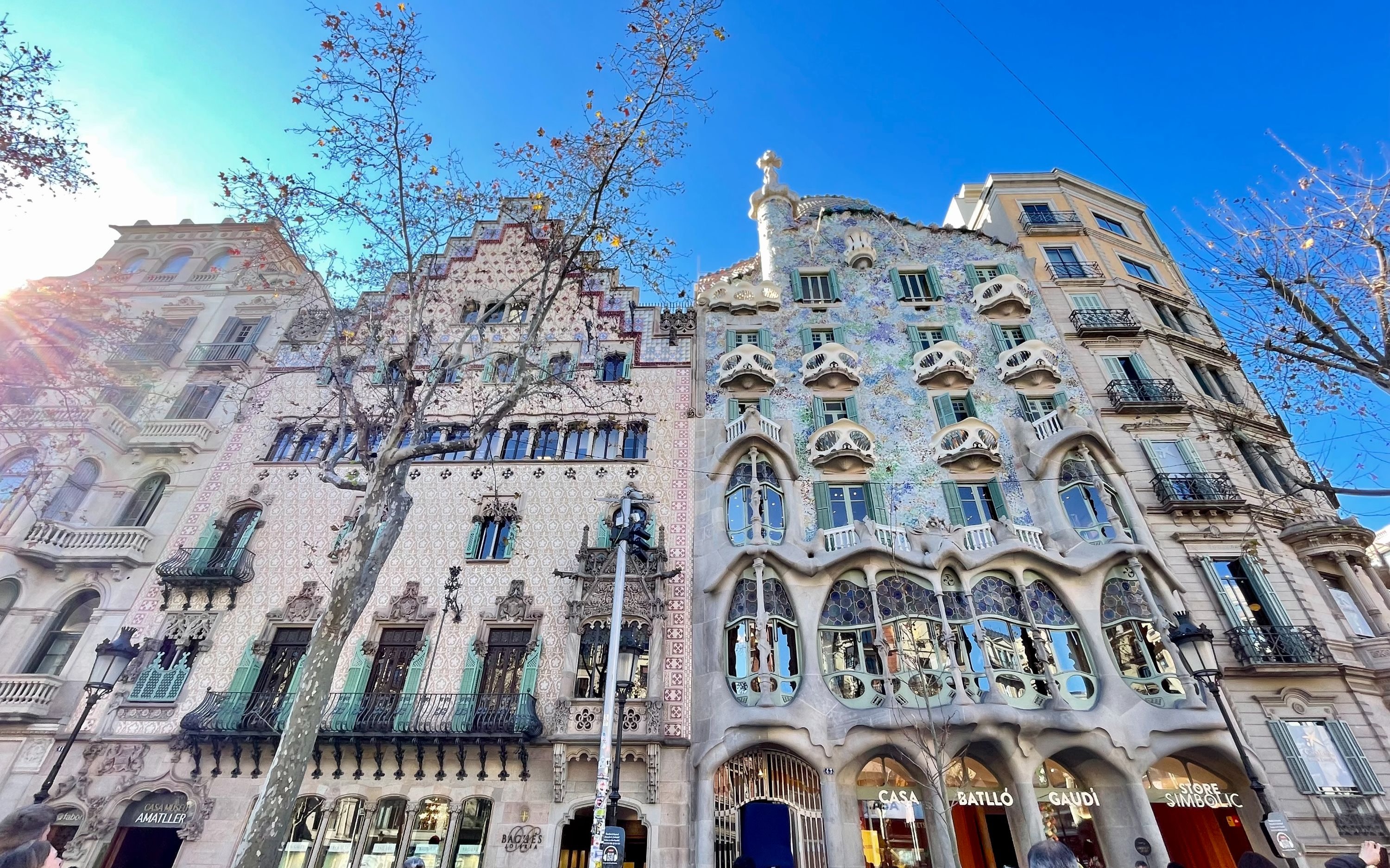
Casa Batlló is a colorful Modernist building in Barcelona, designed by Antoni Gaudí and completed in 1906. Known for its organic shapes, vibrant façade, and whimsical interior, it is considered one of Gaudí’s most imaginative architectural masterpieces and a UNESCO World Heritage Site.
19
Stop 19
Pass by
Passeig de Gràcia is Barcelona’s most famous boulevard, known for its luxury shops, Modernist architecture, and cultural landmarks. Lined with iconic buildings such as Casa Batlló and La Pedrera, it is a central hub for shopping, dining, and sightseeing in the city.
20
Plaça de Tetuan is a central square in Barcelona, located along the bustling Gran Via avenue. Surrounded by shops, cafés, and residential buildings, it serves as a local gathering point and a convenient landmark in the Eixample district.
21
Passeig de Sant Joan is a wide, tree-lined avenue in Barcelona, connecting the Arc de Triomf to the Gràcia district. Known for its cafés, shops, and local atmosphere, it is a popular route for walking, cycling, and enjoying the city’s daily life.
22
Stop 22
The Arc de Triomf in Barcelona is a triumphal arch built in 1888 as the main entrance to the Universal Exhibition. Designed in Neo-Mudéjar style, it features decorative brickwork and sculptures, making it a prominent architectural landmark and popular photo spot.
23
The Fanals de Pere Falqués i Urpí are decorative street lamps designed by the Catalan architect Pere Falqués in the early 20th century. Located throughout Barcelona, these elegant lamps combine functionality with Modernist design, adding artistic charm to the city streets.
24
The Rius i Taulet Monument in Barcelona honors Mayor Francisco Rius i Taulet, who played a key role in organizing the 1888 Universal Exhibition. The monument features a bronze statue of the mayor surrounded by allegorical figures, celebrating his contributions to the city’s modernization.
25
Stop 25
Ciutadella Park is one of Barcelona’s largest and most popular green spaces. It features gardens, fountains, a lake with rowing boats, the Barcelona Zoo, and several historic monuments, including the Cascada Fountain and the Parliament of Catalonia, making it a perfect spot for relaxation and sightseeing.
26
The Castell dels Tres Dragons is a Modernist building in Ciutadella Park, Barcelona, designed by Lluís Domènech i Montaner for the 1888 Universal Exhibition. Originally built as a café-restaurant, it later housed the Zoology Museum and remains an important example of Catalan Modernist architecture.
27
The Homenatge a l'Exposició Universal de 1888 is a monument in Barcelona’s Ciutadella Park that commemorates the 1888 Universal Exhibition. It celebrates the cultural and industrial achievements showcased during the event and highlights Barcelona’s transformation into a modern city.
28
The Hivernacle del Parc de la Ciutadella is a beautiful 19th-century glass and iron greenhouse in Barcelona’s Ciutadella Park. Built for the 1888 Universal Exhibition, it was designed to house exotic plants and today stands as a charming example of Catalan Modernist architecture.
29
The Umbráculo del Parque de la Ciutadella is a 19th-century shaded greenhouse built for the 1888 Universal Exhibition. Made of wood and brick, it houses tropical and subtropical plants, offering a peaceful and historic corner within the park.
30
The Pèrgola del Monumental is an elegant Modernist pergola in Barcelona, originally part of the 1929 International Exhibition. Its intricate ironwork and open design make it a decorative architectural feature and a charming spot for visitors to stroll or relax.
31
The Cascada Monumental is a grand fountain in Barcelona’s Ciutadella Park, designed by Josep Fontserè with contributions from a young Antoni Gaudí. Built for the 1888 Universal Exhibition, it features dramatic sculptures, waterfalls, and ornate decorations, making it one of the park’s most iconic landmarks.
32
The Gran Lago de la Ciutadella is the main lake in Barcelona’s Ciutadella Park, designed by Josep Fontserè with input from a young Antoni Gaudí. Surrounded by gardens and walking paths, it is popular for rowing boats, relaxing, and enjoying the park’s scenic beauty.
33
The Parliament of Catalonia is located in Barcelona’s Ciutadella Park. Housed in a historic 18th-century building originally used as an arsenal, it now serves as the seat of the Catalan Parliament and is notable for its neoclassical architecture.
34
Plaça de Joan Fiveller is a peaceful square in Barcelona’s Ciutadella Park, named after the historic figure Joan Fiveller. Surrounded by greenery, it offers a quiet spot to rest while exploring the park and nearby attractions.
35
The Equestrian Statue of General Joan Prim in Barcelona’s Ciutadella Park honors the 19th-century military leader and politician. The bronze statue depicts him on horseback, symbolizing his courage and leadership in Spanish history.
36
The Monument Homenatge a Picasso, created in 1983, is a tribute to the renowned Spanish painter Pablo Picasso. Located in Barcelona, the sculpture celebrates his artistic legacy and influence on modern art.
37
El Born Centre de Cultura i Memòria is a cultural and historical center in Barcelona, housed in a restored 19th-century market building. It preserves archaeological remains from the 1700s city and hosts exhibitions about Barcelona’s history and heritage.
38
El Born (La Ribera) is a historic neighborhood in Barcelona, known for its narrow streets, medieval architecture, and vibrant cultural scene. The area is popular for cafés, boutiques, and landmarks such as the Basilica of Santa Maria del Mar and the El Born Centre de Cultura i Memòria.
39
Stop 39
Estació de França is one of Barcelona’s main train stations, built in the early 20th century. Known for its elegant combination of classical and modernist architecture, it features large iron-and-glass roofs, marble details, and spacious platforms, making it both a transport hub and a historic landmark.
40
Stop 40
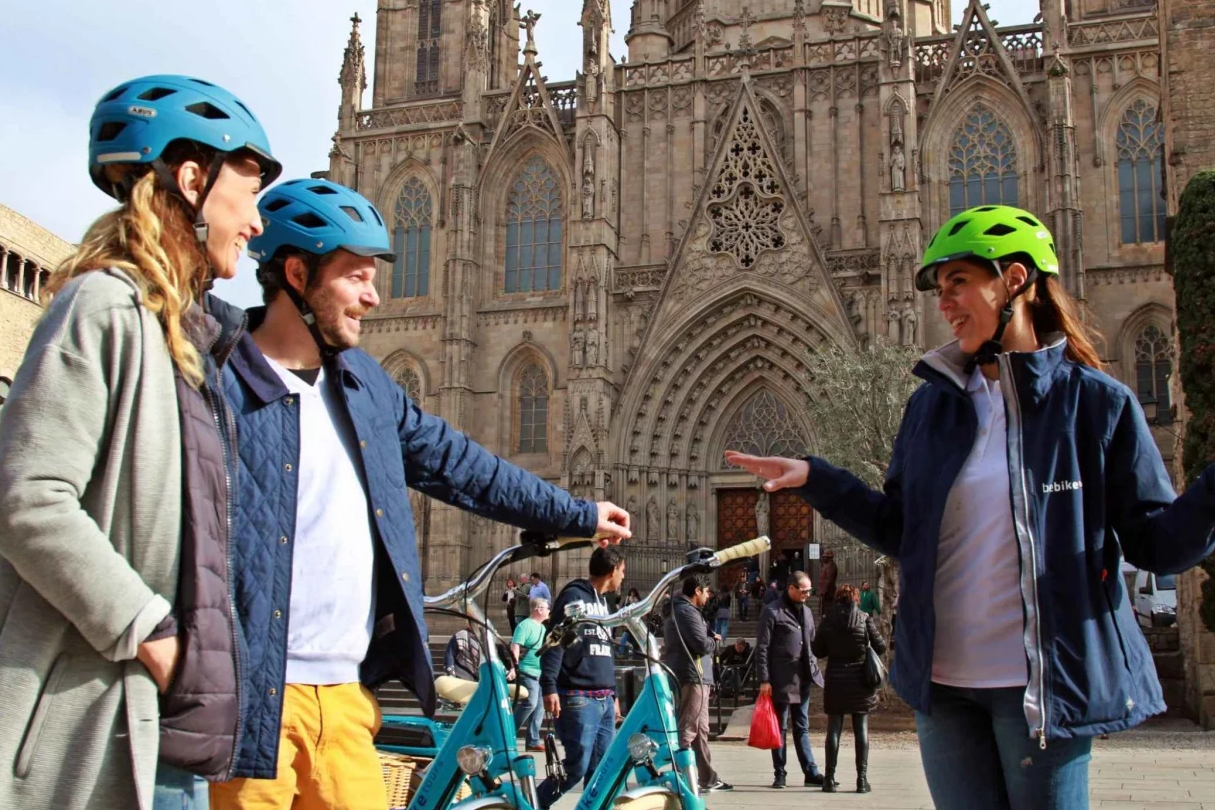
The Basílica de Santa Maria del Mar is a stunning example of Catalan Gothic architecture, located in Barcelona’s El Born district. Built in the 14th century, it is renowned for its elegant proportions, beautiful stained-glass windows, and serene interior.
41
The Pla de Palau Lampposts, designed by Antoni Gaudí, are iconic Modernist street lamps located near Barcelona’s waterfront. Featuring intricate wrought-iron designs and organic shapes, they reflect Gaudí’s distinctive artistic style and add charm to the area.
42
The Baluard de Migdia and Muralla de Mar are historic remnants of Barcelona’s 17th-century city walls near the waterfront. These fortifications once protected the city from naval attacks and today offer a glimpse into Barcelona’s military history and scenic views of the old harbor.
43
Casa Llotja de Mar is a historic building in Barcelona’s Gothic Quarter, originally built in the 14th century as a merchants’ exchange. Over the centuries, it has hosted the Stock Exchange and art schools. Its Gothic and Neoclassical architecture reflects the city’s commercial and cultural history.
What's not included
Gratuities
Available languages
Guide guide
RU
EN
FR
ES
Reviews breakdown
Viator
4.9
12 reviews
5★
11
4★
1
3★
0
2★
0
1★
0
Tripadvisor
5.0
4 reviews
5★
4
4★
0
3★
0
2★
0
1★
0
Important information
Not recommended for pregnant travelers
Not recommended for travelers with poor cardiovascular health
Public transportation options are available nearby
Suitable for all physical fitness levels
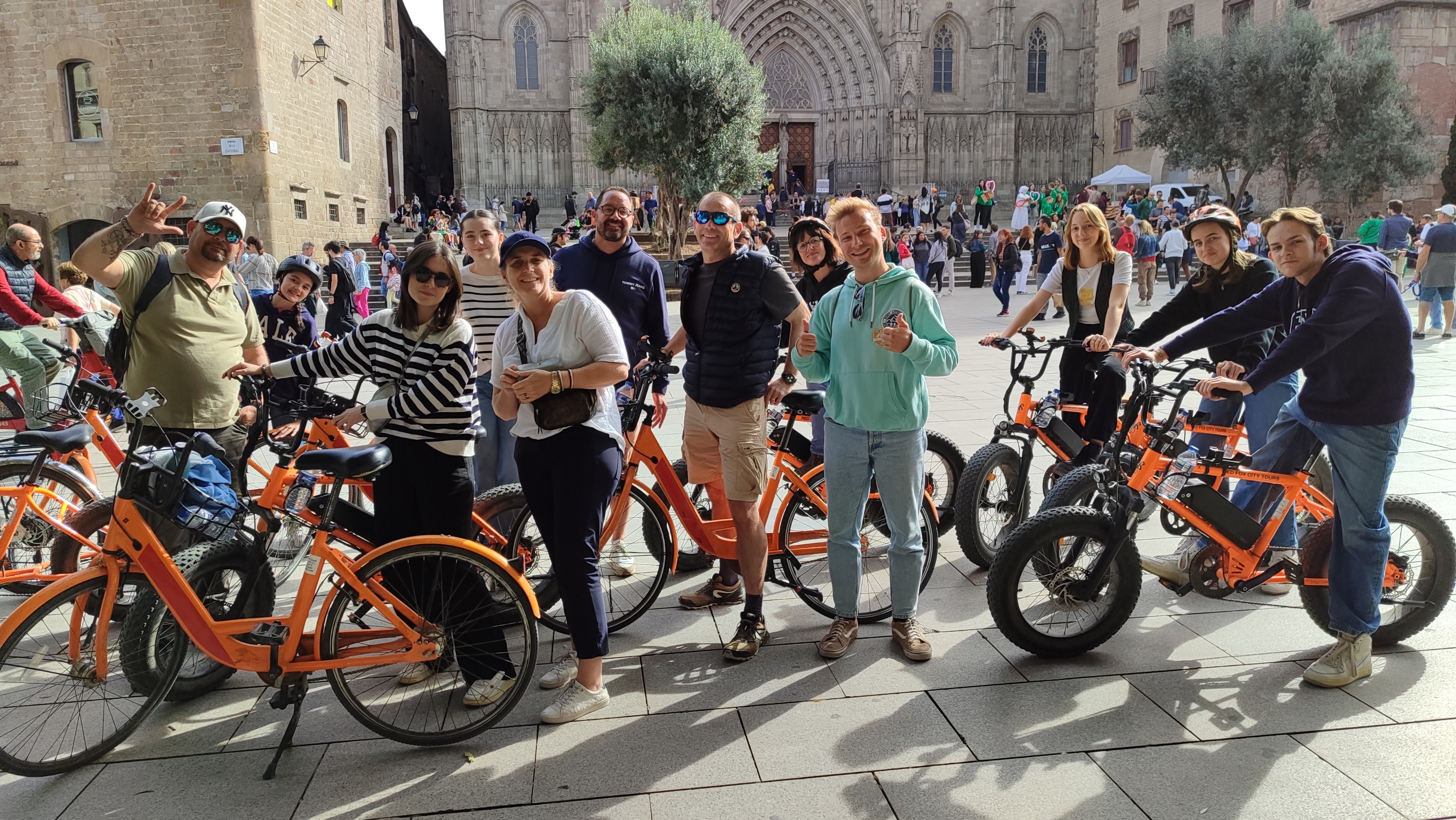
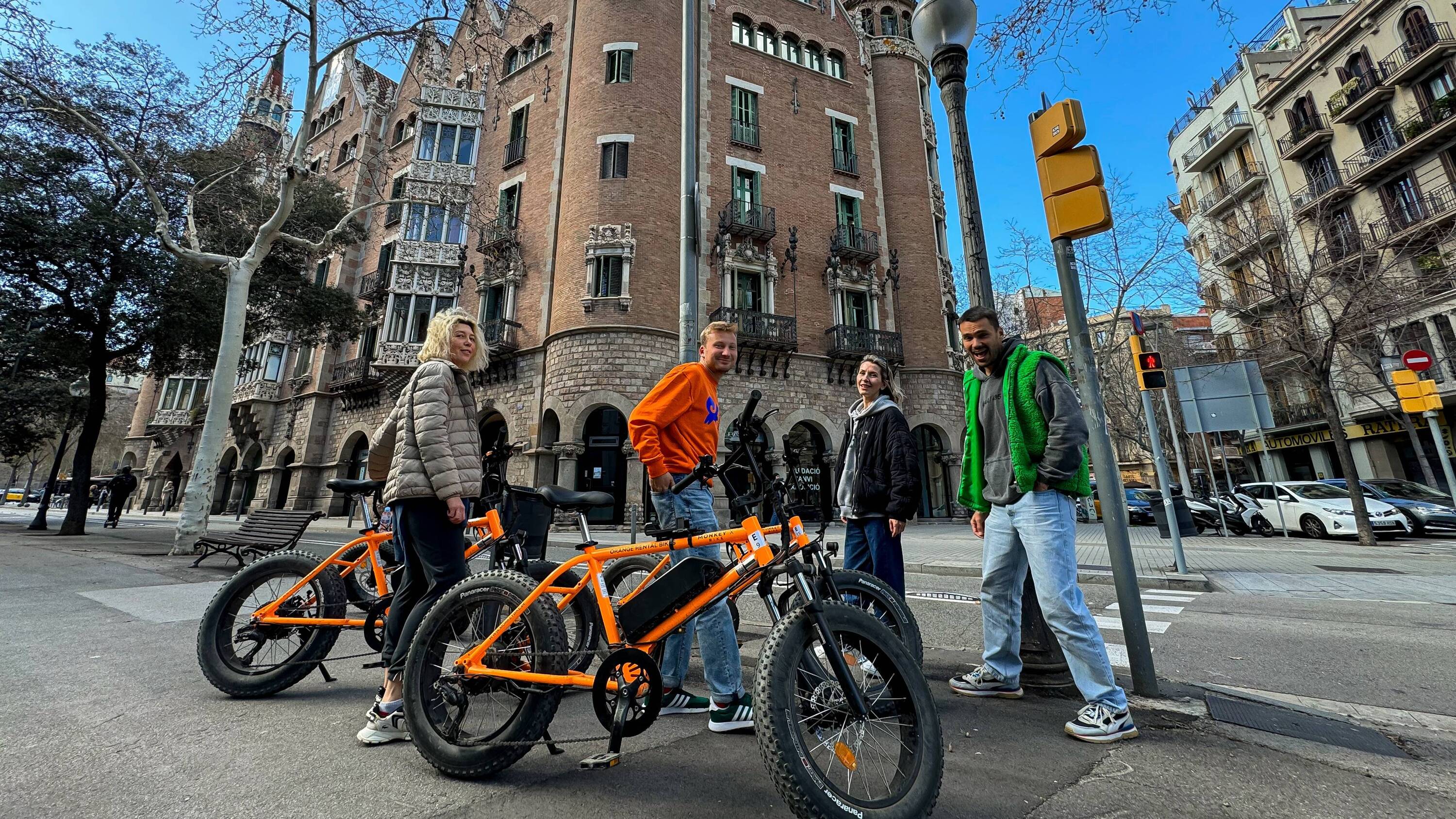
Minimum age to participate in a tour is 12 years old. Children must be accompanied by an adult. Please note that by local laws the minimum age to ride a Segway is 16 years old. For underaged participants we provide electric bicycles suited for children (tour price remains the same).
Tours have no limit of participants; by local laws, guests are divided in smaller groups of 6 participants + 1 guide. Groups will travel with a separation of no less than 50 mts (164 ft) in between.
Minimum weight for Segway riders is 45 kg (100 lbs) and the maximum is 117 kg (260 lbs).
Book your activity in advance to guarantee a spot - groups are limited in size to guarantee a better experience.
Helmets are mandatory and rental is free. A training session will be given so that every rider has enough skills to drive in the city. This activity is forbidden for people under the influence of alcohol, drugs or strong medicine.
Valid I.D. or passport is required at the time of the tour (a copy is also accepted).
May be operated by a multi-lingual guide.
Operates in all weather conditions, please dress appropriately. Comfortable shoes and clothing are recommended. In case of rain we provide raincoats, nonetheless, we recommend guests to bring their own. In case of severe weather, the option of an alternative date and time convenient for both parties will be given.
Please note that tours start and finish on time, so we require all participants to arrive 15 minutes before to check-in and practice. In case of late arrival, the tour may be postponed to another available time slot.
Please note that routes may be altered due to interferences in the itinerary outside of our responsibility.
The main goal of our tours is to show you the most sights, views of the city, and special places hidden from the eyes of outsiders. We try to do it quickly and easily, in a convenient form of travel for guests. Saving your time, we do not include entrance to museums and other buildings in our tours.
Important notes
The meeting point: Correu Vell, 6, Barcelona 08002. Next metro station - Jaume I on the yellow metro line. Please note that tours start and finish according to schedule, so we require all participants to arrive 15 minutes before to check-in and practice.
We practice before the tour to understand if every rider has enough skills to drive in the city.
The minimum age to ride a segway or electric scooter is 16 years old. For Children under 16 years old, we offer electric bicycles.
Activity is forbidden for people under the influence of alcohol, drugs or strong medicine.
Passport/ID details are required at the time of activity for all participants (a copy on your smartphone accepted).
Tours may be operated by a multi-lingual guide.
Operates in all weather conditions. We provide raincoats in case of light rain (up to 1 mm per hour), although we recommend guests to bring their own.
In case of severe weather, you may postpone the tour to a convenient date for both parties or cancelled.
Please note that due to interferences in the itinerary outside of our responsibility routes may be altered with no previous notice.
About Barcelona
Barcelona is a vibrant city on the northeastern coast of Spain, known for its rich cultural heritage, stunning architecture, and lively atmosphere. It seamlessly blends medieval history with modernist masterpieces, making it a unique and appealing destination for travelers.
Top Attractions
Sagrada Família
Antoni Gaudí's unfinished masterpiece, a stunning basilica that combines Gothic and Art Nouveau forms. It's a UNESCO World Heritage Site and a must-visit.
Architecture
1.5-2.5 hours
€26-€34 (depending on access to towers)
Park Güell
Another Gaudí masterpiece, this park features colorful mosaics, whimsical structures, and beautiful city views.
Architecture
1.5-2 hours
€10 (Monumental Zone)
La Rambla
A famous pedestrian street filled with shops, restaurants, street performers, and the famous La Boqueria market.
Street
1-2 hours
Free (shopping and dining costs vary)
Casa Batlló
A unique building designed by Gaudí, known for its surrealist design and colorful façade.
Architecture
1 hour
€35-€45 (depending on the tour)
Gothic Quarter
The historic heart of Barcelona, filled with medieval streets, ancient buildings, and hidden plazas.
Historical
2-3 hours
Free (some attractions may have entry fees)
Must-Try Local Dishes
Pa amb tomàquet
Bread rubbed with tomato, garlic, and olive oil, often served as an appetizer.
Snack
Vegetarian
Fideuà
A paella-like dish made with short, thin noodles, seafood, and saffron.
Main Course
Contains seafood
Crema Catalana
A Catalan version of crème brûlée, made with egg yolks, sugar, and cinnamon.
Dessert
Vegetarian
Patatas Bravas
Fried potato cubes topped with a spicy tomato sauce and garlic aioli.
Snack
Vegetarian
Popular Activities
Hiking in Montserrat
Water sports in Barceloneta
Rock climbing
Beach lounging in Barceloneta
Spa treatments
Strolling through parks and gardens
Visiting museums and galleries
Attending festivals and events
Best Time to Visit
May to June, September to October
The peak season offers pleasant weather and is ideal for exploring the city's attractions. The crowds are manageable, and the city is vibrant with festivals and events.
20°C to 28°C
68°F to 82°F
Practical Information
Language
- Official: Catalan, Spanish
- Widely spoken: English, French
- English: Moderately spoken
Currency
Euro (EUR)
Time Zone
GMT+1 (CET), GMT+2 (CEST during daylight saving time)
Electricity
230VV, 50HzHz
Safety Information
Overall Safety Rating: Generally safe
Barcelona is generally safe, but like any major city, it has its share of petty crime and scams. Be aware of your surroundings, especially in touristy areas and on public transportation.
Important Precautions:
- • Be cautious of pickpockets, especially in crowded areas and on public transportation.
- • Keep an eye on your belongings, especially in touristy areas and on public transportation.
- • Be cautious of fake petitions or distractions to steal from you.
Getting there
By air
- Barcelona-El Prat Airport • 12 km from city center
By train
Sants Station, Estació de França
By bus
Estació d'Autobusos Sants, Estació d'Autobusos Nord
Getting around
Public transport
The metro system is efficient, clean, and covers most of the city. It's a great way to get around quickly and affordably.
Taxis
Available • Apps: Free Now, Cabify
Rentals
Car, Bike, Scooter
Neighborhoods
Eixample
Gràcia
Barceloneta
Gothic Quarter
El Raval
Day trips
Montserrat
50 km from Barcelona • Half day to full day
A stunning mountain range with a historic monastery, offering hiking, scenic views, and religious sites.
Girona
100 km from Barcelona • Full day
A charming medieval city with a well-preserved Jewish Quarter, a stunning cathedral, and a rich history.
Sitges
40 km from Barcelona • Half day to full day
A picturesque coastal town known for its beaches, nightlife, and historic sites.
Festivals
La Mercè Festival • Late September
Sant Jordi • April 23
Festa Major de Gràcia • Mid-August
Pro tips
- Visit popular attractions like the Sagrada Família and Park Güell early in the morning or late in the afternoon to avoid crowds.
- Explore the city's neighborhoods on foot or by bike to discover hidden gems and local culture.
- Try local specialties like pa amb tomàquet, fideuà, and crema catalana at local markets and restaurants.
- Use the T-Casual pass for unlimited travel on public transportation, which is more cost-effective than single tickets.
- Be cautious of pickpockets, especially in crowded areas and on public transportation, and keep an eye on your belongings.
From $25
per person
Price varies by option
Secure booking
Free cancellation available
Instant confirmation