Rome By Night Tour and Pizza in high quality E-scooter!
Active
3h
For a full refund, cancel at least 24 hours before the scheduled departure time.
Manual confirmation
Mobile or paper ticket accepted
About this experience
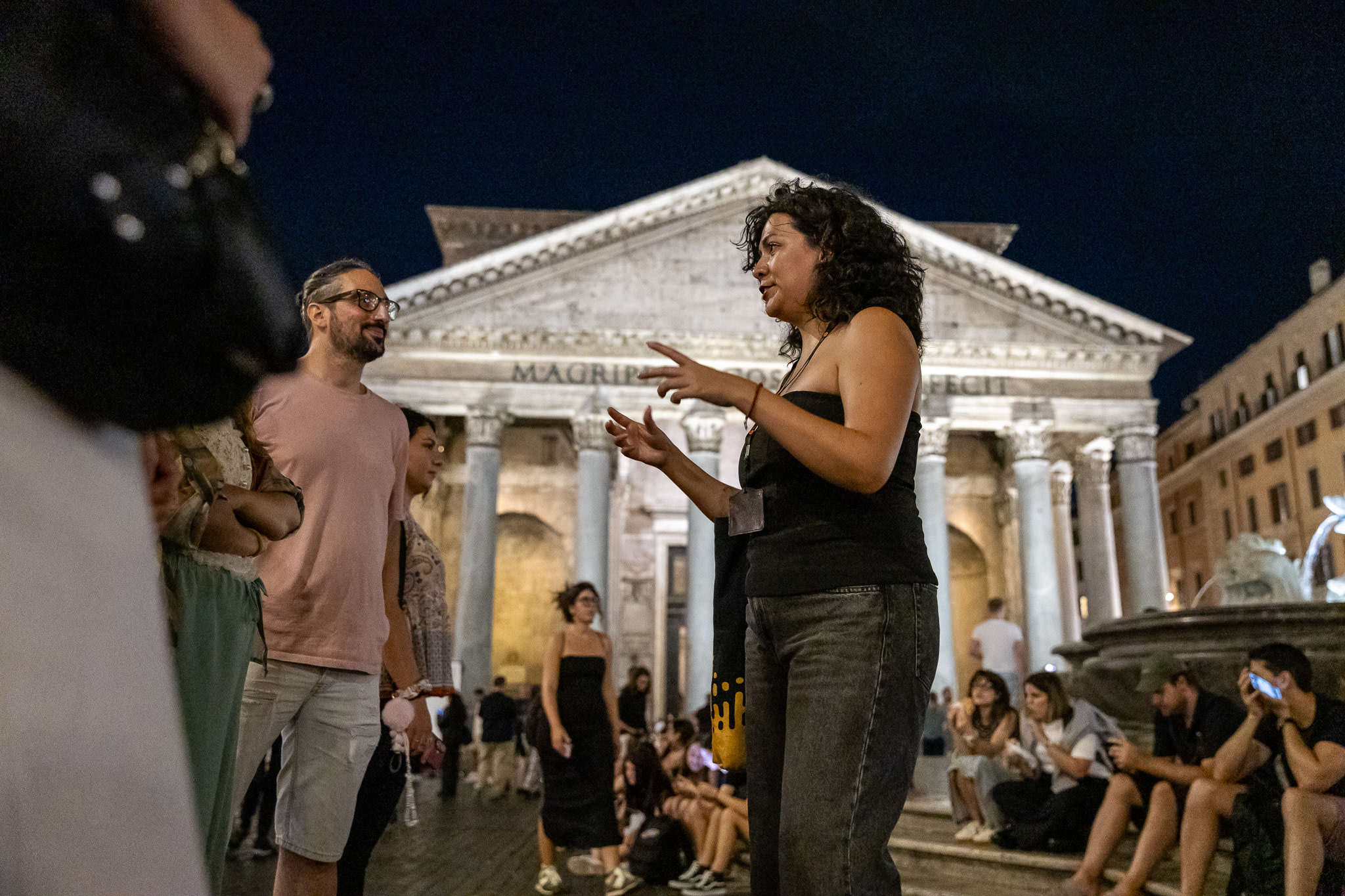
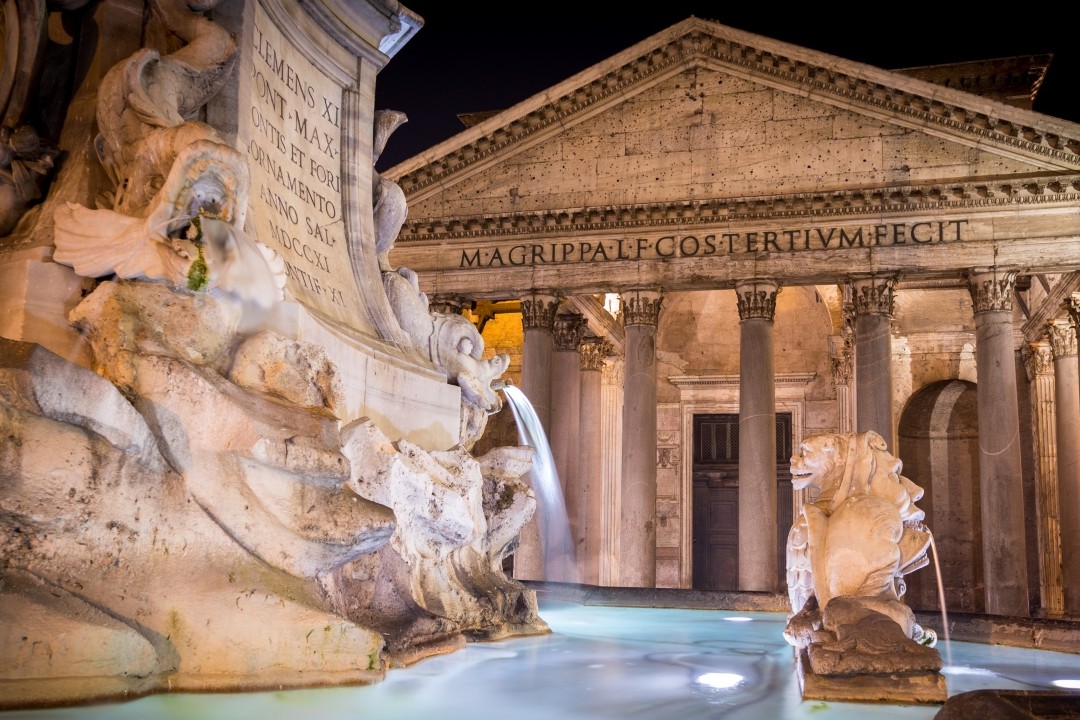
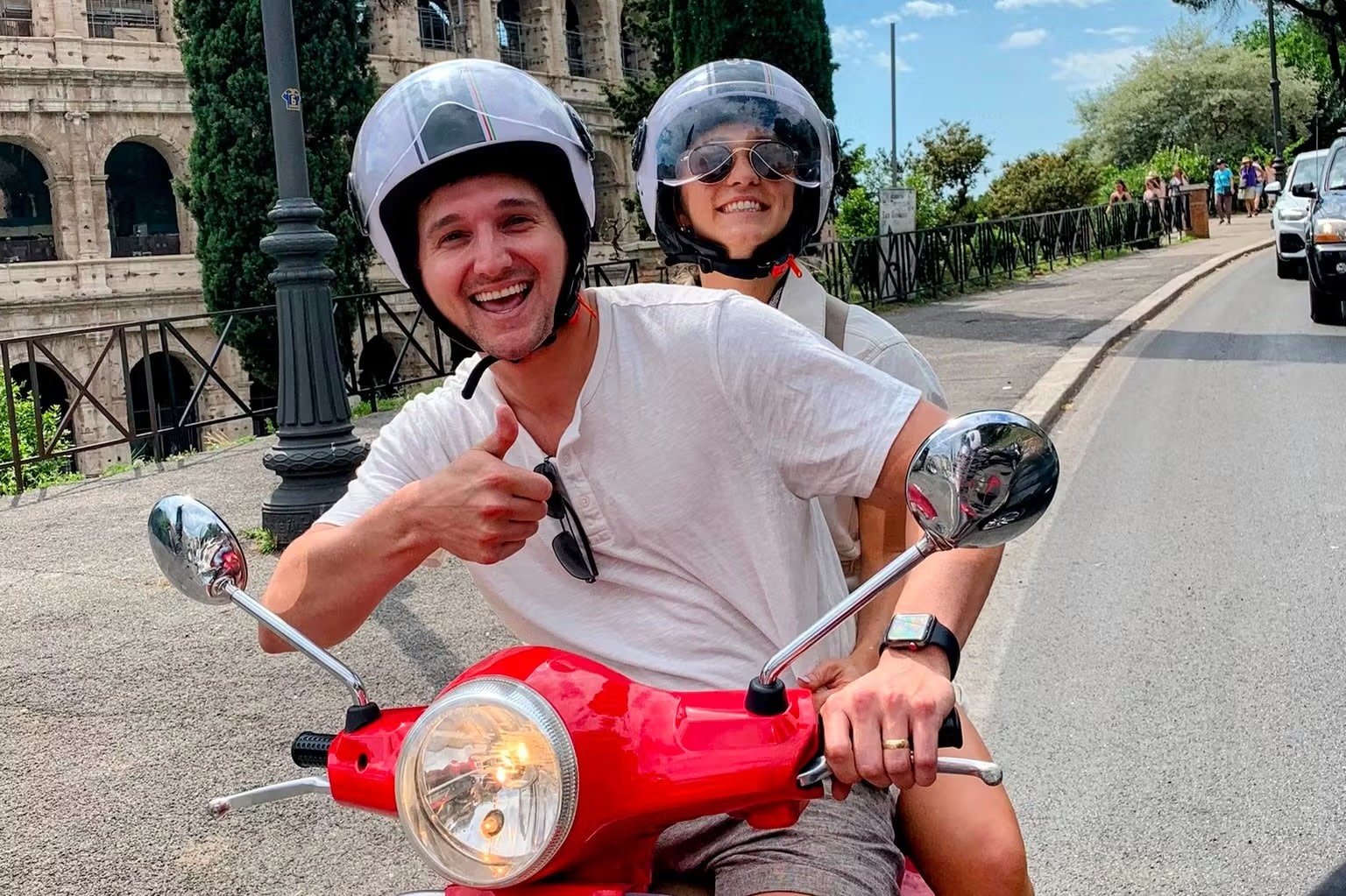
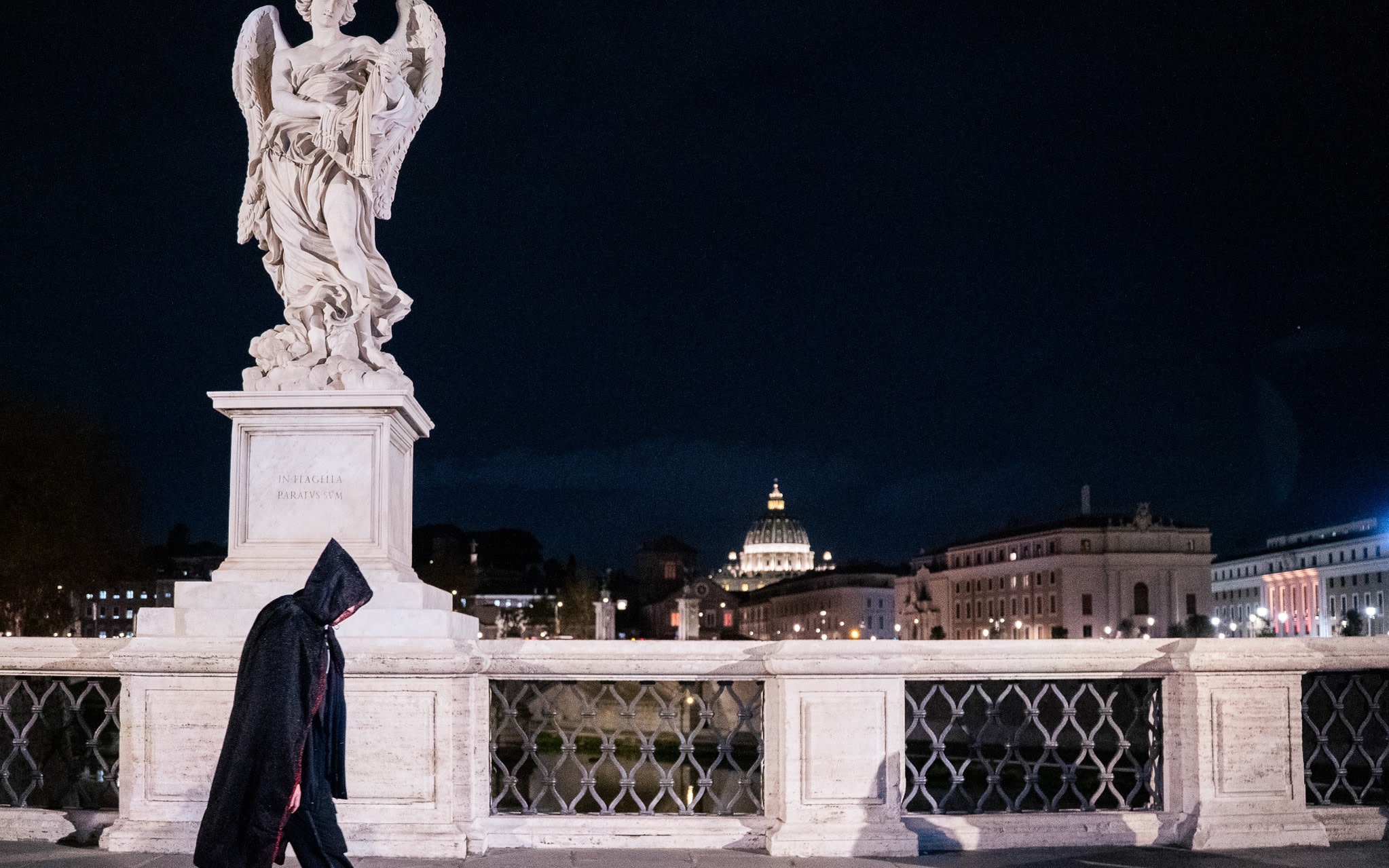
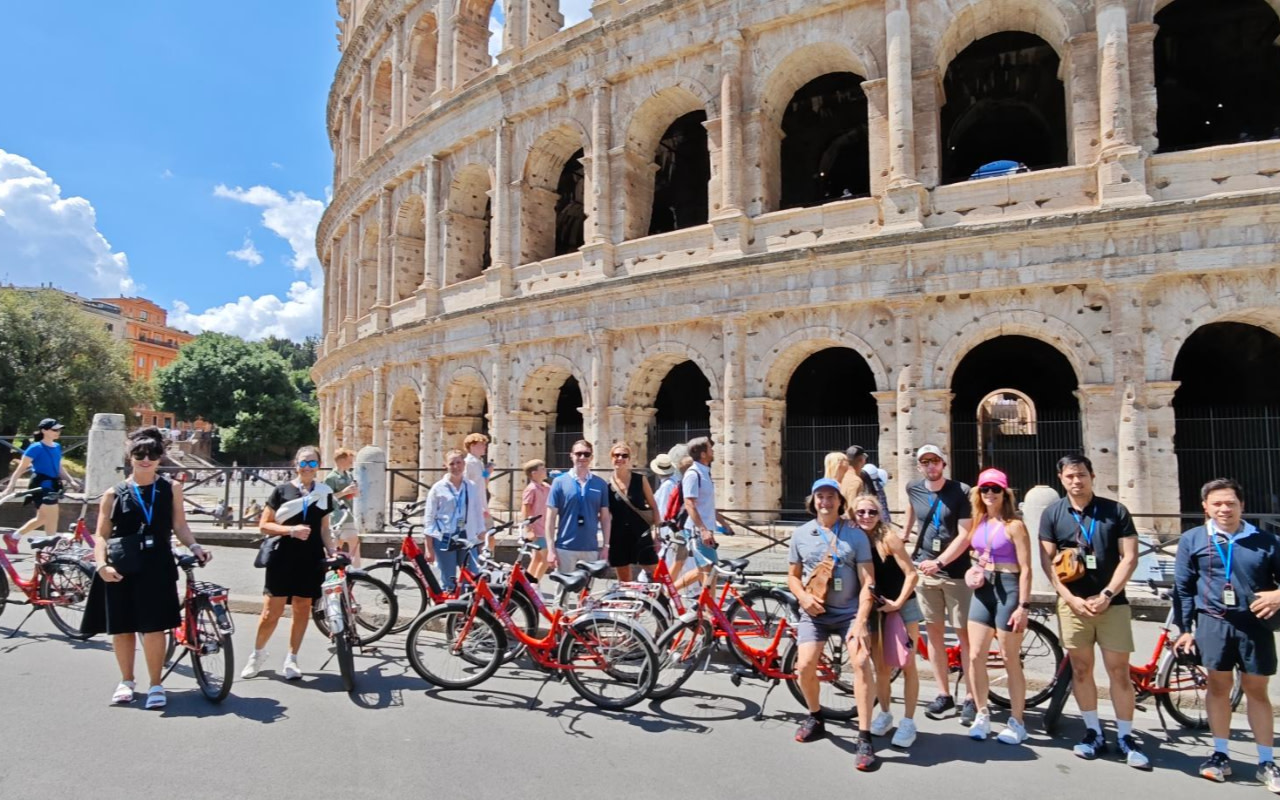
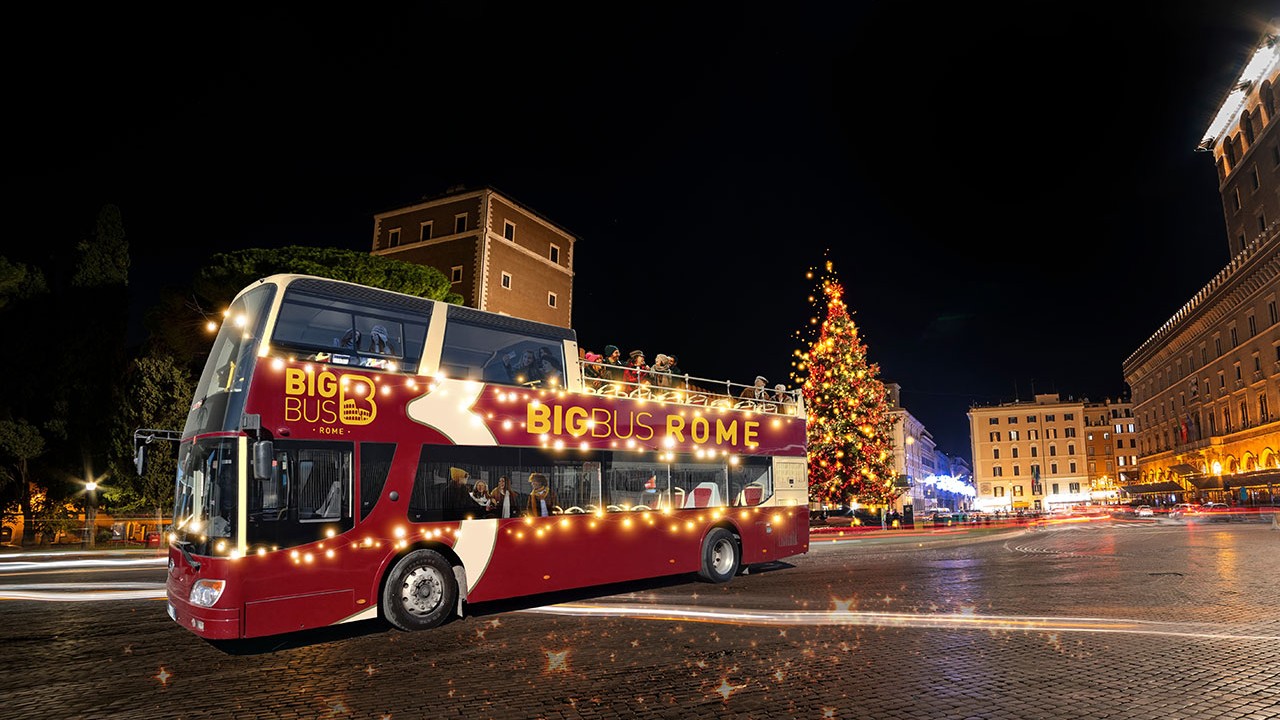
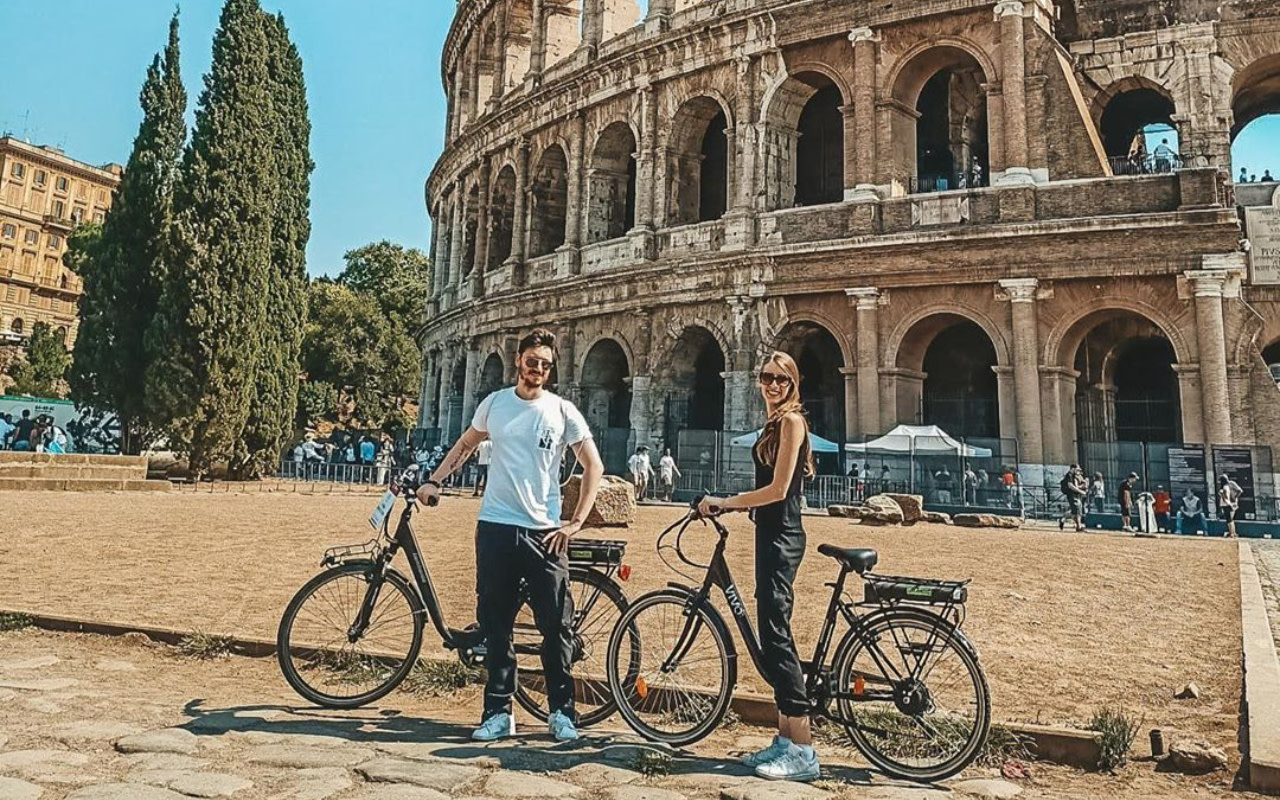
This is the perfect tour to let yourself be overwhelmed by the magical and dreamy atmosphere of the Capitoline nights! The “Rome by night” tour will allow you to admire the Eternal City under the starlight! You will be able to appreciate the sweet and romantic Rome of warm summer evenings, illuminated by the moonlight, which gives the city that incomparable enchanted and fairytale-like air of a film! All on board a fantastic e-scooter!
Available options
Rome By Night Tour and Pizza in high quality E-scooter!
What's included
helmet
child seat up to 4 years
Use of e-scooters
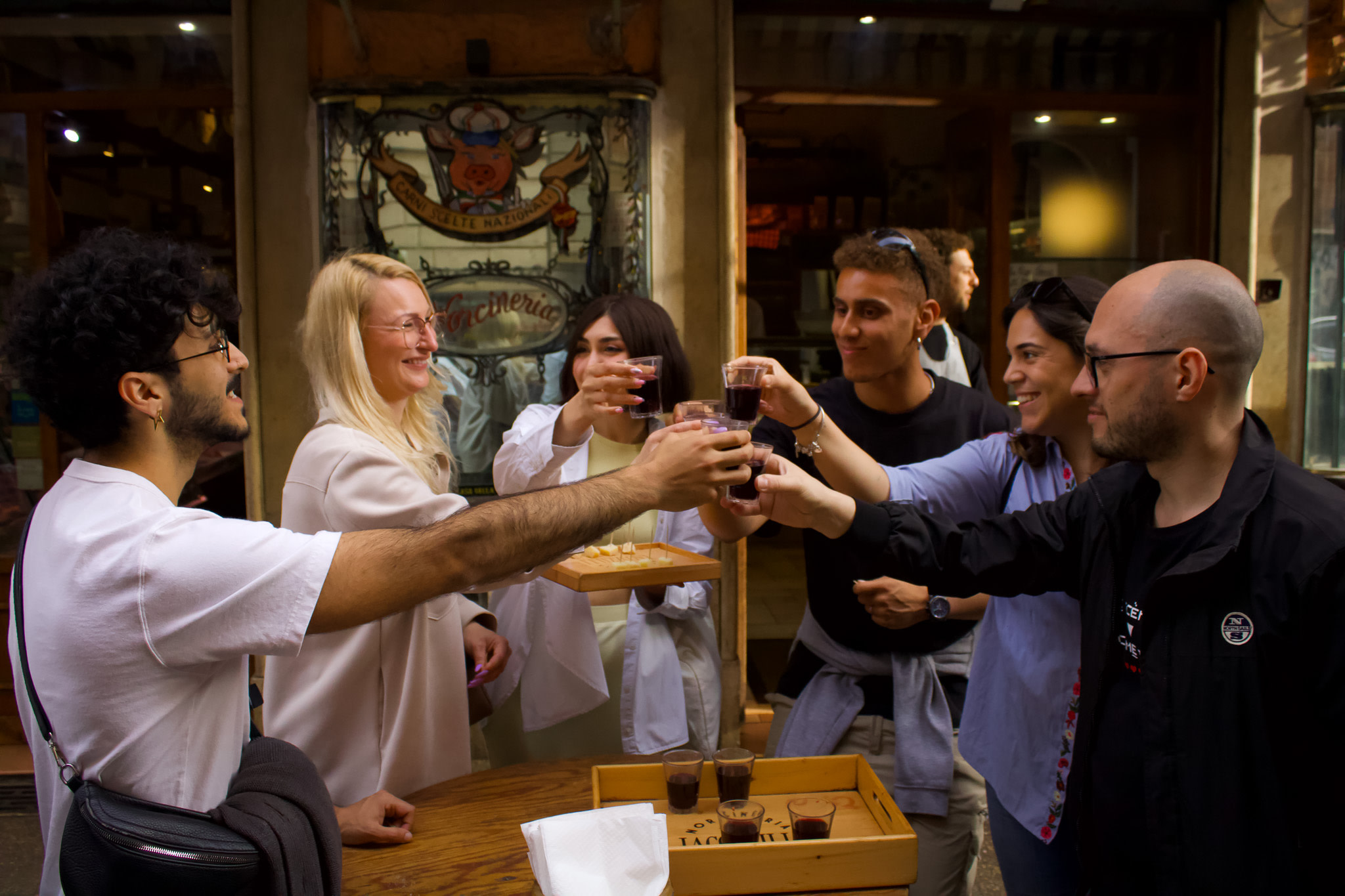
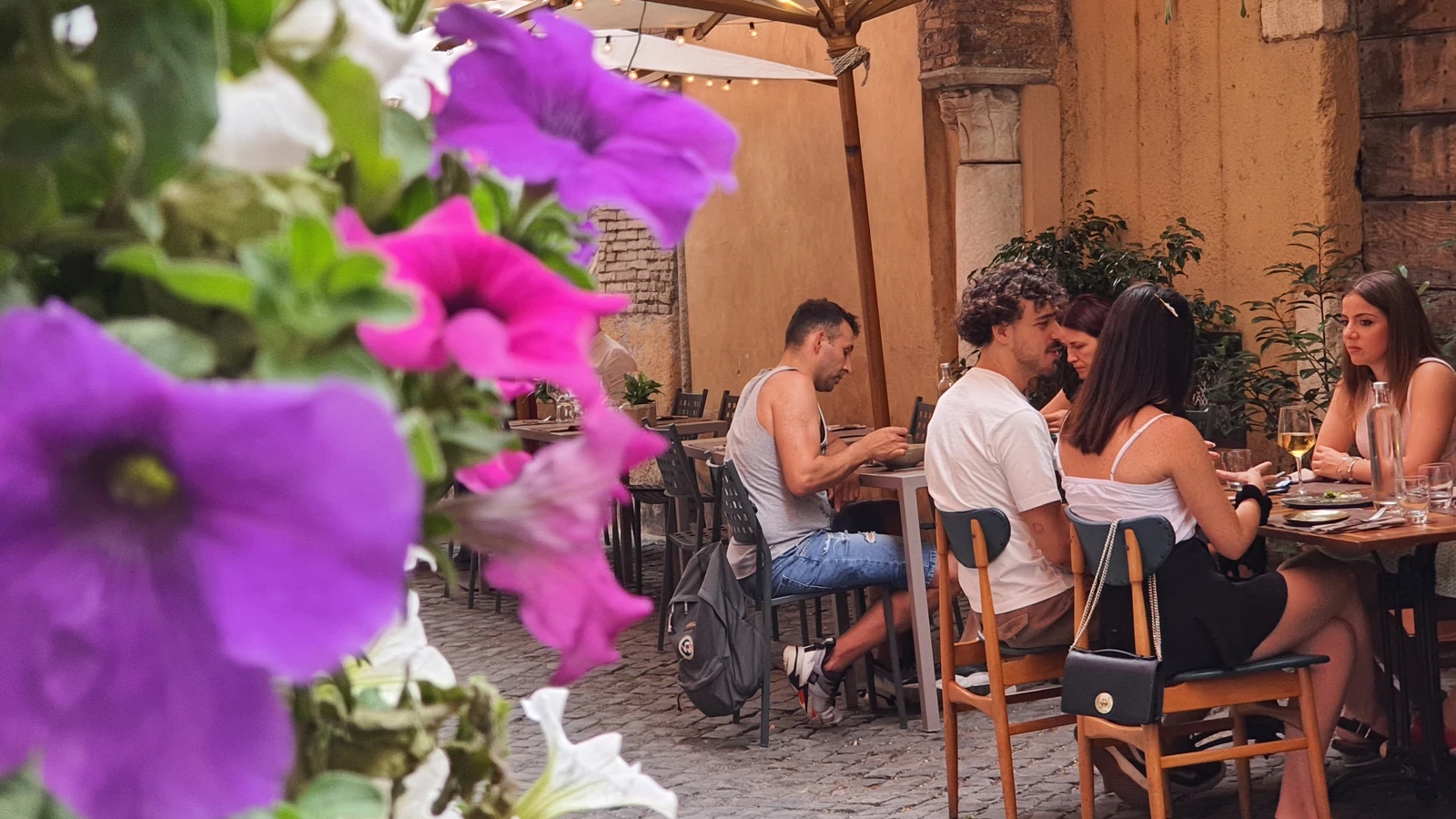
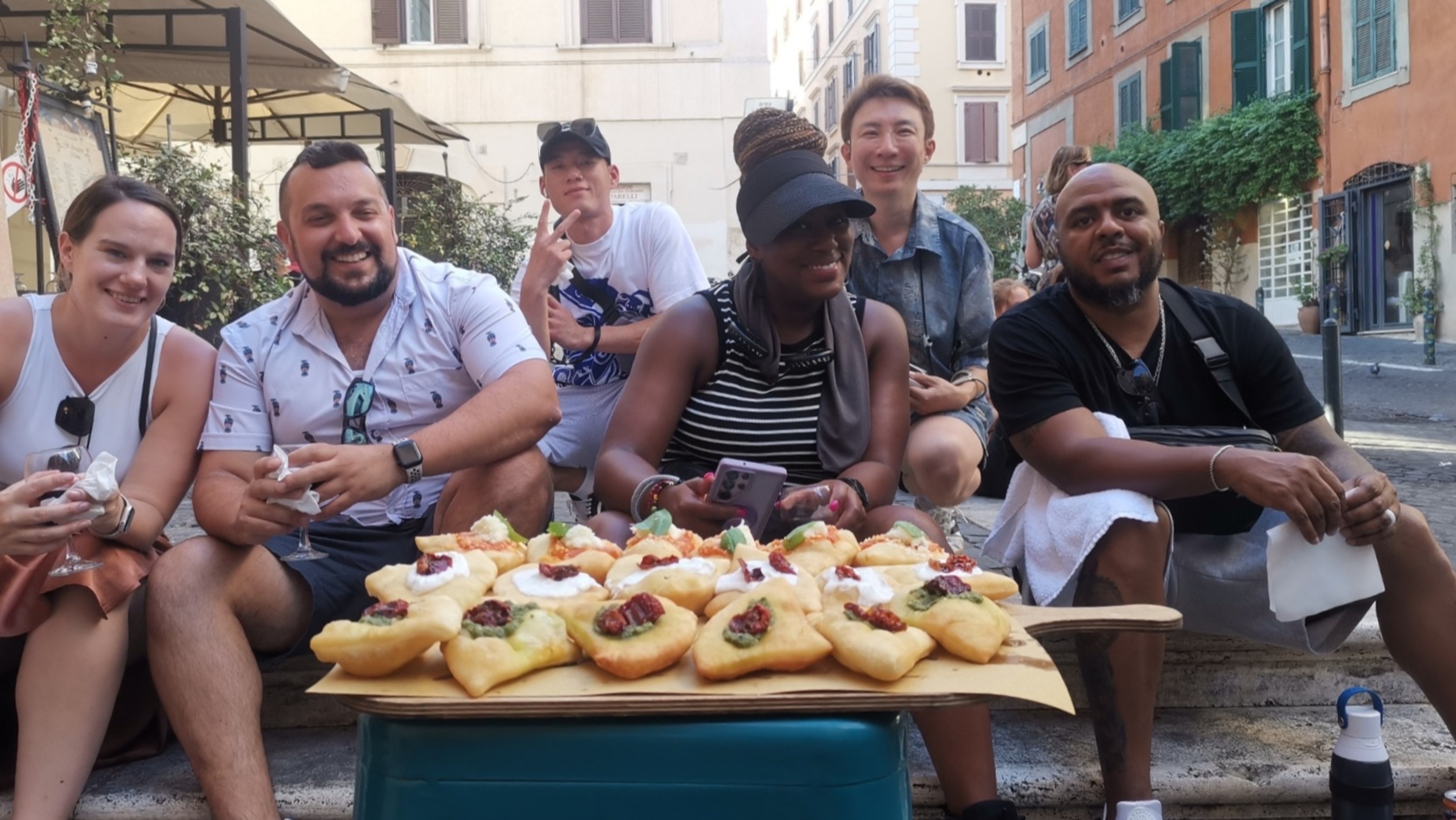
Dinner includes Pizza and non-alcoholic drink
padlock
city map
Detailed itinerary
1
Stop 1
The Arch of Constantine is a triumphal arch with three arches (with a central passage flanked by two smaller lateral passages), located in Rome, a short distance from the Colosseum. Besides the remarkable historical importance as a monument, the Arch can be considered as a real museum of official Roman sculpture, extraordinary for its richness and importance [1]. The general dimensions of the elevation are 21 m high, 25.9 meters wide and 7.4 m deep.
2
Stop 2
The National Monument to Vittorio Emanuele II or (Mole del) Vittoriano, improperly called Altare della Patria, is an Italian national monumental complex located in Rome in Piazza Venezia, on the northern slope of the Campidoglio hill, designed by the architects Ettore Ferrari, Pio Piacentini and Giuseppe Sacconi. It was built starting in 1885, with the works that ended in 1935: however the official inauguration and the simultaneous opening to the public had already taken place in 1911, on the occasion of the events connected to the International Exhibition of Turin, during the celebrations of the 50th anniversary of the Unification of Italy. From an architectural point of view it was conceived as a modern forum, an agorà on three levels connected by stairways and dominated by a portico characterized by a colonnade.
3
Stop 3
Piazza di Spagna (Piazza di Francia in the seventeenth century), with the stairway of Trinità dei Monti, is one of the most famous squares in Rome. It owes its name to the palace of Spain, seat of the embassy of the Iberian state to the Holy See.
4
Stop 4
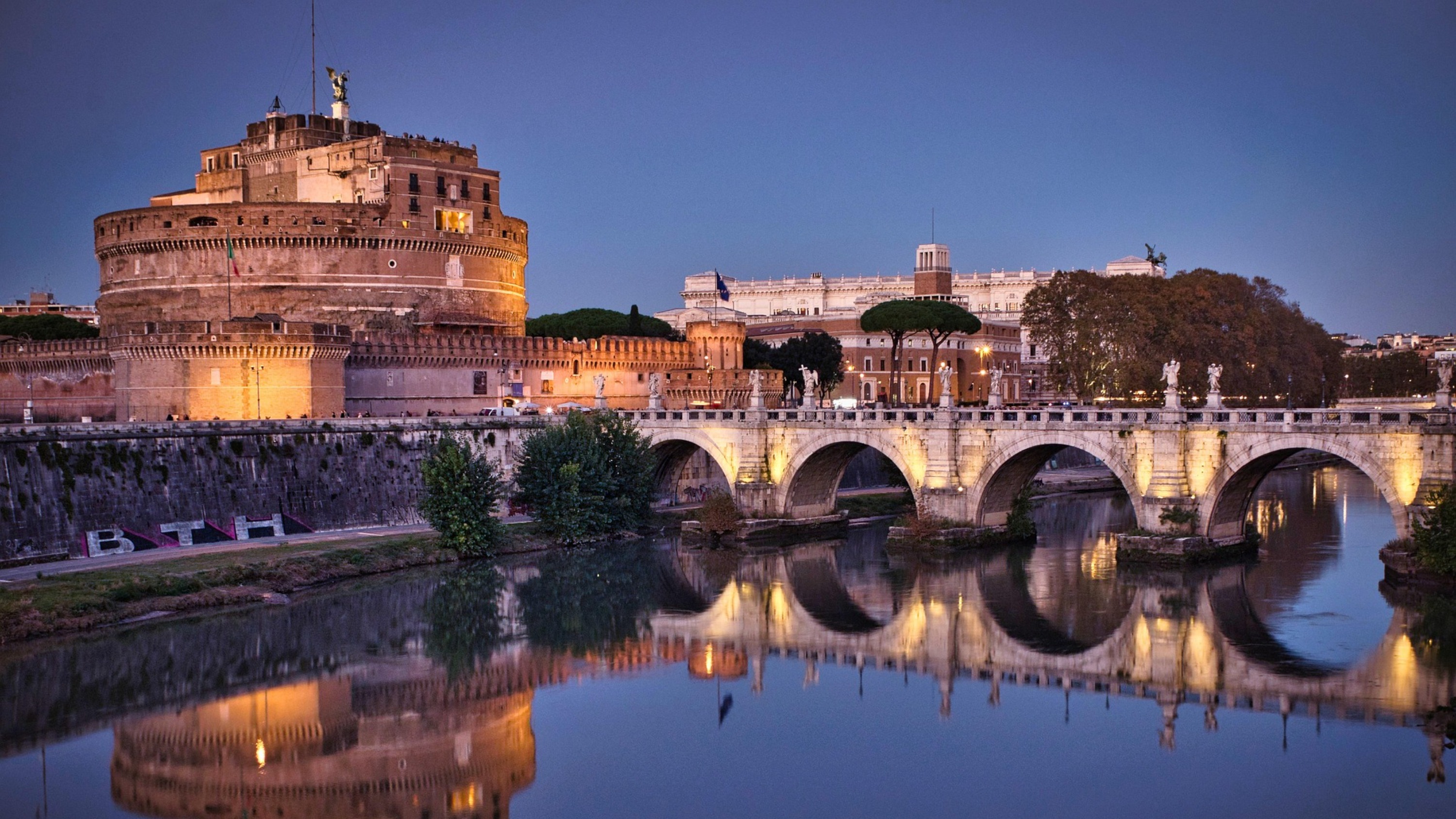
Castel Sant'Angelo (or Mole Adrianorum or Castellum Crescentii in the 10th-12th century), also called Mausoleo di Adriano, is a monument of Rome, located on the right bank of the Tiber in front of the pons Aelius (present Ponte Sant'Angelo), not far from the Vatican, between the district of Borgo and that of Prati; it is connected to the Vatican State through the fortified "passetto" corridor. The castle was radically changed several times during the Middle Ages and the Renaissance. Owned by MiBAC, in December 2014 the Museum became part of the Lazio Museums.
5
Stop 5
Ponte Sant'Angelo, also known as pons Aelius (Elio bridge), pons Hadriani (Adriano's bridge) or Ponte di Castello [1], is a bridge that connects Piazza di Ponte S. Angelo to the Vatican, in Rome, in the districts Ponte and Borgo.
It was built in Rome in 134 by the emperor Hadrian, on a project by a certain Demetrian, to connect his mausoleum to the left bank.
6
Stop 6
Piazza San Pietro is the square in front of the Basilica of San Pietro.
Located on the edge of the historic center of Rome, at 19 m s.l.m., [1] the square is part of the Vatican City and is bounded by the border with the Italian State; through the Borgo district lying to the east, the main entrances are from via di Porta Angelica or via della Conciliazione. In the showy inclination of the "runners" Bernini renounces the sixteenth-century solution of leaving a straight order, inserting the triangular 'wedges' under the base and between capital and entablature, and instead uses an "oblique architecture". This contravenes what Vitruvio claimed about architecture as a mirror of reality
7
Stop 7
Piazza Navona is one of the most famous squares in Rome, built by the Pamphili family. Its shape is that of an ancient stadium: it was built in a monumental style at the behest of Pope Innocent X (Giovanni Battista Pamphili).
8
Stop 8
Campo de Fiori is a square in Rome, between Via dei Giubbonari and Piazza della Cancelleria, on the borders of the Parione and Regola districts.
Until the fifteenth century the square did not exist as such, and in its place there was a flowery meadow with some cultivated gardens, hence the name. According to an unreliable tradition, the square should instead be named after Flora (a woman beloved by Pompey, who had built his theater nearby)
9
Stop 9
The Jewish ghetto of Rome is among the oldest ghettos in the world; in fact it arose 40 years after the one in Venice which is the first ever. The term derives from the name of the Venetian district, gheto, where there was a foundry (precisely gheto in Venetian), where the Jews of that city were forced to reside; another possible etymology traces the origin of this word to the Hebrew גט ghet (pl. גיטים ghittim or גיטין ghittin), which means separation
10
Stop 10
The Capitol, also called Monte Capitolino (Mons Capitolinus), is one of the seven hills on which Rome was founded. Its height is 48 m s.l.m. sull'Arx (current Basilica of S. Maria in Aracoeli) [without source], of 35.9 m s.l.m. in the Asylum (now Piazza del Campidoglio) and 44.7 m s.l.m. on the Capitolium proper (Palazzo Caffarelli). [1]
The Campidoglio is also the representative office of the municipality of Rome.
11
The Via dei Fori Imperiali, formerly Via dell'Impero, is a modern street in Rome, which takes its current name from the remains of the ancient Imperial Forums, and connects the Colosseum to Piazza Venezia.
The area occupied by the remains of ancient buildings was affected in the Middle Ages by the rise of dwellings, churches and monasteries, as well as green spaces used as pastures (under the name of "Campo Vaccino"), until the radical transformation desired, at the end of the 16th century century, by cardinal Michele Bonelli who built the neighborhood called "Alessandrino".
Available languages
Guide guide
DE
EN
IT
FR
ES
Important information
Specialized infant seats are available
Public transportation options are available nearby
Suitable for all physical fitness levels
About Rome
Rome, the capital of Italy, is a city of ancient ruins, artistic masterpieces, and vibrant culture. Known as the Eternal City, it is a living museum where every corner tells a story of its rich history spanning over 2,500 years.
Top Attractions
Colosseum
The Colosseum is an iconic symbol of Rome and one of the most famous ancient amphitheaters in the world. It was used for gladiatorial contests and public spectacles.
Historical
1-2 hours
€16 (combined ticket with Roman Forum and Palatine Hill)
Vatican City
Vatican City is an independent city-state enclaved within Rome. It is the spiritual and administrative center of the Roman Catholic Church.
Religious
Half day
€17 (Vatican Museums and Sistine Chapel), Free (St. Peter's Basilica)
Roman Forum
The Roman Forum was the political, commercial, and legal hub of the Roman Republic and Empire. It is a sprawling ruin of temples, basilicas, and arches.
Historical
1-2 hours
€16 (combined ticket with Colosseum and Palatine Hill)
Pantheon
The Pantheon is a former Roman temple, now a church, known for its large dome and oculus. It is one of the best-preserved ancient buildings in Rome.
Historical
30 minutes to 1 hour
Free
Trevi Fountain
The Trevi Fountain is a Baroque masterpiece and the largest fountain in Rome. It is a popular spot for visitors to throw coins and make wishes.
Architecture
15-30 minutes
Free
Must-Try Local Dishes
Cacio e Pepe
A simple yet delicious pasta dish made with Pecorino Romano cheese and black pepper.
Pasta
Vegetarian
Carbonara
A rich pasta dish made with eggs, Pecorino Romano, guanciale (cured pork cheek), and black pepper.
Pasta
Contains pork and eggs
Supplì
Fried rice balls filled with mozzarella and tomato sauce.
Snack
Vegetarian (some variations may contain meat)
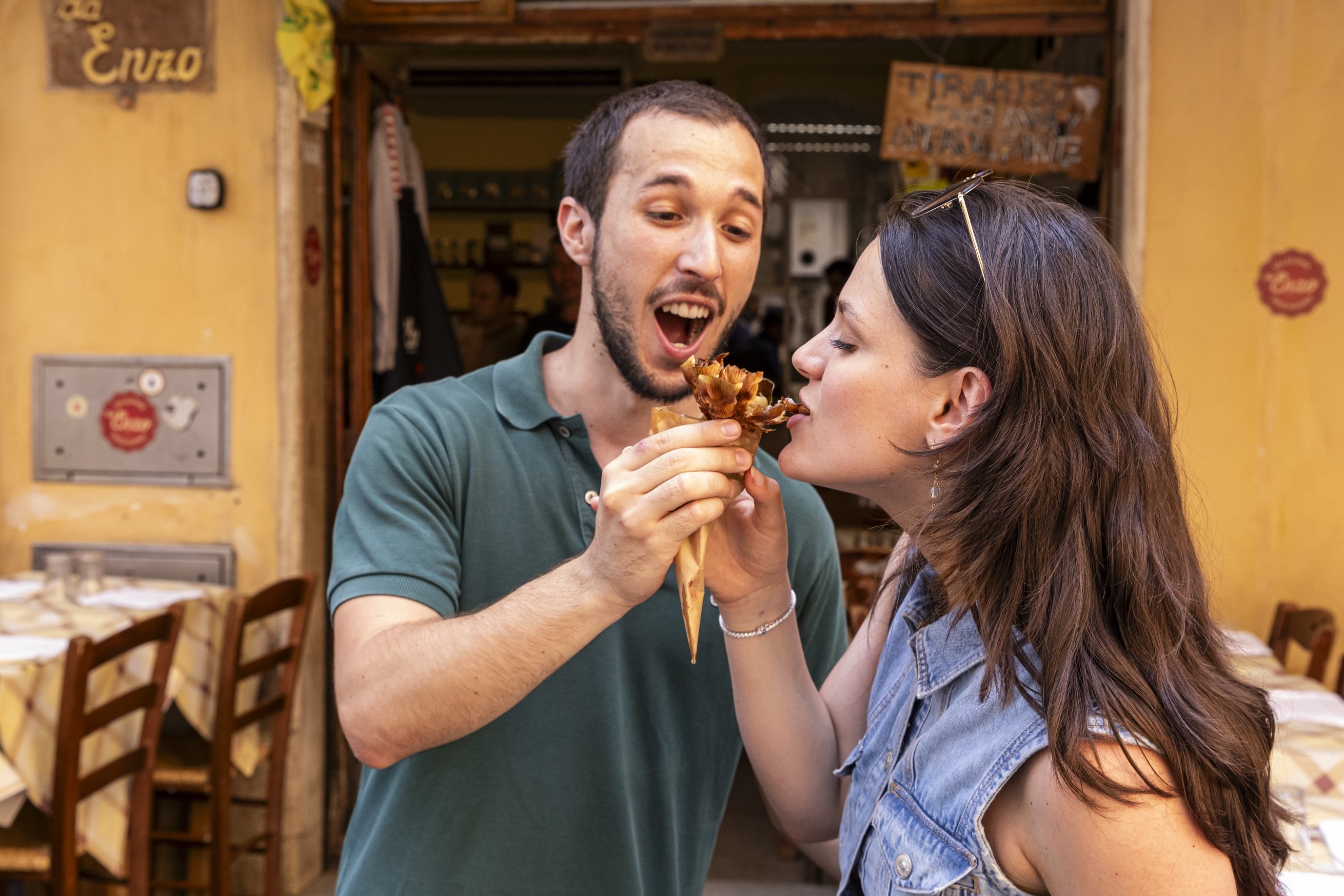
Carciofi alla Romana
Artichokes braised with garlic, mint, and olive oil.
Vegetable
Vegetarian
Popular Activities
Hiking in the Appian Way Regional Park
Biking along the Tiber River
Rock climbing in the nearby mountains
Picnicking in Villa Borghese Gardens
Boating on Lake Albano
Enjoying a spa day at a luxury hotel
Visiting the Vatican Museums
Attending an opera at the Teatro dell'Opera di Roma
Best Time to Visit
April to June, September to October
Spring and fall offer pleasant weather and fewer crowds compared to the summer peak. Ideal for sightseeing and outdoor activities.
15-30°C
59-86°F
Practical Information
Language
- Official: Italian
- Widely spoken: English, Spanish, French
- English: Moderately spoken
Currency
Euro (EUR)
Time Zone
GMT+1 (CET), GMT+2 (CEST during daylight saving time)
Electricity
230VV, 50HzHz
Safety Information
Overall Safety Rating: Generally safe
Rome is generally safe for tourists, but pickpocketing and scams can be a problem in crowded areas. Be aware of your surroundings and take precautions to protect your belongings.
Important Precautions:
- • Keep valuables secure and out of sight
- • Use official taxis or ride-sharing services
- • Be cautious of strangers approaching you with petitions or bracelets
Getting there
By air
- Leonardo da Vinci International Airport • 35 km from city center
- Ciampino Airport • 15 km from city center
By train
Roma Termini, Roma Tiburtina
By bus
Tiburtina Bus Station, Roma Termini
Getting around
Public transport
The metro system is efficient and covers major tourist areas. It operates from 5:30 AM to 11:30 PM.
Taxis
Available • Apps: Uber, FreeNow
Rentals
Car, Bike, Scooter
Neighborhoods
Trastevere
Monti
Prancipio
Testaccio
Day trips
Ostia Antica
30 km from Rome • Half day
An ancient Roman port city with well-preserved ruins, including a theater, baths, and mosaics. It offers a glimpse into daily life in ancient Rome.
Tivoli
30 km from Rome • Full day
A picturesque town known for its stunning villas and gardens, including the famous Villa d'Este with its elaborate fountains and gardens.
Orvieto
120 km from Rome • Full day
A charming hilltop town known for its stunning cathedral, underground caves, and local wine. It offers a mix of history, culture, and scenic views.
Festivals
Natale di Roma • April 21
Festa de' Noantri • July
Rome Film Festival • October
Pro tips
- Visit major attractions early in the morning or late in the afternoon to avoid crowds
- Use public transport or walk instead of taking taxis to save money and experience the city like a local
- Try local specialties and ask for recommendations from locals and restaurant staff
- Dress modestly when visiting religious sites and be respectful of local customs and traditions
- Be aware of pickpockets and scams, especially in crowded areas and tourist hotspots
From $25
per person
Price varies by option
Secure booking
Free cancellation available