Day Tour to Aswan from Luxor by Private Car
Active
12h
For a full refund, cancel at least 24 hours before the scheduled departure time.
Instant confirmation
Mobile or paper ticket accepted
About this experience
Embark on a captivating day tour from Luxor to Aswan by private car, with a stop at the unique Kom Ombo Temple along the way. Witness the mesmerizing landscapes of Egypt as you journey to Aswan, a city rich in historical significance.
Explore the dual sanctuary of Kom Ombo Temple, dedicated to both the crocodile god Sobek and the falcon god Horus. Marvel at its intricate reliefs and architecture that tell ancient tales.
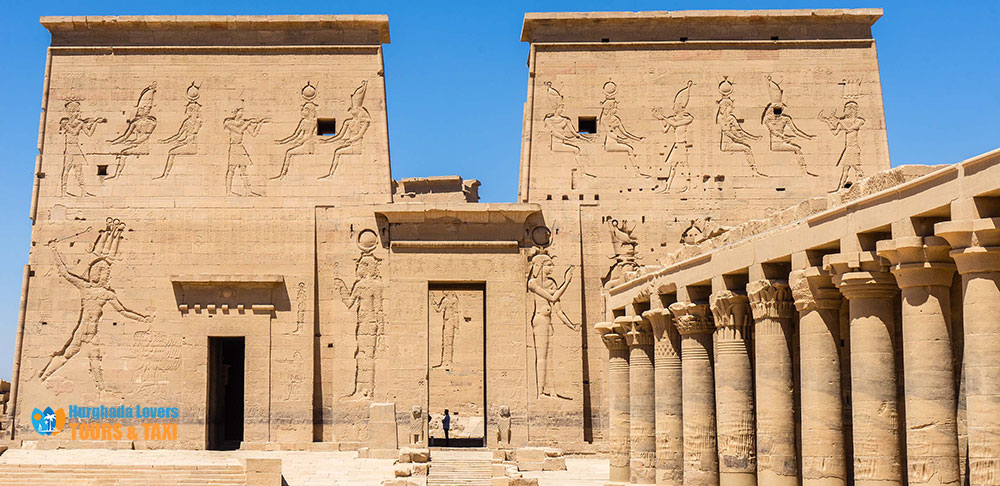
Continue your adventure to Aswan, where you'll visit iconic sites like the High Dam, the Unfinished Obelisk, and the magnificent Philae Temple.
Available options
Day Tour To Aswan From Luxor
Pickup included
What's included
Tour guide
Hotel pickup and drop-off
Entry fees
All Transfers by Private A/C Vehicles Newest Model
Lunch at local restaurants (Local Egyptian Food)
Bottle of water
Detailed itinerary
1
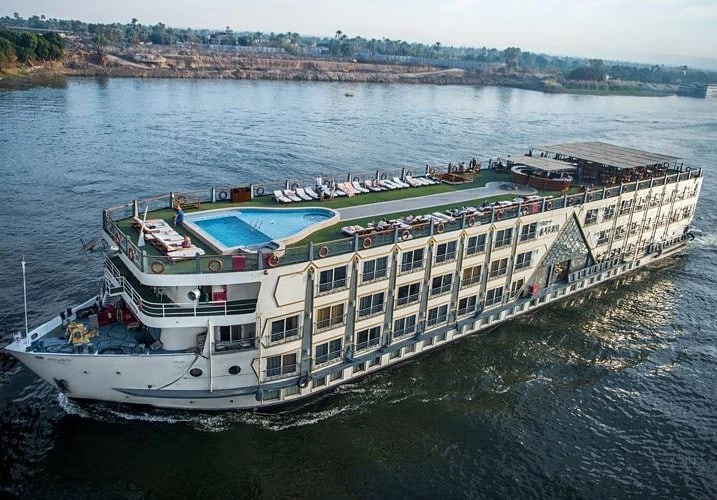
At 6:00 am Pickup from your Hotel or Nile Cruise in Luxor by Licensed Tour guide then you will be transferred by Private A/C Vehicle to Start your tour
Around 15:00 pm Transfer you Back to your Hotel in Luxor or in Aswan if Our Customer intends to stay at Aswan instead of Returning back to Luxor
2
Stop 2
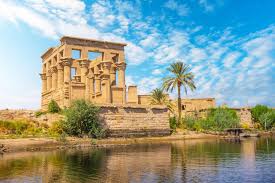
Philae (/ˈfaɪli/; Greek: Φιλαί, Arabic: فيله Egyptian Arabic: [fiːlæ], Egyptian: p3-jw-rķ' or 'pA-jw-rq; Coptic: ⲡⲓⲗⲁⲕ, ⲡⲓⲗⲁⲕⲭ[1]) is an island in the reservoir of the Aswan Low Dam, downstream of the Aswan Dam and Lake Nasser, Egypt. Philae was originally located near the expansive First Cataract of the Nile in Upper Egypt and was the site of an Egyptian temple complex. These rapids and the surrounding area have been variously flooded since the initial construction of the Aswan Low Dam in 1902.[2] The temple complex was dismantled and moved to nearby Agilkia Island as part of the UNESCO Nubia Campaign project, protecting this and other complexes before the 1970 completion of the Aswan High Dam.[3] The hieroglyphic reliefs of the temple complex are being studied and published by the Philae Temple Text Project of the Austrian Academy of Sciences, Vienna (Institute OREA).
3
Stop 3
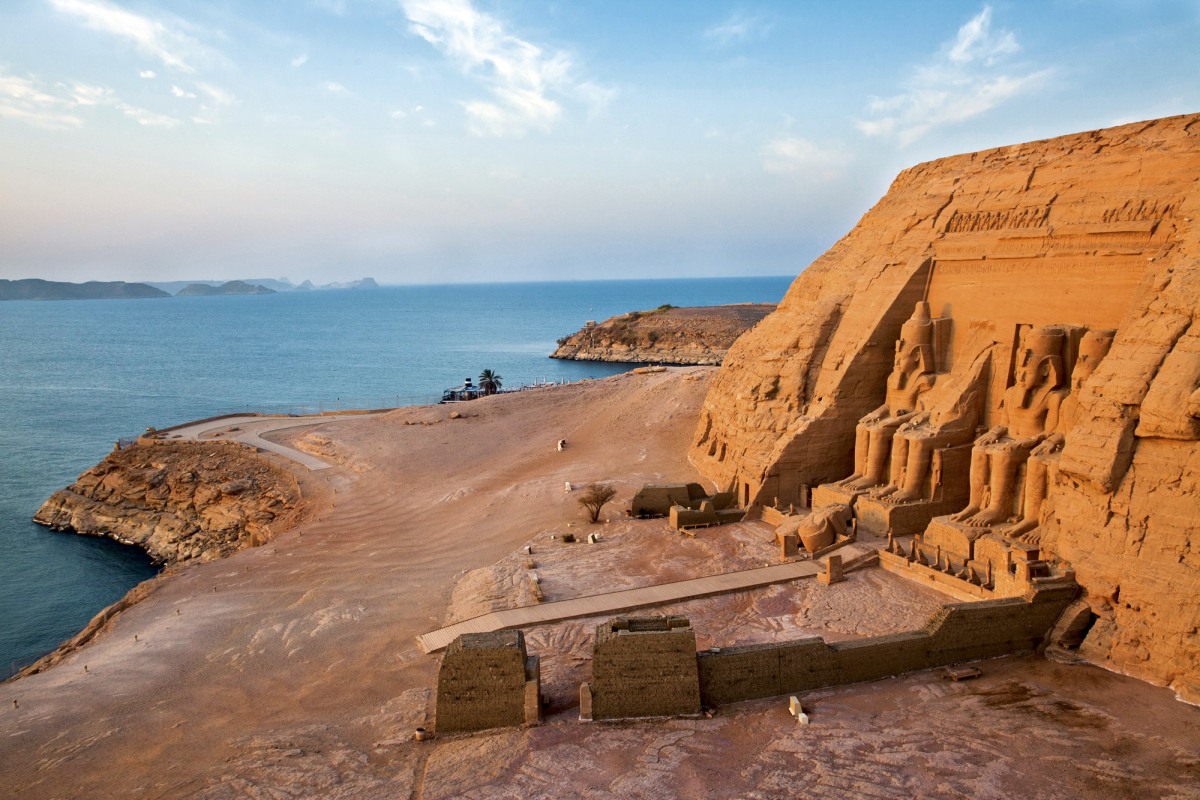
The Aswan Dam, or more specifically since the 1960s, the Aswan High Dam, is an embankment dam built across the Nile in Aswan, Egypt, between 1960 and 1970. Its significance largely eclipsed the previous Aswan Low Dam initially completed in 1902 downstream. Based on the success of the Low Dam, then at its maximum utilization, construction of the High Dam became a key objective of the government following the Egyptian Revolution of 1952; with its ability to better control flooding, provide increased water storage for irrigation and generate hydroelectricity the dam was seen as pivotal to Egypt's planned industrialization. Like the earlier implementation, the High Dam has had a significant effect on the economy and culture of Egypt.
4
Stop 4
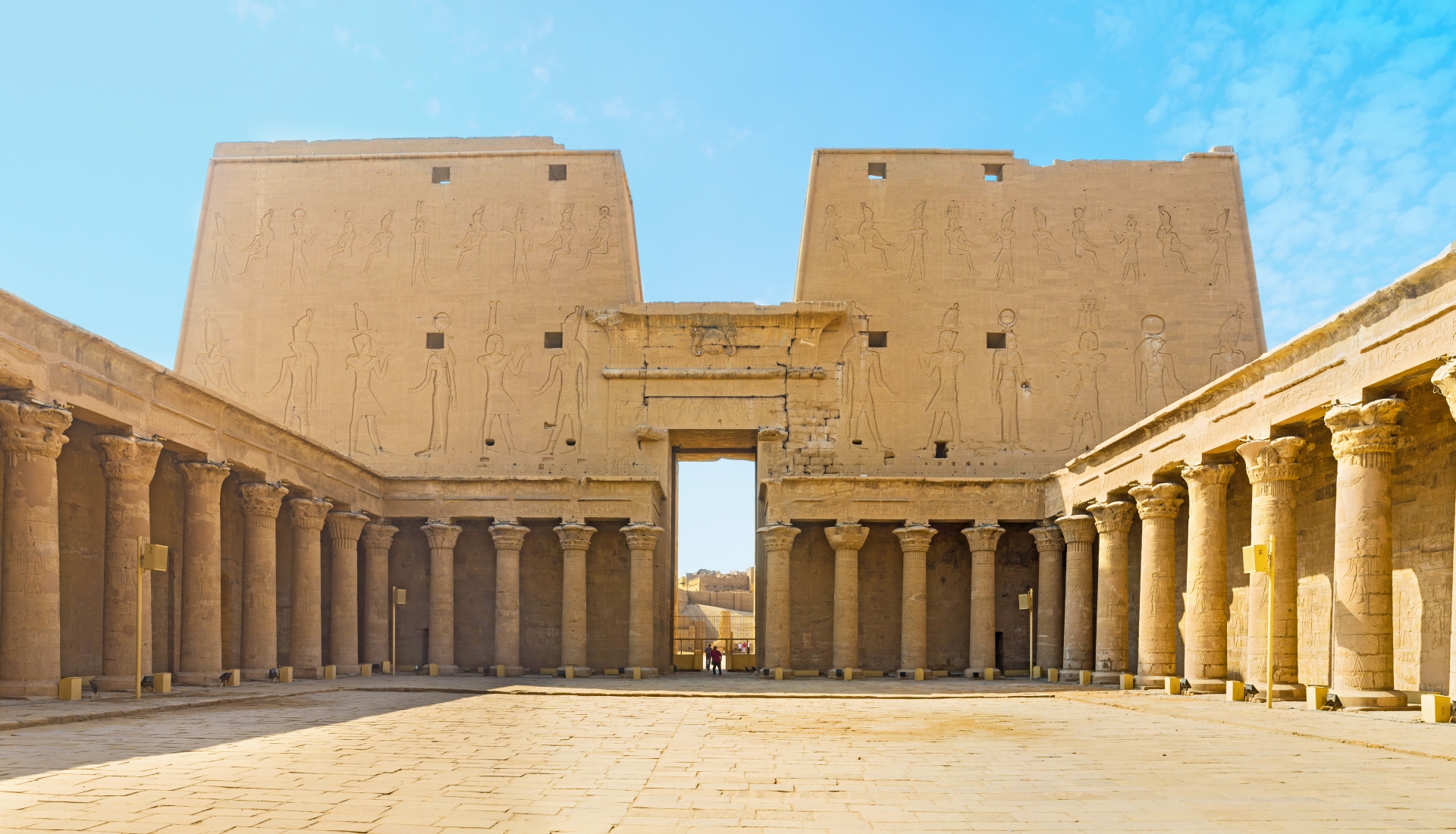
The Temple of Edfu is an Egyptian temple located on the west bank of the Nile in Edfu, Upper Egypt. The city was known in the Hellenistic period as Koinē Greek: Ἀπόλλωνος πόλις and Latin Apollonopolis Magna, after the chief god Horus, who was identified as Apollo under the interpretatio graeca. It is one of the best preserved shrines in Egypt. The temple was built in the Ptolemaic Kingdom between 237 and 57 BC. The inscriptions on its walls provide important information on language, myth and religion during the Hellenistic period in Egypt. In particular, the Temple's inscribed building texts "provide details [both] of its construction, and also preserve information about the mythical interpretation of this and all other temples as the Island of Creation." There are also "important scenes and inscriptions of the Sacred Drama which related the age-old conflict between Horus and Seth." They are translated by the German Edfu-Project.
5
Stop 5
The Temple of Kom Ombo is an unusual double temple in the town of Kom Ombo in Aswan Governorate, Upper Egypt. It was constructed during the Ptolemaic dynasty, 180–47 BC.Some additions to it were later made during the Roman period. The building is unique because its 'double' design meant that there were courts, halls, sanctuaries and rooms duplicated for two sets of gods.The southern half of the temple was dedicated to the crocodile god Sobek, god of fertility and creator of the world with Hathor and Khonsu. Meanwhile, the northern part of the temple was dedicated to the falcon god Haroeris ("Horus the Elder"), along "with Tasenetnofret (the Good Sister, a special form of Hathor or Tefnet/Tefnut and Panebtawy (Lord of the Two Lands)." The temple is atypical because everything is perfectly symmetrical along the main axis.
The texts and reliefs in the temple refer to cultic liturgies which were similar to those from that time period.
What's not included
Personal Items
Tipping
Available languages
Audio guide
AR
DE
EN
IT
FR
ES
Guide guide
AR
DE
EN
ES
Reviews breakdown
Viator
4.9
8 reviews
5★
7
4★
1
3★
0
2★
0
1★
0
Tripadvisor
4.4
15 reviews
5★
10
4★
2
3★
2
2★
1
1★
0
Important information
Public transportation options are available nearby
Specialized infant seats are available
Not recommended for travelers with spinal injuries
Not recommended for pregnant travelers
Not recommended for travelers with poor cardiovascular health
Suitable for all physical fitness levels
Entrance fees -Depending on the Tour Options Chosen
Meeting point
Luxor
Important notes
Hotel pickups commence approximately 30 - 60 minutes prior to this time, exact pickup time will be advised on reconfirmation.
About Luxor
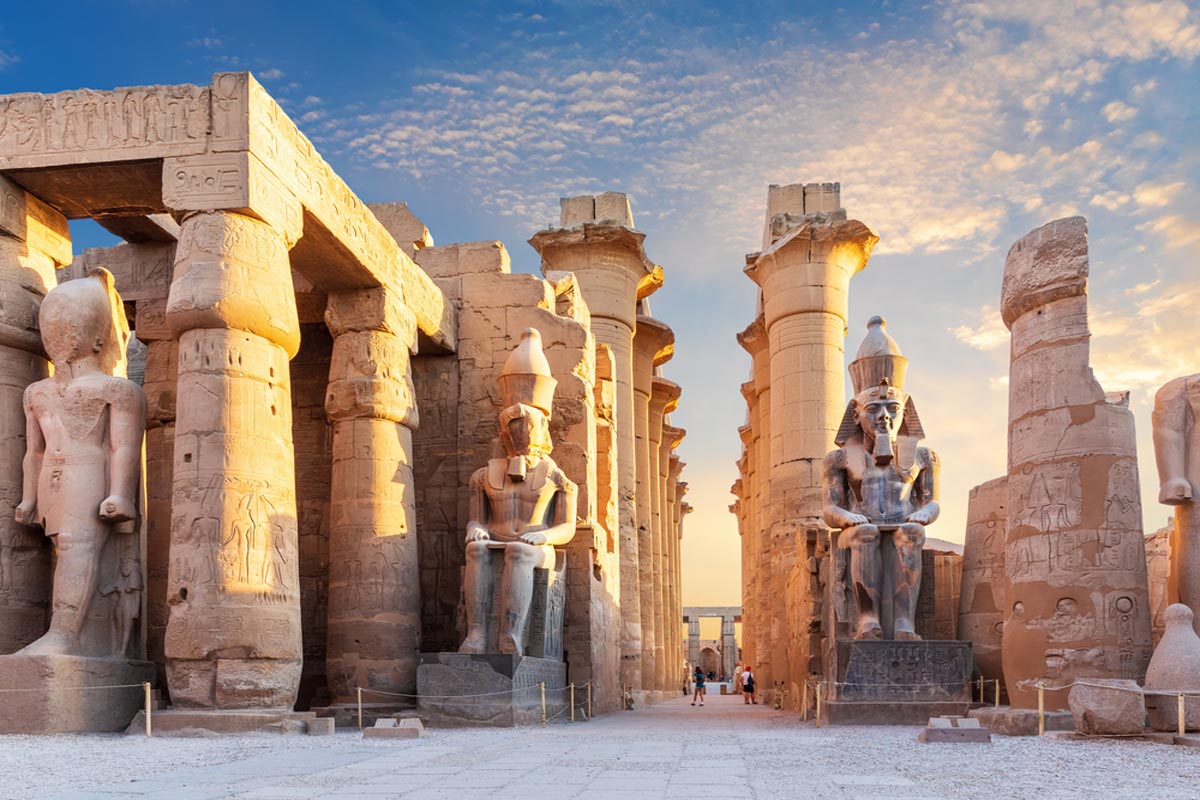
Luxor, once the ancient city of Thebes, is a treasure trove of ancient Egyptian history and architecture. Known for its magnificent temples, tombs, and monuments, it offers an unparalleled glimpse into the past. The city is often referred to as the world's greatest open-air museum, with landmarks like the Valley of the Kings and Karnak Temple attracting visitors from around the globe.
Top Attractions
Karnak Temple Complex
The Karnak Temple Complex is a massive temple complex dedicated to the god Amun-Ra. It is one of the largest religious buildings ever constructed and a must-visit for its grandeur and historical significance.
Historical/Architecture
2-3 hours
Egyptian Pounds 160
Valley of the Kings
The Valley of the Kings is a burial site for pharaohs and nobles from the New Kingdom period. It contains over 60 tombs, including the famous tomb of Tutankhamun.
Historical/Architecture
3-4 hours
Egyptian Pounds 240 (includes entry to 3 tombs)
Luxor Temple
Luxor Temple is a large ancient Egyptian temple complex located on the east bank of the Nile. It was constructed around 1400 BCE and dedicated to the god Amun-Ra.
Historical/Architecture
1-2 hours
Egyptian Pounds 160
Hatshepsut Temple
The Mortuary Temple of Hatshepsut is a stunning temple dedicated to the female pharaoh Hatshepsut. It is uniquely designed and set against the cliffs of Deir el-Bahari.
Historical/Architecture
1-2 hours
Egyptian Pounds 120
Luxor Museum
The Luxor Museum is a small but impressive museum showcasing artifacts from the Theban Necropolis and the surrounding area. It provides a great overview of Luxor's rich history.
Museum
1 hour
Egyptian Pounds 100
Must-Try Local Dishes
Kushari
A popular Egyptian dish made with rice, lentils, pasta, and fried onions, topped with tomato sauce and garlic vinegar.
Main Dish
Vegetarian
Ful Medames
A traditional Egyptian breakfast dish made from slow-cooked fava beans, often served with eggs, falafel, and tahini.
Breakfast
Vegan
Grilled Kebab
Marinated and grilled skewers of lamb or chicken, often served with rice and salad.
Main Dish
Contains meat
Baklava
A sweet pastry made with layers of filo dough, nuts, and honey syrup.
Dessert
Vegetarian, contains nuts
Popular Activities
Hot air balloon ride
Felucca sailing
Horseback riding
Nile River cruise
Spa treatments
Café hopping
Temple visits
Museum tours
Best Time to Visit
October to April
This period offers the most comfortable weather for sightseeing and exploring the ancient sites. The cooler temperatures make it ideal for outdoor activities.
15°C to 30°C
59°F to 86°F
Practical Information
Language
- Official: Arabic
- Widely spoken: English, French
- English: Moderately spoken in tourist areas
Currency
Egyptian Pound (EGP)
Time Zone
GMT+2
Electricity
220VV, 50HzHz
Safety Information
Overall Safety Rating: Generally safe
Luxor is generally safe for tourists, but petty crime and scams can occur. Be cautious of your surroundings, especially in crowded areas and tourist sites.
Important Precautions:
- • Be cautious of your belongings in crowded areas
- • Use reputable tour companies and guides
- • Negotiate prices in advance for taxis and services
Getting there
By air
- Luxor International Airport • 6 km from city center
By train
Luxor Train Station
By bus
Luxor Bus Station
Getting around
Public transport
Local buses are a cheap and common way to get around Luxor. They can be crowded and may not be the most comfortable option for tourists.
Taxis
Available • Apps: Uber, Careem
Rentals
Car, Bike, Scooter
Neighborhoods
East Bank
West Bank
Day trips
Valley of the Queens
3 km from Luxor • Half day
The Valley of the Queens is a burial site for the wives and children of pharaohs. It contains over 70 tombs, including the famous tomb of Nefertari.
Dendera Temple Complex
60 km from Luxor • Full day
The Dendera Temple Complex is a well-preserved temple dedicated to the goddess Hathor. It is known for its beautiful reliefs and the famous Dendera zodiac.
Abydos Temple
140 km from Luxor • Full day
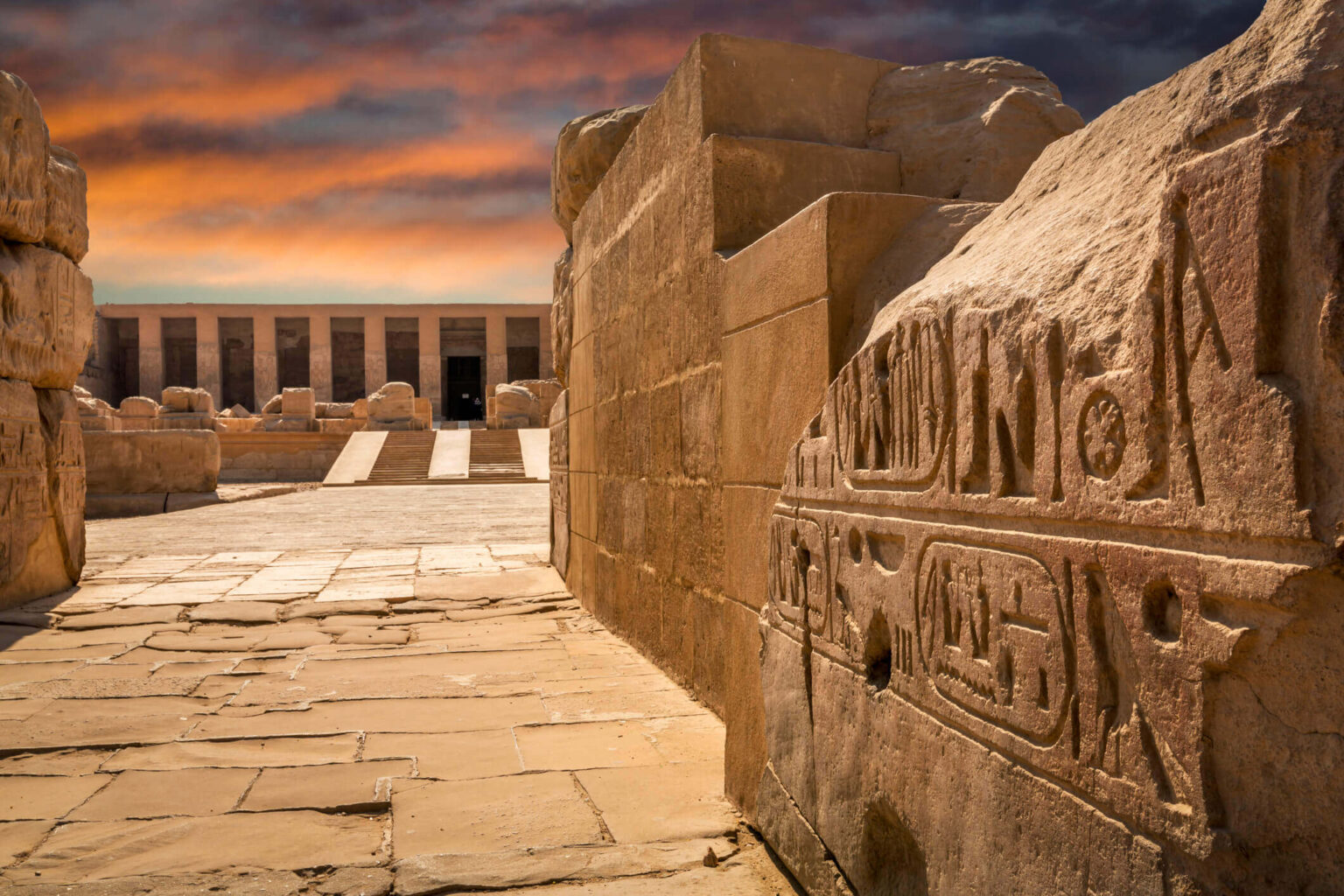
The Abydos Temple is a significant archaeological site dedicated to the god Osiris. It is known for its well-preserved reliefs and the famous Abydos King List.
Festivals
Luxor African Film Festival • Late March to early April
Luxor International Folk Festival • Late October to early November
Eid al-Fitr • Varies (end of Ramadan)
Pro tips
- Visit major attractions early in the morning to avoid crowds and the heat.
- Hire a knowledgeable local guide to fully appreciate the history and significance of the ancient sites.
- Stay hydrated and wear sun protection, as the sun can be intense, especially during the summer months.
- Bargain politely in markets and with street vendors, as prices are often inflated for tourists.
- Try local dishes like Kushari and Ful Medames for an authentic culinary experience.
From $25
per person
Price varies by option
Secure booking
Free cancellation available
Instant confirmation