Johannesburg Historical, Apartheid Museum & Soweto
Active
1h - 7h
For a full refund, cancel at least 24 hours before the scheduled departure time.
Instant confirmation
Mobile or paper ticket accepted
About this experience
Johannesburg(New York of Africa) in South Africa is the second largest city in Africa, in 2016 there were 4.94 million people living in the City of Johannesburg. Joburg, or Jozi as some prefer to call it, offers visitors an experience as unique and diverse as the city itself. Whether you are on business, in search of a cultural encounter, an adrenaline rush or simply want to relax and unwind for a few days, the city of Johannesburg has everything you’re looking for and more!
History. Settlement of Johannesburg began in 1886 when gold was discovered in the Witwatersrand by an Australian prospector named George Harrison. The discovery spurred a feverish gold rush as fortune hunters from all over the world descended on the area.
Establishment of Soweto and the history of forced removal
Soweto uprising 1976
Available options
Jhb Apartheid Museum & Soweto
Pickup included
What's included
All Fees and Taxes
Air-conditioned vehicle
Lunch Can be Added
Detailed itinerary
1
In the 1980s when Standard Bank was preparing the foundations for its new headquarters in the Johannesburg city centre, builders uncovered the entrance to a long-forgotten mine stope that dates back to the city's very earliest gold-mining days.
During the completion of the building the mine stope was preserved and it is now open daily to visitors.
The stope is named for Ignatius Phillip Ferreira, a farmer, soldier and prospector who left his hometown of Grahamstown in the Eastern Cape to join the Gauteng gold rush in 1886. He founded one of the area's very first mining camps in July 1886, and just three months later struck gold.
2
Stop 2
Constitution Hill represents South Africa’s dark past and its bright post-apartheid future. Johannesburg’s most notorious historic prisons (all of them now museums) sit side by side with the home of the Constitutional Court, a symbol of South Africa’s triumphant democracy. The site is located on the ridge between two city neighbourhoods, Hillbrow and Braamfontein, overlooking central Johannesburg....
Historical background
Before Constitutional Hill opened its doors as a museum in 2004, the precinct housed a collection of notorious prisons which included the Old Fort, a high-security prison built in the 1890s to house prisoners of war during the Anglo-Boer Wars (1899-1902), the Number Four prison block, a so-called “Native Prison”, and the Women’s Gaol.
During the apartheid era the prison complex became a detention centre for political dissidents, striking mineworkers, those deemed “anti-establishment” and those who simply violated the inhuman pass laws of the time.
Many ordinary and famous people were incarcerated here during its years as a prison including former president Nelson Mandela and passive resistance leader Mahatma Gandhi, who were both imprisoned for their pro-democracy activism.
3
Entrepreneur Jonathan Liebmann bought up dozens of rundown industrial warehouses and factories on the eastern edge of the inner city and set about transforming them. He was inspired by his travels to other cities where he had enjoyed the vibrancy of 24/7 urban life
The name Maboneng is a Sotho word meaning “place of light”, and the growing precinct aims to transform an area that was once blighted by urban decay and crime into a safe, happening and inspiring place to live, work and play.
Frequently compared with trendy, rejuvenated neighbourhoods such as London’s Shoreditch or New York’s Brooklyn, this pioneering precinct draws the inner-city public, as well as the chic, outgoing and partyloving crowds of the city’s northern suburbs.
Best Place to be...(Sunday)
4
Stop 4
Pass by
Today, Newtown remains resolutely color-blind with artists of all races gathering here.
Strategic regeneration projects in downtown Johannesburg have facilitated the development of Newtown as a tourist attraction, residential zone and cultural area.The bridge, which spans the railway tracks which separate the Newtown and Braamfontein neighbourhoods in the Johannesburg city centre took 18 months to build and was completed in 2003. It is the largest cable-stayed bridge in southern Africa
Designed by leading architectural firm Dissing and Weitling, the bridge was specially designed to be lightweight –The construction of the bridge was part of a larger city project to rejuvenate and modernise the inner city and inspire both local and foreign visitors to the city, while also providing an easy, convenient and safe way for residents to travel between the two districts on foot or by car. Some of the trendiest places to visit in Johannesburg can be found in Newtown and Braamfontein.
5
Stop 5
Apartheid museum the first of its kind, illustrates the rise and fall of apartheid...
6
A stamp battery, or stamp mill, was a piece of equipment used to crush gold-bearing rock brought from underground.
7
Diepkloof Extension Upper Class
Diepkloof is also characterized by Hostels, which were Built to House large numbers of single male migrant workers.
8
The largest hospital in Africa and the third-largest hospital in the world.
9
Stop 9
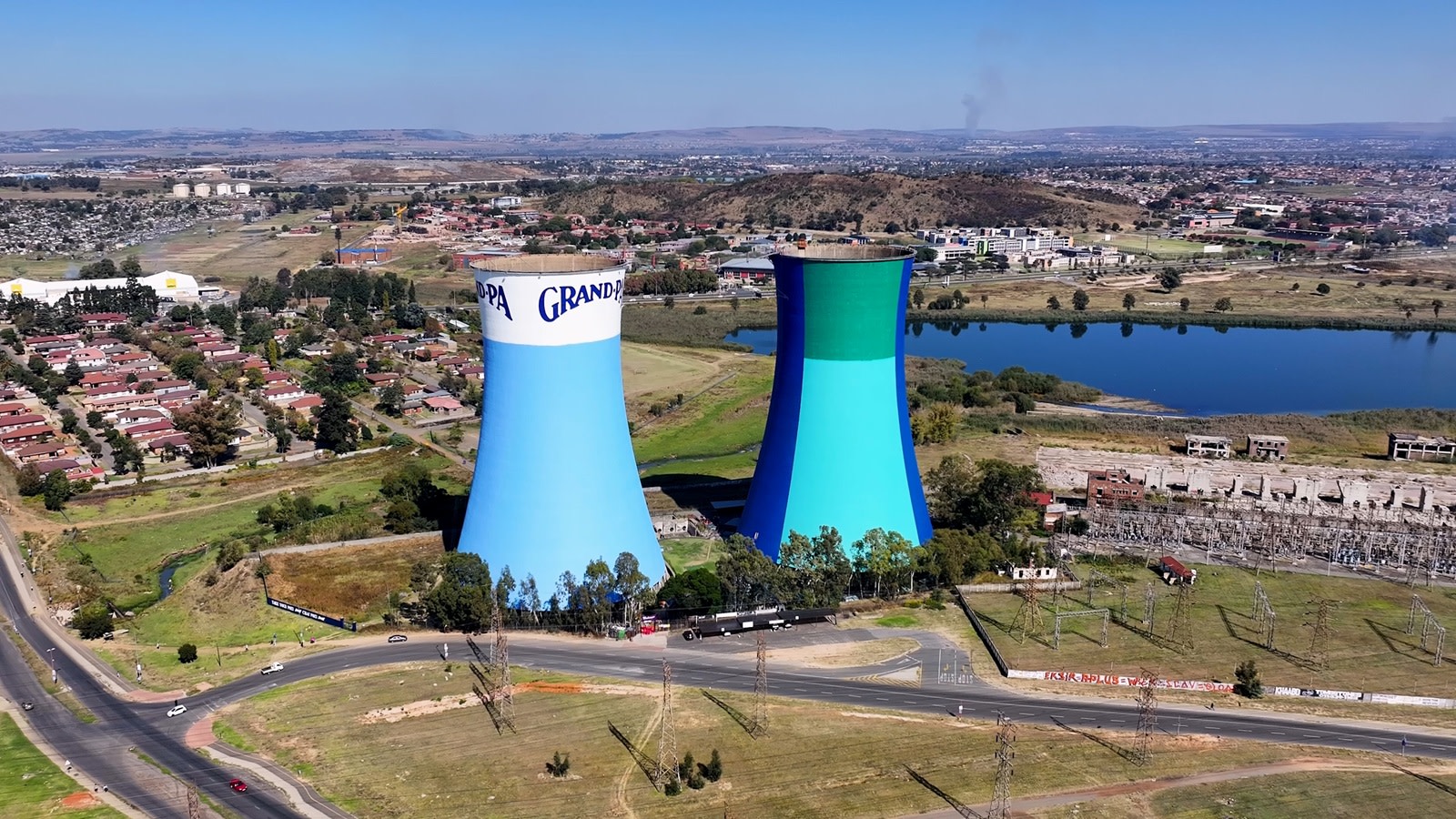
Cooling towers make for one of the world’s most epic bungee jumps.
10
Vilakazi Street may be the only street in the world that can claim to have had two Nobel Laureates as residents - the late Nelson Mandela and Archbishop Emeritus Desmond Tutu. The true electricity of this street comes from those who now call it home, each with their own beautiful stories.
11
Stop 11
8115 Vilakazi Street, Soweto, is a small, face-brick house where the Mandela family lived from 1946 to the 1990s. Today the house is a museum celebrating his life through artwork
12
Stop 12
Commemorates 12-year-old Hector’s ultimate sacrifice on June 16, the first child to die by a police bullet. He is buried in Avalon Cemetery, where many of apartheid’s victims are buried.
13
Pass Demonstrations at Mzimhlophe station, Soweto. During the time of the Treason Trial, there were many protests to highlight the injustices of the South African Government.
Home to unique Elephant Houses
14
Coloured township. It is colloquially called "Bulte"(meaning Hills) by its residents and neighbors, as depicted by the Mine Dumps surrounding the Township. The name "Bulte" was coined as a form of endearment by the residen…
What's not included
Snacks
Alcoholic Beverages
Available languages
Guide guide
EN
Reviews breakdown
Viator
4.8
6 reviews
5★
5
4★
1
3★
0
2★
0
1★
0
Tripadvisor
5.0
11 reviews
5★
11
4★
0
3★
0
2★
0
1★
0
Important information
Wheelchair accessible
Infants and small children can ride in a pram or stroller
Service animals allowed
Public transportation options are available nearby
Infants are required to sit on an adult’s lap
Specialized infant seats are available
Transportation options are wheelchair accessible
All areas and surfaces are wheelchair accessible
Suitable for all physical fitness levels
About Johannesburg
Johannesburg, the largest city in South Africa, is a vibrant metropolis known for its rich history, cultural diversity, and bustling urban energy. The city's nickname, 'City of Gold,' originates from its roots in the gold-mining industry, and it offers a unique blend of modern attractions and historical landmarks.
Top Attractions
Apartheid Museum
The Apartheid Museum is a powerful and moving experience that chronicles the history of apartheid in South Africa. It's a must-visit for understanding the country's past.
Historical
2-3 hours
R95 (Adults), R75 (Children)
Gold Reef City
Gold Reef City is a theme park built on the site of a former gold mine. It offers a mix of thrilling rides, historical exhibits, and entertainment.
Entertainment
Full day
R350-R500 (Adults), R250-R350 (Children)
Cradle of Humankind
The Cradle of Humankind is a UNESCO World Heritage Site known for its significant paleontological and archaeological discoveries, including some of the oldest hominid fossils.
Historical
Half day to full day
R200-R300 (Adults), R150-R200 (Children)
Must-Try Local Dishes
Bunny Chow
A hollowed-out loaf of bread filled with curry, originally created by Indian immigrants. It's a popular street food in Johannesburg.
Lunch/Dinner
Vegetarian and non-vegetarian options available
Braai (BBQ)
A traditional South African BBQ, featuring grilled meats like boerewors (sausage), lamb chops, and chicken.
Dinner
Meat-based, vegetarian options limited
Bobotie
A Cape Malay dish made with spiced minced meat and topped with an egg custard. It's a unique and flavorful South African specialty.
Dinner
Meat-based, vegetarian options available
Popular Activities
Hiking in the Cradle of Humankind
Game drives in Pilanesberg National Park
Hot air ballooning over the Magaliesberg
Spa treatments in Sandton
Picnicking at Zoo Lake
Wine tasting in the nearby wine regions
Visiting the Apartheid Museum
Exploring Soweto
Best Time to Visit
September to November and March to May
These months offer the most pleasant weather, with mild temperatures and lower rainfall. It's an ideal time for outdoor activities and exploring the city.
15°C to 28°C
59°F to 82°F
Practical Information
Language
- Official: English, Zulu, Afrikaans, Sotho, Tsonga, Tswana, Venda, Xhosa, Ndebele, Southern Sotho
- Widely spoken: English, Zulu, Afrikaans
- English: Widely spoken
Currency
South African Rand (ZAR)
Time Zone
GMT+2
Electricity
220-240VV, 50HzHz
Safety Information
Overall Safety Rating: Exercise caution
Johannesburg has a reputation for high crime rates, but many visitors enjoy safe and rewarding experiences by taking necessary precautions. Stick to well-populated areas, avoid walking alone at night, and be cautious with valuables.
Important Precautions:
- • Avoid walking alone at night
- • Use licensed taxis or ride-hailing services
- • Keep valuables secure and out of sight
Getting there
By air
- OR Tambo International Airport • 22 km from city center
- Lanseria International Airport • 35 km from city center
By train
Park Station, Johannesburg Station
By bus
Park Station, Ellis Park
Getting around
Public transport
Rea Vaya is the city's public bus system, offering affordable and efficient transport. It has dedicated bus lanes to avoid traffic.
Taxis
Available • Apps: Uber, Bolt
Rentals
Car, Bike
Neighborhoods
Sandbox
Rosebank
Braamfontein
Day trips
Pilanesberg National Park
250 km from Johannesburg • Full day
Pilanesberg National Park is a malaria-free game reserve offering excellent wildlife viewing opportunities, including the Big Five (lion, leopard, rhino, elephant, and buffalo).
Soweto
20 km from Johannesburg • Half day
Soweto is a historic township known for its role in the anti-apartheid movement. It offers a unique glimpse into South Africa's past and present.
Cradle of Humankind
50 km from Johannesburg • Half day to full day
The Cradle of Humankind is a UNESCO World Heritage Site known for its significant paleontological and archaeological discoveries, including some of the oldest hominid fossils.
Festivals
Johannesburg International Film Festival • Late October to early November
Johannesburg International Motor Show • Even years, typically in October
Africa Day Celebrations • May 25
Pro tips
- Explore the city's vibrant markets for unique souvenirs and local flavors
- Visit the Apartheid Museum for a powerful and moving experience
- Take a guided tour of Soweto for a deeper understanding of the city's history
- Discover the Cradle of Humankind for a fascinating journey into human evolution
- Enjoy the city's diverse culinary scene, from street food to fine dining
From $25
per person
Price varies by option
Secure booking
Free cancellation available
Instant confirmation