Garni Temple, Geghard Monastery
Active
4h - 5h
For a full refund, cancel at least 24 hours before the scheduled departure time.
Instant confirmation
Mobile or paper ticket accepted
About this experience
The spectacular towering cliffs surrounding the monastery are part of the Azat River gorge, and are included together with the monastery in the World Heritage Site listing. Some of the churches within the monastery complex are entirely dug out of the cliff rocks, others are little more than caves, while others are elaborate structures, with both architecturally complex walled sections and rooms deep inside the cliff. The combination, together with numerous engraved and free-standing khachkars is a unique sight, being one of the most frequented tourist destinations in Armenia. You will discover some of the most popular attractions of Armenia throughout this private tour. The first stop is going to be at the only pagan temple in Armenia, Garni, dedicated to the God of Sun Mihr. Next up you will be amazed by the magnificence of the 13th century Geghard monastery complex, partially carved in the rock and included in the UNESCO World Cultural Heritage List.
Available options
Trip for big group
Minivan: Premium Class Minivan<br/>Pickup included
Trip for small group
Pickup included
What's included
Private transportation
All Fees and Taxes
WiFi on board
Bottled water
Air-conditioned vehicle
Detailed itinerary
1
The monument "Arch of Charents" was created by architect Raphael Israelyan. One day on his way to Garni he stopped at this place and, noticing that a picturesque view opens from there to the Mount Ararat, he decided to build an arch as a "temple" to Ararat. The Arch was constructed in 1957, on occasion of the 60th anniversary of the great Armenian poet Yeghishe Charents. It is said, that the poet was also fond of walking around this place. It is like a picture frame, from where a mesmerizing view opens to the Ararat valley with Masis floating in distance. The following words completing Charents' famous poem are carved on the front aperture along the arch:
"There is no summit as snow-white as that of lofty Ararat;
Like an inaccessible path to glory, I love my Mount Masis!"
You can make here stunning pictures against the backdrop of the Arch and Mountain Ararat, only the weather should be clear.
2
Stop 2
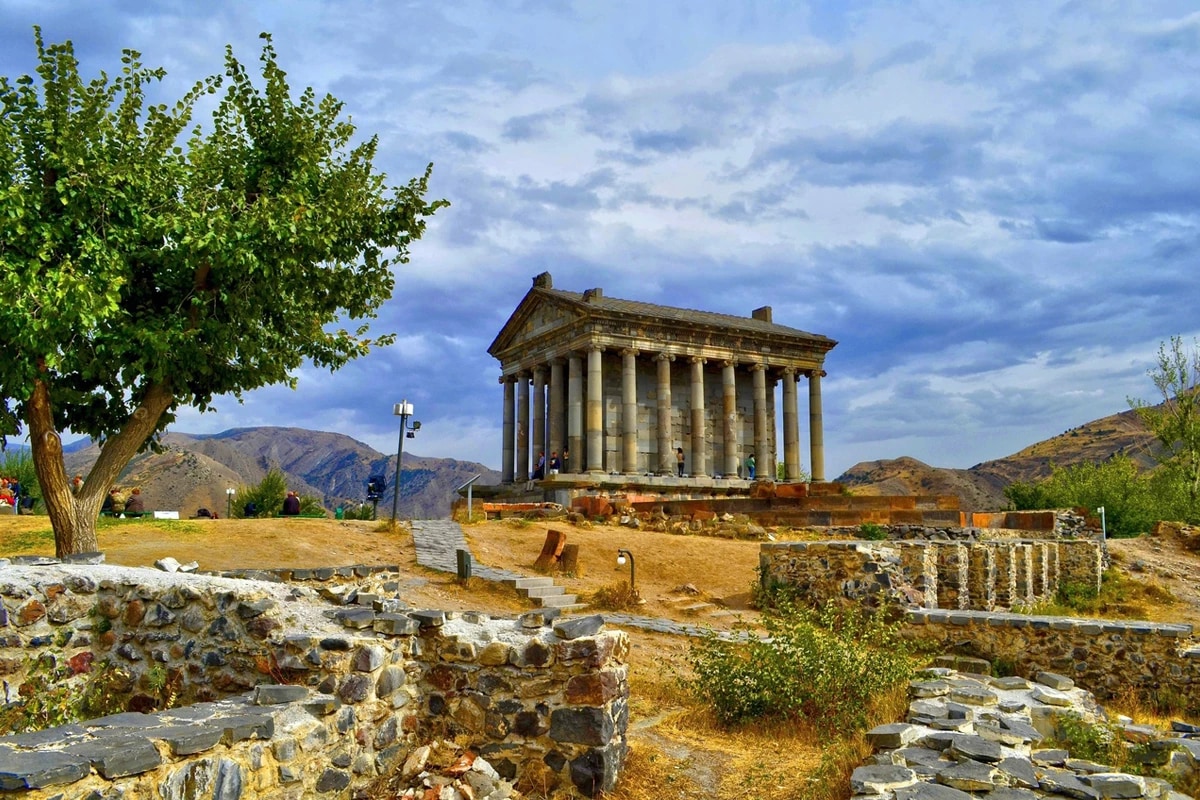
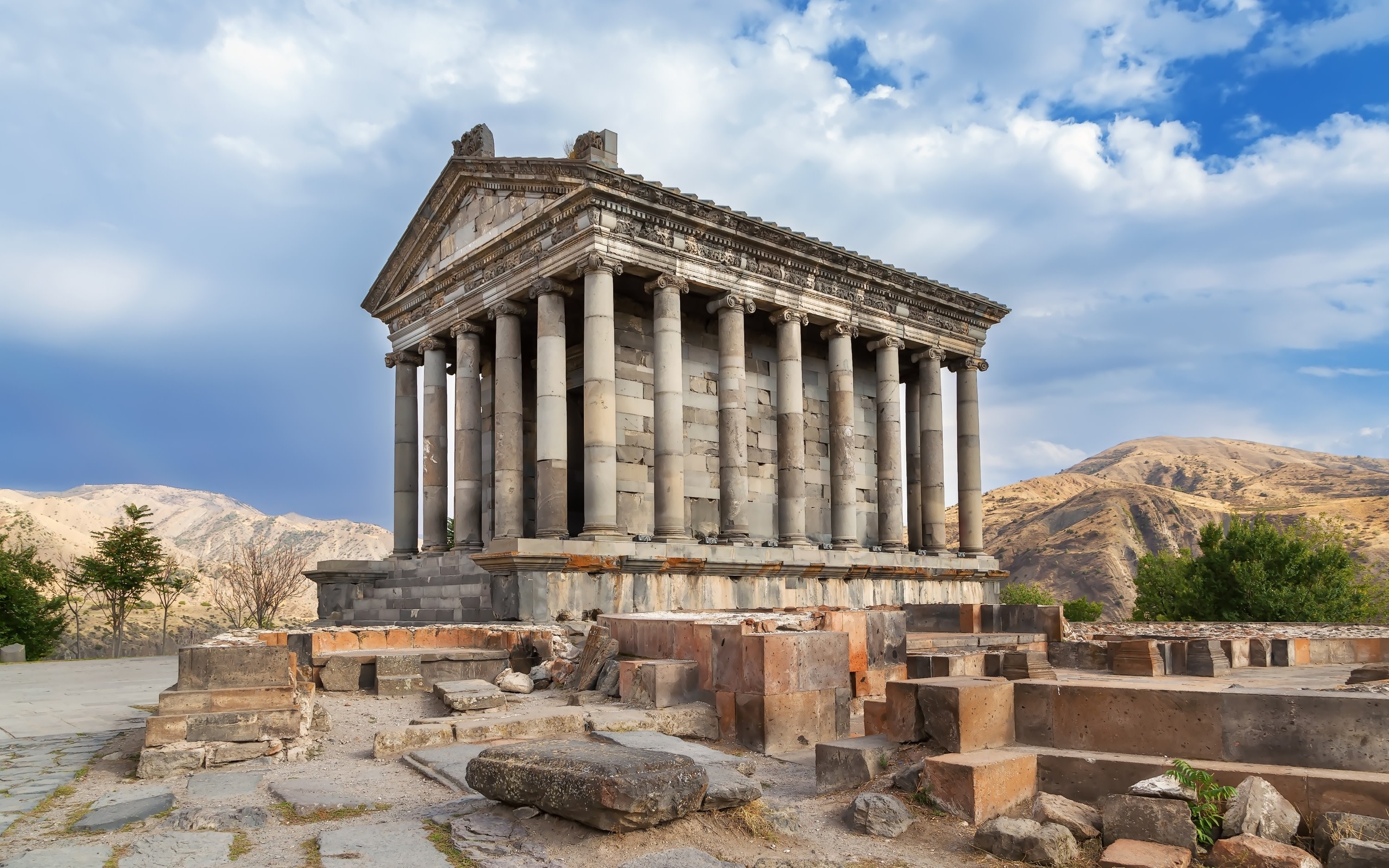
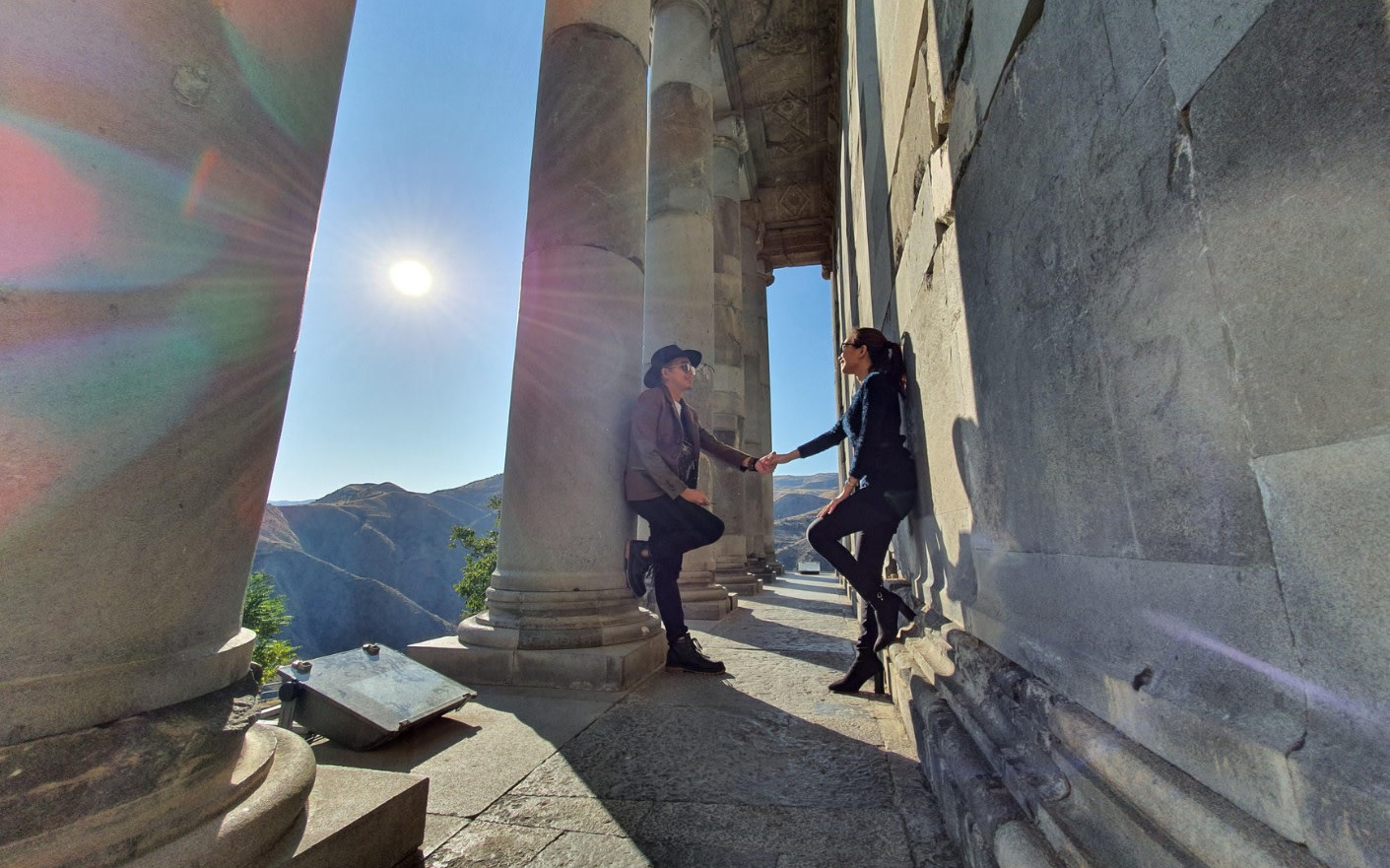
Garni temple, which towers over a triangular cape, is the unique survived example of heathen culture in Armenia. It is a blend of Greco-Roman and Armenian styles. King Trdat The First ordered building the temple in the first century AD and dedicated it to the God of Sun. After adopting Christianity in 301, the pagan temple lost its significance and the fortress of Garni became the summer residence of the kings. Nowadays the ruins of the royal palace and the bathroom with a stunning mosaic work can be found near the temple.
3
Charents Arch is a scenic stone monument located near the town of Vedi in Armenia, along the road to Garni. Built in 1957, it honors the famous Armenian poet Yeghishe Charents. The arch is uniquely positioned to frame a breathtaking view of Mount Ararat, making it a popular stop for both tourists and locals. An inscription on the arch features a line from Charents’ poetry, expressing deep love for Armenia and its iconic mountain.
4
Stop 4
Geghard monastery is the unsurpassable masterpiece of the 13th century Armenian architecture. Some of the churches of the complex are masterfully hewn in a huge rock. From the outset the complex was called Ayrivank (cave monastery), later it was renamed Geghard (lance) as the lance, used by the roman soldier to sting Jesus Christ's side, had been kept in this monastery for many centuries. Due to its construction, Geghardavank serves the best place for singing spiritual songs. The complex is rich in subtle sculptural embellishments and many striking khachkars (cross-stones). The site is included in UNESCO World Cultural Heritage List.
5
“Symphony of Stones” is a natural monument and protected by law. This is one of the must-see places of Armenia. This majestic natural monument isn't only a “must see” place in Armenia, but also “must have photos in” place. So besides an excursion there you can also take a photo tour to Symphony of Stones.
Available languages
Audio guide
RU
EN
Guide guide
RU
EN
Written guide
RU
EN
Important information
Wheelchair accessible
Infants and small children can ride in a pram or stroller
Service animals allowed
Public transportation options are available nearby
Specialized infant seats are available
Suitable for all physical fitness levels
About Yerevan
Yerevan, the capital of Armenia, is one of the world's oldest continuously inhabited cities, known for its rich history, vibrant culture, and stunning architecture. Nestled at the foot of Mount Ararat, the city offers a unique blend of ancient landmarks and modern amenities, making it a fascinating destination for travelers.
Top Attractions
Republic Square
The heart of Yerevan, Republic Square is famous for its architectural beauty and historical significance. The square is surrounded by notable buildings and features a beautiful fountain show in the evenings.
Historical/Architecture
1-2 hours
Free
Yerevan Cascade
The Yerevan Cascade is a massive staircase and fountain complex that offers stunning views of the city and Mount Ararat. It is a popular spot for both locals and tourists.
Architecture/Historical
1-2 hours
Free
Matenadaran
Matenadaran is a repository of ancient manuscripts and a significant cultural and scientific institution in Armenia. It houses a vast collection of manuscripts, including religious texts and historical documents.
Museum/Cultural
1-2 hours
500 AMD
Ararat Brandy Factory
The Ararat Brandy Factory offers tours where visitors can learn about the history of Armenian brandy and enjoy tastings of their famous brandies.
Historical/Cultural
1-2 hours
5000-10000 AMD
Blue Mosque
The Blue Mosque is a beautiful example of Islamic architecture in Yerevan. It is one of the few remaining mosques in the city and is a significant cultural and historical site.
Historical/Religious
30 minutes
Free
Must-Try Local Dishes
Khorovats
Grilled meat, typically lamb or pork, marinated in spices and served with lavash (Armenian flatbread).
Main Course
Contains meat
Lavash
A traditional Armenian flatbread, soft and thin, often served with meals.
Bread
Vegetarian, Vegan
Dolma
Grilled meatballs made with minced lamb and spices, wrapped in grape leaves.
Appetizer
Contains meat
Harissa
A traditional Armenian porridge made from wheat and chickpeas, often served during Lent.
Porridge
Vegetarian, Vegan
Popular Activities
Hiking in Dilijan National Park
Rock climbing in Garni Gorge
Swimming in Lake Sevan
Spa treatments in Yerevan
Visiting museums and historical sites
Attending festivals and events
Boating and swimming in Lake Sevan
Skiing in Tsaghkadzor
Best Time to Visit
April to June, September to October
These periods offer the best weather for exploring the city, with mild temperatures and clear skies. The city is lively with cultural events and festivals.
15-30°C
59-86°F
Practical Information
Language
- Official: Armenian
- Widely spoken: Russian, English
- English: Moderately spoken
Currency
Armenian Dram (AMD)
Time Zone
AMT (UTC+4)
Electricity
220VV, 50HzHz
Safety Information
Overall Safety Rating: Generally safe
Yerevan is generally safe for travelers, with low crime rates and a welcoming atmosphere. However, it is important to take basic precautions to ensure a safe and enjoyable trip.
Important Precautions:
- • Use licensed taxis or ride-hailing apps
- • Keep valuables secure in crowded areas
- • Research tour operators before booking
Getting there
By air
- Zvartnots International Airport • 12 km from city center
By train
Yerevan Railway Station
By bus
Northern Bus Station, Southern Bus Station
Getting around
Public transport
Buses and minibuses (marshrutkas) are the primary modes of public transport, covering most of the city.
Taxis
Available • Apps: Yandex.Taxi, GorTaxi
Rentals
Car, Bike
Neighborhoods
Kentron
Avan
Nork
Day trips
Garni Temple
25 km from Yerevan • Half day
Garni Temple is a ancient pagan temple dedicated to the sun god Mihr. It is one of the few remaining examples of pre-Christian Armenian architecture.
Geghard Monastery
30 km from Yerevan • Half day
Geghard Monastery is a UNESCO World Heritage Site known for its unique rock-cut architecture and historical significance.
Lake Sevan
60 km from Yerevan • Full day
Lake Sevan is the largest lake in Armenia and a popular destination for swimming, boating, and hiking.
Festivals
Yerevan International Film Festival • July
Golden Apricot Film Festival • July
Yerevan Wine Days • September
Pro tips
- Learn a few basic phrases in Armenian to enhance your experience and connect with locals
- Try the local cuisine, including traditional dishes like khorovats, lavash, and dolma
- Visit the Vernissage Market for unique souvenirs and crafts
- Explore the underground tunnels of Yerevan for a unique and fascinating experience
- Take a day trip to Garni Temple and Geghard Monastery for a glimpse into Armenia's rich history and culture
From $25
per person
Price varies by option
Secure booking
Free cancellation available
Instant confirmation