Sacred Valley with Peru Vip : Pisac, Ollantaytambo and Chinchero
Active
9h
For a full refund, cancel at least 24 hours before the scheduled departure time.
Instant confirmation
Mobile or paper ticket accepted
About this experience
· For those who prefer to enjoy their privacy and relaxation in the sacred valley.
· We visit the reserve of South American camelids, where you can have an experience different from the others with our Andean animals.
· We work with the best schedule to visit the sacred valley of the Incas peacefully. Making your experience unique.
· We work in private services to have more time of visit and comfort.
· Our guides are accredited professionals, specialists in Nature and Culture for this route.
· Our transports with all the certification, are private, modern and comfortable to make your trip pleasant.
Available options
Sacred Valley with Peru Vip : Pisac, Ollantaytambo and Chinchero
Pickup included
What's included
First aid kit.
Permanent assistances and respective transfers.
Entrance tickets to the reserve of South American camelids
Private Tourist Transport
Lunch, buffet in the best restaurant in the Sacred Valley
Pick up at your hotel.
Professional guide in required language.
Entrance tickets to Pisaq, Ollantaytambo and Chinchero
Tourist visit to the reserve of camelids, Pisaq, Ollantaytambo, Chinchero
Oxygen balloon
Detailed itinerary
1
Stop 1
We will visit the South American Camel Reserve, where we can see llamas, alpacas and vicuñas in their natural state.
2
Stop 2
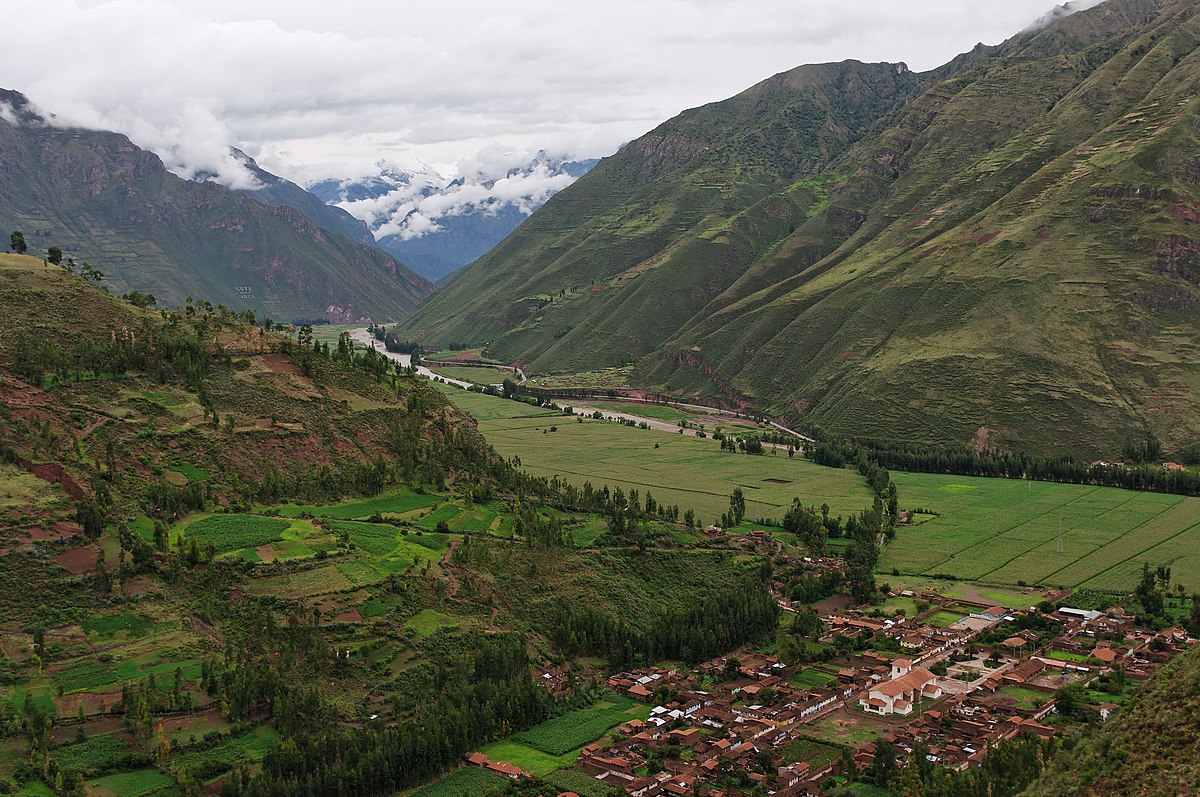
The Pisaq Archaeological Park (or Pisac) is a group of Inca buildings (a fortified city) that is located in the district of Pisaq, in the province of Calca, in the department and region of Cusco. At an altitude of 2 972 meters above sea level, and settled on a mountain near the town of Pisaq. It is believed that its strategic location provided greater security to the building in addition to being in a control area. The place also protected him, by height, from possible attacks by the Anti people, with whom they were in constant enmity.
It is said that the architectural ensemble that forms Pisac would have been built during the tenth and eleventh centuries of our era, in the period of the Inca expansion and would have had urban and religious purposes.
The name of Pisac or Pisac, does not have a definite translation, although there are people who believe that it could be derived from the Quechua word pisaqa, in relation to a bird, whose form would also have tried to be represented in the design of the territory.
At the architectural level, in Pisac we can observe, that in the same way that the majority of the Inca constructions is built with stone carved, in such a way that the angles of them fit perfectly one on another making unnecessary the use of some type of mortar for the union of the same.
3
Stop 3
It was an Inca town. Preserves in time: houses, streets and canals as in the time of Tahuantinsuyo. The name of the town and the archaeological zone is due to the cacique Ollanta, who, according to the oral tradition, fell in love with a princess daughter of the Inca Pachacútec and was severely punished.
In the set of Ollantaytambo, located on the hill overlooking the town, buildings such as the Temple of the Sun and its gigantic monoliths stand out: the Mañaracay or Royal Hall, the Incahuatana and the Princess Baths. In the upper part stands a fortress, with a series of terraces of carved stone, built to protect the valley from the possible invasions of ethnic groups that came from the jungles. One of the best preserved areas extends to the north of Hanan Huacaypata Square: a total of 15 blocks of mansions built on carved stone walls.
4
Chinchero was an important urban center whose main center was located where today is the church, in its vicinity are exhibited formidable walls of assembled polyhedrons that form retaining walls giving shape to the platforms, we can also see large rooms with windows, niches, doors and accesses.
The current main square, where the Sunday fairs are held, concludes with an Inca wall on the eastern side, which has 12 niches, each 2m high and 1.50m wide. This wall in turn serves as a paramento and containment to another square that acts as an atrium in front of the Church.
Also in the area we find the remains of three shrines called Titiqaqa, Pumaqaqa, Chincana; which are enormous outcrops of limestone carefully carved, by the ancient Peruvians, in the form of seats, stairways, cupboards and canals. There is a group of terraces built obeying the conformation of the terrain.
What's not included
Tips, incentive to staff
Available languages
Guide guide
PT
EN
FR
ES
Reviews breakdown
Viator
4.8
6 reviews
5★
5
4★
1
3★
0
2★
0
1★
0
Tripadvisor
5.0
63 reviews
5★
62
4★
1
3★
0
2★
0
1★
0
Important information
Suitable for all physical fitness levels
About Cusco
Cusco, the historic capital of the Inca Empire, is a captivating blend of Indigenous and colonial influences. Known for its well-preserved archaeological sites, vibrant culture, and stunning Andean landscapes, it's a gateway to Machu Picchu and the Sacred Valley. The city's rich history, combined with its lively arts scene and delicious cuisine, makes it a must-visit destination in South America.
Top Attractions
Sacred Valley
The Sacred Valley is a stunning region filled with Inca ruins, traditional villages, and breathtaking landscapes. It's a must-visit for history and nature lovers.
Historical/Nature
Full day
PEN 10-50 (USD 2.50-12.50) depending on the site
Machu Picchu
Machu Picchu is the iconic Inca citadel and one of the most famous archaeological sites in the world. Its breathtaking views and rich history make it a must-see.
Historical/Adventure
Full day or overnight
PEN 152 (USD 38) for entrance, train tickets vary
Qorikancha
Qorikancha, or the Temple of the Sun, was the most important temple in the Inca Empire. It's a fascinating blend of Inca and colonial architecture.
Historical/Religious
1-2 hours
PEN 10 (USD 2.50)
Sacsayhuaman
Sacsayhuaman is a massive Inca fortress with impressive stone walls and panoramic views of Cusco. It's a testament to Inca engineering and military might.
Historical
1-2 hours
PEN 10 (USD 2.50)
San Pedro Market
San Pedro Market is a bustling market offering a variety of fresh produce, local crafts, and traditional foods. It's a great place to experience local life.
Cultural/Food
1-2 hours
Free to enter, prices vary for purchases
Must-Try Local Dishes
Cuy al Horno
Roasted guinea pig, a traditional Andean dish.
Main Course
Not vegetarian
Lomo Saltado
Stir-fried beef with onions, tomatoes, and fries.
Main Course
Can be made vegetarian
Aji de Gallina
Shredded chicken in a creamy, spicy sauce.
Main Course
Not vegetarian
Sopa de Quinoa
Quinoa soup, a nutritious and traditional dish.
Soup
Can be made vegetarian
Popular Activities
Hiking
Trekking
Mountain biking
Whitewater rafting
Visiting spas
Exploring parks
Enjoying local cafes
Visiting museums
Best Time to Visit
May to September
This is the dry season, offering the best weather for exploring the city and its archaeological sites. The skies are clear, and temperatures are mild.
5°C to 20°C (41°F to 68°F)
41°F to 68°F
Practical Information
Language
- Official: Spanish
- Widely spoken: Quechua, English (in tourist areas)
- English: Moderately spoken in tourist areas, limited elsewhere
Currency
Peruvian Sol (PEN)
Time Zone
GMT-5
Electricity
220VV, 50HzHz
Safety Information
Overall Safety Rating: Generally safe with common-sense precautions
Cusco is generally safe for tourists, but petty crime can occur, especially in crowded areas. Be cautious with your belongings and avoid walking alone at night in poorly lit areas.
Important Precautions:
- • Keep valuables secure
- • Use reputable tour operators
- • Be cautious with street food
Getting there
By air
- Alejandro Velasco Astete International Airport • 5 km (3 miles) from city center
By train
San Pedro Station
By bus
Cusco Bus Terminal
Getting around
Public transport
Shared taxis (colectivos) are a common and affordable way to get around Cusco. They follow specific routes and can be flagged down.
Taxis
Available • Apps: InDriver, Easy Taxi
Rentals
Car, Bike, Scooter
Neighborhoods
Historic Center
San Blas
San Cristobal
Day trips
Pisac
35 km (22 miles) from Cusco • Full day
Pisac is a charming town known for its vibrant market and impressive Inca ruins. It's a great day trip from Cusco.
Ollantaytambo
60 km (37 miles) from Cusco • Full day or overnight
Ollantaytambo is a picturesque town with well-preserved Inca ruins and a gateway to Machu Picchu. It's a must-visit for history and adventure lovers.
Tipon
25 km (16 miles) from Cusco • Half day
Tipon is a beautiful archaeological site with well-preserved Inca terraces and water channels. It's a peaceful and less crowded alternative to other Inca sites.
Festivals
Inti Raymi • June 24
Cusco Festival of Music and Dance • August
Pro tips
- Acclimatize to the altitude before engaging in strenuous activities
- Dress in layers to accommodate changing temperatures
- Learn a few basic phrases in Spanish or Quechua to enhance your experience
- Visit the San Pedro Market early in the morning for the best selection and prices
- Book tickets and train tickets in advance for Machu Picchu and other popular attractions
From $25
per person
Price varies by option
Secure booking
Free cancellation available
Instant confirmation