APP Self-Guided Routes Ávila with Audioguide
Active
10h - 12h
All sales are final. No refund is available for cancellations.
Instant confirmation
Mobile or paper ticket accepted
About this experience
It is a navigation APP with self-guided routes with audio guides through Ávila
Everything you need to know about Avila
Points of interest linked to Google Maps
geolocation
Routes by car in Ávila
Walking routes on the different trails
Access to Web Panel to customize your own route
Access to Panel Web as a repository of travel documents
Audio guides with 6 languages available (Spanish, English.)
Available options
English language complement
What's included
Navigation APP that includes self-guided routes with all the points of interest in Ávila
Detailed itinerary
1
The Plaza del Mercado Chico is the main square of the city of Avila, Spain. It is located in the center of the city, within the medieval walls. It is a rectangular square with arcades on three of its sides. It is oriented on the NE-SW axis, with the Town Hall on the NE side, and opposite the church of San Juan Bautista, on the side without arcades.
The built sides of the square have three heights: a first with semicircular arches on pillars and two upper ones in which brick predominates.
The square is surrounded by historic buildings, including the Town Hall, the Church of San Juan Bautista, the Palacio de los Verdugo and the Palacio de los Águilas.
2
The Convent and Museum of Santa Teresa is a historical complex located in the city of Ávila, Spain. The convent was founded in 1562 by Santa Teresa de Jesús, a Carmelite nun who reformed the order of Carmel. The museum was founded in 1957 and houses a collection of objects related to Santa Teresa and the history of the convent.
The convent is located in the center of Ávila, within the medieval walls. The building is in the Renaissance style and consists of a church, a cloister and a series of cells and rooms. The church is the centerpiece of the convent and has a large Gothic vault. The cloister is an inner courtyard with stone columns and a central fountain.
The museum is located inside the convent and houses a collection of objects related to Santa Teresa and the history of the convent.
3
Stop 3
The church was built in the 12th century and is dedicated to Saints Vicente, Sabina and Cristeta, Christian martyrs from the 4th century. The building has a Latin cross floor plan with three naves, a transept and an apse. The central nave is covered by a barrel vault, while the side naves are covered by groin vaults. The transept is covered by an octagonal dome.
The western façade of the church is the most impressive. It is divided into three sections by pilasters with capitals decorated with plant and animal motifs.
4
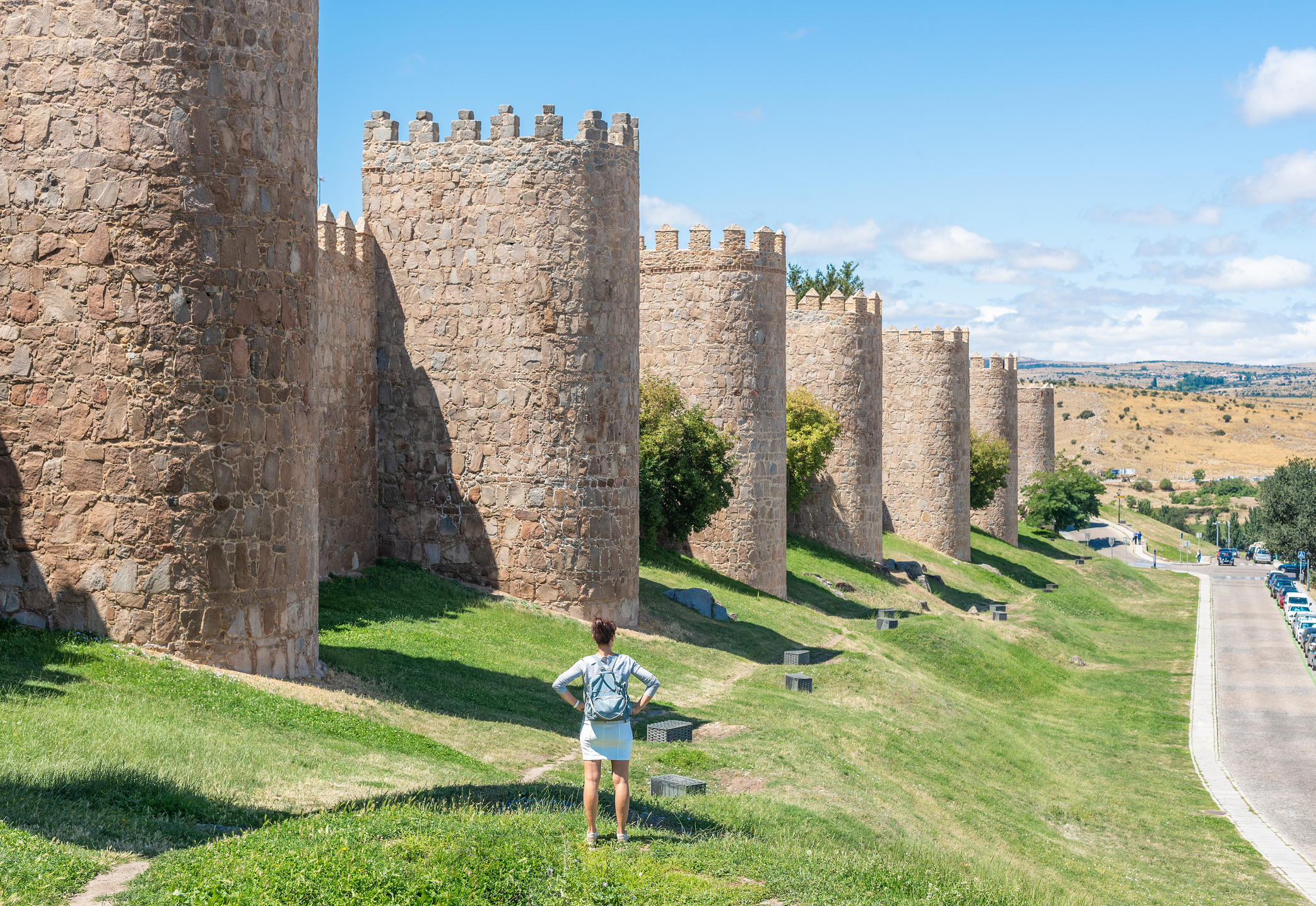
The Puerta del Alcázar is one of the access gates to the walled city of Ávila, in Spain. It is located on the west side of the walls, near the Cathedral of Ávila.
The gate was built in the 12th century, during the reign of Alfonso VI of León. It is one of the oldest and best preserved gates in the walls of Ávila.
The door is Romanesque in style and has a horseshoe arch shape. It is flanked by two cylindrical towers 20 meters high. The towers are linked by a vaulted bridge that crosses the moat that surrounds the walls.
The door is decorated with sculptures of animals and biblical characters. At the top of the gate is a statue of a Christian knight.
The Puerta del Alcázar is an important place for the history and culture of Ávila. It is one of the most emblematic gates of the city and is a popular destination for tourists.
5
Stop 5
The Cathedral of Ávila is a temple of Catholic worship in the Spanish city of Ávila, episcopal seat of the same name, in Castilla y León. It was designed as a temple and fortress, its apse being one of the cubes of the city wall.
It is considered the first Gothic cathedral in Spain, and is one of the best examples of this architectural style in the country.
The cathedral was built in the 12th century, on the remains of a primitive Romanesque building. The construction was carried out in several phases, and was not completed until the 15th century.
6
The Torreón de los Guzmanes is a Renaissance building located in the Spanish city of Ávila, Spain. It is one of the most beautiful noble houses in the city and is currently the headquarters of the Provincial Council of Ávila.
The tower was built in the 16th century by order of Garcibáñez de Mújica, on top of another construction that previously belonged to Sancho del Águila. The building is in the Renaissance style and consists of a quadrangular tower, a Renaissance courtyard and a set of rooms.
The tower is the most characteristic part of the building. It is 30 meters high and is crowned by an octagonal turret. The tower façade is decorated with Renaissance motifs, such as columns, medallions and shields.
7
The building is Plateresque in style and consists of a Plateresque façade, an arcaded patio and a set of rooms.
The façade is the most characteristic part of the building. It is divided into three sections by pilasters with capitals decorated with Plateresque motifs. In the center of the façade there is a main window decorated with grotesques.
The porticoed courtyard is the centerpiece of the building. It has a square plan and is surrounded by a gallery of columns. The courtyard is decorated with a central fountain.
8
The Dávila Palace, also known as the Abrantes Palace, is a historic building located in the city of Ávila, Spain. It is one of the best examples of medieval architecture in Spain.
The palace was built in the 14th century by order of Pedro Dávila y Zúñiga, first Marqués de las Navas and third Count of Risco. The building is made of the same material as the city wall, granite, and has a defensive structure with towers and barbicans.
The palace is rectangular in plan and has two floors. The main façade is divided into three sections by pilasters. In the center of the façade there is a main window decorated with Gothic tracery.
9
The Jewish quarter of Ávila is located in the center of the city, within the medieval walls. The neighborhood is made up of a maze of narrow, winding streets, which are flanked by one-story stone houses.
The neighborhood was founded in the 11th century and was an important center of Jewish life in Spain. The neighborhood was home to a synagogue, a cemetery, and a number of other Jewish institutions.
In 1492, the Jews were expelled from Spain. The synagogue in the Jewish quarter of Ávila was converted into a church and the cemetery was abandoned.
10
The Garden of San Vicente is a public park located in the Spanish city of Ávila, Castilla y León. It is located in the center of the city, next to the Basilica of San Vicente.
The garden was created in the 20th century, on the old Roman cemetery of the city. The garden is made up of a set of terraces that descend from the Basilica of San Vicente to the city wall.
The garden is full of trees and plants, and features a number of sculptures and monuments. Among the most outstanding sculptures are the sculptures of saints Vicente, Sabina and Cristeta, which are located on the upper terrace of the garden.
11
The church was built in the 12th century and is located outside the city walls. The building has a Latin cross plan with three naves and three apses. The central nave is higher than the side naves and is covered with a barrel vault. The side naves are covered with groin vaults.
The main façade of the church is in the Lombard Romanesque style. It is decorated with a set of blind arches, friezes of small arches and a series of sculptures. The main door of the church is decorated with a tympanum carved with a representation of Christ in Majesty.
12
The Royal Monastery of Santa Ana is a monastery of Cistercian nuns located in the Spanish city of Ávila, capital of the homonymous province, in the autonomous community of Castilla y León. It was founded in 1350 on the initiative of Queen Maria of Portugal, wife of King Pedro I of Castile, and was dedicated to the education of the daughters of the nobility and the royal family.
The monastery was completely rebuilt in the 16th century, following the canons of the Renaissance. The building consists of a church with a single nave with a barrel vault, a three-story cloister, a refectory and a chapter house.
13
Los Cuatro Postes is a humilladero located in the city of Ávila, Spain. It is a religious monument built in 1566 that consists of four Doric columns five meters high on which four architraves with the city's coat of arms are supported. In the center of the square formed by the columns, on a base, stands a granite cross.
The humilladero is located on the left bank of the Adaja River, overlooking the city from the west. It is a popular place for tourists and locals as it offers stunning views of the city.
Available languages
Audio guide
DE
IT
FR
Guide guide
EN
ES
Reviews breakdown
Tripadvisor
3.0
1 reviews
5★
0
4★
0
3★
1
2★
0
1★
0
Important information
Infants and small children can ride in a pram or stroller
Service animals allowed
Specialized infant seats are available
Suitable for all physical fitness levels
Important notes
Once the Premium Access to Self-guided Routes of Ávila has been purchased, you will receive an ACCESS CODE that will allow you to access the Premium area and have access to the Web Panel to customize the route
Download the application: Tourist Road Guide
About Segovia
Segovia is a historic city in Spain known for its exceptionally well-preserved Roman aqueduct, medieval architecture, and the stunning Alcázar of Segovia, which is said to have inspired Walt Disney's Cinderella Castle. This UNESCO World Heritage site offers a blend of Roman, medieval, and Renaissance influences, making it a unique and captivating destination.
Top Attractions
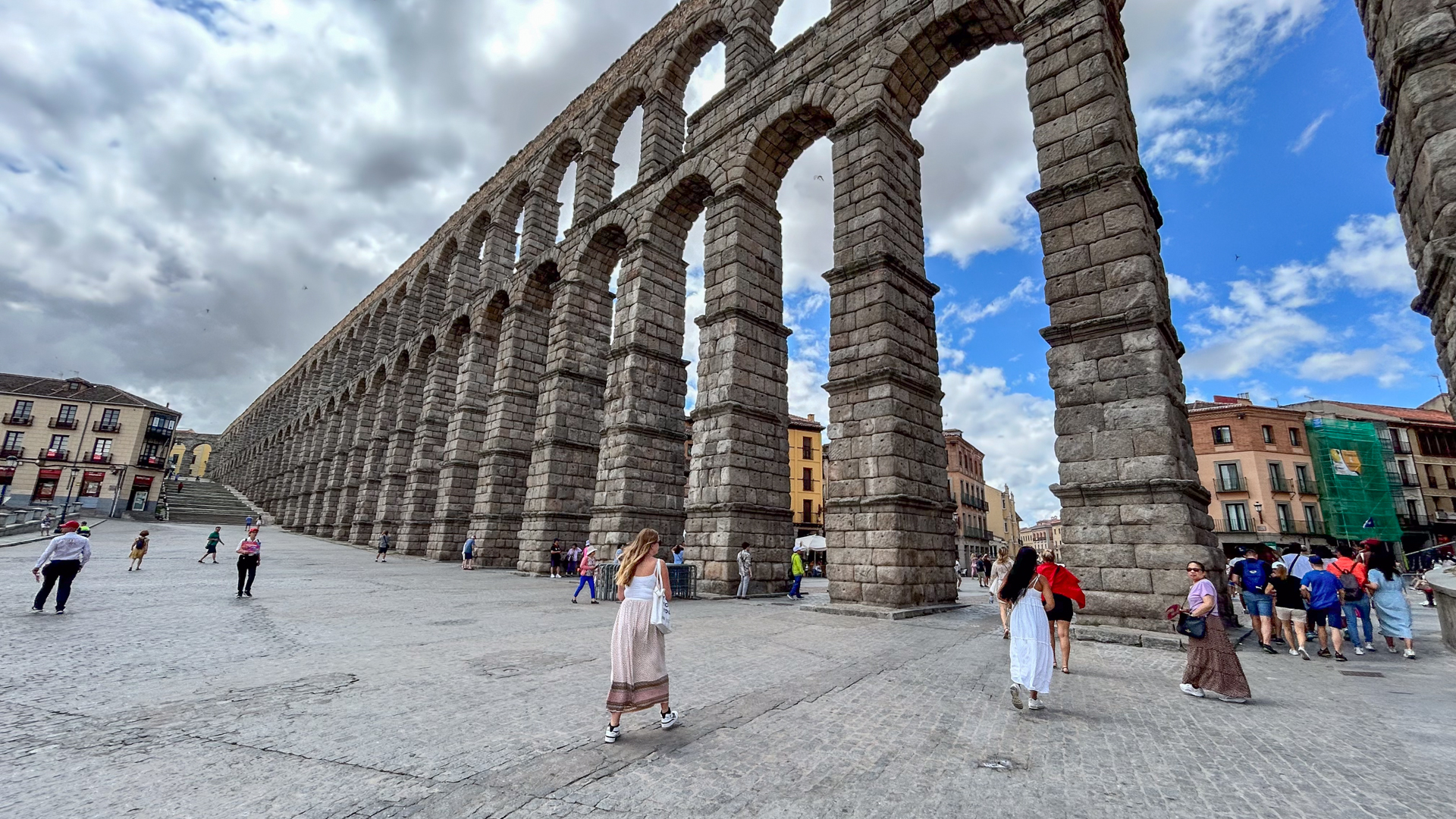
Roman Aqueduct of Segovia
This impressive aqueduct, built by the Romans in the 1st century AD, is one of the best-preserved elevated Roman aqueducts in the world. It spans over 29 kilometers and features 167 arches.
Historical/Architecture
30-60 minutes
Free
Alcázar of Segovia
This fairytale-like castle is one of the most distinctive castles in Spain. It is said to have inspired Walt Disney's Cinderella Castle and offers stunning views of the city and surrounding countryside.
Historical/Architecture
1-2 hours
€5.50 (general admission)
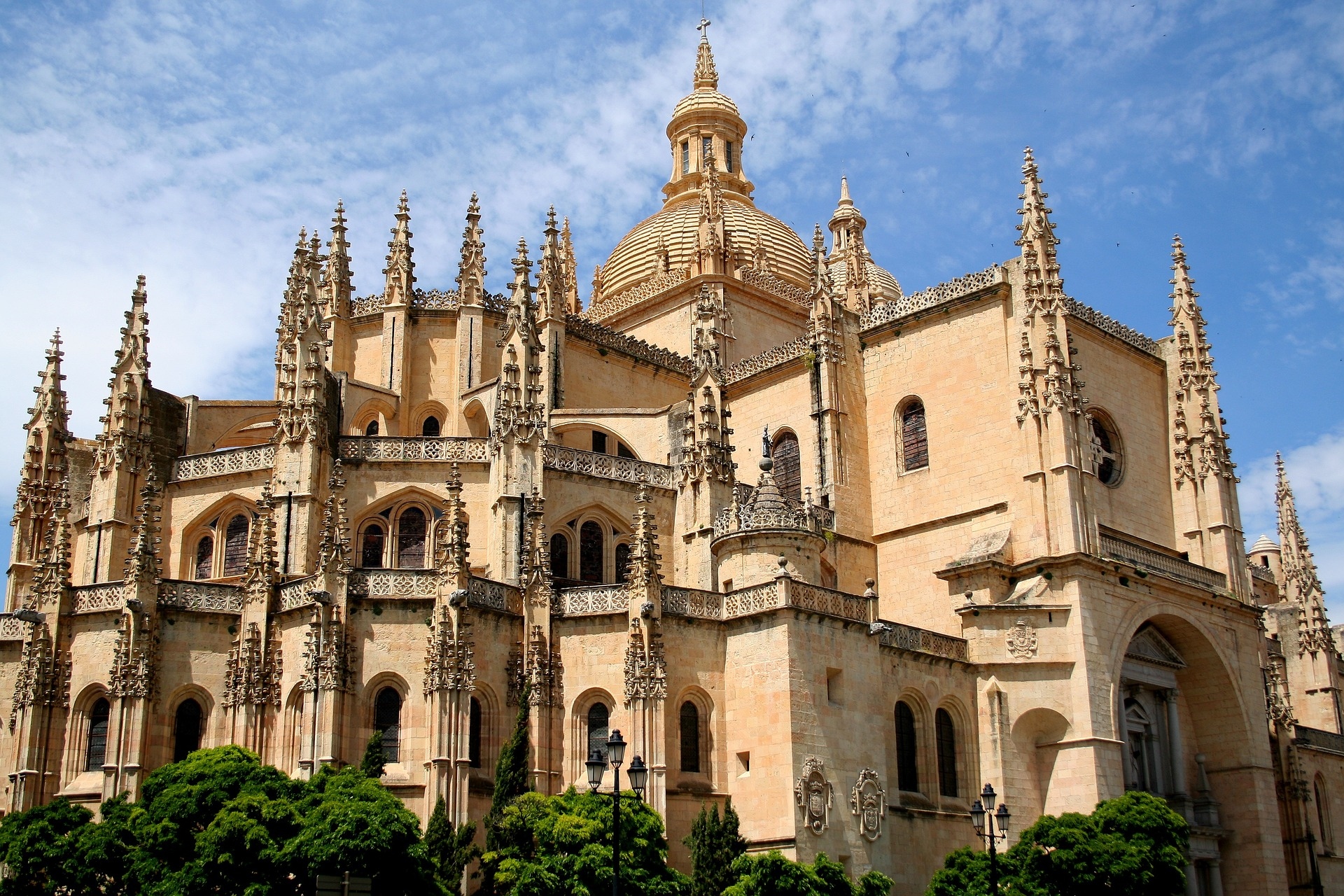
Segovia Cathedral
Known as 'the Lady of Cathedrals,' this Gothic cathedral is the last to be built in Spain and features stunning stained glass windows, intricate carvings, and a beautiful cloister.
Religious/Architecture
1 hour
€3 (general admission)
Royal Palace of La Granja de San Ildefonso
This stunning palace and gardens were once a royal residence and hunting lodge. The palace features opulent interiors, while the gardens are home to numerous fountains and sculptures.
Historical/Architecture
2-3 hours
€9 (palace and gardens admission)
Must-Try Local Dishes
Cochinillo Asado
A traditional dish of roasted suckling pig, known for its crispy skin and tender meat.
Main Course
Not suitable for vegetarians or vegans.
Judiones de La Granja
A hearty stew made with large white beans, pork, and other meats, originating from the nearby town of La Granja de San Ildefonso.
Main Course
Not suitable for vegetarians or vegans.
Ponche Segoviano
A traditional dessert made with layers of sponge cake, custard, and meringue, topped with almonds.
Dessert
Contains eggs and nuts.
Popular Activities
Hiking in the nearby Sierra de Guadarrama mountains
Mountain biking
Strolling through the historic center
Enjoying a wine tasting
Visiting museums and historic sites
Attending local festivals and events
Skiing and snowboarding in the nearby Sierra de Guadarrama mountains
Watching the fountain shows at the Royal Palace of La Granja de San Ildefonso
Best Time to Visit
Spring (April to June) and Fall (September to October)
These seasons offer pleasant weather, fewer crowds, and ideal conditions for sightseeing and outdoor activities.
15-25°C
59-77°F
Practical Information
Language
- Official: Spanish
- Widely spoken: English (in tourist areas)
- English: Moderately spoken in tourist areas, limited elsewhere
Currency
Euro (EUR)
Time Zone
GMT+1 (Central European Time)
Electricity
230VV, 50HzHz
Safety Information
Overall Safety Rating: Generally safe
Segovia is a generally safe destination for travelers, with low crime rates and a welcoming atmosphere. However, as with any destination, it is important to take basic precautions to ensure a safe and enjoyable trip.
Important Precautions:
- • Keep valuables secure and out of sight.
- • Be cautious of pickpockets in crowded areas.
- • Use licensed taxis or ride-sharing services.
Getting there
By air
- Adolfo Suárez Madrid–Barajas Airport • 90 km
By train
Segovia Station
By bus
Segovia Bus Station
Getting around
Public transport
The bus network covers most of the city and is an affordable way to get around.
Taxis
Available • Apps:
Rentals
Car, Bike, Scooter
Neighborhoods
Historic Center
San Lorenzo
La Alameda
Day trips
La Granja de San Ildefonso
12 km • Half day to full day
This charming town is home to the Royal Palace of La Granja de San Ildefonso and its stunning gardens, featuring numerous fountains and sculptures.
Pedraza
35 km • Half day to full day
This medieval town is known for its well-preserved walls, historic buildings, and charming streets. It is also home to a famous bullring.
Coca
30 km • Half day
This small town is home to the stunning Castle of Coca, a well-preserved example of Mudéjar architecture.
Festivals
Festival of San Juan and San Pedro • June 23-24
Segovia Christmas Market • December
Medieval Festival of Segovia • August
Pro tips
- Visit the Roman Aqueduct early in the morning or late in the afternoon for the best photos and fewer crowds.
- Try the local specialties, such as Cochinillo Asado and Judiones de La Granja, at traditional restaurants like Mesón de Cándido or Casa Zancas.
- Explore the historic center on foot to fully appreciate its charm and beauty.
- Visit the Alcázar of Segovia for stunning views of the city and surrounding countryside, and to learn about its fascinating history.
- Take a day trip to La Granja de San Ildefonso to see the Royal Palace and its beautiful gardens, featuring numerous fountains and sculptures.
From $25
per person
Price varies by option
Secure booking
Free cancellation available
Instant confirmation