Rupit Audioguide APP
Active
6h - 8h
All sales are final. No refund is available for cancellations.
Instant confirmation
Mobile or paper ticket accepted
About this experience
Self-guided routes with audio guides
Everything you need to know about Rupit
Points of interest linked to Google Maps
geolocation
Routes by car through Rupit
Walking routes in the different points of interest
Access to Web Panel to customize your own route
Access to Panel Web as a repository of travel documents
Audio guides with 6 languages available (Spanish, Portuguese, German, Italian, French, English.)
Available options
Rupit Audioguide APP
What's included
Navigation APP that includes self-guided routes with all the points of interest in Rupit.
Detailed itinerary
1
As soon as you leave the car, the ideal thing to do is to head towards the suspension bridge where, crossing the small river, and passing almost one by one, you can cross to the urban center. From there you arrive at Barbacana street, the axis of this small town, to head towards the Plaza Mayor, already seeing the characteristic stone facades, balconies, windows and wooden doors, and with inscriptions of dates on some porticos.
2
Church of San Miguel, of which you will be surprised by its baroque style with white facades, in contrast with the stone architecture of the rest of the town. Its origin is from the 13th century, but it has subsequently undergone various renovations.
With the bell tower built at the beginning of the 19th century, the interior altarpiece in Baroque style is from 1633.
3
One of the liveliest places in the town is its main square, which houses some of the most important buildings in Rupit, such as the town hall or the school. Do not miss the Gothic-style window of the Can Sallent Restaurant, located at number 3, the viewpoint from where you can see the Hermitage of Santa Magdalena or the house that is located right next to the Church of San Miquel that has the typical wooden balconies so characteristic of this old medieval town.
4
The most characteristic of Rupit, which from the church goes up to the highest part of the town. You will see that you will go up a road that maintains the stone structure of the cliff itself, while you go through beautiful houses with rustic architecture, totally genuine.
An outstanding place is the great rock that rises above the street and some of its houses, where the remains of the small castle that was built around the year 1000 are located, and where previously there must have been a Visigoth fortification.
5
Located on top of a rock and built in the 11th century by Casa Cardona. Today, only part of a defensive tower and a piece of wall remain standing, but unfortunately it cannot be visited, so you will have to settle for seeing it from Calle del Fossar or Plaza dels Cavallers.
6
located on a rock and largely surrounded by the Riera de Rupit. This temple dates from the 17th century and its interior is usually closed but the views are well worth the walk, it takes approximately 45 minutes to get there.
7
It is about 6 kilometers from Rupit. This waterfall is one of the highest in Catalonia with approximately 100 meters of vertical drop and offers spectacular views of the surrounding landscapes.
8
A few meters from the Salt de Sallent is the Church of San Joan de Fábregues, one of the oldest in Rupit and which has been documented since the year 968. The building is 810 meters high and is Baroque in style, throughout Throughout history it has suffered several deteriorations, which is why in 1978 it was restored by the Barcelona Provincial Council.
Available languages
Audio guide
DE
PT
EN
IT
FR
ES
Important information
Infants and small children can ride in a pram or stroller
Service animals allowed
Specialized infant seats are available
Suitable for all physical fitness levels
Important notes
Once the Premium Access to Rupit Self-guided Routes has been purchased, you will receive an ACCESS CODE that will allow you to access the Premium area and have access to the Web Panel to customize the route
Download the application: Tourist Road Guide
About Girona
Girona is a charming medieval city in Catalonia, known for its well-preserved Jewish Quarter, stunning cathedral, and vibrant cultural scene. Its cobblestone streets, colorful houses, and rich history make it a captivating destination for travelers.
Top Attractions
Girona Cathedral
The Girona Cathedral is a stunning example of Gothic architecture, featuring a magnificent nave and a large, intricate stained-glass window.
Historical
1-2 hours
Free entry to the cathedral, €7 for the museum
Jewish Quarter (Call)
The Jewish Quarter is one of the best-preserved in Europe, featuring narrow streets, ancient houses, and a rich history.
Historical
1-2 hours
Free to explore, €7 for the museum
Arab Baths (Banys Àrabs)
These well-preserved 12th-century Arab Baths offer a glimpse into Girona's medieval past and feature beautiful architecture.
Historical
30-45 minutes
€5
Pujada de Sant Domènec
This iconic staircase, featured in Game of Thrones, offers a picturesque view of the colorful houses and the Onyar River.
Scenic
15-30 minutes
Free
Girona City Walls
The ancient city walls offer a walk through history and panoramic views of the city and surrounding countryside.
Historical
1-2 hours
Free
Must-Try Local Dishes
Pan con Tomate
Toasted bread rubbed with garlic and tomato, drizzled with olive oil and salt.
Appetizer
Vegetarian, can be made vegan
Fideuà
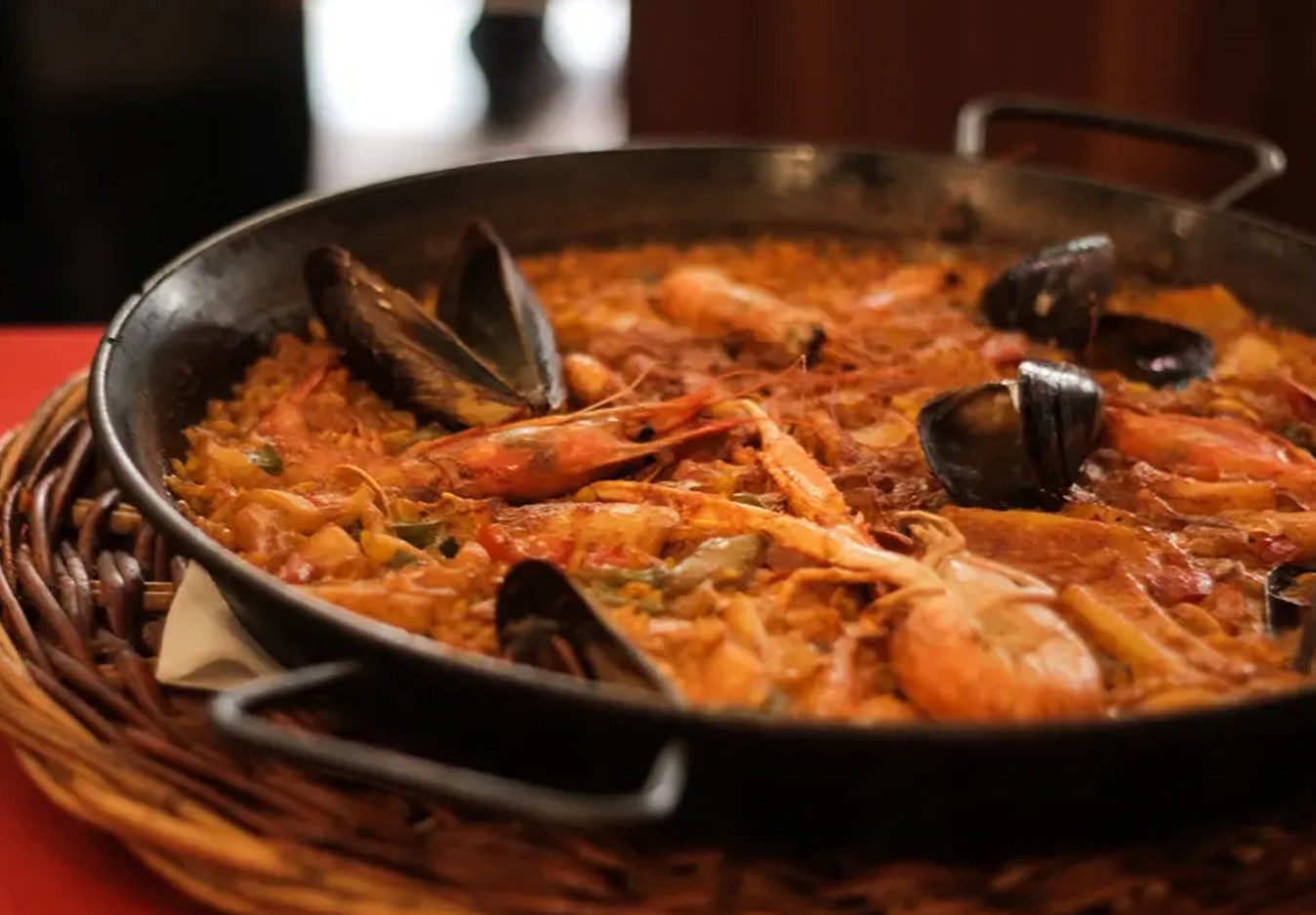
A traditional Catalan dish similar to paella, made with short noodles instead of rice and seafood.
Main Course
Contains seafood, can be made gluten-free
Crema Catalana
A Catalan version of crème brûlée, made with milk, egg yolks, sugar, and flavored with cinnamon and lemon zest.
Dessert
Contains dairy and eggs, can be made vegetarian
Butifarra
A traditional Catalan sausage made with pork, garlic, and spices, often served with beans or grilled.
Main Course
Contains pork, not suitable for vegetarians or vegans
Popular Activities
Hiking in the nearby mountains
Cycling along scenic routes
Strolling through the Old Town
Enjoying a wine tasting
Visiting museums and historical sites
Attending local festivals
Swimming at nearby beaches
Kayaking on the Onyar River
Best Time to Visit
June to August
This is the busiest time of year with warm weather and various festivals. Expect crowded attractions and higher prices.
20-30°C
68-86°F
Practical Information
Language
- Official: Catalan, Spanish
- Widely spoken: Spanish, English
- English: Moderately spoken in tourist areas, limited in rural areas
Currency
Euro (EUR)
Time Zone
GMT+1 (CET), GMT+2 (CEST) during daylight saving time
Electricity
230VV, 50HzHz
Safety Information
Overall Safety Rating: Generally safe
Girona is generally a safe city for travelers, with low crime rates and a welcoming atmosphere. However, as with any destination, it's important to be aware of your surroundings and take basic precautions to ensure a safe and enjoyable trip.
Important Precautions:
- • Keep valuables secure and out of sight
- • Be cautious when using ATMs, especially at night
- • Use licensed taxis or ride-sharing services
Getting there
By air
- Girona-Costa Brava Airport • 12 km from city center
- Barcelona-El Prat Airport • 100 km from city center
By train
Girona Station
By bus
Girona Bus Station
Getting around
Public transport
The bus network covers the entire city and is efficient and affordable. Buses run frequently and are a convenient way to get around.
Taxis
Available • Apps: MyTaxi, Cabify
Rentals
Car, Bike, Scooter
Neighborhoods
Old Town (Barri Vell)
Eixample
Sant Daniel
Day trips
Figueres
35 km • Half day to full day
Home to the Dalí Theatre-Museum and a charming old town, Figueres offers a mix of art, history, and culture.
Costa Brava
30-50 km • Full day
The stunning coastline of Costa Brava offers beautiful beaches, charming fishing villages, and scenic hikes.
Besalú
35 km • Half day
A medieval village with a well-preserved Jewish Quarter, Romanesque bridge, and charming streets.
Festivals
Temps de Flors • May
Girona Film Festival • October
Sant Narcís Festival • October
Pro tips
- Visit the Girona Cathedral early in the morning to avoid crowds and enjoy the stunning architecture and views.
- Explore the Jewish Quarter (Call) on a weekday to avoid the busiest times and enjoy a more peaceful experience.
- Take a guided tour of the ancient city walls for a unique perspective on the city's history and architecture.
- Try the local specialty, fideuà, at a traditional restaurant for an authentic taste of Catalan cuisine.
- Visit the Mercat del Lleó for fresh produce, local specialties, and a taste of the city's vibrant food culture.
From $25
per person
Price varies by option
Secure booking
Free cancellation available
Instant confirmation