Ephesus Walking Tour with Public Transportation
Active
5h
For a full refund, cancel at least 24 hours before the scheduled departure time.
Instant confirmation
Mobile or paper ticket accepted
About this experience
this is focused for those who already have their car to reach the destination yet need a Professional Guide who will help the participant to both understand and enjoy the ancient city of ephesus and its tales.
Available options
Ephesus Walking Tour with Public Transportation
What's included
Professional Guiding Service
Detailed itinerary
1
Stop 1
In the year of 10 BC, Androclos, the son of King of Athens-Kodros, was searching a location for establishing a site. Androclos belonged to Akhas, was running from the Dor invasion in Greece. He was leading one of the migration convoys. It was predicted by an Apollon oracle that a fish and a boar would show the location of the new settlement. Days later, parallel to the oracle’s prediction, while frying, a fish fell down from the pan, irritating a hiding boar behind the bushes. The feared boar escaped immediately. Androclos followed the boar and established the city of Ephesus, where he had killed the boar. When Androclos died in the wars with Carians, a mausoleum was built to the memory of the first king of Ephesus. The mausoleum is considered to be placed around "The Gate of Magnesia".
Ephesus was ruled by the Lydian king, Kreisos, in the mid 6BC. The city reached the "Golden Age" and became a good model to the Antic World in culture.
2
This building has the shape of a small theatre with the stage building, seating places and the orchestra.It had double function in use. First it was used as a Bouleuterion for the meetings of the Boulea or the Senate. The second fuction was the Odeum as a concert hall for the performances.It was constructed in the 2nd century A.D by the order of Publius Vedius Antonius and his wife Flavia paiana, two wealthy citizens in Ephesus.
3
Behind the basilica is the Prytaneion, where religious ceremonies , official receptions and banquets were held. The sacred flame symbolizing the heart of Ephesus was kept constantly alight in the Prytaneion. The construction of the building dates to the 3rd century B.C, during the reign of Lysimachos, but the ruins of the complex dates to the Augustan age.
4
Stop 4
Located to the south end of the Domitian Street, it is the first structure in Ephesus known to be dedicated to an emperor. It was built on a high and wide terrace set by 50x100 meters in size, on vaulted foundations. The northern size of the terrace seems to be two-stories high, reached by stairs. The stairs are still visible today.
5
It is one of the three main streets of Ephesus between The Hercules Gate till to the Celsus Library.This street took its name from the priests who were called as Curetes later.Their names were written in Prytaneion.
6
Stop 6
They were part of the Scholastica Baths and built in the 1C AD. They were the public toilets of the city. There was an entrance fee to use them.
In the centre, there is an uncovered pool and the toilets are aligned along the walls. The columns surrounding the pool supported a wooden ceiling. There was a drainage system under the toilets.
7
Stop 7
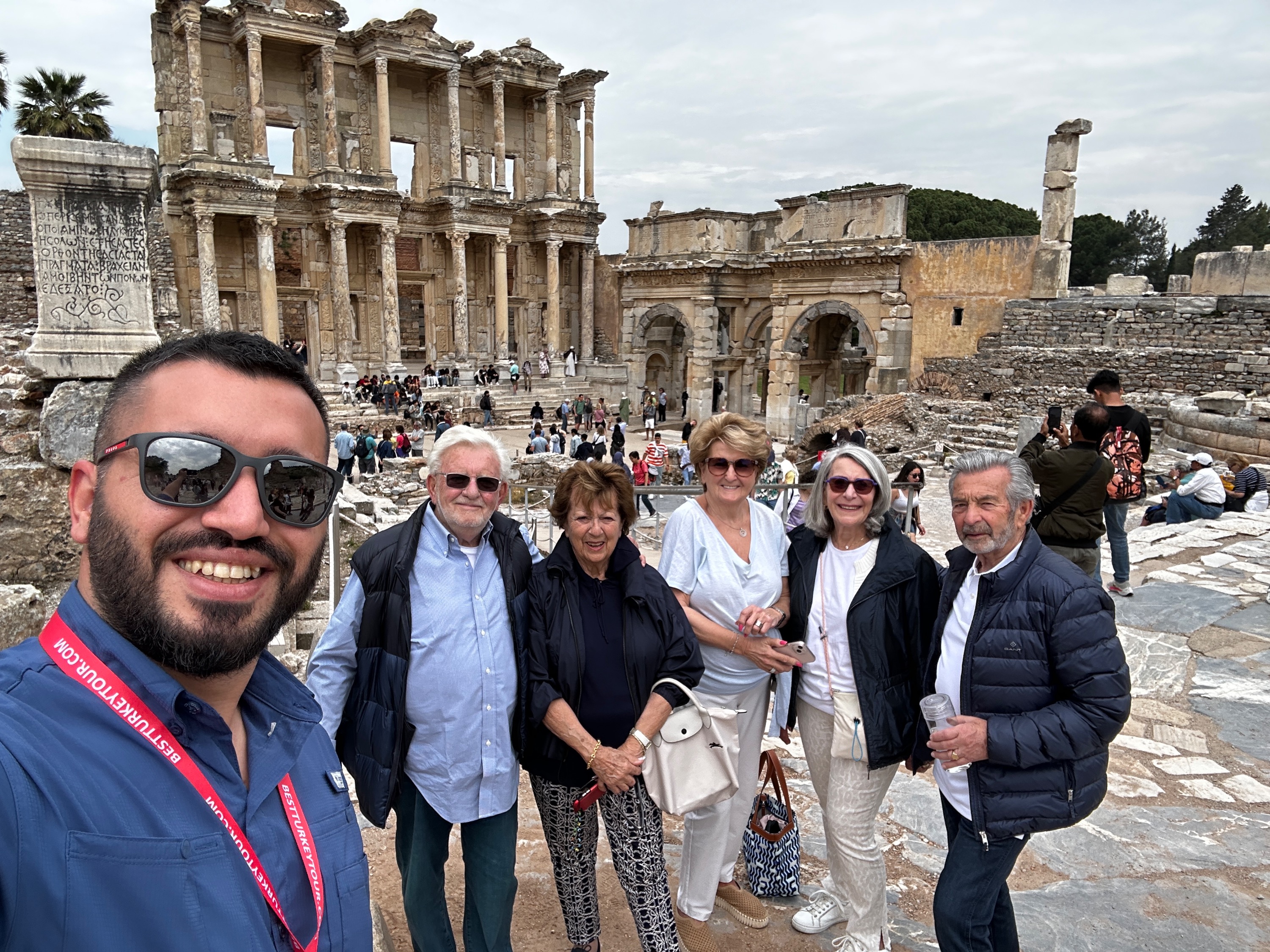
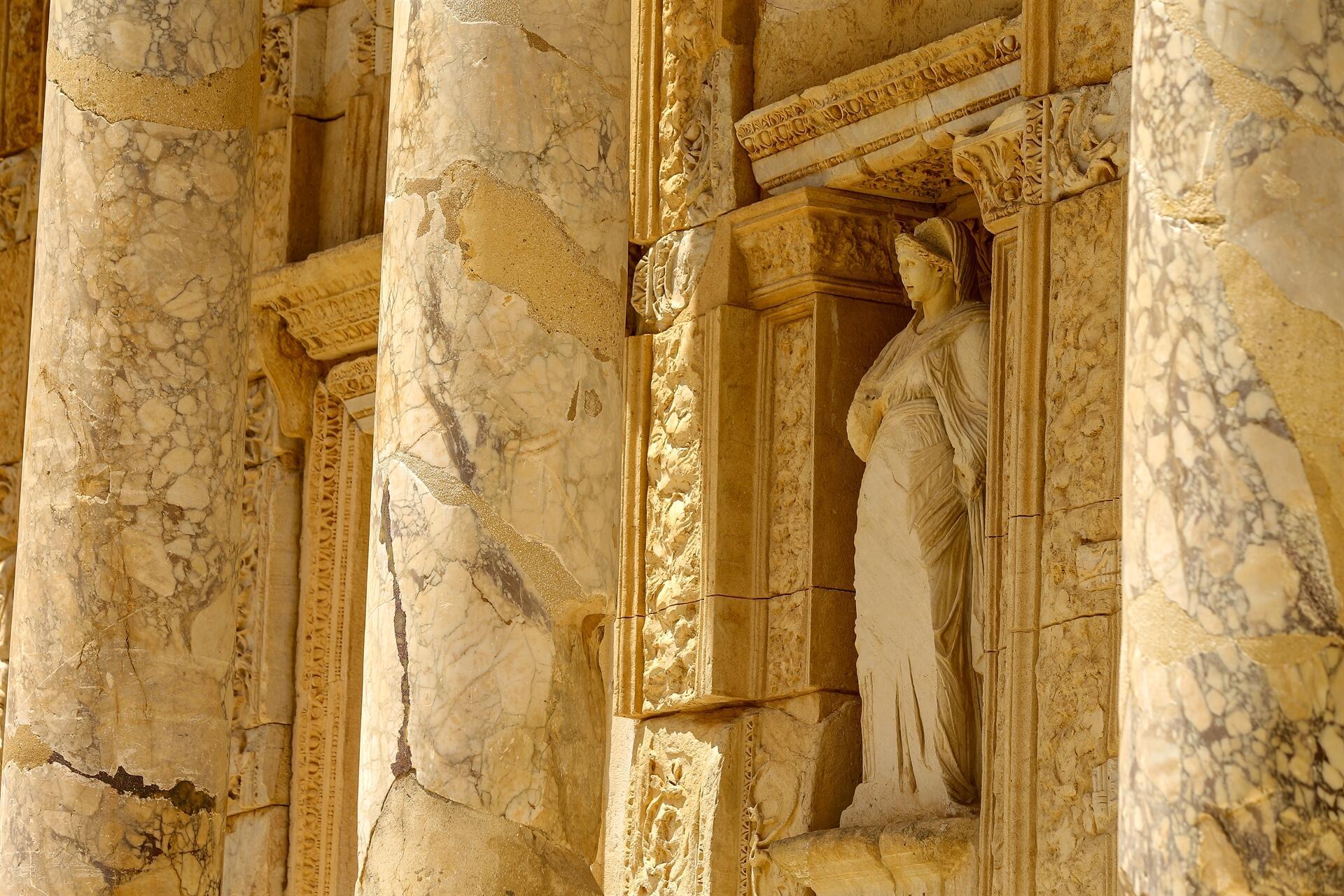
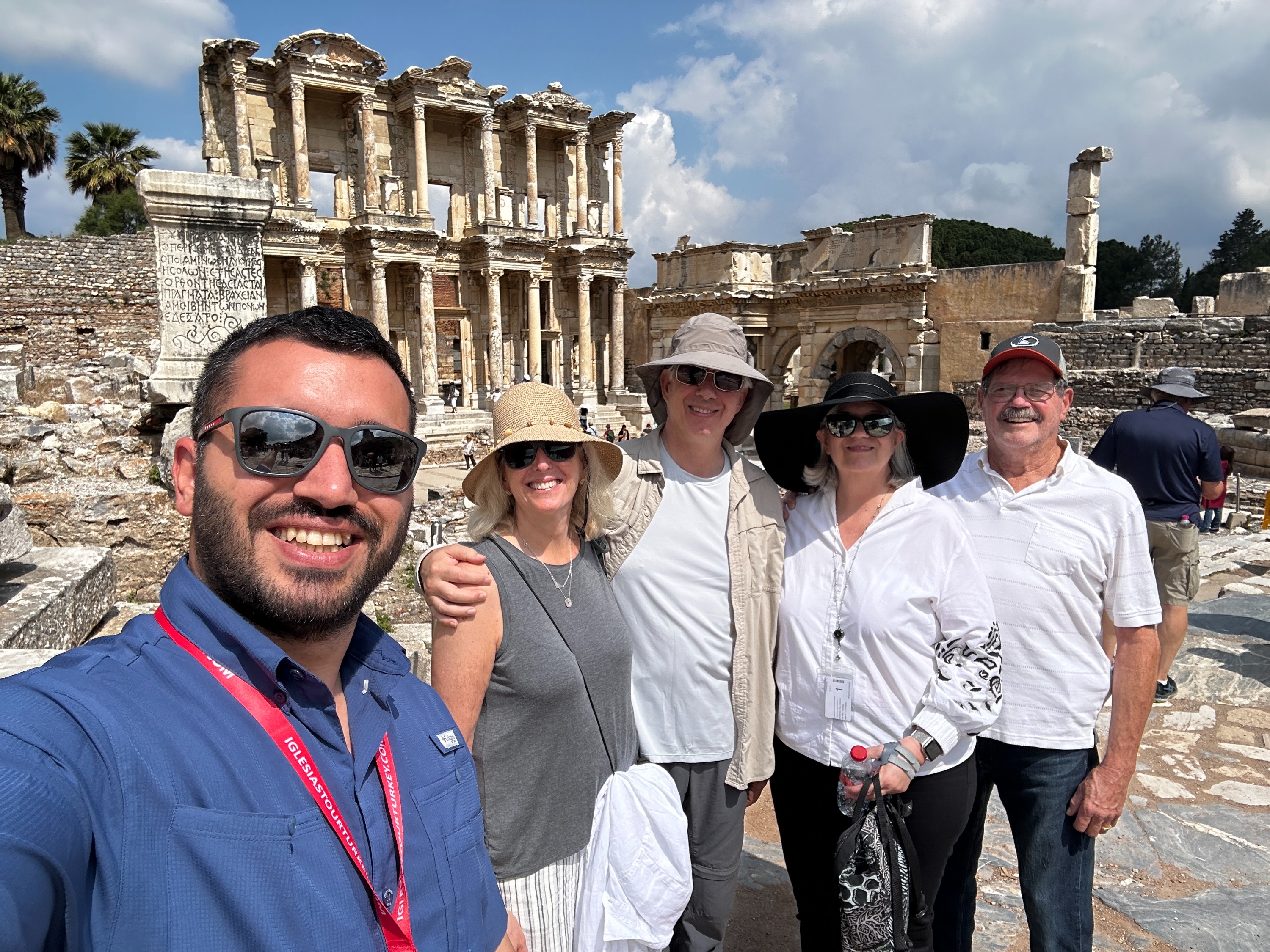
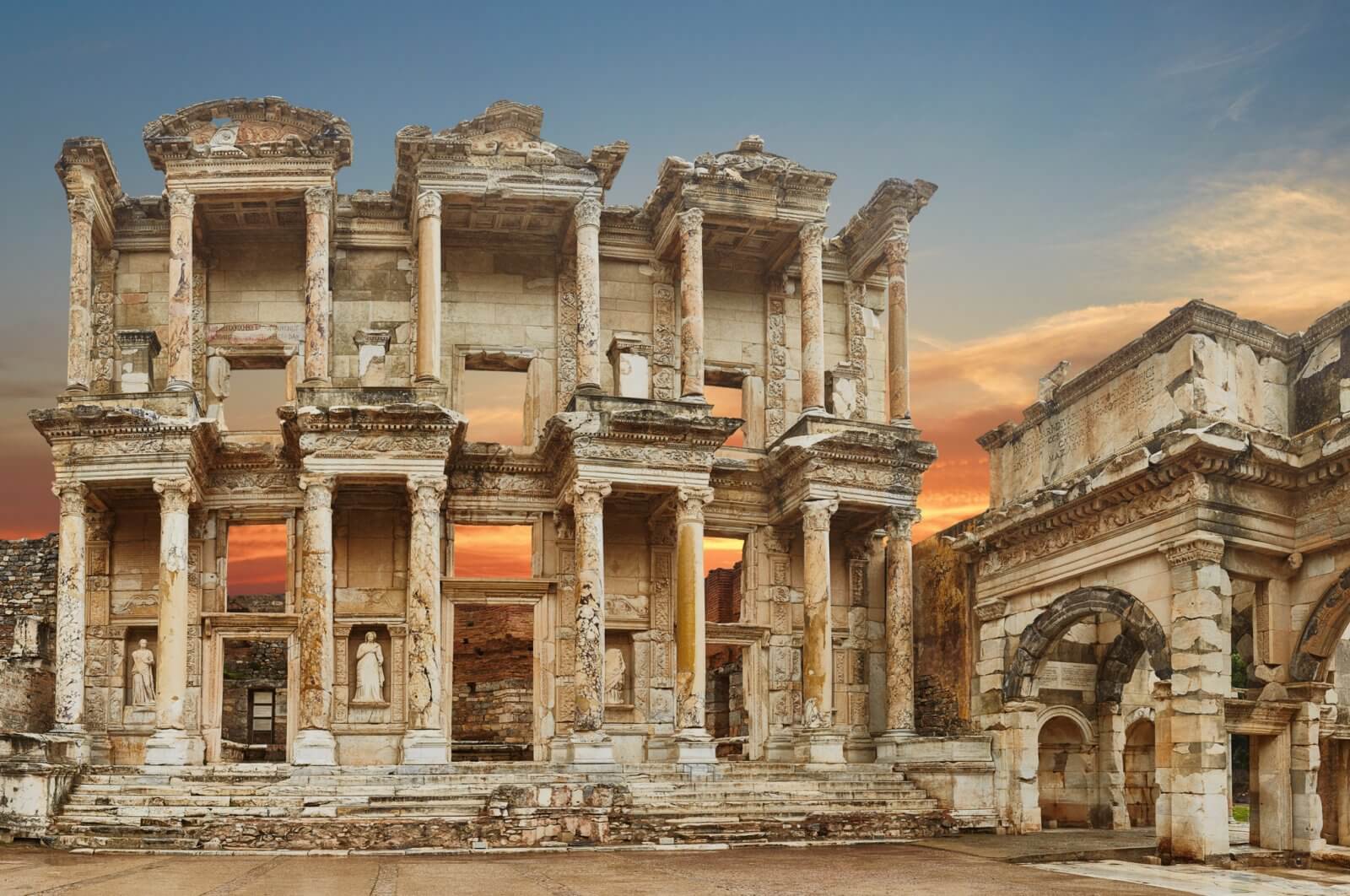
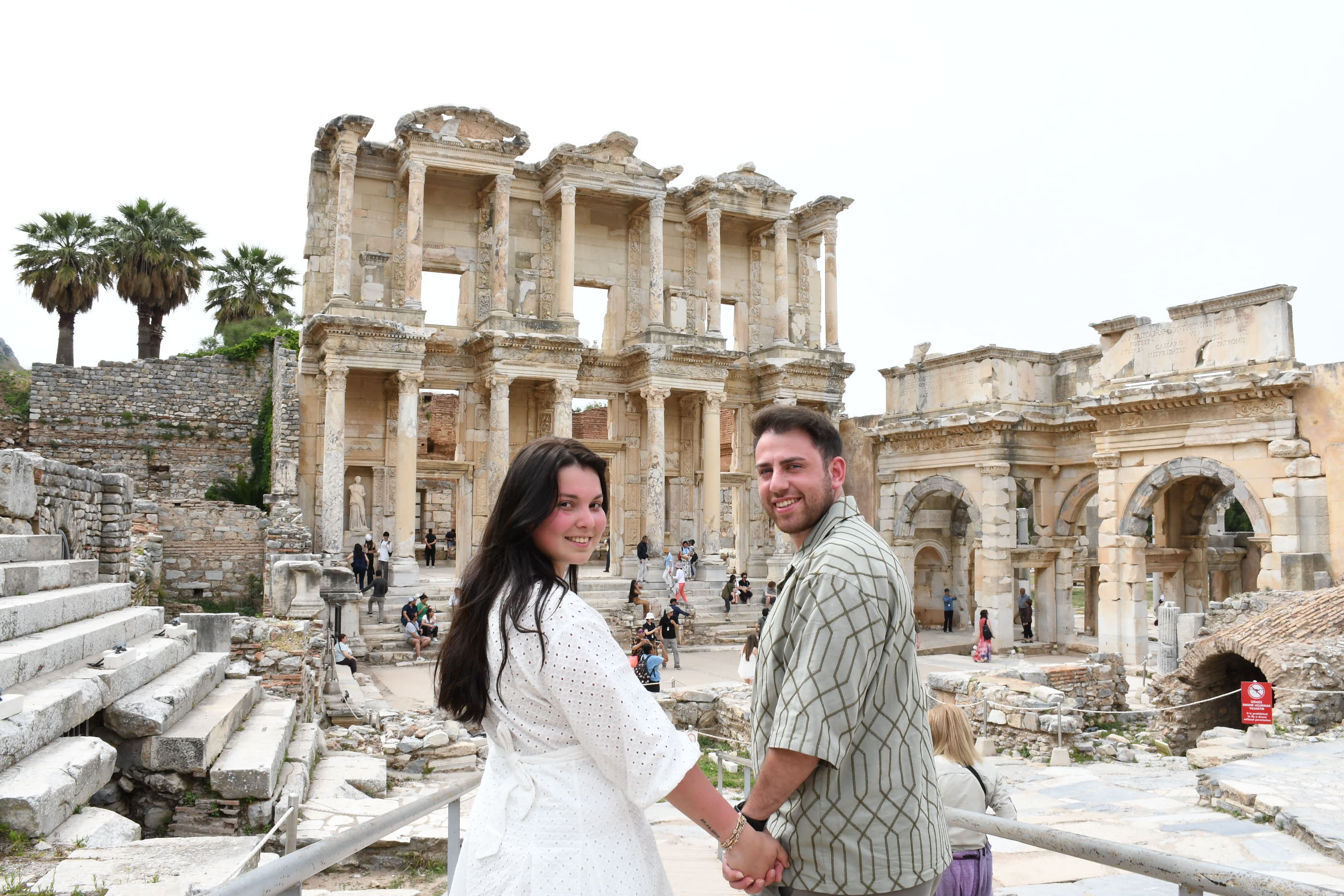
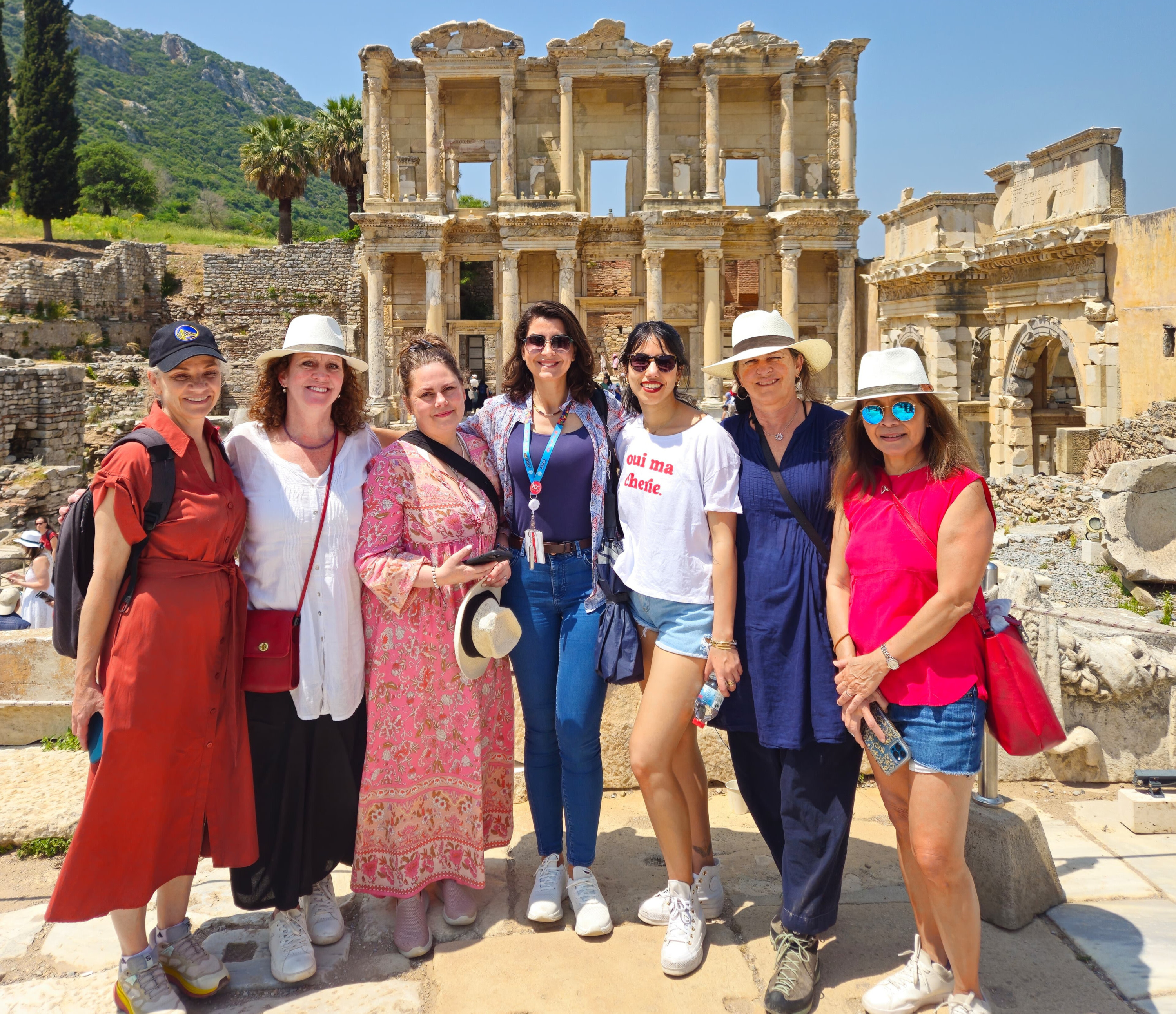
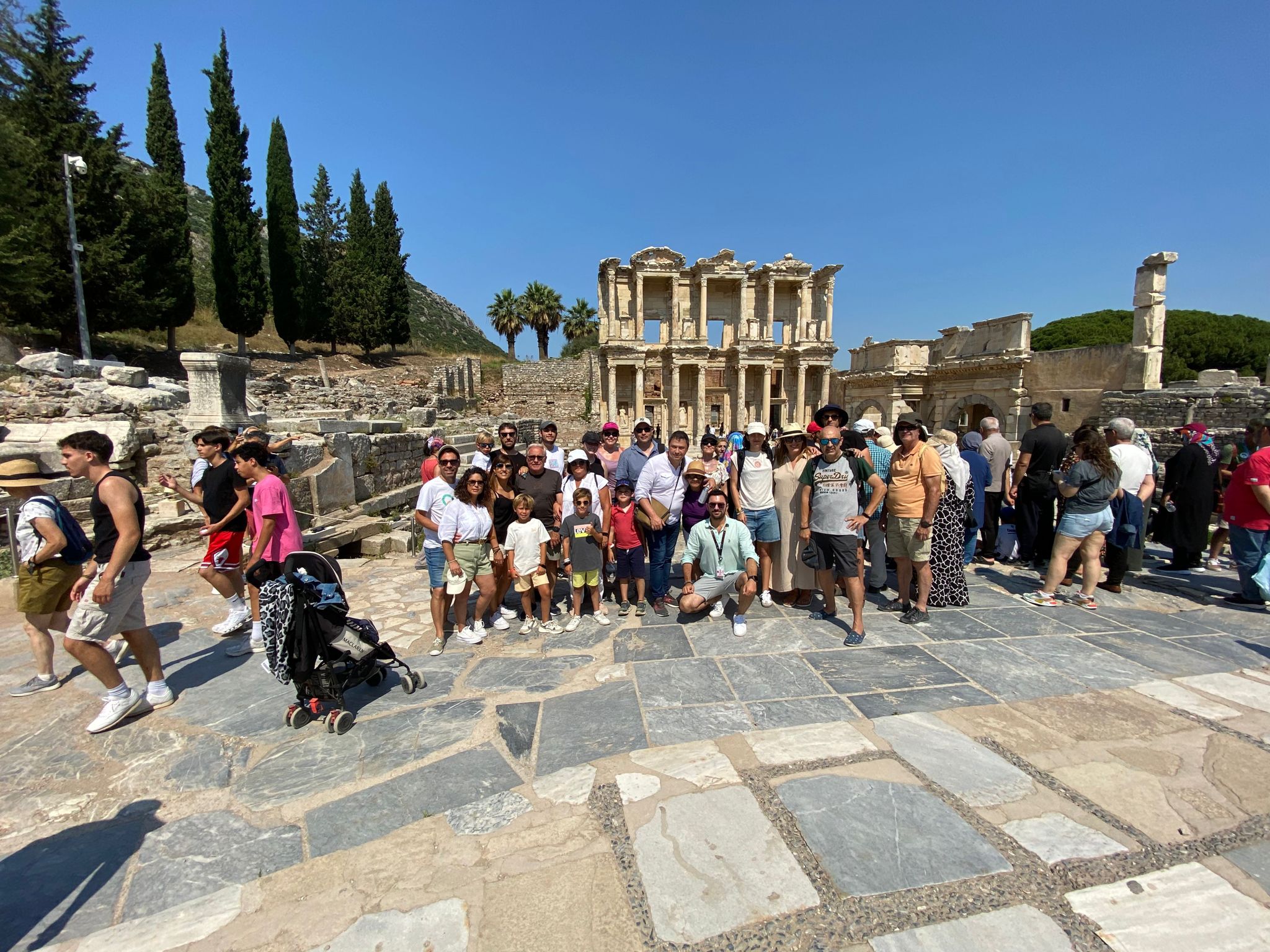
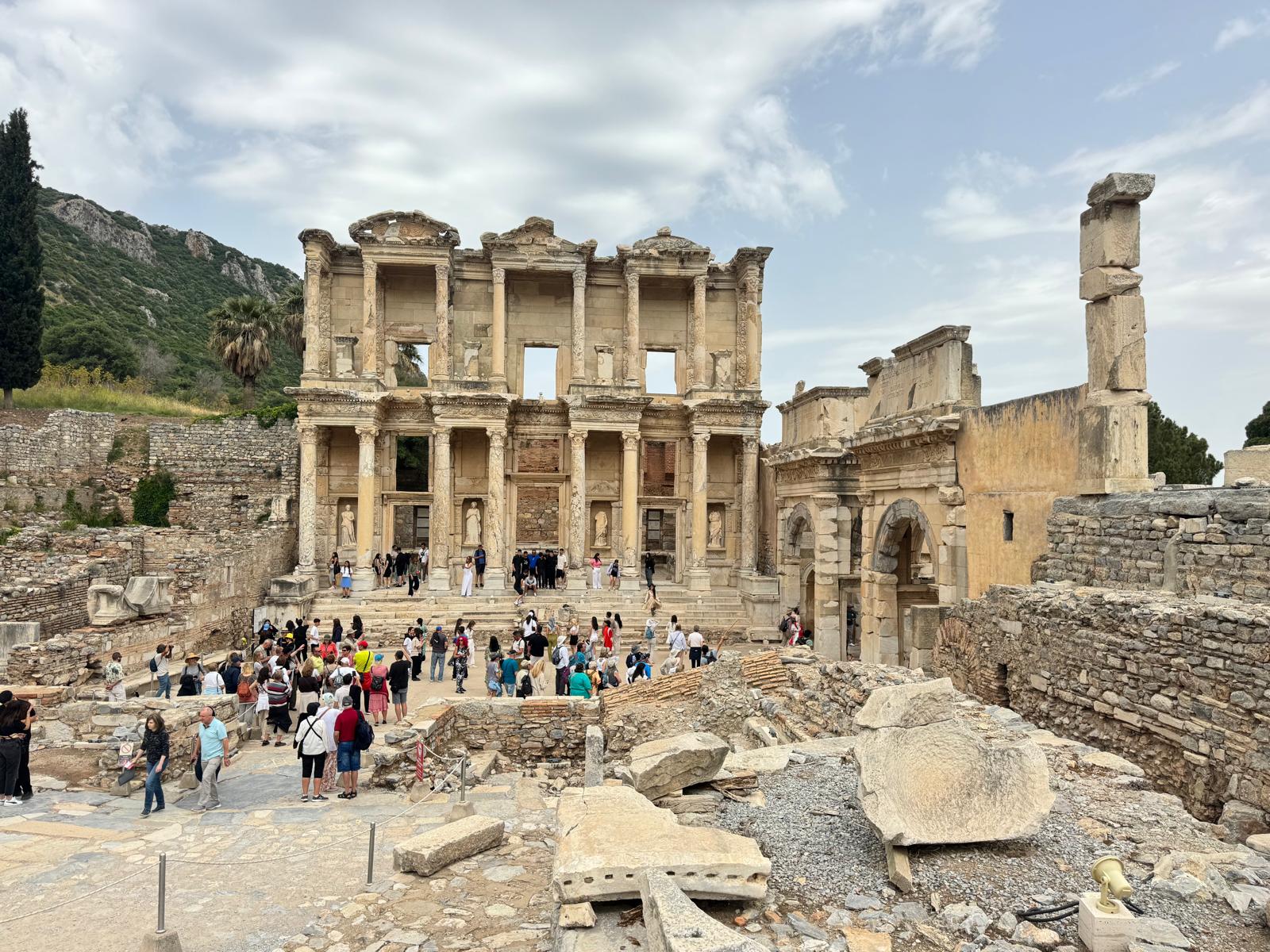
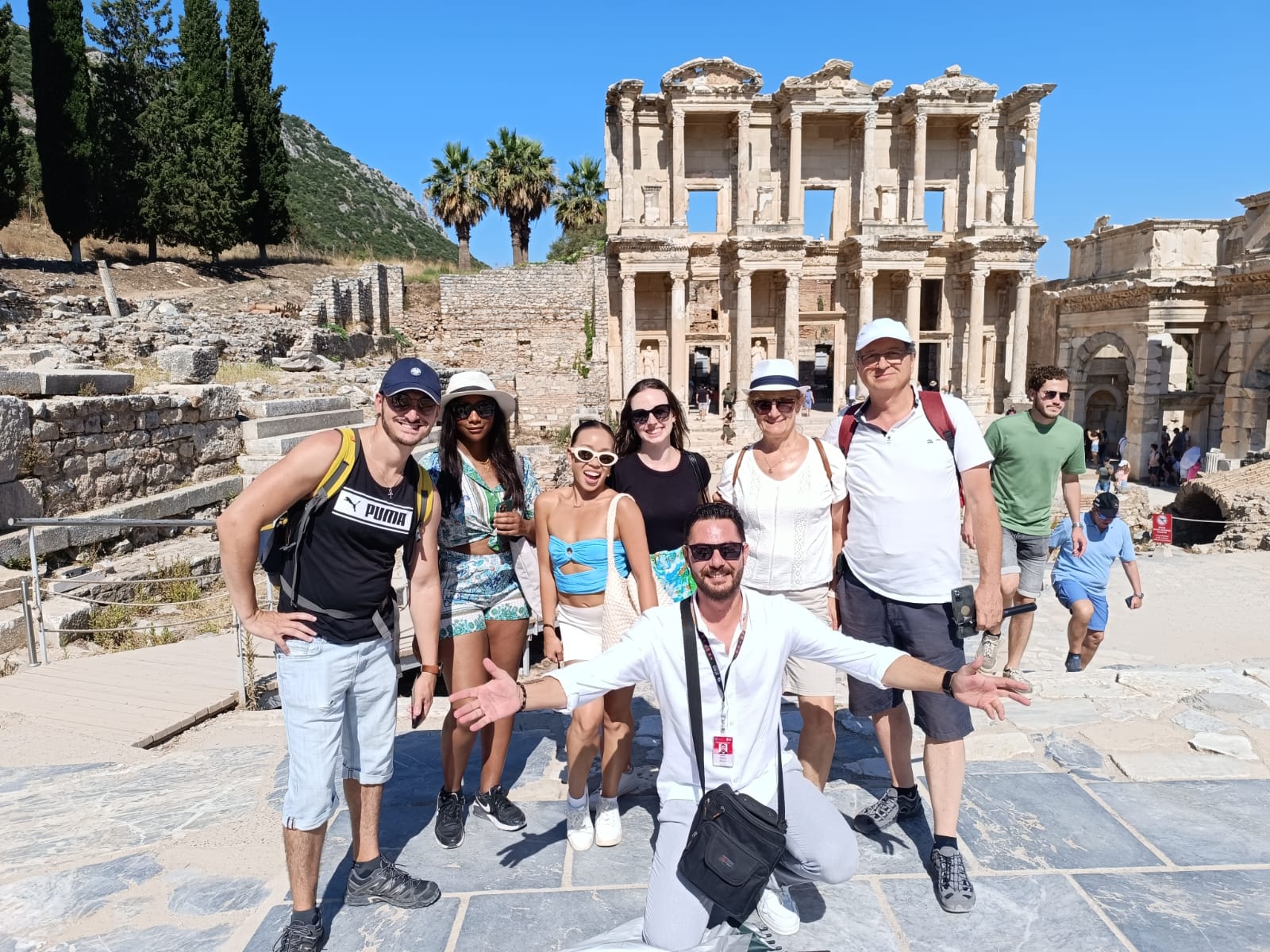
Celsus Library is one of the most beautiful structures in Ephesus. Celcius Library was built in 117 A.D. Celsus Library was a monumental tomb for Gaius Julius Celsus Polemaeanus, the governor of the province of Asia; from his son Galius Julius Aquila. The grave of Celsus was beneath the ground floor, across the entrance and there was a statue of Athena over it. Because Athena was the goddess of the wisdom.
What's not included
Entrance Fees
Public Transportation Fees
Gratuities
Lunch
Ephesus
Available languages
Guide guide
EN
Important information
Infants and small children can ride in a pram or stroller
Public transportation options are available nearby
Not recommended for travelers with poor cardiovascular health
Travelers should have at least a moderate level of physical fitness
Meeting point
we meet with you at Ephesus Upper Gate Parking Area
About Selçuk
Selçuk is a charming town in Turkey's Aegean Region, renowned as the gateway to the ancient city of Ephesus. With its rich history, vibrant culture, and proximity to stunning natural sites, Selçuk offers a unique blend of archaeological wonders and authentic Turkish hospitality.
Top Attractions
Ephesus
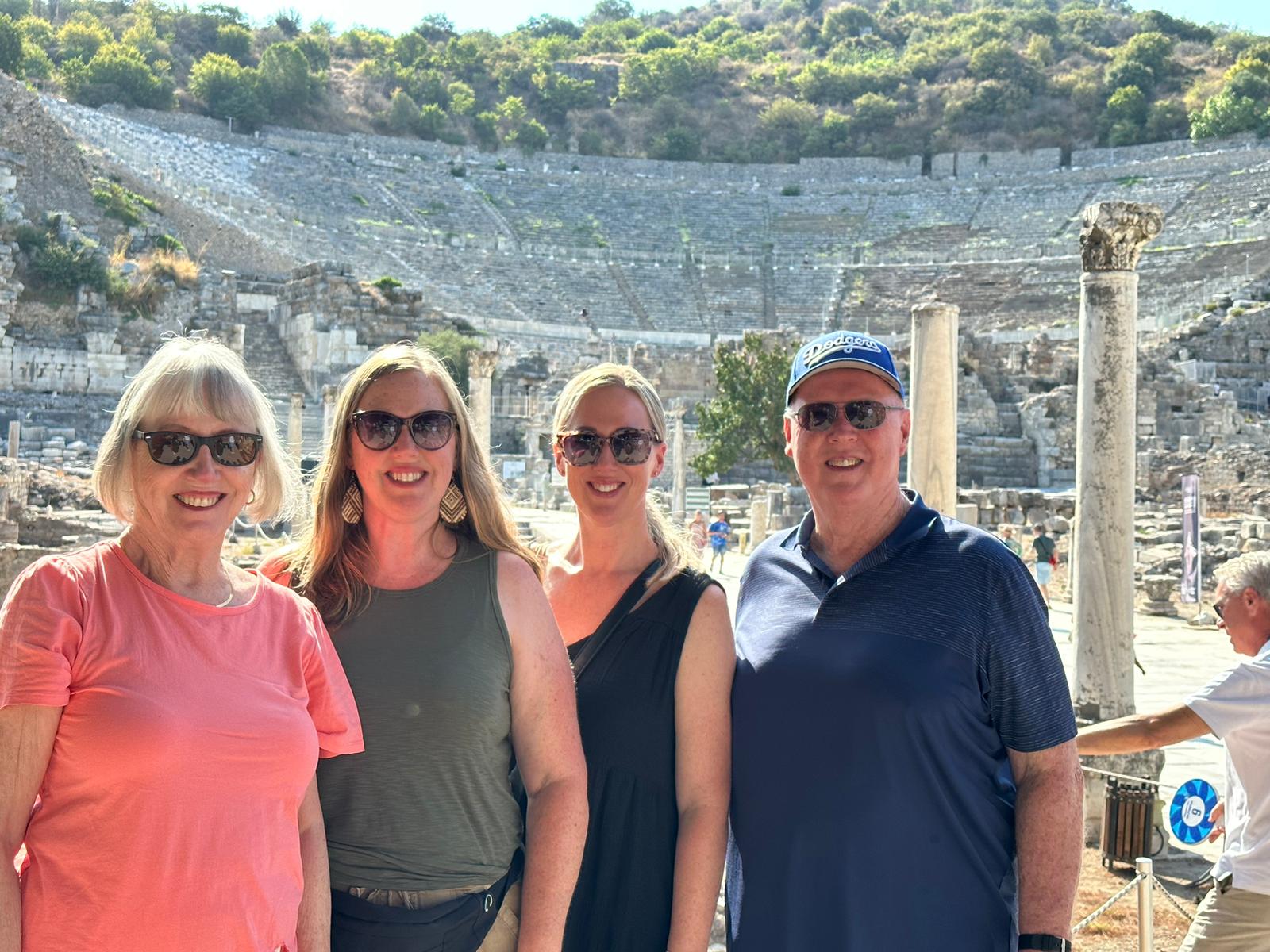
Ephesus is one of the most famous ancient cities in the world, known for its well-preserved ruins, including the Library of Celsus, the Great Theatre, and the Temple of Artemis.
Historical
Half to full day
Moderate (Entrance fee around 20 USD)
Selçuk Basilica
The Selçuk Basilica is an ancient Christian church with well-preserved mosaics and architectural details, offering insights into the region's early Christian history.
Historical
1-2 hours
Free
İsa Bey Mosque
İsa Bey Mosque is a 14th-century Ottoman mosque with beautiful Seljuk architecture, featuring intricate tile work and a serene courtyard.
Historical
30 minutes to 1 hour
Free
Şirince Village
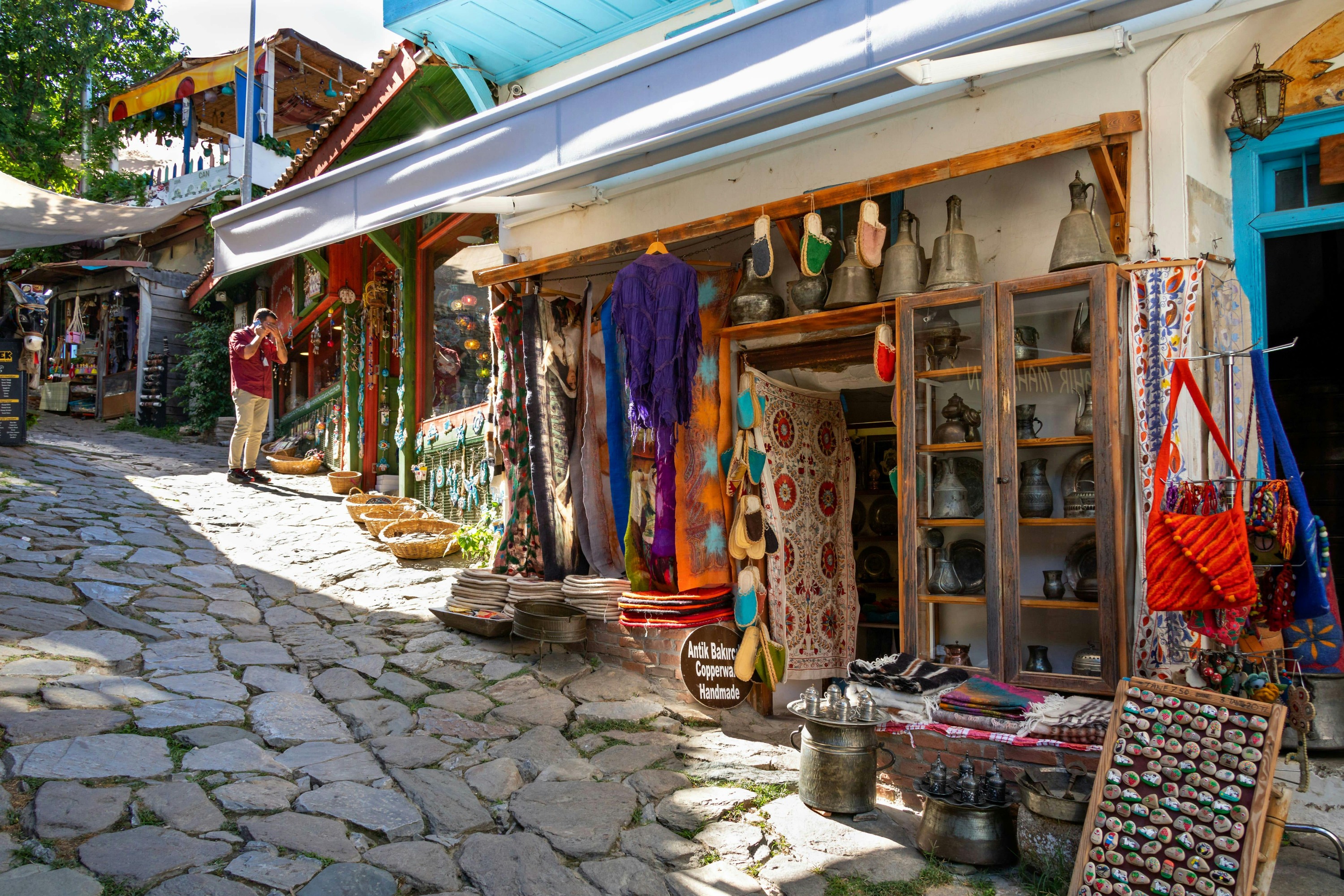
Şirince is a picturesque village known for its traditional stone houses, local wines, and olive oil. It's a great place to experience authentic Turkish village life and sample local produce.
Cultural
Half day
Free to explore, budget for food and wine tastings
Ephesus Museum
The Ephesus Museum houses a collection of artifacts from the ancient city of Ephesus, including sculptures, mosaics, and coins.
Museum
1-2 hours
Moderate (Entrance fee around 5 USD)
Must-Try Local Dishes
Çökertme Kebap
A traditional dish made with minced lamb or beef, onions, and spices, cooked on a skewer over an open flame.
Main Course
Contains meat, can be spicy
Karnıyarık
A stuffed eggplant dish made with minced meat, onions, tomatoes, and peppers, topped with a rich tomato sauce.
Main Course
Contains meat, can be spicy
Şakşuka
A traditional dish made with green peppers, tomatoes, and onions, cooked with minced meat and topped with a yogurt sauce.
Main Course
Contains meat, can be spicy
Midye Dolma
Stuffed mussels filled with a mixture of rice, pine nuts, and spices, served with a lemon wedge.
Snack
Contains seafood, can be spicy
Popular Activities
Hiking in the surrounding countryside
Horseback riding
Mountain biking
Beach relaxation in Kuşadası
Spa treatments in Pamukkale
Wine tasting in Şirince Village
Exploring ancient ruins
Visiting local museums
Best Time to Visit
April to June, September to October
The best time to visit Selçuk is during the spring and autumn when the weather is pleasant, and the crowds are manageable. These seasons offer ideal conditions for exploring the ancient sites and enjoying the local cuisine.
15°C to 30°C
59°F to 86°F
Practical Information
Language
- Official: Turkish
- Widely spoken: English, German, Russian
- English: Moderately spoken in tourist areas, limited in rural areas
Currency
Turkish Lira (TRY)
Time Zone
GMT+3
Electricity
220VV, 50HzHz
Safety Information
Overall Safety Rating: Generally safe
Selçuk is generally a safe destination for travelers, with low crime rates and a welcoming atmosphere. However, as with any destination, it's important to be aware of your surroundings and take precautions to ensure a safe and enjoyable trip.
Important Precautions:
- • Use licensed taxis or ride-hailing apps to avoid overcharging.
- • Keep valuables secure and be cautious of pickpockets in crowded areas.
- • Be wary of fake petitions or surveys, as they may be a distraction for thieves.
Getting there
By air
- Izmir Adnan Menderes Airport • 80 km
By train
Selçuk Railway Station
By bus
Selçuk Bus Terminal
Getting around
Public transport
Local buses are the primary mode of public transportation in Selçuk, connecting the town center to major attractions and nearby towns.
Taxis
Available • Apps: BiTaksi
Rentals
Car, Bike, Scooter
Neighborhoods
Town Center
Ephesus Area
Şirince Village
Day trips
Pamukkale
150 km • Full day
Pamukkale is a natural wonder known for its white travertine terraces and thermal springs. The site is a UNESCO World Heritage Site and a popular day trip from Selçuk.
Kuşadası
20 km • Half day
Kuşadası is a popular coastal town known for its beaches, nightlife, and shopping. It's a great day trip for those looking to relax on the beach or explore the town's many shops and restaurants.
Priene, Miletus, and Didyma
50-60 km • Full day
Priene, Miletus, and Didyma are ancient cities located near Selçuk, offering a glimpse into the region's rich history. These sites are less crowded than Ephesus and offer a unique opportunity to explore ancient ruins.
Festivals
International Selçuk Ephesus Culture and Art Festival • May
International Selçuk Ephesus Jazz Festival • July
Selçuk Wine Festival • September
Pro tips
- Visit the ancient city of Ephesus early in the morning or late in the afternoon to avoid the midday heat and crowds.
- Try the local specialties, such as Çökertme Kebap and Şakşuka, at traditional restaurants like Dünyayla Otel Restaurant or Selçuk Pidecisi.
- Explore the charming village of Şirince for a glimpse into traditional Turkish village life, with its stone houses, local wines, and olive oils.
- Take a day trip to Pamukkale to experience the natural wonders of the travertine terraces and thermal springs.
- Visit the Ephesus Museum to learn more about the ancient city and its rich history, with a collection of artifacts that includes sculptures, mosaics, and coins.
From $25
per person
Price varies by option
Secure booking
Free cancellation available
Instant confirmation