D-Day trip from Paris to Utah Beach aboard a van - Private Tour (2/7 pax)
Active
13h - 14h
For a full refund, cancel at least 24 hours before the scheduled departure time.
Instant confirmation
Mobile or paper ticket accepted
About this experience
Visit to Normandy D-Day battle sites and paratroopers drop zones from Paris (Including Utah Beach, Sainte Marie du Mont, Sainte Mère Eglise and the Normandy American Cemetery) from Paris in a private tour.
Travel with your own group of passengers (2/7 travellers) aboard a comfortable and air-conditioning Van for a more personalized atmosphere.
Step back in time on a history tour, and learn about the events of June 6, 1944
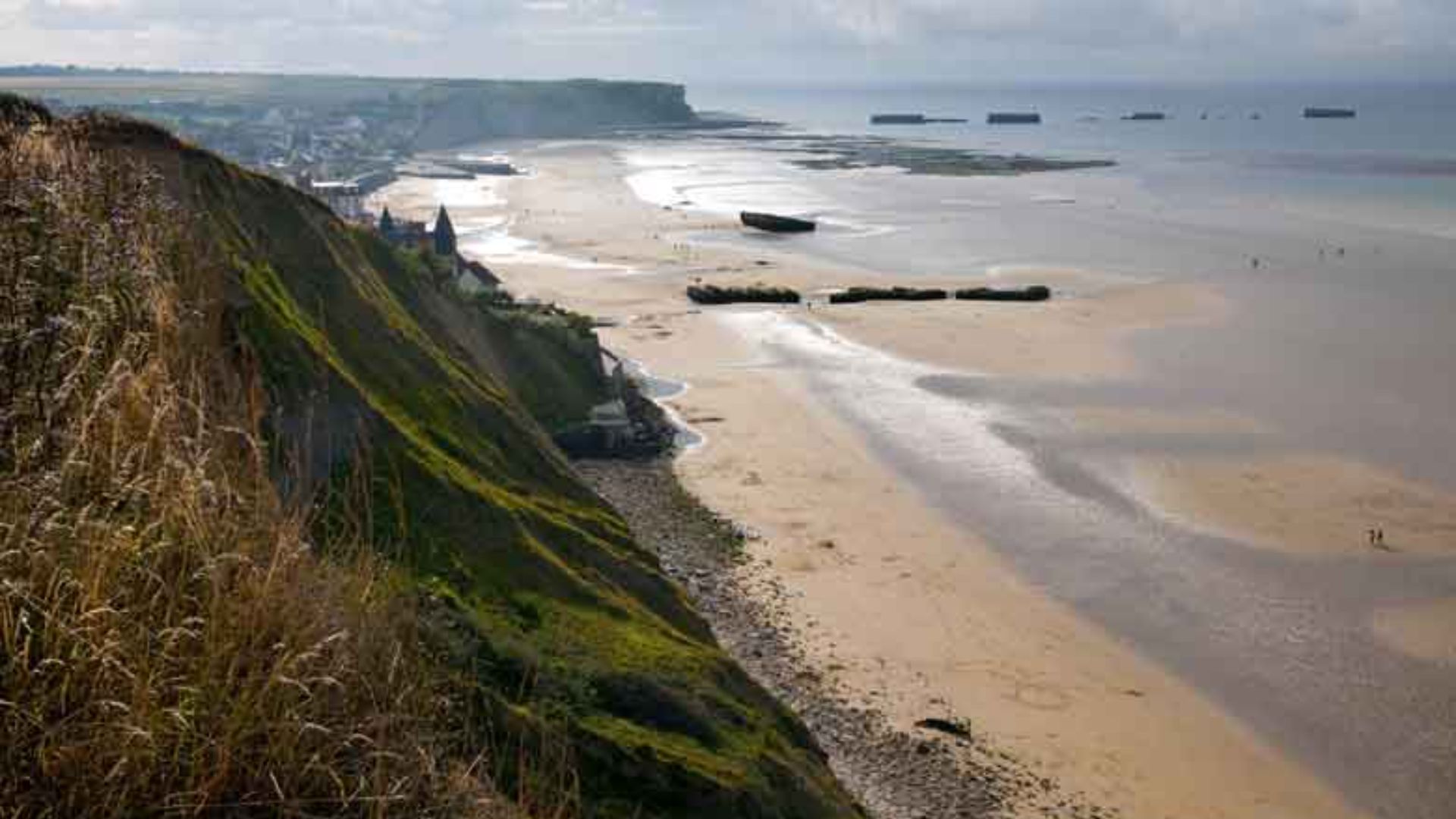
Walk along the dunes at « Utah beach » and see some german fortifications still standing and half buried in the sand.
Live the history of the Normandy invasion at Utah Beach Museum and see an authentic B26 bomber on display inside a Hangar!
See the famous church in Sainte Mère l’Eglise (With a dummy american paratrooper still hanging onto the church steeple).
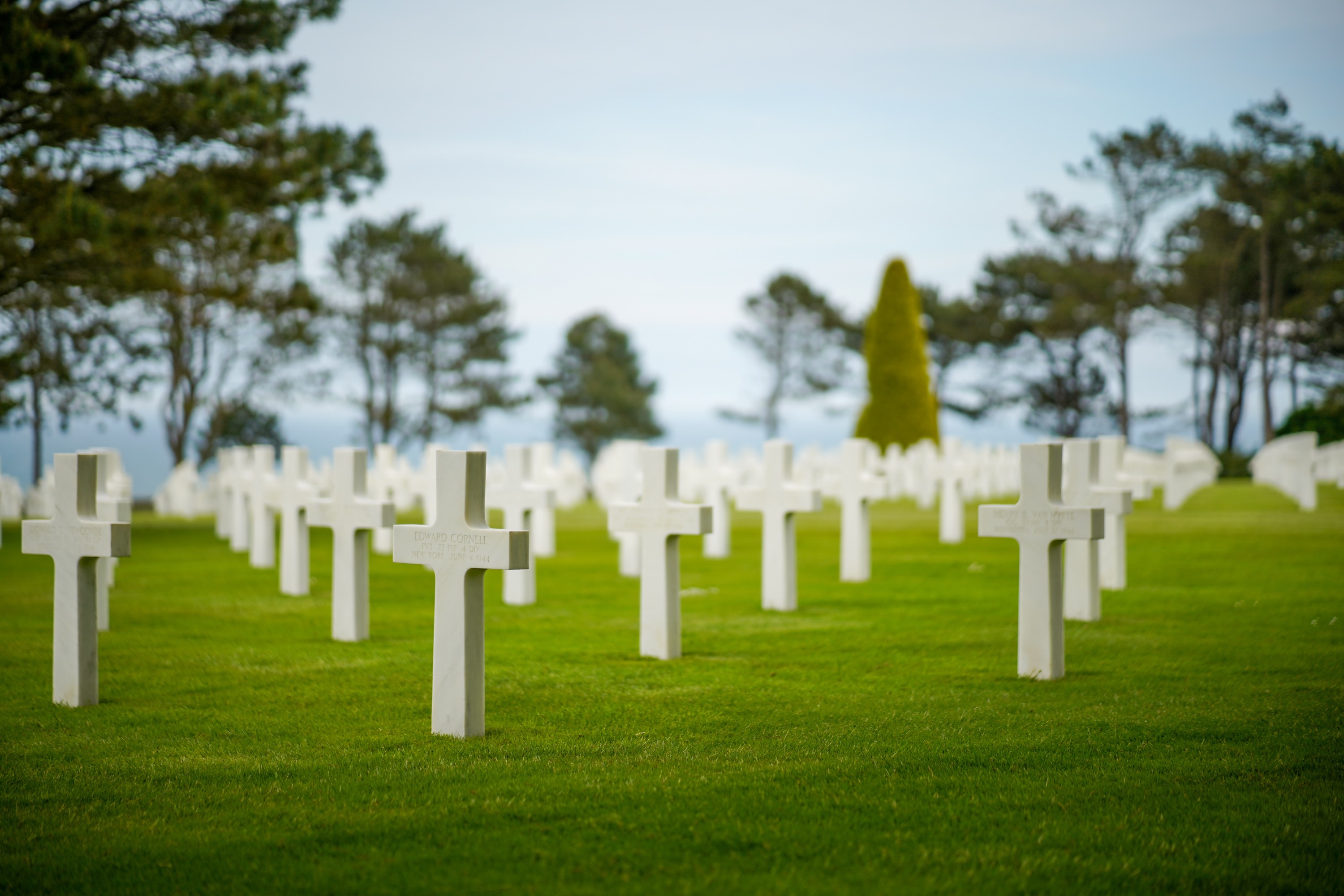
Pay tribute to the fallen americans soldiers while visiting the Normandy American Cemetery which overlooks Omaha Beach.
Available options
D-Day trip from Paris to Utah Beach aboard a van - Private Tour (2/7 pax)
Pickup included
What's included
Private transportation
Air-conditioned vehicle
Admission ticket to the UTAH BEACH Museum, La Madeleine, 50480 Sainte-Marie-du-Mont
Driver Guide
Hotel pick up and drop off in central Paris
Detailed itinerary
1
With your driver-guide you will travel to Normandy in an air-conditioned minivan. Once you arrive in the Cotentin Peninsula in Normandy, you will stop at « Utah Beach » which was one of the two American landing zones in Normandy. This beach was created by British general Bernard Montgomery who wished to establish a beachhead directly in the Cotentin peninsula in order to capture Cherbourg faster, because of its deep water harbor and its major logistic importance.
The amphibious assault, primarily by the US 4th Infantry Division and 70th Tank Battalion, was supported by airborne landings of the 82nd and 101st Airborne Division. The 4th Infantry Division landed 21,000 troops on Utah at the cost of only 197 casualties. Airborne troops arriving by parachute and glider numbered an additional 14,000 men, with 2,500 casualties.
To commemorate their bravery and sacrifice,severals war monuments were erected there directly on the sand of the beach after the war. Around the monuments, german concrete bunkers, shell holes and traces of the battle are still visibles today. (photo stop on the spot) :
.Monument of the 4th Infantry Division
.The 90th Infantry Division Monument
.U.S Navy Monument
.Milestone 00
At Utah beach, you will have time to walk along the dunes and while you will take a look at sea just to imagine in your mind the hundred of american war ships and Landing Craft Assault who came offshore Utah Beach on D-day.
2
Stop 2
Built on the very beach where the first American troops landed on June 6, 1944, the Utah Beach Museum recounts the story of D-Day in 10 sequences, from the preparation of the landing, to the final outcome and success. This comprehensive chronological journey immerses visitors in the history of the landing through a rich collection of objects, vehicles, materials, and oral histories.
Admire an original B26 bomber, one of only six remaining examples of this airplane still in existence worldwide, and relive the epic experience of American soldiers through the film “VICTORY IN THE SAND,” winner of a CINE GOLDEN EAGLE AWARD 2012 and the 2013 CINE SPECIAL JURY AWARD for best museum documentary.
By the end of your visit, you will understand the strategic choices for the Allied invasion of Normandy and the reasons for the success at Utah Beach. Thanks to your visit, you will also have contributed to the safeguard of the site and the preservation of the memory of the Allied soldiers’ extraordinary sacrifices.
3
The World War II Foundation selected Major “Dick” Winters of Easy Company as a symbol of leadership. This monument honors the combat leadership of the American troops during Operation Overlord.
Located along the strategically important road between Utah Beach and Sainte Marie du Mont. The sculpture of Winters leads in the direction of the upcoming battles.
4
The Iron Mike memorial is a statue of an American paratrooper. It is named after St Michael, a saint of the Airborne. The memorial is a replica of the one at the U.S. Army Infantry School in Fort Benning USA. The Iron Mike memorial was unveiled on June 7, 1997 by Major-General Kellogg, commander of the 82nd Airborne who made a jump with his men that day out of a plane.
Jumping on the night of D-Day, the 82nd Airborne had to capture the town of Sainte-Mère-Église. Holding the town, however, would have meant little without also holding the roads to and from it. One such route had a bottleneck: the La Fière Bridge a small stone bridge at La Fière manor, 700 yards to the west of the outskirts. The manor itself was a small group of buildings a grenade-throw away from the bridge. On the far side of the bridge, the road led west, the small hamlet of Cauguigny standing by it two-thirds of a mile away.
Securing La Fière Bridge fell to the 505th PIR. The 1st Battalion was one of the few units that night to jump on time and land in its designated drop zone to the east of the bridge, between it and the town. They quickly learned that things were not as expected: the Germans have flooded large areas of Normandy and the tiny Merderet River running north-south under the bridge was now a marsh 1,000 yards across at its narrowest. The elevated road between the bridge and Cauguigny became a causeway surrounded by water, providing no cover.
5
Sainte Mere Eglise became known to the world after the film The Longest Day because of the paratrooper John Steele of the 505th Parachute Infantry Regiment.
Steele indeed landed on the church's steeple and pretended to be dead in order to avoid being shot by the Germans.
He stayed put, hanging in the air, for two long hours and watched helplessly as the Germans shot his comrades around him.
Nowadays the Church is still standing in the middle of the town square.
The municipality of Sainte Mère l’Eglise has hung a dummy US paratrooper and his parachute on the steeple of the church and so has found the finest tribute that could be given to John Steele and all his comrades who lost their lives under German bullets.
In addition, two stained glass windows were created for the church, in order to commemorate the liberation of the town by 82nd Airborne Division on June 6,1944.One of them depicts the Virgin with two paratroopers and the second one is Private John M. Steele (1912–1969)
6
Stop 6
The guide is now taking you to visit the beatiful maintained American Cemetery in Colleville sur Mer which overlooks Omaha Beach nearby. The 180 acre site contains 9,387 perfectly aligned white crosses and a memorial chapel which adds the finishing touches to this moving scene, allowing visitors to reflect on the price of war.
While walking along row upon row of white grave headstones, your historian guide will share with you stories of soldiers who fought in the vicinities and then were awarded for gallantry the highest miltary decorations.
On the Walls of the Missing, in a semicircular garden on the east side of the memorial, are inscribed 1,557 names. Rosettes mark the names of those since recovered and identified.
The memorial consists of a semicircular colonnade with a loggia at each end containing large maps and narratives of the military operations; at the center is the bronze statue, “Spirit of American Youth Rising from the Waves.” An orientation table overlooking the beach depicts the landings in Normandy. Facing west at the memorial, one sees in the foreground the reflecting pool; beyond is the burial area with a circular chapel and, at the far end, granite statues representing the United States and France.
What's not included
Food and drinks
Gratuities (optional)
Available languages
Guide guide
EN
FR
Reviews breakdown
Viator
5.0
1 reviews
5★
1
4★
0
3★
0
2★
0
1★
0
Tripadvisor
5.0
1 reviews
5★
1
4★
0
3★
0
2★
0
1★
0
Important information
Public transportation options are available nearby
Not recommended for pregnant travelers
Not recommended for travelers with poor cardiovascular health
Suitable for all physical fitness levels
About Paris
Paris, the capital of France, is a city steeped in history, art, and romance. Known for its iconic landmarks, world-class museums, and charming neighborhoods, Paris offers a unique blend of timeless elegance and modern vibrancy. From the Eiffel Tower to the Louvre, the city is a treasure trove of cultural and historical gems.
Top Attractions
Eiffel Tower
The Eiffel Tower is Paris's most iconic landmark and a symbol of France. Built in 1889 for the World's Fair, it offers breathtaking views of the city.
Architecture
2-3 hours
€17.10-€26.80 (depending on the level)
Louvre Museum
The Louvre is the world's largest art museum and a historic monument in Paris. It houses thousands of works of art, including the Mona Lisa and the Venus de Milo.
Museum
3-4 hours
€17 (full price), free for under 18s and EU residents under 26
Notre-Dame Cathedral
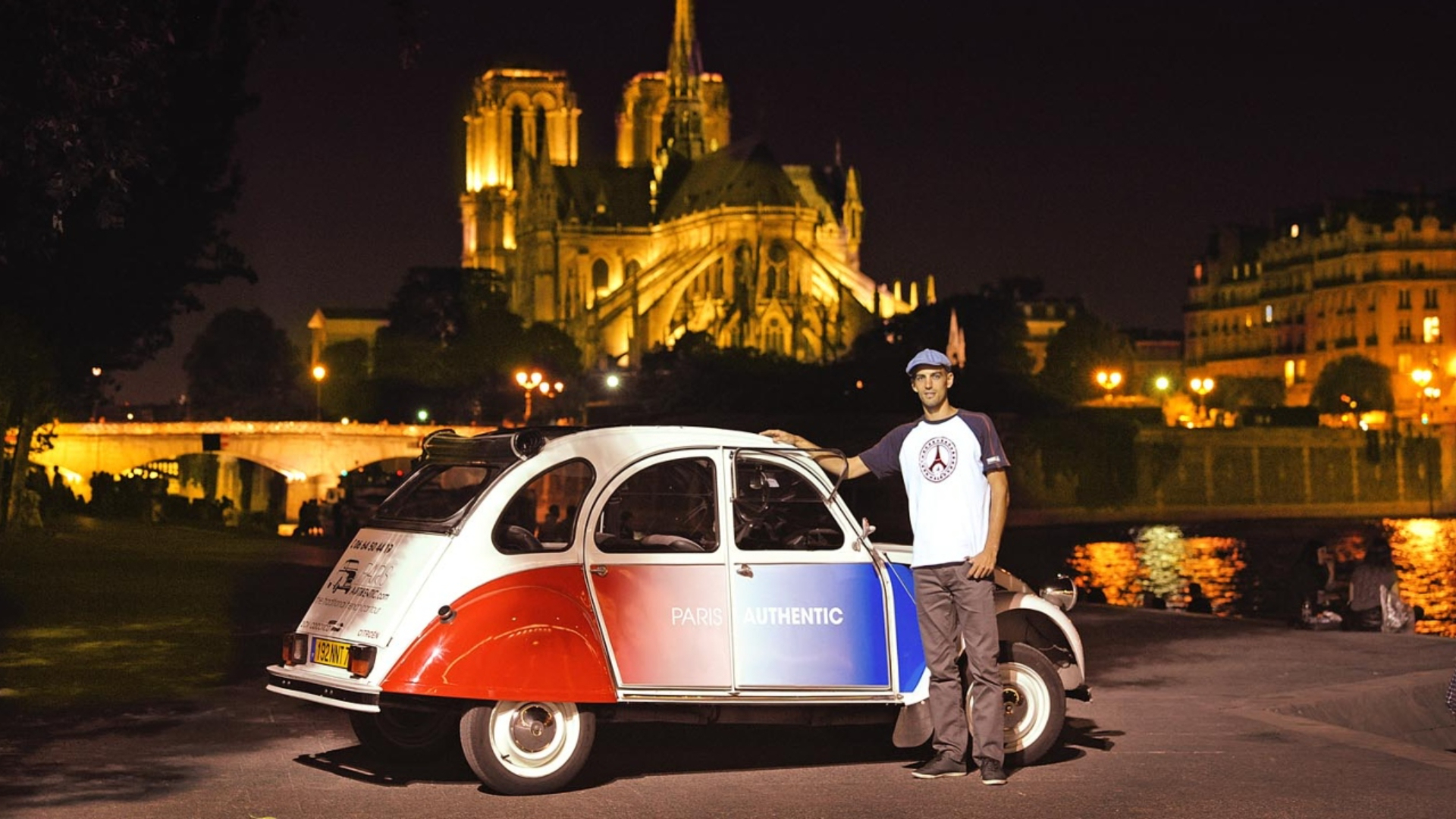
Notre-Dame is a masterpiece of French Gothic architecture and one of the most famous cathedrals in the world. It has been undergoing restoration since the 2019 fire.
Historical/Religious
1-2 hours
Free (towers and crypts may have reopening fees in the future)
Montmartre
Montmartre is a historic and artistic district known for its bohemian past, charming streets, and the stunning Sacré-Cœur Basilica.
Cultural
Half-day
Free to explore (Sacré-Cœur dome visit €6)
Palace of Versailles
The Palace of Versailles is a grand royal château and garden located just outside of Paris. It was the principal royal residence of France from 1682 to 1790.
Historical
Full day
€18-€28 (depending on the pass)
Must-Try Local Dishes
Croissant
A buttery, flaky pastry made from laminated dough. Best enjoyed fresh from a local bakery.
Breakfast
Contains gluten and dairy
Baguette
A long, thin loaf of French bread with a crispy crust and soft interior. Often served with cheese or ham.
Breakfast/Lunch
Contains gluten
Steak Frites
A classic French dish consisting of steak and French fries, usually served with a side of salad and béarnaise sauce.
Lunch/Dinner
Contains gluten (if served with fries) and meat
Crêpes
Thin pancakes that can be filled with a variety of sweet or savory ingredients, such as Nutella, cheese, or ham.
Snack/Dessert
Can be made gluten-free and vegetarian/vegan options available
Popular Activities
Hot air balloon rides
Rock climbing in Fontainebleau forest
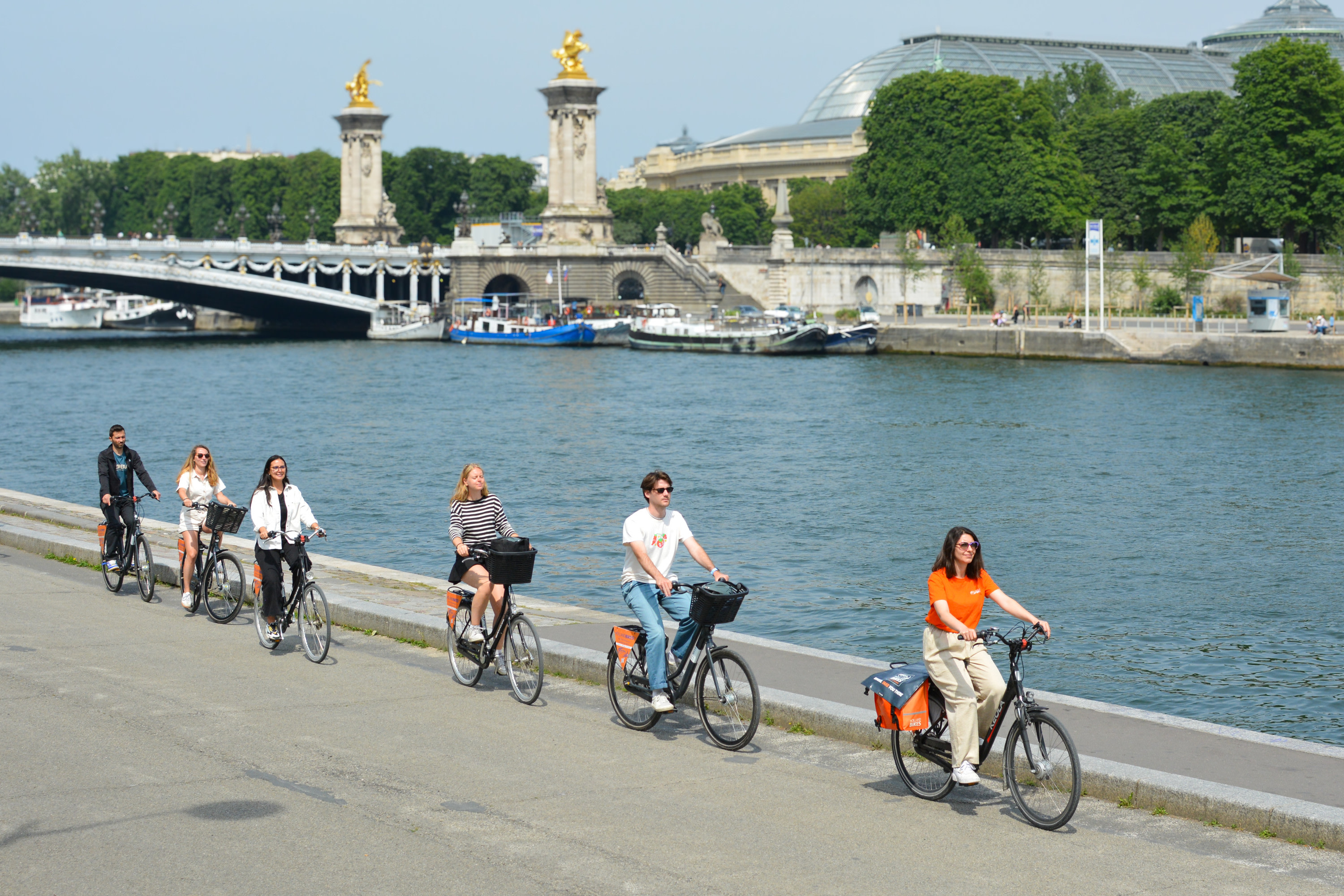
Kayaking on the Seine
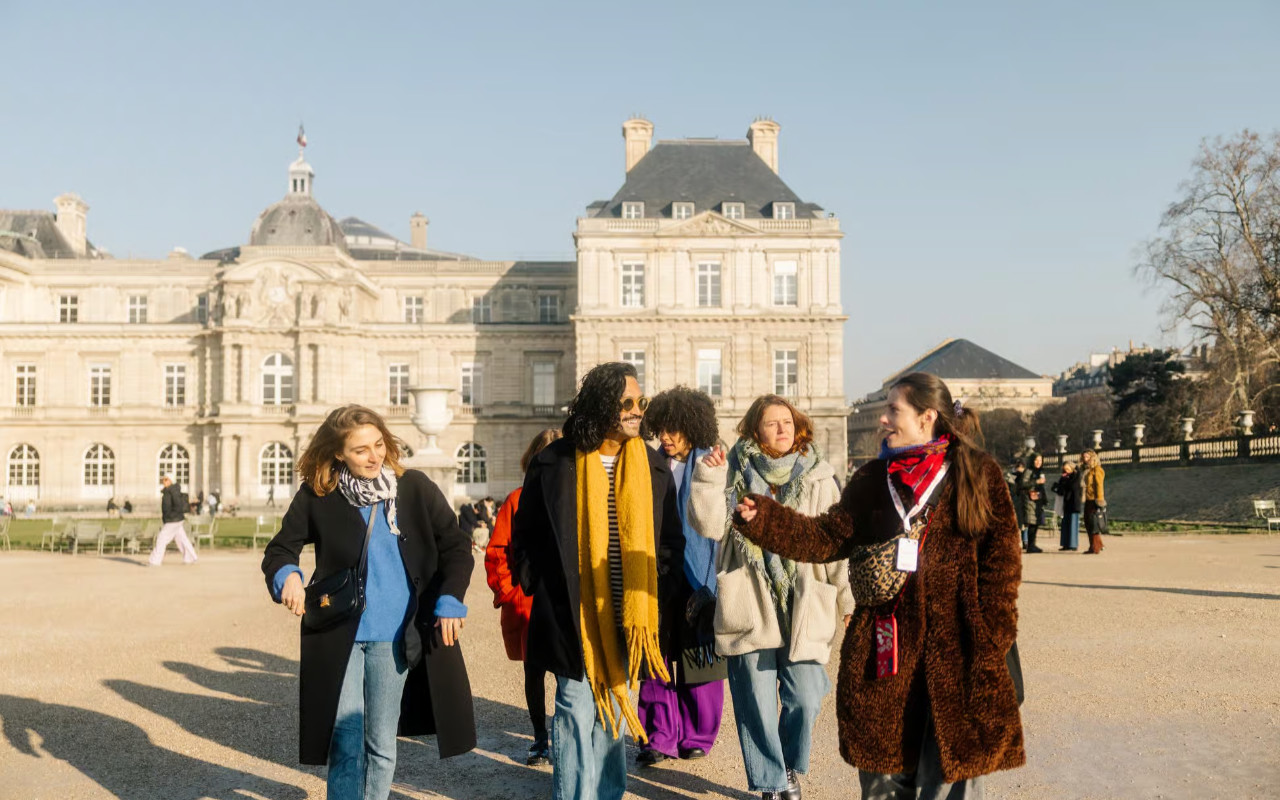
Picnicking in the Luxembourg Garden
Boat tours on the Seine
Spa day at a luxury hotel
Visiting museums and galleries
Attending a cabaret show
Best Time to Visit
June to August
Summer is the peak tourist season in Paris, with warm weather and long daylight hours. This is the best time to enjoy outdoor activities and festivals. However, it's also the busiest and most expensive time to visit.
15°C to 25°C (59°F to 77°F)
59°F to 77°F
Practical Information
Language
- Official: French
- Widely spoken: English, Spanish, Arabic, Portuguese
- English: Moderately spoken
Currency
Euro (EUR)
Time Zone
GMT+1 (Central European Time, CET), GMT+2 (Central European Summer Time, CEST) during daylight saving time
Electricity
230VV, 50HzHz
Safety Information
Overall Safety Rating: Generally safe
Paris is generally safe for travelers, but pickpocketing and petty theft can be a problem in tourist areas. Be aware of your surroundings and take precautions to protect your belongings.
Important Precautions:
- • Keep valuables secure and out of sight
- • Be cautious of pickpockets in crowded areas and on public transport
- • Use licensed taxis or ride-sharing services
Getting there
By air
- Charles de Gaulle Airport • 25 km (15.5 miles) from city center
- Orly Airport • 14 km (8.7 miles) from city center
By train
Gare du Nord, Gare de Lyon
By bus
Bercy Seine, Porte Maillot
Getting around
Public transport
The Paris Metro is one of the most efficient and extensive subway systems in the world, covering all major attractions and neighborhoods.
Taxis
Available • Apps: Uber, G7
Rentals
Car, Bike, Scooter
Neighborhoods
Le Marais
Montmartre
Latin Quarter
Saint-Germain-des-Prés
Champs-Élysées
Day trips
Versailles
17 km (10.5 miles) from Paris • Full day
The Palace of Versailles is a grand royal château and garden located just outside of Paris. It was the principal royal residence of France from 1682 to 1790 and is famous for its opulent interiors and vast gardens.
Giverny
75 km (47 miles) from Paris • Half day to full day
Giverny is a charming village known as the home of the famous impressionist painter Claude Monet. The village is home to Monet's House and Gardens, which inspired many of his most famous works.
Château de Fontainebleau
55 km (34 miles) from Paris • Full day
The Château de Fontainebleau is a grand royal château and park located just outside of Paris. It was a residence of the French monarchs from Louis VII to Napoleon III and is known for its beautiful architecture and vast forests.
Festivals
Fête de la Musique • June 21st (annual)
Paris Fashion Week • February and September (annual)
Nuit Blanche • First Saturday in October (annual)
Pro tips
- Learn a few basic French phrases to enhance your experience and show respect for the local culture
- Use public transport, walk, or bike to get around the city and avoid traffic and parking issues
- Consider purchasing a Paris Museum Pass or a multi-day public transport pass to save money on attractions and transport
- Explore the city's many neighborhoods and hidden gems, not just the major tourist attractions
- Try local specialties and enjoy the dining experience slowly and leisurely
From $25
per person
Price varies by option
Secure booking
Free cancellation available
Instant confirmation