Catholic Heritage Walking Tour of Split
Active
1h
For a full refund, cancel at least 24 hours before the scheduled departure time.
Instant confirmation
Mobile or paper ticket accepted
About this experience
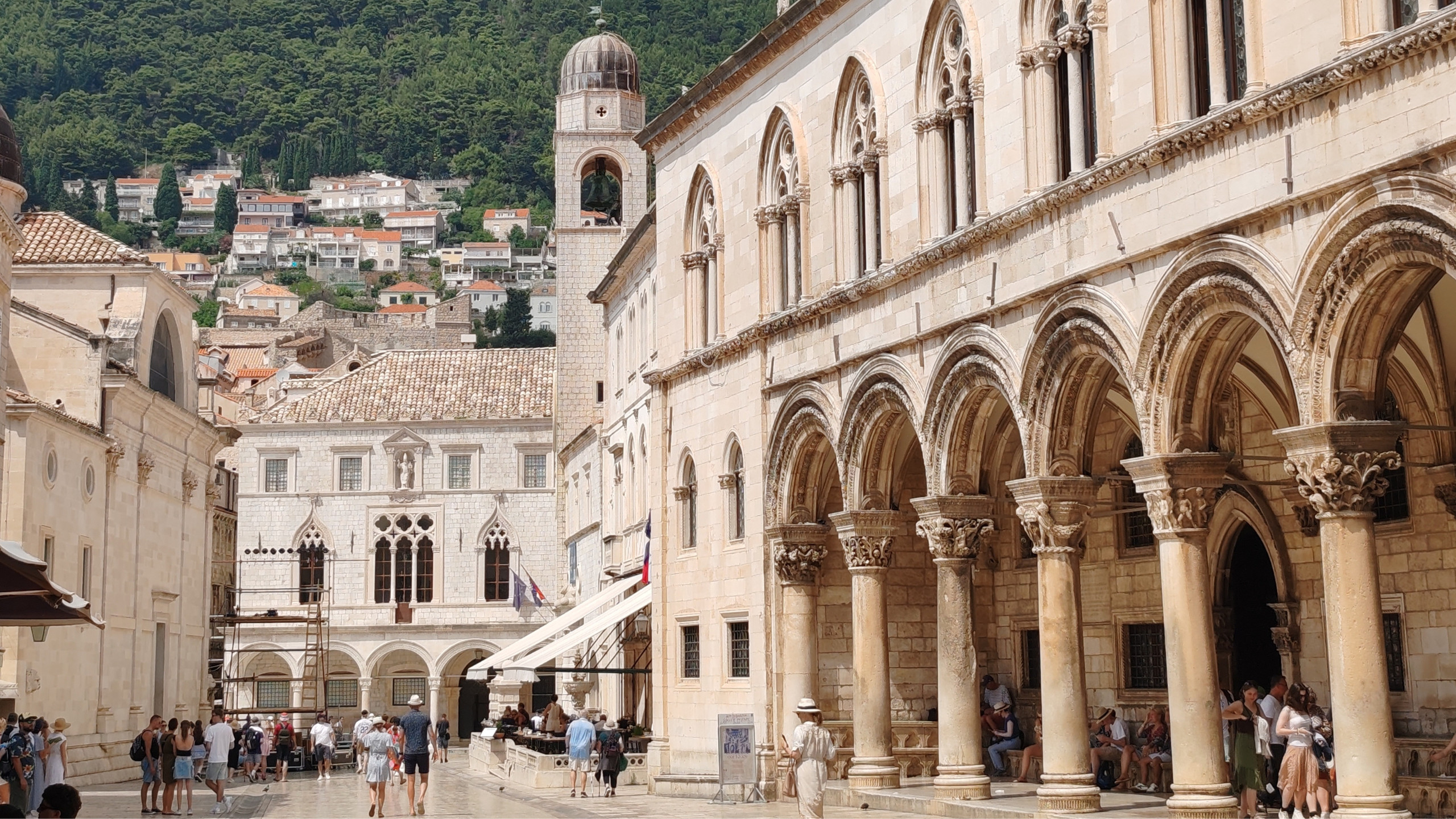
This walking tour is a unique blend of a classic stroll through Split’s historic center and a special focus on its rich Catholic heritage.
Together we’ll uncover the story of the Croats—who already accepted Christianity at the time of Emperor Heraclius—whose history has been deeply intertwined with Christianity and Catholicism from the very beginning.
In 90 minutes, we’ll explore the city’s ancient and medieval heart: the arrival of the Romans, the legacy of Emperor Diocletian, our beloved patron Saint Domnius, and the centuries of faith that shaped Split.
Along the way, we’ll wander narrow stone alleys, discover hidden corners, and admire the many beautiful churches that grace the old town.
Come walk with me, feel the spirit of faith and history come alive, and make your visit to Split truly unforgettable. Book your Catholic walking tour today—I can’t wait to welcome you!
Available options
Catholic Heritage Walking Tour of Split
What's included
Bringing the Catholic heritage of the Croatian people closer to all guests on the tour
Sightseeing of 1700 years old Diocletian's palace - a world heritage site protected by UNESCO
Professional and licensed tour guide who is a local and lives in Split
Detailed itinerary
1
Next to the sign with big red letters that spells out the city name - SPLIT, behind the bus terminal for tourist buses. When you turn your back to the restaurant called Terminal F, you will see the southeast tower of Diocletian's palace and entrance into the parking lot at Riva promenade.
2
Stop 2
Meet your guide and explore how Split’s waterfront evolved from a palace quay into a vibrant promenade that serves as the city’s living room, cherished by every local resident.
3
Walking through the main street of the palace’s cellars, 1,700 years old.
4
Stop 4
Get ready to travel back in time as you enter this magnificent square. Encircled by columns, you’ll experience what it felt like to witness the emperor’s appearance under the Protiron, emerging from the Vestibule. Discover how the Cardo and Decumanus, the city’s main streets, evolved over the centuries, shaped by various architectural styles. And most importantly, here you will see the oldest building in the world with an active Catholic cathedral and hear all about the persecution of Christians during Diocletian’s time.
5
Whether you approach from the Peristyle or the Cryptoporticus, this circular structure with its open ceiling will captivate you with both its appearance and remarkable acoustics. Originally serving as the entrance to Diocletian’s private quarters, it continues to impress visitors just as it did centuries ago. Thanks to its exceptional sound quality, it is often used by klapa—traditional a cappella singing groups that preserve the Dalmatian style, recognized by UNESCO as an intangible cultural heritage.
6
As you enter the remains of the emperor’s dining hall, you’ll catch a glimpse of the Roman way of dining. You’ll learn what they ate, how they feasted, and why the vomitorium played such a role, giving you a true understanding of the phrase: “Carpe Diem!”
7
Stop 7
The eastern entrance to the palace, with the Dominican church and monastery right next to it.
8
As you enter the Propugnaculum, you’ll understand why gaining access to this palace—designed as a fortified military camp—was no simple task. Beyond the impressive gates, you’ll see the palace’s best-preserved wall and uncover the hidden location of Split’s oldest chapel. In the wall, we will visit one of the oldest churches in the city, the Church of Saint Martin
9
A narrow church, once a guardhouse for Roman soldiers.
10
Stop 10
Beyond being a perfect spot for photos, you’ll come across the famous statue of Gregory of Nin. Once you see it, you’ll understand why its creator, Ivan Meštrović, is celebrated as one of the world’s greatest sculptors.
11
This town square, which has undergone several name changes over the centuries, is now the heart of the old town. Discover the rich architectural layers and the vibrant, often turbulent history that define this lively square.
12
The Church of St. Francis in Split, often called the “Split Pantheon,” is the burial place of several notable citizens, including the father of Croatian literature, Marko Marulić. Their tombs are located in the monastery cloister, with Marulić’s sarcophagus featuring a life-sized sculpture by Ivan Meštrović.
13
Stop 13
In this charming square, you’ll find Split’s finest example of Baroque architecture. Hear the fascinating stories of how the Venetian Republic defended the city from Ottoman attacks and the pivotal role Marko Marulić, the father of Croatian literature, played in its history.
What's not included
Gratuities
Available languages
Guide guide
EN
Reviews breakdown
Tripadvisor
5.0
2 reviews
5★
2
4★
0
3★
0
2★
0
1★
0
Important information
Infants and small children can ride in a pram or stroller
Public transportation options are available nearby
Suitable for all physical fitness levels
Meeting point
Next to the sign with big red letters that spells out the city name - SPLIT, behind the bus terminal for tourist buses. When you turn your back to the restaurant called Terminal F, you will see the southeast tower of Diocletian's palace and entrance into the parking lot at Riva promenade.
About Split
Split is a stunning coastal city in Croatia, known for its rich history, vibrant culture, and breathtaking Adriatic Sea views. The city is home to the impressive Diocletian's Palace, a UNESCO World Heritage site, and offers a blend of ancient Roman architecture and modern Mediterranean charm.
Top Attractions
Diocletian's Palace
A UNESCO World Heritage site and one of the most impressive Roman palaces in the world. Built by the Roman Emperor Diocletian in the 4th century, it's a must-visit for history buffs.
Historical/Architecture
2-3 hours
Free to enter, some areas require a ticket (around 50 HRK)
Riva Promenade
A lively waterfront promenade that stretches along the Adriatic Sea. It's a great place to enjoy the sea breeze, people-watch, and sample local ice cream.
Scenic
1-2 hours
Free
Marjan Hill
A forested park offering stunning views of Split and the surrounding islands. It's perfect for hiking, swimming, and enjoying the natural beauty of the area.
Nature/Scenic
2-4 hours
Free
Bacvice Beach
A popular sandy beach known for its shallow waters and vibrant atmosphere. It's a great place to relax, swim, and enjoy local seafood.
Beach
Half-day
Free, sunbeds and umbrellas for rent
Split City Museum
Housed in the historic Papalić Palace, this museum offers a fascinating look at the history and culture of Split through various exhibits and artifacts.
Museum
1-2 hours
Free, donations welcome
Must-Try Local Dishes
Black Risotto (Crni Rižot)
A traditional Dalmatian dish made with cuttlefish, giving it a distinctive black color.
Main course
Contains seafood, not suitable for vegetarians or those with seafood allergies.
Peka
A slow-cooked dish made with meat (lamb, veal, or octopus) and vegetables, cooked under a bell-like lid with hot coals.
Main course
Can be made with meat or seafood, not suitable for vegetarians.
Brodet
A traditional fish stew made with various types of fish, potatoes, and tomatoes.
Main course
Contains seafood, not suitable for vegetarians or those with seafood allergies.
Rozata
A traditional Dalmatian dessert similar to crème caramel, flavored with rose liqueur.
Dessert
Contains dairy and eggs, not suitable for vegans.
Popular Activities
Hiking on Marjan Hill
Sailing to nearby islands
Scuba diving in the Adriatic Sea
Sunbathing at Bacvice Beach
Enjoying a leisurely stroll along Riva Promenade
Relaxing at a local spa
Exploring Diocletian's Palace
Visiting local museums and galleries
Best Time to Visit
June to August
The peak season offers the best weather for beach activities and outdoor exploration. However, it is also the busiest and most expensive time to visit.
25°C to 35°C
77°F to 95°F
Practical Information
Language
- Official: Croatian
- Widely spoken: English, Italian, German
- English: Moderately spoken, especially in tourist areas
Currency
Croatian Kuna (HRK)
Time Zone
GMT+1 (Central European Time, CET)
Electricity
230VV, 50HzHz
Safety Information
Overall Safety Rating: Generally safe
Split is generally safe for travelers, with low crime rates and a welcoming atmosphere. However, as with any tourist destination, it's important to be aware of your surroundings and take precautions to ensure a safe and enjoyable trip.
Important Precautions:
- • Be aware of your surroundings, especially in crowded areas.
- • Use licensed taxis and agree on the fare before starting your journey.
- • Be cautious of strangers offering unsolicited help or services.
Getting there
By air
- Split Airport • 15 km from city center
By train
Split Railway Station
By bus
Split Bus Terminal
Getting around
Public transport
The bus system is efficient and covers most parts of the city. Buses are a convenient and affordable way to get around.
Taxis
Available • Apps: Camme, Bolt
Rentals
Car, Bike, Scooter
Neighborhoods
Old Town
Varoš
Bačvice
Meje
Day trips
Hvar Island
60 km from Split • Full day
A picturesque island known for its stunning beaches, lavender fields, and historic sites. Hvar is a popular destination for sailing, swimming, and exploring.
Brač Island
30 km from Split • Full day
A beautiful island known for its golden beaches, crystal-clear waters, and scenic hiking trails. Brač is a great destination for beach lovers and outdoor enthusiasts.
Krka National Park
80 km from Split • Full day
A stunning national park known for its waterfalls, lakes, and lush greenery. Krka is a great destination for hiking, swimming, and nature lovers.
Festivals
Split Summer Festival • July to September
Split Music Festival • July to August
Split International Film Festival • June to July
Pro tips
- Visit Diocletian's Palace early in the morning or late in the afternoon to avoid crowds.
- Try local seafood dishes, especially Black Risotto and Peka, for an authentic taste of Dalmatian cuisine.
- Explore the city on foot or by bike to discover hidden gems and enjoy the scenic views.
- Take a day trip to nearby islands like Hvar or Brač for stunning beaches and outdoor activities.
- Enjoy the sunset from Marjan Hill for a breathtaking view of the city and the Adriatic Sea.
From $25
per person
Price varies by option
Secure booking
Free cancellation available
Instant confirmation