7 Days Private Guided Tour of Bhutan
Active
7d
For a full refund, cancel at least 24 hours before the scheduled departure time.
Instant_then_manual confirmation
Mobile or paper ticket accepted
About this experience
Discover the magic of Bhutan on a rejuvenating 7-day adventure. Immerse yourself in the heart of the Himalayas as we explore the enchanting cities of Thimphu, Punakha, and Paro. Unveil ancient monasteries, hike through breathtaking landscapes, and connect with warm-hearted locals. This tour is designed for the young at heart, offering a perfect blend of cultural exploration, outdoor adventures, and relaxation.
Experience the thrill of hiking through pristine forests, visit iconic landmarks like Tiger's Nest Monastery, and immerse yourself in the vibrant local culture. From discovering hidden gems to creating lifelong memories, this journey is your passport to a truly unforgettable Bhutanese adventure.
Available options
7 Days Private Guided Tour of Bhutan
Pickup included
What's included
A qualified & licensed English speaking guide and An experienced driver with Tour Vehicle
Visa, Taxes, surcharges, the government contribution. Tourism Development funds
Accommodations at 3-star hotels
Detailed itinerary
1
Welcome to Bhutan, the Land of the Thunder Dragon. Touching down at Paro International Airport, you will be greeted by your guide upon exiting the arrival hall. Today, we will take it easy to acclimatise to the altitude. Drive to Thimphu, check in to the hotel and lets have your first taste of Bhutanese cuisine.
2
Motithang Takin Preserve, located in the Motithang district of Thimphu, Bhutan is a wildlife reserve area for Takin, the national animal of Bhutan. Originally a mini-zoo, it was converted into a preserve when it was discovered that the animals refrained from inhabiting the surrounding forest even when set free. The reason for declaring Takin as a national animal of Bhutan is attributed to a legend of the animal’s creation in Bhutan in the 15th century by Lama Drukpa Kunley
3
This is one of the most ancient temples of Thimphu valley. This is the home of gigantic prayer wheels, super-sized sacred scriptures and, most importantly, a sculpted figure of Thousand-armed Avalokitesvara, a lord/master that looks over the troubles/sadness of life, according to the Buddhist faith.
4
This institution, better known as the “school of painting,” runs several educational programs in the 13 traditional arts Bhutan is famous for. The well-motivated students that come here can delve into elaborate forms of painting, embroidery, woodcarving, and statue sculpting, usually with the use of clay. The pieces made here are impressive—even the ones created by mere students. You will be impressed with the quality of what is displayed and put up for sale here.
5
We will take a scenic drive up to Buddha Point in the Kuenselphodrang Nature Park to see the 169-foot-tall bronze statue of the seated Buddha Dordenma. One of the largest sitting Buddha statues in the world, it sits atop a hill where you will see sweeping views of the valley and surrounding mountains.
6
Centenary Farmers’ Market is where farmers come to sell their vegetables, cheeses, grains, and the occasional yak leg. Across the street is the Kundeyling Baazam where you can bargain for local handicrafts, such as mala beads and prayer wheels.
7
Simply Bhutan Project is a living museum and a photo studio. The project is aimed at preservation and promotion of culture being one of the four pillars of Gross National Happiness (GNH) by involving youth as the core group because they are the future leaders of the country.
8
The “fortress of the glorious religion” was first
constructed in 1641 and restored by the Third King Jigme Dorji Wangchuck in the 1960s. Tashichhodzong houses the offices of some ministries, His Majesty’s secretariat, and the central monastic body.
9
Along the old road from Paro to Phuentsholing, about 5km south of Thimphu, lies the charming ancient fortress. Simtokha Dzong was built in 1629 by Zhabdrung Ngawang Namgyal. Strategically built on a projecting ridge with deep gullies, the Simtokha Dzong overlooks the entire Thimphu Valley.
Officially known as Sangak Zabdhon Phodrang ‘Palace of the Profound Meaning of Secret Mantras’. Simtokha Dzong is the first dzong built in Bhutan during the 17th century which is still intact in its original state. There were dzongs in Bhutan built as early as 1153, but this was the first dzong built by the Zhabdrung, and was the first structure to incorporate both monastic and administrative facilities. It is also the oldest dzong to have survived as a complete structure. Just above the dzong is Bhutan's Institute for Language and Culture Studies.
10
At 3,100 metres, this beautiful pass located on the way to Punakha
from Thimphu offers stunning 360-degree panoramas of the Himalayas mountain range. Here you
will also see 108 chortens built by Her Majesty The Queen Mother Ashi Dorji Wangmo Wangchuck.
The pass is a popular spiritual destination for both locals and tourists.
11
Also known as the Fertility Temple, this monastery is located in the beautiful village of Sopsokha. It stands on a small hill close to the village of Lobesa and was
constructed in 1499 by Ngawang Choegyel, the 14th Drukpaheirarch. This monastery is dedicated
to Lama Drukpa Kunley, the 'Divine Madman', known for his risqué behavior. The footpath to Chimi Lhakhang meanders through beautiful terraces of paddy fields.
12
Located strategically at the junction of the Pho Chu and Mo Chu rivers, the Dzong was built in 1637 by the Great Unifer of Bhutan as the religious and administrative seat of the region. It was here that the dual system of government in Bhutan was introduced in the 17th century.
13
At 160 metres, this is known as the longest suspension bridge in Bhutan. From here, you will get spectacular views of Punakha Dzong and the Pho Chhu Valley.
14
The Druk Wangyal Lhakhang (temple) was built in honor of His Majesty the fourth Druk Gyalpo, Jigme Singye Wangchuck. The past and future appears to merge in the details of the Lhakhang (temple) and its structure tells the story of a supreme warrior figure, whose vision pierces the distant future in a fine blend of history and mythology.
15
[Duration 2 hour, 1 hour to ascend and 1 hour to descend]
There is no temple in Bhutan built elaborately as this. This fascinating temple was built by the
Queen Mother of the 5th King to bring universal peace in this world. The best of the spiritual art
works are painted on the inner walls. There are also paintings of Buddhist teachers and tutelary
deities of the country. This is a great temple to study the symbolic meanings from frescoes and
sculptures.The Chorten is situated along a hill up the valley and can be reached after a leisurely
hike through the woods and paddy fields.
16
A temple and nunnery perched on a ridge and overlooking Toebesa, Punakha and wangduephodrang valleys. The temple is consecrated by
His Holiness and was attended by His Majesty the King, the Fourth Druk Gyalpo, members of the
royal family along with hundreds of people from Punakha. The temple is dedicated to the
bodhisattva of compassion.
17
Chorten Nyenpo is not a chorten but a temple built on the top of a hill in Chumey above the place called Kakaling or Yamtrak. It takes a good 45 minutes on foot to access it. It was founded in 1587 by Tenpey Nyima, the Zhabdrung’s father, on his journey through Bhutan from Tibet. He took a consort Ani Machig from the lineage of the great religious figure Pema Lingpa. A family looks after the temple. It is a small building, typical of the unassuming architectural style of this period in Bhutan. The stone throne where Tenpey Nyima gave his teachings is still there. It is a venerated place kept by a caretaker but without much activity because of its isolated location.
18
At 1,300 years old, this is one of the oldest temples in Bhutan. Like
the Jambhay Lhakhang in Bumthang, it is one of 108 temples built by the Tibetan King Songtsen
Gampo to subdue and vanquish an ogress that was obstructing the spread of Buddhism. Legend
has it that all 108 temples were built in a single night. The Kyichhu temple’s name means
“reservoir of peace”. Next to the temple is a museum dedicated to the late Dilgo Khyentse
Rinpoche. You will see photographs and other personal artefacts belonging to the Rinpoche.
19
The beautiful valley is home to many of Bhutan's old monasteries and
temples. The valley is also home to Mount Chomolhari (7,300 meters) situated at the northern end
of the valley whose glacier water forms the Pachu flowing through the valley.
20
Explore Rinpung Dzong, which the locals call
the ‘fortress of a heap of jewels’. Built in 1646 by Zhabdrung Ngawang Namgyal, the dzong stands
on a hill above Paro Township. It is linked by a traditional cantilever bridge called the Nemi Zam
over the Po Chhu. Walk up the stone paved path running alongside imposing outer walls. Once
inside the Dzong, you will be welcomed by the monks, architecture and beautiful frescoes. This
dzong is a highlight for art and history lovers.
21
National Museum of Bhutan is a cultural museum in the town of Paro in western Bhutan. Established in 1968, in the renovated ancient Ta-dzong building, above Rinpung Dzong under the command of His Majesty, the King Jigme Dorji Wangchuck, the third hereditary Monarch of Bhutan.
22
Drukgyel is one of the most interesting places to see in Paro because of its history and notoriety. It is one of the oldest monasteries in the area and despite being the victim of a massive fire accident in the 1950s, it has withstood and survived for all to witness it today. The fort has been renovated and rebuilt, with some new murals and frescoes being added to the plethora of existing ones. Visitors can get a wonderful view of the surrounding Chomolhari mountains from the summit of the Monastery. Exploring Drukgyel is a highlight of any trip to Bhutan, offering a glimpse into the past and the enduring spirit of its people.
23
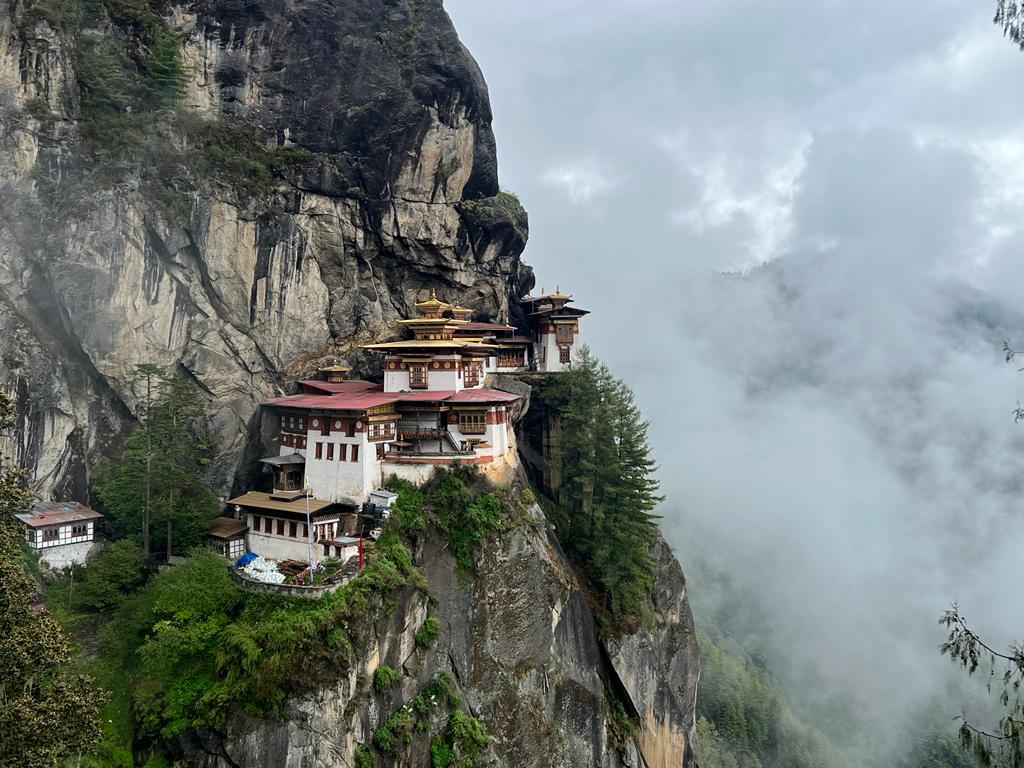
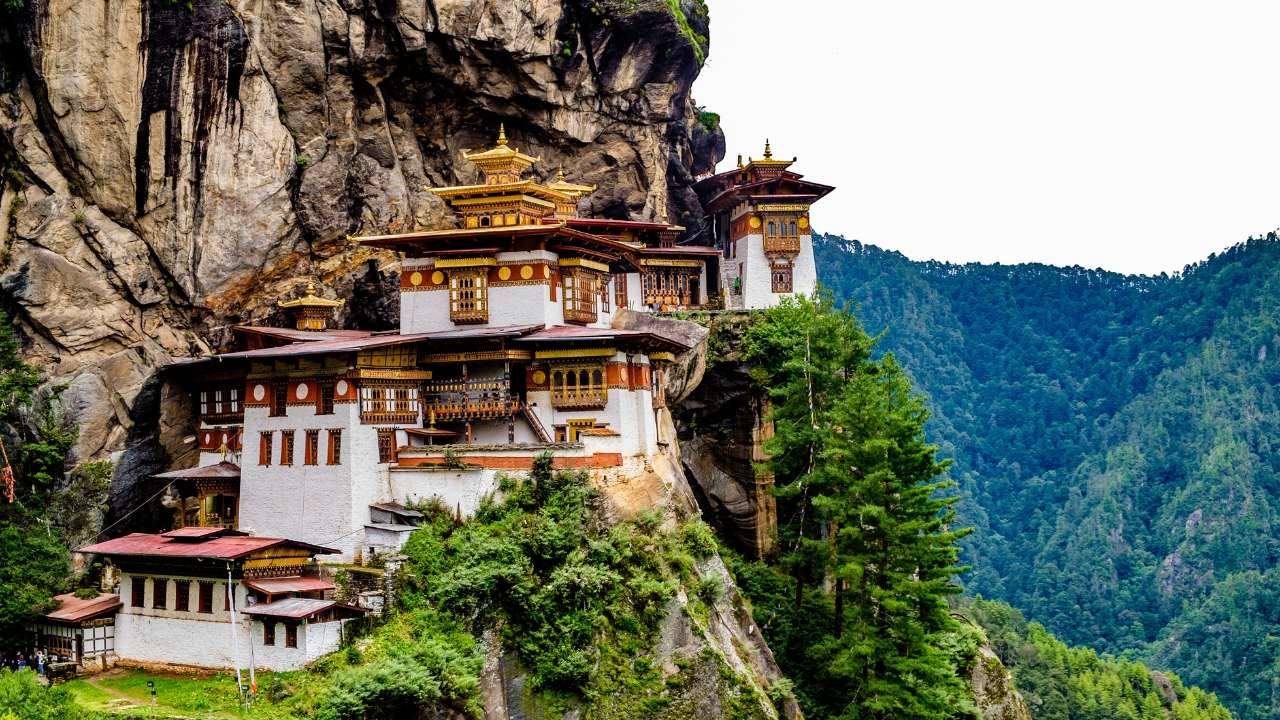
Are you ready? We will be making the hike up to one of the key highlights in Bhutan today! Tiger's Nest aka Taktsang Monastery. Also known as the Tiger’s Nest, this monastery set
dramatically on the cliffs of Paro Valley, is Bhutan’s most famous landmark. In fact, some tourists
would even say that “A trip to Bhutan is not complete without climbing to Taktsang.”
24
Today we will bid a fond farewell to this beautiful Himalayan country and take an early flight back to Singapore. We hope by now you would have made some friends and also kept many photos and beautiful memories of Bhutan! And we look forward to seeing you again in this beautiful land of endless Enchantments! Tashi Delek!
What's not included
Hot Stone Bath - USD 25 per person
Available languages
Guide guide
EN
Reviews breakdown
Tripadvisor
5.0
18 reviews
5★
18
4★
0
3★
0
2★
0
1★
0
Important information
Infants and small children can ride in a pram or stroller
Public transportation options are available nearby
Infants are required to sit on an adult’s lap
Not recommended for travelers with spinal injuries
Not recommended for pregnant travelers
Not recommended for travelers with poor cardiovascular health
Travelers should have at least a moderate level of physical fitness
About Paro
Paro is a picturesque valley in Bhutan, known for its stunning landscapes, historic dzongs, and the only international airport in the country. It's a cultural and spiritual hub, offering a blend of natural beauty and rich heritage.
Top Attractions
Paro Dzong (Rinpung Dzong)
A stunning fortress-monastery that serves as the administrative and religious center of Paro. It's known for its beautiful wooden architecture and historical significance.
Historical/Architecture
2-3 hours
Free (entry fee for the museum: Nu 300 approx. $4.20 USD)
Tiger's Nest Monastery (Paro Taktsang)
A sacred Buddhist monastery perched on a cliffside, accessible via a steep hike. It's one of Bhutan's most iconic landmarks.
Religious/Cultural
4-5 hours (hike and visit)
Nu 1000 (approx. $14 USD) for foreigners
Chele La Pass
The highest motorable pass in Bhutan, offering breathtaking views of the Himalayas and the valley below.
Nature/Scenic
1-2 hours (visit)
Free
Drukgyel Dzong
A ruined fortress that once protected Bhutan from Tibetan invasions. It's a UNESCO World Heritage Site and a symbol of Bhutanese resilience.
Historical/Architecture
1-2 hours
Free
Kyichu Lhakhang
One of the oldest and most sacred temples in Bhutan, known for its beautiful gardens and peaceful atmosphere.
Religious/Cultural
1 hour
Free
Must-Try Local Dishes
Ema Datshi
A spicy stew made with chilies and cheese, a staple in Bhutanese cuisine
Main dish
Vegetarian (unless made with meat)
Momos
Dumplings filled with meat or vegetables, a popular street food
Snack
Can be vegetarian or with meat
Jasha Maru
A spicy minced chicken curry, often served with red rice
Main dish
Non-vegetarian
Suja (Butter Tea)
A traditional Bhutanese tea made with butter and salt, often served in the morning
Drink
Contains dairy
Popular Activities
Hiking
Mountain biking
Rafting
Meditation
Yoga
Spas
Temple visits
Festivals
Best Time to Visit
March to May and September to November
These months offer the best weather for sightseeing and outdoor activities. The skies are clear, and the landscapes are vibrant.
15°C to 30°C
59°F to 86°F
Practical Information
Language
- Official: Dzongkha
- Widely spoken: English
- English: Widely spoken, especially in tourist areas
Currency
Ngultrum (BTN)
Time Zone
Bhutan Time (BTT, UTC+6)
Electricity
230VV, 50HzHz
Safety Information
Overall Safety Rating: Generally safe
Bhutan is generally safe for travelers, with low crime rates and a peaceful society. However, travelers should exercise caution when hiking, driving, or engaging in outdoor activities.
Important Precautions:
- • Use reputable tour operators and taxis.
- • Be cautious when using ATMs and carrying large amounts of cash.
- • Keep valuables secure and be aware of your surroundings.
Getting there
By air
- Paro International Airport • 0 km
By bus
Paro Bus Terminal
Getting around
Public transport
Buses are affordable but can be crowded. Schedules are not always reliable.
Taxis
Available • Apps:
Rentals
Car, Bike, Scooter
Neighborhoods
Paro Town
Drukgyel Village
Chele La
Day trips
Haa Valley
50 km • Full day
A scenic valley known for its beautiful landscapes, traditional villages, and historic sites.
Phobjikha Valley
70 km • Full day
A remote and picturesque valley known for its wetlands, black-necked cranes, and traditional villages.
Thimphu
55 km • Half day to full day
The capital city of Bhutan, offering a mix of modern and traditional elements, with historic sites, museums, and vibrant markets.
Festivals
Paro Tsechu • Spring and autumn (specific dates vary each year)
Haa Summer Festival • July
Thimphu Tsechu • September/October (specific dates vary each year)
Pro tips
- Visit Paro Dzong early in the morning or late in the afternoon to avoid crowds and enjoy the best light for photographs.
- Hike to the Tiger's Nest Monastery early in the day to beat the heat and crowds, and bring plenty of water and snacks.
- Try local Bhutanese dishes like Ema Datshi and Jasha Maru for an authentic culinary experience.
- Learn a few basic Dzongkha phrases to connect with locals and show respect for their culture.
- Pack layers of clothing, as temperatures can vary significantly throughout the day and between seasons.
From $25
per person
Price varies by option
Secure booking
Free cancellation available