Guided Tour of Pompeii and Herculaneum with Lunch and Ticket
Active
9h
For a full refund, cancel at least 24 hours before the scheduled departure time.
Instant confirmation
Mobile or paper ticket accepted
About this experience
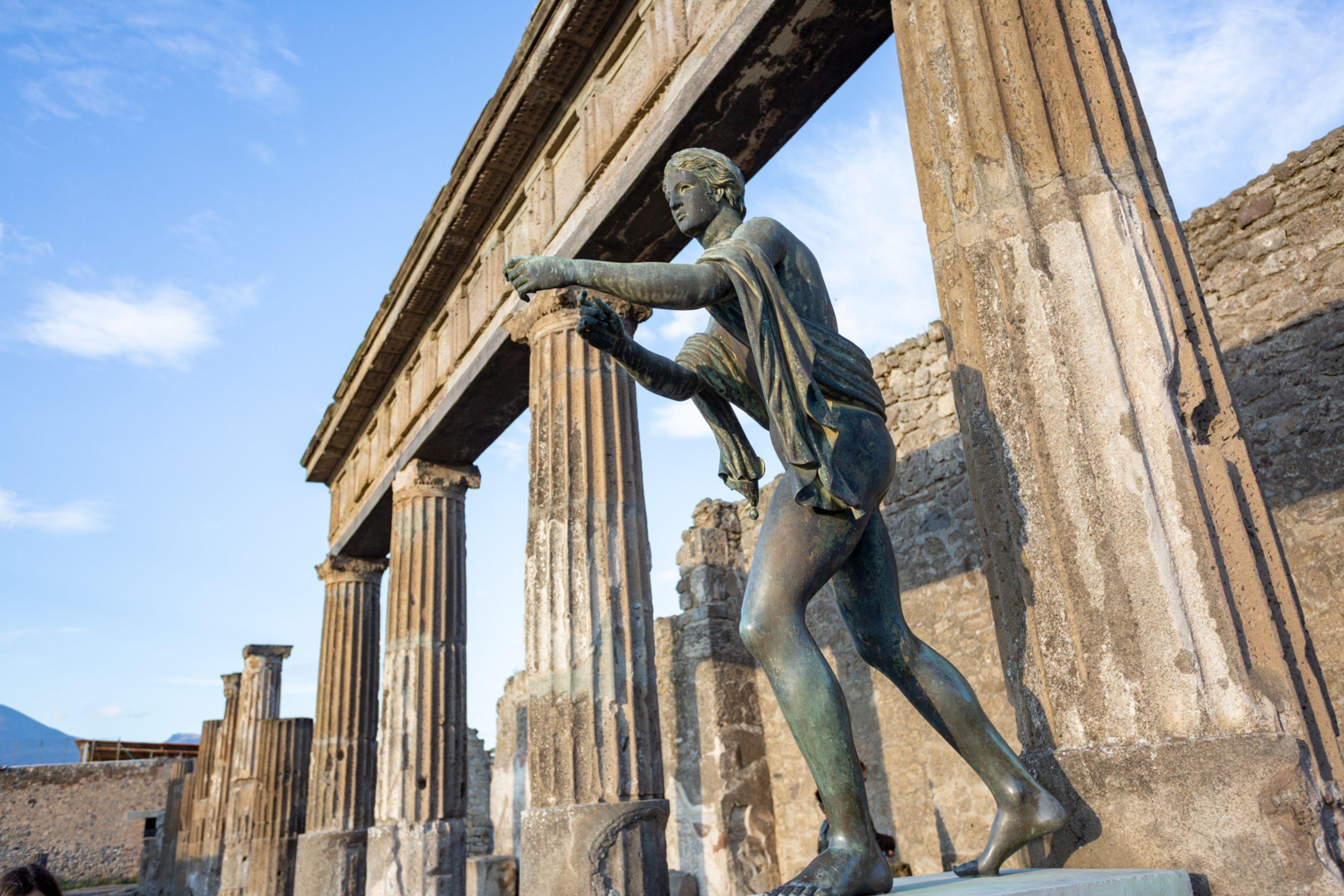
The eruption of the volcano in 79 A.D. burned and buried the cities of Pompeii and Herculaneum, but after the catastrophe the ruins were preserved almost perfectly under layers of volcanic ash. Thousands of years later, you can still explore the spooky streets and get inside houses, toilets, and restaurants during the tour along with our authorized guides. Our tour was created to have a unique memory and discover the ancient cities of Pompeii and Herculaneum with their hidden treasures declared World Heritage by UNESCO. Immerse yourself in the tragic history of the region and then end the day with a delicious Italian lunch in a traditional restaurant on the slopes of Vesuvius.
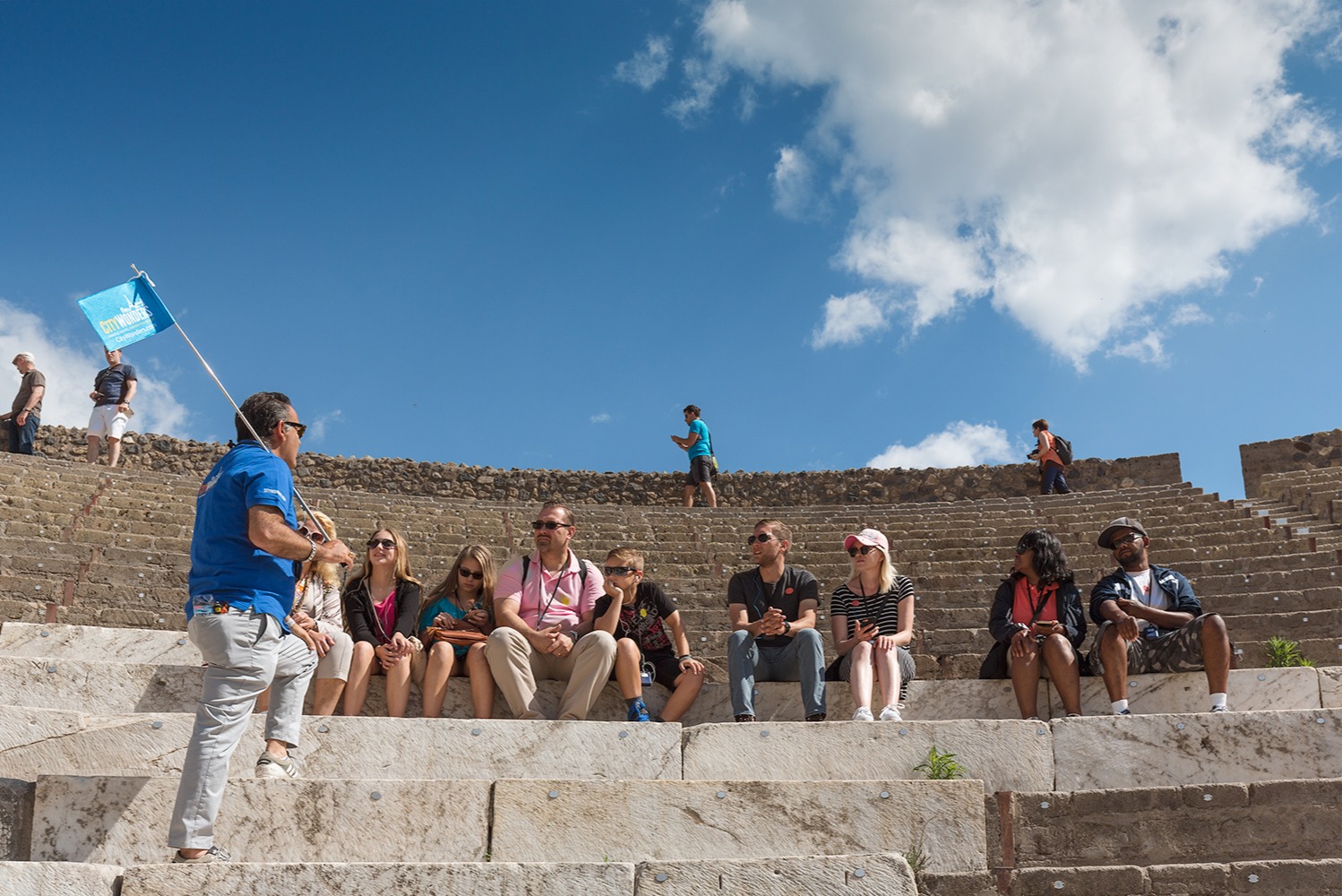
• Explore the ruins of Pompeii and Herculaneum with a local expert archaeological guide
• Semi-private and air-conditioned buses
• Entrance reserved in Pompeii and Herculaneum
• Wine tasting and lunch with local products
Available options
Private Tour from Sorrento
Private Tour : Pompeii & Herculaneum <br/>Private Car or Minivan<br/>Duration: 7 hours<br/>Lunch NOT included <br/>Departure from Sorrento<br/>Mercedes Car or Minivan<br/>Starting point:<br/>Bar Kontatto, Corso Italia, 257, 80067 Sorrento NA, Italy
Shared Tour from Sorrento
Services Included:: Round trip transfer from from Sorrento
Guide full day
Pompeii & Herculaneum entrance fee
Light Lunch & wine tasting<br/>Shared Tour<br/>Duration: 9 hours<br/>Light Lunch & wine tasting<br/>Departure from Sorrento: Meeting point at 08:00 a.m. by the BAR KONTATTO - Corso Italia n. 257 Sorrento<br/>Minibus up to 29 people<br/>Starting point:<br/>Bar Kontatto, Corso Italia, 257, 80067 Sorrento NA, Italy
Shared Tour from Naples
Services Included:: Round trip transfer from from Naples
Guide full day
Pompeii & Herculaneum entrance fee
Lunch (if selected)
Bottled water<br/>Shared Tour<br/>Duration: 8 hours<br/>Lunch (if selected)<br/>Departure from Naples: Meeting point at 08:30 a.m. by the Starhotels Terminus, Piazza Garibaldi 91<br/>Bus/Minibus<br/>Starting point:<br/>Starhotels Terminus, P.za Giuseppe Garibaldi, 91, 80142 Napoli NA, Italy
What's included
Authorized official English speaking guide
Light Lunch and Wine Tasting
Entrance tickets to Pompeii and Herculaneum
A/C Minibus
Headphones for all passengers in Pompeii and Herculaneum
Pick-up from our meeting point
Detailed itinerary
1
Stop 1
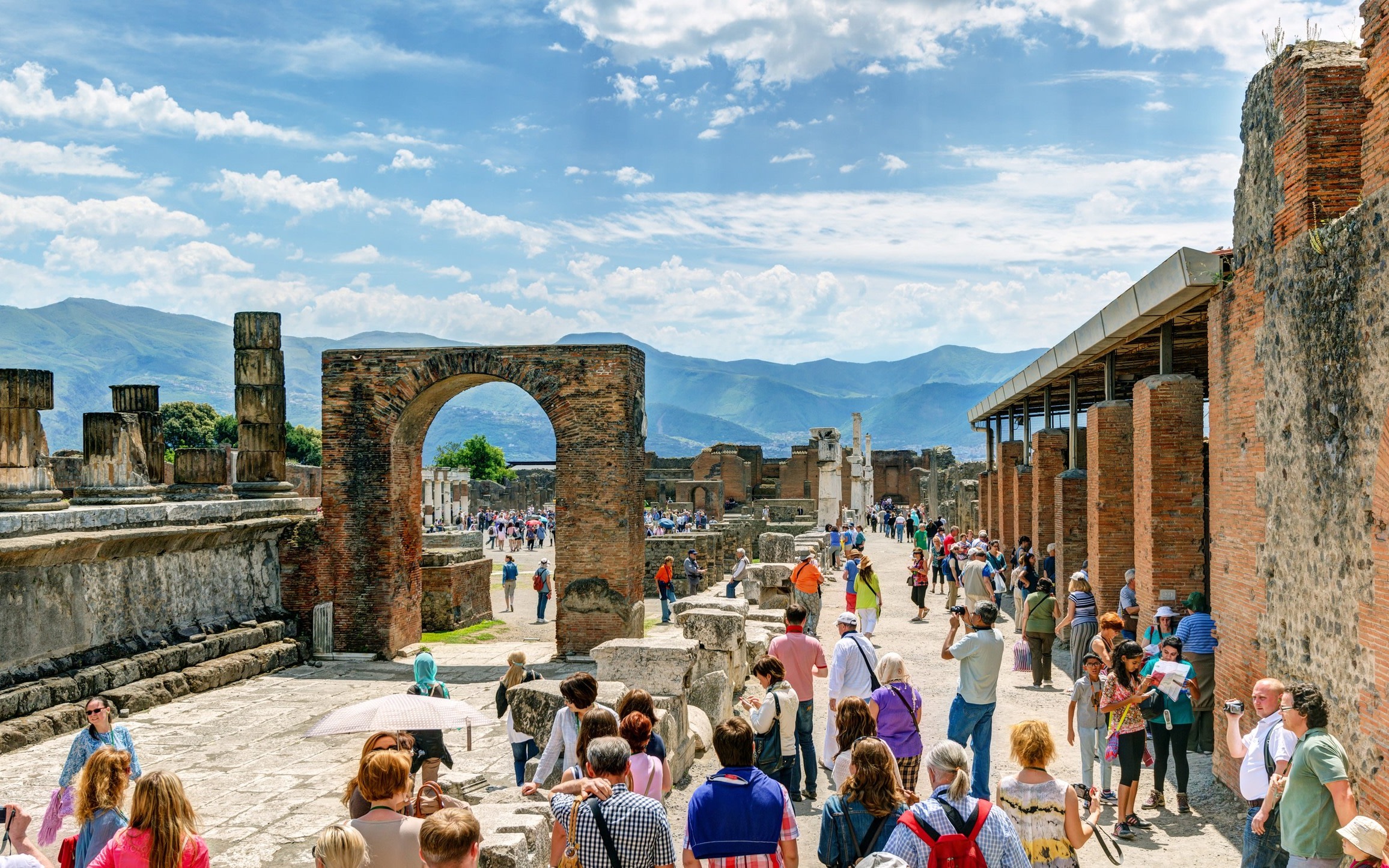
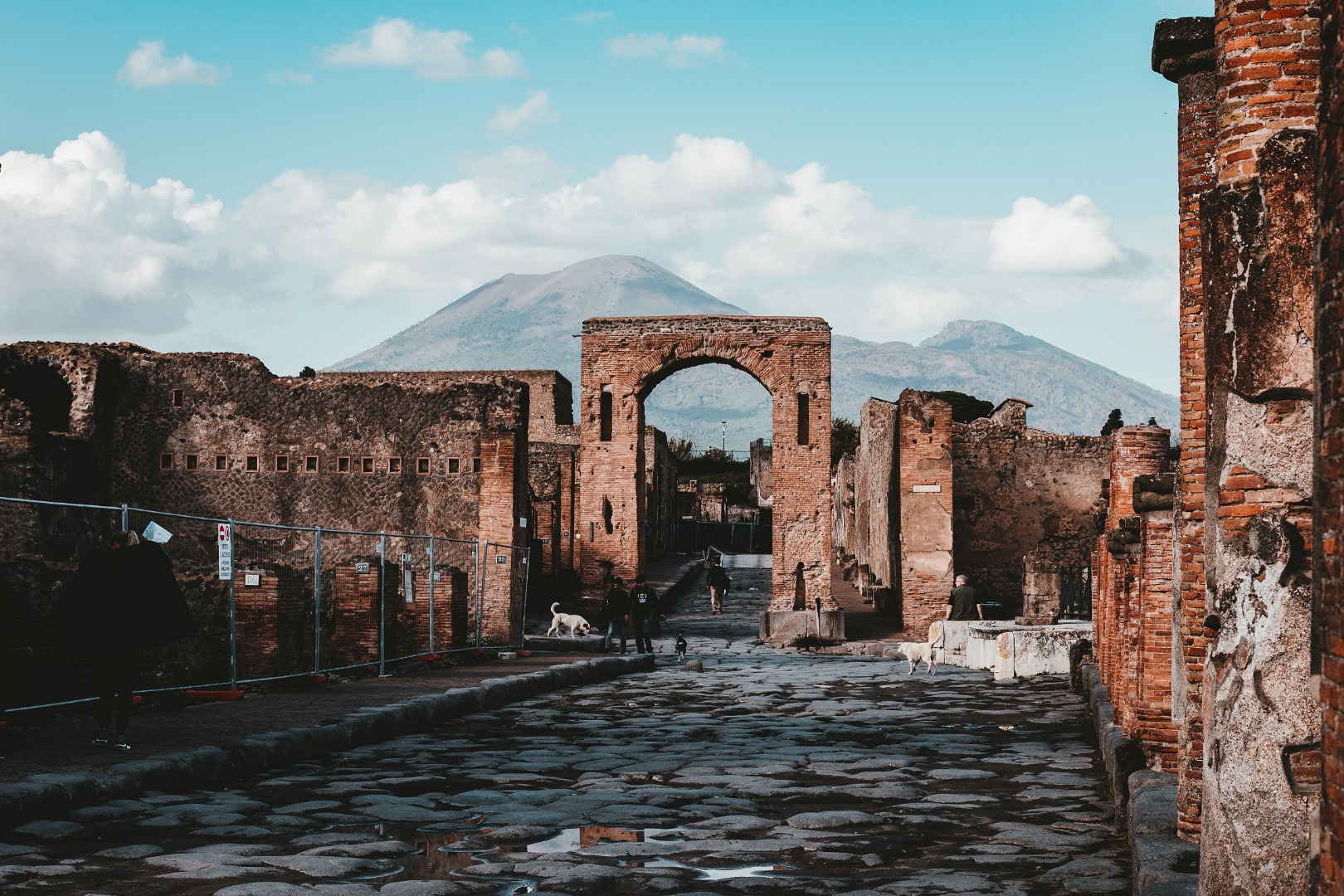
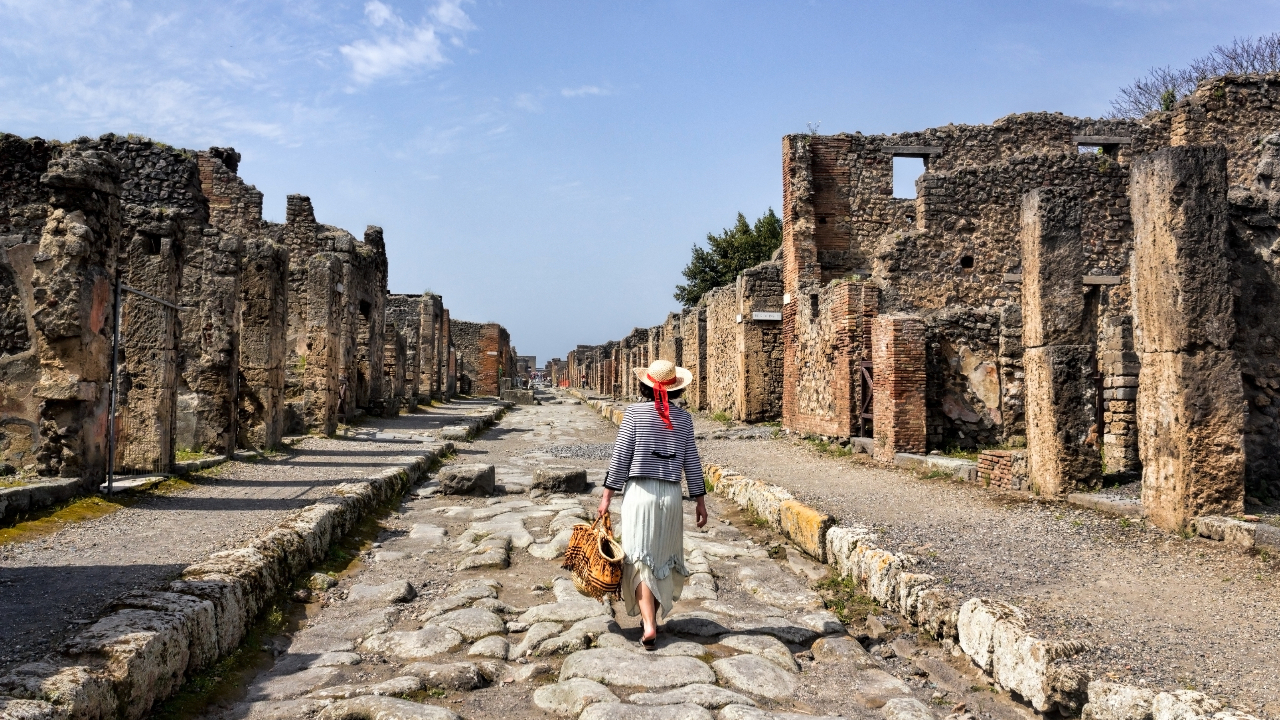
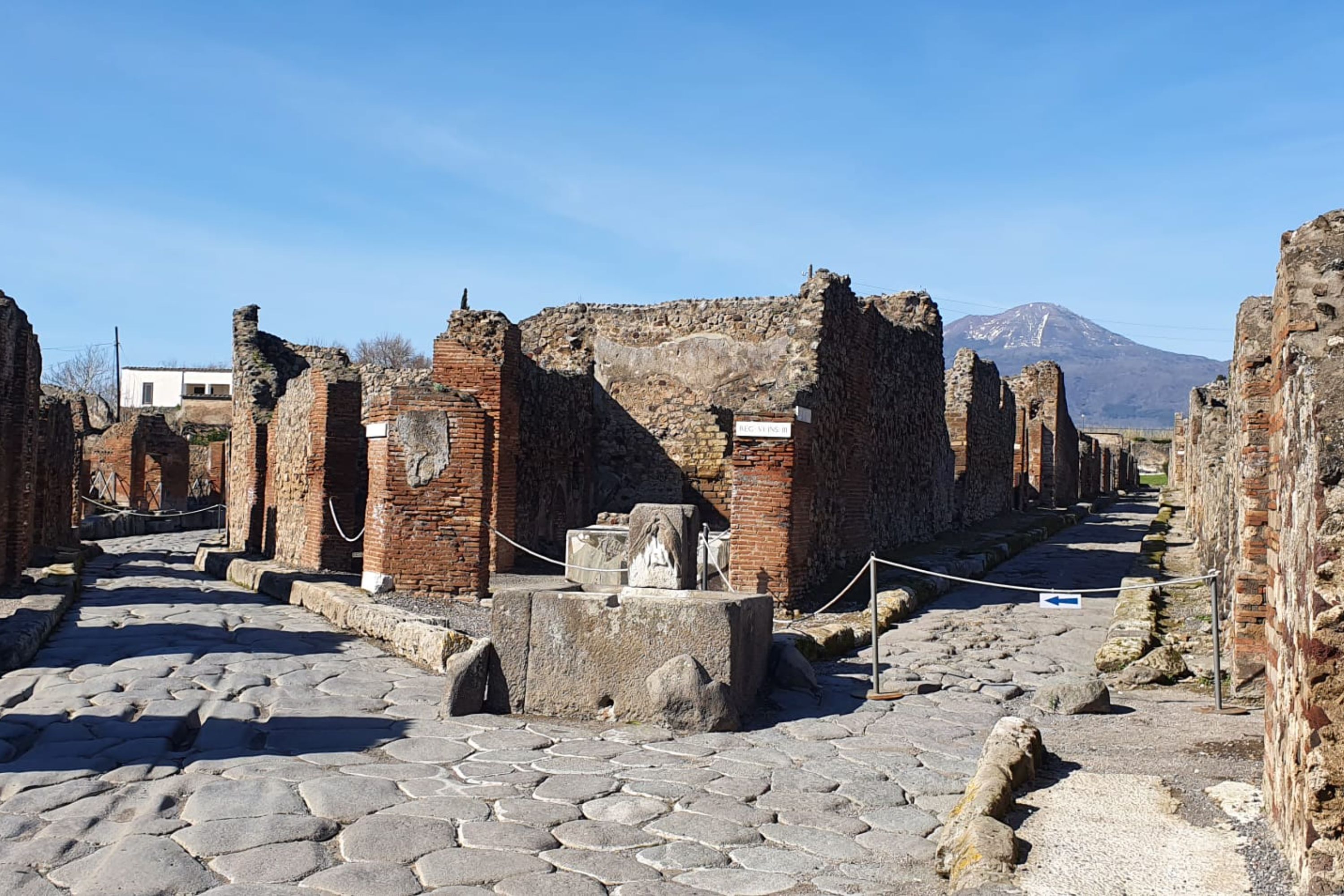
The ruins of Pompeii are a vast archaeological site in the southern Campania region, near the coast of the Gulf of Naples. Once a thriving and sophisticated Roman city, Pompeii was buried under meters of ash and pumice after the catastrophic eruption of Mount Vesuvius in 79 AD. The preserved site features remain of excavated streets and houses that visitors can freely explore.
2
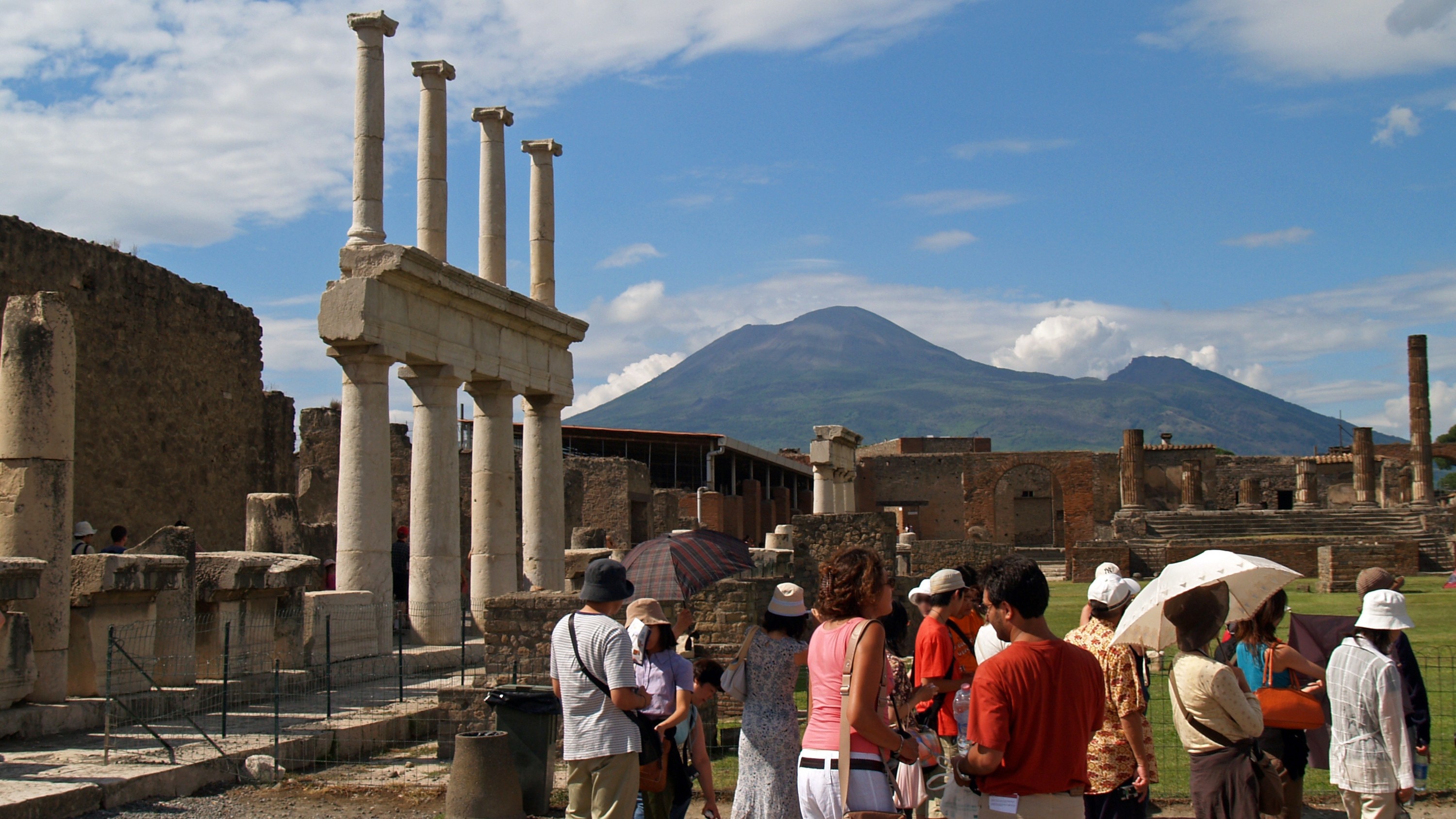
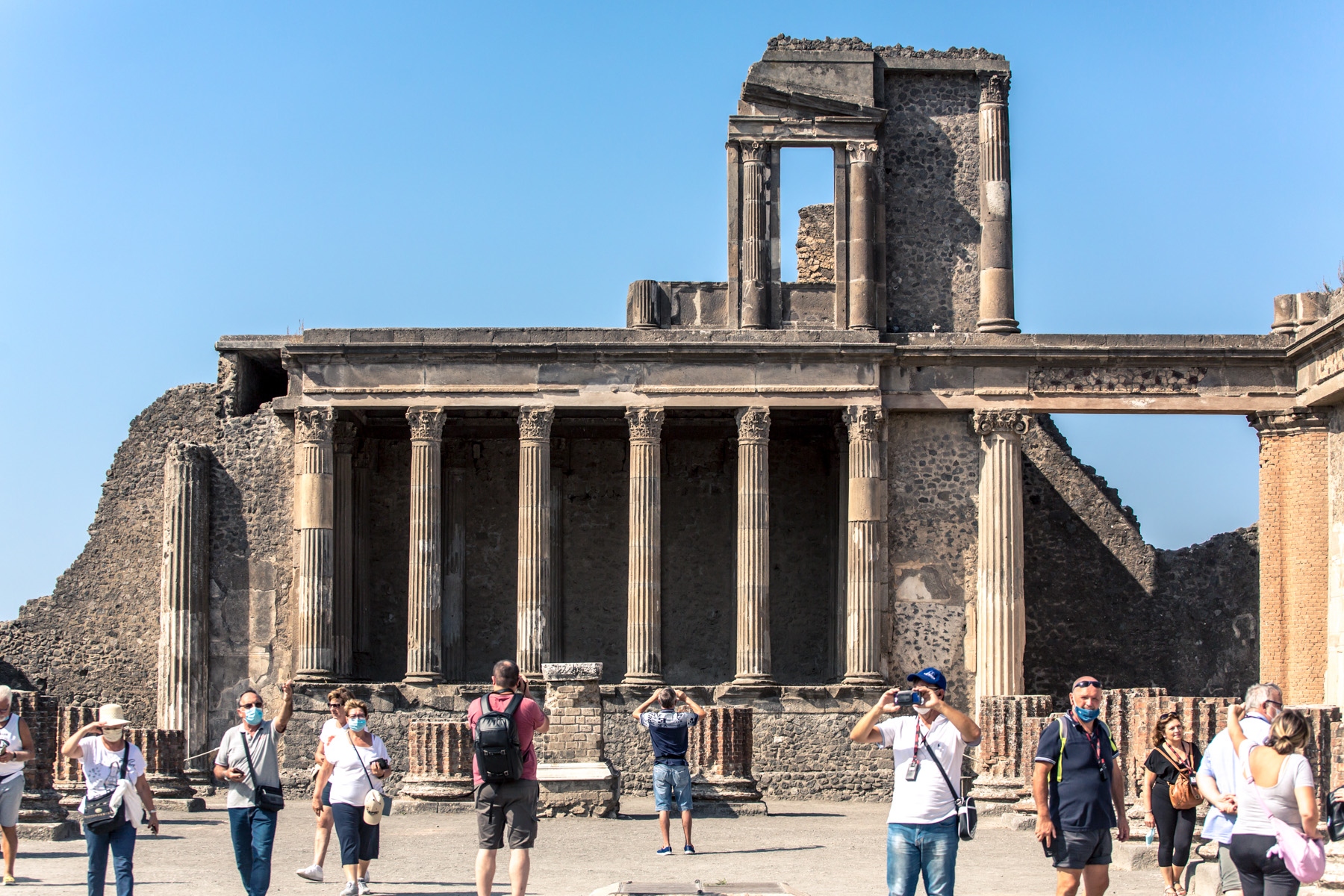
The Civil Forum represents the center of the daily life of the city, all the main public buildings for the administration of the city and justice, for the management of business, for commercial activities, such as markets, overlook it, in addition to the main places of city worship.
3
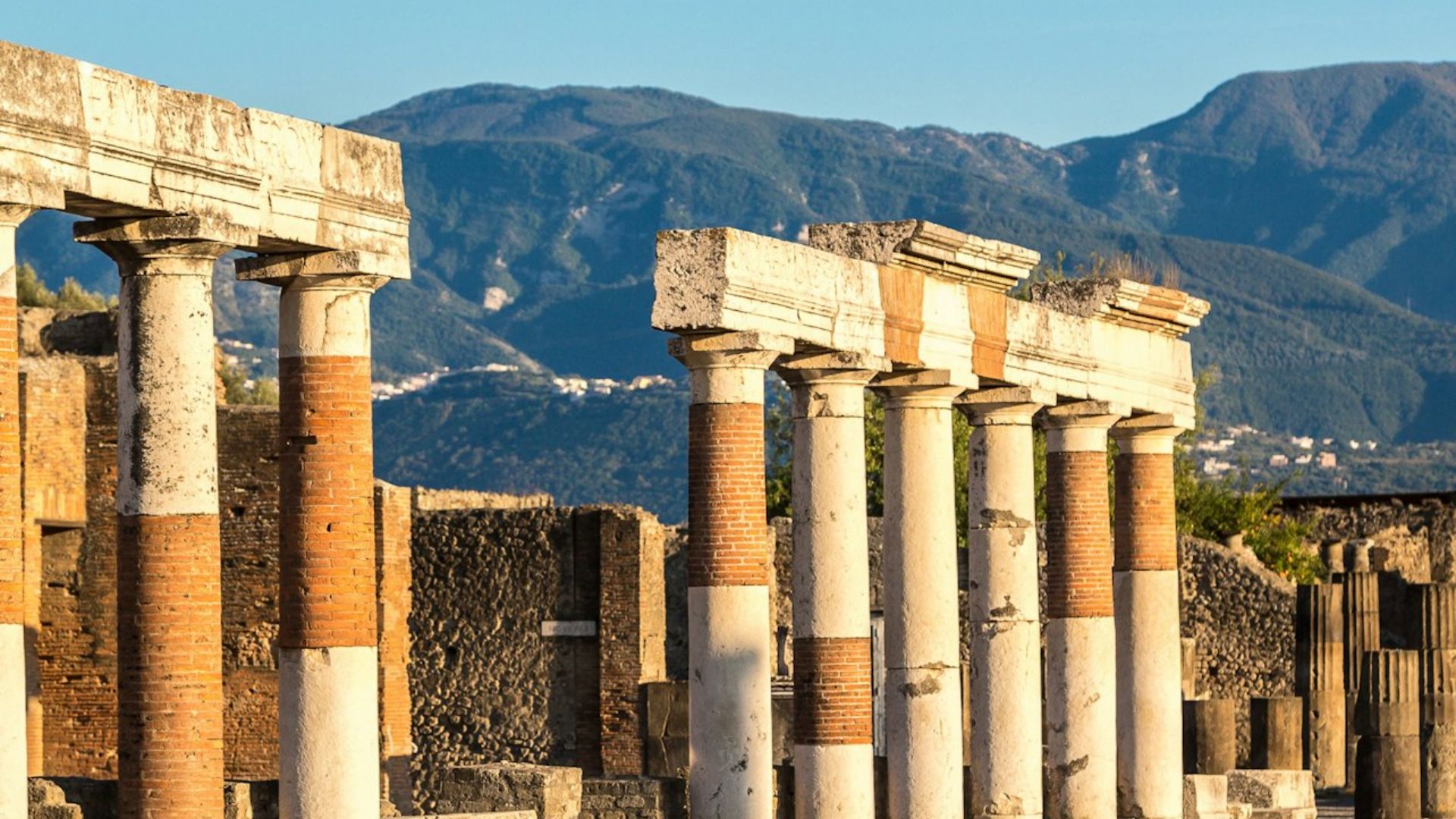
The Temple of Jupiter dominates the northern side of the Forum, and Vesuvius rises spectacularly behind it. With the deduction of the colony (80 BC) the temple was the subject of a radical renovation and became a real Capitolium, with the three cult statues of Jupiter, Juno and Minerva, which imitated those of the Capitolium in Rome, placed on a high base, so as to make them visible to those passing through the Forum square.
4
The Macellum consists of a tuff Quadri-porticus with a hall for worship in an elevated position on the eastern side, in line with the entrance. The Macellum of Pompeii was nothing more than the city market where people could buy food. Located north-east of the Forum, the complex had to remain out of the way from the square so as not to create too much crowding, given the high number of people who certainly frequented it. The walls of the porticoes were decorated with scenes from daily life, such as selling fish and poultry, and mythological subjects.
5
Stop 5
“Via dell 'Abbondanza” is one of the main streets of the ancient city of Pompeii, in Campania, which connected the Forum with the Amphitheatre.
6
Stop 6
The Stabian Baths were built at different times. The initial phase of construction dates back to the 4th BC. The main entrance by via dell'Abbondanza leads to a large courtyard. The pool is found to the left, whereas a colonnade is found to the right, which leads to the men's quarters, which are split into the apodyterium, with the frigidarium, which leads to the tepidarium and then to the calidarium.The heating was guaranteed by a piping system in the walls and double floors that circulated the hot air coming from the furnaces and from mobile braziers. The women's quarters, close to the men's quarters, were split the same way in the apodyterium, tepidarium and calidarium. However, all were smaller and had no rich decorations as the men's quarters. The baths that we can admire today were built in the 2nd century BC, a period in which Pompeii underwent a major building renovation. In the spa not only did people bathe, but they also discussed politics, battles, trials, women.
7
Stop 7
The brothel of Pompeii, with its erotic paintings, is one of the best-known buildings of the excavations and had the function of a brothel. The prostitutes in the brothel were mostly Greek and Oriental slaves. The building has two floors. The homes of the owner and the slaves are at the top and there are five rooms at the bottom, all fitted with a built-in bed. The brothel is named from Lupa, a Latin word meaning 'prostitute'.
8
Stop 8
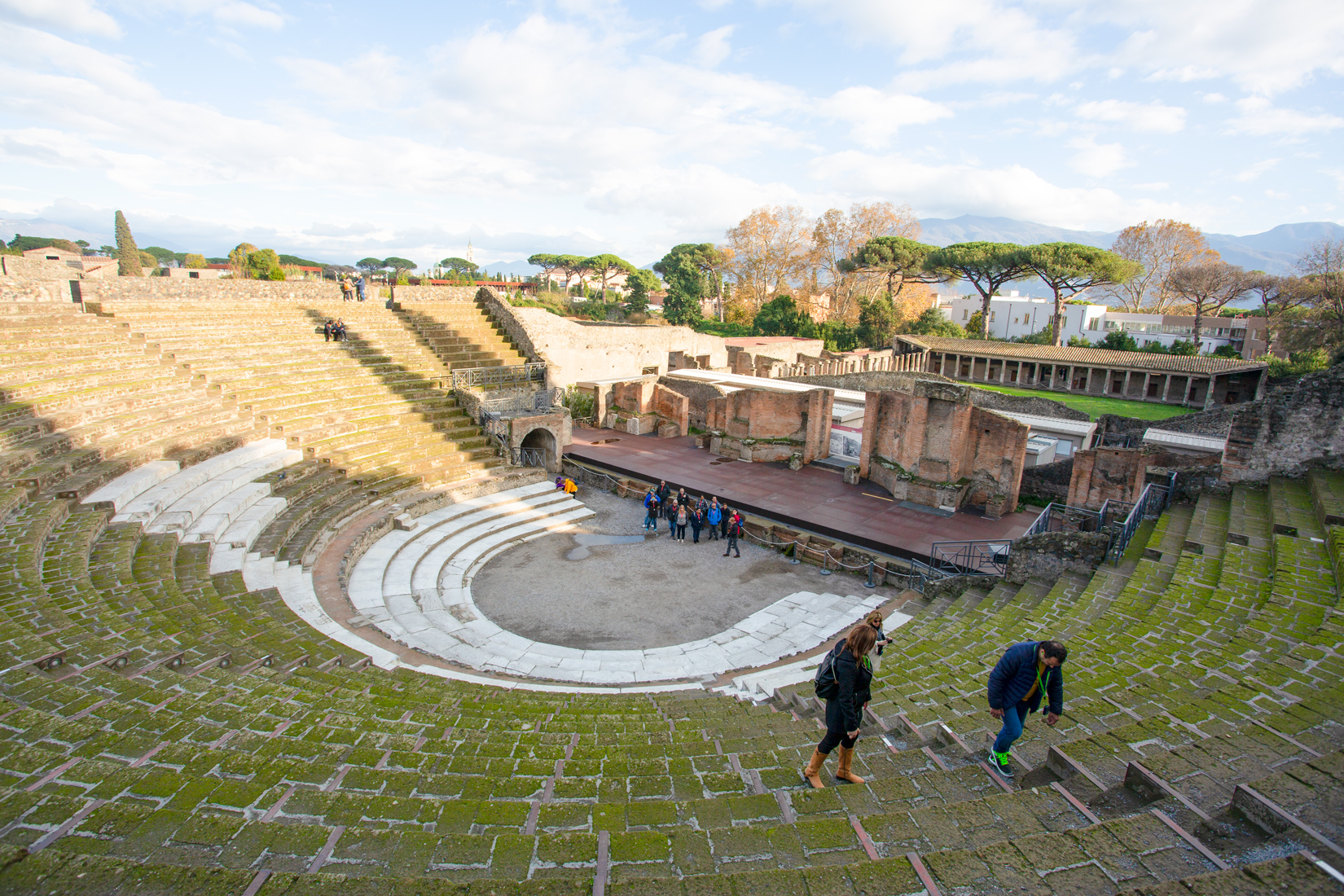
The Large Theatre was built around the middle of the 2nd century BC and significantly restored according to the Roman style. In the theatre they represented comedies and tragedies of Greek-Roman tradition. The theatre was the first large public building completely freed from the deposits of the eruption.
9
Sorrentino Vini was founded in 1990 by the passion of Paolo Sorrentino. The company is currently the largest one of Vesuvius as it has 35 hectares of property, all located within the Vesuvius National Park. The most famous wine produced on Vesuvius is Lacryma Christi. It is the only DOC product (controlled designation of origin) produced on Vesuvius.
10
Stop 10
The ruins of Herculaneum are an archaeological site in the southern Campania region, near the coast of the Gulf of Naples. Once a small and sophisticated Roman city, Herculaneum was buried under meters of ash and pumice after the catastrophic eruption of Vesuvius in 79 A.D. The site is still perfectly preserved, has remains of streets, houses and villas excavated that visitors can admire.
11
The luxurious house with sea view terrace belonged to Q. Granius Verus, a slave freed shortly before the destruction of Herculaneum. In the garden there are two statues of deer assaulted by a pack of dogs, from these the house takes its name
12
Enchanting are the mosaics in glass paste, (very expensive for the time), with floral and hunting scenes and in a central position the mosaic with Neptune and Amphitrite, (the marine deity and his wife).
13
The skeleton house is probably the result of the aggregation of three smaller buildings, and its name derives from the discovery of human remains in a second-floor room in 1831.
14
The Sacellum of the Augustales was built near the forum when Emperor Augustus was still alive and in power. It is a building with a quadrangular plan that preserves the splendid frescoes that represent Hercules entering the Olympus in the company of Jupiter, Juno, Minerva and Hercules against Achelous. The janitor’s skeleton was found in his room lying on the bed.
15
The house of the Hotel is a house of roman times, buried during the eruption of Vesuvius in 79 and found following the archaeological excavations of Herculaneum. The house of the Hotel is located on the edge of the hill, in a panoramic position, with its two thousand hundred and fifty square meters is the largest house of Herculaneum so far discovered and is also the only one of the city to own a spa district was for these reasons considered at first to be a hotel.
16
The house of the black salon owes its name to its party hall entirely painted in black with geometric patterns. In this house were found waxed tablets of L. Venidius Ennychus who was supposed to have owned the house. The tablets speak of her eligibility for Augustale, the purchase of a slave, and the birth of a daughter.
Available languages
Audio guide
EN
Guide guide
EN
Reviews breakdown
Viator
4.4
5 reviews
5★
3
4★
1
3★
1
2★
0
1★
0
Tripadvisor
4.8
25 reviews
5★
21
4★
4
3★
0
2★
0
1★
0
Important information
Infants and small children can ride in a pram or stroller
Public transportation options are available nearby
Suitable for all physical fitness levels
The duration and times of the itinerary may vary due to local traffic conditions or other circumstances
The tour may be operated by a multilingual guide
Wear comfortable shoes, sunglasses and sunscreen in the summer.
Meeting point
This is the meeting point in Naples (Please choose the Naples Departure's Option)
Important notes
For information about the meeting point and time, check WhatsApp and your email (spam folder too).
About Sorrento
Sorrento is a charming coastal town on the Amalfi Coast, known for its stunning views, lemon groves, and historic center. It's a gateway to the Amalfi Coast and offers a mix of relaxation, culture, and adventure.
Top Attractions
Piazza Tasso
The main square of Sorrento, named after the famous poet Torquato Tasso. It's a lively spot with cafes, restaurants, and street performers.
Historical
30 minutes to a few hours
Free
Sorrento Cathedral
A beautiful 19th-century cathedral dedicated to Saint Mary of the Assumption. It features a mix of architectural styles and a stunning interior.
Religious
30 minutes
Free
Villa Tasso
A historic villa that once hosted the famous poet Torquato Tasso. It offers beautiful gardens and panoramic views of the coast.
Historical
1 hour
Free
Marina Grande
The main beach of Sorrento, offering a mix of sandy and pebbly shores. It's a popular spot for swimming, sunbathing, and enjoying seafood at nearby restaurants.
Beach
Half day
Free (beach clubs may charge)
Museo Correale di Terranova
A museum showcasing the history and culture of Sorrento, with exhibits on local crafts, art, and archaeology.
Museum
1-2 hours
€7
Must-Try Local Dishes
Spaghetti alle Vongole
Spaghetti with clams, a classic dish made with fresh clams, garlic, olive oil, and white wine.
Main Course
Contains seafood
Sfogliatella
A traditional Italian pastry filled with sweet ricotta cheese and candied fruit.
Dessert
Contains dairy
Limoncello
A lemon liqueur made from the local Sorrento lemons, typically served as a digestif.
Drink
Contains alcohol
Popular Activities
Hiking the Path of the Gods
Scuba diving
Boat tours
Beach activities
Spa treatments
Wine tasting
Visiting museums
Attending festivals
Best Time to Visit
June to August
The peak season offers the best weather for beach activities and exploring the town. However, it's also the most crowded and expensive time.
25°C to 35°C
77°F to 95°F
Practical Information
Language
- Official: Italian
- Widely spoken: English, French, German
- English: Moderately spoken
Currency
Euro (EUR)
Time Zone
GMT+1 (CET), GMT+2 (CEST) during daylight saving time
Electricity
230VV, 50HzHz
Safety Information
Overall Safety Rating: Generally safe
Sorrento is generally safe for tourists, with low crime rates. However, petty theft can occur in crowded areas.
Important Precautions:
- • Keep valuables secure in crowded areas
- • Use licensed taxis or rideshare services
- • Be cautious of strangers approaching you with petitions or surveys
Getting there
By air
- Naples International Airport • 50 km
By train
Sorrento Station
By bus
Sorrento Bus Terminal
Getting around
Public transport
Buses are the primary mode of public transport in Sorrento and connect to other towns on the Amalfi Coast.
Taxis
Available • Apps: MyTaxi
Rentals
Car, Bike, Scooter
Neighborhoods
Marina Grande
Town Center
Capo di Sorrento
Day trips
Amalfi Coast
10-30 km • Half day to full day
The Amalfi Coast is a stunning stretch of coastline with picturesque towns, beautiful beaches, and breathtaking views.
Capri
10 km (by boat) • Full day
A beautiful island known for its luxurious villas, stunning views, and the famous Blue Grotto.
Pompeii
30 km • Half day
An ancient Roman city preserved by volcanic ash from the eruption of Mount Vesuvius in 79 AD.
Festivals
Festa di San Paolo • June 29-30
Limoncello Festival • July
Sorrento Film Festival • September
Pro tips
- Visit the lemon groves for a unique and authentic experience
- Try a limoncello tasting to sample the local specialty
- Explore the Path of the Gods for stunning views and a challenging hike
- Take a boat tour to see the coastline from the water
- Visit during the shoulder season for fewer crowds and lower prices
From $25
per person
Price varies by option
Secure booking
Free cancellation available
Instant confirmation