Daytrip to Kerkouen Unesco Site Kelibia and Houaria Caves
Active
7h
For a full refund, cancel at least 24 hours before the scheduled departure time.
Instant confirmation
Mobile or paper ticket accepted
About this experience
Discover the enchanting beauty of the Cape Bon peninsula and escape the hustle and bustle of everyday life. Start your adventure by exploring the ancient ruins of Kerkouane, a UNESCO World Heritage site that offers a glimpse into Tunisia's rich history. A short drive will take you to Kélibia, where you can ascend the fortress for breathtaking panoramic views.
Spanning over 80 km from Nabeul, Cap Bon juts into the Mediterranean Sea, offering a stunning landscape that alternates between lush plains, rugged plateaus, vibrant villages, pristine beaches, and secluded coves. This fertile region, renowned for its vineyards that produce the exquisite Muscat of Kélibia, as well as an array of fruit trees and grains, is truly a hidden gem.
Experience a side of Tunisia that is authentic, serene, and navigable by car for a delightful day trip that will leave you with cherished memories of this beautiful region.
Available options
Day-trip to Cape Bon
Pickup included
What's included
Private transportation
Certified professional tourist guide
WiFi on board
Air-conditioned vehicle
Detailed itinerary
1
The fort is now one of the main tourist attractions in the city of Kelibia. It is a 16th century citadel built on top of a rocky promontory 150 meters high which dominates the Mediterranean Sea and the city of Kelibia in the governorate of Nabeul, on the northeast coast of the Tunisian peninsula of Cape Bon.
In its oldest parts, this fortress has Roman components, since the Punic period (3rd century BC) a fort stood at this location. Dismantled by the Romans, a new fortification was erected under the Byzantines which was to be constantly enlarged and altered by its successive occupants, especially in the 16th century when the Ottomans faced repeated assaults by the Spanish. A visit to the fortress is an opportunity to enjoy the magnificent panorama that opens from the top of the ramparts: on a clear day, Sicily is visible offshore.
2
It is one of the most precious archaeological sites in Tunisia, because the only one, until today, whose foundation dates back to the Punic era - perhaps in the 6th century BC. J-C. - and that the Romans did not rebuild after the annexation of Africa to the Roman Empire, bequeathing us an urban space, that of a small city that has not yet been identified, typically Punic.
Apparently abandoned after its destruction by the Roman consul Mr. Atilus Regulus in 256 BC. Before being rediscovered in the early 1950s of the last century, the city had been virtually leveled. But the remains offer us today the plan of a typically Punic city, with the very clear layout of houses equipped with all amenities (baths and ovens included), decorated with pavements of primitive mosaics, one of which depicts the Punic goddess Tanit.
A coastal city, Kerkouane has had a port, some sections of which still remain; it was to engage in trade with other Mediterranean ports to which it exported agricultural but also artisanal products, like fabrics dyed in purple, installations for the manufacture of this substance having been discovered near the coast, same as the shops in a shopping district. A museum gathering some objects discovered on the site, was erected at the entrance.
3
The oldest of the olive trees of Tunisia is found in Echraf, before the entry of Haouaria and it has impressive dimensions: the roots cover an area of about sixteen meters, the trunk has a circumference of six meters and its age exceeds 2,500 years. This olive tree is protected, maintained and surprised, it continues to produce olives. Each year a small production of olive oil from the Echraf olive tree is distributed like something sacred, in small vials like an elixir with magical powers.
4
El Haouaria is one of the most beautiful seaside sites in Tunisia, located at the northeast end of Cap Bon, at the entrance to the Gulf of Tunis: crystal clear waters, dolphins, coves and caves ... however the crowds and the lack of civility of summer visitors endangers this once wild place. Its geographical location, its contrasting relief and its mild and temperate climate make it a favorite refuge for a multitude of migratory birds. The Romans also nicknamed the place Aquilaria or "land of the eagle".
Each spring, 40,000 raptors from 24 different species, but also thousands of storks and other smaller birds, stop at the tip of the cape before crossing the Mediterranean Sea. Crystal clear waters, creeks and caves are the main attractions of the place. Three kilometers west of the city, the artificial caves of the Ghar El Kebir site were dug by prisoners or slaves under the authority of the Carthaginians and then the Romans. The blocks of stone which were extracted from it were transported by sea to Carthage, on the other side of the Gulf of Tunis. They were used for the construction of the Punic city, but also for the construction of the forts in the medina of Tunis. These underground quarries have been exploited for almost 1,000 years.
What's not included
Lunch
Available languages
Guide guide
DE
EN
IT
PL
FR
ES
Reviews breakdown
Viator
4.3
4 reviews
5★
2
4★
1
3★
1
2★
0
1★
0
Tripadvisor
5.0
4 reviews
5★
4
4★
0
3★
0
2★
0
1★
0
Important information
Wheelchair accessible
Infants and small children can ride in a pram or stroller
Service animals allowed
Public transportation options are available nearby
Specialized infant seats are available
Transportation options are wheelchair accessible
All areas and surfaces are wheelchair accessible
Suitable for all physical fitness levels
About Tunis
Tunis, the capital of Tunisia, is a vibrant city where ancient history meets modern life. Known for its rich cultural heritage, bustling medinas, and Mediterranean charm, it offers a unique blend of Arab, African, and European influences. The city is a gateway to Tunisia's diverse landscapes, from the Sahara Desert to the coastal resorts of the Mediterranean.
Top Attractions
Medina of Tunis
The Medina of Tunis is a UNESCO World Heritage Site and one of the best-preserved medieval cities in the Arab world. It's a labyrinth of narrow streets filled with shops, mosques, and historic buildings.
Historical
Half day to full day
Free to explore, but entry fees for specific sites
Bardo National Museum
One of the most important museums in the Islamic world, the Bardo Museum houses an extensive collection of mosaics, artifacts, and historical exhibits.
Museum
2-3 hours
Moderate (around 10 TND or 3.50 USD)
Carthage
The ancient city of Carthage, founded by the Phoenicians, is a UNESCO World Heritage Site with ruins dating back to the 9th century BC.
Historical
Half day
Moderate (entry fees for specific sites)
Sidi Bou Said
A picturesque hilltop village known for its blue and white architecture, narrow streets, and stunning views of the Mediterranean Sea.
Cultural
Half day
Free to explore, but costs for cafes and shops
Must-Try Local Dishes
Brik
A crispy fried pastry filled with egg, tuna, parsley, and sometimes cheese.
Appetizer
Contains egg and seafood.
Lablabi
A traditional chickpea soup flavored with garlic, cumin, and harissa, often served with bread and a poached egg.
Soup
Vegetarian option available.
Tajine
A slow-cooked stew made with meat (chicken, lamb, or fish) and vegetables, seasoned with spices and served with bread.
Main Course
Vegetarian options available.
Makroudh
A sweet pastry made from semolina, filled with dates or almonds, and fried or baked, then soaked in honey syrup.
Dessert
Contains nuts and honey.
Popular Activities
Hiking in the surrounding hills and nature reserves
Water sports in the coastal areas
Spa treatments and hammams
Beach lounging
Exploring the medina and historic sites
Visiting museums and art galleries
Swimming and snorkeling in the Mediterranean Sea
Boat trips to nearby islands
Best Time to Visit
Spring (March to May) and Autumn (September to November)
These seasons offer the most comfortable weather for sightseeing and outdoor activities. The city is lively with cultural events and festivals.
15°C to 25°C
59°F to 77°F
Practical Information
Language
- Official: Arabic
- Widely spoken: French, English (in tourist areas)
- English: Moderately spoken in tourist areas, limited elsewhere
Currency
Tunisian Dinar (TND)
Time Zone
GMT+1 (Central European Time, CET)
Electricity
230VV, 50HzHz
Safety Information
Overall Safety Rating: Exercise caution
Tunis is generally safe for tourists, but petty crime and scams can occur, especially in crowded areas and tourist spots.
Important Precautions:
- • Be cautious of your surroundings, especially in crowded areas.
- • Use official taxis or reputable ride-hailing apps.
- • Keep valuables secure and out of sight.
Getting there
By air
- Tunis-Carthage International Airport • 8 km from city center
By train
Tunis Ville
By bus
Tunis City Bus Terminal, Tunis South Bus Terminal
Getting around
Public transport
The metro is efficient and air-conditioned, making it a comfortable option for travelers.
Taxis
Available • Apps: InDrive
Rentals
Car, Bike, Scooter
Neighborhoods
Bab El Bahr
La Marsa
Day trips
Sousse
140 km from Tunis • Full day
A coastal city known for its historic medina, beautiful beaches, and the impressive Ribat of Sousse.
Hammamet
60 km from Tunis • Full day
A popular resort town known for its beautiful beaches, luxury hotels, and the picturesque Medina of Hammamet.
El Djem
200 km from Tunis • Full day
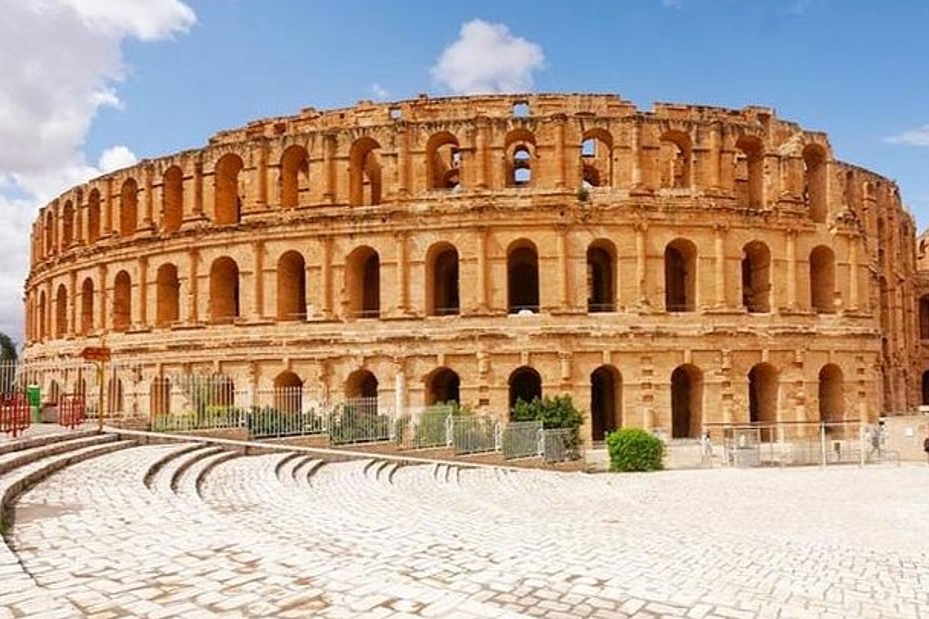
Home to the impressive Roman amphitheater, El Djem is a UNESCO World Heritage Site offering a glimpse into Tunisia's Roman past.
Festivals
Tunis International Festival • July
Carthage International Film Festival • October
Pro tips
- Learn a few basic Arabic phrases to enhance your interaction with locals.
- Visit the medina early in the morning or late in the afternoon to avoid the heat and crowds.
- Try local street food for an authentic and affordable culinary experience.
- Bargain politely when shopping in the souks, but always be respectful and friendly.
- Use official taxis or reputable ride-hailing apps for safe and reliable transportation.
From $25
per person
Price varies by option
Secure booking
Free cancellation available
Instant confirmation