Rome Private Half-Day Tour with Private Minivan and English Speaking Driver
Active
4h
For a full refund, cancel at least 24 hours before the scheduled departure time.
Instant confirmation
Mobile or paper ticket accepted
About this experience
Enjoy a great half-day of sightseeing in Rome. An English-speaking driver will offer commentary on landmarks and help customize the tour to your request. This tour starts and ends in Rome
Available options
Rome Private Half-Day Tour with Private Minivan and English Speaking Driver
Pickup included
What's included
Driving tour
English-speaking driver
Live commentary on board
Transport by private vehicle
Detailed itinerary
1
Stop 1
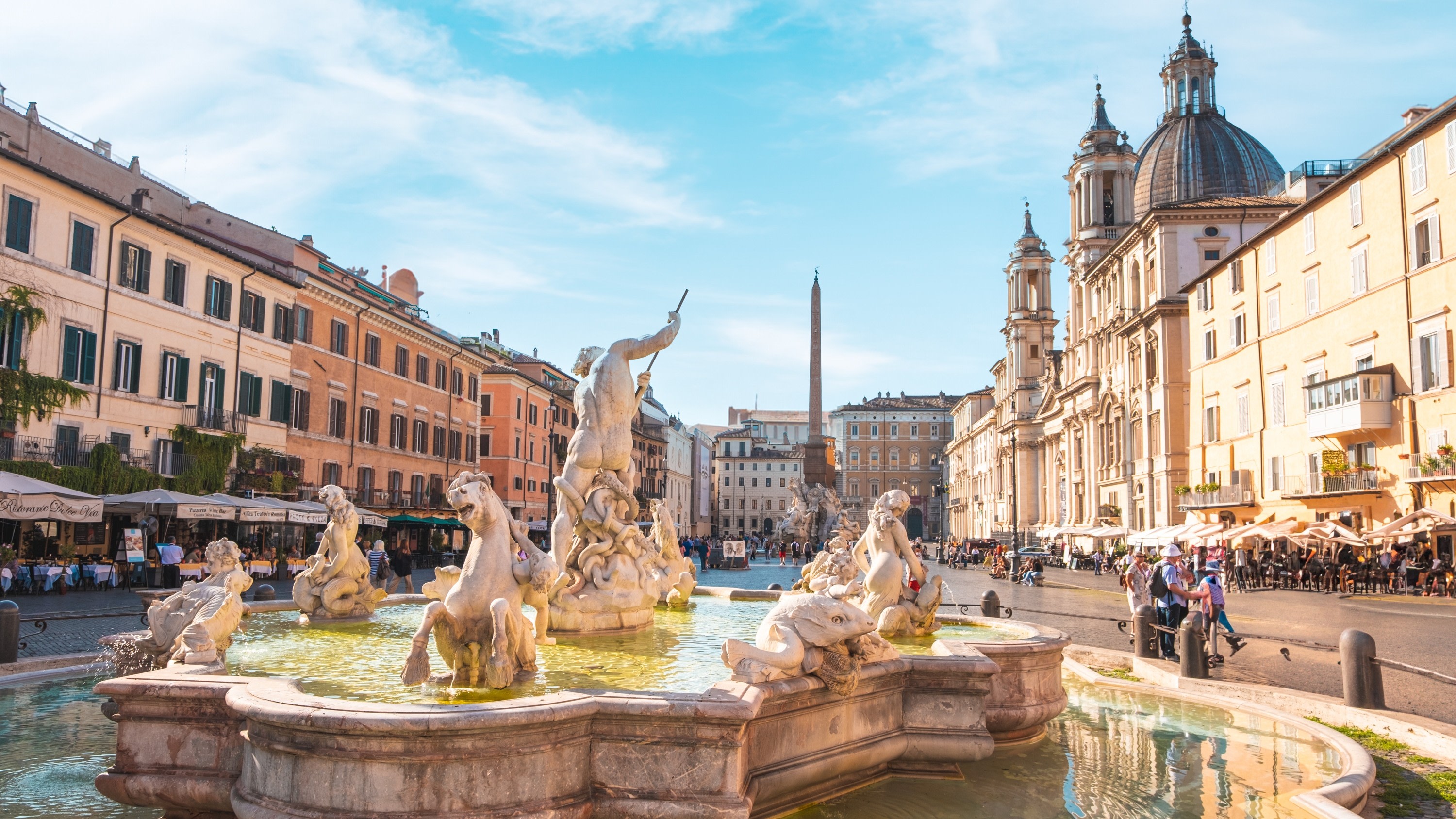
Rome Navona square – The Piazza has its lengthened shape because it resamples the route of aRoman stadium here built by emperor Domitian.Piazza Navona (Navona square) is one of the most ancient and full of history places in Rome. Called originally theCircus Agonalis built by Domitianand was flooded for mock battles into the 19th c.-is thronged with vendors, portrait artists, and picture snapping tourists who tend to crowd the view of the main attraction,Bernini’s Fountain of the Four Rivers .
2
Stop 2
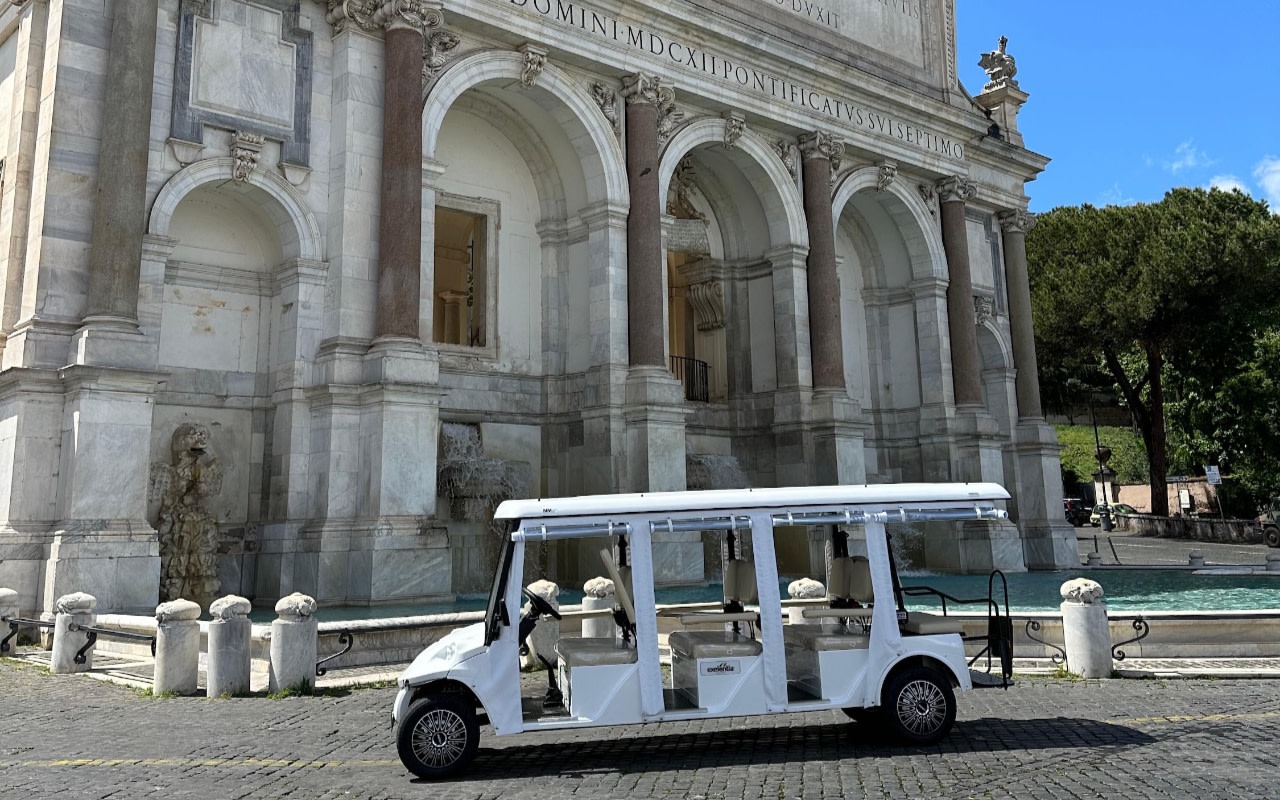
Trevi Fountain is the most beautiful fountain in Rome is also the largest fountain in the city.The origins of the fountain go back to the year 19 B.C., in which period the fountain formed the end of the Aqua Virgo aqueduct. The first fountain was built during the Renaissance, under the direction of Pope Nicholas the 5th.The Trevi Fountain dates from 1762, when after many years of works at the hand of Nicola Salvi, it was finalized by Giuseppe Pannini.
Interestingly enough, the name of Trevi derives from Tre Vie (three ways), since the fountain was the meeting point of three streets.
3
Stop 3
Roman mythology talks of the cave that was inhabited by Luperca, the she-wolf that took care of Romulus and Remus, which is located in the Palatine Hill. According to the legend, when the brothers grew up they decided to form a city on the banks of the river, but when they could not come to an agreement in some points of the decision, Romulus killed Remus and founded the city of Rome.
4
Stop 4
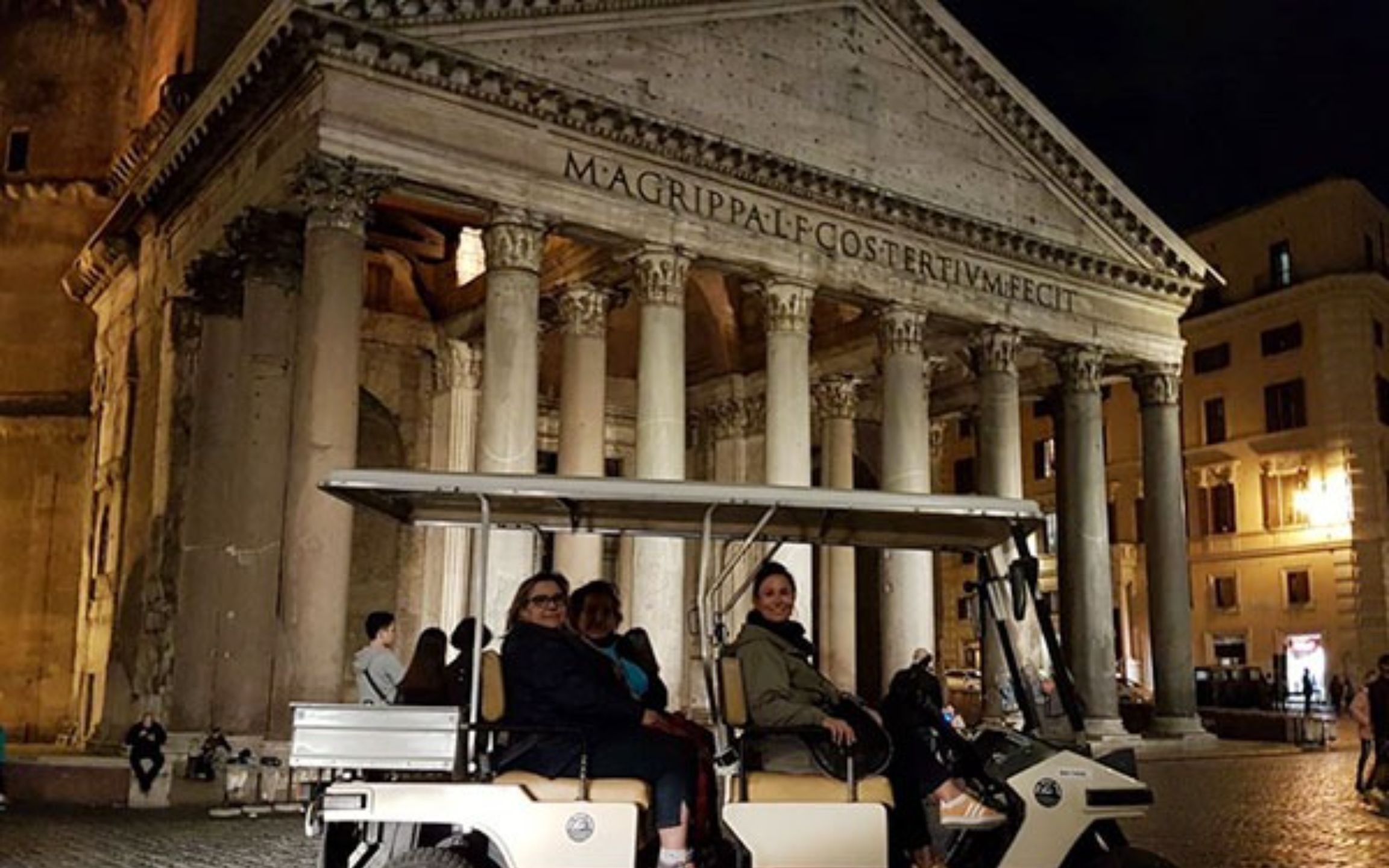
What is extraordinary about the Pantheon is not only its architecture or external beauty, but also the fact that it represents a true cultural revolution. It was the first temple built for the common people. Today, this could seem an obvious concept, but in ancient times temples were forbidden places, only for vestals and priests.
5
Stop 5
The ‘Spanish’ part of the name refers to the Spanish Embassy to the Holy See, which would have been located on Piazza di Spagna (literally ‘Spanish Square’) at the base of the monument.
After they were completed in 1725, the steps quickly gained a reputation for being a prime people-watching spot because they attracted a crowd. And not just any gathering, but a particularly good-looking crowd. Why did such a beautiful bunch congregate here? It's simple really. A high concentration of artists and later photographers, who were themselves drawn to the attractive monument, served as bait for wannabe models.
Of course, decades of heavy footfall took their toll on the monument. A huge restoration project in 2015 and 2016 saw the Spanish Steps scrubbed clean and returned to their former splendor. These days, they are looking as spick and span as they ever have.
6
Stop 6
Pass by
Altare della Patria, or Altar of the Fatherland, the colossal mountain of white marble that towers over Piazza Venezia. It was built at the turn of the 20th century to honour Italy's first king, Vittorio Emanuele II – who's immortalised in its vast equestrian statue.
The building provides the dramatic setting for the Tomb of the Unknown Soldier. Also inside is the Complesso del Vittoriano, a gallery that regularly hosts major art exhibitions. But as impressive as any of the art on show are the glorious 360-degree views from the top of the monument. See for yourself by taking the panoramic Roma dal Cielo lift up to the Terrazza delle Quadrighe.
7
Stop 7
The pulsing heart of Rome. Crowd gathered there every day.
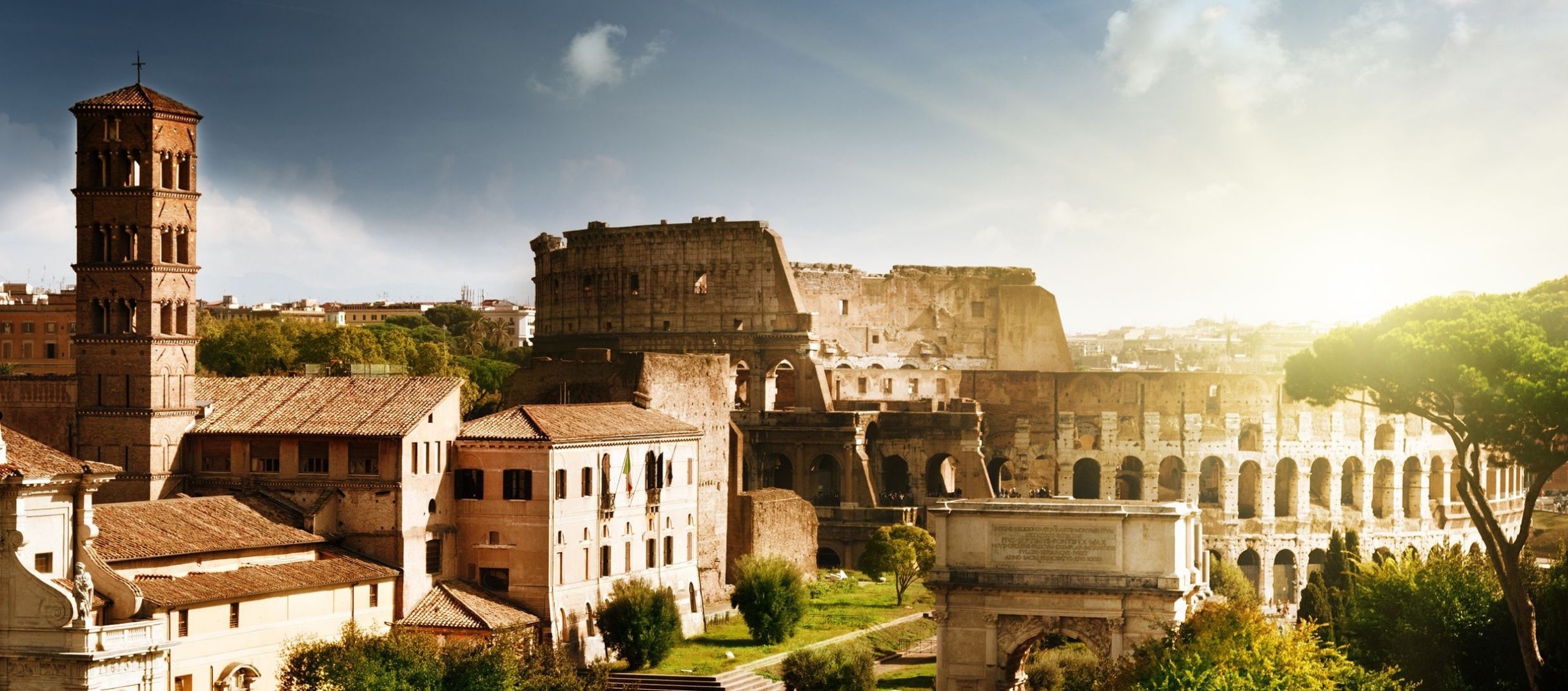
The Roman Forum is situated in the area between Piazza Venezia and the Colosseum is one of the most important archaeological sites in the world. The area soon began to develop and already at the end of the 7th century BC, it was home to many markets and a hive of social activity.
The most incredible panoramic view of the entire Forum complex can be seen from the magnificent terraces of Campidoglio. Here you can observe the imposing ruins of Basilica Emilia, the only remaining Republican basilica, or the Curia, which was once the seat of the Senate. Starting from the Arch of Septimius Severus, the pathway winds through the most unique place in the world and passes beside the imposing Basilica di Massenzio, one of the most magnificent buildings of Imperial Rome, and ends near the Arch of Titus, where you will get a glimpse of the unmistakable Colosseum.
What's not included
Food and drinks
Gratuities
Available languages
Guide guide
EN
Reviews breakdown
Viator
5.0
1 reviews
5★
1
4★
0
3★
0
2★
0
1★
0
Tripadvisor
5.0
5 reviews
5★
5
4★
0
3★
0
2★
0
1★
0
Important information
Wheelchair accessible
Infants and small children can ride in a pram or stroller
Specialized infant seats are available
Transportation options are wheelchair accessible
All areas and surfaces are wheelchair accessible
Suitable for all physical fitness levels
A dress code is required to enter places of worship and selected museums. No shorts or sleeveless tops allowed. Knees and shoulders MUST be covered for both men and women. You may risk refused entry if you fail to comply with these dress requirements
Important notes
• A dress code is required to enter places of worship and selected museums. No shorts or sleeveless tops allowed. Knees and shoulders MUST be covered for both men and women. You may risk refused entry if you fail to comply with these dress requirements
About Rome
Rome, the capital of Italy, is a city of ancient ruins, artistic masterpieces, and vibrant culture. Known as the Eternal City, it is a living museum where every corner tells a story of its rich history spanning over 2,500 years.
Top Attractions
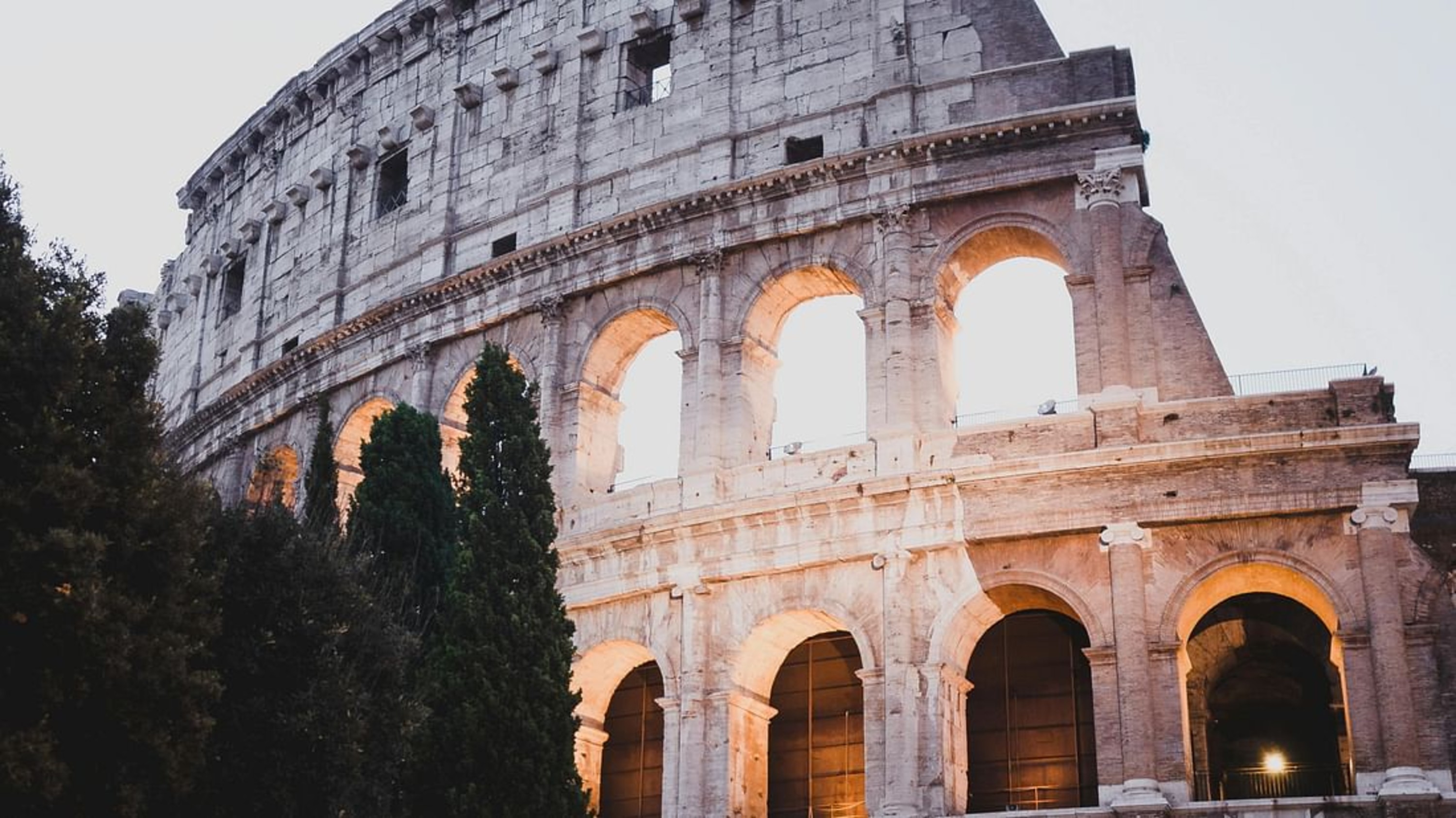
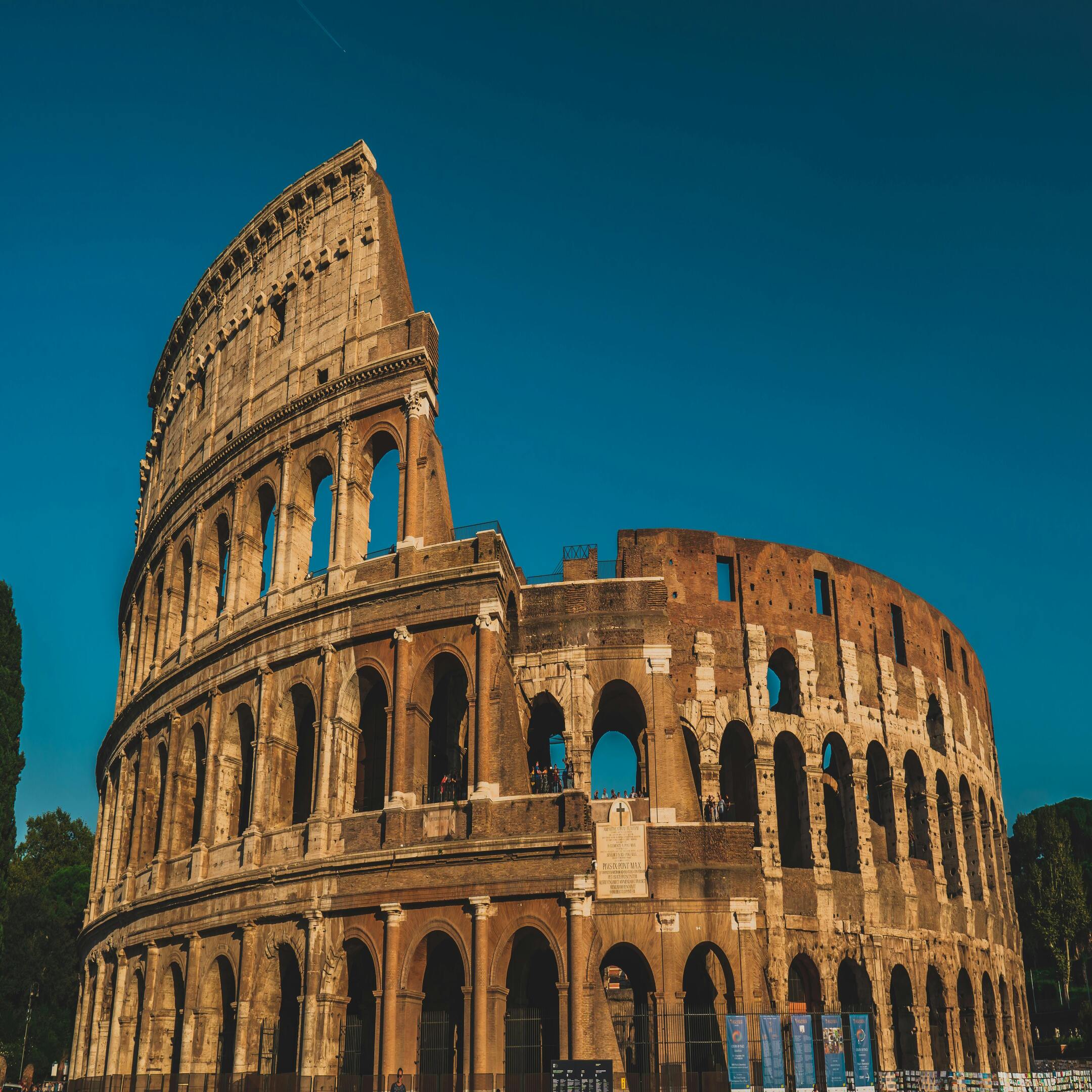
Colosseum
The Colosseum is an iconic symbol of Rome and one of the most famous ancient amphitheaters in the world. It was used for gladiatorial contests and public spectacles.
Historical
1-2 hours
€16 (combined ticket with Roman Forum and Palatine Hill)
Vatican City
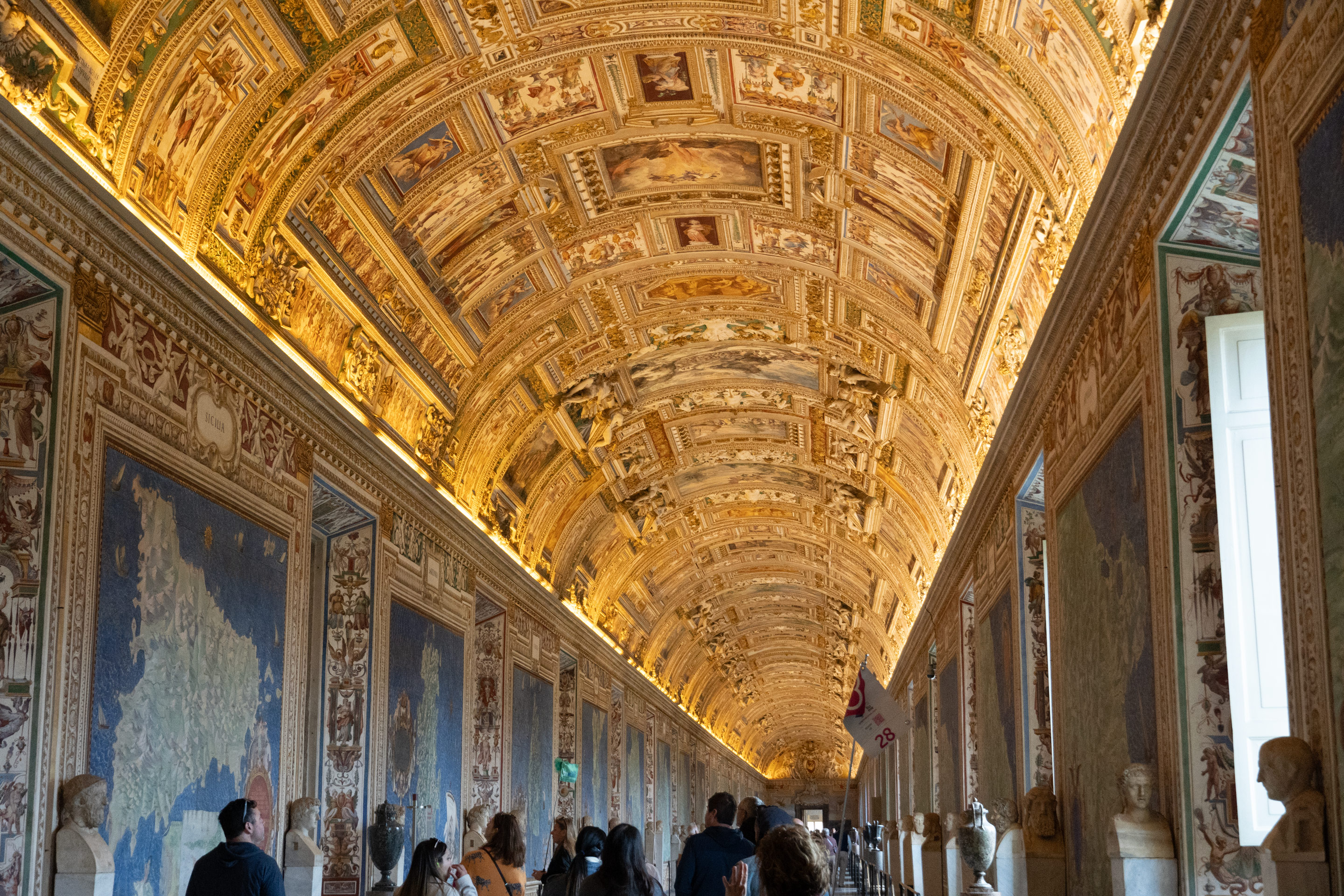
Vatican City is an independent city-state enclaved within Rome. It is the spiritual and administrative center of the Roman Catholic Church.
Religious
Half day
€17 (Vatican Museums and Sistine Chapel), Free (St. Peter's Basilica)
Roman Forum
The Roman Forum was the political, commercial, and legal hub of the Roman Republic and Empire. It is a sprawling ruin of temples, basilicas, and arches.
Historical
1-2 hours
€16 (combined ticket with Colosseum and Palatine Hill)
Pantheon
The Pantheon is a former Roman temple, now a church, known for its large dome and oculus. It is one of the best-preserved ancient buildings in Rome.
Historical
30 minutes to 1 hour
Free
Trevi Fountain
The Trevi Fountain is a Baroque masterpiece and the largest fountain in Rome. It is a popular spot for visitors to throw coins and make wishes.
Architecture
15-30 minutes
Free
Must-Try Local Dishes
Cacio e Pepe
A simple yet delicious pasta dish made with Pecorino Romano cheese and black pepper.
Pasta
Vegetarian
Carbonara
A rich pasta dish made with eggs, Pecorino Romano, guanciale (cured pork cheek), and black pepper.
Pasta
Contains pork and eggs
Supplì
Fried rice balls filled with mozzarella and tomato sauce.
Snack
Vegetarian (some variations may contain meat)
Carciofi alla Romana
Artichokes braised with garlic, mint, and olive oil.
Vegetable
Vegetarian
Popular Activities
Hiking in the Appian Way Regional Park
Biking along the Tiber River
Rock climbing in the nearby mountains
Picnicking in Villa Borghese Gardens
Boating on Lake Albano
Enjoying a spa day at a luxury hotel
Visiting the Vatican Museums
Attending an opera at the Teatro dell'Opera di Roma
Best Time to Visit
April to June, September to October
Spring and fall offer pleasant weather and fewer crowds compared to the summer peak. Ideal for sightseeing and outdoor activities.
15-30°C
59-86°F
Practical Information
Language
- Official: Italian
- Widely spoken: English, Spanish, French
- English: Moderately spoken
Currency
Euro (EUR)
Time Zone
GMT+1 (CET), GMT+2 (CEST during daylight saving time)
Electricity
230VV, 50HzHz
Safety Information
Overall Safety Rating: Generally safe
Rome is generally safe for tourists, but pickpocketing and scams can be a problem in crowded areas. Be aware of your surroundings and take precautions to protect your belongings.
Important Precautions:
- • Keep valuables secure and out of sight
- • Use official taxis or ride-sharing services
- • Be cautious of strangers approaching you with petitions or bracelets
Getting there
By air
- Leonardo da Vinci International Airport • 35 km from city center
- Ciampino Airport • 15 km from city center
By train
Roma Termini, Roma Tiburtina
By bus
Tiburtina Bus Station, Roma Termini
Getting around
Public transport
The metro system is efficient and covers major tourist areas. It operates from 5:30 AM to 11:30 PM.
Taxis
Available • Apps: Uber, FreeNow
Rentals
Car, Bike, Scooter
Neighborhoods
Trastevere
Monti
Prancipio
Testaccio
Day trips
Ostia Antica
30 km from Rome • Half day
An ancient Roman port city with well-preserved ruins, including a theater, baths, and mosaics. It offers a glimpse into daily life in ancient Rome.
Tivoli
30 km from Rome • Full day
A picturesque town known for its stunning villas and gardens, including the famous Villa d'Este with its elaborate fountains and gardens.
Orvieto
120 km from Rome • Full day
A charming hilltop town known for its stunning cathedral, underground caves, and local wine. It offers a mix of history, culture, and scenic views.
Festivals
Natale di Roma • April 21
Festa de' Noantri • July
Rome Film Festival • October
Pro tips
- Visit major attractions early in the morning or late in the afternoon to avoid crowds
- Use public transport or walk instead of taking taxis to save money and experience the city like a local
- Try local specialties and ask for recommendations from locals and restaurant staff
- Dress modestly when visiting religious sites and be respectful of local customs and traditions
- Be aware of pickpockets and scams, especially in crowded areas and tourist hotspots
From $25
per person
Price varies by option
Secure booking
Free cancellation available
Instant confirmation