"Tour of Ancient Corinth:Follow in the footsteps of Apostle Paul"
Active
4h - 5h
For a full refund, cancel at least 24 hours before the scheduled departure time.
Instant confirmation
Mobile or paper ticket accepted
About this experience
See and learn about the most popular sites in Peloponnese as you encounter Corinth Canal, and Ancient Corinth.
Follow the footsteps of Apostle Paul from Athens to Ancient Corinth, ideal sightseeing in some of the most beautiful places in Greece, and enjoying the breathtaking views from the Isthmus/Corinth Canal.
We will visit Corinthia and it's extended on the foot of the Gerania mountain range. You will explore the large citadel of Acrocorinth. Through its imposing entrance gates, you will enter the castle and you will discover its hidden gems. You will also explore the incredible archaeological site of ancient Corinth, including its fabulous museum, courtyard, Temple of Apollo, Fountain of Glauke, Sacred Spring, Peirene, Asklepieion, Odeion, Bema, Agora, and much more.
Available options
"By MiniBus up to 12pax"
Private tour in 5hours.<br/>Luxurius Mercedes Benz<br/>Pickup included
"By Sedan up to 3pax"
Private tour in 5hours<br/>Luxurious Mercedes Benz<br/>Pickup included
"By MiniVan up to 8pax"
Private tour in 5hours.<br/>Luxurius Mercedes Benz<br/>Pickup included
What's included
Hotel/Airbnb/Port Piraeus Pick up & Drop off (Without extra charge)
Mercedes-Benz vehicles equipped with A/C, Child Seats
English speaking driver with knowledge of the history. Not licensed to accompany you in any site.
Bottled water
WiFi on board
Mobile Chargers
Assistance with purchasing Skip-the-Line tickets (customer covers ticket cost)
Air-conditioned vehicle
Rafina Port/Laurio Port Pick up & Drop Off (Additional charge)
Private transportation - Tour
Detailed itinerary
1
The Isthmus of Corinth is a narrow strip of land that connects Central Greece with the Peloponnese , while the canal that has been opened in it connects the Saronic Gulf with the Gulf of Corinth . It is about 6 kilometers long and the narrowest point is where the Corinth Canal was built (1880-1893). It was a strategic point and for this reason a wall had already been built since ancient times (end of the 5th century BC), which had been preserved until the Byzantines ( Hexamilion ).
2
Corinth was a city-state (polis) on the Isthmus of Corinth, the narrow stretch of land that joins the Peloponnese to the mainland of Greece, roughly halfway between Athens and Sparta. The modern city of Corinth is located approximately 5 kilometres (3.1 mi) northeast of the ancient ruins. Since 1896, systematic archaeological investigations of the Corinth Excavations by the American School of Classical Studies at Athens have revealed large parts of the ancient city, and recent excavations conducted by the Greek Ministry of Culture have brought to light important new facets of antiquity.
3
The Archaeological Museum of Ancient Corinth, located in the archaeological site of ancient Korinthos, was built in 1932 by the American School of Classical Studies that conducted excavations in the area. The renovated building familiarizes the visitor with one of the most important ancient Greek cities. It exhibits Prehistoric collections, finds from the Asklepieion, and artifacts from the Geometric times until the Byzantine period. Τhe Τwin Kouroi from ancient Tenea, an exquisite sample of archaic plastic art, recently became part of the exhibition.
4
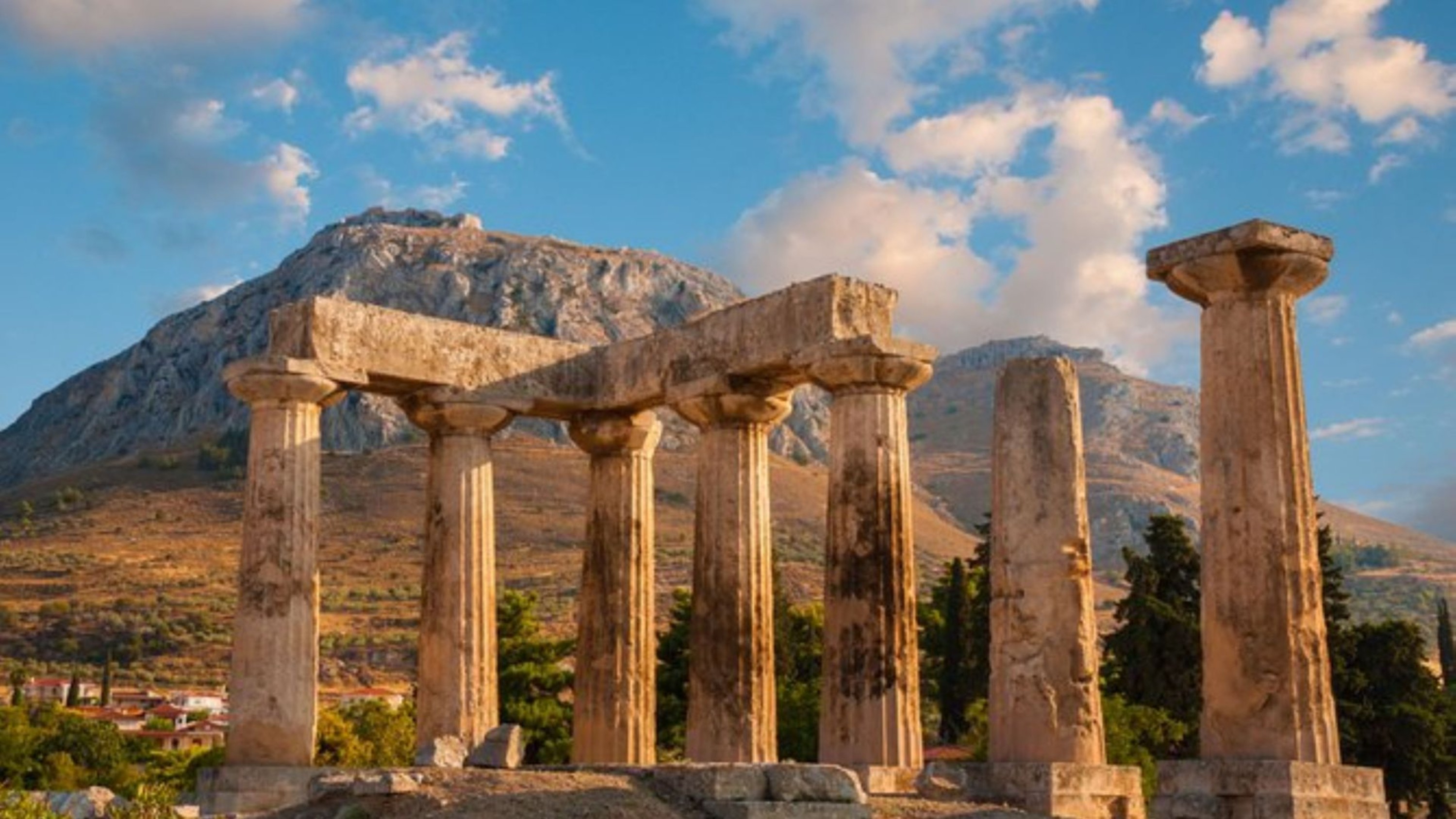
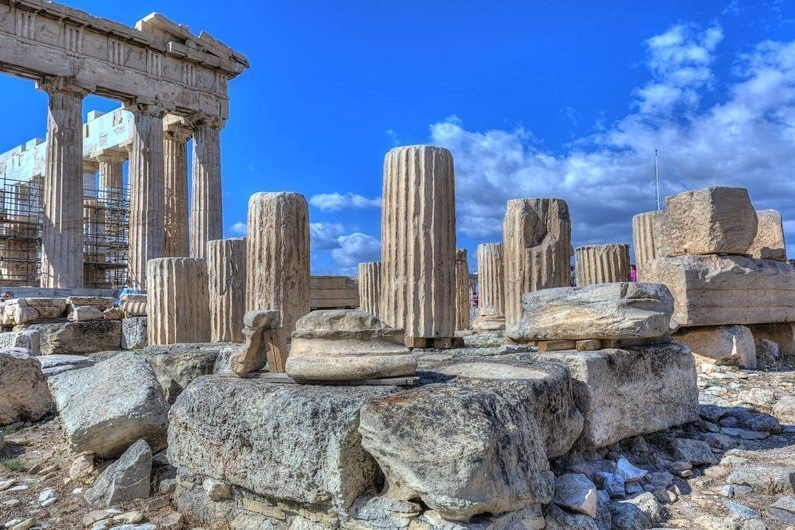
The temple of Apollo archair temple built of 40 monolithic Dorian columns with only seven of them maintained over the ruins of the ancient market.
The original temple dating back to between the early 7th and early 6th centuries BC. it was built of stone, bricks and wooden beams and carried a heavy and complex four-pitched roof made of clay tiles. It was probably a simple construction without external columns, while in other respects it brought occasion.
-Asklepieion, the healing sanctuary
-Corinth, a Roman colony
-The Museum’s Atrium
5
Akrokorinthos, a steep rock 575m. high which because of its morphology, used to be a viewport (Acropolis) in ancient times in case of a raid either from central Greece or from the sea.
Acrocorinth is a monolithic rock overlooking the ancient city of Corinth, Greece. In the estimation of George Forrest, "It is the most impressive of the acropolis of mainland Greece".
With its secure water supply, Acrocorinth's fortress was repeatedly used as a last line of defense in southern Greece because it commanded the Isthmus of Corinth, repelling foes from entry by land into the Peloponnese peninsula.
-Amphitheater
-Apostle Paul's step
- Theater
- Sanctuary of Asclepius
- Sanctuary of Demeter and Koris
- Fountain Glavki
- Temple of Apollo
- Temple of Octavia
- Early Christian Basilica of the Skull
- Early Christian Basilica of Lechai
- Pirine
- Conservatory
What's not included
Licensed Tour guide upon request depending on availability.
The guide driver is not a licensed tour guide to accompany you at any site/museum.
The tickets for all archeological places and museums.
Archaeological Museum of Ancient Corinth
Available languages
Guide guide
EN
FR
Reviews breakdown
Viator
5.0
7 reviews
5★
7
4★
0
3★
0
2★
0
1★
0
Tripadvisor
5.0
7 reviews
5★
7
4★
0
3★
0
2★
0
1★
0
Important information
Specialized infant seats are available
Service animals allowed
Public transportation options are available nearby
Infants and small children can ride in a pram or stroller
All areas and surfaces are wheelchair accessible
Transportation options are wheelchair accessible
Wheelchair accessible
Suitable for all physical fitness levels
Additional fees if the tour concludes at a location other than the designated meeting point.
Flexible Pick-Up Times - Customize pick-up times to suit your schedule.
Hourly Extensions - Extend your tour for a fee, adaptable to your needs.
The Archaeological Museum of Ancient Corinth is closed on the following dates: January 1st, March 25th, May 1st, Easter Sunday, December 25th, and December 26th.
Ticket prices for archaeological sites vary depending on the season, either winter or summer
About Athens
Athens, the capital of Greece, is a city rich in history and culture, often considered the cradle of Western civilization. It is home to iconic ancient landmarks, vibrant neighborhoods, and a thriving modern scene.
Top Attractions
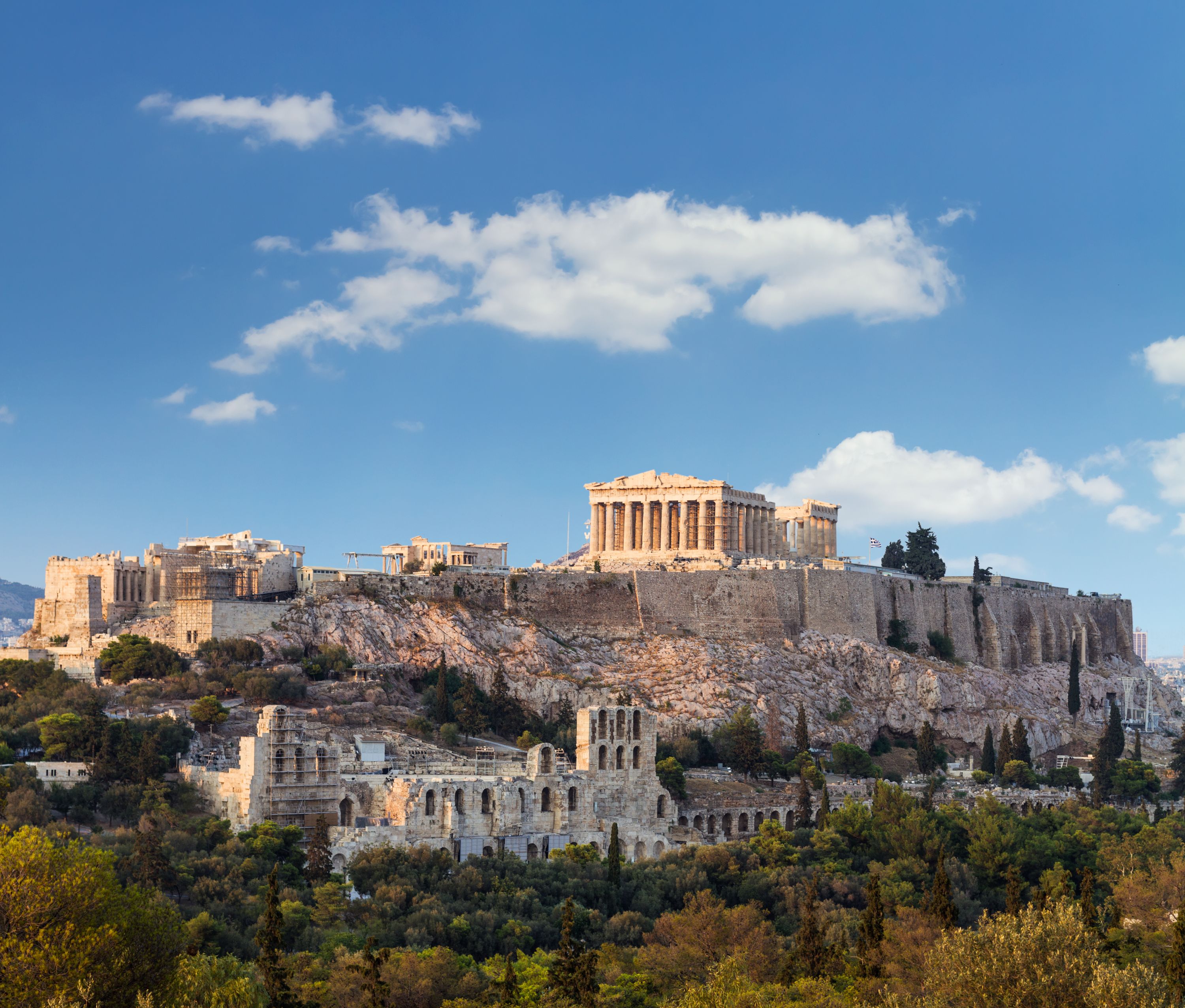
Acropolis of Athens
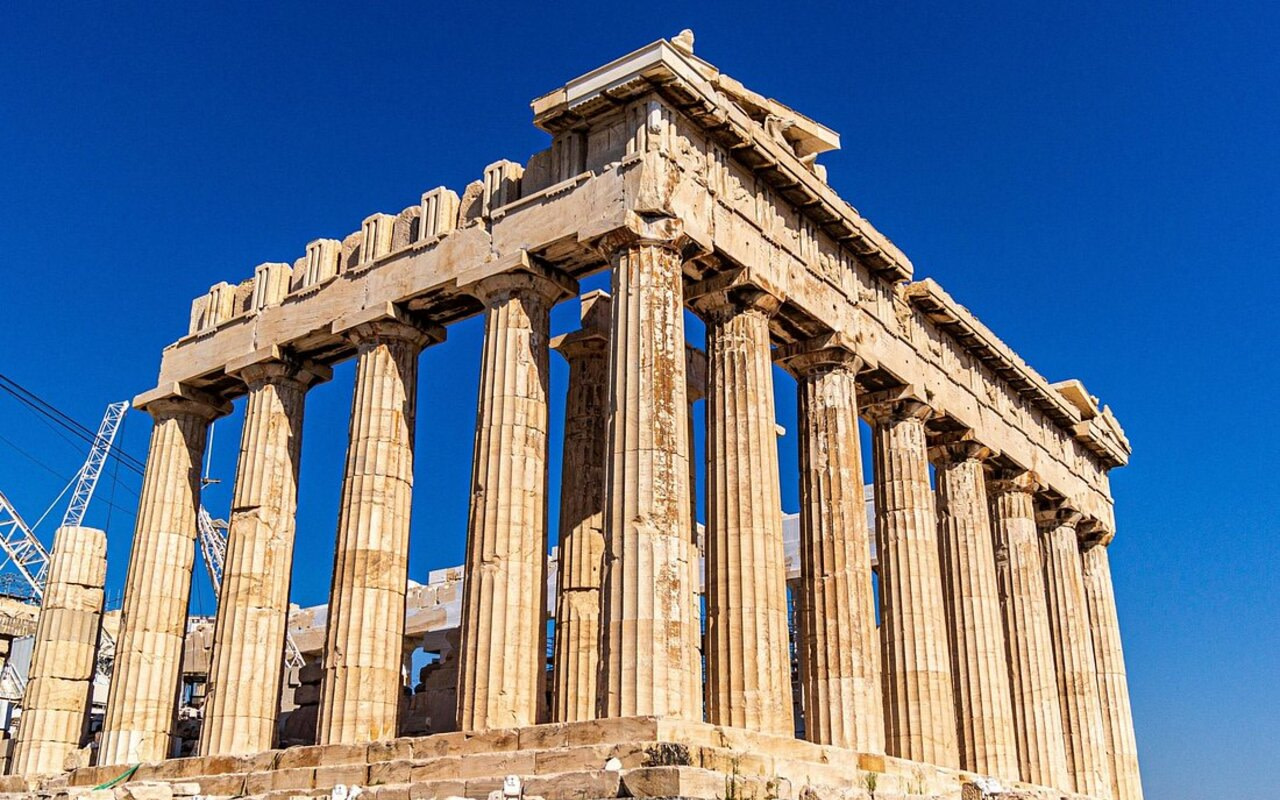
The Acropolis is the most iconic landmark in Athens, featuring ancient ruins and temples, including the Parthenon.
Historical
2-3 hours
€20 (combined ticket for multiple sites)
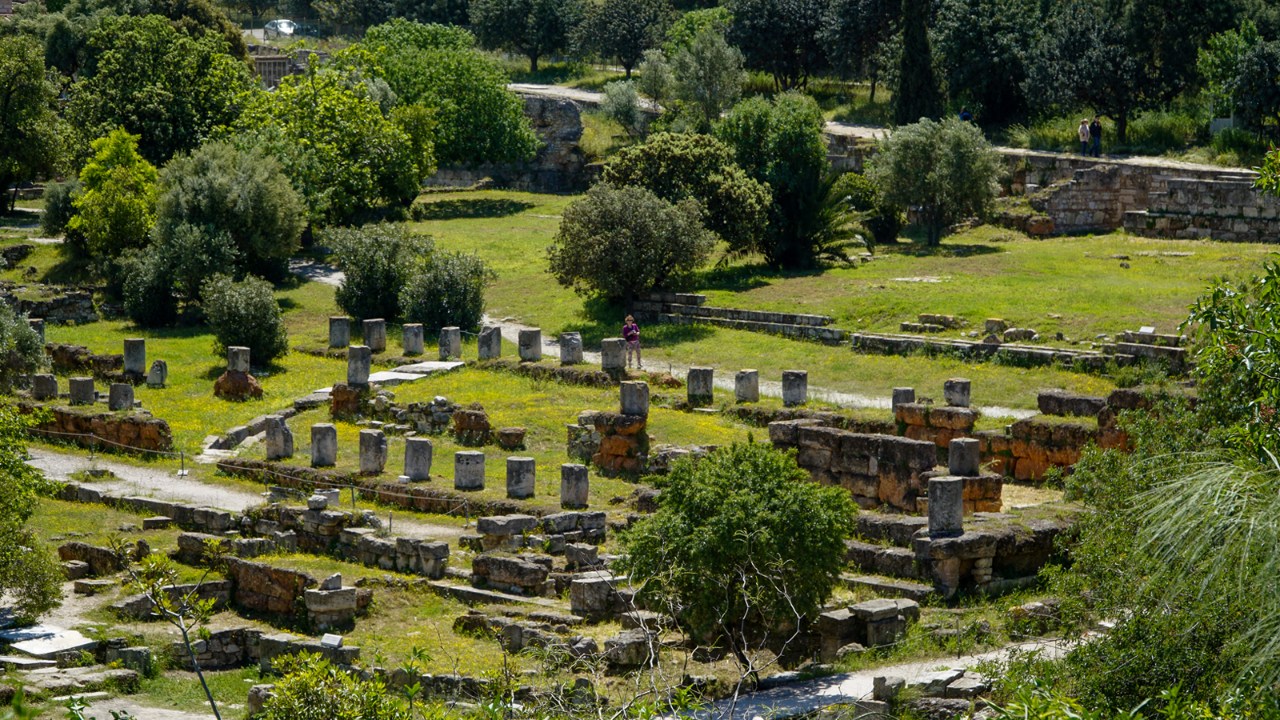
Ancient Agora of Athens
The heart of ancient Athens, featuring the Temple of Hephaestus and the Stoa of Attalos.
Historical
1-2 hours
€8 (included in the combined ticket)
Plaka
A charming, historic neighborhood with narrow streets, neoclassical houses, and vibrant nightlife.
Cultural
2-3 hours
Free to explore
Acropolis Museum
A modern museum showcasing artifacts from the Acropolis and its surroundings.
Museum
1-2 hours
€10
Temple of Olympian Zeus
An ancient temple dedicated to Zeus, once the largest temple in Greece.
Historical
30 minutes to 1 hour
€6 (included in the combined ticket)
Must-Try Local Dishes
Moussaka
A baked dish with layers of eggplant, minced meat, and béchamel sauce.
Dinner
Vegetarian versions available
Souvlaki
Grilled meat skewers, often served with pita bread and tzatziki.
Snack
Can be made with chicken, pork, or vegetarian options
Tzatziki
A yogurt-based dip with cucumber, garlic, and herbs.
Snack
Vegetarian and vegan options available
Baklava
A sweet pastry made with layers of filo, nuts, and honey syrup.
Dessert
Vegetarian
Popular Activities
Hiking in the mountains
Rock climbing
Scuba diving
Beach visits
Spa treatments
Café hopping
Museum visits
Theater performances
Best Time to Visit
April to June, September to October
The best time to visit Athens is during the spring and autumn months when the weather is pleasant and the tourist crowds are smaller.
18°C to 32°C
64°F to 90°F
Practical Information
Language
- Official: Greek
- Widely spoken: English, French, German
- English: Moderately spoken
Currency
Euro (EUR)
Time Zone
GMT+2 (EET)
Electricity
230VV, 50HzHz
Safety Information
Overall Safety Rating: Generally safe
Athens is generally safe for travelers, but petty crime and pickpocketing can occur in tourist areas. Be cautious with your belongings and avoid poorly lit areas at night.
Important Precautions:
- • Keep valuables secure
- • Use licensed taxis or ride-sharing apps
- • Be cautious with ATMs and credit cards
Getting there
By air
- Eleftherios Venizelos International Airport • 30 km from city center
By train
Athens Central Railway Station
By bus
KTEL Bus Station
Getting around
Public transport
Clean, efficient, and air-conditioned. Easy to navigate with clear signage in English.
Taxis
Available • Apps: Beat, Uber
Rentals
Car, Bike, Scooter
Neighborhoods
Plaka
Monastiraki
Psiri
Koukaki
Kolonaki
Day trips
Cape Sounion
65 km from Athens • Half day to full day
A scenic coastal area featuring the Temple of Poseidon with stunning views of the Aegean Sea.
Delphi
180 km from Athens • Full day
An ancient archaeological site and home to the famous Oracle of Delphi.
Meteora
350 km from Athens • Overnight
A unique landscape featuring rock formations and medieval monasteries perched atop cliffs.
Festivals
Athens Festival • May to October
Athens Epidaurus Festival • June to August
Athens International Film Festival • October
Pro tips
- Visit major attractions early in the morning or late in the afternoon to avoid crowds and heat
- Use the metro for easy and efficient travel around the city
- Explore local neighborhoods for an authentic Greek experience
- Try local street food for a quick and delicious meal
- Learn a few basic Greek phrases to enhance your experience and connect with locals
From $25
per person
Price varies by option
Secure booking
Free cancellation available
Instant confirmation