Nuremberg WWII Tour, Courtroom 600 and 3rd Reich Sites
Active
4h
For a full refund, cancel at least 24 hours before the scheduled departure time.
Instant confirmation
Mobile or paper ticket accepted
About this experience
The Major War Criminals Trial was held before the International Military Tribunal in Nuremberg from November 20, 1945 to October 1, 1946. As a result of this trial, Courtroom 600 of the Nuremberg Palace of Justice gained worldwide notoriety. From 1946 to 1949, 12 "Subsequent Trials" were held in the same courtroom before exclusively U. S. American military tribunals. .
Still to this day, in the southeast corner of Nuremberg, the remains of structures located on the former Nazi Party Rally Grounds impress visitors with their immense proportions and stand as vivid testimony to the megalomania of the National Socialist regime. This area of 4 square miles was intended to be an impressive backdrop for the Nazi party rallies and serve to demonstrate their power not only to Germany, but to the entire world.
Palace of Justice is CLOSED ON TUESDAY
That is a Group Tour Max 8 Persons
Available options
Nuremberg WWII Tour, Courtroom 600 and 3rd Reich Sites
Pickup included
What's included
Private Transport
Tour Guide
Detailed itinerary
1
The Nazi Party Rally Grounds were called the area in the southeast of Nuremberg, where the Nazi Party rallies of the NSDAP took place from 1933 to 1938. The overall design for the design of the site came from Albert Speer in the basic concept and from Walter Brugmann in detail, who also managed the implementation. It covers a total area of over 16.5 km².
2
Documentation Center Nazi Party Rally Grounds. From 1933 to 1938, the National Socialists held their Party Rallies in Nuremberg. Today remains of huge structures still bear witness to how this propaganda display was organized and produced.
3
Stop 3
is located east of the Great Road. It consists of a large grandstand (Zeppelinhaupttribüne) with a width of 360 metres (390 yards) and a smaller stand. It was one of Albert Speer's first works for the Nazi party and was based upon the Pergamon Altar. Its square piers are inspired by the work of Franco-American architect Paul Philippe Cret. The grandstand is famous as the building that had the swastika blown from atop it in 1945, after Germany's fall in World War II. The name "Zeppelinfeld" or "Zeppelinwiese" refers to the fact that in August 1909 Ferdinand Graf von Zeppelin landed with one of his airships (LZ6) in this location.
4
Stop 4
The Major War Criminals Trial was held before the International Military Tribunal in Nuremberg from November 20, 1945 to October 1, 1946. As a result of this trial, Courtroom 600 of the Nuremberg Palace of Justice gained worldwide notoriety. From 1946 to 1949, 12 "Subsequent Trials" were held in the same courtroom before exclusively U.S. American military tribunals..
What's not included
Palace of Justice is CLOSED ON TUESDAYS
Nuremberg Palace of Justice
Available languages
Audio guide
DE
FR
Guide guide
PT
EN
IT
ES
Reviews breakdown
Viator
4.5
51 reviews
5★
40
4★
5
3★
3
2★
0
1★
3
Tripadvisor
4.6
98 reviews
5★
78
4★
7
3★
7
2★
4
1★
2
Important information
Wheelchair accessible
Infants and small children can ride in a pram or stroller
Transportation options are wheelchair accessible
All areas and surfaces are wheelchair accessible
Suitable for all physical fitness levels
About Nuremberg
Nuremberg is a historic city in the Franconia region of Bavaria, known for its medieval architecture, rich history, and as the unofficial capital of the Holy Roman Empire. It offers a blend of cultural heritage, vibrant markets, and modern attractions, making it a unique destination for travelers.
Top Attractions
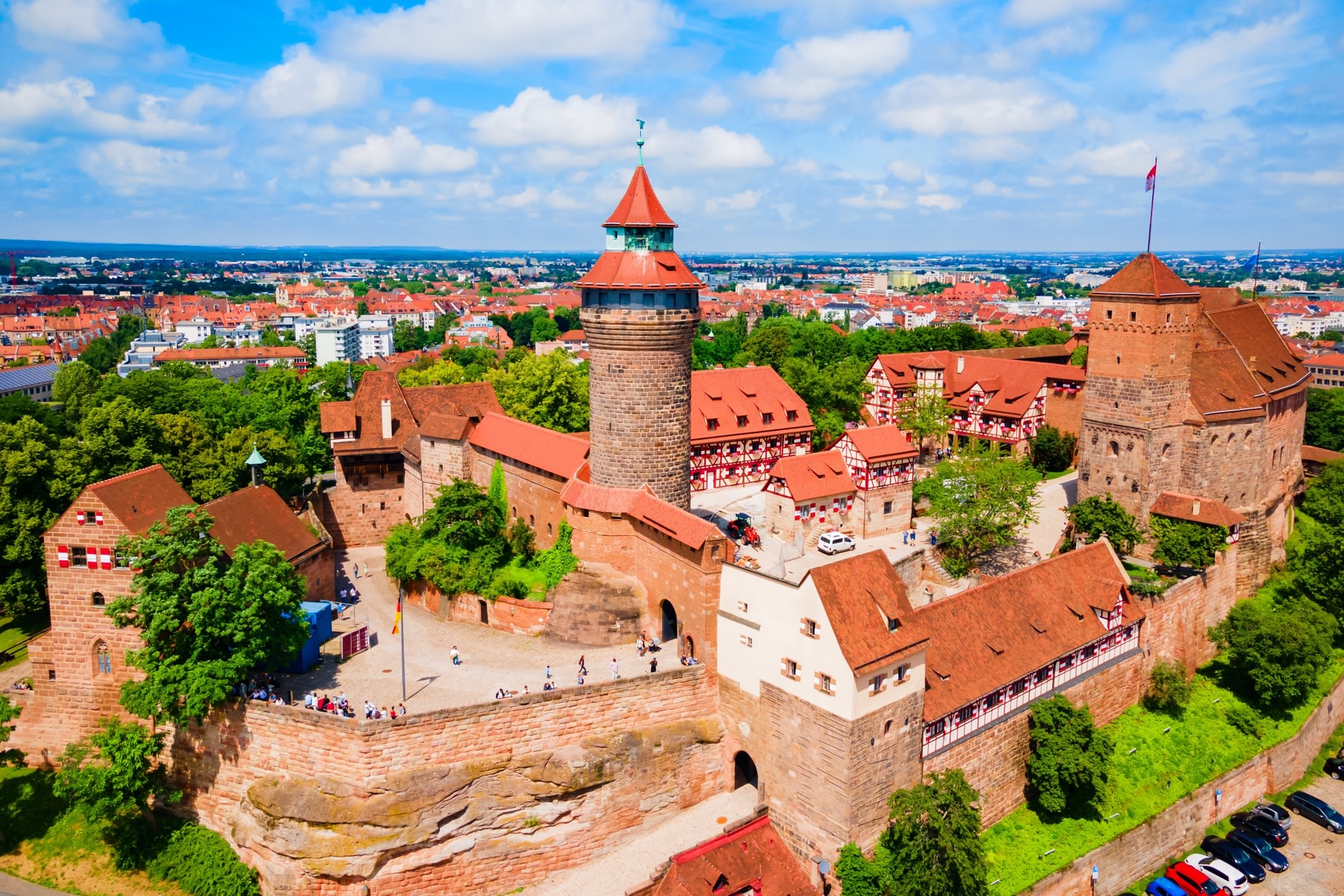
Nuremberg Castle
A complex of medieval fortified buildings that served as the seat of the Holy Roman Empire. It offers stunning views of the city and insights into its rich history.
Historical
2-3 hours
€7-€10
Nuremberg Christmas Market
One of the most famous Christmas markets in Germany, featuring traditional wooden stalls, festive decorations, and a variety of local crafts and foods.
Cultural
2-4 hours
Free entry, variable for purchases
Germanisches Nationalmuseum
The largest museum of cultural history in the German-speaking world, housing a vast collection of art and historical artifacts.
Museum
2-3 hours
€12-€14
Nuremberg Zoo
One of the largest and most popular zoos in Germany, featuring a wide variety of animals and beautiful landscapes.
Nature
3-4 hours
€18-€22
St. Lorenz Church
A magnificent example of Gothic architecture, known for its intricate design and historical significance.
Architectural
1-2 hours
Free entry, €3 for tower climb
Must-Try Local Dishes
Nuremberg sausages (Nürnberger Rostbratwurst)
Small, grilled sausages made from pork, typically served with mustard and bread.
Snack
Contains pork, gluten-free if served without bread
Bratwurst
A traditional German sausage, often served with sauerkraut and mustard.
Main dish
Contains pork, gluten-free if served without bread
Schäufele
A roasted pork dish, typically served with potato salad or dumplings.
Main dish
Contains pork, not gluten-free
Bier
Nuremberg is known for its local breweries and beer culture. Try a local beer like Tucher or Spezial.
Drink
Contains gluten, not suitable for vegetarians or vegans
Popular Activities
Hiking in the nearby forests
Cycling along the Pegnitz River
Rock climbing at the nearby quarries
Visiting the city's parks and gardens
Enjoying a spa day at one of the local wellness centers
Strolling along the Pegnitz River
Visiting museums and historic sites
Attending local festivals and events
Best Time to Visit
May to September
This is the best time to visit Nuremberg, with pleasant weather and numerous outdoor festivals and events. The city is vibrant and lively during these months.
15°C to 25°C
59°F to 77°F
Practical Information
Language
- Official: German
- Widely spoken: English, French, Turkish
- English: Moderately spoken
Currency
Euro (EUR)
Time Zone
CET (GMT+1), CEST (GMT+2 during daylight saving time)
Electricity
230VV, 50HzHz
Safety Information
Overall Safety Rating: Generally safe
Nuremberg is generally safe for travelers, with low crime rates and a welcoming atmosphere. However, as with any destination, it's important to be aware of your surroundings and take basic precautions to ensure a safe and enjoyable trip.
Important Precautions:
- • Be aware of your surroundings
- • Keep valuables secure
- • Use reputable taxis and public transport
Getting there
By air
- Nuremberg Airport • 5 km from city center
By train
Nuremberg Hauptbahnhof
By bus
Nuremberg Central Bus Station
Getting around
Public transport
Nuremberg's public transport system is efficient and covers most of the city. The U-Bahn (subway) and Straßenbahn (tram) are the primary modes of transport.
Taxis
Available • Apps: Free Now, Taxi Nuremberg
Rentals
Car, Bike, Scooter
Neighborhoods
Old Town (Altstadt)
Gostenhof
St. Johannis
Südstadt
Day trips
Bamberg
70 km from Nuremberg • Full day
A UNESCO World Heritage site known for its medieval architecture, historic breweries, and unique culture. Bamberg is a charming city with a rich history and beautiful landscapes.
Rothenburg ob der Tauber
110 km from Nuremberg • Full day
A picturesque medieval town known for its well-preserved old town, Christmas markets, and fairy-tale atmosphere. Rothenburg ob der Tauber is a must-visit for history and culture enthusiasts.
Regensburg
100 km from Nuremberg • Full day
A historic city known for its well-preserved medieval architecture, UNESCO World Heritage sites, and vibrant culture. Regensburg offers a mix of history, art, and local cuisine.
Festivals
Nuremberg Christmas Market • Late November to December 24
Bardentreffen • Early June
Nuremberg International Human Rights Film Festival • Early March
Pro tips
- Visit the Nuremberg Castle early in the morning to avoid crowds and enjoy the best views of the city
- Try the local specialties, such as Nuremberg sausages, schnitzel, and Lebkuchen (gingerbread)
- Explore the city's hidden gems, such as the underground tunnels and bunkers, for a unique and fascinating experience
- Attend a local festival or event, such as the Christmas market or the Bardentreffen music festival, for a taste of Nuremberg's vibrant culture
- Take a day trip to nearby cities and attractions, such as Bamberg, Rothenburg ob der Tauber, or the Neuschwanstein Castle, for a more comprehensive exploration of the region
From $25
per person
Price varies by option
Secure booking
Free cancellation available
Instant confirmation