Guided tour of Fes
Active
6h - 7h
For a full refund, cancel at least 24 hours before the scheduled departure time.
Instant confirmation
Mobile or paper ticket accepted
About this experience
The fountain in En Nejjarine square is the most beautiful in Fez with its decor of
zelliges and its cedar wood canopy. The Medersa El Attarine is also a pretty
representation of Hispano-Moorish architecture (comparable to the Medersa Ben
Youssef in Marrakech (although less well maintained!).
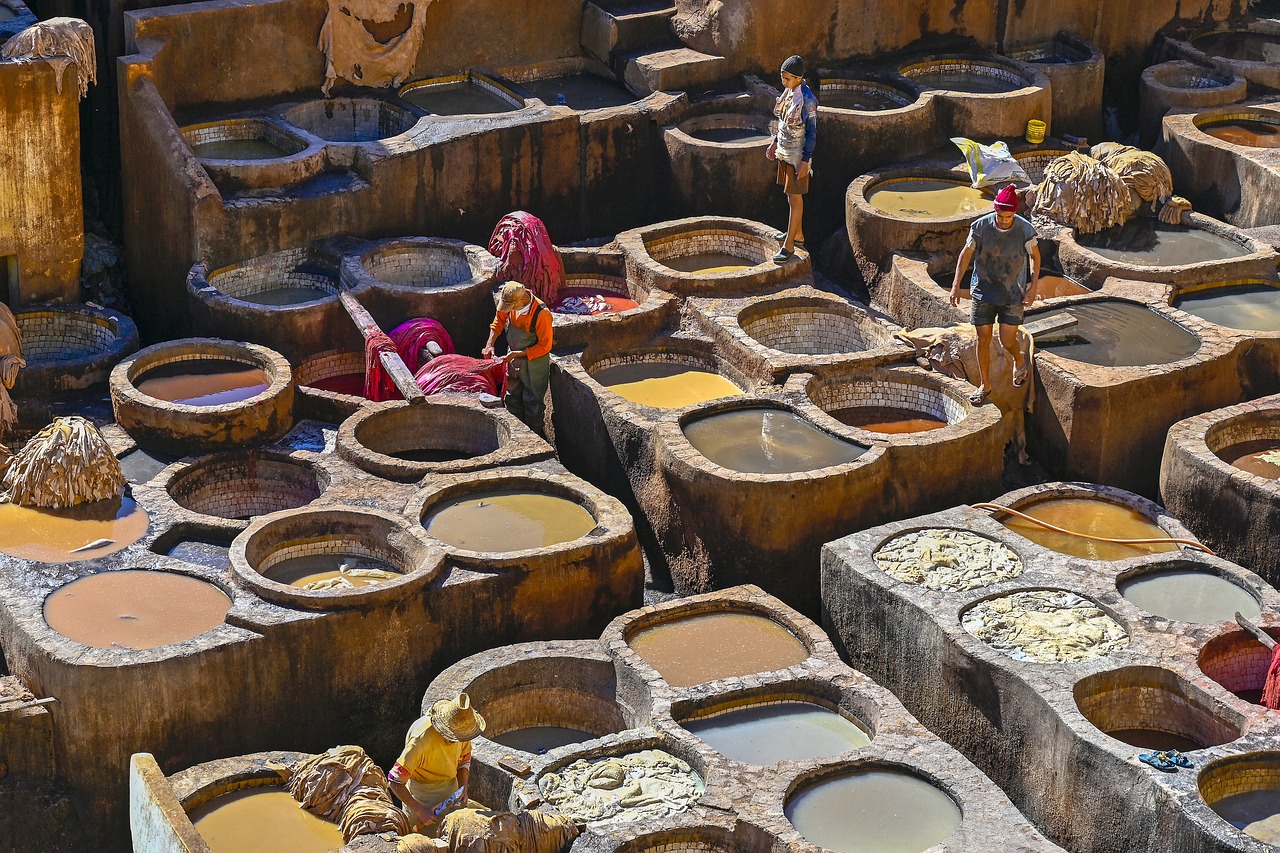
The souks are surely the great interest of Fez. The visit of the district of
Tanners are the most impressive. The Tanners are barefoot in
mostly natural dye tanks. The skins have been previously
stripped of their hair in lime baths for weeks. The
great spectacle of this work can be seen at the top of the shops
tanners.
Accept the mint leaves at the entrance offered by the merchant, in order to withstand the foul smells that you will encounter above the vats !!
Souk of dyers, henna, jewelry, blacksmithing, carpentry, everything is made in this wonderful city.
Available options
Guided tour of Fes
Pickup included
What's included
Private transportation
All Fees and Taxes
Approved guide
Detailed itinerary
1
Stop 1
After Bab Bou Jeloud, begins the largest and most beautiful medina in the Maghreb, once separated into
around twenty small medinas. Narrow and dark alleys, less pleasant but more
authentic that the two main arteries are constantly expanding, so much so that Fez El-Bali
has almost a thousand derbs (dead ends).
2
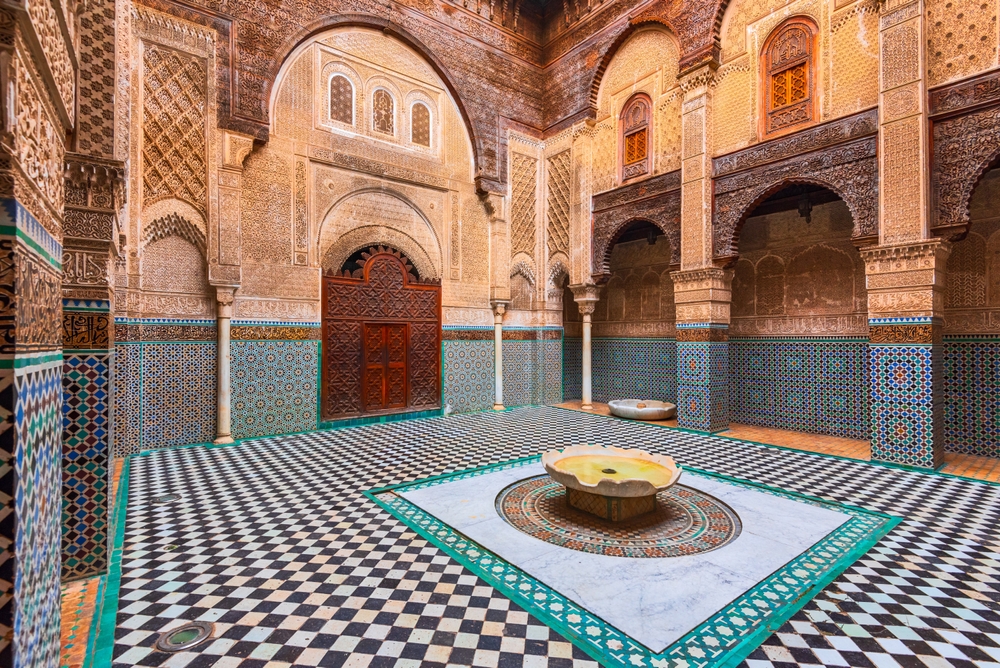
Also known as the Mererside Medersa, the latter is the largest in Fez, its
construction lasted from 1350 to 1357 under the aegis of Sultan Abu Inan. His sculpted plasters, his
cedar woodwork today discolored, its decor in bronze, marble and onyx, its windows often
surmounted by stalactites, the mukarnas, are characteristic of the Marinid architecture. The walls of
interior patio are decorated with zelliges topped with stucco and a canopy of green tiles. The room of
prayer has notably superb old stained glass windows and a magnificent minbar. Still active,
this madrassah nowadays serves as a mosque, and represents one of the rare religious buildings of the
Morocco open to non-Muslims.
3
Stop 3
This square takes its name from the cabinetmakers' souk which stands behind a wooden door in an alley
below. Its fountain is splendid and unusual. At the bottom of the square, the "Fondouk" (house
En-Najjarine, probably built in the 17th century, it has recently been transformed into
mosque and opens onto a facade with extremely rich decoration.
4
On the edge of the Fez wadi which provides the water necessary for the treatment of hides, the tanners' district
de Chouara displays its bright colors. From the terraces of the surrounding houses, the view plunges into
a series of red and fawn dye basins. Skins are drying everywhere in the sun. "Wool,
skins, wax are shipped in large quantities to Europe; the most beautiful leathers remain in Fez where,
worked by skillful workers, they are used to make belghas (sort of slippers), cushions,
belts, luxury items that we come to buy from all over Morocco.
5
Stop 5
This term designates in Morocco all the Jewish districts and comes from the word melh (salt). The mellah of Fez,
considered the first in Morocco, was located near the current Jamaï Palace, in the El
Yahoudi located north of the city. The district knew the animation of a life of work and prayer,
around its small shops, its goldsmith workshops (a specialty of the Jews in the past), its
synagogues or its Talmudic schools. It is now inhabited by a Muslim majority,
mostly country people, freshly arrived in town. Among the historic buildings that have
marked the seven centuries of Jewish life: the house of the Chief Rabbi, the Danan Synagogue and the
Jewish cemetery which is located below the district.
6
Stop 6
Important commercial building built in the 17th century, including the monumental door
is unique in its structure, shape and decorative elements, has regained its beauty: warmth
cedar wood, elegant arcades, but also revival of a central district of
Medina. Around its foundouk, with its place, its fountain and the carpenters' souk, is
the object of an exemplary restoration-rehabilitation. The Foundouk Nejjarine has become a museum
wood where the woodwork of traditional architecture is exposed.
7
Stop 7
The Dar Batha Palace now houses a museum of Moroccan Arts. Carpets, Berber jewelry,
Fez pottery, illuminated Qur'ans, carved cedar wood, firearms, sculptures and stones
engraved, coins, embroidery, zelliges and chiseled stucco recovered in medersas in
ruined. Also a renowned collection of ceramics from the 14th century to the present day and of course
famous blue pottery from Fez. This museum is as interesting for its Andalusian garden as for
its beautiful collections of traditional Fassi art: manuscripts, furniture, clothing, carpets and jewelry.
What's not included
Monuments tickets
Lunch
Soda/Pop
Available languages
Guide guide
DE
PT
CMN
EL
EN
IT
FR
DA
ES
Important information
Infants are required to sit on an adult’s lap
Specialized infant seats are available
Public transportation options are available nearby
Infants and small children can ride in a pram or stroller
All areas and surfaces are wheelchair accessible
Transportation options are wheelchair accessible
Suitable for all physical fitness levels
Wheelchair accessible
Meeting point
opposite Atlas Volubilis hotel
About Fez
Fez is the cultural and spiritual heart of Morocco, known for its ancient medina, a UNESCO World Heritage site, and the oldest university in the world, the University of al-Qarawiyyin. It offers a rich tapestry of history, architecture, and traditional crafts.
Top Attractions
Fez Medina
The Fez Medina is a UNESCO World Heritage site and one of the largest and best-preserved medieval old cities in the world. It's a labyrinth of narrow streets, bustling markets, and historic sites.
Historical/Cultural
Full day
Free to explore, fees for specific sites
Al-Qarawiyyin University
Founded in 859 AD, Al-Qarawiyyin is the oldest continuously operating university in the world. It's a significant cultural and historical site.
Historical/Educational
1-2 hours
Free
Bou Inania Madrasa
A beautiful example of Marinid architecture, this madrasa (Islamic school) is one of the few religious sites in Fez open to non-Muslims.
Historical/Architectural
30-60 minutes
Moderate
Chouara Tanneries
One of the last remaining traditional tanneries in the world, the Chouara Tanneries offer a glimpse into an ancient craft that has changed little over centuries.
Cultural/Industrial
30-60 minutes
Free (donations appreciated)
Bab Bou Jeloud
The main gate to the Fez Medina, Bab Bou Jeloud is a beautiful example of Moroccan architecture and a great photo opportunity.
Architectural
15-30 minutes
Free
Must-Try Local Dishes
Tagine
A slow-cooked stew made with meat, vegetables, and spices, served in a conical clay pot.
Dinner
Can be made with various meats or vegetables, some vegetarian options available.
Couscous
Steamed semolina grains served with vegetables and meat, often with a rich sauce.
Lunch/Dinner
Can be made with various meats or vegetables, some vegetarian options available.
Pastilla
A savory-sweet pie made with layers of thin pastry, filled with spiced pigeon meat, almonds, and sugar.
Lunch/Dinner
Contains meat and nuts.
Harira
A hearty soup made with lentils, chickpeas, tomatoes, and spices, often served during Ramadan.
Lunch/Dinner
Vegetarian and vegan options available.
Popular Activities
Hiking in the Rif Mountains
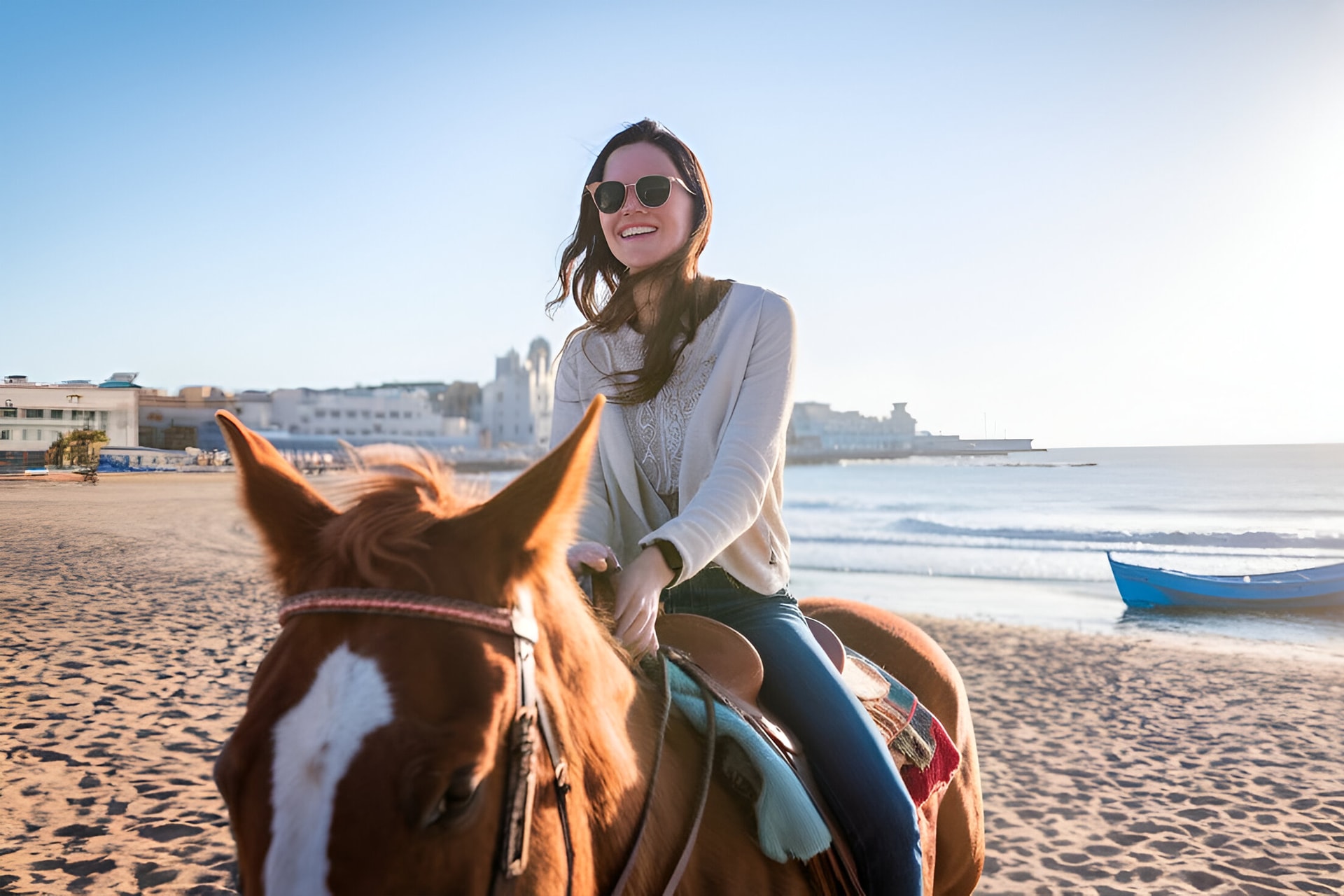
Horseback riding in the countryside
Spa and hammam treatments
Strolling through the gardens of the Royal Palace
Exploring the Fez Medina
Visiting historic sites and museums
Attending traditional music and dance performances
Experiencing a traditional hammam
Best Time to Visit
Spring (March to May) and Fall (September to November)
The weather is pleasant, with mild temperatures and lower humidity. This is the best time for sightseeing and exploring the city.
15°C to 25°C
59°F to 77°F
Practical Information
Language
- Official: Arabic, Berber
- Widely spoken: French, English (in tourist areas)
- English: Moderately spoken in tourist areas, limited elsewhere
Currency
Moroccan Dirham (MAD)
Time Zone
GMT+1
Electricity
220VV, 50HzHz
Safety Information
Overall Safety Rating: Generally safe, but exercise caution
Fez is generally safe for travelers, but petty crime and scams can occur, especially in crowded areas. Be aware of your surroundings and take precautions to protect your belongings.
Important Precautions:
- • Keep valuables secure and out of sight
- • Be cautious of strangers offering help or services
- • Use reputable tour operators and guides
Getting there
By air
- Fes-Saïss Airport • 15 km from city center
By train
Fez Railway Station
By bus
Fez CTM Bus Station, Fez Supratours Bus Station
Getting around
Public transport
Buses are the most common form of public transport in Fez. They are affordable but can be crowded.
Taxis
Available • Apps: None widely used
Rentals
Car, Bike, Scooter
Neighborhoods
Fez Medina
Fes el Jdid
Ville Nouvelle
Day trips
Meknes
60 km • Full day
Meknes is a historic city with a rich past, known for its imperial palaces, mosques, and the famous Bab Mansour gate. It offers a mix of history, architecture, and local culture.
Volubilis
80 km • Full day
Volubilis is a UNESCO World Heritage site and the remains of a Roman city. It's one of the most important archaeological sites in Morocco, offering a glimpse into the country's Roman past.
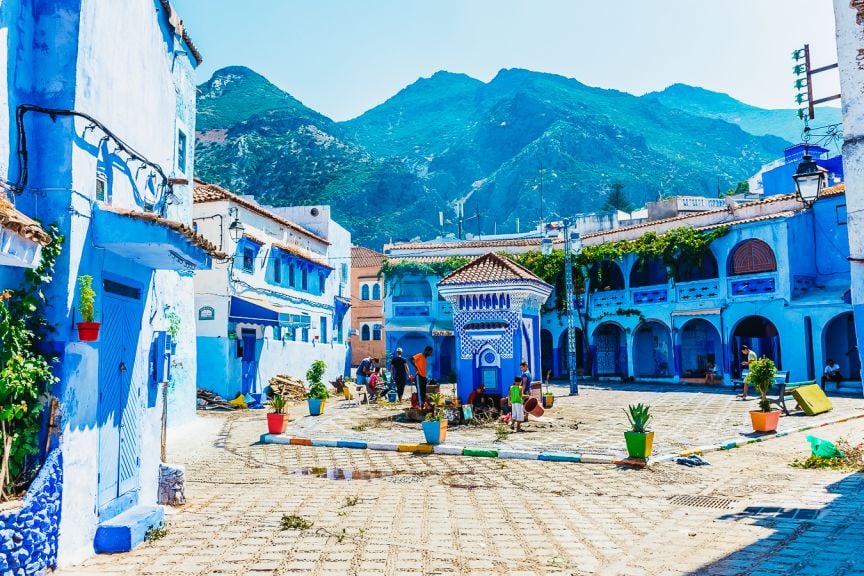
Chefchaouen
120 km • Overnight
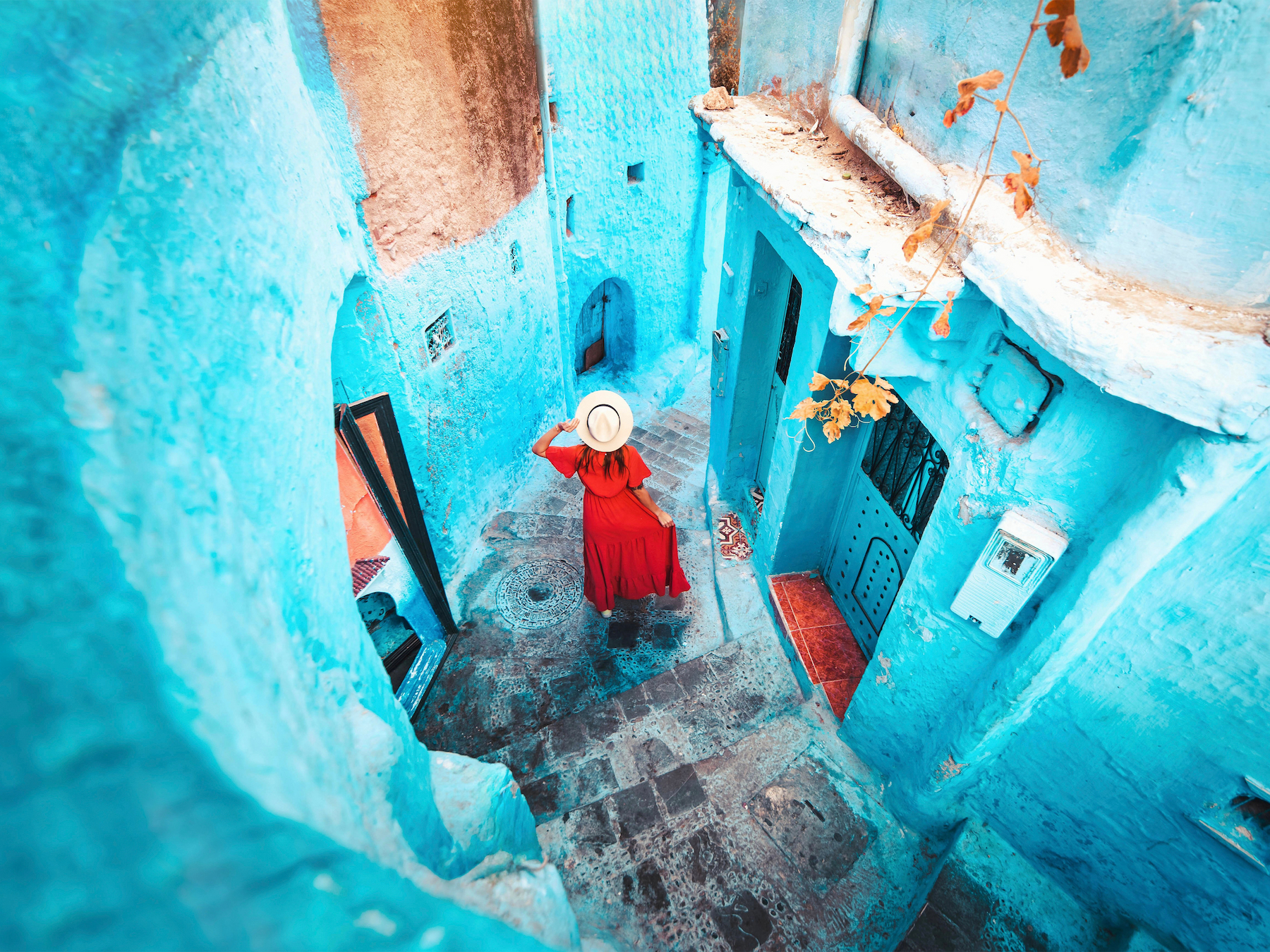
Chefchaouen is a picturesque mountain town known for its blue-washed buildings, narrow streets, and relaxed atmosphere. It's a great place to escape the hustle and bustle of the city and enjoy the natural beauty of the Rif Mountains.
Festivals
Fez Festival of World Sacred Music • June
Fez Festival of Sufi Culture • April
Ramadan • Date varies (Islamic calendar)
Pro tips
- Hire a local guide to navigate the medina and learn about its history and culture
- Visit the Chouara Tanneries early in the morning to avoid the heat and crowds
- Try a traditional hammam experience for relaxation and rejuvenation
- Learn a few basic phrases in Arabic or French to enhance your interactions with locals
- Bargain politely in markets and souks, but be prepared to walk away if the price is not agreeable
From $25
per person
Price varies by option
Secure booking
Free cancellation available
Instant confirmation