Pamukkale and Kaklik Cave Tour - Drop off DNZ Airport
Active
6h - 7h
For a full refund, cancel at least 24 hours before the scheduled departure time.
Instant confirmation
Mobile or paper ticket accepted
About this experience
Get enough of crowded places? Explores the beauty around Pamukkale and discover the hidden secrets in nature.
Available options
Pamukkale and Kaklik Cave Tour - Drop off DNZ Airport
Pickup included
What's included
Drop-off airport service
All entrance fees
Lunch
Air-conditioned vehicle
English Speaking professional guide
Detailed itinerary
1
When our tour starts we will drive to Karahayıt. Our first stop is in Karahayit Red Water Hot Springs. Karahayit hot springs are located in Karahayit Town, Denizli, Turkey. It’s about 5 km north of the famous Pamukkale Travertine and has similar characteristics to that of Pamukkale. Due to the minerals existing in its structure, the hot spring water spreads reddish color to the environment
2
Stop 2
After a short visit to this natural beauty, we will head to the north gate of Hierapolis and start to explore this mighty antique city. We will see the Necropolis, Bath and Basilica, Frontinius Gate, Frontinius Street, Latrina, Northern Byzantine Gate, Fountain of the Tritons, and the Temple of Apollon.
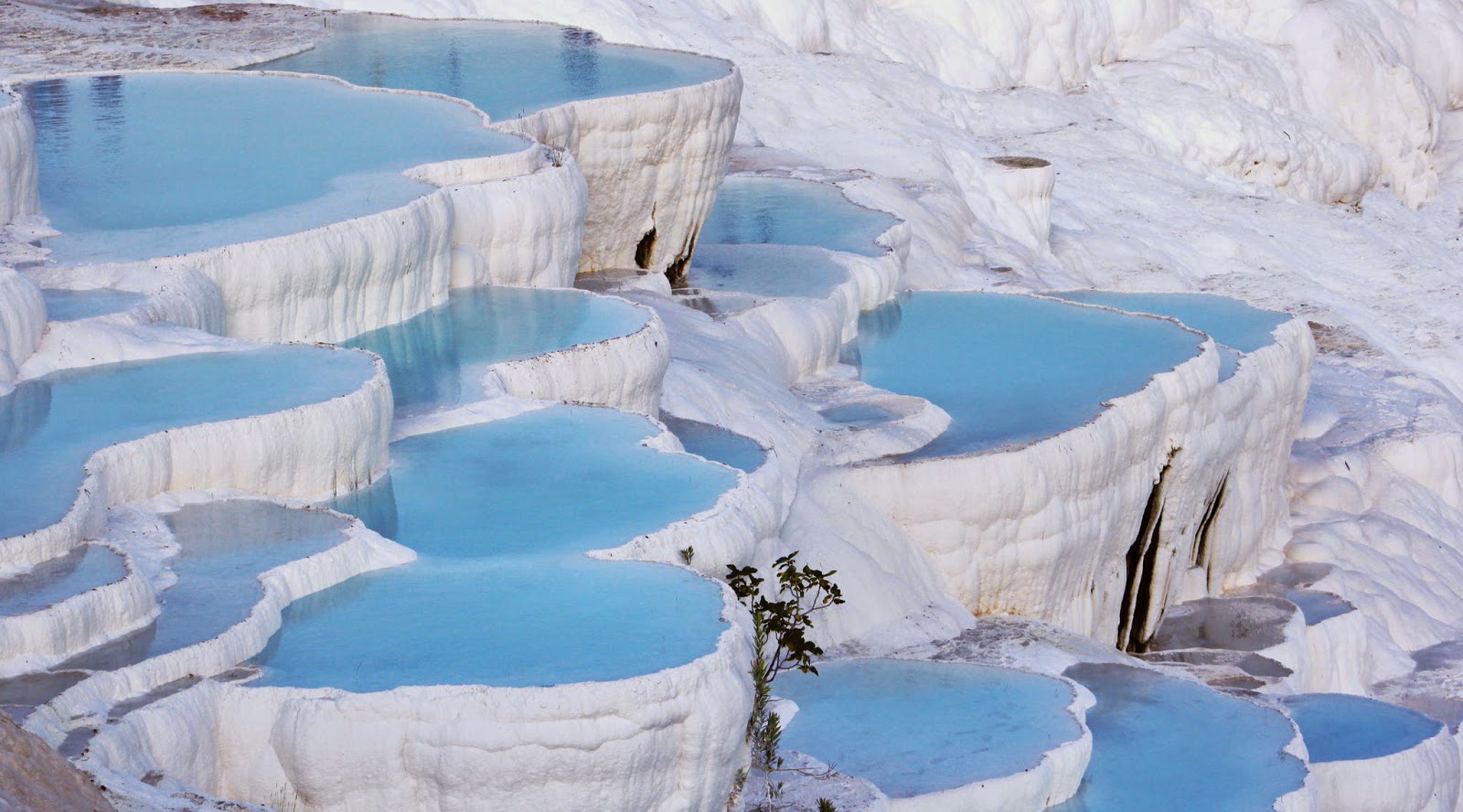
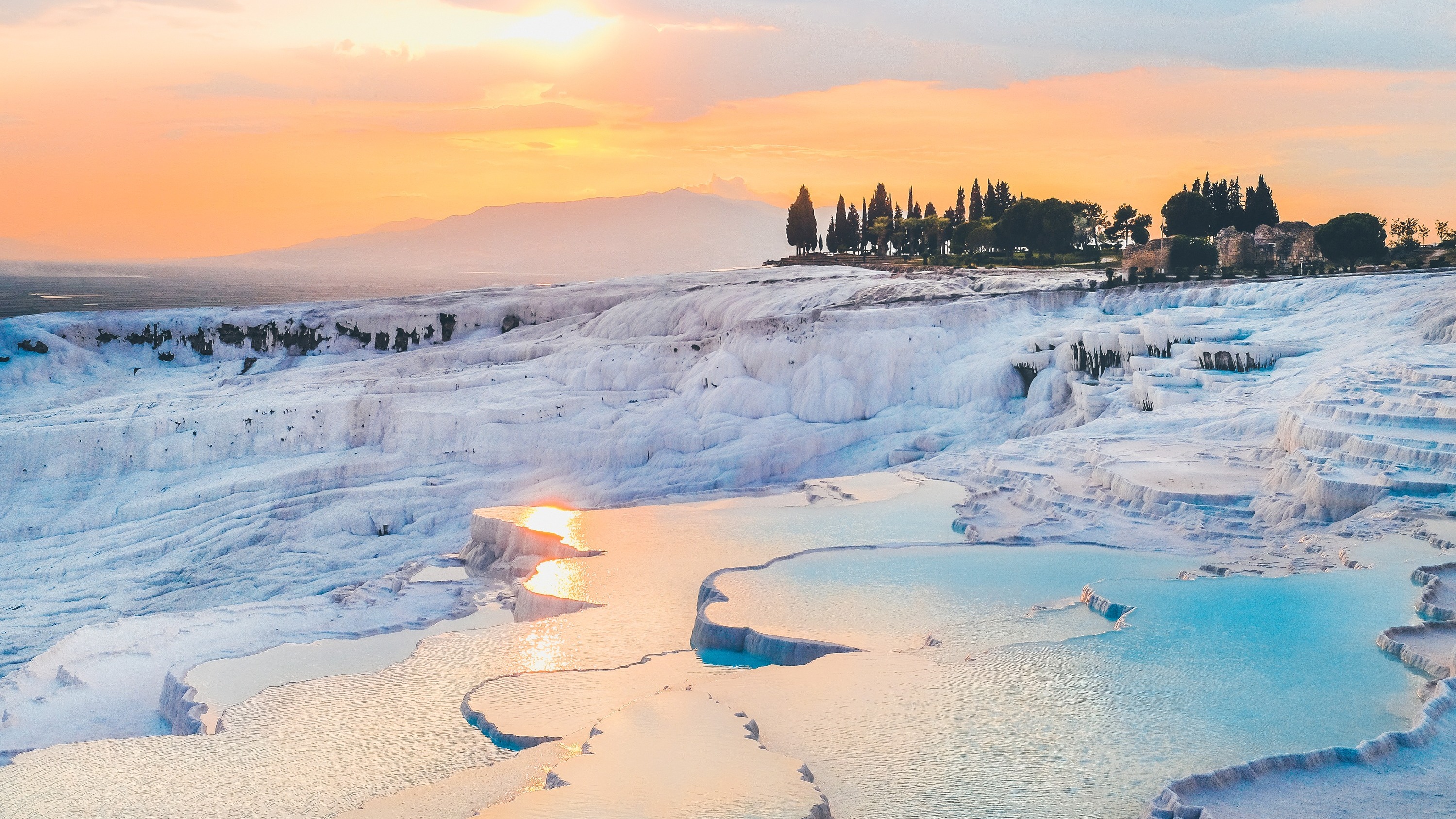
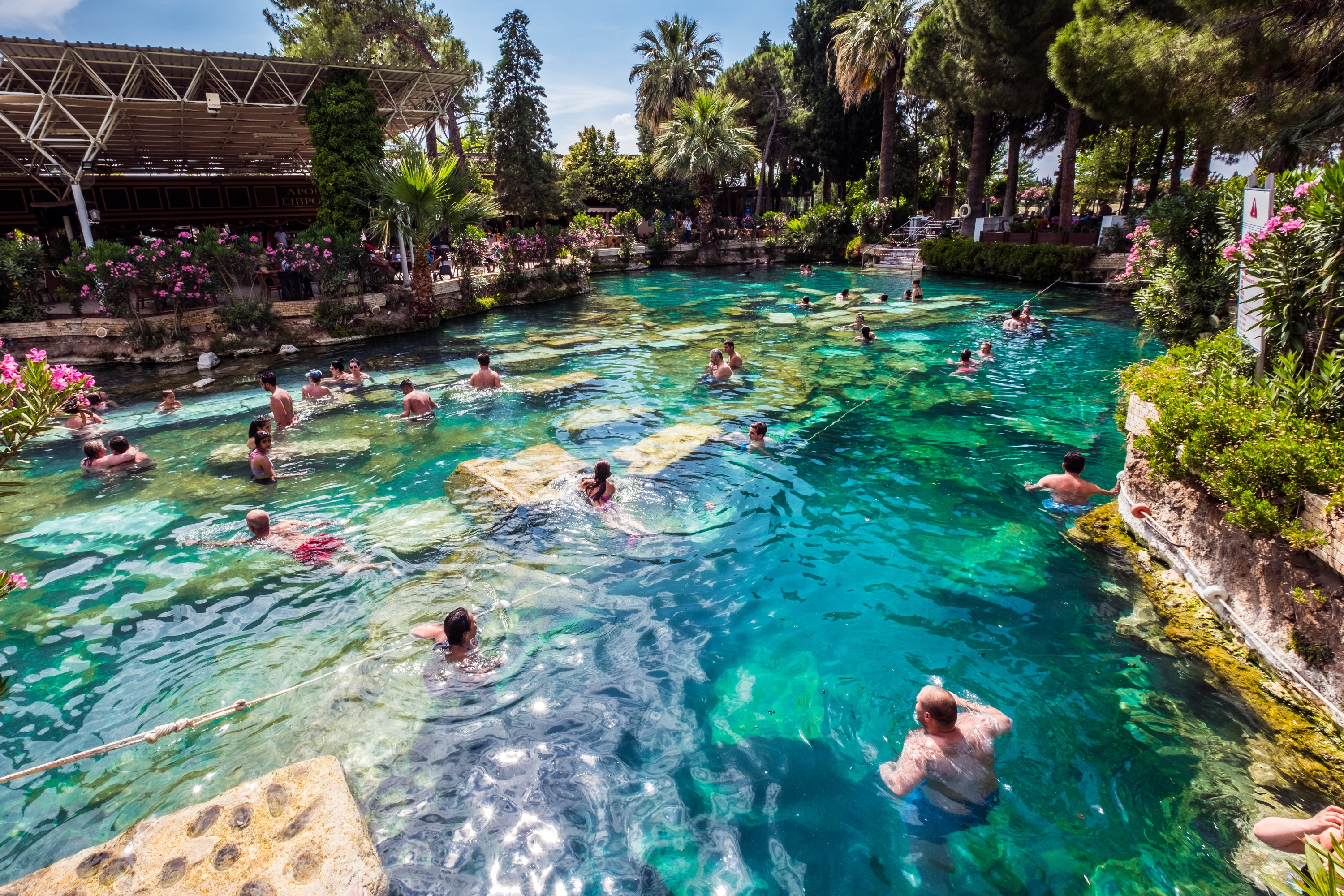
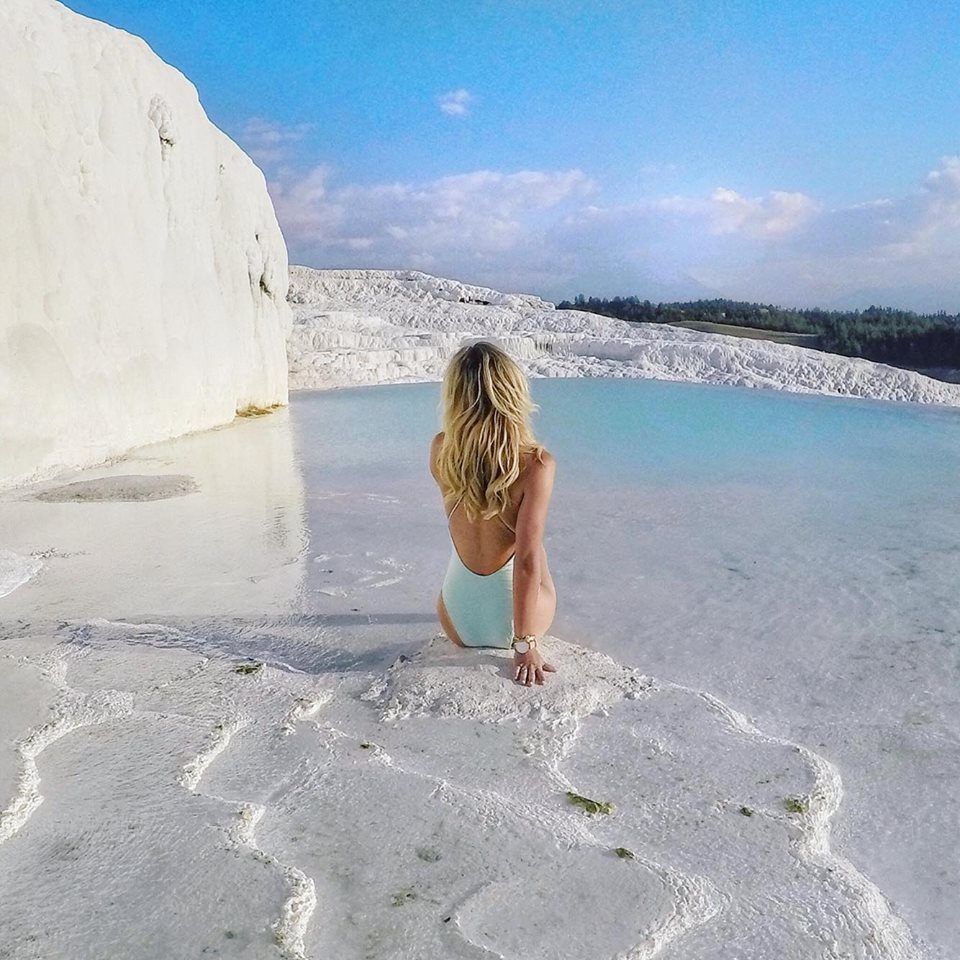
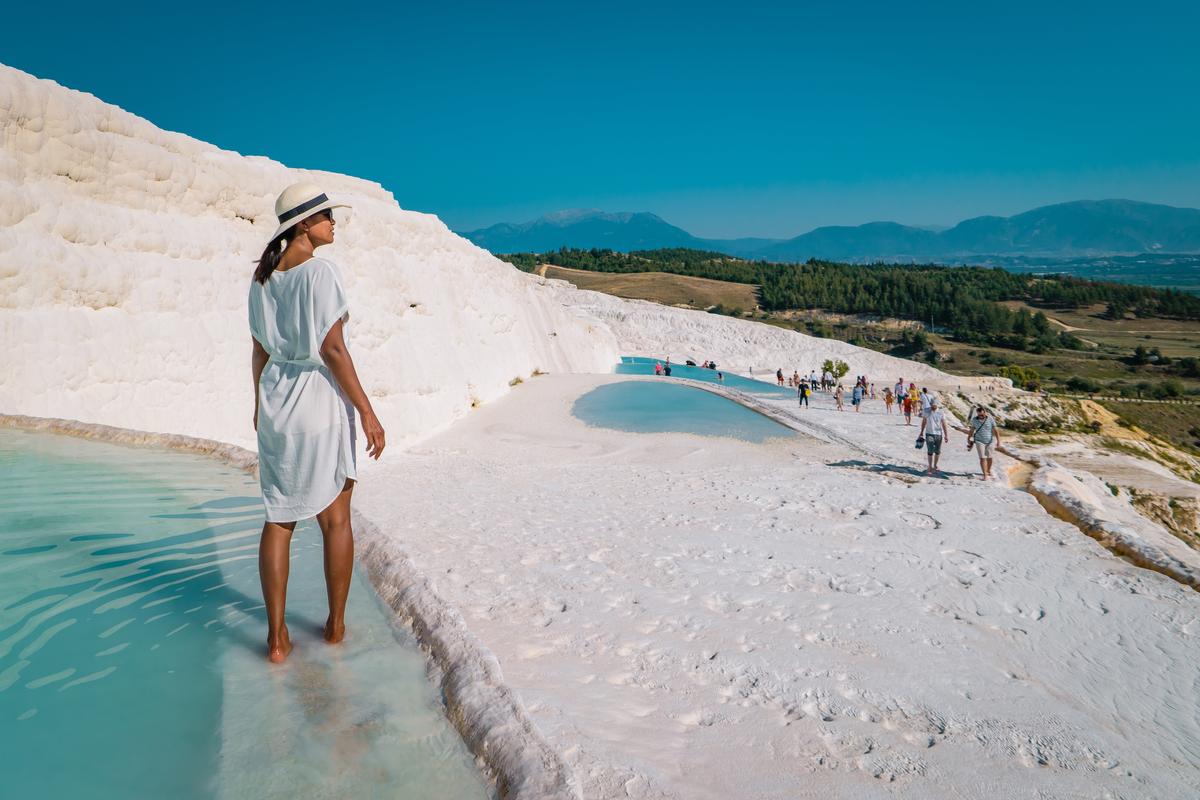
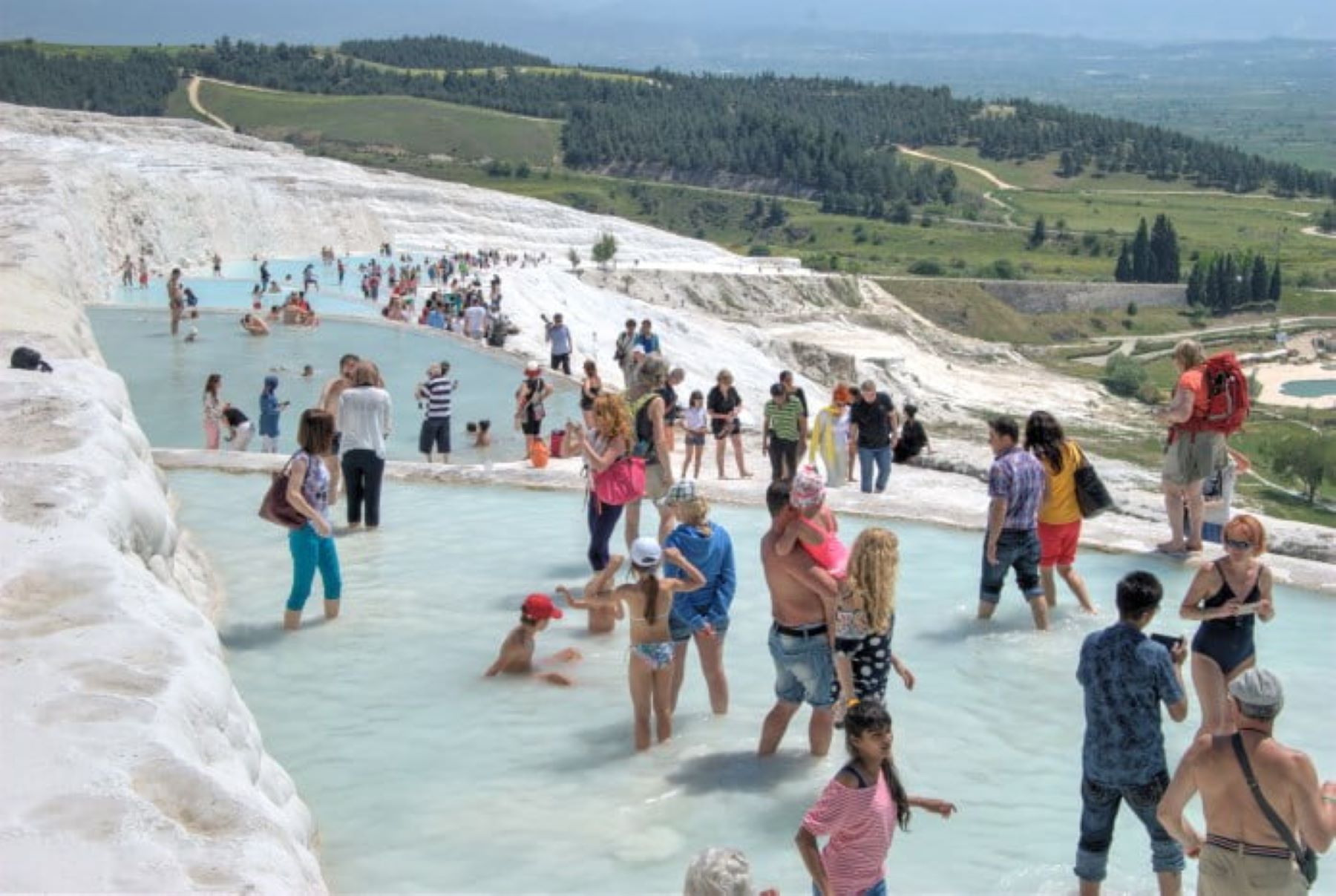
Afterward, we will stop at Cleopatra’s Pool. The guide will give you free time to swim then we will walk to the white cliffs of Pamukkale. You will have another hour to discover the white cliffs and enjoy the hot waters on the cliffs.
At the end of the tour, we will have lunch in a local restaurant.
3
After lunch, we drive the direction of Kaklik. Kaklık cave was formed by a subterranean stream that slowly eroded the porous limestone and sulfurous rocks. It began to form over 2 million years ago, and it wasn’t until the roof of the cave collapsed, that people discovered it, after which it was opened to the public in 2002.
Water pours in from above, at the cave mouth and covers the surface, creating travertine steps with the calcium carbonate deposit left behind. At the same time, the geothermal spring below the cave pushes water into it from the surface. The movement of the water is clearly visible in the clear blue waters below the sinkhole but also happens elsewhere inside the cave. After the tour, we can drive you back to Pamukkale or Cardak airport.
What's not included
Drinks at lunch
Pick-up from the Airport
Available languages
Guide guide
EN
Reviews breakdown
Viator
3.0
1 reviews
5★
0
4★
0
3★
1
2★
0
1★
0
Tripadvisor
5.0
1 reviews
5★
1
4★
0
3★
0
2★
0
1★
0
Important information
Public transportation options are available nearby
Infants are required to sit on an adult’s lap
Suitable for all physical fitness levels
About Pamukkale
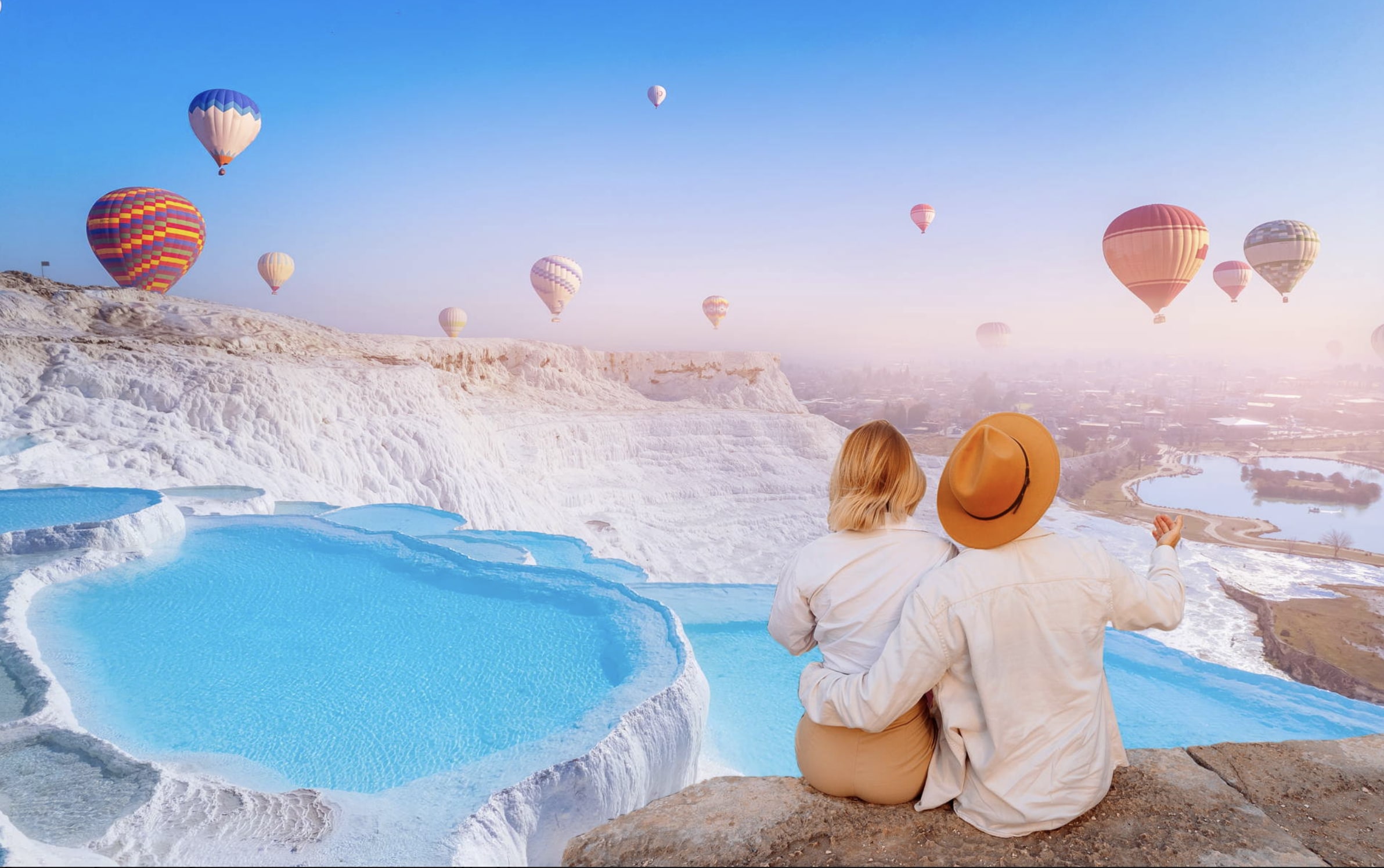
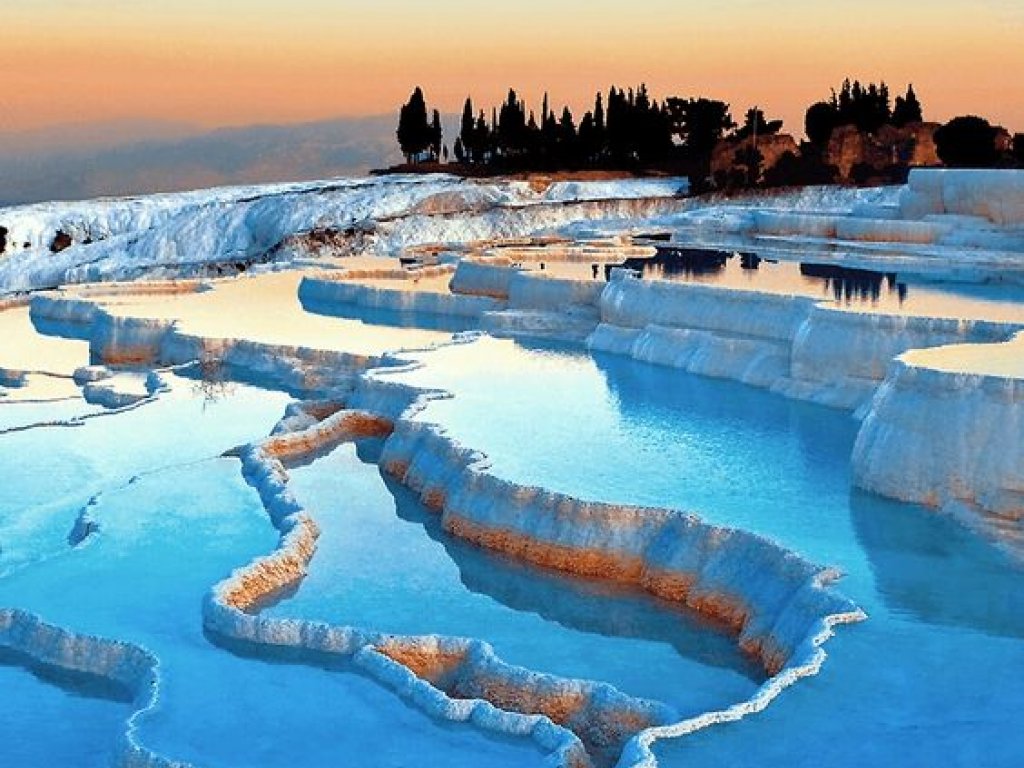
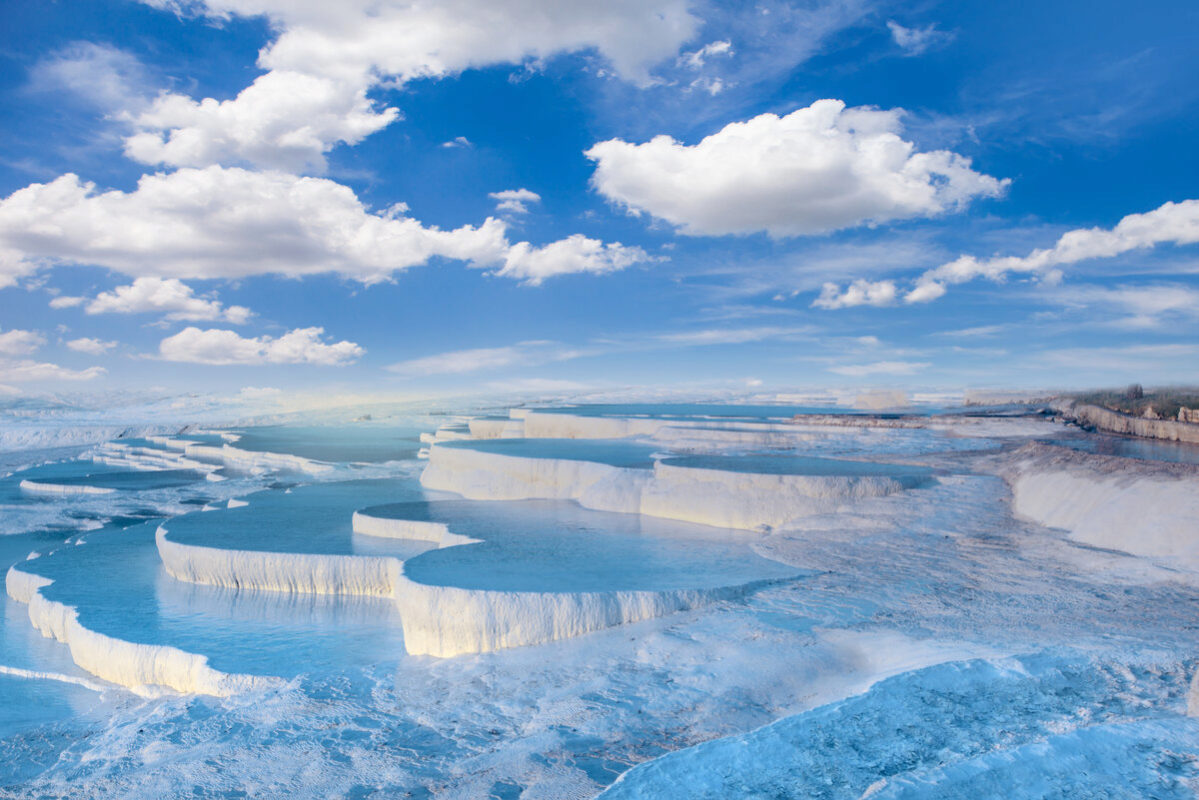
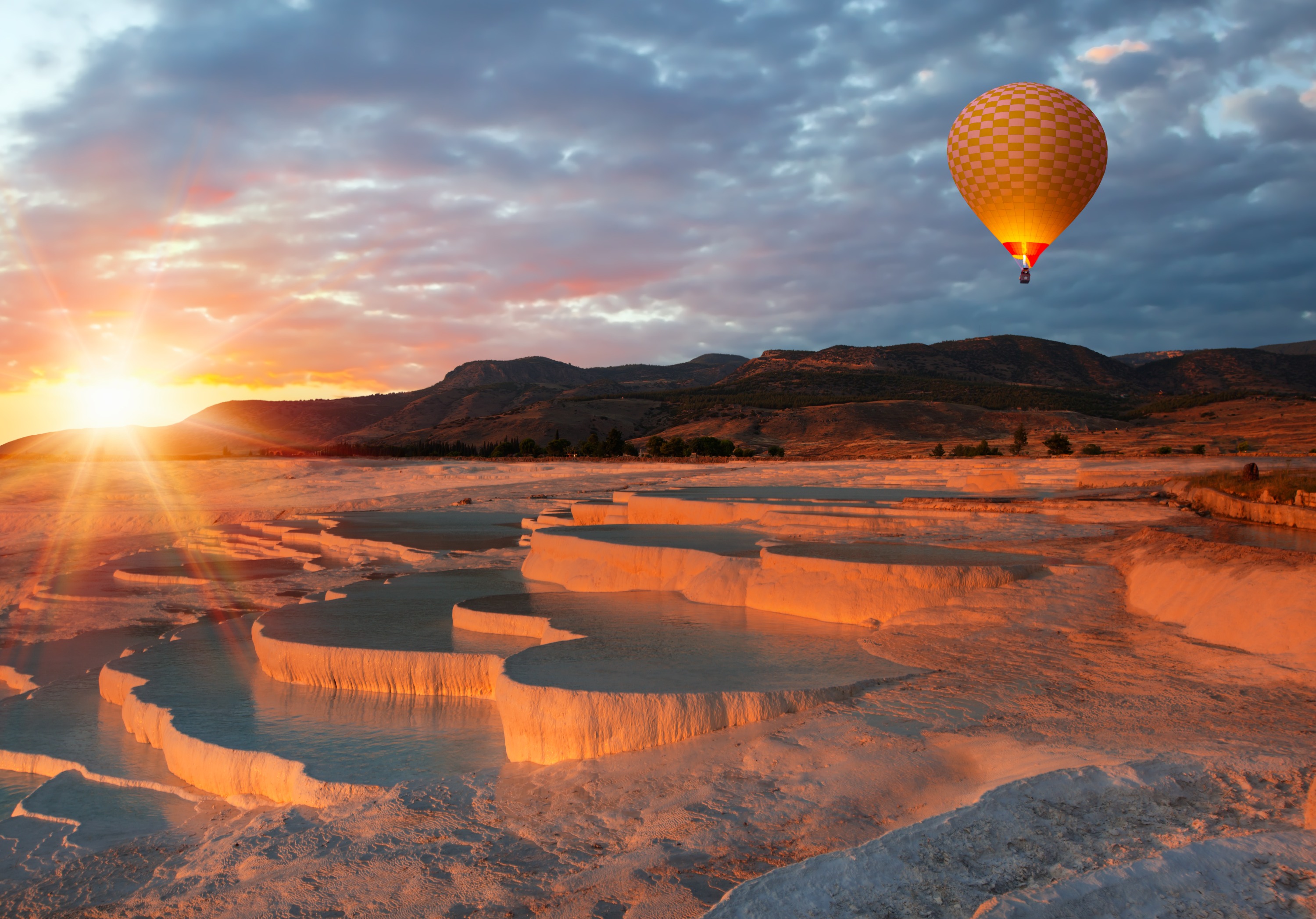
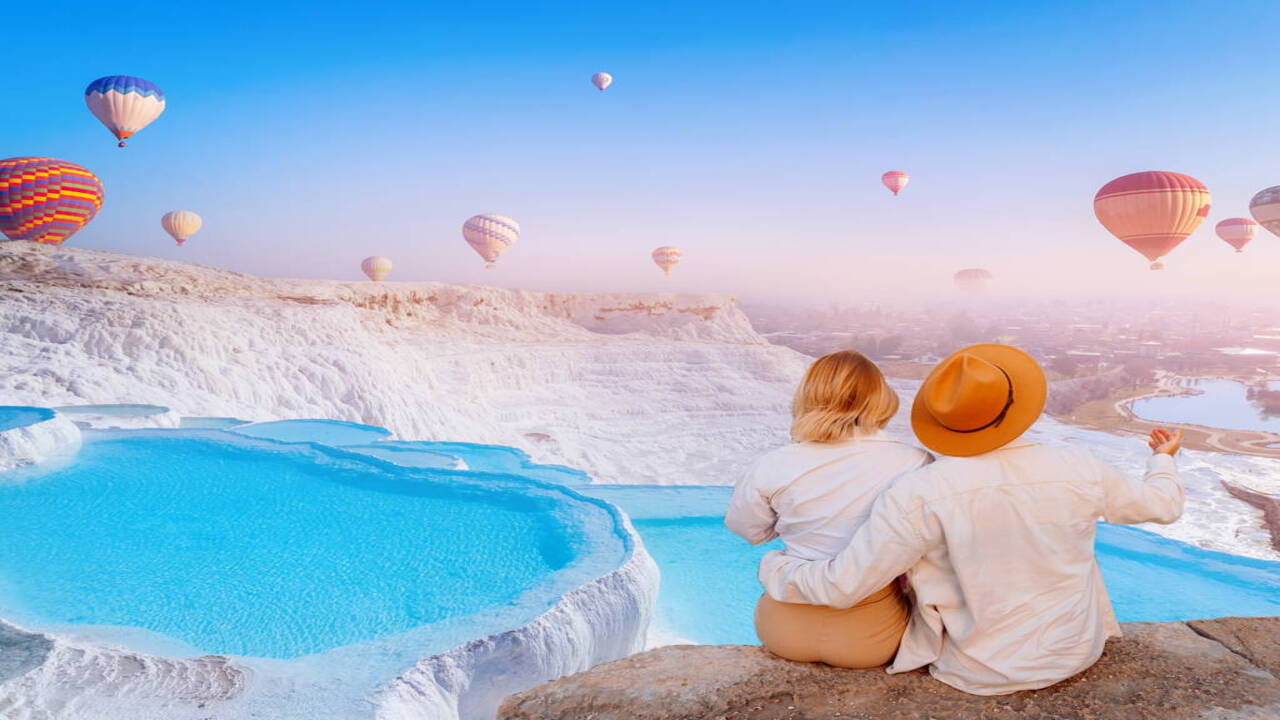
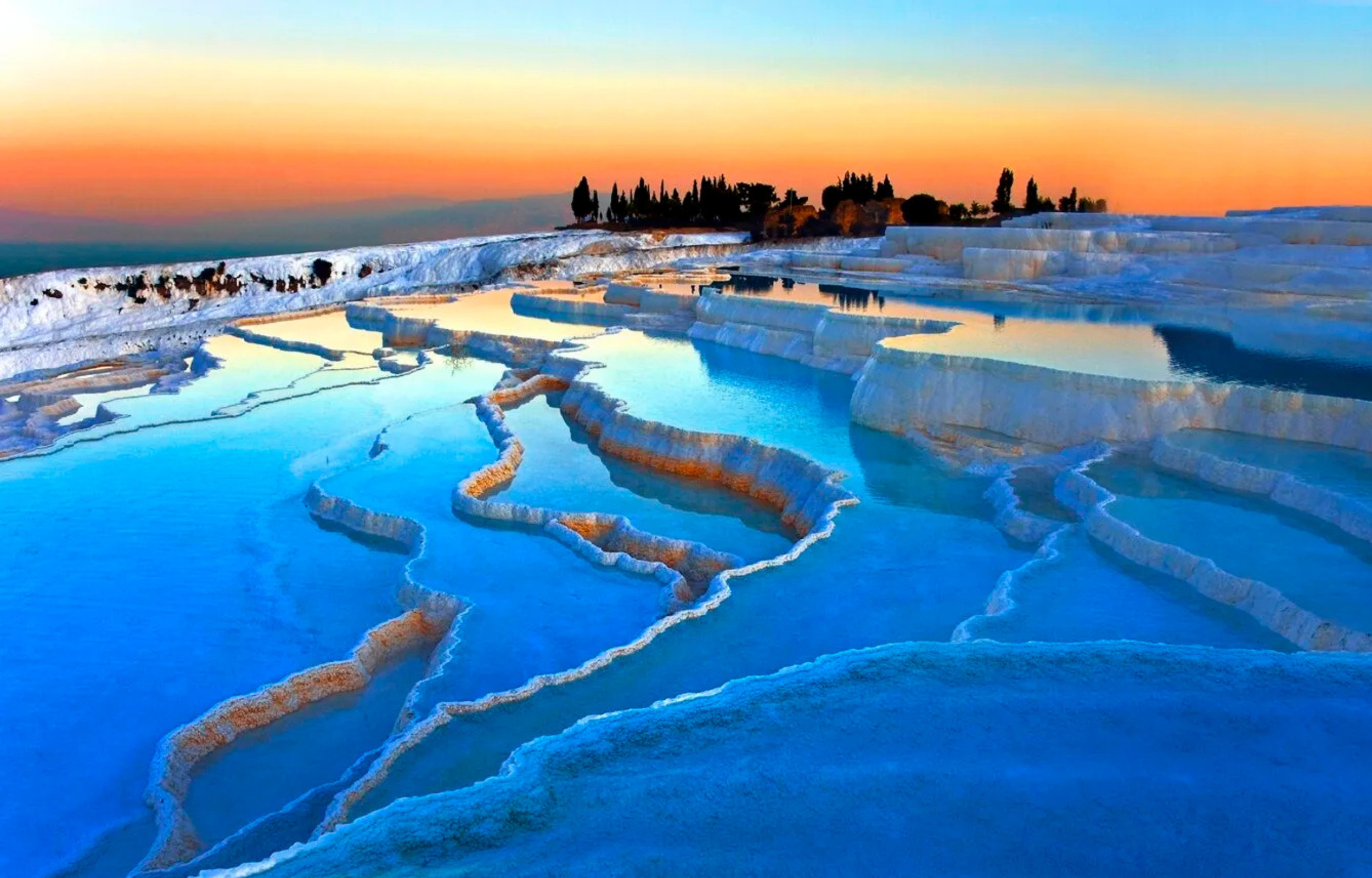
Pamukkale, known as the 'Cotton Castle,' is a natural site in Turkey's Denizli Province. It's famous for its terraces of white travertine, formed by mineral-rich thermal waters, and the ancient Greco-Roman city of Hierapolis nearby. This unique landscape and historical significance make it a must-visit destination.
Top Attractions
Pamukkale Travertine Terraces
The terraces are a natural wonder formed by calcium-rich thermal waters. The white travertine pools are a UNESCO World Heritage Site and a popular spot for swimming and photography.
Nature
2-3 hours
Free (entry to the site is included in the Hierapolis ticket)
Hierapolis
An ancient Greco-Roman city built on top of the thermal springs, Hierapolis is known for its well-preserved ruins, including the theater, necropolis, and ancient baths.
Historical
2-3 hours
60 TL
Cleopatra's Pool
A unique swimming pool filled with thermal water and ancient ruins, including columns and statues. Legend has it that Cleopatra bathed here.
Historical
1-2 hours
Included in Hierapolis ticket
Must-Try Local Dishes
Denizli Kebap
A traditional kebab made with lamb or beef, grilled and served with vegetables and bread
Main Course
Contains meat
Gözleme
A savory or sweet filled pastry, often made with cheese, spinach, or potatoes
Snack
Vegetarian options available
Pide
A Turkish flatbread topped with various ingredients, similar to a pizza
Main Course
Vegetarian and meat options available
Popular Activities
Hiking in nearby mountains
Exploring ancient ruins
Swimming in thermal pools
Sunbathing at Salda Lake
Visiting Hierapolis and Laodicea
Exploring local markets
Boating at Salda Lake
Exploring historical sites
Best Time to Visit
April to June, September to October
These months offer pleasant temperatures and fewer crowds. The weather is ideal for exploring the terraces and historical sites.
20-30°C
68-86°F
Practical Information
Language
- Official: Turkish
- Widely spoken: English, German
- English: Moderately spoken
Currency
Turkish Lira (TRY)
Time Zone
GMT+3
Electricity
220VV, 50HzHz
Safety Information
Overall Safety Rating: Generally safe
Pamukkale is generally safe for tourists, but standard precautions should be taken to avoid petty theft and scams.
Important Precautions:
- • Use licensed taxis and agree on the fare before starting the journey.
- • Be cautious of strangers offering unsolicited help or tours.
Getting there
By air
- Denizli Çardak Airport • 60 km
By bus
Denizli Bus Station
Getting around
Public transport
Local buses connect Pamukkale to nearby towns and Denizli. They are affordable but may not be very frequent.
Taxis
Available • Apps:
Rentals
Car, Bike
Neighborhoods
Pamukkale Town
Day trips
Laodicea
6 km • Half day
An ancient city known for its well-preserved ruins, including a large theater and ancient churches.
Salda Lake
100 km • Full day
Known as the 'Turkish Maldives,' this lake is famous for its turquoise waters and beautiful beaches.
Festivals
Pamukkale International Culture and Art Festival • July
Pro tips
- Visit the terraces early in the morning to avoid crowds and the heat.
- Wear waterproof shoes for walking on the slippery travertine surfaces.
- Bring a towel and swimwear if you plan to swim in the thermal pools.
- Try the local thermal spring water, which is believed to have healing properties.
- Explore the ancient city of Hierapolis for a deeper understanding of the region's history.
From $25
per person
Price varies by option
Secure booking
Free cancellation available
Instant confirmation