Porto private afternoon tour, discover the most iconic attractions
Active
4h
For a full refund, cancel at least 24 hours before the scheduled departure time.
Instant confirmation
Mobile or paper ticket accepted
About this experience
Our Porto private afternoon city tour experience offers travelers the opportunity to discover some of the city's most breathtaking attractions.
One of the highlights of this tour is the famous Porto Cathedral, an impressive old building with a beautiful interior and stunning views of the city. Travelers will also visit the historic Praça da Ribeira, a lively and colorful area located near the Douro River, where they can explore its narrow streets, local shops and restaurants.
Another attraction on this tour is the stunning São Bento Railway Station, known for its magnificent blue and white tile panels depicting historical scenes.
The tour also includes a visit to the iconic Clérigos Tower, a must-see attraction that offers a panoramic view of the city from its top.
Overall, this private tour experience is an excellent opportunity to discover Porto's rich history, culture and beauty in just a few hours.
Available options
Business Van - 7 Pax
Mercedes Class V<br/>Pickup included
Business Suv - 4 Pax
Hyundai Santa Fe<br/>Pickup included
What's included
Personal accident and civil liability insurance.
Our executive vehicles offer Wi-Fi, bottled water, refreshments and a relaxing atmosphere
Additional options can be added upon request – See section Exclusions
Transportation in luxury vehicles with maximum comfort and equipment tailored to your needs
Detailed itinerary
1
Stop 1
Pass by
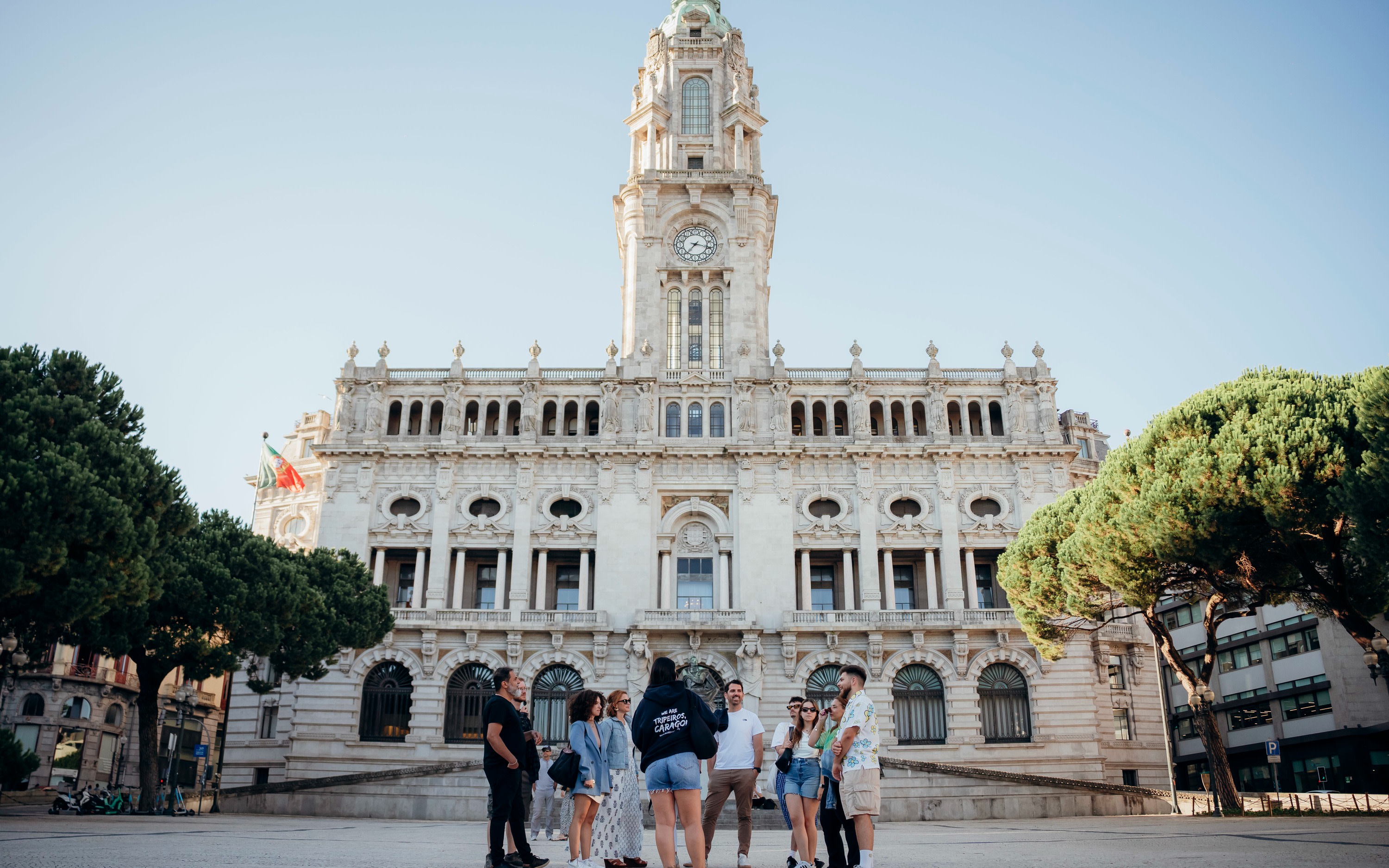
This wide avenue, flanked by a group of buildings from the 20s and 40s, is closed on the south side by the Cardosas building (19th century) and on the north side by the Porto City Council.
In the center of Praça de D. Pedro, a square that merges with Avenida dos Aliados itself as they are contiguous, in front of Palácio das Cardosas, is the statue of D. Pedro IV, the Liberator.
2
The Mercado do Bolhão is the most emblematic of the city and was classified as a property of public interest in 2006. It dates back to 1850, with a unique two-story structure, characterized by the monumental nature of neoclassical architecture.
Outside, the market is divided into many establishments, which face the four streets that delimit it: Fernandes Tomás, to the north, Alexandre Braga, to the east, Formosa to the south and Sá da Bandeira to the west.
It focuses mainly on fresh produce. Merchants are divided into different specialized sections: fishmongers, butchers, horticultural products and floral items.
3
Located in the heart of Porto, Plaza da Batalha is a historic square with deep roots in the city’s past. The square's name is believed to be linked to a battle that took place around the 10th century, during which the people of Porto were defeated by the forces of Almançor, a Moorish leader. This defeat led to the destruction of the city, along with many others across Portugal and Spain. Although the name might suggest a more recent battle, it is this historic defeat that gave the square its name, which remains in use today. The area was urbanized around 1861, becoming a significant public space.
The square is home to the Teatro São João, one of Porto's oldest and most important cultural venues. Inaugurated in 1798, the theater was initially built to host operas and dramatic performances. The theater’s history took a tragic turn when it was destroyed by a fire on the night of April 11-12, 1908.
4
This wall began its works in the 14th century, in the reign of D. Afonso IV, to replace the old wall and face the expansion of the city. Despite being almost completely completed around 1370, its completion was already in the reign of D. Fernando, in 1409, hence the name given.
In the 18th century, after it was no longer needed in military terms, the wall began to be demolished and only a few parts have survived to the present day.
5
Stop 5
Pass by
Building of Gothic origin whose original construction dates from the 15th century.
However, in the 17th century, it underwent some changes when the beautiful Renaissance portal was added, as well as the gilded carvings inside.
6
Stop 6
The Cathedral of Porto is a construction dating from the 12th/13th century that was expanded and renovated over the centuries until its final configuration, in the 20th century, always maintaining the initial configuration of a medieval cathedral.
Special mentions:
- Gothic chapel of São João Evangelista and its cloister
- Enlargement of the chancel
- Chapel of the Blessed Sacrament and its silver altar
7
Stop 7
The São Bento Railway Station was built at the beginning of the 20th century, in the exact location of the former Convent of São Bento de Avé Maria, a construction from the 16th century.
The glass and iron structure was designed by the architect Marques da Silva. The vestibule is adorned with twenty thousand tiles painted by Jorge Colaço that illustrate the evolution of transport and the events in the history and ways of life of the Portuguese in the region.
8
Opened in 1921, Café Majestic stands as a prime example of Porto’s Belle Époque era, located on the bustling Rua Santa Catarina. This café, with its opulent Art Nouveau style, has long been a beloved meeting place for intellectuals, artists, and writers. The café’s elegant interior, adorned with marble, gilded mirrors, and intricate woodwork, transports visitors to a past era of grandeur. It remains a cultural landmark, offering a place to indulge in traditional Portuguese pastries and coffee while experiencing the rich history of Porto.
Just a short stroll from Café Majestic, you’ll find the Palladium, an ornate clock with a carillon and four statues that perform every three hours. These statues, representing four key figures from Porto’s history—Saint John (San Juan), Prince Henry the Navigator (Infante D. Henrique), the writer Almeida Garrett, and the novelist Camilo Castelo Branco—emerge and parade on the building’s façade to the sound of the bells.
9
Located in front of Praça D. João I, the Theater was opened in 1913, but changes in the city forced the rethinking and modernization of the building shortly afterwards.
After the renovation of the former National Theater in 1913, the Rivoli Theater was opened in 1932 adapted for cinema and with a program of opera, dance, theater and concerts.
In 1989 it became the property of the Câmara do Porto and closed in 1992 for a total refurbishment, which was completed four years later.
10
Designed by Carlos Amarante in the neoclassical style, it was financed by the Literary Subsidy, a tax on wine, in 1803.
The building, of classic style, has some similarities with the Santo António Hospital.
In 1911, it housed the Faculty of Sciences and is currently where the Rectory and the Natural History Museum of the University of Porto are located.
11
Stop 11
The Church of Carmo and Church of the Carmelites, two stunning Baroque churches, are landmarks of Porto’s rich religious history. The Church of Carmo, with its impressive tiles (painted ceramic tiles) adorning the exterior, is known for its intricate architecture and serene atmosphere. Just across the street, the Church of the Carmelites, equally beautiful, features a striking and ornate facade.
What makes this area truly fascinating, however, is the "Hidden House", a charming secret tucked away between these two churches. This small but delightful house is cleverly wedged between the two buildings, showcasing the creative solutions required when constructing in such a densely built area. Visitors often overlook this unique space, which offers an intriguing glimpse into Porto's architectural ingenuity.
Together, these churches and the hidden house offer a fascinating peek into Porto’s past, with beautiful architecture, historical significance, and a touch of mystery.
12
Stop 12
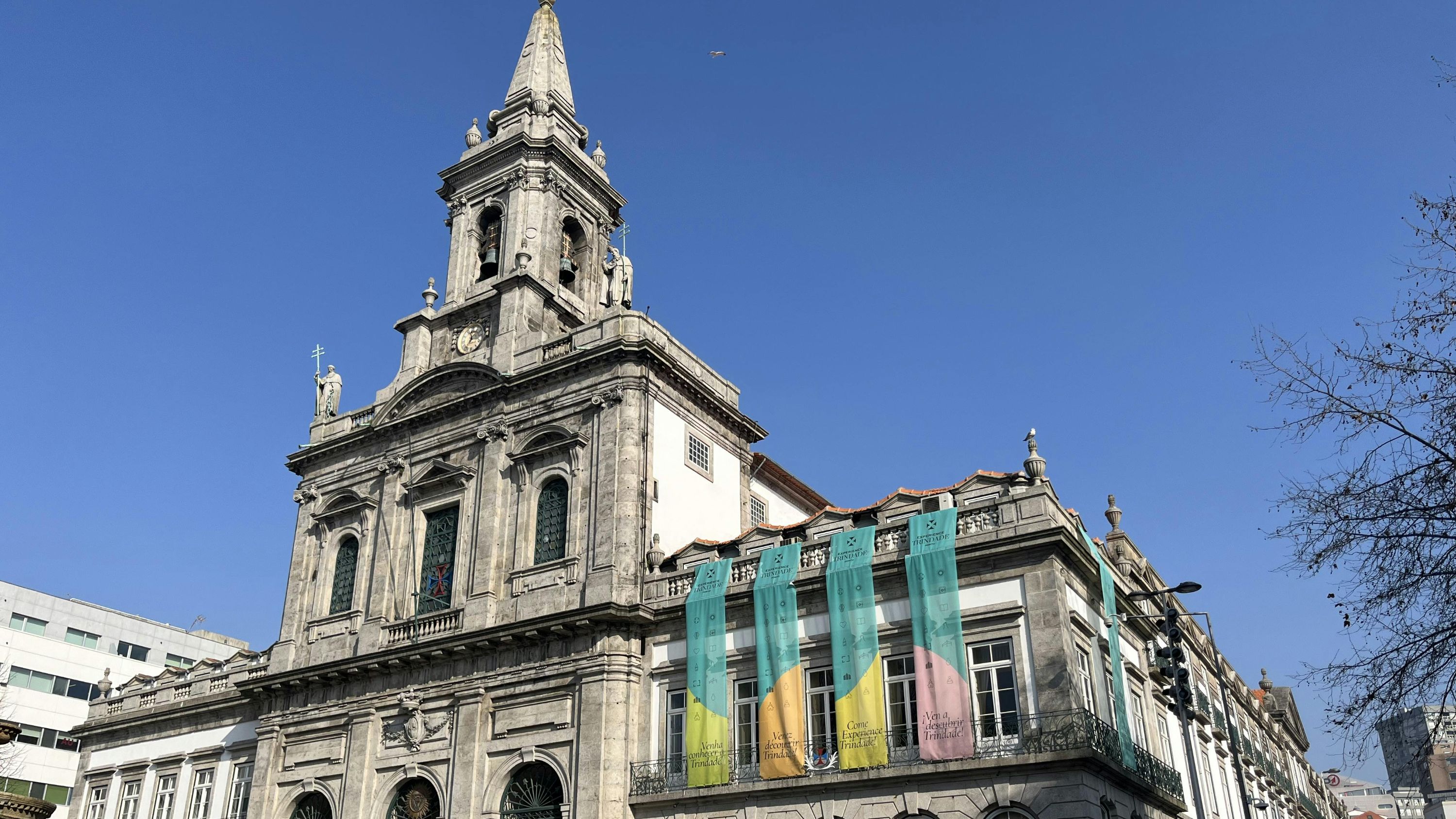
The Clérigos Tower is one of the most emblematic monuments in the city of Porto.
This Baroque work by Nicolau Nasoni was built in the first half of the 18th century.
A panoramic view over the city and the Douro River, which can be seen from the top of the tower, makes the 240-step climb worth the effort.
Interestingly, this tower appeared in the 2021 Hollywood blockbuster movie “Suicide Squad.”
13
Stop 13
The building where this bookstore is located was opened in 1906.
Classified as a building of public interest, its beautiful Art Nouveau facade, with neo-Gothic details, is noteworthy.
Inside, the library is decorated with painted plaster imitating wood and features a magnificent staircase that connects it to the upper floor, one of the first works of reinforced concrete in Porto.
Also worthy of attention is the huge stained glass skylight, with the library's monogram and motto.
14
This is the oldest public museum in Portugal, initially installed in the building of the Convent of Santo António da Cidade, the current building of the National Public Library of Porto.
It has been installed since 1942 in the Palácio dos Carrancas, a building from the late 18th century that has undergone several renovations for its new function as a Museum.
It is a museum of fine arts, decorative arts and archeology.
15
The Palácio de Cristal Gardens, from the Romantic era, occupy an area of 8 hectares in the center of Porto and were designed in the 19th century by the German landscape architect Émille David, in the context of the construction of the Palácio de Cristal building.
Currently, the gardens remain preserved according to the original project: Jardim Émille David at the main entrance, Avenida das Tílias, the forest, and the design of the balconies over the Douro River.
16
Opened in 1992, the Electric Car Museum contains a set of trams and other auxiliary vehicles that used to circulate through the streets of Porto and that left a mark on the history of light rail transport in the city.
His explorations also include an example of the American horse-drawn trolley buses that were first introduced to Porto in 1872.
Housed in the former Massarelos power station, a listed municipal building, the museum also displays some of the original equipment previously used.
17
This neoclassical building, built in the 19th century by engineer Jean FG Colson, has two facades, one facing the Douro River and the other facing the city.
The use of construction techniques that use iron in conjunction with other materials - stone, brick or wood - depending on the functionality of the different spaces, makes this space very interesting to observe.
In 1992 the Museum of Transports and Communications was opened.
18
Stop 18
Pass by
The most important Gothic temple in the city, with construction started in the 14th century, it is one of the most important works of the Baroque, for its golden interior from the 17th and 18th centuries.
It was the exuberance of its carved woodwork that led Count Raczinsky to describe it as a "Gold Church". And, impressed, he adds: 'This church is so beautiful and rich that it goes far beyond anything I've seen in Portugal and around the world'.
It is worth noting the Tree of Jesse, as well as visiting the catacombs.
It has been classified as a National Monument since 1910 and a UNESCO World Heritage Site since 1996.
19
This building is extremely representative of the religious architecture of Porto at the end of the 17th century.
It is also part of a Mannerist style trend, although some Baroque influence can be seen.
The nave comprises the remarkable altarpiece that shows the beautiful image of Saint Nicholas, patron saint of metalworkers.
20
Stop 20
Pass by
Classified as a National Monument, Palácio da Bolsa is the property and headquarters of the Porto Commercial Association.
It was designed by Joaquim da Costa Lima in neoclassical style in 1842 and built on the site of the former São Francisco Convent, which was completely destroyed in a fire during the siege of Porto.
Located in the historic center, it is one of the most visited monuments, with the famous Arab Room as its main highlight.
A Cultural and Conference Centre, Palácio da Bolsa is a place with unique conditions for holding events.
21
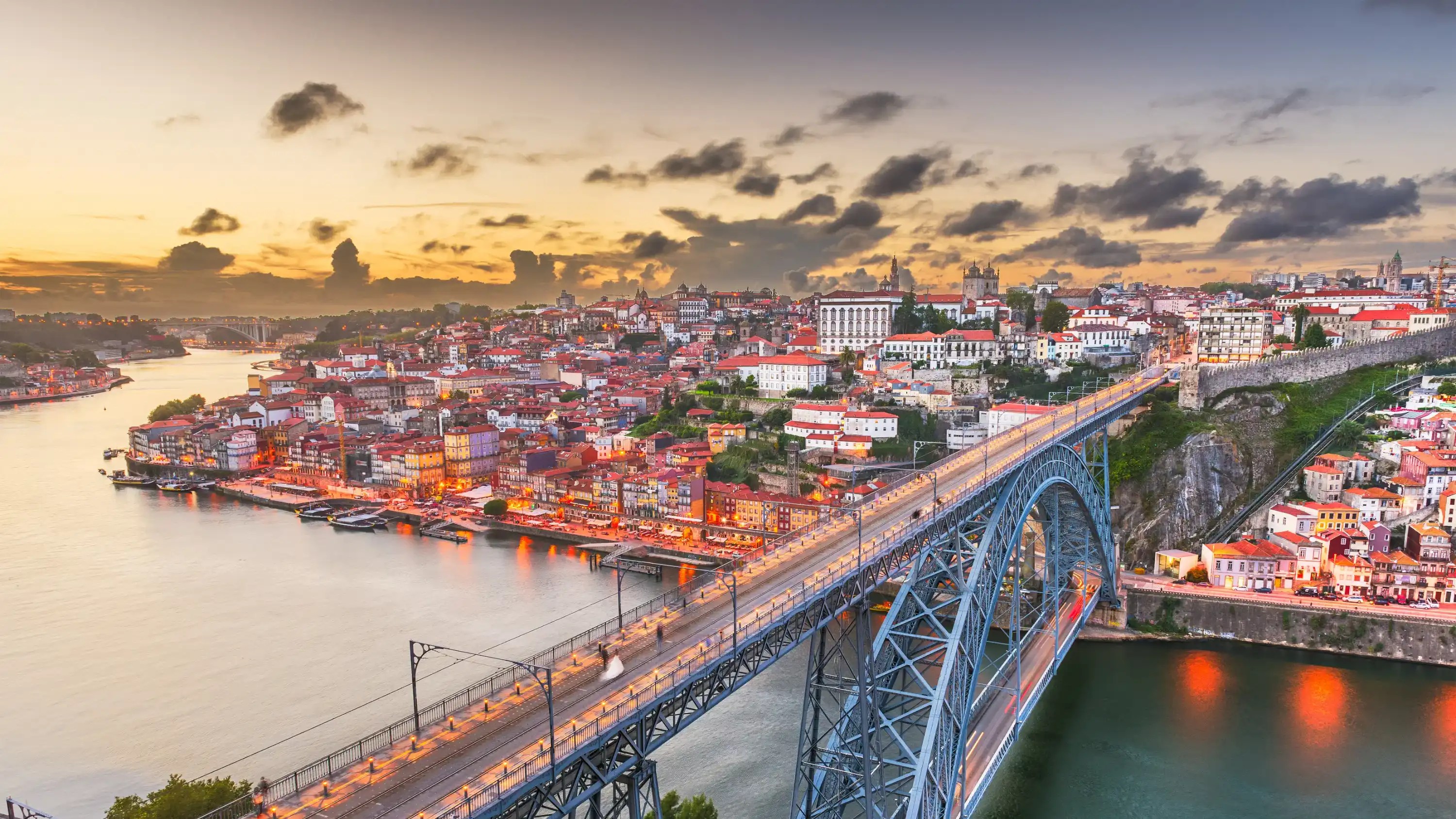
The suspension bridge, officially designated D. Maria III, was created as a need for a permanent bridge that would connect Porto and Gaia.
This work by the French company Claranges Luccote et Compagnie, was inaugurated in 1843, but was deactivated after four years due to a feeling of insecurity on the part of those who passed it.
Currently, only two stone pillars, in the form of an obelisk, remain.
22
Stop 22
Pass by
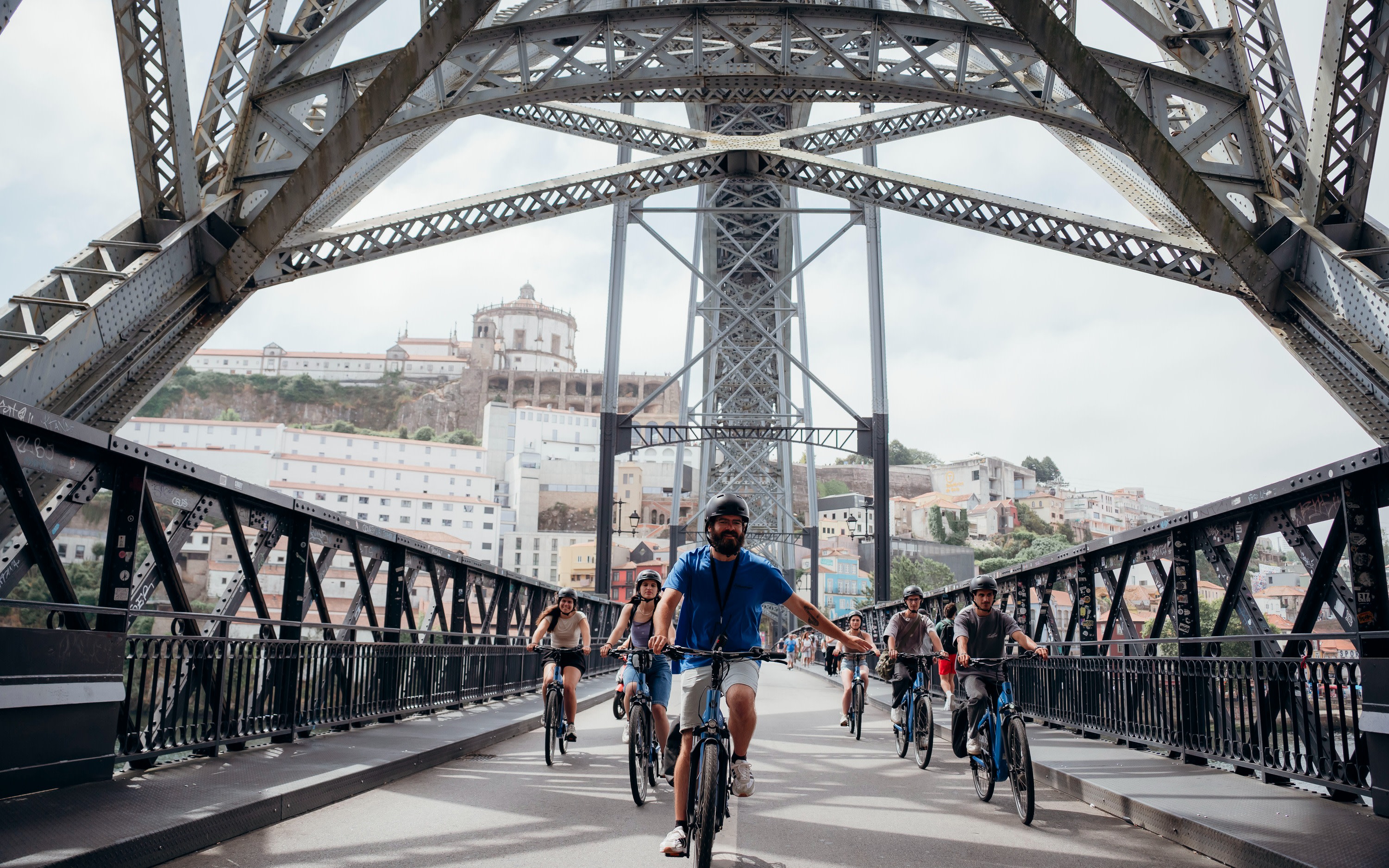
In 1879, the government determined the opening of a tender for the “construction of a metal bridge over the Douro River, in the most convenient location in front of the city of Porto, to replace the current suspension bridge”. The winner was the proposal from the Belgian company Société de Willebroeck, with a project by Engineer Teófilo Seyrig, who had already worked with Gustave Eiffel in the construction of the D. Maria Pia Bridge.
The bridge was inaugurated in 1886 (upper deck) and 1888 (lower deck and fully operational).
This bridge, included in the Historic Center of Porto on the UNESCO World Heritage List, is made up of the largest wrought iron arch in the world.
23
The bridge was inaugurated on March 30, 2003, after a project by engineer Adão da Fonseca, to replace the upper part of the D. Luís I Bridge through which one of the Porto Metro lines currently passes.
With a deck of 371 meters in length and 20 meters in width, it is a Maillart-type arch bridge, with a span/arrow ratio of 11.2m for an arch span of 280m, thus being a world record, of domains never before reached in this typology of bridges.
It is a type of bridge considered one of the most slender by experts.
24
Created to replace the suspension bridge, Gustave Eiffel's first masterpiece - on which he worked with his partner and former disciple Theóphile Seyrig - was inaugurated in Porto in 1877 and remained in operation for 114 years until its use was replaced by the bridge. of St. John.
It consists of a bi-articulated arch that supports the single-track rail deck through lattice pillars.
25
This railway structure, designed by Edgar Cardoso, connects the Campanhã station in Porto to all destinations in the South. Its inauguration took place on Saint John's Day, June 24, 1991.
The bridge adopts a portico solution, with three spans (two of 125m and one of 250m) supported by two majestic pillars founded on the bed of the Douro river near each of the banks.
26
Stop 26
The Jardim do Morro (Hill Garden) offers a beautiful public park with panoramic views, making it a popular spot for both locals and visitors. The garden, which was developed in the 20th century, complements the monastery's historic setting and provides a tranquil space for relaxation, with wide pathways and lush greenery.
27
The Monastery of Serra de Pilar is located on an elevation called Serra do Pilar on the bank of the River Douro in Vila Nova de Gaia.
The monastery belonged to the Order of Saint Augustine; Its construction began in 1538, but its construction continued over the following centuries in different stages of construction, which resulted in a significant change in the initial design.
It is considered one of the most remarkable buildings in European classical architecture due to the circular shapes of the church and cloister.
It currently serves as a religious, cultural and military site.
The monastery was classified as a National Monument in 1910 and in 1996, together with the Historic Center of Porto and the Luís I Bridge, it became classified as a UNESCO World Heritage Site.
28
Stop 28
Pass by
The Arrábida Bridge, designed by Edgar Cardoso and with a length of 270 meters, was, for some time, the longest reinforced concrete bridge in the world.
Opened in 1963, it is located 70 meters above the average water level.
The bronze sculptures sit atop the four large pillars that support the central span, adding to the bridge's modern innovative spirit.
29
This fort, which is a fine example of Portuguese military architecture, was built at the end of the 16th century to protect the coast and the entrance to the Douro.
Modern fortresses were added in sec. XVII to the original structure and the access gate to the fort (18th century).
30
Fort São Francisco Xavier (Cheese Castle)
Fort São Francisco Xavier was built in the 17th century to protect the coast from North African pirates. It is located on a rocky hill in the shape of cheese, thus obtaining the name Castelo do Queijo.
31
Work carried out by Salvador Carvão da Silva d'Eca Barata-Feyo, it was inaugurated in June 1966.
The monument is made up of a high decorated granite pedestal, which in front of it displays a crown and the legend of D. João VI.
On this pedestal is the metal statue, cast in brass, representing King D. João VI riding horses, giving a sense of movement.
With his left hand he holds the reins and with his right he holds a balloon, which certainly already intended to symbolize the imperial dignity obtained in 1816, through the creation of the United Kingdom of Portugal, Brazil and the Algarves.
It is a replica of the statue that Portugal offered to the city of Rio de Janeiro on its 4th anniversary.
32
She changes, popularly known as Anemone, is a sculpture designed by artist Janet Echelman for the cities of Porto and Matosinhos, northern Portugal.
A fluid and beautiful work of art, it looks like a huge fishing net that moves with the wind, like an anemone in the sea currents.
33
Leixões Cruise Terminal
Situated in the middle of an attractive tourist destination, Porto, Leixões has increased its cruise operation.
After the opening of the new Cruise Pier, in April 2011, the Port of Leixões now has two docking piers for cruise ships and larger ships (up to 300m).
In 2012, the number of passengers increased by 81% and the number of ships by 25%. 75,613 cruise passengers visited Porto that same year.
In 2013, the Port of Leixões expects around 70 cruise calls, corresponding to more than 66,000 passengers and 30,000 crew members visiting the region.
34
Stop 34
Pass by
The Serralves (Foundation) house, built in the 1930s, is one of the best examples of the Art Deco movement in Europe and is used to host exhibitions and events.
It is located in Parque de Serralves, a unique landmark in the landscape of Portugal, which harmoniously extends over 18 hectares of magnificent, carefully designed gardens, a traditional farmhouse, and even a forest.
Designed by architect Jacques Greber, Parque de Serralves is one of the few Portuguese gardens built in the first half of the 20th century.
Located in the heart of Porto, Serralves brings together the Museum of Contemporary Art, Casa Arte Deco and the Park, as well as leisure facilities, shops and a restaurant in one place.
35
Stop 35
Pass by
Designed by Dutch architect Rem Koolhaas, Porto's main concert hall is located in the Boavista area and is called Casa da Música.
It opened in 2005 and has since become an icon of contemporary architecture.
36
Stop 36
The monumental 45m high statue erected in the center of the square – the Monument to the Heroes of the Peninsular War - was inaugurated in 1951 and is a work of historic, architectural and sculptural evocation of spectacular grandeur, composed of an obelisk and several groups. of sculptures.
It represents the union of the Portuguese and the English (the Lion) against the French Napoleonic armies (the eagle).
37
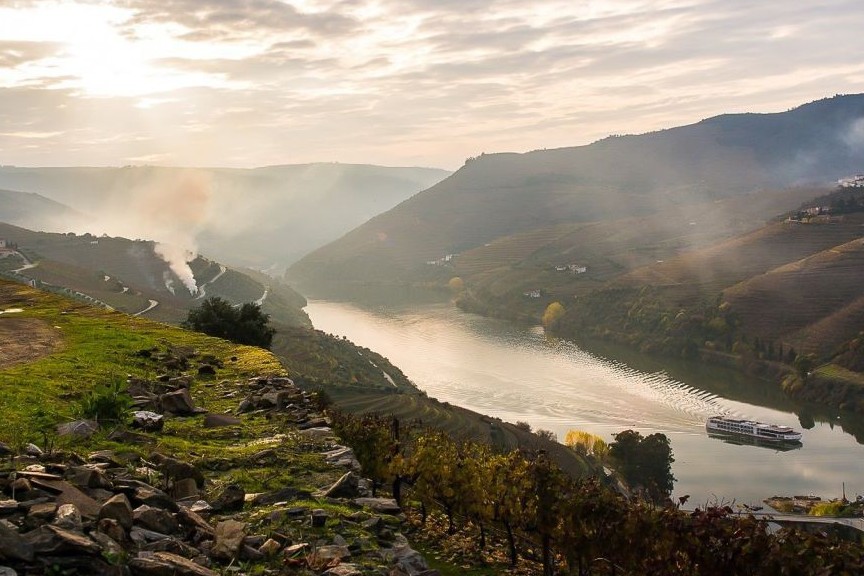
Optional - Private Douro River Cruise – €360,00 to €460,00
Entry to this location is not included in the price of your tour unless you book it in the final booking as an optional activity.
DURATION: Approximately 2H00
Exclusive Sunset Experience
Breathtaking Views of Porto & Vila Nova de Gaia
Set sail on a private journey along the Douro River, where the golden hues of sunset paint the sky and the city lights begin to shimmer. Enjoy a relaxing two-hour cruise, soaking in the iconic six bridges, historic riverside neighborhoods, and the serene beauty of the Douro Valley. Whether you seek romance, celebration, or pure tranquility, this experience is designed just for you.
38
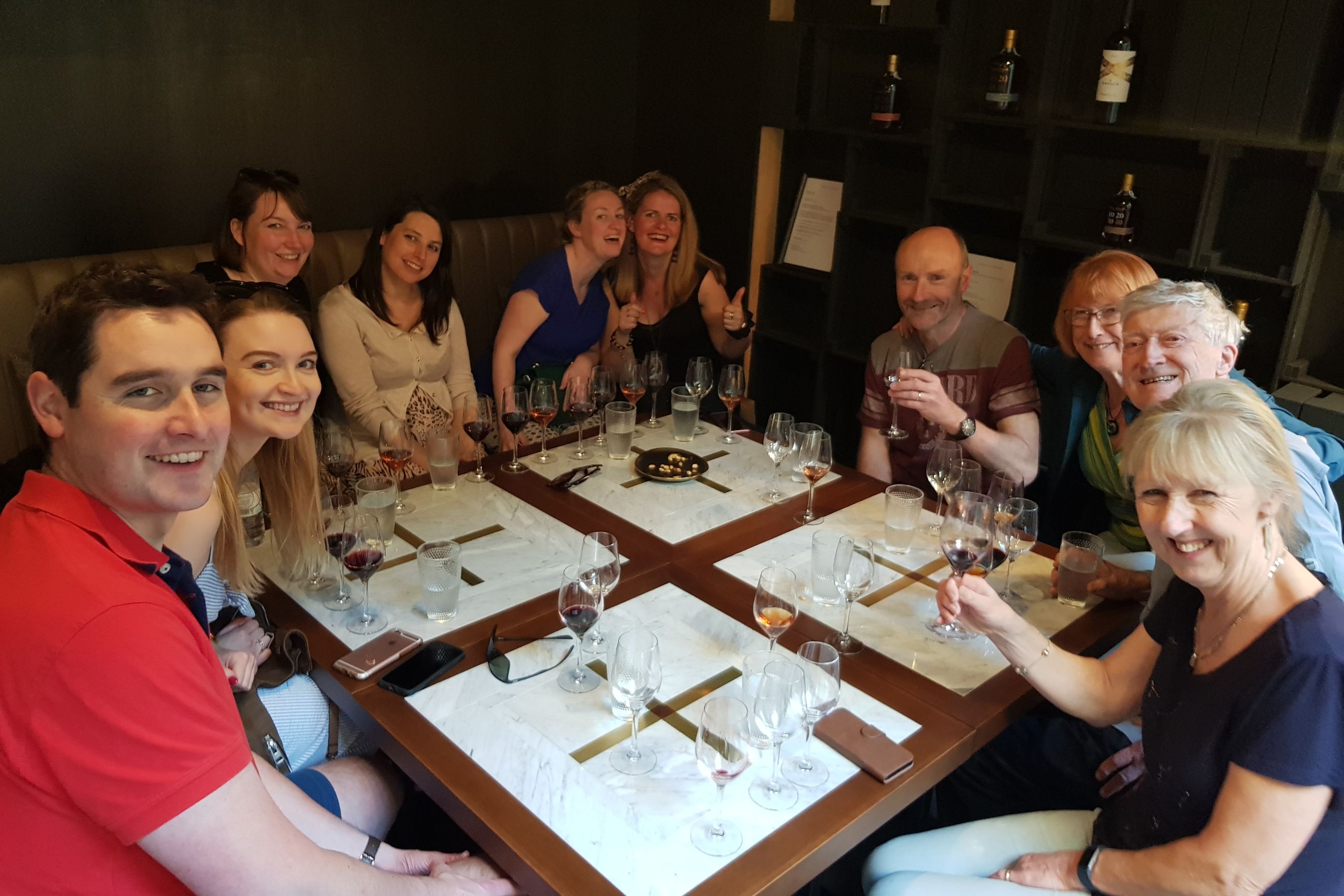
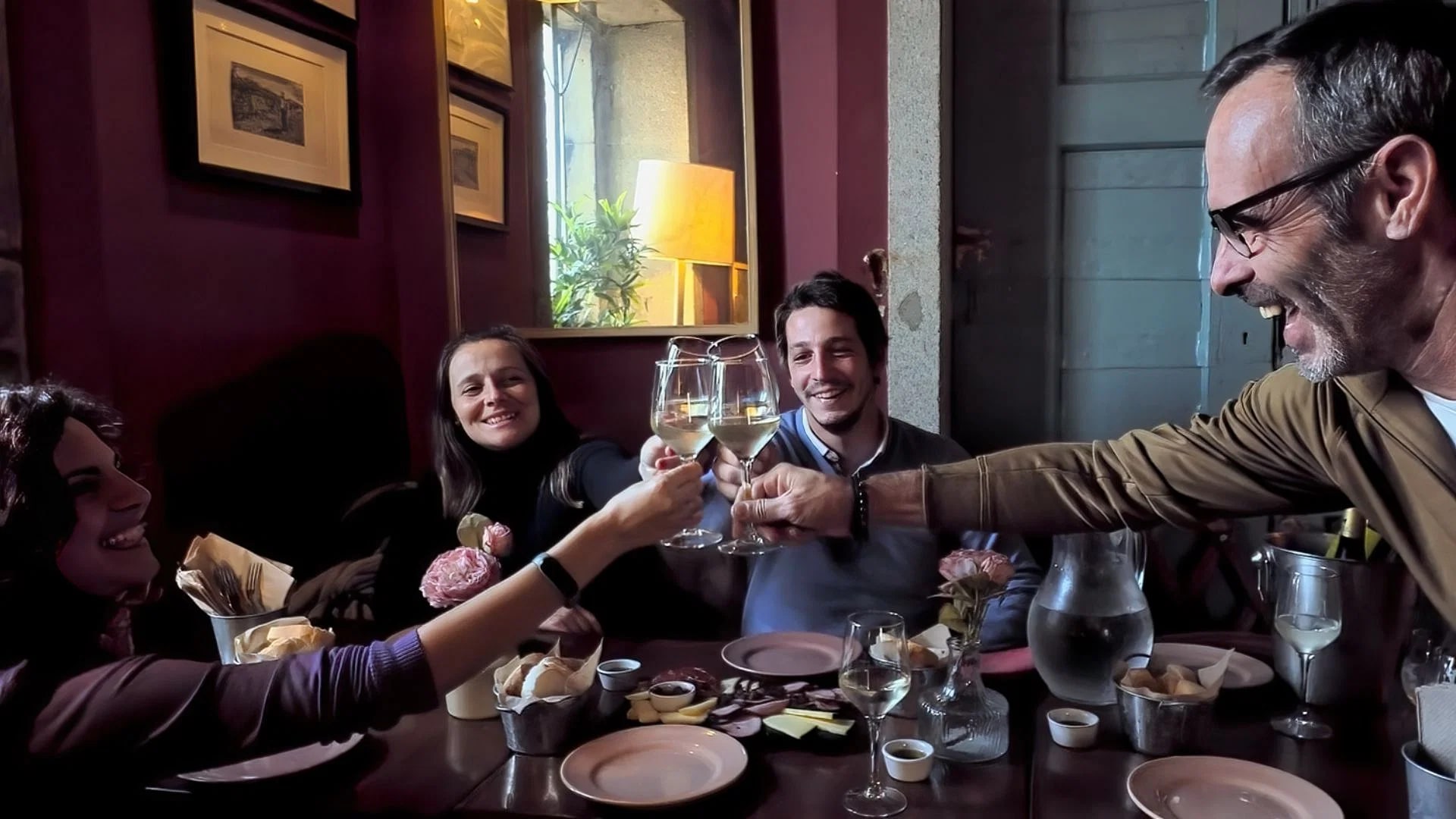
Optional - Port Wine Cellars – Exclusive Dona Antónia Tour – €32.00 to €41.00
Entry to this location is not included in the price of your tour unless you book it in the final booking as an optional activity.
DURATION: 1h30
TASTING: 5 Port Wines
A TRIBUTE TO DONA ANTÓNIA – THE LADY OF THE DOURO
Discover the fascinating story of Dona Antónia Adelaide Ferreira, the visionary woman who shaped the destiny of Port Wineand the Douro region.
On this exclusive tour, walk through the historic cellars and learn about the legacy of a remarkable figure whose determination and passion elevated the quality and prestige of Portuguese wine.
The experience culminates in a special tasting of five Port wines named after Dona Antónia:
A tribute to her values and the excellence of the Douro.
39
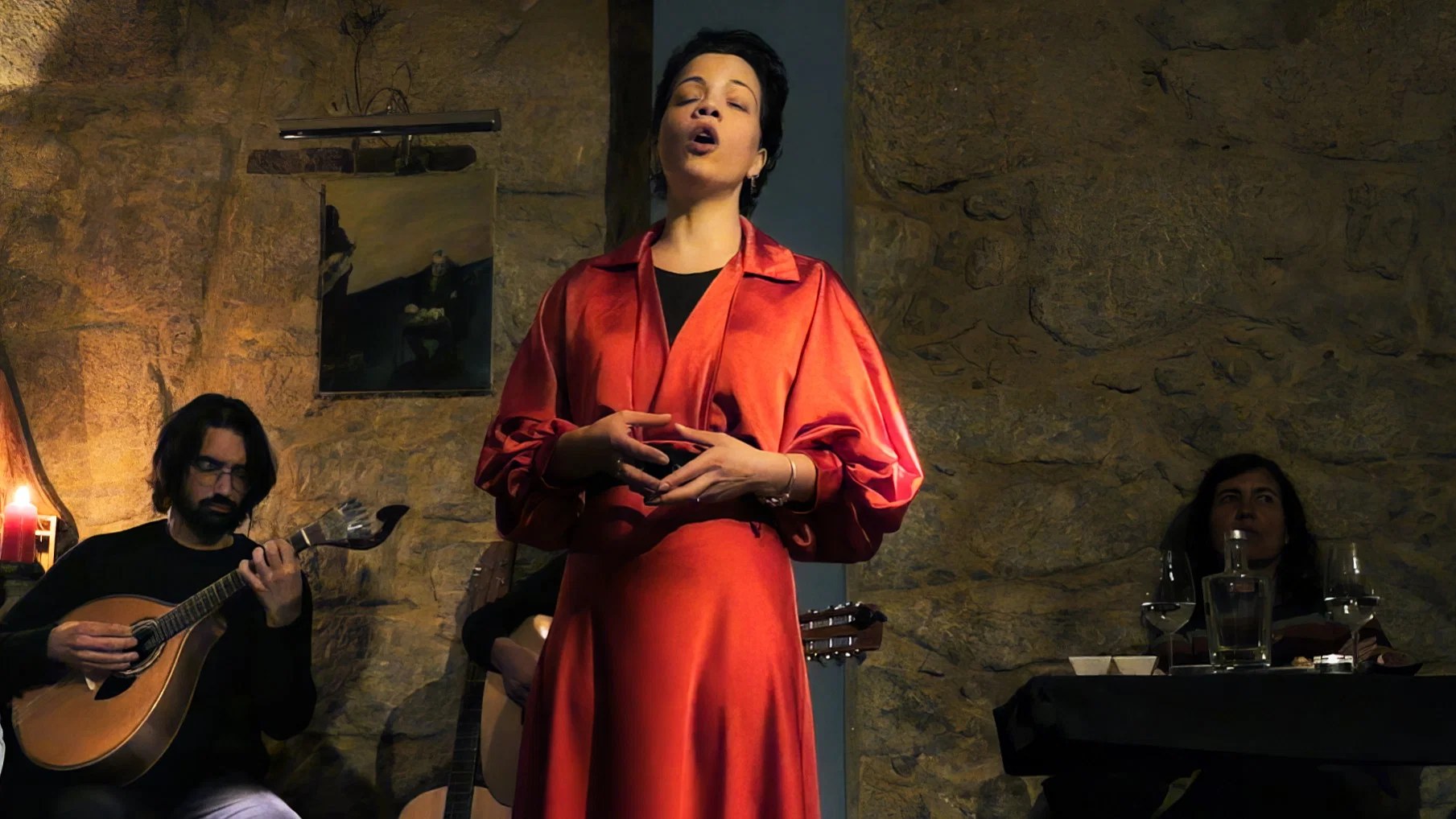
Optional - Fado Night & Traditional Dinner – Transport Included – €80.00
Entry to this location is not included in the price of your tour unless you book it in the final booking as an optional activity.
DURATION: Approximately 2h30
TIME: Starts at 20:00
AN AUTHENTIC EXPERIENCE OF FADO, CULTURE, AND GASTRONOMY
Enjoy an unforgettable evening where tradition, music, and cuisine come together to celebrate the soul of Northern Portugal.
As you enjoy a traditional dinner, travel through the history and roots of the Douro in an atmosphere that breathes authenticity. Fado moves, Folklore enchants, and the festivity takes us back in time, celebrating the spirit and traditions of Porto.
40
Optional - Fado Show in Porto with Port Wine – €20.00 to €26,00
Entry to this location is not included in the price of your tour unless you book it in the final booking as an optional activity.
DURATION: 1 hour
SCHEDULE: Daily at 18:00 and 19:30
AN AUTHENTIC FADO EXPERIENCE
Discover Fado, the soul of Portuguese music and an Intangible Cultural Heritage of Humanity.
Right in the heart of Porto, immerse yourself in the magic of this unique musical style. More than just a concert, this show is an emotional journey through Portugal’s culture and history.
An unforgettable experience where every chord tells a story.
Includes Port Wine tasting.
What's not included
Lello Bookstore – Gold Ticket (Priority + Book)
Ticket Tower of the Clergy (Evita Fila)
Guide DA to the Stock Exchange Palace
Church DE San Francisco – The Golden Church
Visit and Taste DE Port Wine – Exclusive Dona Antónia
Private Cruise NO Douro – Sunset
Dinner with Fado Concert and transfers
Fado Concert (1 Hour)
Tour Extension – Each extra hour
Not included gratifications and DE drops at the discretion of each participant
Available languages
Guide guide
PT
EN
FR
ES
Reviews breakdown
Viator
5.0
1 reviews
5★
1
4★
0
3★
0
2★
0
1★
0
Tripadvisor
4.9
10 reviews
5★
9
4★
1
3★
0
2★
0
1★
0
Important information
Infants and small children can ride in a pram or stroller
Service animals allowed
Specialized infant seats are available
Suitable for all physical fitness levels
Meeting point
Opposite the hotel Intercontinental Porto
Important notes
The starting point or arrival will be your hotel or other agreed place in Porto.
About Porto
Porto, the second-largest city in Portugal, is a vibrant coastal city known for its rich history, stunning architecture, and delicious cuisine. With its picturesque Ribeira district, historic bridges, and world-famous port wine cellars, Porto offers a unique blend of cultural heritage and modern charm.
Top Attractions
Ribeira District
The Ribeira district is the historic heart of Porto, known for its colorful buildings, narrow streets, and lively atmosphere. It's a UNESCO World Heritage site and a must-visit for anyone coming to Porto.
Historical
2-3 hours
Free to explore
Livraria Lello
Livraria Lello is one of the most famous bookstores in the world, known for its stunning neo-Gothic interior and as an inspiration for J.K. Rowling's Harry Potter series.
Cultural
1 hour
€6 (includes a book voucher)
Clérigos Tower
The Clérigos Tower is a iconic Baroque bell tower that offers panoramic views of Porto. Climbing the 240 steps to the top is well worth the effort for the breathtaking views.
Architecture
1 hour
€5
Dom Luís I Bridge
This double-deck iron bridge spans the Douro River, connecting Porto to Vila Nova de Gaia. The upper deck offers stunning views of the river and the city.
Architecture
30 minutes
Free
Port Wine Cellars
Vila Nova de Gaia is home to many of Porto's famous port wine cellars, where you can learn about the history of port wine and enjoy tastings.
Cultural
2-3 hours
€10-€30
Must-Try Local Dishes
Francesinha
A hearty sandwich made with layers of meat, covered in melted cheese and a special sauce, served with fries.
Lunch/Dinner
Contains meat and dairy
Bacalhau à Brás
A traditional Portuguese dish made with shredded cod, onions, potatoes, and eggs.
Lunch/Dinner
Contains fish and eggs
Tripas à Moda do Porto
A traditional Porto dish made with tripe, beans, and spices, slow-cooked to perfection.
Lunch/Dinner
Contains meat
Pastéis de Nata
Delicious custard tarts with a flaky pastry crust, often dusted with cinnamon or powdered sugar.
Dessert
Contains dairy and eggs
Popular Activities
Hiking in the Serra do Pilar
Kayaking on the Douro River
Sunbathing at Praia do Castelo do Queijo
Enjoying a port wine tasting
Visiting the Livraria Lello
Exploring the Ribeira district
Swimming at Praia do Castelo do Queijo
Boat tours on the Douro River
Best Time to Visit
May to September
This is the peak tourist season with warm weather and plenty of sunshine. It's ideal for exploring the city and enjoying outdoor activities.
18°C to 28°C
64°F to 82°F
Practical Information
Language
- Official: Portuguese
- Widely spoken: English, Spanish, French
- English: Widely spoken in tourist areas
Currency
Euro (EUR)
Time Zone
GMT+1 (Western European Time)
Electricity
230VV, 50HzHz
Safety Information
Overall Safety Rating: Generally safe
Porto is generally a safe city for travelers, with low violent crime rates. However, petty crime, such as pickpocketing and bag snatching, can occur in tourist areas and on public transportation.
Important Precautions:
- • Keep valuables secure and out of sight, especially in tourist areas and on public transportation
- • Be cautious when using taxis, and always ensure the meter is running or agree on a price before starting your journey
- • Avoid walking alone at night in quiet or poorly lit areas
Getting there
By air
- Francisco Sá Carneiro Airport • 11 km (7 miles) from city center
By train
Porto Campanhã, Porto São Bento
By bus
Porto Bus Terminal (Terminal de Camionagem de Porto)
Getting around
Public transport
The metro system is efficient and easy to use, with six lines connecting major points of interest.
Taxis
Available • Apps: Bolt, Uber
Rentals
Car, Bike, Scooter
Neighborhoods
Ribeira
Bolhão
Foz do Douro
Miguel Bombarda
Day trips
Braga
50 km (31 miles) • Full day
Braga is a historic city known for its beautiful churches, monasteries, and the Bom Jesus do Monte sanctuary.
Guimarães
40 km (25 miles) • Full day
Guimarães is a historic city known as the birthplace of Portugal. It's home to a well-preserved medieval center and the stunning Guimarães Castle.
Douro Valley
80 km (50 miles) • Full day
The Douro Valley is a stunning wine region known for its terraced vineyards, port wine cellars, and scenic boat tours.
Festivals
São João Festival • June 23-24
Festa de São João • June 24
Porto Wine Festival • September
Pro tips
- Visit the Livraria Lello bookstore early in the morning or late in the afternoon to avoid the crowds and long queues
- Take a port wine tasting tour to learn about the history of port wine and sample a variety of wines from different cellars
- Explore the historic center of Porto on foot, as many of its narrow streets and charming squares are best discovered by walking
- Try the local cuisine, such as Francesinha, Bacalhau à Brás, and Tripas à Moda do Porto, at traditional restaurants and cafes
- Take a day trip to the Douro Valley to see the stunning vineyards, visit port wine cellars, and enjoy a scenic boat tour on the Douro River
From $25
per person
Price varies by option
Secure booking
Free cancellation available
Instant confirmation