Tour to Didgori Valley from Tbilisi (Turtle Lake, Ethnographic Museum, Kojori)
Active
9h
For a full refund, cancel at least 24 hours before the scheduled departure time.
Instant confirmation
Mobile or paper ticket accepted
About this experience
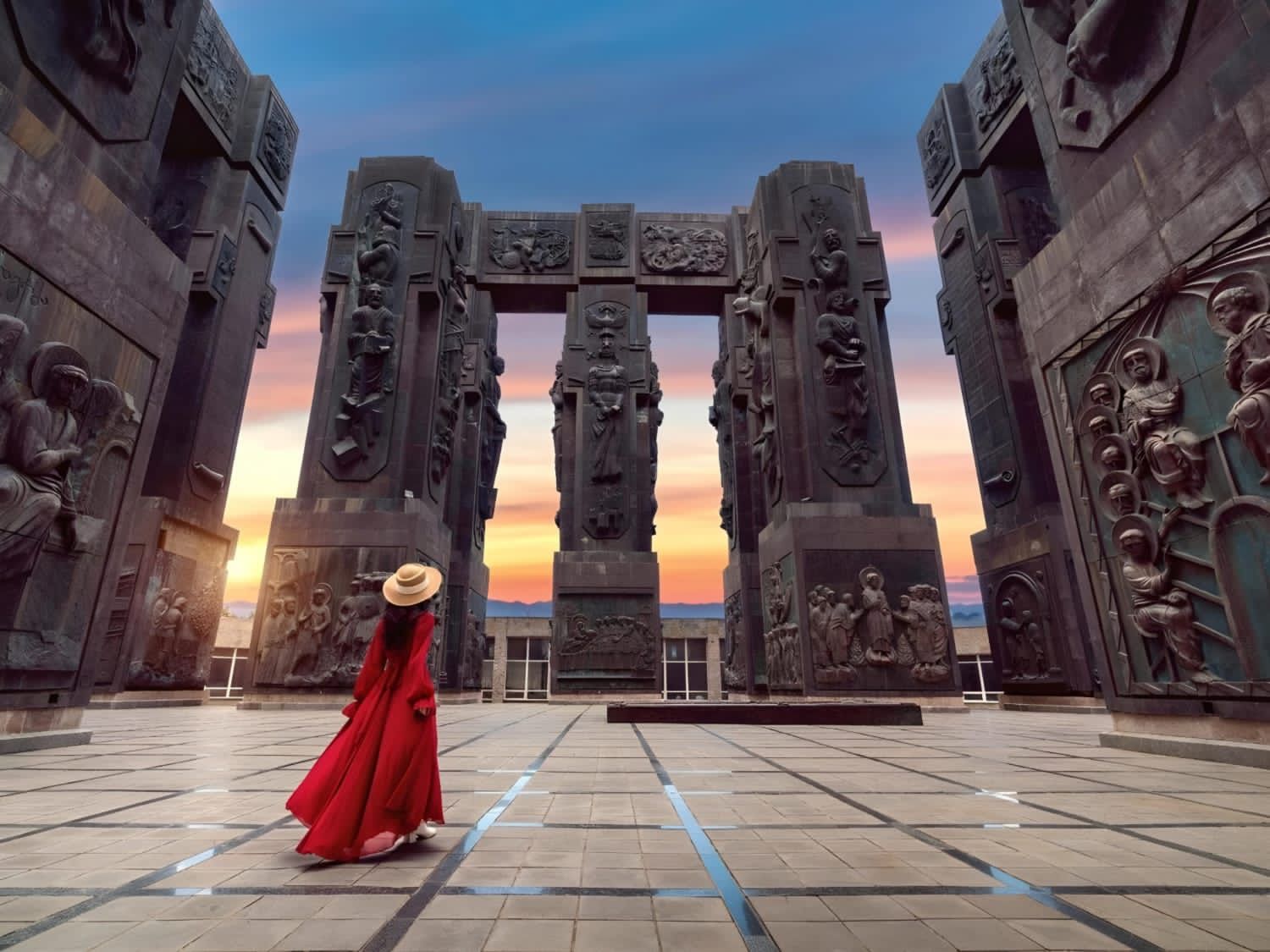
Private full day tour to Didgori Valley from Tbilisi includes visiting Turtle Lake, Tbilisi Open Air Museum of Ethnography, Kojori (Azeuli) Fortress, Udzo Monastery and Didgori Battle Memorial. Total drive 155 km (95 miles).
Available options
Tour to Didgori Valley from Tbilisi (Turtle Lake, Ethnographic Museum, Kojori)
Pickup included
What's included
Private transportation
WiFi on board
Bottled water
Air-conditioned vehicle
Detailed itinerary
1
Stop 1
Turtle Lake (686.7 m above sea level) is a small lake at the outskirts of Tbilisi so named due to the perceived abundance of turtles living in these places. The Turtle Lake area is designed as a recreational zone and is frequently visited on weekends. It is also a place where festivals and concerts are held.
2
Stop 2
The Giorgi Chitaia Open Air Museum of Ethnography displays the examples of folk architecture and craftwork from various regions of the country. The museum is named after Giorgi Chitaia, a Georgian ethnographer, who founded the museum on April 27, 1966. It is historic village populated by buildings moved there from all main territorial subdivisions of Georgia. The museum occupies 52 hectares of land and is arranged in eleven zones, displaying around 70 buildings and more than 8,000 items. The exhibition features the traditional darbazi-type and fiat-roofed stone houses from eastern Georgia, openwork wooden houses with gable roofs of straw or boards from western Georgia, watchtowers from the mountainous provinces of Khevsureti, Pshavi, and Svaneti, Megrelian and Imeretian wattle maize storages, Kakhetian wineries (marani), and Kartlian water mills as well as a collection of traditional household articles such as distaffs, knitting-frames, chums, clothes, carpets, pottery and furniture.
3
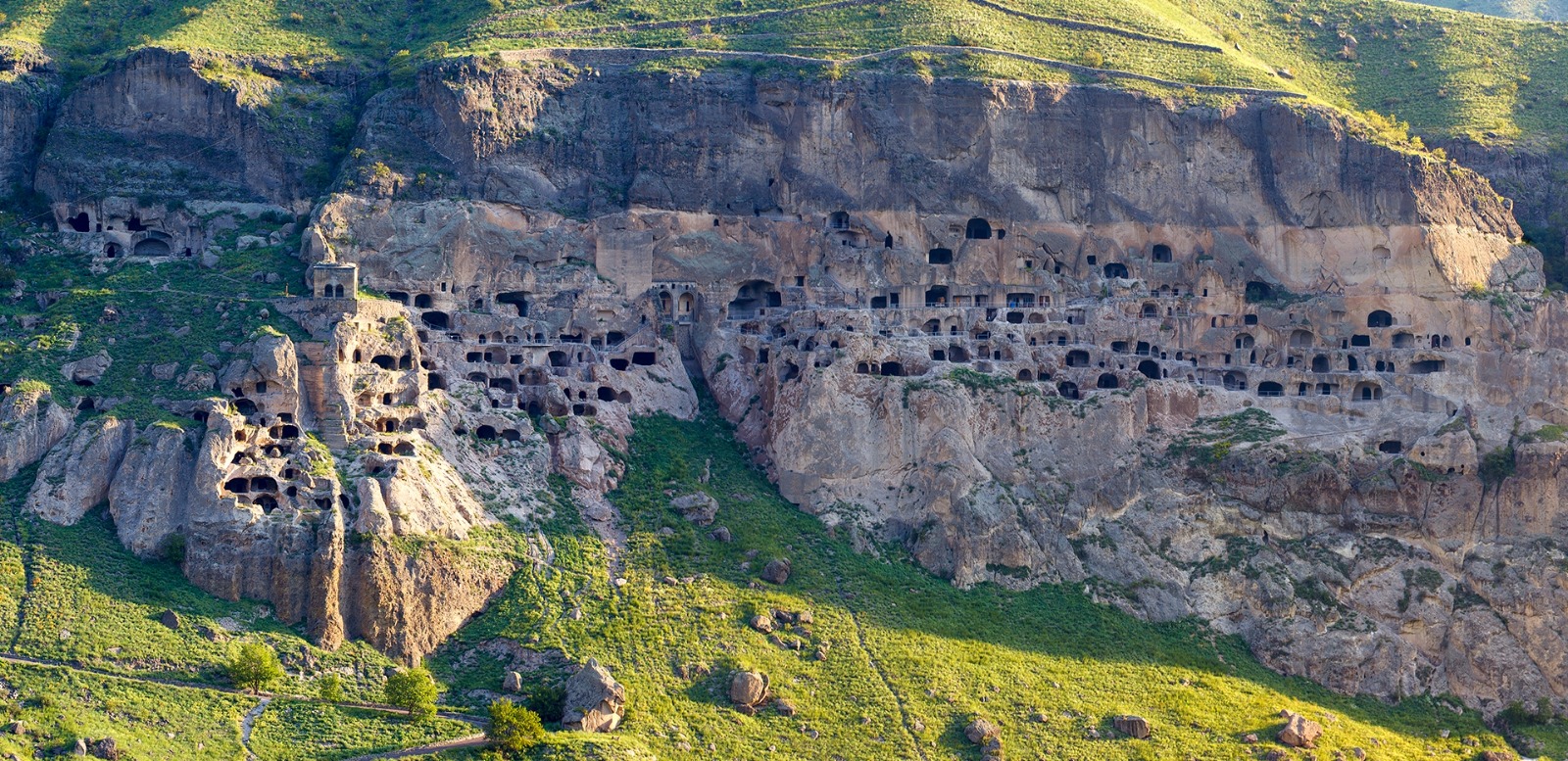
The earliest layers of Kojori fortress date to the late 11th century, but most of the structures are newer, dating to the 16th-18th centuries. During the Red Army invasion of Georgia in February 1921, the heights of Kojori saw heavy fighting between the Georgian and Russian SFSR forces. A monument to the Georgian Junkers (cadets) who died in this battle was erected on the site in the 1990s.
4
Stop 4
St. George Fathers' Monastery stands on Udzo Mountain (1416 metre). According to the legend, a childless man built a church and asked St. George to give him a child. His request was granted and since then (childless) childless women have come here to pray, praying to St. George and leaving an offering on one of the trees (this tree is still called the Christmas tree). The word Udzeo was also used to refer to the mountain and the church. St. George's Day is a moving Christian holiday. The day is held every year, on the Tuesday following Easter. The holiday is called infertility. The population of the nearby villages gathers on the hill.
5
Didgori Valley is known with The Battle of Didgori, fought between the armies of the Kingdom of Georgia and the Great Seljuq Empire on August 12, 1121. The large Muslim army, under the command of Ilghazi, was unable to maneuver, and suffered a devastating defeat due to King David IV of Georgia’s effective military tactics. The battle at Didgori was the culmination of the entire Georgian-Seljuk wars, and led to the Georgians’ reconquest of Tbilisi in 1122. Soon after that David moved the capital from Kutaisi to Tbilisi. The victory at Didgori inaugurated the medieval Georgian Golden Age and is celebrated in The Georgian Chronicles as a (the "miraculous victory"). Modern Georgians continue to remember the event as an annual September festival known as Didgoroba ("the day of Didgori")
What's not included
Lunch
Available languages
Guide guide
EN
Reviews breakdown
Tripadvisor
5.0
1 reviews
5★
1
4★
0
3★
0
2★
0
1★
0
Important information
Suitable for all physical fitness levels
Ladies need to wear head scarves and dresses in Georgian orthodox churches. Short trousers for men are also forbidden. Scarves and dresses can also be found near church entrances for men and women to enter churches. Comfortable shoes and warm jacket are recommended.
About Tbilisi
Tbilisi, the capital of Georgia, is a vibrant city where ancient history meets modern culture. Known for its unique architecture, thermal baths, and rich culinary scene, it offers a blend of European and Asian influences that make it a captivating destination for travelers.
Top Attractions
Narikala Fortress
This ancient fortress offers panoramic views of Tbilisi and is a symbol of the city's rich history.
Historical
1-2 hours
Free
Sulfur Baths
A unique historical landmark where people have been bathing in sulfur-rich waters for centuries.
Religious
1-2 hours
10-20 GEL (3-6 USD)
Sameba Cathedral
One of the largest religious buildings in the Caucasus, this cathedral is an architectural masterpiece.
Religious
1 hour
Free
Mtatsminda Park
A beautiful park with panoramic views of the city, perfect for a relaxing stroll or picnic.
Nature
2-3 hours
Free
Dry Bridge Market
A popular flea market where you can find antiques, souvenirs, and local crafts.
Shopping
1-2 hours
Varies
Must-Try Local Dishes
Khachapuri
A cheesy bread filled with melted cheese, often with an egg in the center.
Main Dish
Vegetarian
Khinkali
Dumplings filled with spiced meat or mushrooms, typically served with a side of soup.
Main Dish
Vegetarian options available
Badrijani Nigvzit
Fried eggplant rolls filled with a walnut paste.
Appetizer
Vegetarian
Lobio
A rich, spicy bean stew often served in clay pots.
Side Dish
Vegetarian
Popular Activities
Hiking in the mountains
Paragliding
Rafting
Spa treatments
Thermal baths
Picnics in parks
Visiting museums
Attending festivals
Best Time to Visit
May to October
This is the best time to visit Tbilisi as the weather is warm and pleasant, ideal for exploring the city's outdoor attractions and festivals.
20°C to 35°C
68°F to 95°F
Practical Information
Language
- Official: Georgian
- Widely spoken: Russian, English
- English: Moderately spoken
Currency
Georgian Lari (GEL)
Time Zone
GMT+4
Electricity
220VV, 50HzHz
Safety Information
Overall Safety Rating: Generally safe
Tbilisi is generally safe for travelers, but petty crime and pickpocketing can occur in crowded areas.
Important Precautions:
- • Be cautious of pickpockets in crowded areas
- • Use official taxis or ride-hailing apps
- • Avoid walking alone late at night
Getting there
By air
- Shota Rustaveli Tbilisi International Airport • 17 km from city center
By train
Tbilisi Central Railway Station
By bus
Ortachala Bus Station, Didube Bus Station
Getting around
Public transport
The metro is efficient and affordable, with stations well-connected to major attractions.
Taxis
Available • Apps: Bolt, Yandex.Taxi
Rentals
Car, Bike, Scooter
Neighborhoods
Old Town
Vake
Avlabari
Day trips
Mtskheta
20 km from Tbilisi • Half day
Mtskheta is an ancient city and the former capital of Georgia, known for its historic churches and monasteries.
Kazbegi
160 km from Tbilisi • Full day
Kazbegi is a stunning mountain region with breathtaking views and outdoor activities.
Gori
80 km from Tbilisi • Half day
Gori is a city known for its historic sites, including the birthplace of Joseph Stalin.
Festivals
Tbilisi International Film Festival • March
Tbilisi Open Air • July
Tbilisi Wine Festival • October
Pro tips
- Visit the Dry Bridge Market early in the morning for the best selection of antiques and souvenirs
- Try traditional Georgian dishes at local restaurants and street food vendors
- Explore the Old Town on foot to discover hidden gems and historic sites
- Take a day trip to Mtskheta to experience Georgia's ancient history and culture
- Attend a traditional Georgian supper club for an authentic dining experience
From $25
per person
Price varies by option
Secure booking
Free cancellation available
Instant confirmation