Tour to Katskhi Pillar&Chiatura from Tbilisi (Mghvimevi,Cableway, Ubisa,Tsitska)
Active
12h
For a full refund, cancel at least 24 hours before the scheduled departure time.
Instant confirmation
Mobile or paper ticket accepted
About this experience
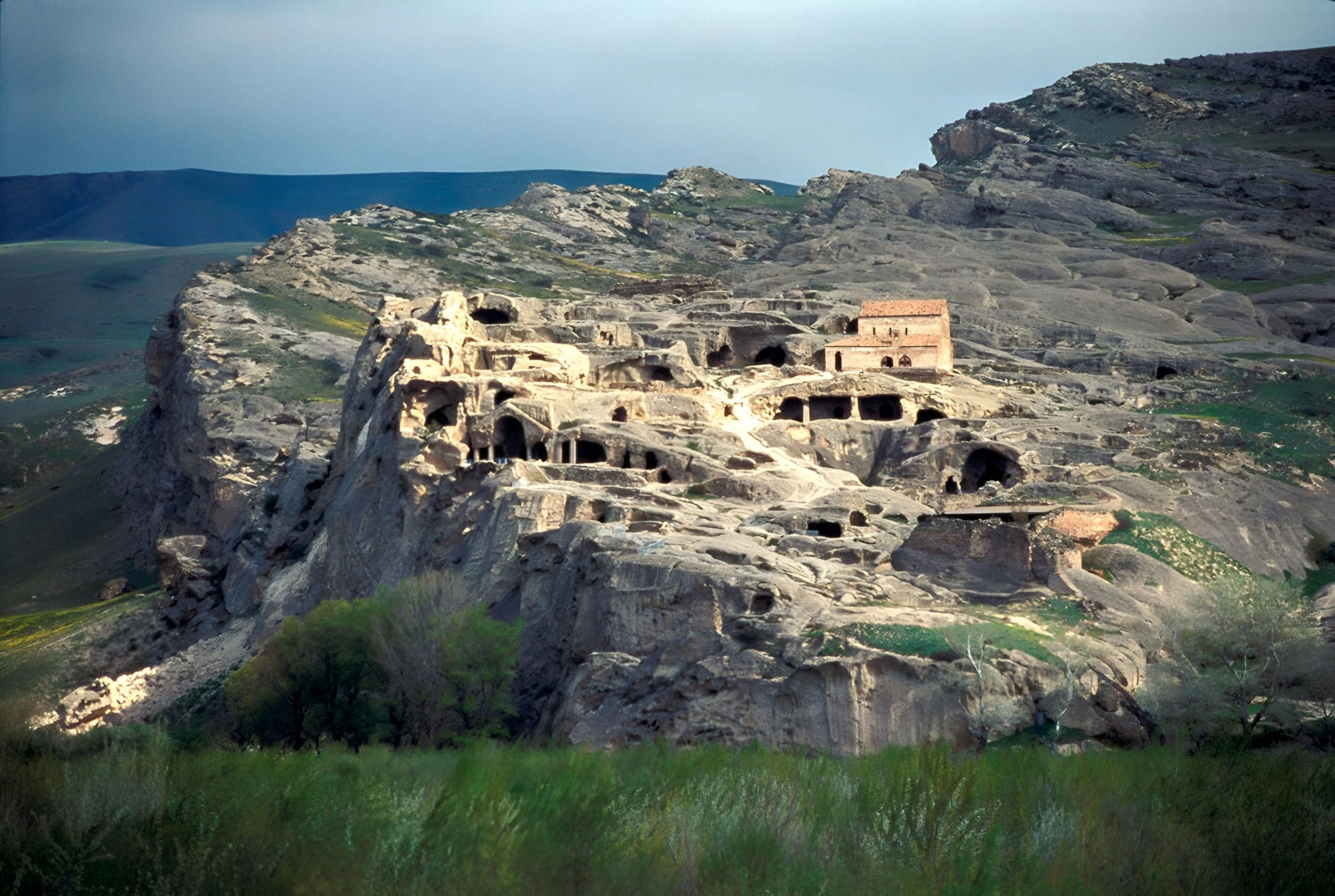
Private full day tour to Katskhi Pillar and Chiatura includes visiting two-nave church of Mgvimevi built in a natural cave in the 13th century, mining town Chiatura with the oldest Soviet cable cars, Katskhi Monastery with a unique hexagonal design and ornamentation, Katskhi Pillar - a natural limestone monolith with the most sacred churches on top and the medieval monastic complex of Ubisa with some of the best frescoes in Georgia. Private tour includes tasting Khachapuri (Georgian Cheese Bread) in the mountain village and tasting Tsitska wine that is part of the Imereti family of indigenous Georgian vines. Guests will also enjoy great landscapes of Jvari Pass and Rikoti Pass. Total drive 435 km (265 miles).
Available options
Tour to Katskhi Pillar&Chiatura from Tbilisi (Mghvimevi,Cableway, Ubisa,Tsitska)
Pickup included
What's included
Private transportation
WiFi on board
Tasting Khachapuri (Cheese Bread)
Bottled water
Air-conditioned vehicle
Detailed itinerary
1
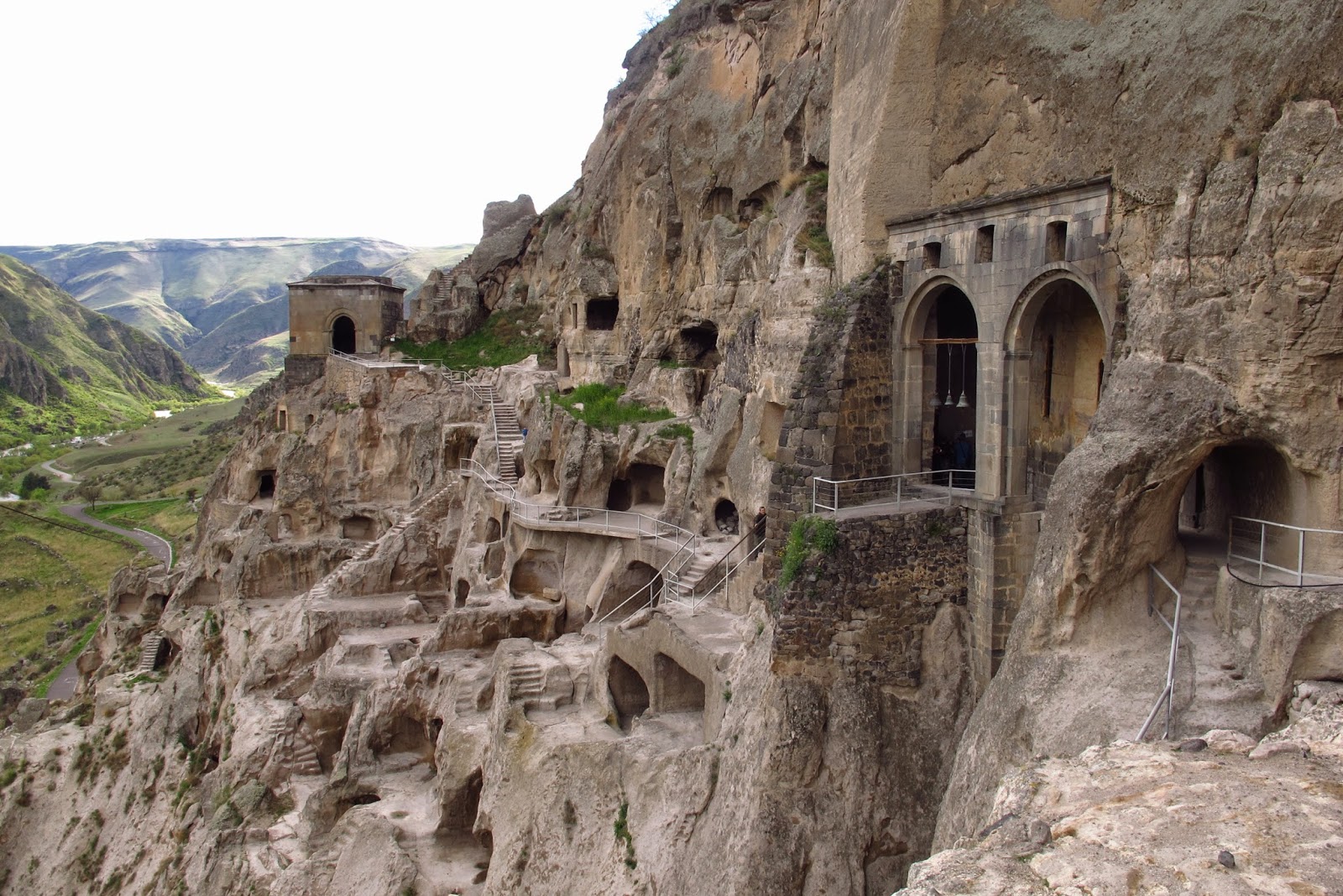
Mghvimevi (cave) Mothers' Monastery is a 13th century two-nave basilica, dedicated to the Nativity of the Mother of God partly carved into rock. The complex includes a small hall church, bell-tower, and a circuit wall. Small caves around the monastery served as refuges during wartime. The facade has carvings around the window, monumental crosses, interlocking rhombuses, cornice carvings, etc. Wooden iconostasis depicts the Savior and Twelve Apostles and various scenes from the life of Jesus made in the 18th century.
2
Chiatura is a mining town in a mountain valley of the Qvirila River. In 1879 the Georgian poet Akaki Tsereteli discovered the manganese and as a mining colony, Chiatura quickly became a source for manganese and iron and was declared a city in 1921. Due to the steep sided river valley, workers spent a large amount of time walking up from the town to the mines, thereby reducing productivity. In 1954 cable car system was installed to transport workers. Still utilizing the original infrastructure of the 1950s, today 17 cable car systems still exist. The central hub with 4 lines is being rebuilt with modern cable car technology.
3
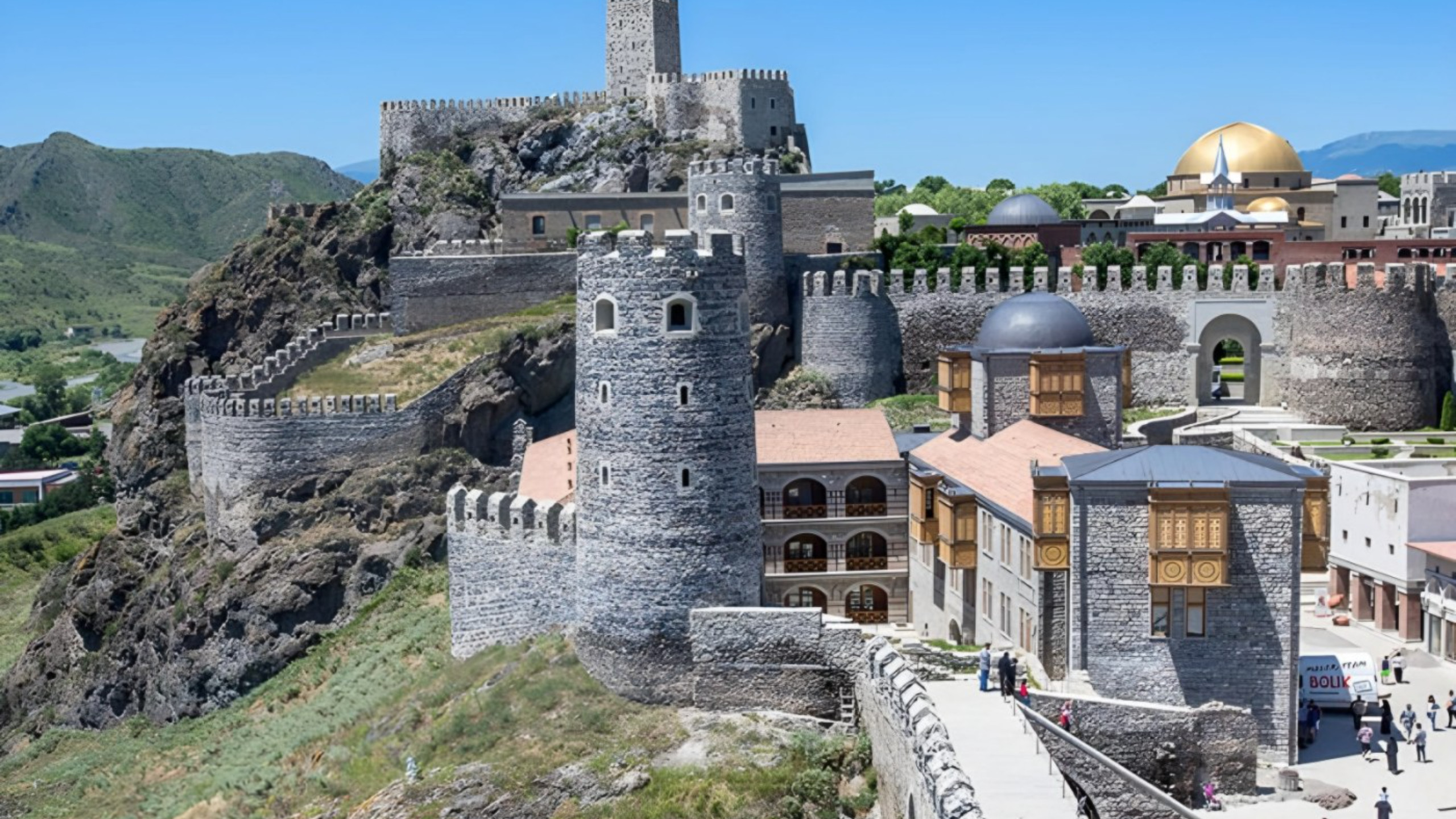
Katskhi Monastery of Nativity of the Savior is a medieval monastery built by the Baguashi family in the period of 988–1014. The church building is noted for a hexagonal design and rich ornamentation. The exterior of the church features three gradually narrowing cylindrical levels. The building was richly ornate, but the decoration of two upper tiers was lost in the process of the 1854 restoration. The relief at the southern vestibule is the Exaltation of the Holy Cross, featuring a cross supported by four angels. The church is surrounded by a pentagonal wall with a free-standing bell tower added in the 17th or 18th centuries.
4
The Katskhi pillar is 40 meters high natural limestone monolith that overlooks the small river valley of Katskhura dating from the 9th-10th century. The Katskhi pillar complex consists of a church of Maximus the Confessor, a burial vault, three hermit cells, a wine cellar, and a curtain wall on the top of the column. At the base of the pillar are the newly built church of Simeon Stylites, ruins of an old wall and belfry and a Bolnisi cross relief. A number of local legends surround the pillar. One of the legend is that the top of the rock was connected by a long iron chain to the dome of the Katskhi church, located 1.5 km away.
5
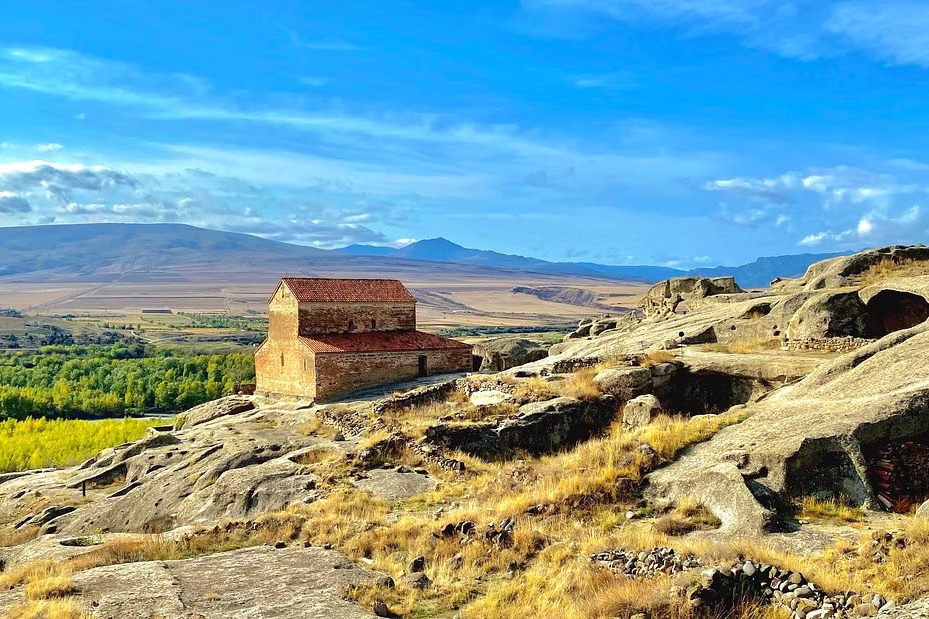
Ubisa is a medieval monastic complex founded by Grigol Khandzteli in the 9th century. It was later renewed by Simon Chkondideli in 1141. In the 14th century, during the reign of George the Magnificent, the main temple of the monastery was decorated with unique frescoes. The "Last Supper" of Ubisa Monastery is a new style of the 14th century Georgian artist Damian and his student Gerasim. This fresco proves that Georgia had its courage towards the Renaissance earlier in the Middle Ages. Before the great Italian Leonardo da Vinca (painted in 1495 to 1498), a fish appears on the table of Ubisa's "Last Supper" and human gestures and facial expressions in the faces of saints.
What's not included
Lunch
Available languages
Guide guide
EN
Reviews breakdown
Viator
5.0
1 reviews
5★
1
4★
0
3★
0
2★
0
1★
0
Important information
Suitable for all physical fitness levels
Ladies need to wear head scarves and dresses in Georgian orthodox churches. Short trousers for men are also forbidden. Scarves and dresses can also be found near church entrances for men and women to enter churches.
About Tbilisi
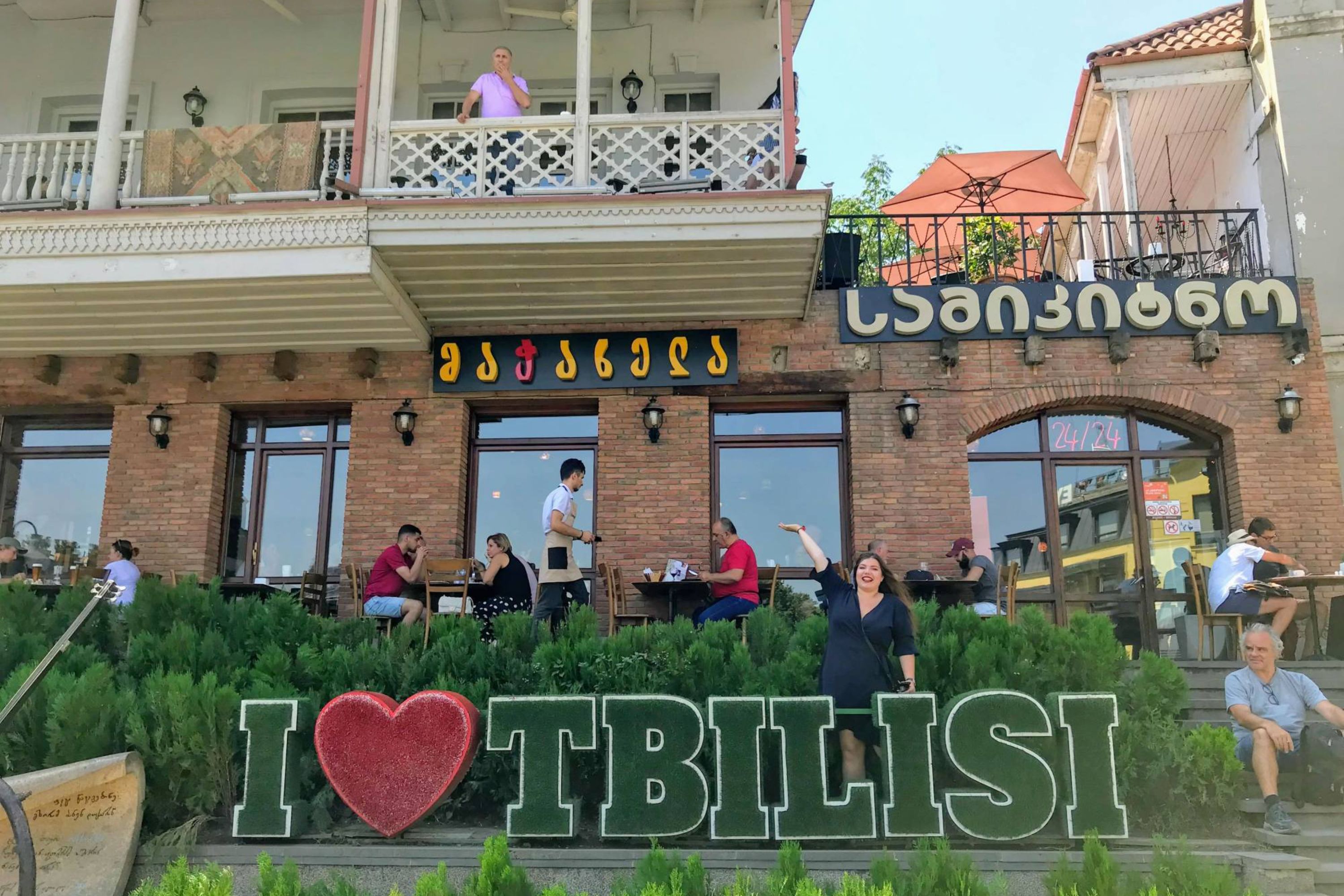
Tbilisi, the capital of Georgia, is a vibrant city where ancient history meets modern culture. Known for its unique architecture, thermal baths, and rich culinary scene, it offers a blend of European and Asian influences that make it a captivating destination for travelers.
Top Attractions
Narikala Fortress
This ancient fortress offers panoramic views of Tbilisi and is a symbol of the city's rich history.
Historical
1-2 hours
Free
Sulfur Baths
A unique historical landmark where people have been bathing in sulfur-rich waters for centuries.
Religious
1-2 hours
10-20 GEL (3-6 USD)
Sameba Cathedral
One of the largest religious buildings in the Caucasus, this cathedral is an architectural masterpiece.
Religious
1 hour
Free
Mtatsminda Park
A beautiful park with panoramic views of the city, perfect for a relaxing stroll or picnic.
Nature
2-3 hours
Free
Dry Bridge Market
A popular flea market where you can find antiques, souvenirs, and local crafts.
Shopping
1-2 hours
Varies
Must-Try Local Dishes
Khachapuri
A cheesy bread filled with melted cheese, often with an egg in the center.
Main Dish
Vegetarian
Khinkali
Dumplings filled with spiced meat or mushrooms, typically served with a side of soup.
Main Dish
Vegetarian options available
Badrijani Nigvzit
Fried eggplant rolls filled with a walnut paste.
Appetizer
Vegetarian
Lobio
A rich, spicy bean stew often served in clay pots.
Side Dish
Vegetarian
Popular Activities
Hiking in the mountains
Paragliding
Rafting
Spa treatments
Thermal baths
Picnics in parks
Visiting museums
Attending festivals
Best Time to Visit
May to October
This is the best time to visit Tbilisi as the weather is warm and pleasant, ideal for exploring the city's outdoor attractions and festivals.
20°C to 35°C
68°F to 95°F
Practical Information
Language
- Official: Georgian
- Widely spoken: Russian, English
- English: Moderately spoken
Currency
Georgian Lari (GEL)
Time Zone
GMT+4
Electricity
220VV, 50HzHz
Safety Information
Overall Safety Rating: Generally safe
Tbilisi is generally safe for travelers, but petty crime and pickpocketing can occur in crowded areas.
Important Precautions:
- • Be cautious of pickpockets in crowded areas
- • Use official taxis or ride-hailing apps
- • Avoid walking alone late at night
Getting there
By air
- Shota Rustaveli Tbilisi International Airport • 17 km from city center
By train
Tbilisi Central Railway Station
By bus
Ortachala Bus Station, Didube Bus Station
Getting around
Public transport
The metro is efficient and affordable, with stations well-connected to major attractions.
Taxis
Available • Apps: Bolt, Yandex.Taxi
Rentals
Car, Bike, Scooter
Neighborhoods
Old Town
Vake
Avlabari
Day trips
Mtskheta
20 km from Tbilisi • Half day
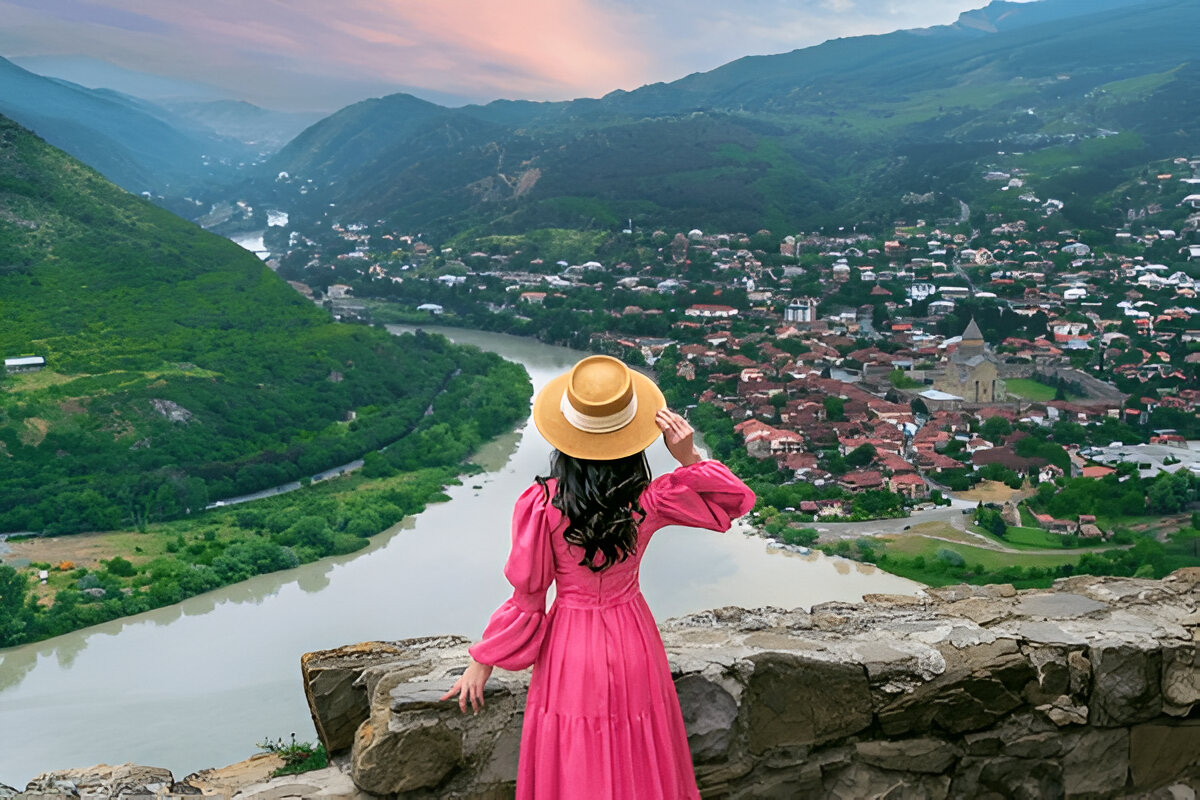
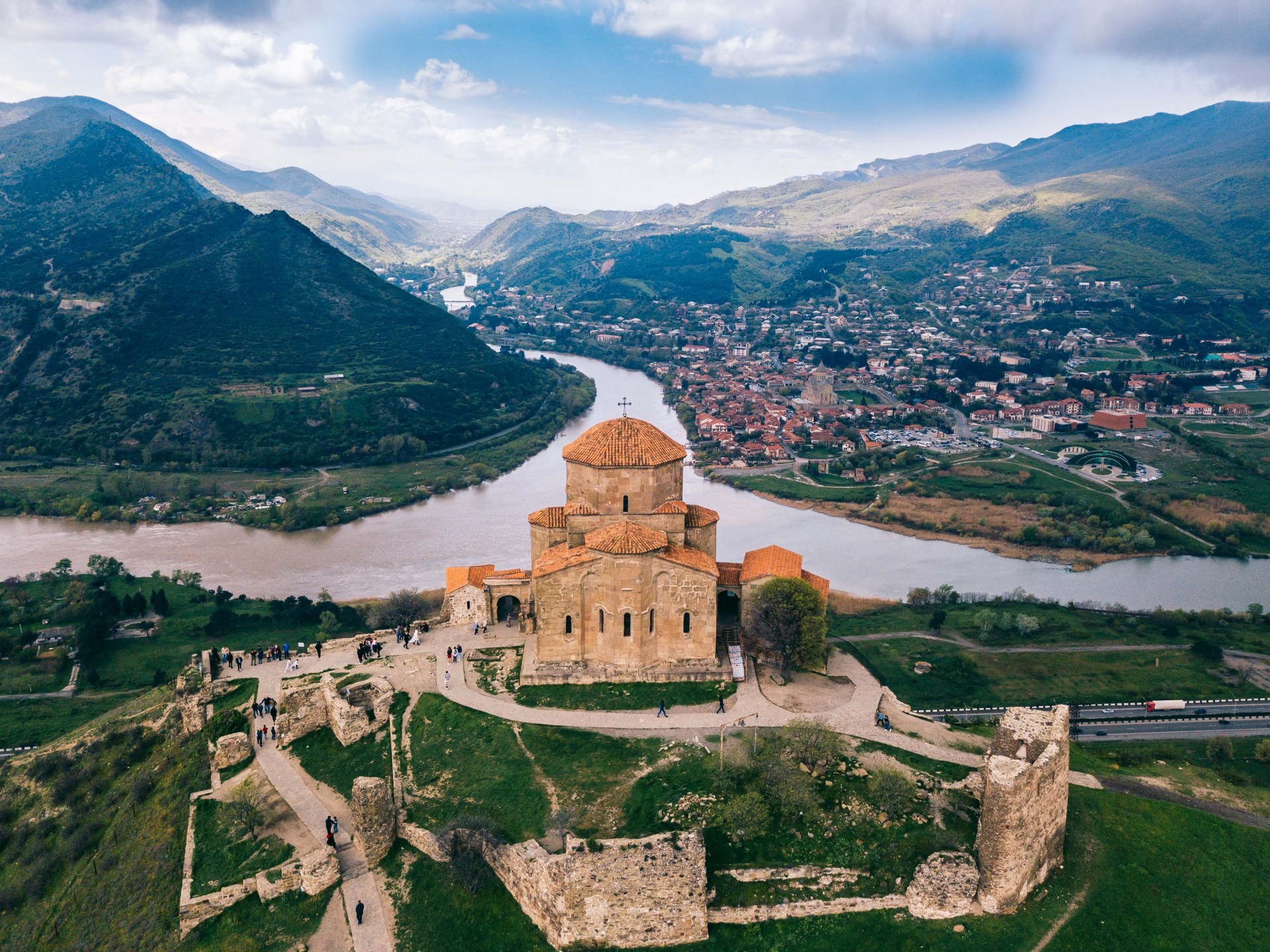
Mtskheta is an ancient city and the former capital of Georgia, known for its historic churches and monasteries.
Kazbegi
160 km from Tbilisi • Full day
Kazbegi is a stunning mountain region with breathtaking views and outdoor activities.
Gori
80 km from Tbilisi • Half day
Gori is a city known for its historic sites, including the birthplace of Joseph Stalin.
Festivals
Tbilisi International Film Festival • March
Tbilisi Open Air • July
Tbilisi Wine Festival • October
Pro tips
- Visit the Dry Bridge Market early in the morning for the best selection of antiques and souvenirs
- Try traditional Georgian dishes at local restaurants and street food vendors
- Explore the Old Town on foot to discover hidden gems and historic sites
- Take a day trip to Mtskheta to experience Georgia's ancient history and culture
- Attend a traditional Georgian supper club for an authentic dining experience
From $25
per person
Price varies by option
Secure booking
Free cancellation available
Instant confirmation