

Borjomi Tour from Tbilisi with Bakuriani Resort and Soviet Train Ride
Active
12h
For a full refund, cancel at least 24 hours before the scheduled departure time.
Instant confirmation
Mobile or paper ticket accepted
About this experience
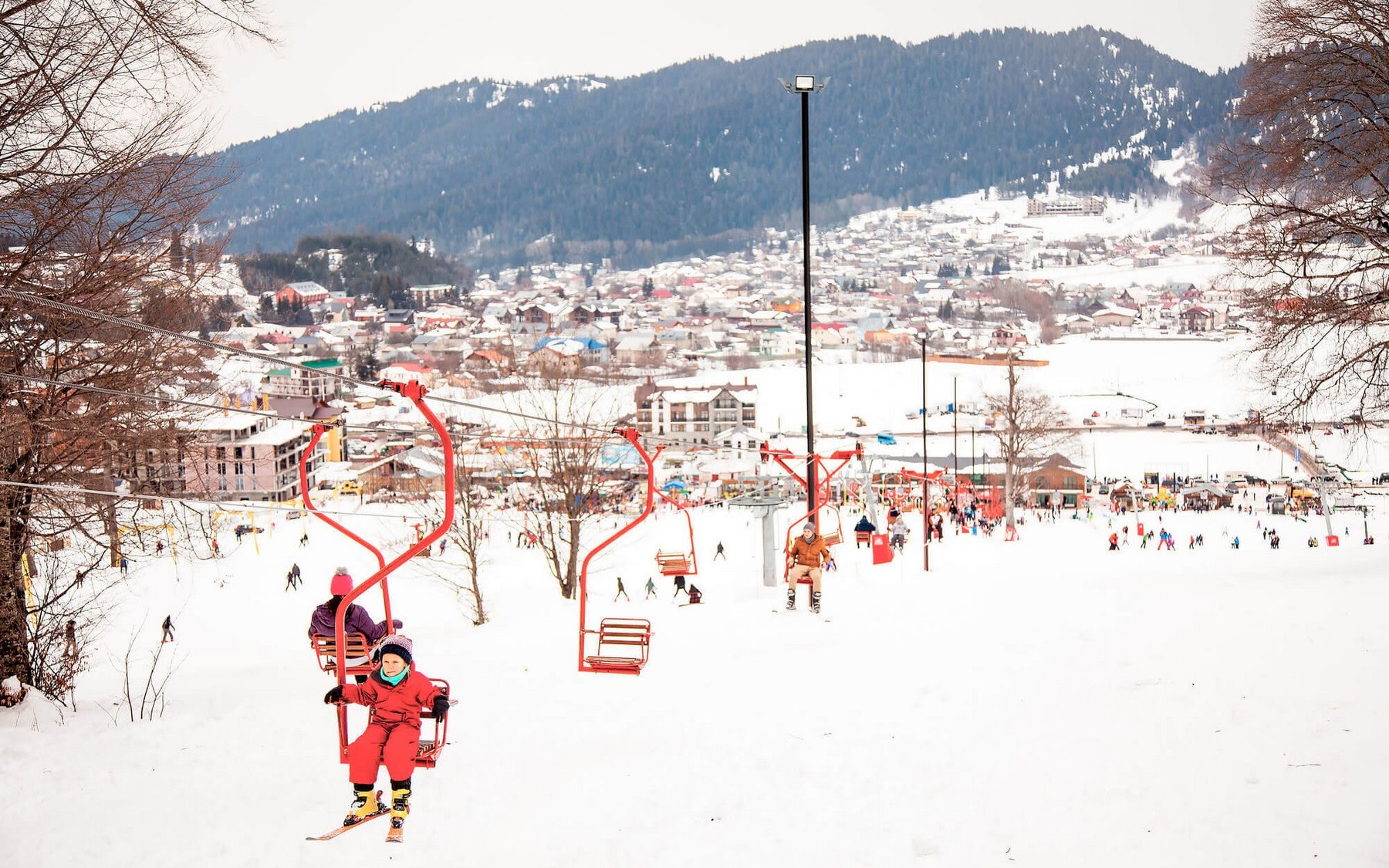
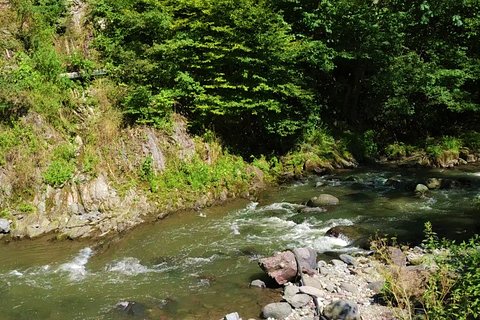
Private full day tour to Borjomi and Bakuriani includes visiting the best winter and summer resort Bakuriani at an elevation of 1,700 meters covered by forests and a balneological resort Borjomi, well-known with its mineral water park that dates back to the 1850s. To appreciate the nature, guests will take Soviet train Kukushka (Russian for "little cuckoo") that connects Borjomi to Bakuriani via the narrow-gauge railway in the deep forest. Guests will visit Borjomi Central Park to relax, enjoy the nature and taste mineral water. Guests will also visit Mtsvane Monastery built in 10th century and covered with greenery. Private tour to Borjomi and Bakuriani includes entry tickets to the train and central park. Total drive 370 km (230 miles).
Available options
Standard Tour
Pickup included
Tour with Lunch&Wine Tasting
Taste local food and wine<br/>Pickup included
What's included
Private transportation
Bottled water
WiFi on board
Air-conditioned vehicle
Detailed itinerary
1
Railway "Kukushka" (Russian "little cuckoo") is a 37.2-kilometre narrow-gauge railway line linking the town of Borjomi (820 m asl) to the village and ski resort of Bakuriani (1,700 m asl). The construction of this 900 mm line began in 1897, when Georgia was still part of the Russian Empire. The difficult terrain caused construction to take four years, and the first train ran in January 1902. Gustave Eiffel was commissioned by the Romanovs to design the bridge over the Tsemistskhali River between the stations of Tsaghveri and Tsemi. Originally, trains were pulled by a steam engine of the "Porter" type, imported from America, and passengers travelled in open carriages protected by handrails. The line was electrified in 1966, when the small steam engine was replaced by an electric "crocodile" locomotive made by the Škoda works in Czechoslovakia. Travel time is 2.5 hours (average speed 15 km/h).
2
Bakuriani is a village and a skiing resort located at an elevation of 1,700 meters above sea level. The region around Bakuriani is covered by coniferous forests (mainly made up of spruce). The present-day area of the town was built up by lava flows from the nearby Mukhera volcano. The ski area of the resort is split into two separate parts: Didveli and Kokhta/Kokhta-Mitarbi. Mount Kokhta provides a maximum skiable altitude of 2,269 metres, whereas the highest lift in Didveli reaches 2,702 metres.
3
Borjomi is a resort town with a population of 10,546 and is a balneological and climatic resort. Borjomi has several districts, of which Likani, Papa and Plateau are particularly favorable for treatment. The main treatment of the resort is mineral water used for drinking and balneological procedures. Other treatment factors in Borjomi are climatotherapy, mud treatment. The best time for climatotherapy is June-October. Medical indications: chronic diseases of the gastrointestinal tract, liver and biliary tract, alteration of substances, some diseases of the cardiovascular system. The season lasts all year. Borjomi has striking nature and unique mineral waters. One of the best places visit is the “Mineral Water Park”. The park itself dates back to the 1850s and is an attractive destination all throughout the year. Here you can taste the natural Borjomi mineral water and relax in a beautiful environment.
4
The Chitakhevi church of Saint George is a medieval church. Abandoned for more than two hundred years, the monastery was restored in 2003.The monastery's history is unknown. An upsurge in pilgrimage followed, driven by a belief that stones in the nearby stream acquired a reddish colour after a massacre of local monks by the soldiers of the Persian shah Tahmasp I in the 1550s. The Monastery consists of a three-nave basilica, stylistically dated to the late 9th or 10th century, and a two-storey bell-tower, likewise dated to the 15th or 16th century. There are remnants of old monastic cells and some accessory structures nearby. The church is built of coarsely hewn ashlar and rubble. Both the internal and external walls are plain, devoid of any significant decoration; traces of frescoes, probably executed in the 12th or 13th century, survive in the apse and on the west wall. A bell-tower stands a few metres southeast of the church. It is a two-storey structure.
What's not included
Lunch
Available languages
Guide guide
EN
Reviews breakdown
Tripadvisor
5.0
1 reviews
5★
1
4★
0
3★
0
2★
0
1★
0
Important information
Travelers should have at least a moderate level of physical fitness
About Tbilisi
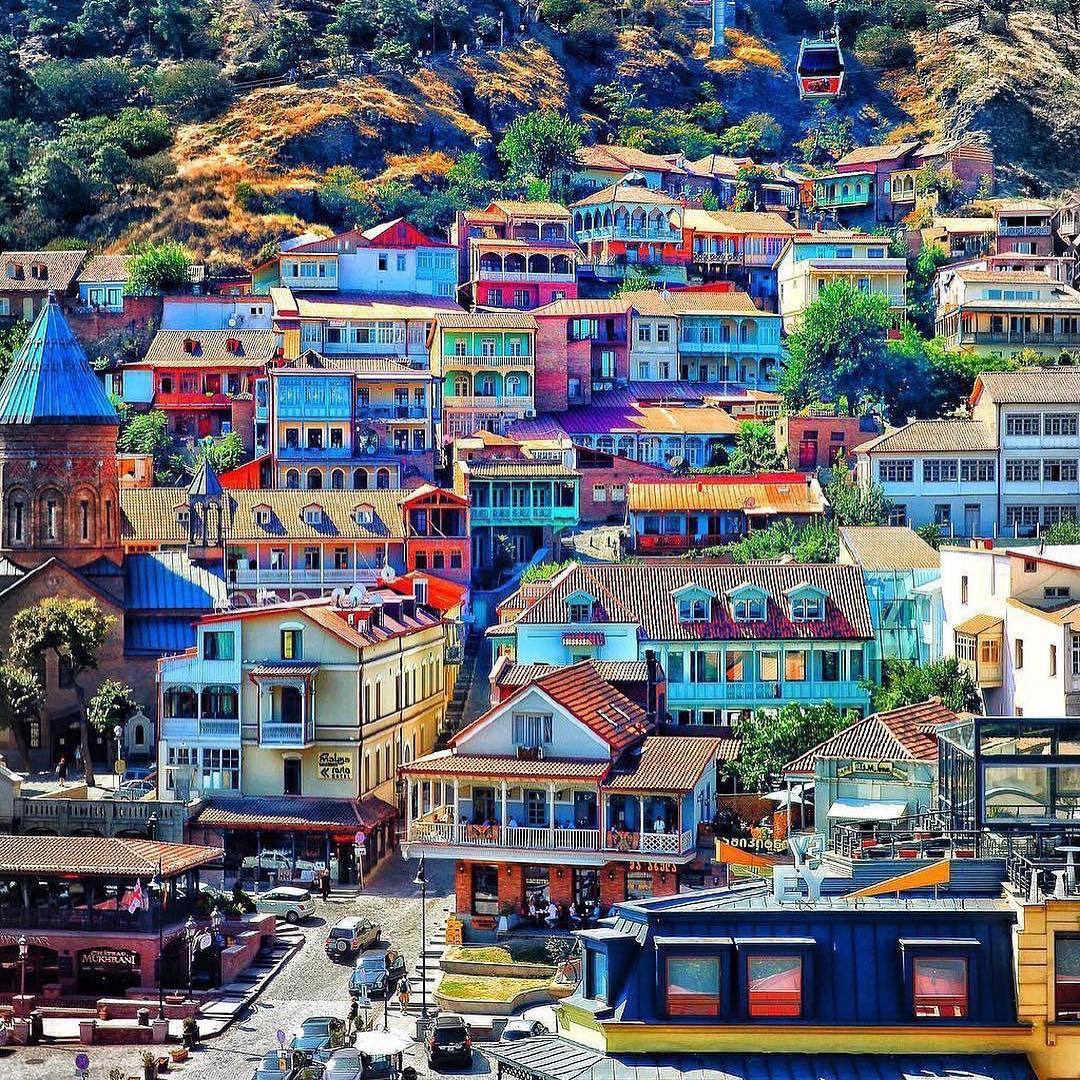
Tbilisi, the capital of Georgia, is a vibrant city where ancient history meets modern culture. Known for its unique architecture, thermal baths, and rich culinary scene, it offers a blend of European and Asian influences that make it a captivating destination for travelers.
Top Attractions
Narikala Fortress
This ancient fortress offers panoramic views of Tbilisi and is a symbol of the city's rich history.
Historical
1-2 hours
Free
Sulfur Baths
A unique historical landmark where people have been bathing in sulfur-rich waters for centuries.
Religious
1-2 hours
10-20 GEL (3-6 USD)
Sameba Cathedral
One of the largest religious buildings in the Caucasus, this cathedral is an architectural masterpiece.
Religious
1 hour
Free
Mtatsminda Park
A beautiful park with panoramic views of the city, perfect for a relaxing stroll or picnic.
Nature
2-3 hours
Free
Dry Bridge Market
A popular flea market where you can find antiques, souvenirs, and local crafts.
Shopping
1-2 hours
Varies
Must-Try Local Dishes
Khachapuri
A cheesy bread filled with melted cheese, often with an egg in the center.
Main Dish
Vegetarian
Khinkali
Dumplings filled with spiced meat or mushrooms, typically served with a side of soup.
Main Dish
Vegetarian options available
Badrijani Nigvzit
Fried eggplant rolls filled with a walnut paste.
Appetizer
Vegetarian
Lobio
A rich, spicy bean stew often served in clay pots.
Side Dish
Vegetarian
Popular Activities
Hiking in the mountains
Paragliding
Rafting
Spa treatments
Thermal baths
Picnics in parks
Visiting museums
Attending festivals
Best Time to Visit
May to October
This is the best time to visit Tbilisi as the weather is warm and pleasant, ideal for exploring the city's outdoor attractions and festivals.
20°C to 35°C
68°F to 95°F
Practical Information
Language
- Official: Georgian
- Widely spoken: Russian, English
- English: Moderately spoken
Currency
Georgian Lari (GEL)
Time Zone
GMT+4
Electricity
220VV, 50HzHz
Safety Information
Overall Safety Rating: Generally safe
Tbilisi is generally safe for travelers, but petty crime and pickpocketing can occur in crowded areas.
Important Precautions:
- • Be cautious of pickpockets in crowded areas
- • Use official taxis or ride-hailing apps
- • Avoid walking alone late at night
Getting there
By air
- Shota Rustaveli Tbilisi International Airport • 17 km from city center
By train
Tbilisi Central Railway Station
By bus
Ortachala Bus Station, Didube Bus Station
Getting around
Public transport
The metro is efficient and affordable, with stations well-connected to major attractions.
Taxis
Available • Apps: Bolt, Yandex.Taxi
Rentals
Car, Bike, Scooter
Neighborhoods
Old Town
Vake
Avlabari
Day trips
Mtskheta
20 km from Tbilisi • Half day
Mtskheta is an ancient city and the former capital of Georgia, known for its historic churches and monasteries.
Kazbegi
160 km from Tbilisi • Full day
Kazbegi is a stunning mountain region with breathtaking views and outdoor activities.
Gori
80 km from Tbilisi • Half day
Gori is a city known for its historic sites, including the birthplace of Joseph Stalin.
Festivals
Tbilisi International Film Festival • March
Tbilisi Open Air • July
Tbilisi Wine Festival • October
Pro tips
- Visit the Dry Bridge Market early in the morning for the best selection of antiques and souvenirs
- Try traditional Georgian dishes at local restaurants and street food vendors
- Explore the Old Town on foot to discover hidden gems and historic sites
- Take a day trip to Mtskheta to experience Georgia's ancient history and culture
- Attend a traditional Georgian supper club for an authentic dining experience
From $25
per person
Price varies by option
Secure booking
Free cancellation available
Instant confirmation