İzmir Tour by Khalid
Active
5h
For a full refund, cancel at least 24 hours before the scheduled departure time.
Instant confirmation
Mobile or paper ticket accepted
About this experience
This half-day guided tour to Izmir begins
with the 4th century Castle of Alexander the Great built on Pagos
Hill overlooking the city. Nearby, is the well preserved Roman market place,
the Agora. This has become the Agora Open-Air Museum of Izmir holding many
historical artifacts. The symbol of Izmir is a beautifully carved marble Clock
Tower which stands in the centre of Konak Square. It has four fountains round
it and is about 113 years old. You will then be taken round the bay to
Karsiyaka, a residential area before crossing the bay by ferry boat to see
Kemeralti, the old Bazaar built by the Ottomans.
Available options
İzmir Tour by Khalid
Pickup included
What's included
Private transportation
Soda/Pop
WiFi on board
Bottled water
Lunch
Air-conditioned vehicle
Fuel surcharge
Parking Fees
Detailed itinerary
1
Turkey's Aegean shores are among the loveliest landscapes in the country. The magnificent coastline, lapped by the clear water of the Aegean Sea, abounds in vast and pristine beaches surrounded by olive groves, rocky crags and pine woods. Dotted with idyllic fishing harbours, popular holiday villages and the remains of ancient civilizations attesting to the inheritance of more than 5,000 years of history, culture and mythology, this region offers a holiday with something for everyone - nature lovers, sun worshippers, photographers, sports enthusiasts, sailors and archaeologists. Along the whole length of the coast, accommodation to suit every taste and price range can be found. Known in Turkish as "Beautiful Izmir", the city lies at 'the head of a long and narrow gulf furrowed by ships and yachts. The climate is mild and in the summer the constant and refreshing sea breezes temper the sun's heat. The city, in horizontal terraces, gently ascends the slopes of the surrounding mountains.
2
Stop 2
Castles are defensive structures specifically built to withstand attack. Despite their differences though, they all have one feature in common, they are fortified. About the castles that have survived for thousands of years, we can say that they are the greatest witnesses of history. These castles built by civilizations living in Anatolia to protect themselves are visited today by history lovers. During the fourth century BC, a new city was built on the slopes of Mt Pagos (Kadifekale) during the reign of Alexander the Great. On Kadifekale, Mt. Pagos, stands the impressive ruins of a castle and its walls, built by Lysimachus in the reign of Alexander the Great, which still dominate Izmir today. The castle offers an excellent vantage point to enjoy the magnificent view over the Gulf of Izmir. Enjoy the breath-taking view of Izmir
3
Stop 3
The Agora, or marketplace, in the Namazgah Quarter, was originally constructed during the rule of Alexander the Great. What remains today, however, dates from the rebuilding under Marcus Aurelius after a devastating earthquake in 178 AD. But even more interesting are the vaulted chambers and cisterns in the cells of the two basilicas, which have been reconstructed in Corinth and Faustina, giving visitors a good idea of how this rectangular multi-story marketplace looked in its day. There are still underway archaeological investigations. Thanks to recent works, both Kadifekale and Agora are connected eachother as it used to be.
4
The Kemeralti Market, which is 400 years old, is the most ancient meeting and shopping centre of Izmir. Since the Hellenistic period, the bazaar has always been a major trade area.
5
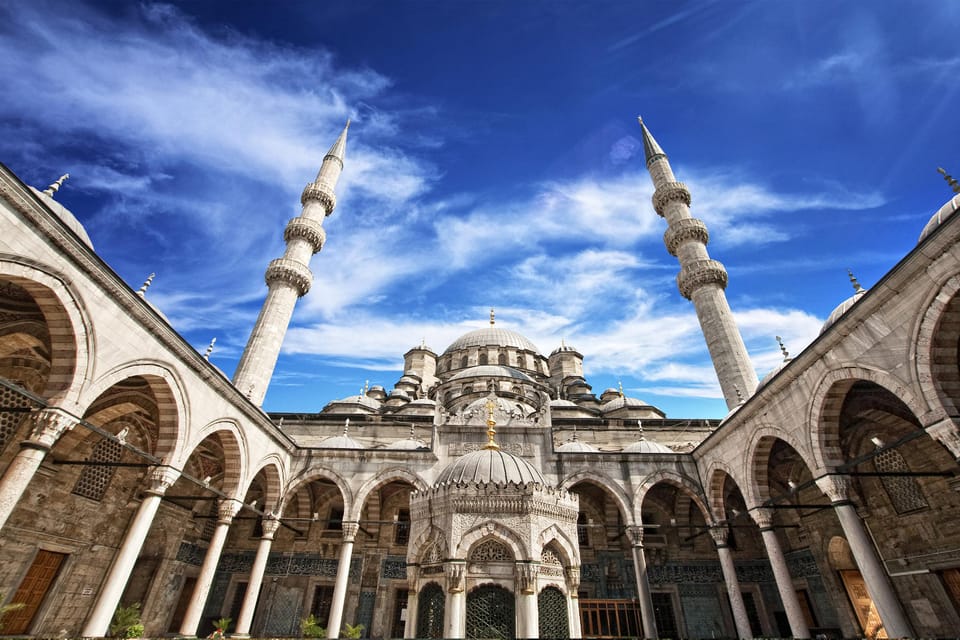
The Hisar Mosque, one of five mosques that surround the old harbour and the Hisaronu Mosque, is one of Izmir 's largest mosques. The mosque is also one of Ottoman Architecture's most beautiful examples. The local people called Hisaronu mosque, but it is known as Molla Yakup Mosque in written documents. When you step into the mosque, you feel the spiritual atmosphere of the religious site. Yes, as always, shoes off.
6
İzmir Clock Tower is a historic clock tower located at the Konak Square in the Konak district of İzmir, Turkey. It is considered as the main landmark and the symbol of the city. The tower has four fountains on the base, in circular design decorated in an Ottoman architecture. The landmark is a gift from the Sultan Abdulhamid and built-in 1901.
7
Stop 7
Archeological Museum, near Konak Square, houses a superb collection antiquities including the statues of Poseidon and Demeter which, in ancient times, stood in the Agora. Most of the artefacts, which include busts, statues, statuettes, tools, and various eating and cooking utensils, come from the Bronze Age, or from the Greek and Roman periods.
8
Time to proceed to where the original city was established in the third millennium B.C. and at that time shared, with Troy, the most advanced culture in Western Anatolia. By 1500 B.C. it had fallen under the influence of Central Anatolia's Hittite Empire. In the first millennium B.C. Izmir, then known as Smyrna, ranked as one of the most important cities of the Ionian Federation; during this period - one of the city's most brilliant - it is believed that Homer resided here. Lydian conquest of the city, around 600 B.C., brought this period to an end, and Izmir remained little more than a village throughout the Lydian and the subsequent 6th century B.C. Persian rule. In the fourth century B.C., a new city was built at the instigation of Alexander the Great on the slopes of Mt. Pagos (Kadifekale).
What's not included
Gratuities
Available languages
Guide guide
EN
TR
Important information
Infants are required to sit on an adult’s lap
Specialized infant seats are available
Service animals allowed
Infants and small children can ride in a pram or stroller
Transportation options are wheelchair accessible
Wheelchair accessible
Travelers should have at least a moderate level of physical fitness
About Izmir
Izmir is a vibrant coastal city on Turkey's Aegean coast, known for its rich history, beautiful beaches, and lively cultural scene. As one of Turkey's most cosmopolitan cities, it offers a blend of ancient ruins, modern amenities, and a relaxed Mediterranean lifestyle.
Top Attractions
Agora of Smyrna
An ancient Roman agora located in the heart of Izmir. It's one of the most important historical sites in the city.
Historical
1-2 hours
Free
Kadifekale
A historic castle offering panoramic views of the city and the Aegean Sea.
Historical
1-2 hours
Free
Izmir Archeological Museum
A museum showcasing a vast collection of artifacts from the region's ancient history.
Museum
1-2 hours
Moderate (around 50 TRY)
Kordon
A beautiful waterfront promenade stretching along the Aegean coast.
Beach
Flexible, can be enjoyed at any time
Free
Çeşme
A popular beach resort town near Izmir, known for its beautiful beaches and thermal springs.
Beach
Full day
Varies by activity and accommodation
Must-Try Local Dishes
Köfte
Grilled or fried meatballs made from ground beef or lamb, often served with rice or bread.
Main Course
Contains meat
Boyoz
A type of pastry filled with a spiced beef mixture, typically eaten for breakfast.
Breakfast
Contains meat and gluten
Kumru
A sandwich made with a special type of bread, filled with various ingredients like cheese, tomatoes, and peppers.
Sandwich
Vegetarian options available
Midye Dolma
Stuffed mussels filled with spiced rice and pine nuts.
Snack
Contains seafood and gluten
Popular Activities
Hiking in nearby mountains
Water sports in Çeşme
Sunbathing on the beach
Visiting thermal baths in Pamukkale
Exploring ancient ruins in Ephesus
Visiting museums in Izmir
Swimming in the Aegean Sea
Boat trips to nearby islands
Best Time to Visit
June to August
This is the peak tourist season with warm weather, clear skies, and vibrant nightlife. It's ideal for beach activities and outdoor events.
25°C to 35°C
77°F to 95°F
Practical Information
Language
- Official: Turkish
- Widely spoken: English, German
- English: Moderately spoken in tourist areas
Currency
Turkish Lira (TRY)
Time Zone
GMT+3
Electricity
220VV, 50HzHz
Safety Information
Overall Safety Rating: Generally safe
Izmir is generally safe for tourists, but it's important to be aware of your surroundings and take precautions to avoid petty crime.
Important Precautions:
- • Be cautious of your belongings in crowded areas
- • Use licensed taxis and insist on the meter being turned on
- • Be wary of strangers offering unsolicited help or services
Getting there
By air
- Adnan Menderes Airport • 20 km south of the city center
By train
Basmane Railway Station
By bus
Izmir Otogar (Main Bus Terminal)
Getting around
Public transport
Affordable and efficient, with frequent services. Buses are the most common form of public transport in Izmir.
Taxis
Available • Apps: BiTaksi, Uber
Rentals
Car, Bike, Scooter
Neighborhoods
Alsancak
Karsiyaka
Gözlüce
Bornova
Day trips
Çeşme
90 km • Full day
A popular beach resort town with beautiful beaches and thermal springs.
Selçuk
80 km • Full day
A town near Izmir with significant historical and archaeological sites.
Sirince
70 km • Full day
A charming village known for its wine production and traditional architecture.
Festivals
Izmir International Festival • July to August
Izmir Short Film Festival • April
Izmir Jazz Festival • October
Pro tips
- Visit the Agora of Smyrna early in the morning to avoid the heat and crowds
- Try local street food like kumru and midye dolma for an authentic culinary experience
- Explore the city's neighborhoods on foot or by bike to discover hidden gems and local culture
- Attend a local festival or event to immerse yourself in Izmir's vibrant cultural scene
- Take a day trip to Çeşme or Selçuk for a relaxing beach getaway or a historical adventure
From $25
per person
Price varies by option
Secure booking
Free cancellation available
Instant confirmation