Ephesus Tour from Izmir City by Khalid
Active
8h
For a full refund, cancel at least 24 hours before the scheduled departure time.
Instant confirmation
Mobile or paper ticket accepted
About this experience
This will be an excursion to Ephesus, an
ancient Roman city. The site is extensive and consists of many buildings
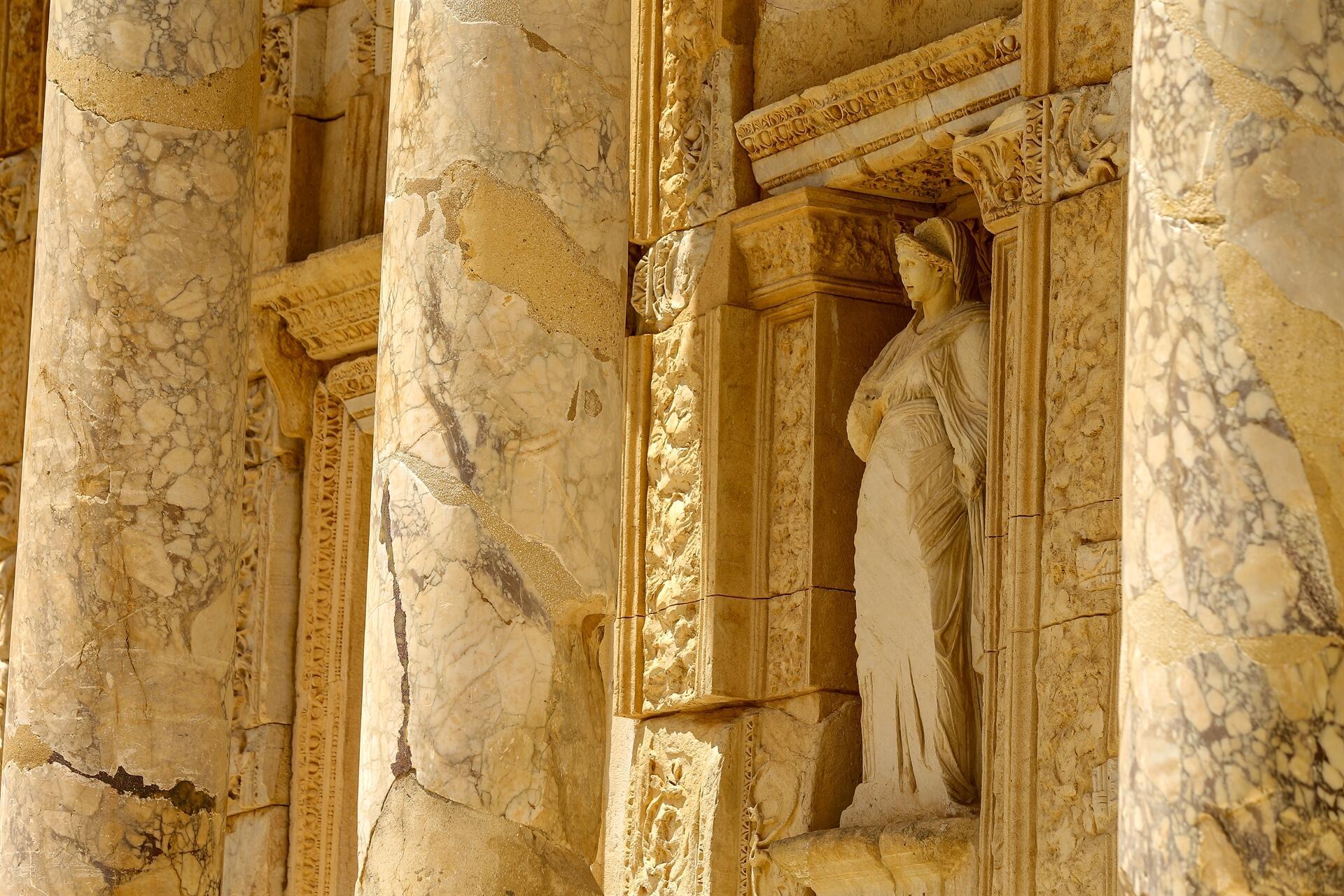
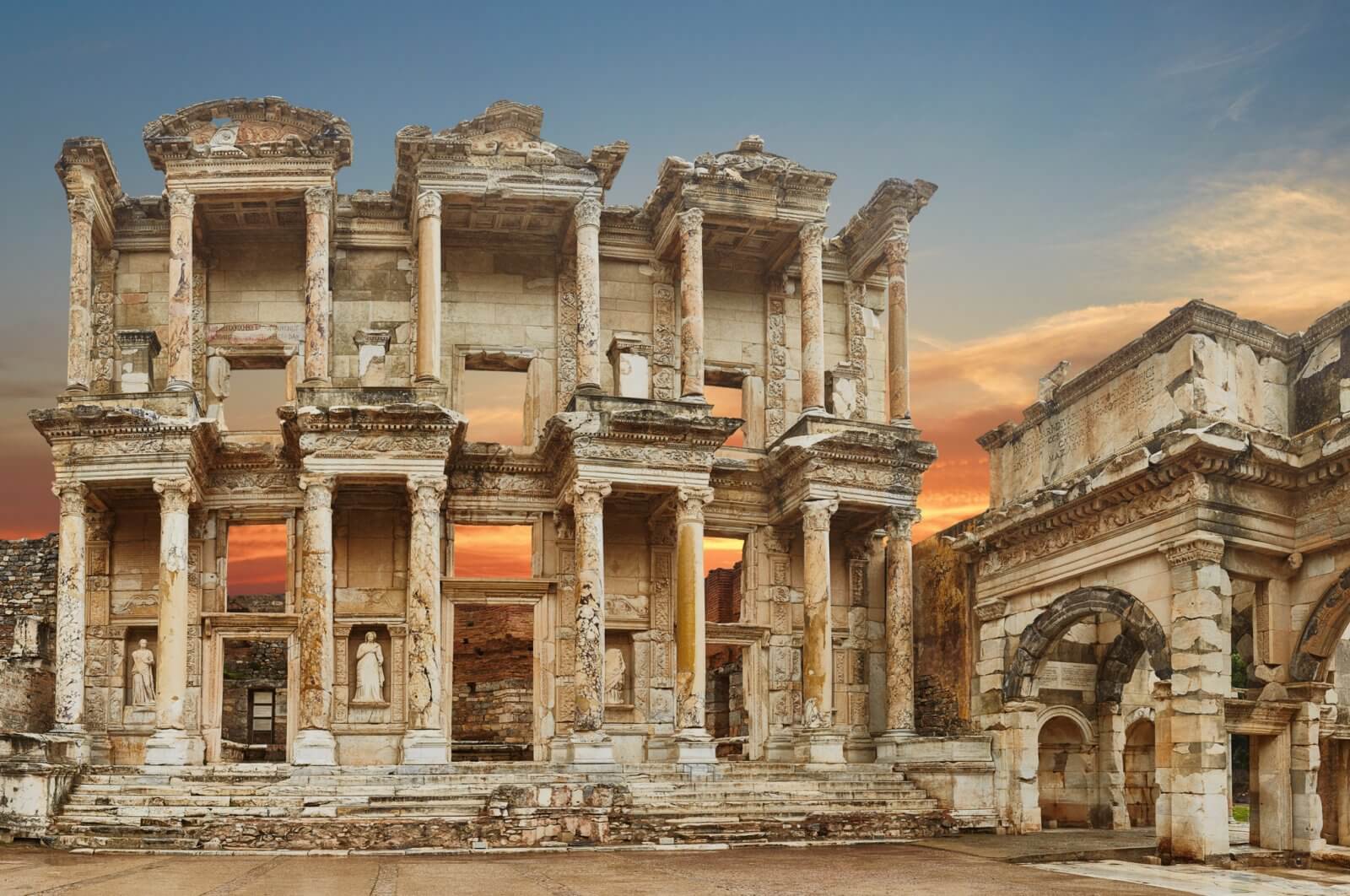
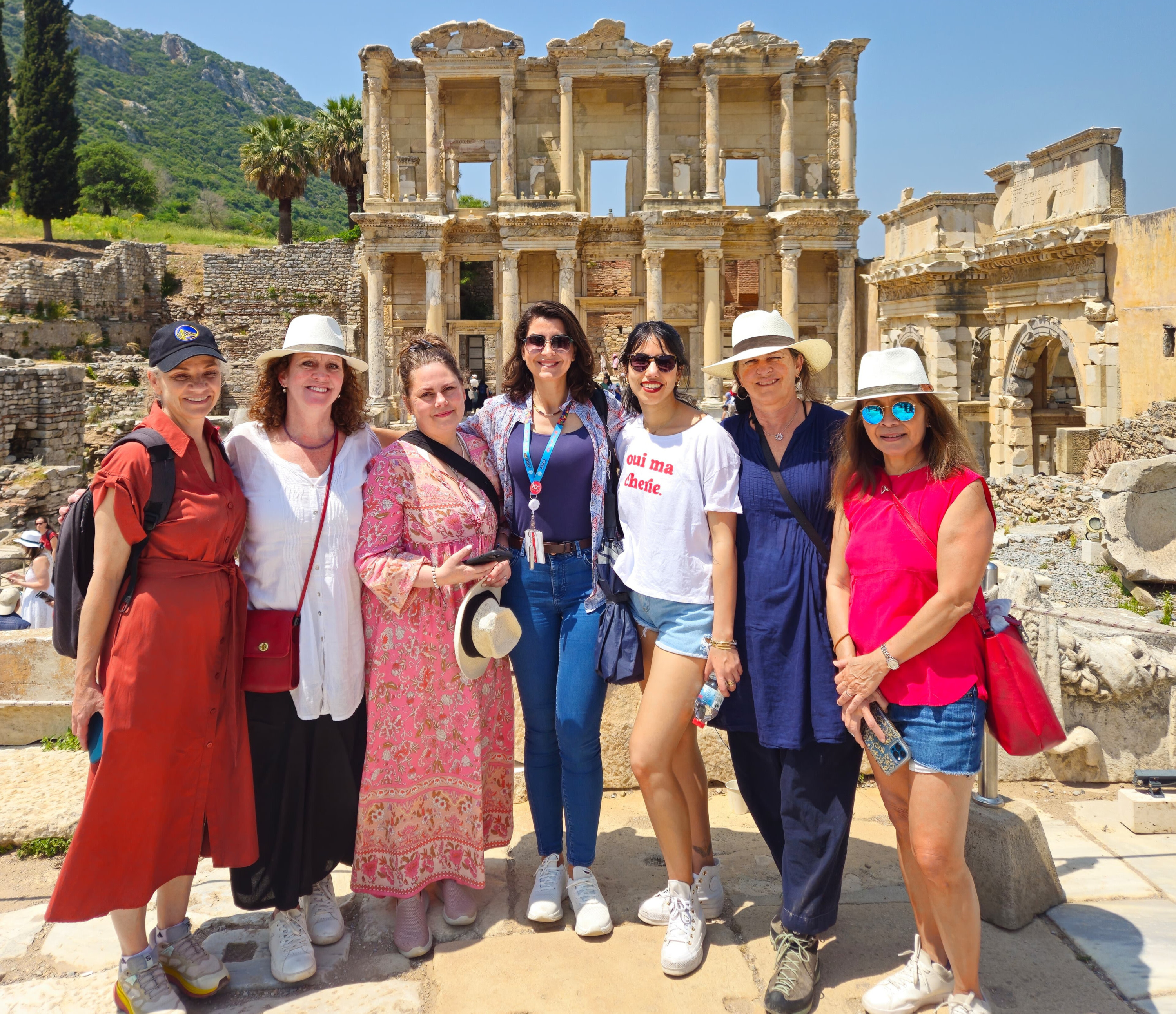
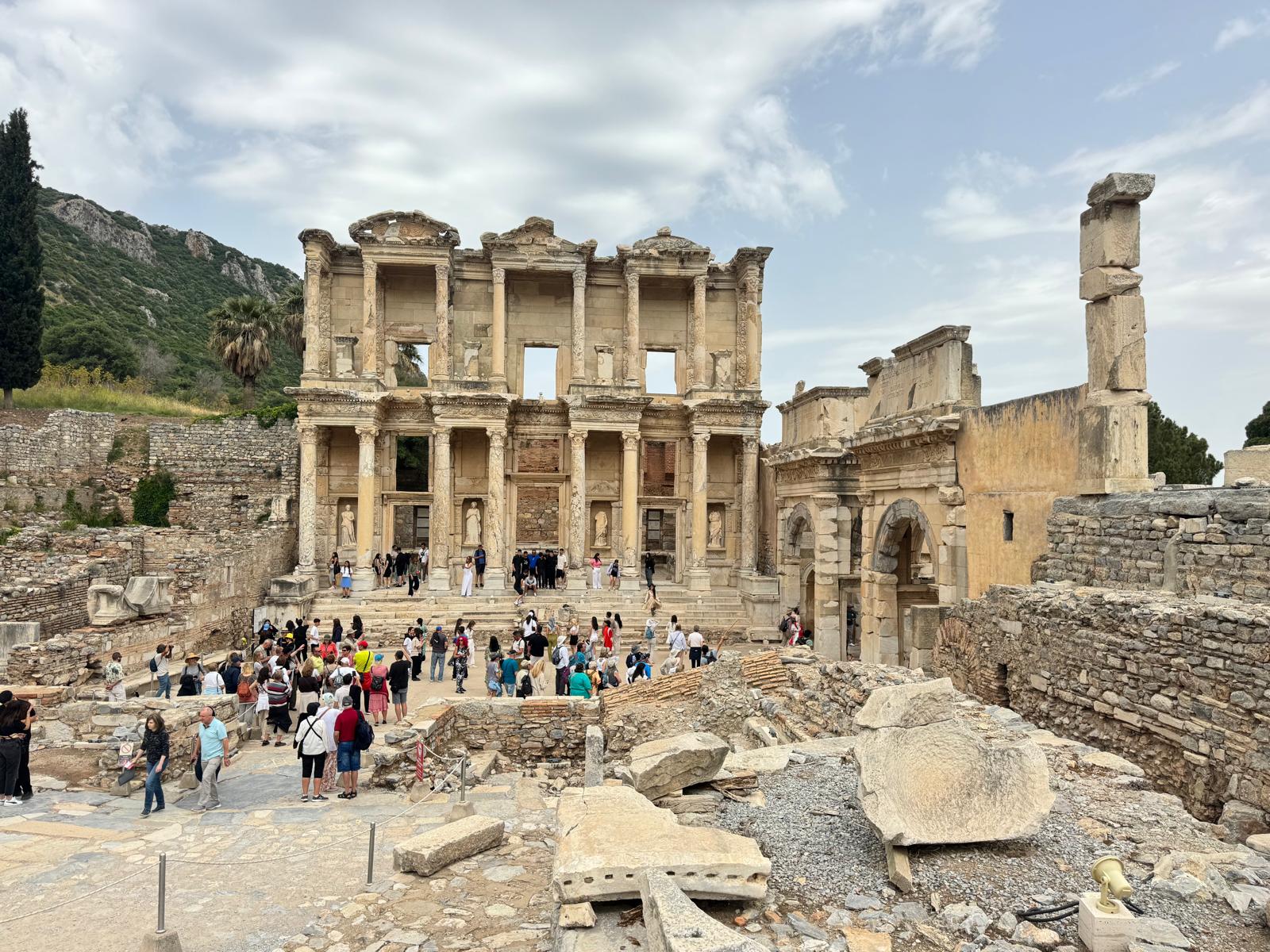
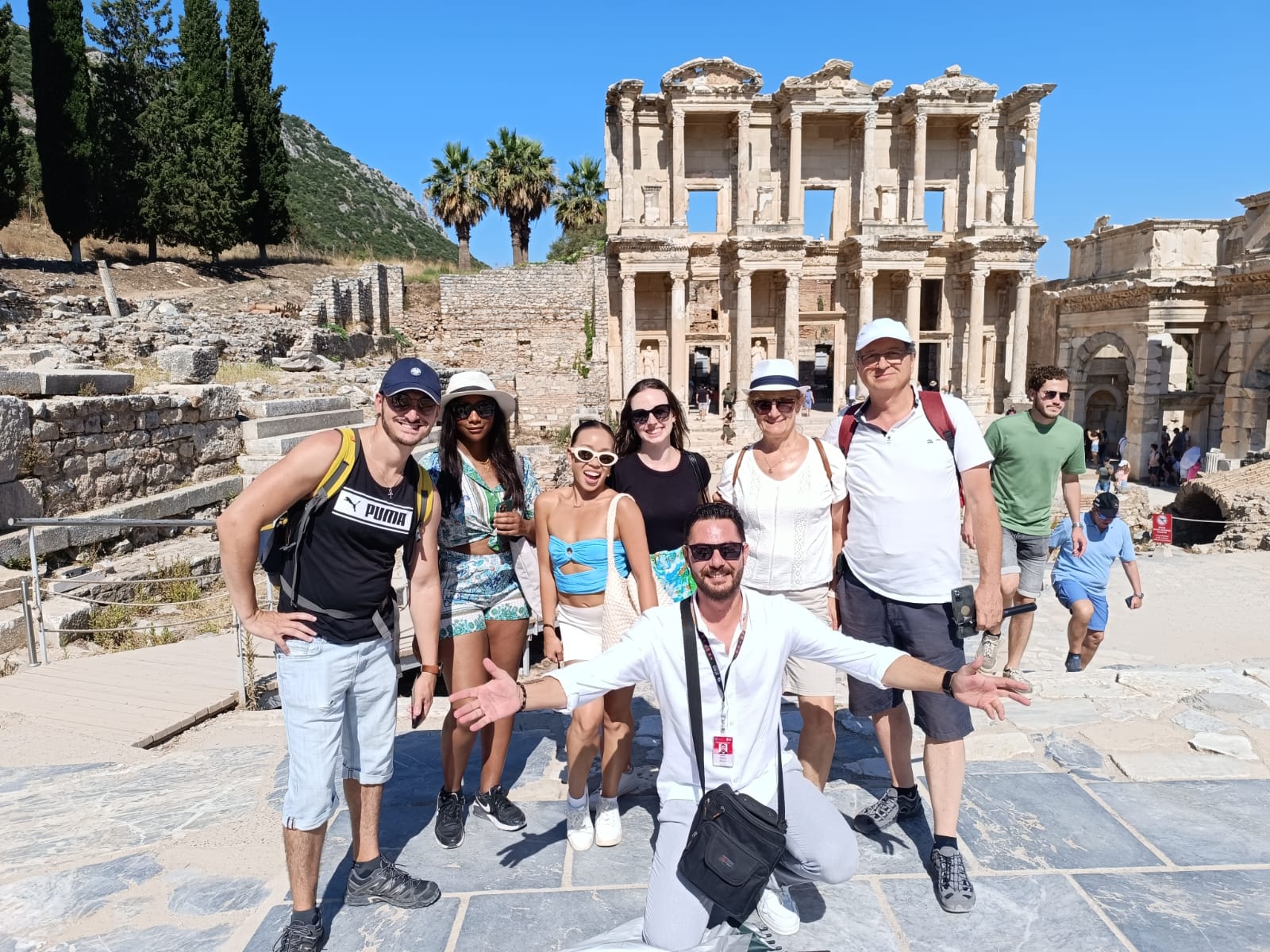
excavated over the years, including the Library of Celsus which was immense and
has statues and reliefs, the Temple of Hadrian, with a colourful frieze, the
Theatre, which was used for chariots races and the Odeon which was used for
meetings and concerts. After a traditional Turkish lunch you will also see the
House of the Virgin Mary and the Archaeological Museum before being dropped in
Kusadasi or Izmir. (L)
Available options
Ephesus Tour from Izmir City by Khalid
Pickup included
What's included
Private transportation
Soda/Pop
WiFi on board
Bottled water
Lunch
Air-conditioned vehicle
Fuel surcharge
Parking Fees
Detailed itinerary
1
Stop 1
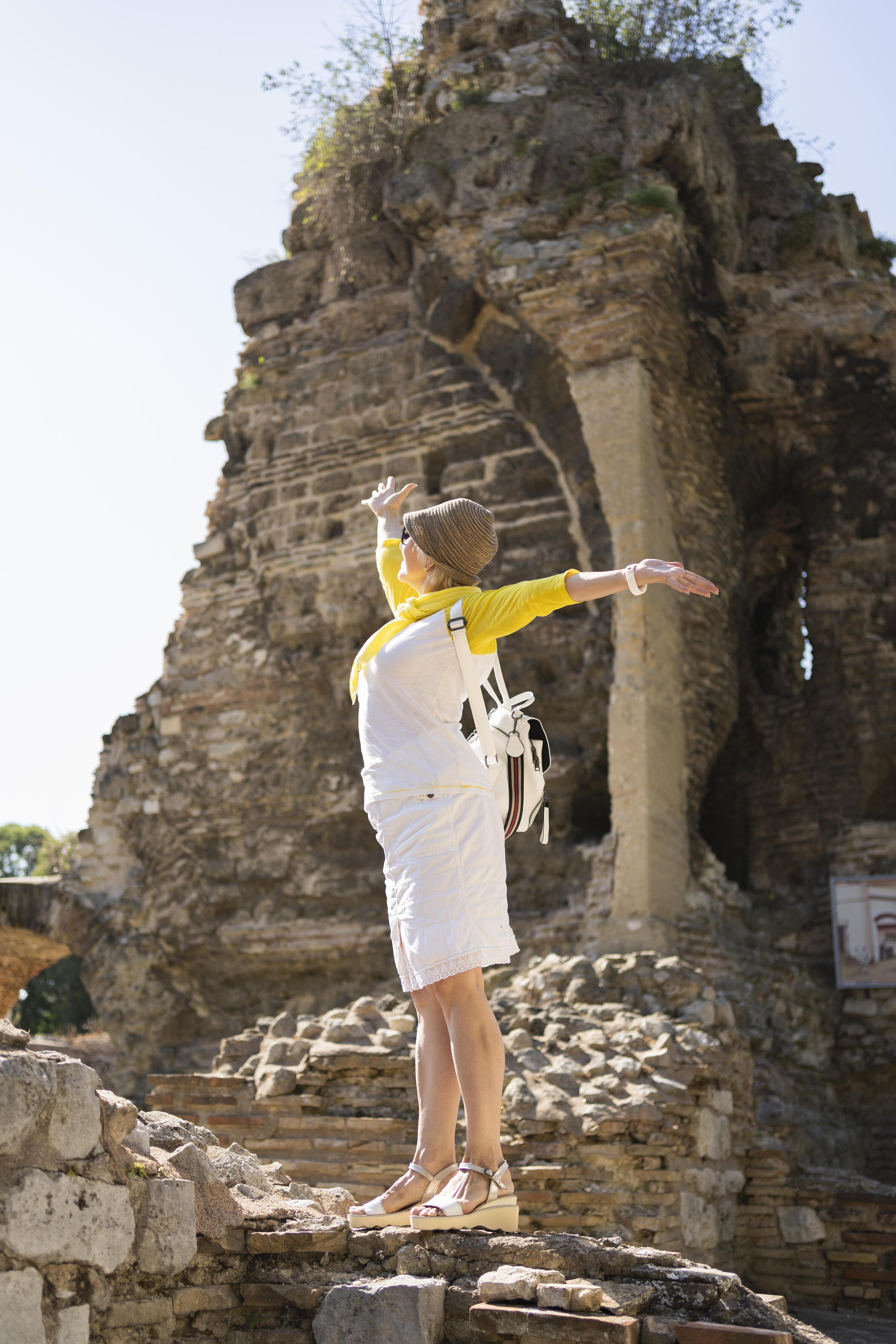
A visit to Efes (Ephesus) - once the commercial centre of the ancient world - is a highlight of any visit to Turkey The city, whose wealth and patronage supported its splendid architectural program, was dedicated to the goddess Artemis. Her enormous temple, once considered one of the Seven Wonders of the Ancient World and rebuilt several times, dates in its latest form from the third century B.C. The ruins also include a theatre, gymnasium, agora and baths, as well as the Library of Celsus.
This tour offers a complete perspective about the Ancient City of Ephesus and the Roman way of living. In Ephesus, you will see the:
• Magnesia Gate,
• Curetes Street,
• Odeon,
• Trajan Fountain,
• Temple of Hadrian,
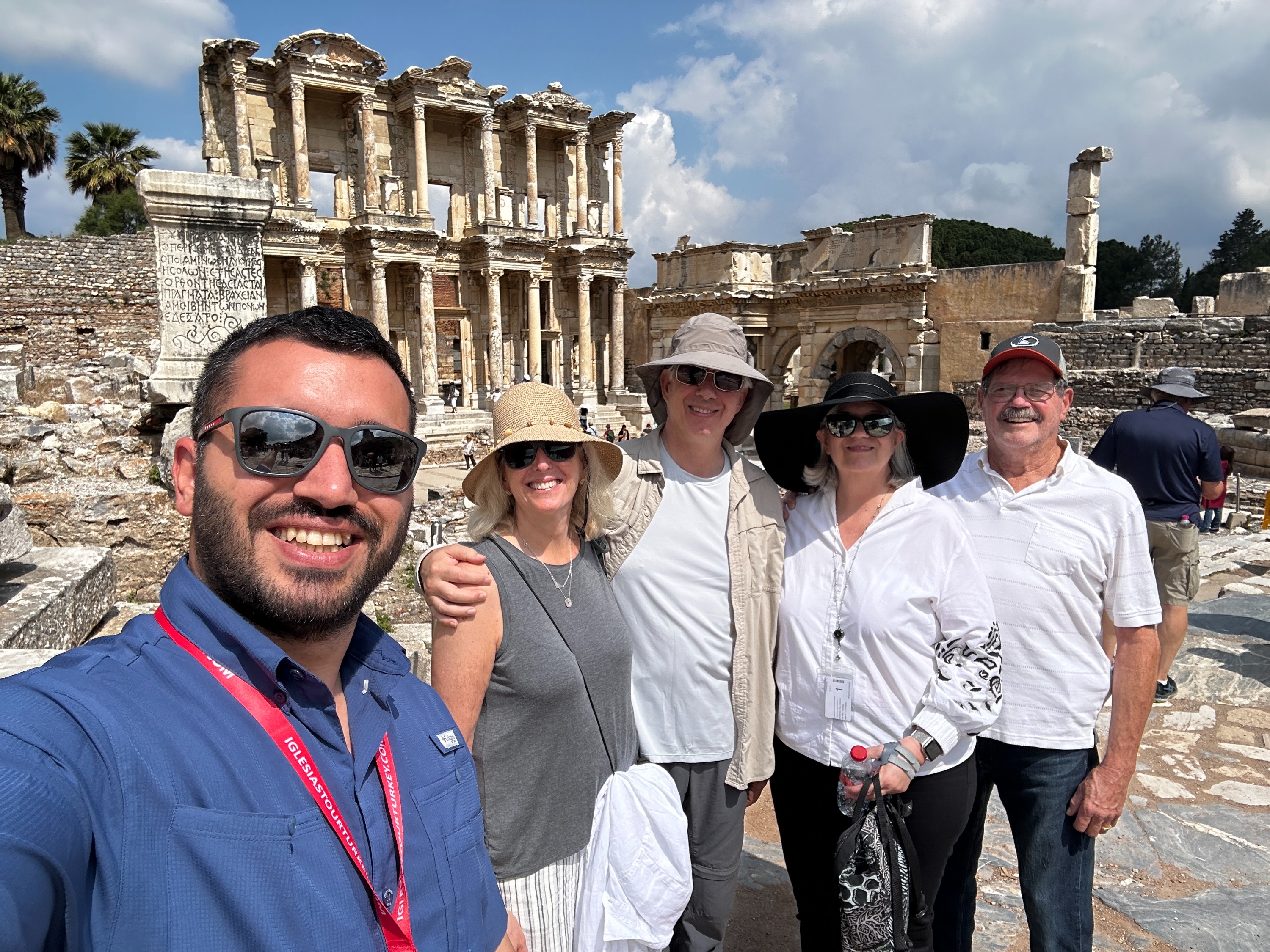
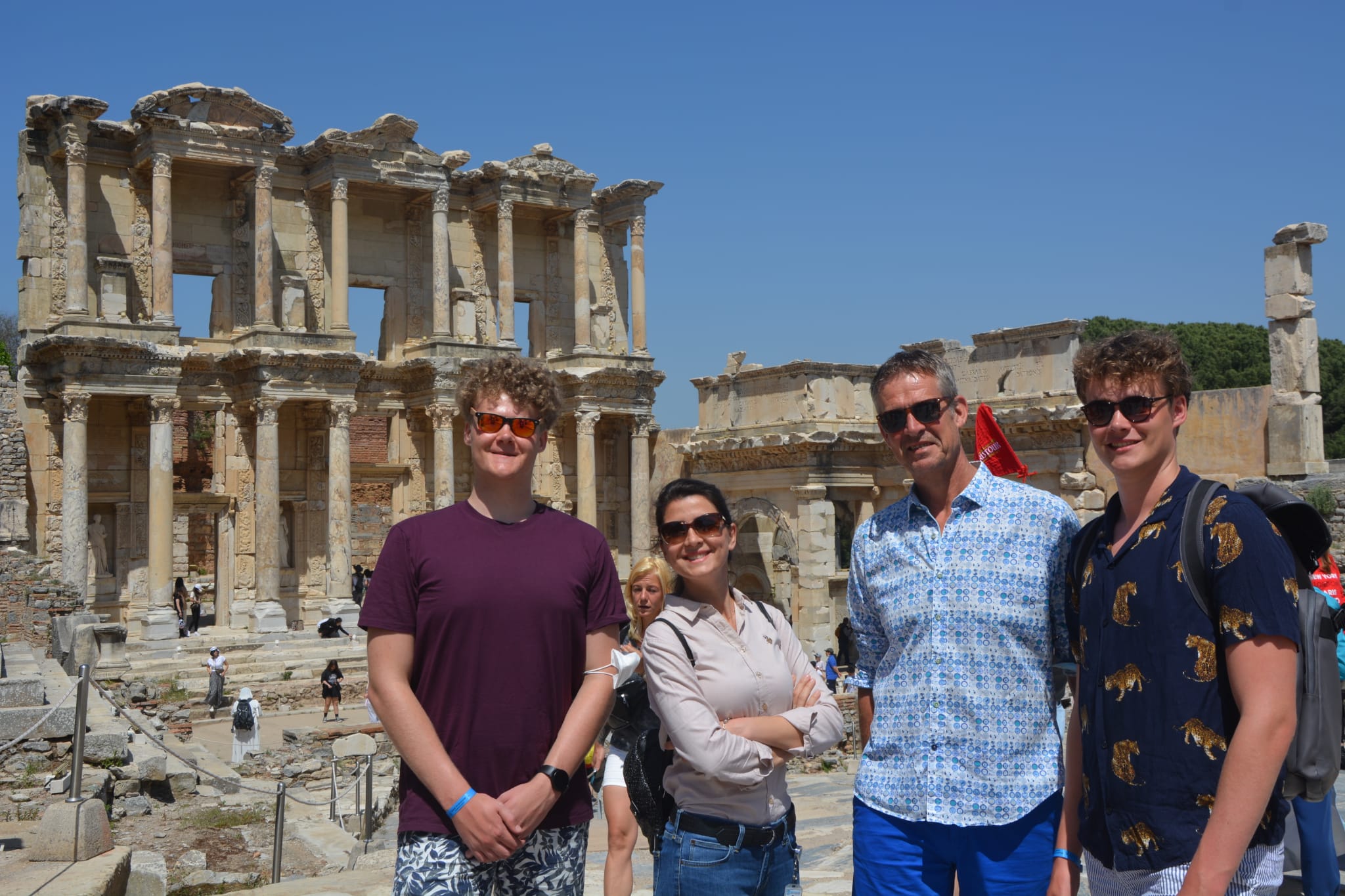
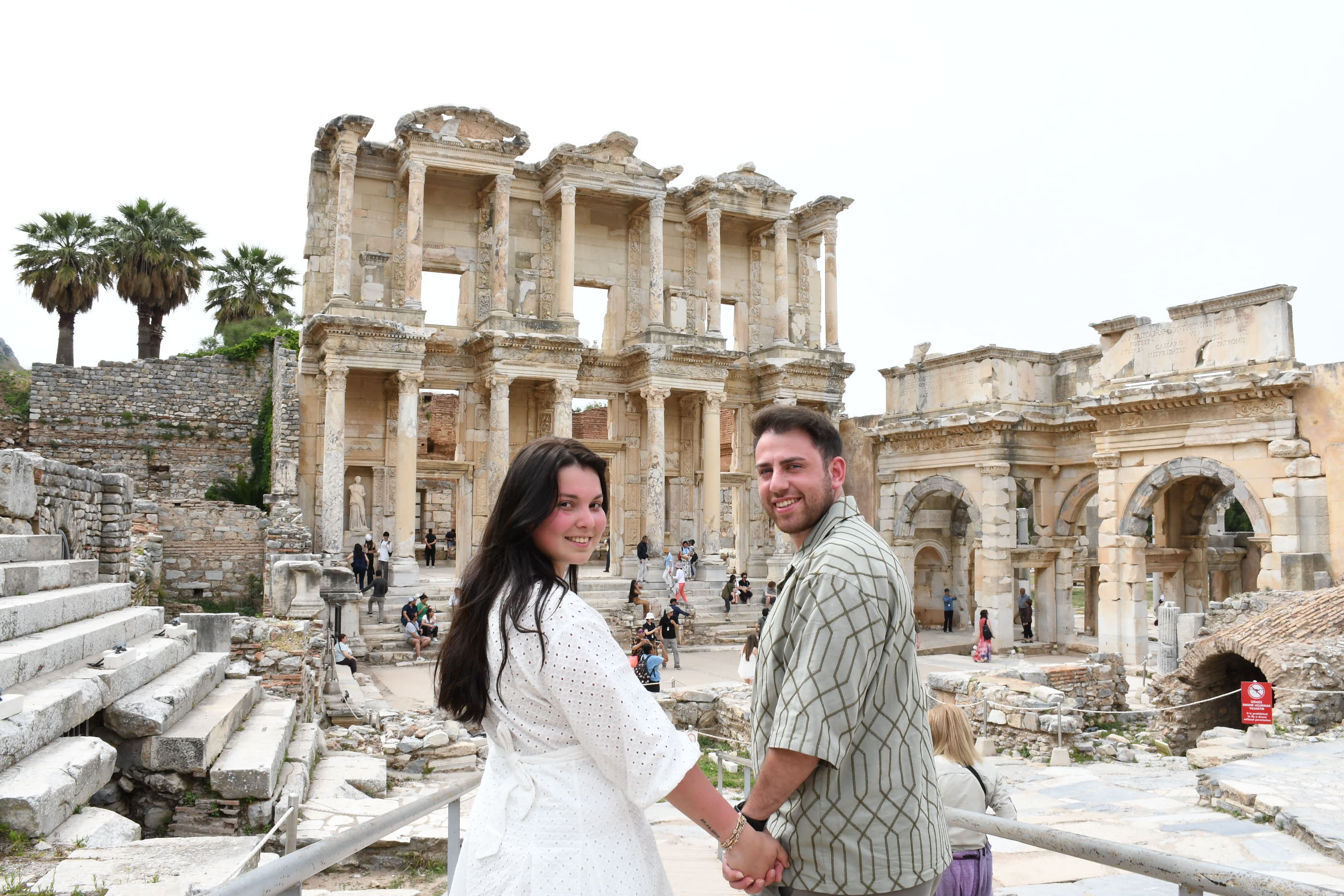
• Celsus Library,
• Grand Theatre,
• Arcadian Way.
2
Curetes street takes its name from the priests, who are called as Curetes, later. Their names were written in Prytaneion. It is one of the 3 main avenues of the Ephesians between the Hercules Gate and Celsus Library. On the sides of the street there were fountains, monuments, statues and shops. There were two-story shops on the south side. Unfortunately, numerous strong earthquakes in Ephesus, damaged many important structures on Curetes Street. The damaged columns have been restored and reconstructed after the earthquake. The columns you see today have been replaced by the other ones that were brought from the different buildings in the city. While walking, you can easily spot the differences of the design of these columns.
3
Trajan Fountain was built on the east side of the Hadrian Temple at the north end of Curetes Street. In the second century AD an inscription on the fountain says it was built and erected in honour of Emperor Trajan. This spring is considered one of Ephesus' three most majestic springs. The Trajan Fountain Pool, surrounded by columns and statues, was about 20x10 metres. Some of the statues of the family members of Trajan currently displayed in Ephesus Museum.
4
Stop 4
The Odeon of Antique Ephesus is a small, semi-circular theatre built in the 2nd century A.D and funded by Publius Vedius Antonius and Flavia Paiana, his wife. The building would have been a place for political meetings, social events, concerts and plays.
5
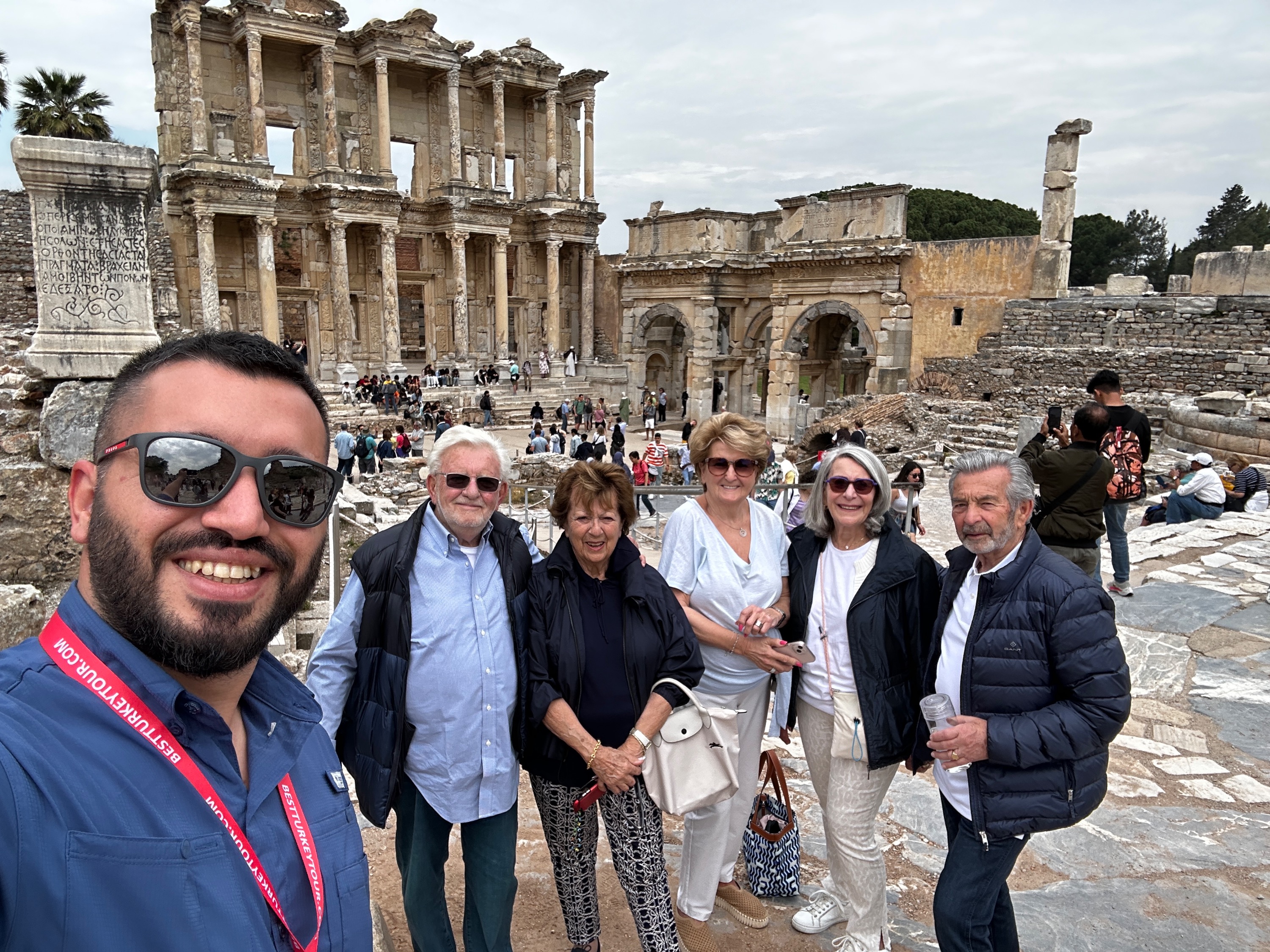
Wander among the beautifully preserved remains of the library built for a great lover of knowledge, the Roman Senator Celsus. The Celsus Library was one of the largest libraries in the ancient world, housing over 12,000 rolls and is the Senator's mausoleum. Come and become enthralled in this delightful place of wisdom.
6
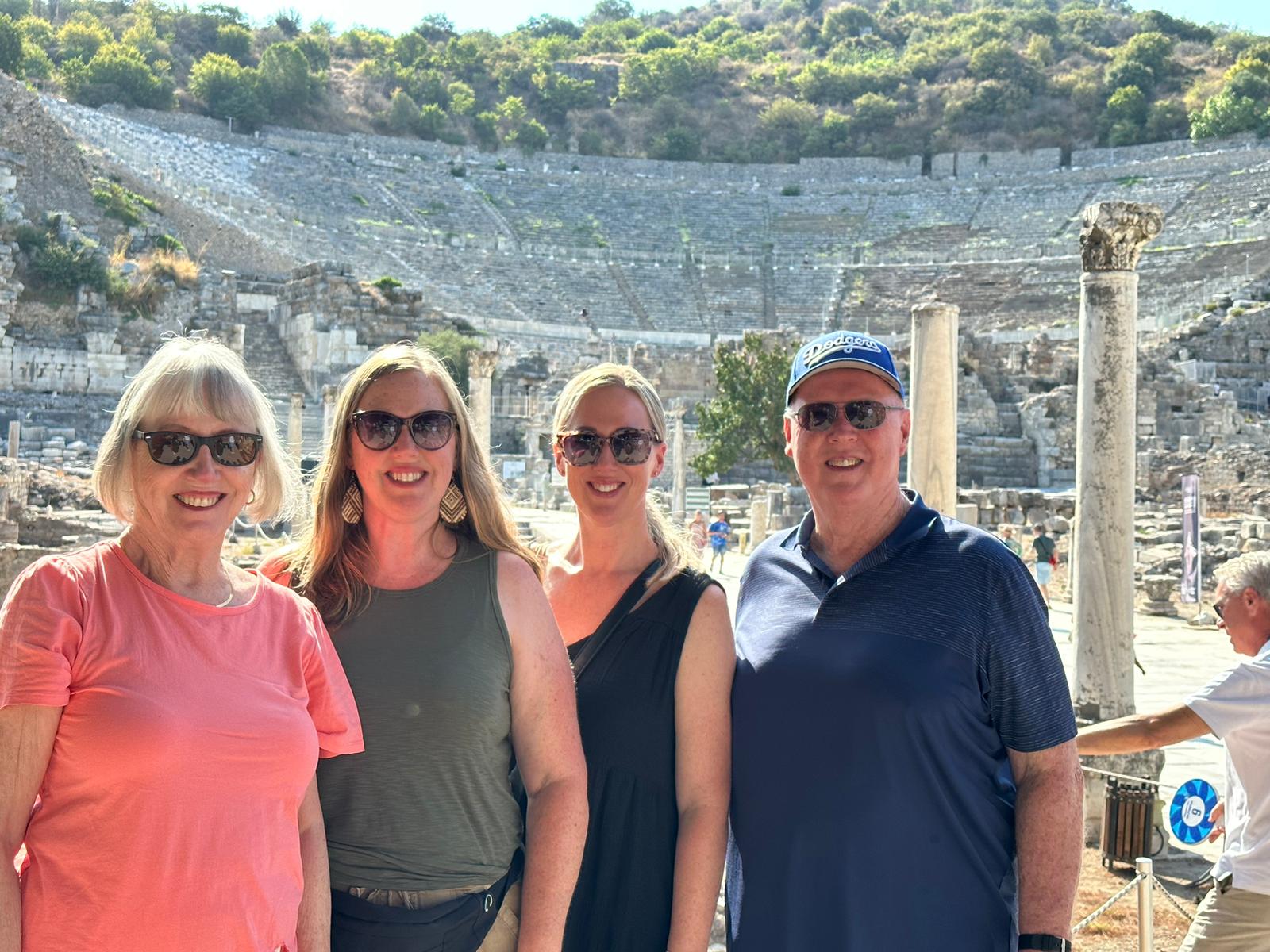
This theatre has the 24.000 people capacity, consists of three horizontal sections. Today, thousands of visitors enjoy the splendour of the breath-taking Grand Theatre in Ephesus.
7
Stop 7
This impressive temple is dedicated to the emperor Hadrian and it is one of the most beautifully ornamented structures in Ephesus we must say. P. Quintilius built this masterpiece before 138 A.D for the Emperor who came to visit Ephesus from Athens. The temple's façade has four Corinthian columns that support a curved ark with a relief of Tyche, the goddess of victory, in the middle. Emperor Hadrian has been regarded as one of the Good Five Emperors. Nervus, Trajan, Hadrian, Antoninus Pius and Marcus Aurelius managed to win support and cooperation from the Senate, which had not been accomplished by former emperors. Therefore, we can use this term for all those emperors. The building is not only a temple, but rather a monument, and it also was devoted to the goddess Artemis and the Ephesians.
8
Stop 8
Artemis Temple was one of the seven wonders of the world; it was also referred to as Artemisium, is very close to Ephesus. Croesus, the king of Lydia, built this large temple around 550 BC and was reconstructed after it was burnt by a madman named Herostratus in 356 BC. The Artemisium was not only famous for its large dimensions, more than 350 by 180 feet (approximately 110 by 55 m), but also for its magnificent works of art. In 262 CE the temple was destroyed by invading Goths in 262 CE and never rebuilt again. Little remains of the temple is in the British Museum. There are many fragments, particularly sculptured columns displayed in the museum. Traces of both Croesus' temple and of that of the 4th century and of three previously smaller ones have been revealed in the excavation.
9
Stop 9
House of Virgin Mary is the house that Mother Mary lived her days after the Resurrection of Christ. She was brought to Ephesus by Apostle John. House of Virgin Mary is one of the pilgrimage sites for Christians where she had her recently time and died. Pope Paul VI visited the shrine in 1967, Pope John Paul II also visited the shrine in 1979 and finally Pope Benedictus XVI visited the House of Virgin Mary in November 25, 2006. Here you will walk the same spiritual path as experienced by various Popes. This is considered one of the great pilgrimage sites for Catholics and Christians worldwide, where you will have the opportunity to drink the holy water, known to many for it healing energies, from the sacred spring located on the Virgin Mary grounds. Virgin Mary’s House is recognized by the Catholic Church.
10
Stop 10
This reopened lovely museum houses several artefacts from the great Temple of Artemis in Ephesus and finds from many other important antiques, Hellenistic and Roman cities of the region. The architectural objects excavated in Ephesus are the best in the region. The museum's artefacts are rotating so, you can find various artefacts every time you visit.
What's not included
Gratuities
Available languages
Guide guide
EN
TR
Important information
Infants are required to sit on an adult’s lap
Specialized infant seats are available
Service animals allowed
Infants and small children can ride in a pram or stroller
Transportation options are wheelchair accessible
Wheelchair accessible
Travelers should have at least a moderate level of physical fitness
About Izmir
Izmir is a vibrant coastal city on Turkey's Aegean coast, known for its rich history, beautiful beaches, and lively cultural scene. As one of Turkey's most cosmopolitan cities, it offers a blend of ancient ruins, modern amenities, and a relaxed Mediterranean lifestyle.
Top Attractions
Agora of Smyrna
An ancient Roman agora located in the heart of Izmir. It's one of the most important historical sites in the city.
Historical
1-2 hours
Free
Kadifekale
A historic castle offering panoramic views of the city and the Aegean Sea.
Historical
1-2 hours
Free
Izmir Archeological Museum
A museum showcasing a vast collection of artifacts from the region's ancient history.
Museum
1-2 hours
Moderate (around 50 TRY)
Kordon
A beautiful waterfront promenade stretching along the Aegean coast.
Beach
Flexible, can be enjoyed at any time
Free
Çeşme
A popular beach resort town near Izmir, known for its beautiful beaches and thermal springs.
Beach
Full day
Varies by activity and accommodation
Must-Try Local Dishes
Köfte
Grilled or fried meatballs made from ground beef or lamb, often served with rice or bread.
Main Course
Contains meat
Boyoz
A type of pastry filled with a spiced beef mixture, typically eaten for breakfast.
Breakfast
Contains meat and gluten
Kumru
A sandwich made with a special type of bread, filled with various ingredients like cheese, tomatoes, and peppers.
Sandwich
Vegetarian options available
Midye Dolma
Stuffed mussels filled with spiced rice and pine nuts.
Snack
Contains seafood and gluten
Popular Activities
Hiking in nearby mountains
Water sports in Çeşme
Sunbathing on the beach
Visiting thermal baths in Pamukkale
Exploring ancient ruins in Ephesus
Visiting museums in Izmir
Swimming in the Aegean Sea
Boat trips to nearby islands
Best Time to Visit
June to August
This is the peak tourist season with warm weather, clear skies, and vibrant nightlife. It's ideal for beach activities and outdoor events.
25°C to 35°C
77°F to 95°F
Practical Information
Language
- Official: Turkish
- Widely spoken: English, German
- English: Moderately spoken in tourist areas
Currency
Turkish Lira (TRY)
Time Zone
GMT+3
Electricity
220VV, 50HzHz
Safety Information
Overall Safety Rating: Generally safe
Izmir is generally safe for tourists, but it's important to be aware of your surroundings and take precautions to avoid petty crime.
Important Precautions:
- • Be cautious of your belongings in crowded areas
- • Use licensed taxis and insist on the meter being turned on
- • Be wary of strangers offering unsolicited help or services
Getting there
By air
- Adnan Menderes Airport • 20 km south of the city center
By train
Basmane Railway Station
By bus
Izmir Otogar (Main Bus Terminal)
Getting around
Public transport
Affordable and efficient, with frequent services. Buses are the most common form of public transport in Izmir.
Taxis
Available • Apps: BiTaksi, Uber
Rentals
Car, Bike, Scooter
Neighborhoods
Alsancak
Karsiyaka
Gözlüce
Bornova
Day trips
Çeşme
90 km • Full day
A popular beach resort town with beautiful beaches and thermal springs.
Selçuk
80 km • Full day
A town near Izmir with significant historical and archaeological sites.
Sirince
70 km • Full day
A charming village known for its wine production and traditional architecture.
Festivals
Izmir International Festival • July to August
Izmir Short Film Festival • April
Izmir Jazz Festival • October
Pro tips
- Visit the Agora of Smyrna early in the morning to avoid the heat and crowds
- Try local street food like kumru and midye dolma for an authentic culinary experience
- Explore the city's neighborhoods on foot or by bike to discover hidden gems and local culture
- Attend a local festival or event to immerse yourself in Izmir's vibrant cultural scene
- Take a day trip to Çeşme or Selçuk for a relaxing beach getaway or a historical adventure
From $25
per person
Price varies by option
Secure booking
Free cancellation available
Instant confirmation