Delhi: Old & New Delhi full Day Private tour with Guided Tour
Active
11h - 12h
For a full refund, cancel at least 24 hours before the scheduled departure time.
Instant confirmation
Mobile or paper ticket accepted
About this experience
*Explore Mughal History and Modern History during the local tour in Delhi.
*Rickshaw Ride in the crowded locations and the Nose of Delhi, which is known as Chandni Chowk.
* Unesco World Heritage buildings, Mughal Architecture, First World War Memorial, the President's house, and religious places.
*mouthbreathing food in a local restaurant and food of Mughal, North India,
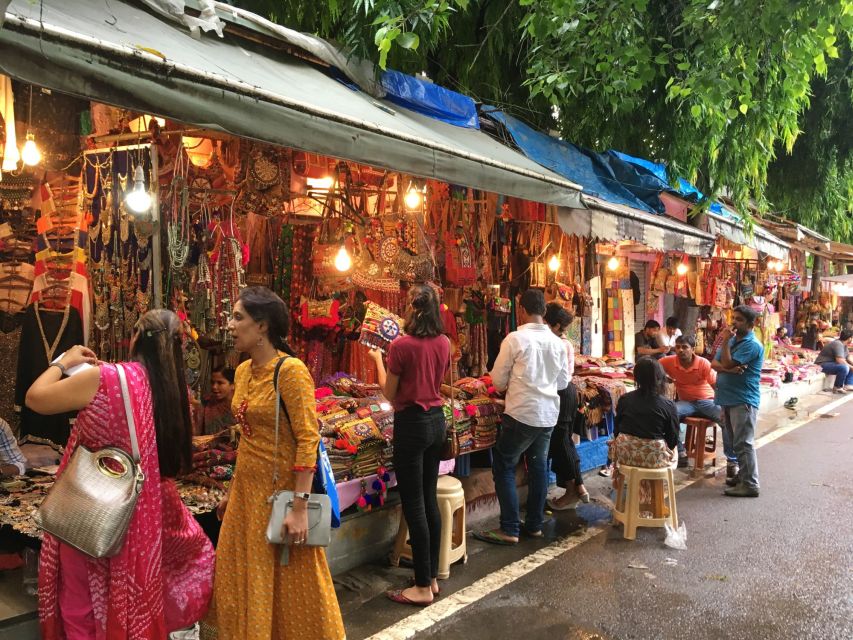
*local shopping of spice market, jewellery, pashmina, and handmade rugs.
Available options
1 to 2 pax allowed
Etios, <br/>Pickup included
What's included
Pickup and drop
Air-conditioned vehicle
Rikhsha Ride in old delhi tuk tuk (if choose options)
Parking Fees
Professional Tour Guide
Detailed itinerary
1
Stop 1
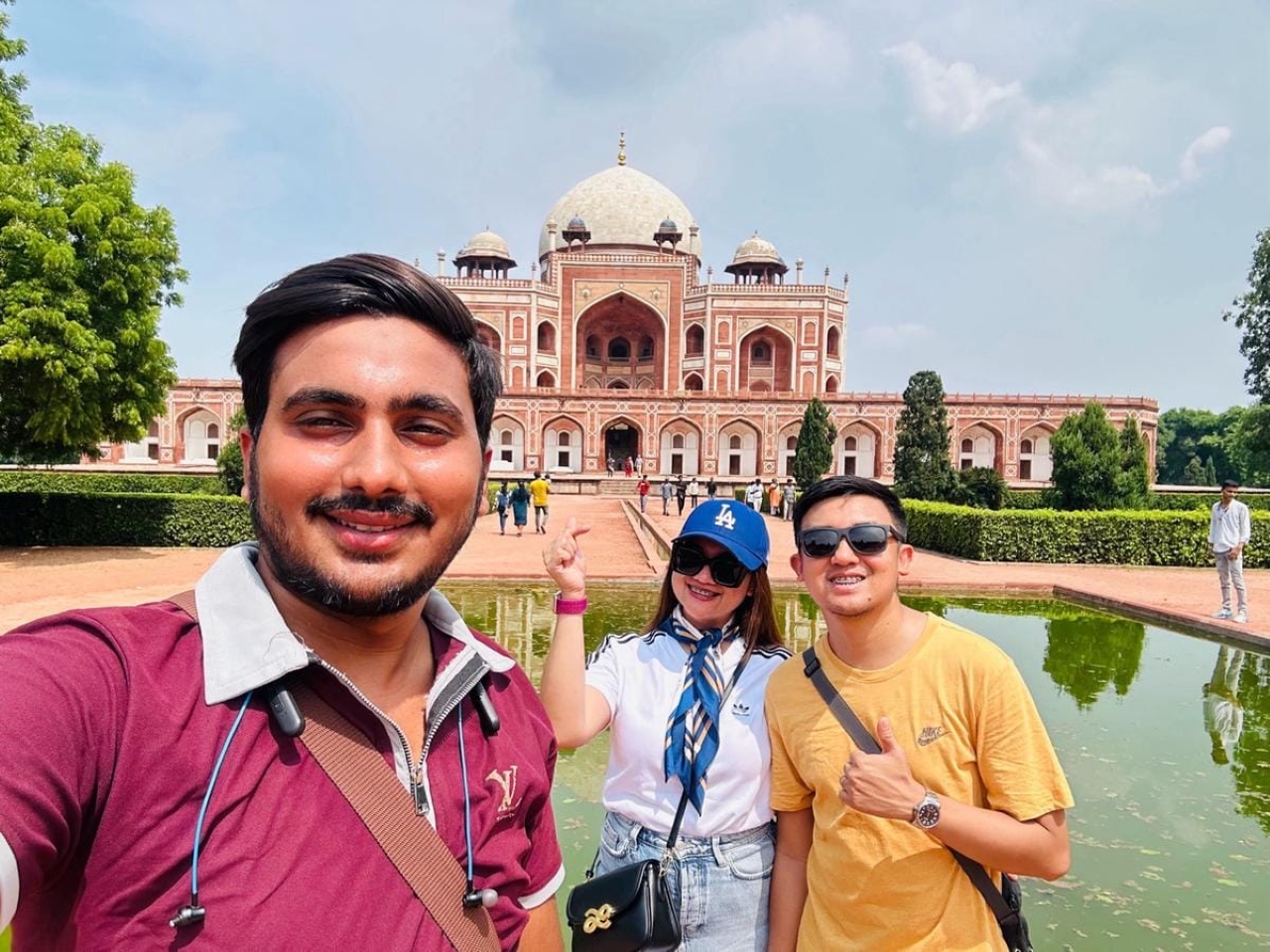
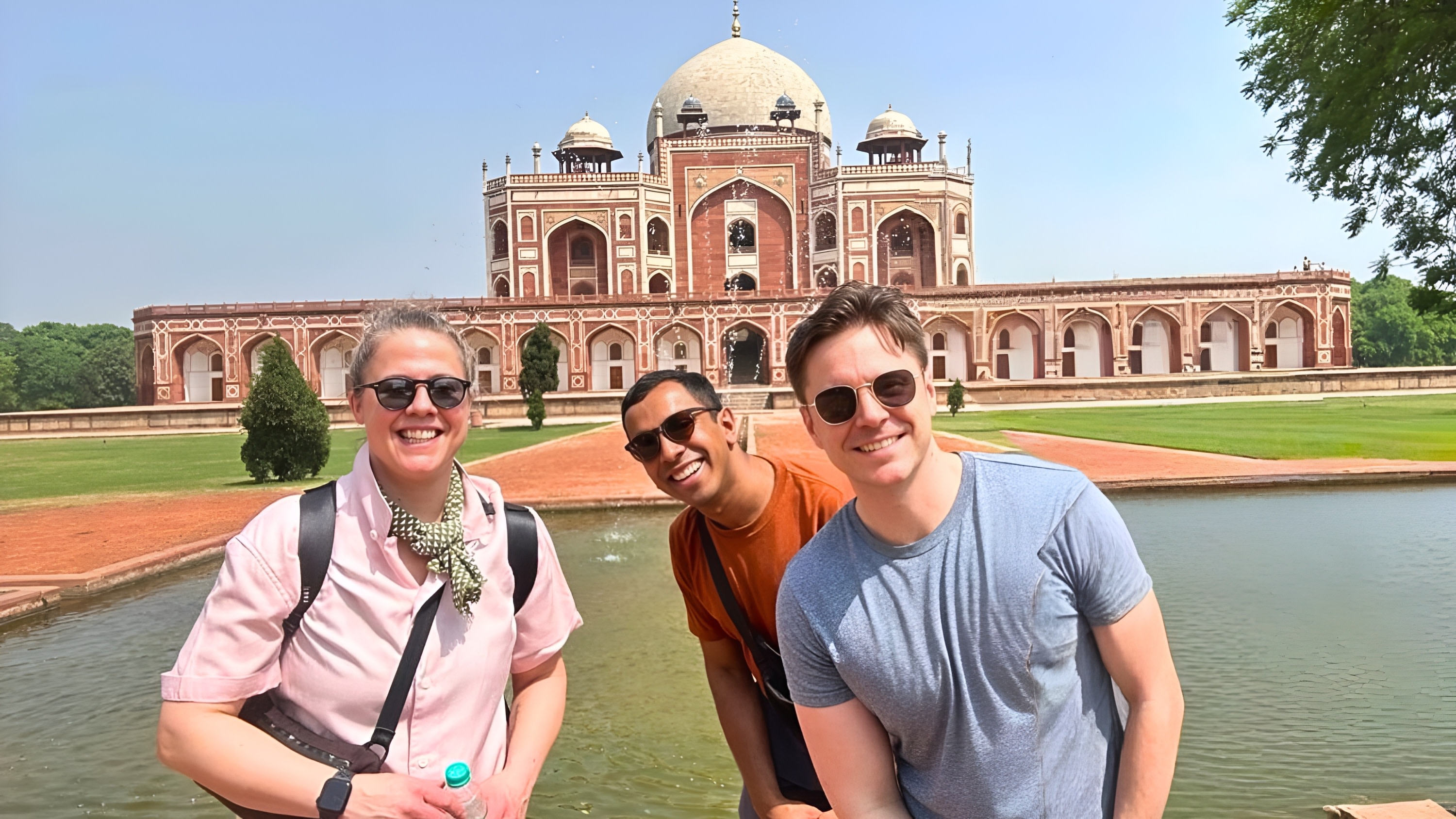
Humayun's tomb was commissioned by his first wife and chief consort, Empress Bega Begum (also known as Haji Begum). Construction began in 1565 and was completed in 1572. It cost 1.5 million rupees, paid for entirely by the Empress. Bega Begum was so heartbroken by her husband's death that she dedicated her life to a single purpose: the construction of a memorial for him on a site near the Yamuna River in Delhi, which would be the most magnificent mausoleum in the empire. According to the Ain-i-Akbari, a detailed 16th-century document written during Akbar's reign, Bega Begum supervised the construction of the tomb after returning from Mecca and performing the Hajj pilgrimage.
2
Stop 2
The Qutub Minar was commissioned by Qutb-ud-din Aibak, the first ruler of the Delhi Sultanate, around 1192, along with the Quwwat-ul-Islam Mosque. The mosque complex is one of the earliest surviving mosques in the Indian subcontinent. The minar is named after Qutb-ud-din Aibak, or Qutbuddin Bakhtiyar Kaki, a Sufi saint. Its ground floor was built on the ruins of the Lal Kot fortress of Dillika. Aibak's successor, Iltutmish, added three more stories. The minar's top floor was damaged by lightning in 1369 and was rebuilt by Firoz Shah Tughlaq, who added another story. In 1505, an earthquake damaged the Qutub Minar. Major Robert Smith of the British Indian Army renovated the tower in 1828 and installed a pillared dome over the fifth story, thus creating a sixth. The dome was removed in 1848 on the instructions of Viscount Hardinge, then Governor-General of India.
3
Stop 3
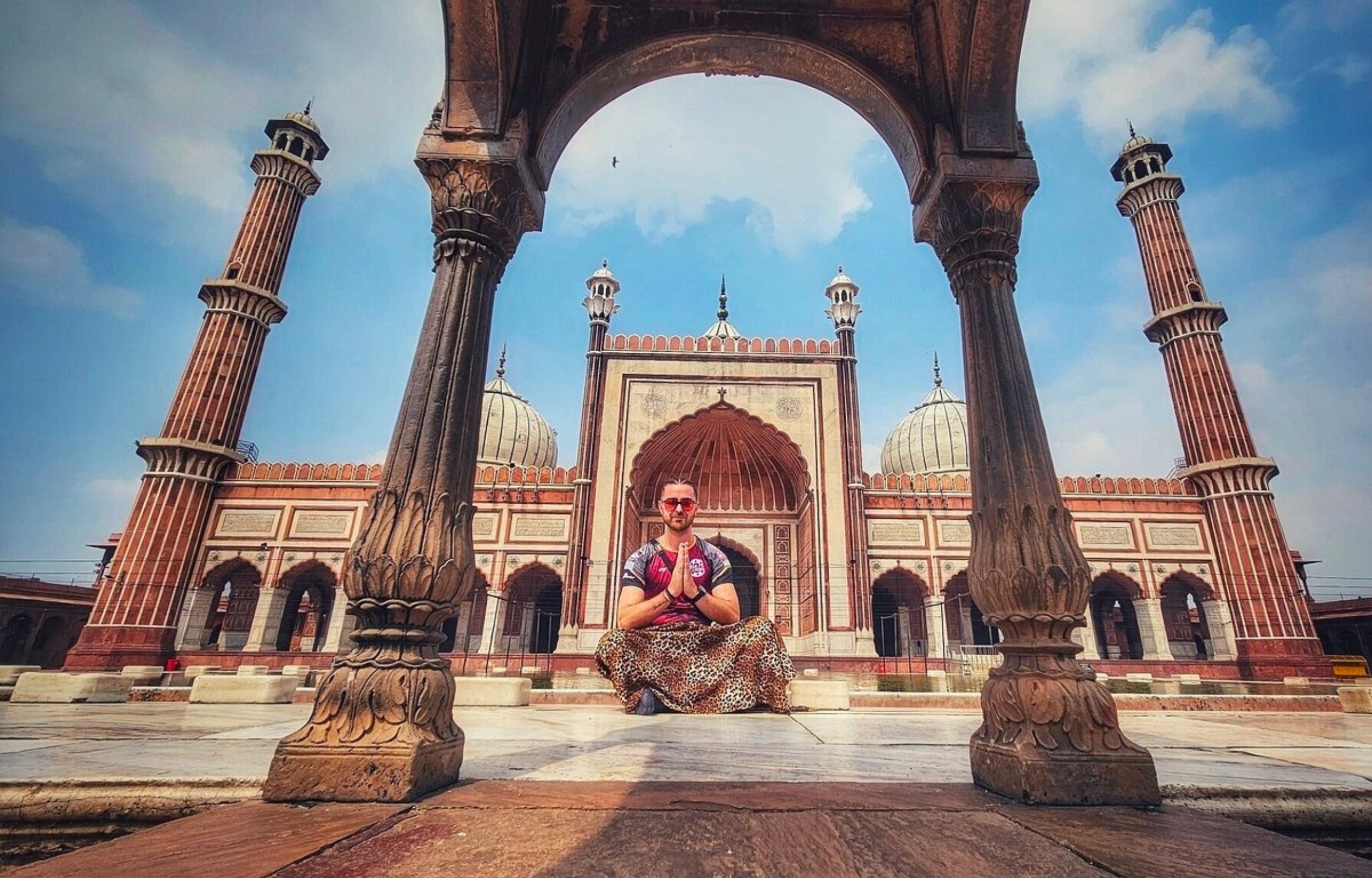
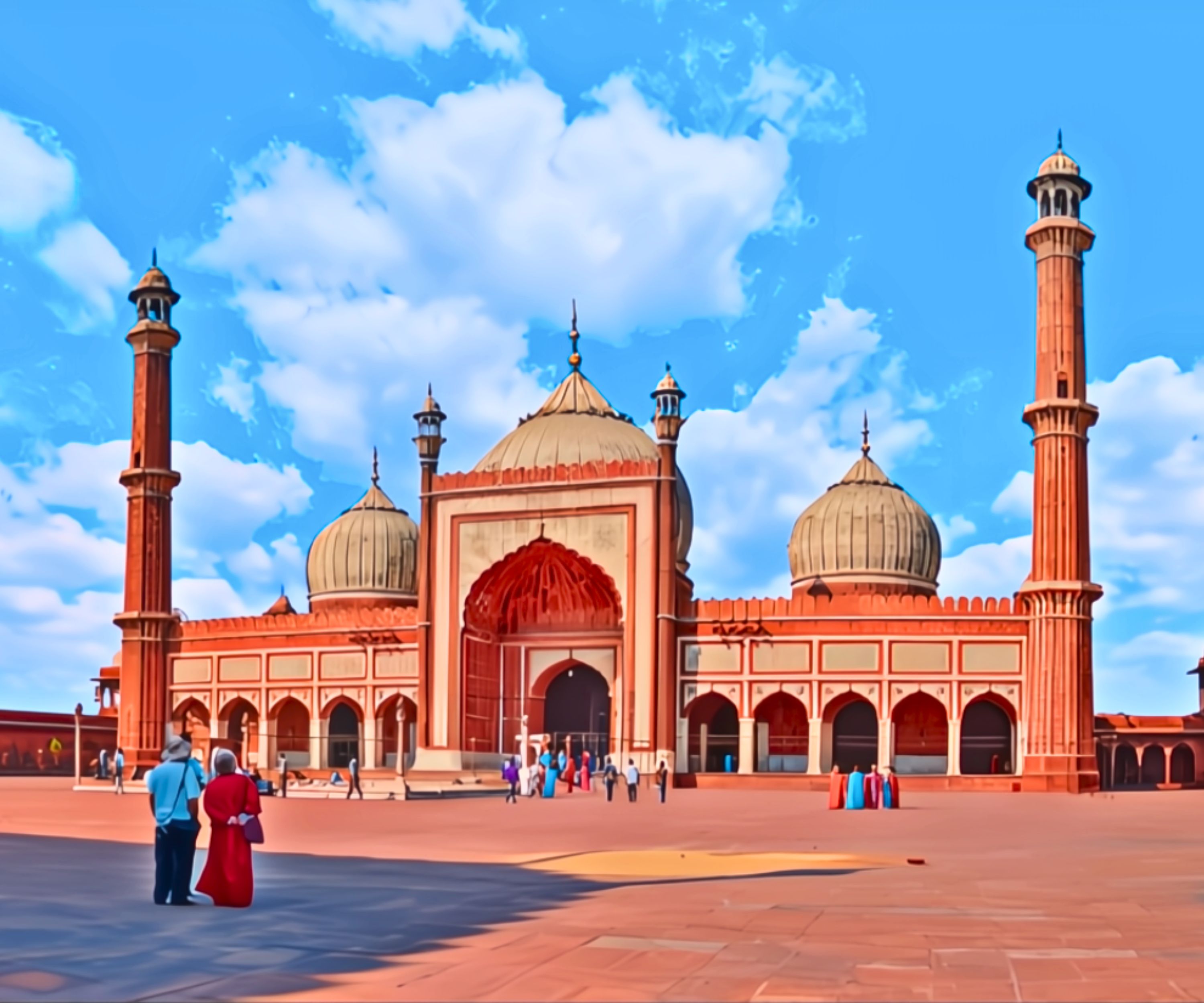
The Masjid-e-Jahan Numa, commonly known as the Jama Masjid of Delhi, is one of the largest mosques in India. Built by the Mughal emperor Shah Jahan between 1650 and 1656 for a cost of one million rupees, it was inaugurated by Imam Syed Abdul Ghafur Shah Bukhari from Bukhara, in present-day Uzbekistan.
There is no entry fee, but there is a photography charge of 300 rupees for foreigners.
4
Stop 4
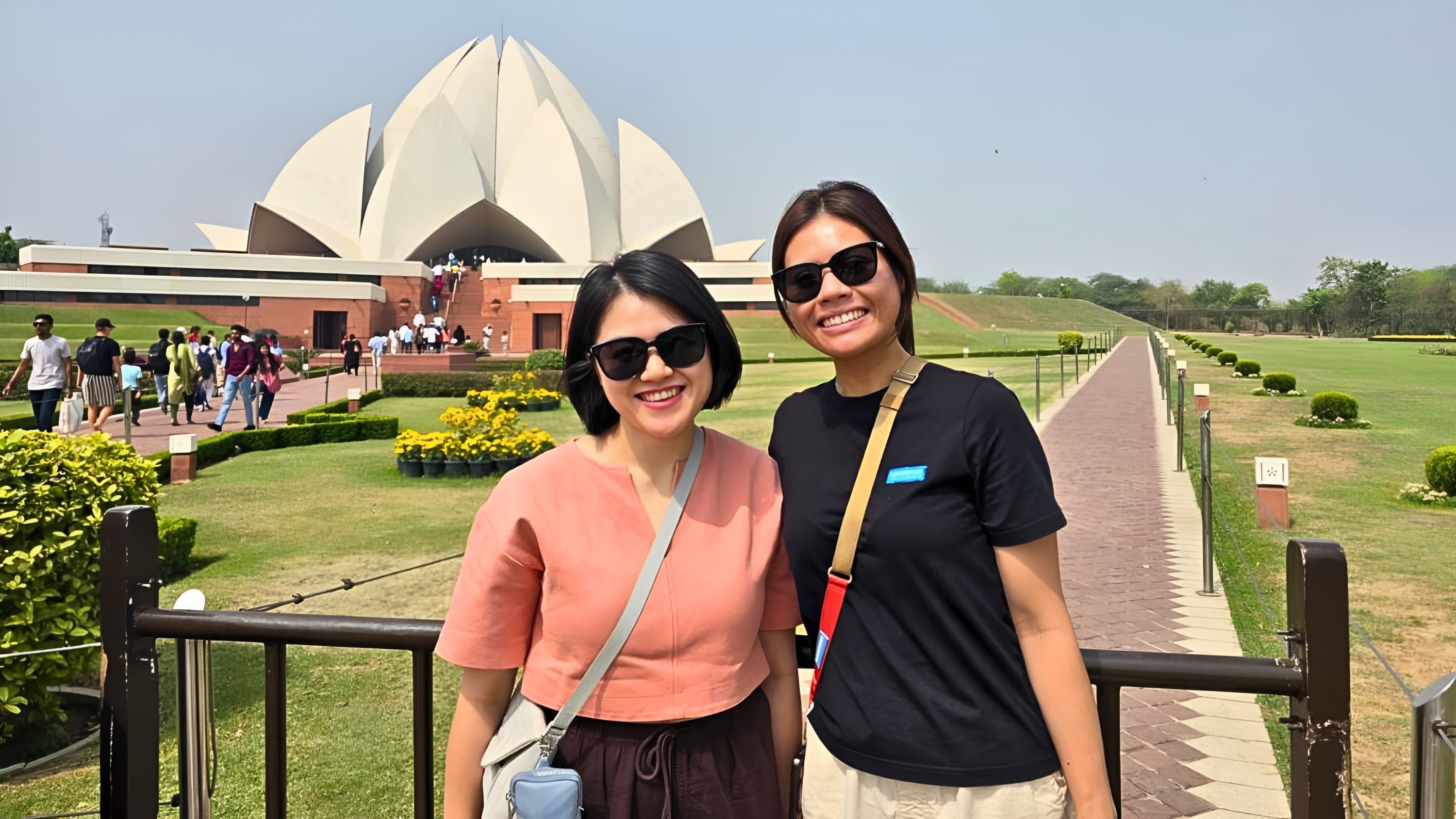
The Lotus Temple in Delhi, India, is a Bahá'í House of Worship that was built in December 1986. Its flower-like shape has made it a prominent landmark in the city. Like all Bahá'í Houses of Worship, the Lotus Temple is open to all, regardless of religion or other qualifications.
5
Stop 5
The Red Fort is a historic fort in the Indian city of Delhi. Every year on India's Independence Day, the Prime Minister hoists the Indian tricolour flag at the fort's main gate and delivers a speech broadcast nationwide from its ramparts.
The Red Fort was built by Shah Jahan from red sandstone, and he also shifted the capital from Agra to Delhi.
6
Stop 6
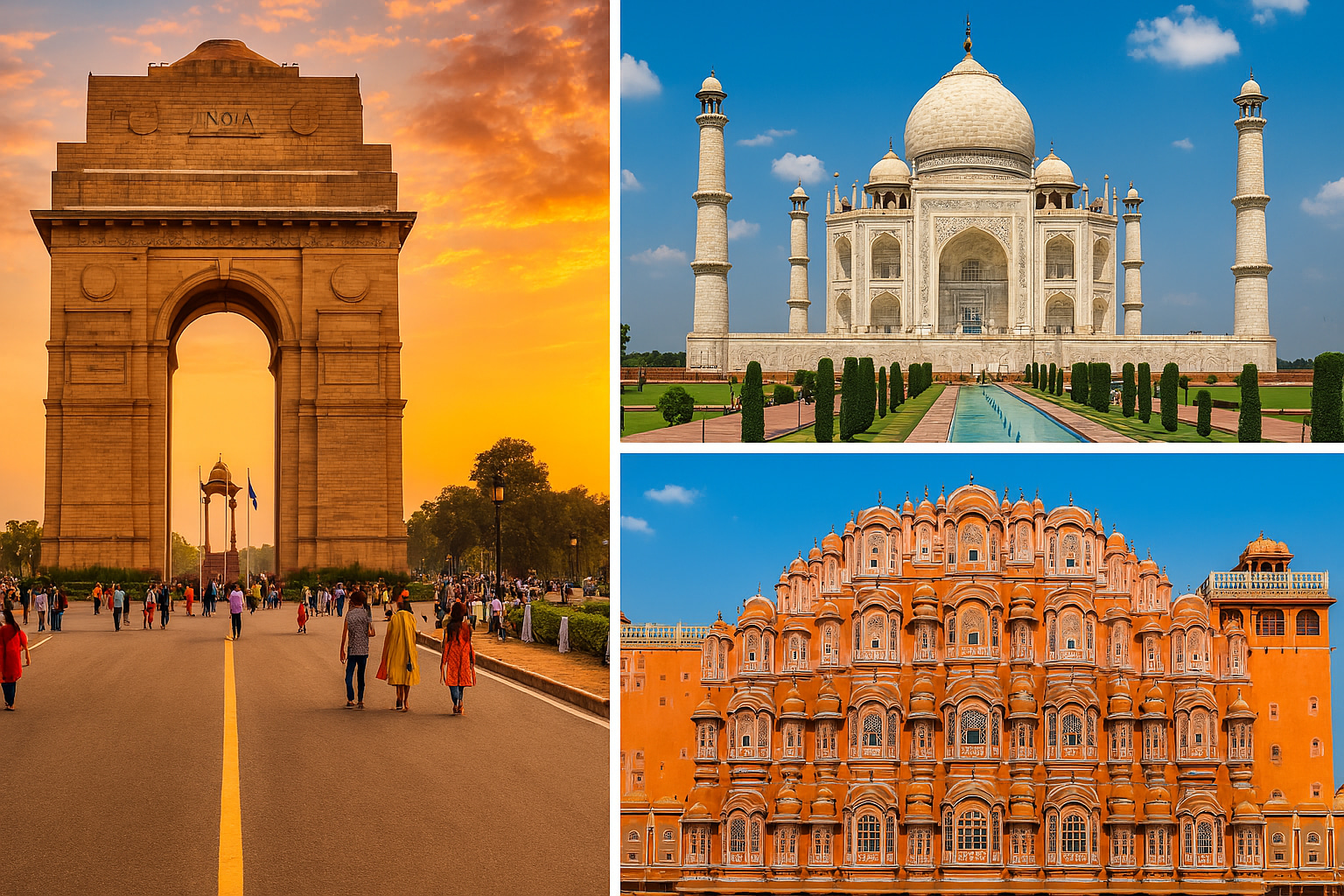
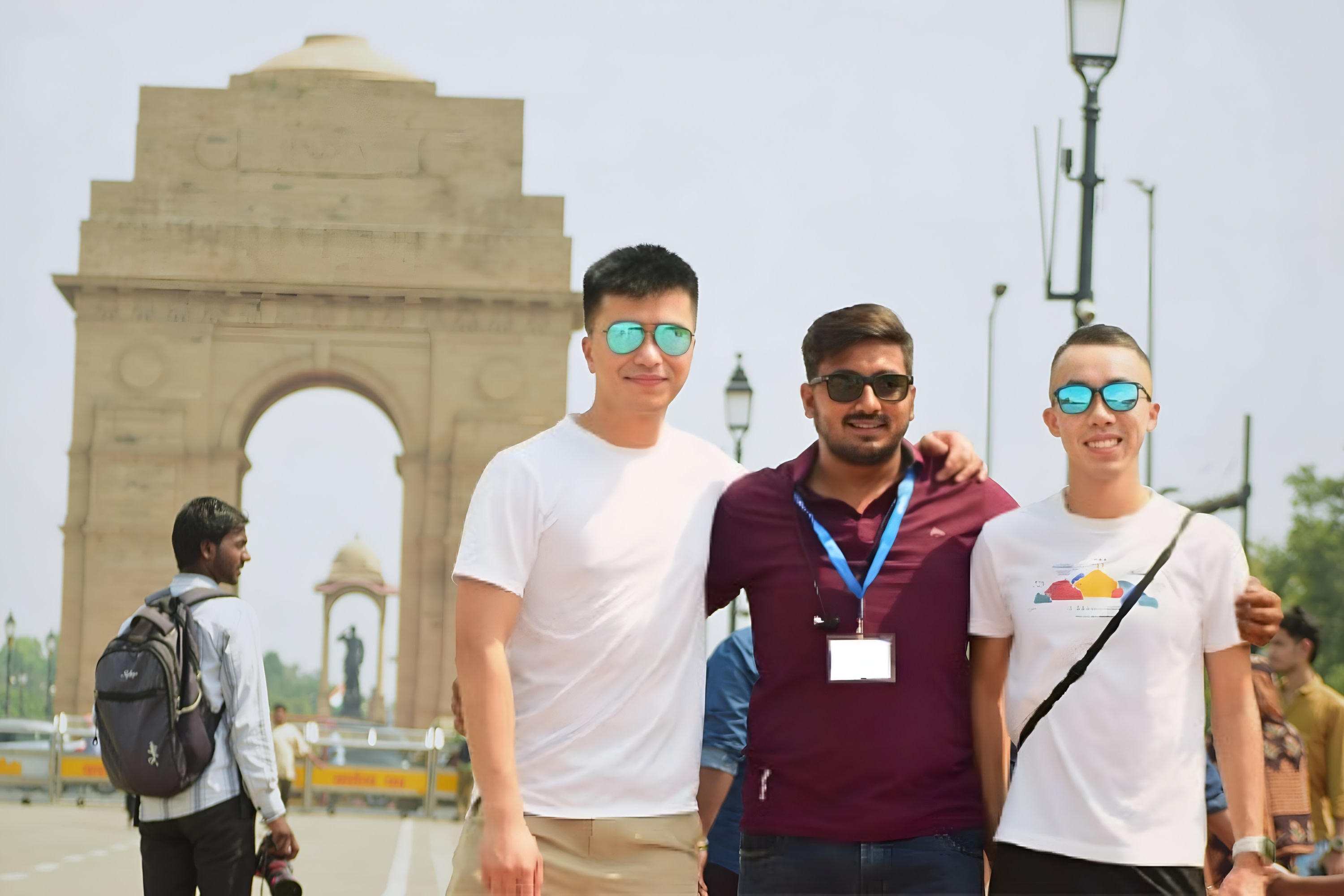
This beautiful and large gate, known as the India Gate, was built of yellow sandstone. India Gate is a war memorial honoring the 70,000 Indian soldiers who lost their lives during World War I
7
Stop 7
Sikh temple is a holy place for Sikh believers, but this temple is open for people of all religions, and they can come here and pray, so when tourists from other countries do not know about this religion, we show them this temple and our tour guides also explain about Sikhism.
What's not included
Any type of tipping
Any Entrance of Monuments
Available languages
Guide guide
DE
RU
EN
IT
FR
ES
Reviews breakdown
Tripadvisor
5.0
6 reviews
5★
6
4★
0
3★
0
2★
0
1★
0
Important information
Infants and small children can ride in a pram or stroller
Public transportation options are available nearby
Specialized infant seats are available
Not recommended for travelers with spinal injuries
Not recommended for pregnant travelers
Not recommended for travelers with poor cardiovascular health
Suitable for all physical fitness levels
Meeting point
This is the very famous monument in delhi so traveler will reach here very easy ad meet out side of monument otherwise of they will inform any local Delhi location then driver or tour Guide will meet them .
Important notes
When you will go to any local Delhi Monuments so will pay direct entrance fee so this is not inculed
About New Delhi
New Delhi, the capital of India, is a vibrant blend of ancient history and modern development. It offers a rich cultural experience with its historic monuments, bustling markets, and diverse cuisine. The city is a gateway to understanding India's past and present.
Top Attractions
Red Fort
A UNESCO World Heritage Site and a symbol of India's struggle for independence. Built by Emperor Shah Jahan in the 17th century.
Historical
2-3 hours
₹35 ($0.50) for Indians, ₹500 ($7) for foreigners
Qutub Minar
Another UNESCO World Heritage Site, this towering minaret is a fine example of early Indo-Islamic architecture.
Historical
1-2 hours
₹30 ($0.40) for Indians, ₹500 ($7) for foreigners
India Gate
A war memorial dedicated to the soldiers who died in World War I and the Afghan Wars. A popular evening spot for locals and tourists.
Historical
1 hour
Free
Humayun's Tomb
A UNESCO World Heritage Site and a precursor to the Taj Mahal. This beautiful Mughal garden tomb is a must-visit.
Historical
1-2 hours
₹30 ($0.40) for Indians, ₹500 ($7) for foreigners
Lotus Temple
A Baha'i House of Worship known for its flower-like shape. It is a symbol of peace and unity.
Religious
1 hour
Free
Must-Try Local Dishes
Butter Chicken
Creamy tomato-based curry with tender chicken pieces, originated in Delhi.
Dinner
Non-vegetarian
Chole Bhature
Spicy chickpea curry served with deep-fried bread.
Lunch
Vegetarian
Chaat
A variety of savory snacks like Pani Puri, Bhel Puri, and Aloo Tikki.
Snack
Vegetarian, some options vegan
Paratha
Stuffed flatbread cooked on a griddle, often served with yogurt or pickle.
Breakfast
Vegetarian, some options vegan
Popular Activities
River rafting in Rishikesh
Hot air ballooning in Jaipur
Trekking in the Aravalli Range
Spa treatments in luxury hotels
Yoga and meditation in Rishikesh
Strolls in Lutyens' Delhi
Attending a classical music or dance performance
Visiting art galleries and museums
Best Time to Visit
October to March
This is the most pleasant time to visit with cooler temperatures and various festivals. It's ideal for sightseeing and outdoor activities.
15°C to 35°C
59°F to 95°F
Practical Information
Language
- Official: Hindi, English
- Widely spoken: Punjabi, Urdu, Bhojpuri
- English: Widely spoken in urban areas
Currency
Indian Rupee (INR)
Time Zone
IST (GMT+5:30)
Electricity
230VV, 50HzHz
Safety Information
Overall Safety Rating: Exercise caution
New Delhi is generally safe for tourists, but petty crimes like pickpocketing and scams can occur. Be cautious, especially in crowded areas.
Important Precautions:
- • Use trusted transport options
- • Avoid walking alone at night
- • Be cautious of strangers offering help
Getting there
By air
- Indira Gandhi International Airport • 16 km from city center
By train
New Delhi Railway Station, Old Delhi Railway Station
By bus
Inter-State Bus Terminal (ISBT), Dhaula Kuan Bus Stand
Getting around
Public transport
Clean, efficient, and air-conditioned. Connects major attractions and neighborhoods.
Taxis
Available • Apps: Ola, Uber
Rentals
Car, Bike, Scooter
Neighborhoods
Connaught Place
Old Delhi
Lutyens' Delhi
Hauz Khas
Day trips
Agra
233 km from Delhi • Full day
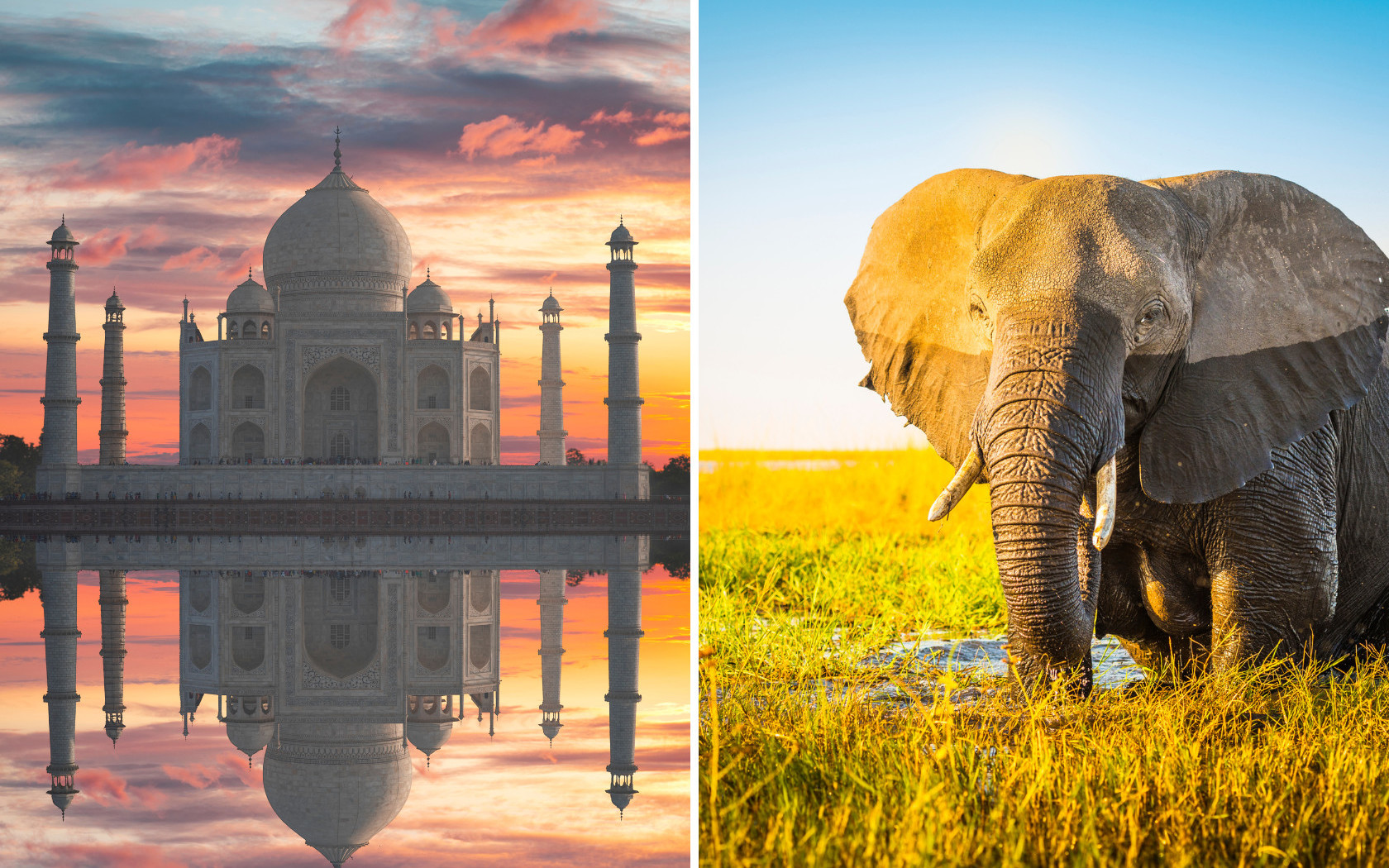
Home to the iconic Taj Mahal, Agra is a must-visit for history and architecture lovers.
Jaipur
268 km from Delhi • Full day or overnight
The Pink City is known for its palaces, forts, and vibrant culture.
Rishikesh
240 km from Delhi • Full day or overnight
A spiritual and adventure hub, Rishikesh is famous for yoga, meditation, and river rafting.
Festivals
Diwali • October-November (dates vary)
Holi • March (dates vary)
Republic Day • January 26
Pro tips
- Use the Delhi Metro for efficient and affordable travel around the city.
- Try street food from busy stalls to ensure freshness and hygiene.
- Bargain politely in markets, but be prepared to pay a fair price.
- Carry small denominations for shopping and street food.
- Respect local customs and traditions, especially when visiting religious sites.
From $25
per person
Price varies by option
Secure booking
Free cancellation available
Instant confirmation