Sacred Valley Luxury Tour (Private)
Active
10h
For a full refund, cancel at least 24 hours before the scheduled departure time.
Instant confirmation
Mobile or paper ticket accepted
About this experience
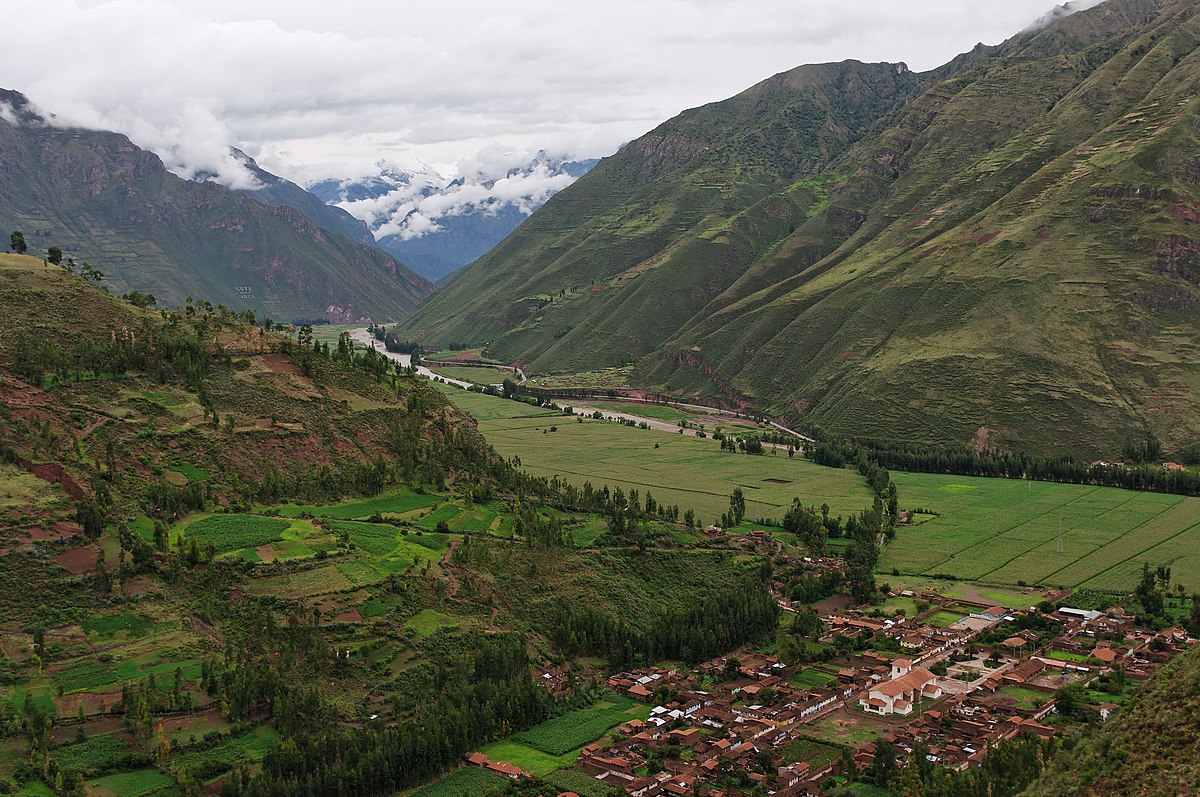
The Sacred Valley tour is one of the most popular tours in the region. The Sacred Valley of the Incas was a crucial area for the Inca empire and it functioned as both an agricultural, spiritual and political centre for them. Throughout its length there are many Inca and Pre-Inca sites that can be found and the Sacred Valley tour visits the 2 main sites, Pisac and Ollantaytambo. Lasting a full day you will get to appreciate the fine works of craftsmanship that the Incas produced and see the beautiful scenery of the Sacred Valley. Many tourists opt to do this tour just before their visit to Machu Picchu as you can choose to finish in Ollantaytambo from where you take the train on to Aguas Calientes (the town at the base of Machu Picchu).
Available options
Sacred Valley Luxury Tour (Private)
Pickup included
What's included
Buffet lunch in Urubamba (a town lying between Pisac and Ollantaytambo
Bi-lingual tour Guide
Round-trip transportation (tourist bus)
Detailed itinerary
1
Stop 1
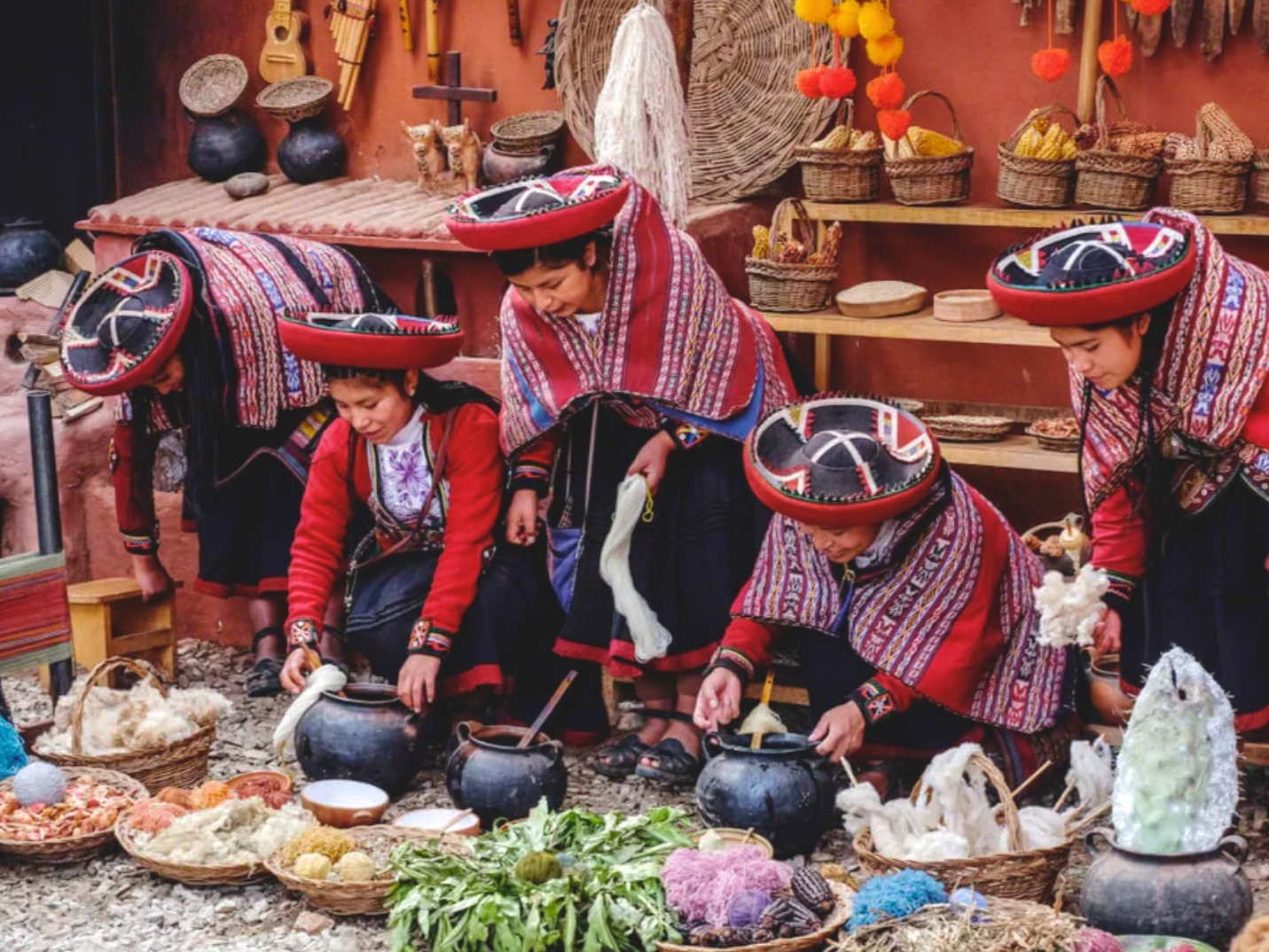
The Pisac Market is one of the most famous markets in the Cusco region, drawing many visitors to its famous Sunday market when indigenous Quechua communities from the surrounding highlands come to Pisac to sell their produce and stock up on supplies for the week.
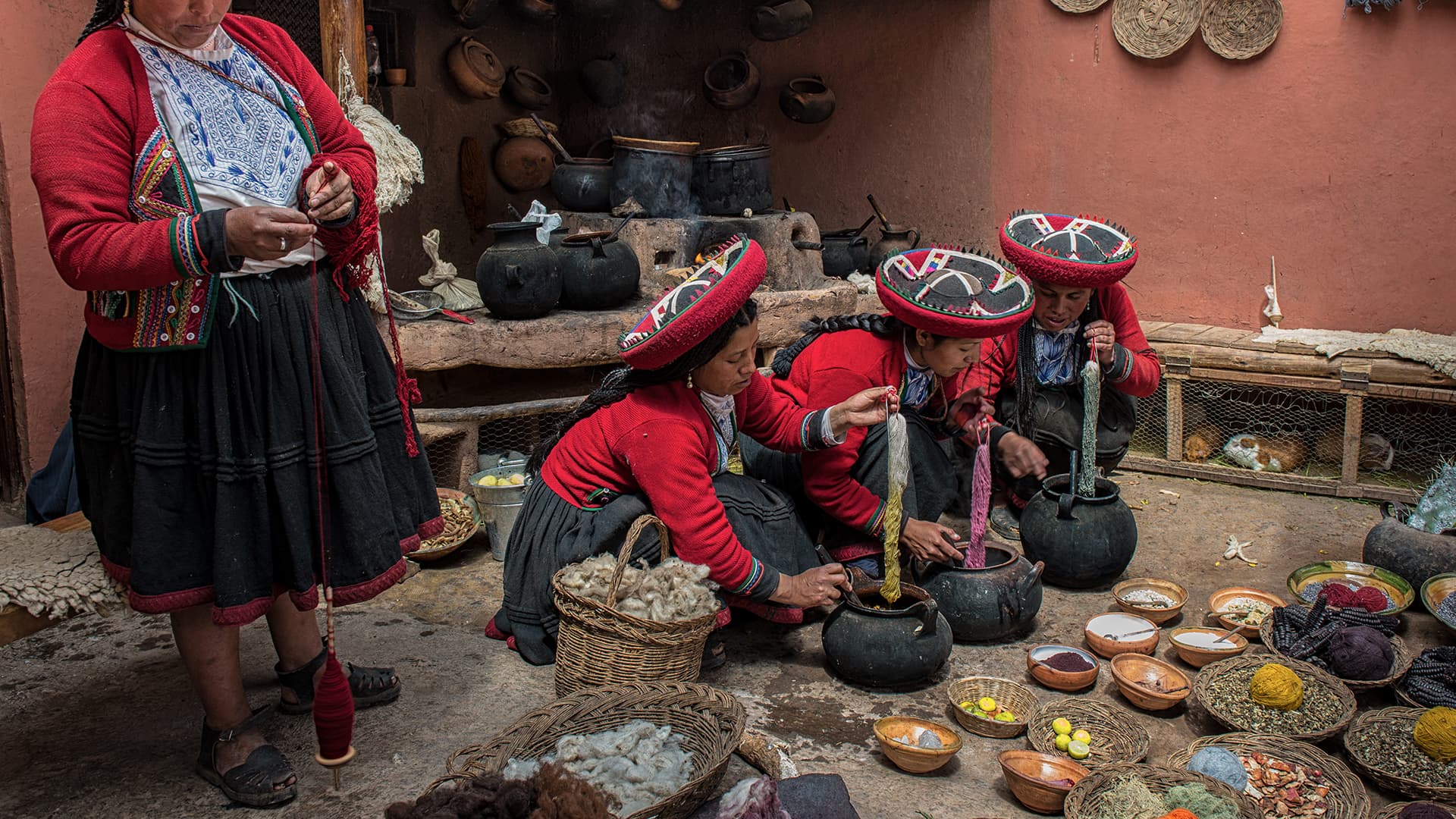
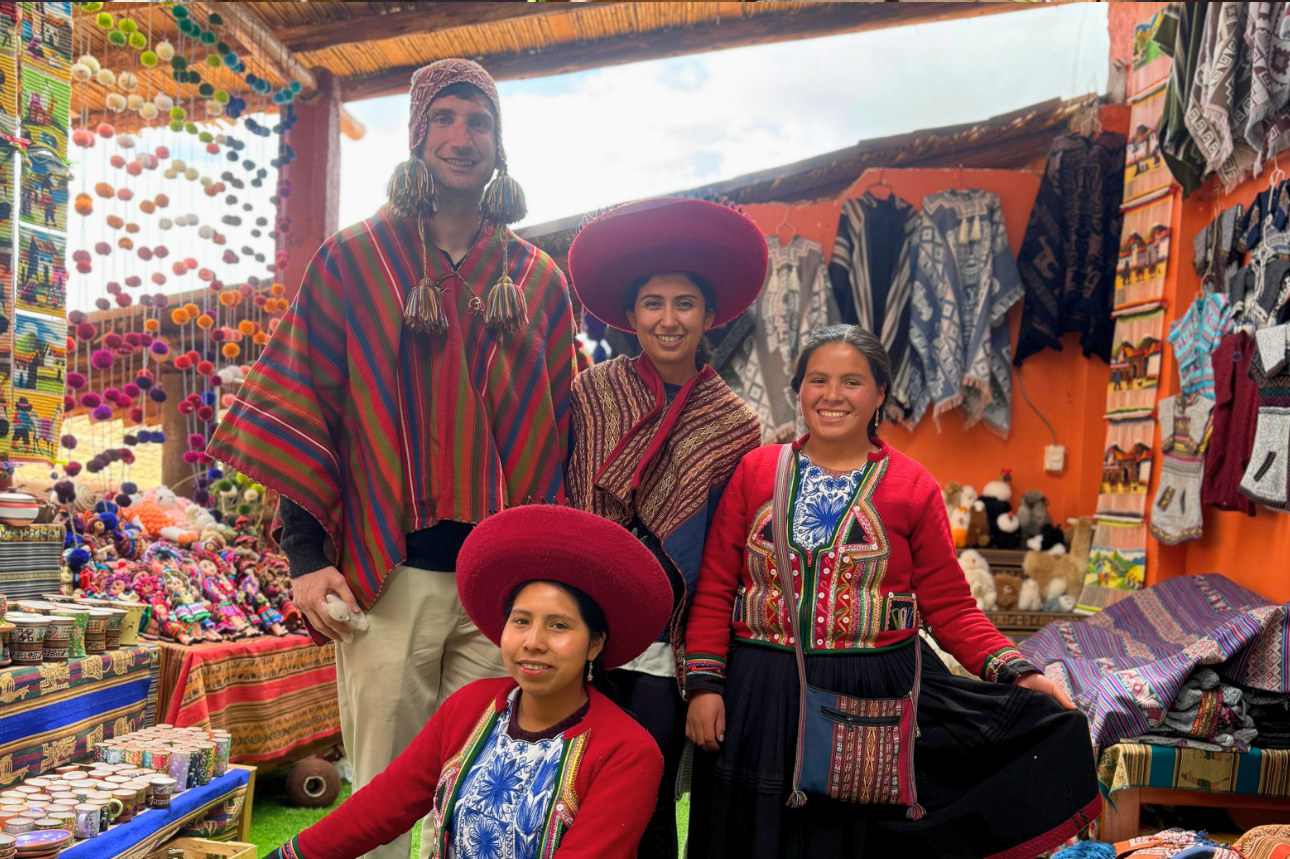
A large section of the market is dedicated to tourist-oriented souvenir stalls where you can find weavings, jewellery, ponchos, hats, Andean instruments, ceramics, alpaca products and a whole range of other gifts and souvenirs to take home with you. The handcraft market is open every day from 9am to 4.30pm and is a good place to pick up some gifts all in the one place.
If you want a more authentic and colourful experience, try and plan your trip to visit the market on a Sunday when the local quechua communities set up shop on the main square. Dressed in their colourful clothing, they sit cross-legged with their wares laid out giving the market an authentic feel. It’s definitely worth a visit but be warned this is a tourist hot spot so be prepared for savvy vendors, tour buses and tour groups.
The more unusual products you can buy at the Pisac market include natural powders in a variety of eye-popping colours that can be used as watercolour paint, colourful weavings and alpaca clothing.
2
Stop 2
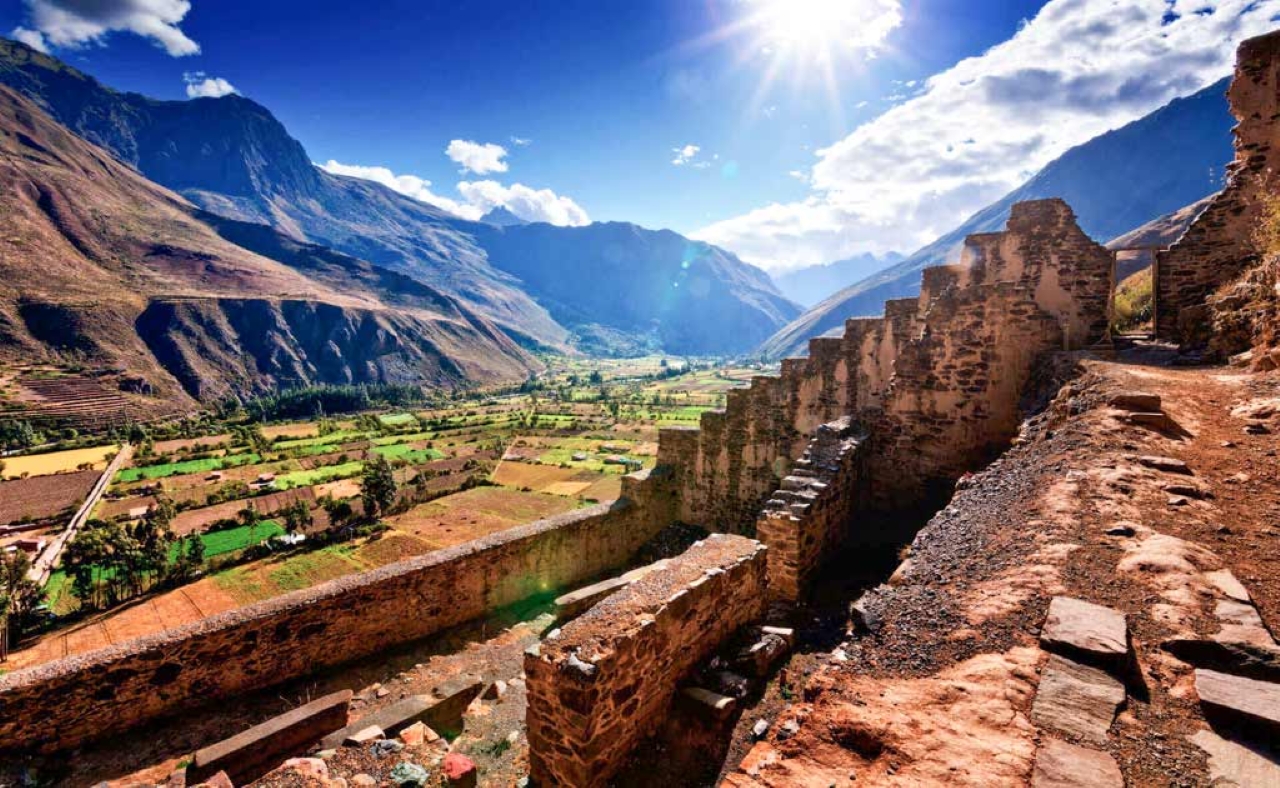
Pisac was once the site of a vital Inca road which wound its way through the Sacred Valley to the borders of the eastern jungle. This made it an important connecting route for the Inca Empire and the city of Paucartambo– giving Inca Písac a strategic controlling point. With its elevated position, researchers believed the site served a defensive purpose, protecting the southern end of the valley. It was also an important agricultural sector and the terraces constructed on the steep hillside are still in use today. Another theory for its construction is that Pachacuti, for whom most archaeologists believe Machu Picchu was built, had it constructed to celebrate victory over a local ethnic group called the Cuyos. In either case it is unknown exactly when Inca Písac was built. Since it does not appear to have been inhabited by any pre-Inca civilisation, estimations are that it was built no earlier than 1440.
3
Stop 3
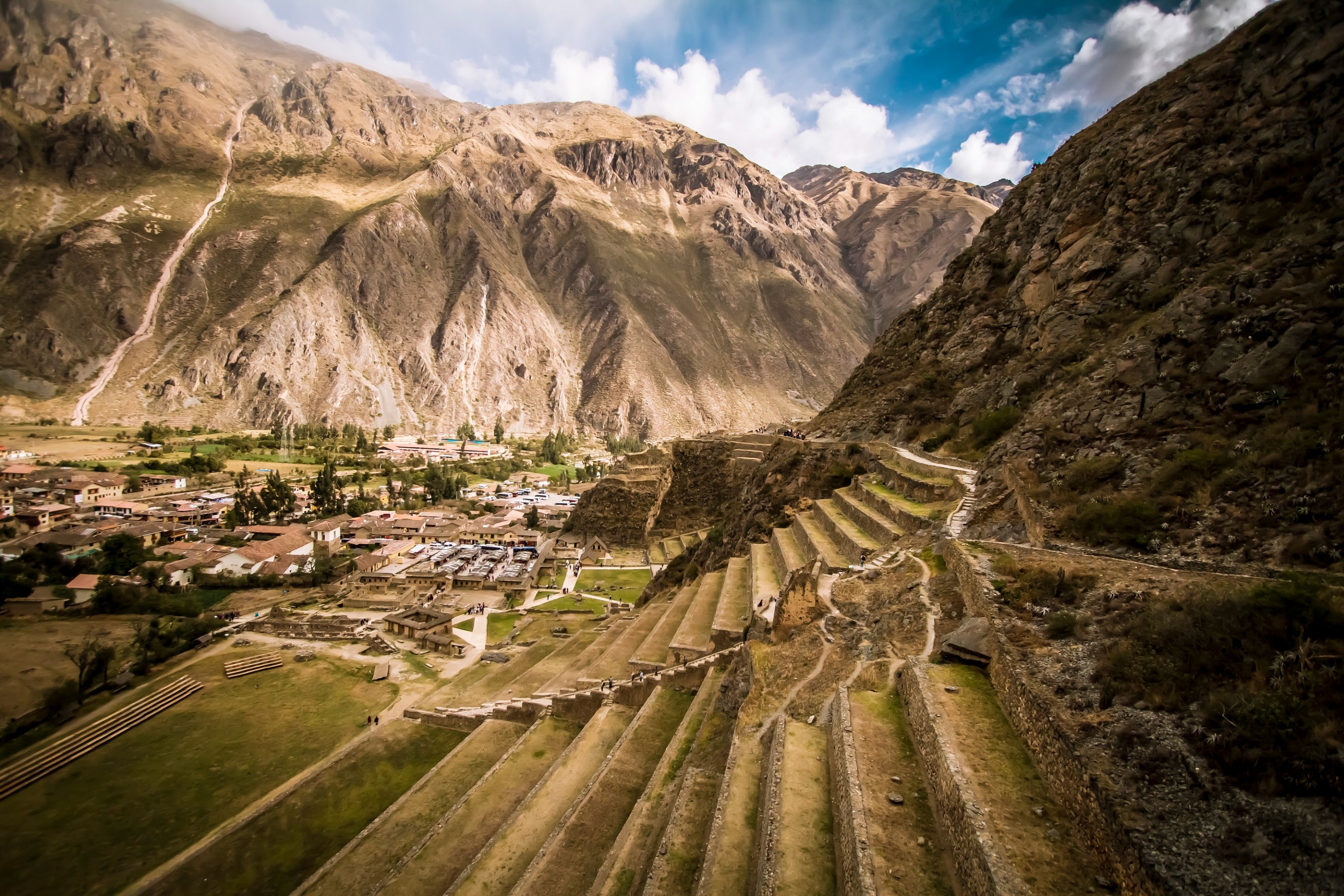
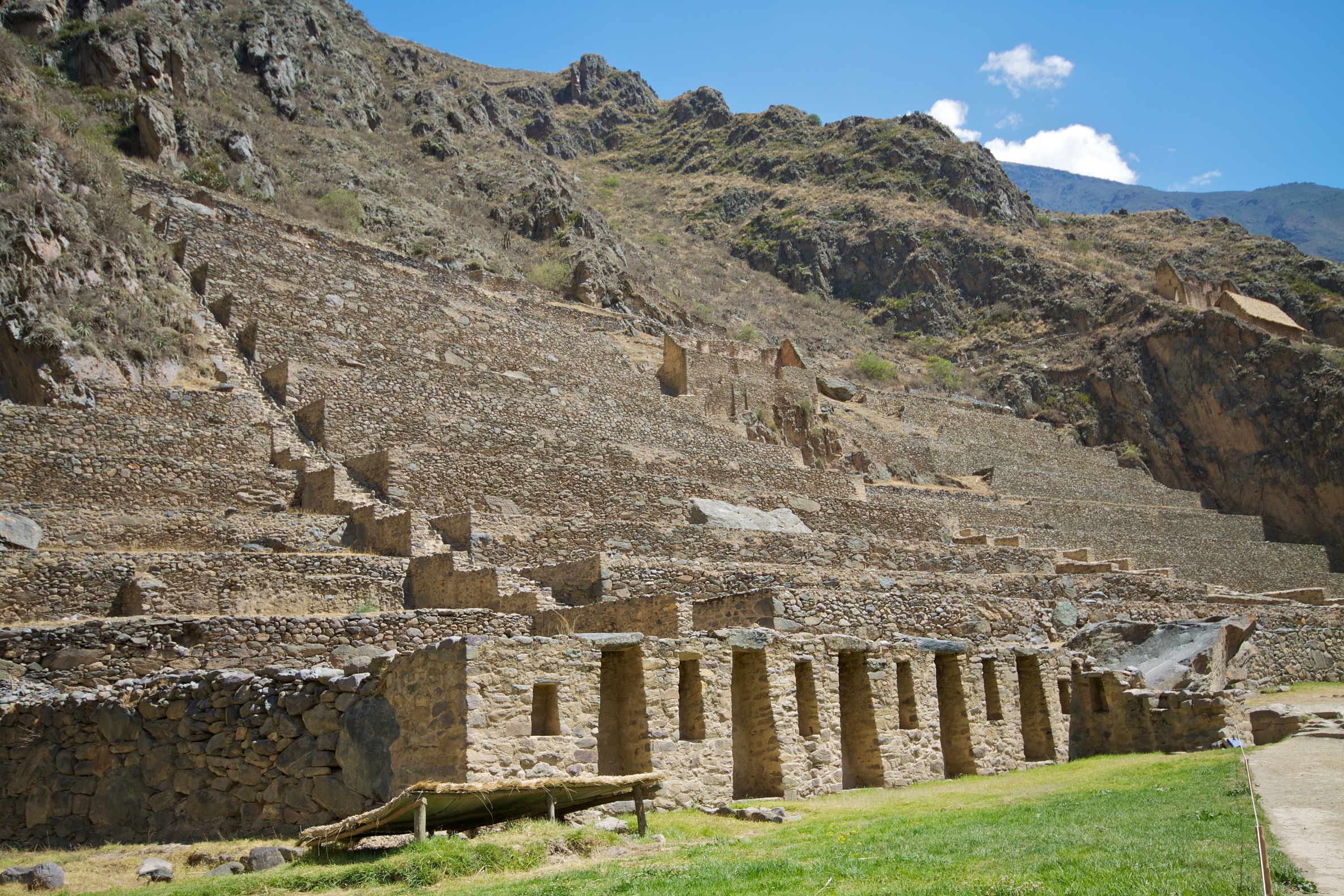
Both fortress and temple, these spectacular Inca ruins rise above Ollantaytambo, making a splendid half-day trip. (Admission is via the boleto turístico tourist card, valid for 10 days and for 16 other sites across the region.) The huge, steep terraces that guard Ollantaytambo’s spectacular Inca ruins mark one of the few places where the Spanish conquistadors lost a major battle.
Tickets & tours
Pumamarca Ruins to Machu Picchu 2-Day Trek with Ollantaytambo
$587
and up
DETAILS
Private Ollantaytambo, Pisac Ruins Tour with Farm Picnic Lunch
$180
and up
DETAILS
Machupicchu Day Trip From Ollantaytambo
$387.50
and up
DETAILS
MORE TICKETS & TOURS
Details
Hours
7am-5pm
Price
boleto turístico adult/student S130/70
The rebellious Manco Inca had retreated to this fortress after his defeat at Sacsaywamán. In 1536 Hernando Pizarro, Francisco’s younger half-brother, led a force of 70 cavalrymen to Ollantaytambo, supported by large numbers of indigenous and Spanish foot soldiers, in an attempt to capture Manco Inca.
The conquistadors, showered with arrows, spears and boulders from atop the steep terracing, were unable to climb to the fortress. In a brilliant move, Manco Inca flooded the plain below the fortress through previously prepared channels. With the Spaniards’ horses bogged down in the water, Pizarro ordered a hasty retreat, chased down by thousands of Manco Inca’s victorious soldiers.
Yet the Inca victory would be short lived. Spanish forces soon returned with a quadrupled cavalry force and Manco fled to his jungle stronghold in Vilcabamba.
Though Ollantaytambo was a highly effective fortress, it also served as a temple. A finely worked ceremonial center is at the top of the terracing. Some extremely well-built walls were under construction at the time of the conquest and have never been completed. The stone was quarried from the mountainside 6km away, high above the opposite bank of the Río Urubamba. Transporting the huge stone blocks to the site was a stupendous feat. The Incas’ crafty technique to move massive blocks across the river meant carting the blocks to the riverside then diverting the entire river channel around them.
4
Known to the Incas as the birthplace of the rainbow, this typical Andean village combines Inca ruins with a colonial church, some wonderful mountain views and a colourful Sunday market. On a high plain with sweeping views to snow-laden peaks, it’s quite beautiful. Since it is very high, it’s unwise to spend the night until you’re somewhat acclimated.
What's not included
Tourist Ticket for archeological sites to be visited: Pisaq
Tourist Ticket for archeological sites to be visited: ollantaytambo
Tourist Ticket for archeological sites to be visited: chinchero
Available languages
Guide guide
EN
ES
Reviews breakdown
Tripadvisor
5.0
2 reviews
5★
2
4★
0
3★
0
2★
0
1★
0
Important information
Public transportation options are available nearby
Infants are required to sit on an adult’s lap
Suitable for all physical fitness levels
Meeting point
we meeting on the plaza de armas and triunfo street by paddys pab
About Cusco
Cusco, the historic capital of the Inca Empire, is a captivating blend of Indigenous and colonial influences. Known for its well-preserved archaeological sites, vibrant culture, and stunning Andean landscapes, it's a gateway to Machu Picchu and the Sacred Valley. The city's rich history, combined with its lively arts scene and delicious cuisine, makes it a must-visit destination in South America.
Top Attractions
Sacred Valley
The Sacred Valley is a stunning region filled with Inca ruins, traditional villages, and breathtaking landscapes. It's a must-visit for history and nature lovers.
Historical/Nature
Full day
PEN 10-50 (USD 2.50-12.50) depending on the site
Machu Picchu
Machu Picchu is the iconic Inca citadel and one of the most famous archaeological sites in the world. Its breathtaking views and rich history make it a must-see.
Historical/Adventure
Full day or overnight
PEN 152 (USD 38) for entrance, train tickets vary
Qorikancha
Qorikancha, or the Temple of the Sun, was the most important temple in the Inca Empire. It's a fascinating blend of Inca and colonial architecture.
Historical/Religious
1-2 hours
PEN 10 (USD 2.50)
Sacsayhuaman
Sacsayhuaman is a massive Inca fortress with impressive stone walls and panoramic views of Cusco. It's a testament to Inca engineering and military might.
Historical
1-2 hours
PEN 10 (USD 2.50)
San Pedro Market
San Pedro Market is a bustling market offering a variety of fresh produce, local crafts, and traditional foods. It's a great place to experience local life.
Cultural/Food
1-2 hours
Free to enter, prices vary for purchases
Must-Try Local Dishes
Cuy al Horno
Roasted guinea pig, a traditional Andean dish.
Main Course
Not vegetarian
Lomo Saltado
Stir-fried beef with onions, tomatoes, and fries.
Main Course
Can be made vegetarian
Aji de Gallina
Shredded chicken in a creamy, spicy sauce.
Main Course
Not vegetarian
Sopa de Quinoa
Quinoa soup, a nutritious and traditional dish.
Soup
Can be made vegetarian
Popular Activities
Hiking
Trekking
Mountain biking
Whitewater rafting
Visiting spas
Exploring parks
Enjoying local cafes
Visiting museums
Best Time to Visit
May to September
This is the dry season, offering the best weather for exploring the city and its archaeological sites. The skies are clear, and temperatures are mild.
5°C to 20°C (41°F to 68°F)
41°F to 68°F
Practical Information
Language
- Official: Spanish
- Widely spoken: Quechua, English (in tourist areas)
- English: Moderately spoken in tourist areas, limited elsewhere
Currency
Peruvian Sol (PEN)
Time Zone
GMT-5
Electricity
220VV, 50HzHz
Safety Information
Overall Safety Rating: Generally safe with common-sense precautions
Cusco is generally safe for tourists, but petty crime can occur, especially in crowded areas. Be cautious with your belongings and avoid walking alone at night in poorly lit areas.
Important Precautions:
- • Keep valuables secure
- • Use reputable tour operators
- • Be cautious with street food
Getting there
By air
- Alejandro Velasco Astete International Airport • 5 km (3 miles) from city center
By train
San Pedro Station
By bus
Cusco Bus Terminal
Getting around
Public transport
Shared taxis (colectivos) are a common and affordable way to get around Cusco. They follow specific routes and can be flagged down.
Taxis
Available • Apps: InDriver, Easy Taxi
Rentals
Car, Bike, Scooter
Neighborhoods
Historic Center
San Blas
San Cristobal
Day trips
Pisac
35 km (22 miles) from Cusco • Full day
Pisac is a charming town known for its vibrant market and impressive Inca ruins. It's a great day trip from Cusco.
Ollantaytambo
60 km (37 miles) from Cusco • Full day or overnight
Ollantaytambo is a picturesque town with well-preserved Inca ruins and a gateway to Machu Picchu. It's a must-visit for history and adventure lovers.
Tipon
25 km (16 miles) from Cusco • Half day
Tipon is a beautiful archaeological site with well-preserved Inca terraces and water channels. It's a peaceful and less crowded alternative to other Inca sites.
Festivals
Inti Raymi • June 24
Cusco Festival of Music and Dance • August
Pro tips
- Acclimatize to the altitude before engaging in strenuous activities
- Dress in layers to accommodate changing temperatures
- Learn a few basic phrases in Spanish or Quechua to enhance your experience
- Visit the San Pedro Market early in the morning for the best selection and prices
- Book tickets and train tickets in advance for Machu Picchu and other popular attractions
From $25
per person
Price varies by option
Secure booking
Free cancellation available
Instant confirmation