01 Nights 02 Days Jaipur Packages
Active
1d
For a full refund, cancel at least 24 hours before the scheduled departure time.
Instant confirmation
Mobile or paper ticket accepted
About this experience
Settled in the rugged hills of the Aravallis, Jaipur is the pristine jewel in the desert sands of Rajasthan. Jaipur is as remarkable for its marvellous architecture and town planning as it is for the lively spirit of the people who inhabit it. The city presents a unique synthesis of culture that has to be experienced in order to be appreciated.
With its origin buried deep into the pages of history, the city still exudes a magical old world charm; an aroma of chivalry and romance is evident, despit having evolved into a city that is the hub of modern commercial activity in the region. Tell-tale signs of the glorious past and regal splendour of the city lie strewn across with gay abandon.
The colourful and intricately carved monuments are adequately matched by the lively spirit of fanfare, festivity and celebration of the people. Even today, one can find weather beaten faces with huge coloufrul trurbans, fierce moustaches and lips that spontaneouslya crease into a heart warming smile.
Available options
1 Nights 2 Days Jaipur Package
Three Star Hotel<br/>Duration: 2 days<br/>Breakfast<br/>Delhi-Jaipur-Delhi<br/>Car
What's included
01 Night Accommodation in 3*Hotel With morning Breakfast
Air-conditioned vehicle
Parking Fees
Detailed itinerary
1
Stop 1
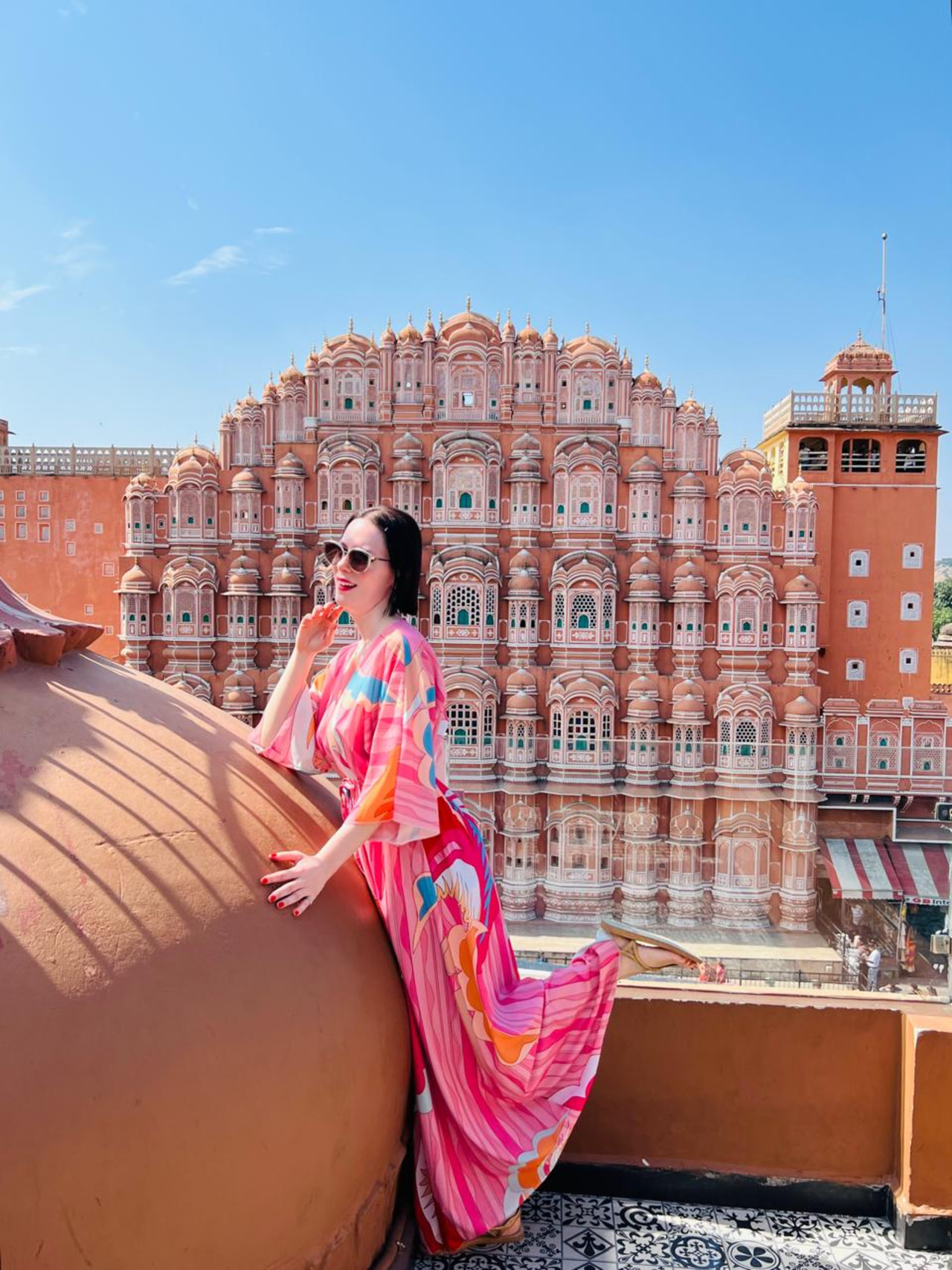
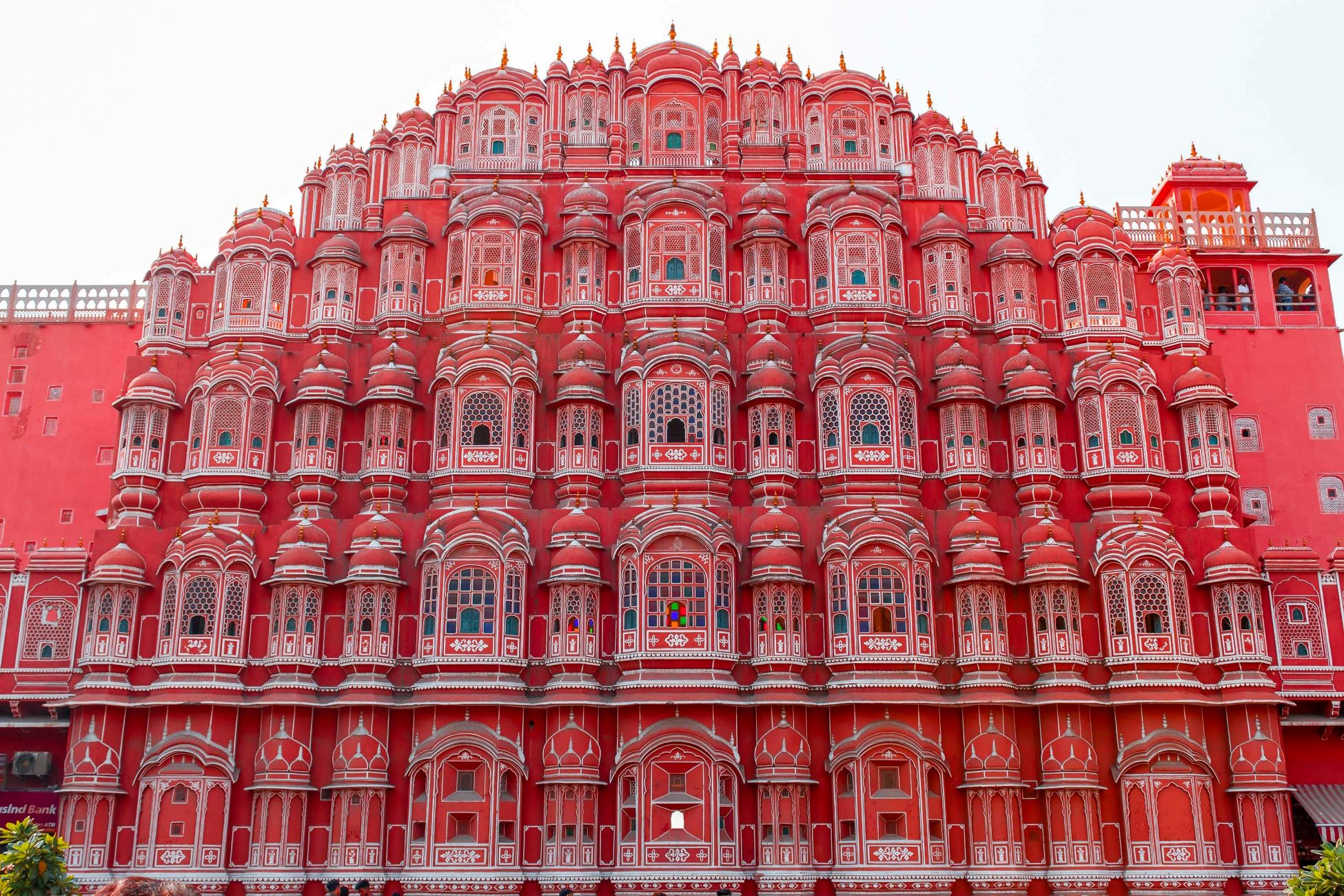
The Hawa Mahal, or the "Palace of Wind" built by Maharaja Sawai Pratap Singh in 1799 A.D. is characterised by elaborate and fanciful architecture.
The broad pyramidical facade comprises five storeys of semi octagonal overhanging windows with perforated screens, domes and spires.
2
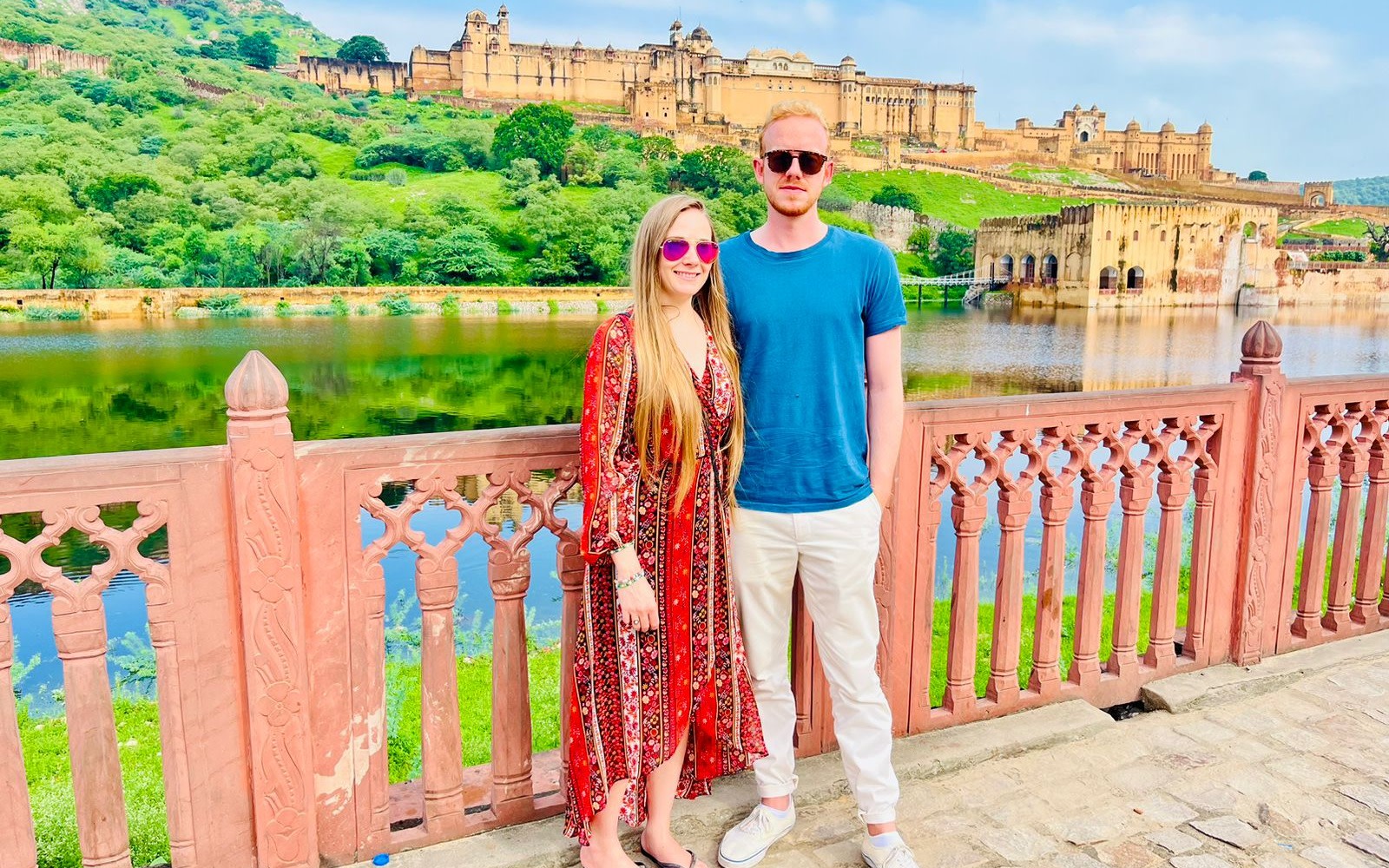
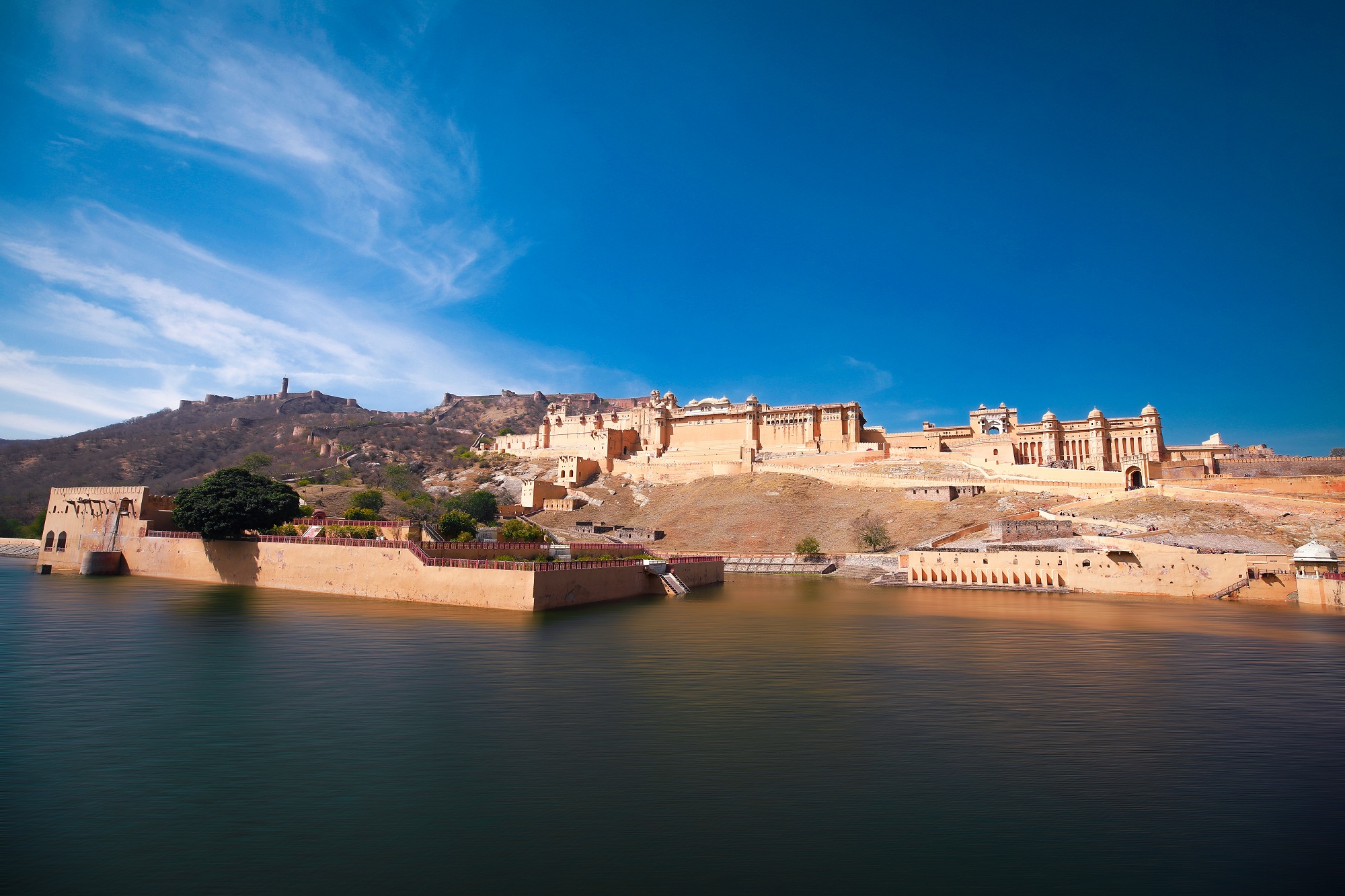
At a short distance of 11 kms . from Jaipur, the Amer Fort complex stands amidst wooded hills overlooking the Delhi-Jaipur highway, with its forbidding ramparts reflected in the still waters of the Maota Lake below.
One of the finest examples of Rajput architecture, it was the ancient capital of the Kachhawah rulers. The original palace was built by Raja Man Singh and additions were made later by Sawai Jai Singh.
Within the palace are the Diwan-e-Aam or the "Hall of Public Audience", the Diwan-e-Khas or the "Hall of Private Audience" and the Sukh Niws where a cool breeze blows across channels of water for the purpose of air-conditioning.
Here are the private chambers of the queens with windows having latticed screens so that the ladies could watch the proceedings of the royal court inprivacy. There is also the Jai Mandir or the "Temple of Vicotry", with its famed Sheesh Mahal, the scintillating "Hall of Mirrors"
3
Stop 3
The western skyline is dominated by the extensive walls, watch towers and gatewasys of the Jaigarh Fort.
It is one of the few military structures of medieval India preserved almost intact, containing palaces, agrdens open and covered reservoirs, a granary, an armoury, a well-planned cannon foundry, several temples, a tall tower and a giant mounted acnnon-the Jain Ban, the largest cannon in the world.
4
Stop 4
Perched atop a pricturesque hill, the Nahargarh Fort offers a breathtaking view of the city below. Initially built by Sawai Jain Singh in 1734 A.D.
It was enlarged and given its present shape by Sawai Madho Singh in1885 A.D. Decorative motifs in some of the rooms are delightful.
From the windows of the nine identical suites, one gets a magnificent view of the city, complete witht he geometrical layout. From Amer there is a road to Nahargarh, which passes through the hills.
5
Stop 5
The City Palce is an imposing blend of traditional Rajasthani and Mughal art and architecture.
The City Palace complex houses several palatial structures. The first building in it is Mubarak Mahal, built by Kaharaja Madho Singh. It has a beautifully carved marble gate with heavy brass doors on either side of this gate. Beyond this gate lies the Diwan -e-Khas, or the "Hall of Private Audience".
Across a paved square lies the Diwan-e-Aam, or the "Hall of Public Audience". To the north-west is the stately and graceful seven storeyed Chandra Mahal, the residence of the ex-ruler. Each storey has a distinctive name and is a place of sheer beauty and luxury. Paintings, floral decorations, mirror walls and ceilings in the traditional style adorn the palace.
What's not included
Dinner
Lunch
Monument Fee
Personal Expenses
Available languages
Audio guide
DE
EN
IT
FR
ES
Guide guide
DE
EN
IT
FR
ES
Written guide
DE
EN
IT
FR
ES
Reviews breakdown
Tripadvisor
5.0
3 reviews
5★
3
4★
0
3★
0
2★
0
1★
0
Important information
Wheelchair accessible
Infants and small children can ride in a pram or stroller
Service animals allowed
Infants are required to sit on an adult’s lap
Transportation options are wheelchair accessible
Suitable for all physical fitness levels
About New Delhi
New Delhi, the capital of India, is a vibrant blend of ancient history and modern development. It offers a rich cultural experience with its historic monuments, bustling markets, and diverse cuisine. The city is a gateway to understanding India's past and present.
Top Attractions
Red Fort
A UNESCO World Heritage Site and a symbol of India's struggle for independence. Built by Emperor Shah Jahan in the 17th century.
Historical
2-3 hours
₹35 ($0.50) for Indians, ₹500 ($7) for foreigners
Qutub Minar
Another UNESCO World Heritage Site, this towering minaret is a fine example of early Indo-Islamic architecture.
Historical
1-2 hours
₹30 ($0.40) for Indians, ₹500 ($7) for foreigners
India Gate
A war memorial dedicated to the soldiers who died in World War I and the Afghan Wars. A popular evening spot for locals and tourists.
Historical
1 hour
Free
Humayun's Tomb
A UNESCO World Heritage Site and a precursor to the Taj Mahal. This beautiful Mughal garden tomb is a must-visit.
Historical
1-2 hours
₹30 ($0.40) for Indians, ₹500 ($7) for foreigners
Lotus Temple
A Baha'i House of Worship known for its flower-like shape. It is a symbol of peace and unity.
Religious
1 hour
Free
Must-Try Local Dishes
Butter Chicken
Creamy tomato-based curry with tender chicken pieces, originated in Delhi.
Dinner
Non-vegetarian
Chole Bhature
Spicy chickpea curry served with deep-fried bread.
Lunch
Vegetarian
Chaat
A variety of savory snacks like Pani Puri, Bhel Puri, and Aloo Tikki.
Snack
Vegetarian, some options vegan
Paratha
Stuffed flatbread cooked on a griddle, often served with yogurt or pickle.
Breakfast
Vegetarian, some options vegan
Popular Activities
River rafting in Rishikesh
Hot air ballooning in Jaipur
Trekking in the Aravalli Range
Spa treatments in luxury hotels
Yoga and meditation in Rishikesh
Strolls in Lutyens' Delhi
Attending a classical music or dance performance
Visiting art galleries and museums
Best Time to Visit
October to March
This is the most pleasant time to visit with cooler temperatures and various festivals. It's ideal for sightseeing and outdoor activities.
15°C to 35°C
59°F to 95°F
Practical Information
Language
- Official: Hindi, English
- Widely spoken: Punjabi, Urdu, Bhojpuri
- English: Widely spoken in urban areas
Currency
Indian Rupee (INR)
Time Zone
IST (GMT+5:30)
Electricity
230VV, 50HzHz
Safety Information
Overall Safety Rating: Exercise caution
New Delhi is generally safe for tourists, but petty crimes like pickpocketing and scams can occur. Be cautious, especially in crowded areas.
Important Precautions:
- • Use trusted transport options
- • Avoid walking alone at night
- • Be cautious of strangers offering help
Getting there
By air
- Indira Gandhi International Airport • 16 km from city center
By train
New Delhi Railway Station, Old Delhi Railway Station
By bus
Inter-State Bus Terminal (ISBT), Dhaula Kuan Bus Stand
Getting around
Public transport
Clean, efficient, and air-conditioned. Connects major attractions and neighborhoods.
Taxis
Available • Apps: Ola, Uber
Rentals
Car, Bike, Scooter
Neighborhoods
Connaught Place
Old Delhi
Lutyens' Delhi
Hauz Khas
Day trips
Agra
233 km from Delhi • Full day
Home to the iconic Taj Mahal, Agra is a must-visit for history and architecture lovers.
Jaipur
268 km from Delhi • Full day or overnight
The Pink City is known for its palaces, forts, and vibrant culture.
Rishikesh
240 km from Delhi • Full day or overnight
A spiritual and adventure hub, Rishikesh is famous for yoga, meditation, and river rafting.
Festivals
Diwali • October-November (dates vary)
Holi • March (dates vary)
Republic Day • January 26
Pro tips
- Use the Delhi Metro for efficient and affordable travel around the city.
- Try street food from busy stalls to ensure freshness and hygiene.
- Bargain politely in markets, but be prepared to pay a fair price.
- Carry small denominations for shopping and street food.
- Respect local customs and traditions, especially when visiting religious sites.
From $25
per person
Price varies by option
Secure booking
Free cancellation available
Instant confirmation