7 Wonders of Ancient Rome (Driver Only/Self Touring)
Active
8h
For a full refund, cancel at least 24 hours before the scheduled departure time.
Manual confirmation
Mobile or paper ticket accepted
About this experience
This is a Tour By Car with only a Driver. This tour does NOT include a Tour Guide. You will SELF-TOUR on your own away from the vehicle. Your Driver will wait with the vehicle.
Experience living history and explore the Seven Wonders of Ancient Rome as you walk in the footsteps of Roman emperors, generals, and gladiators on this exciting day tour from Rome.
Rome was the last of the greatest ancient civilizations that had the most profound impact on today’s architecture, engineering, politics, and entertainment among many others, leaving behind iconic monuments testament to Roman awe-inspiring achievements.
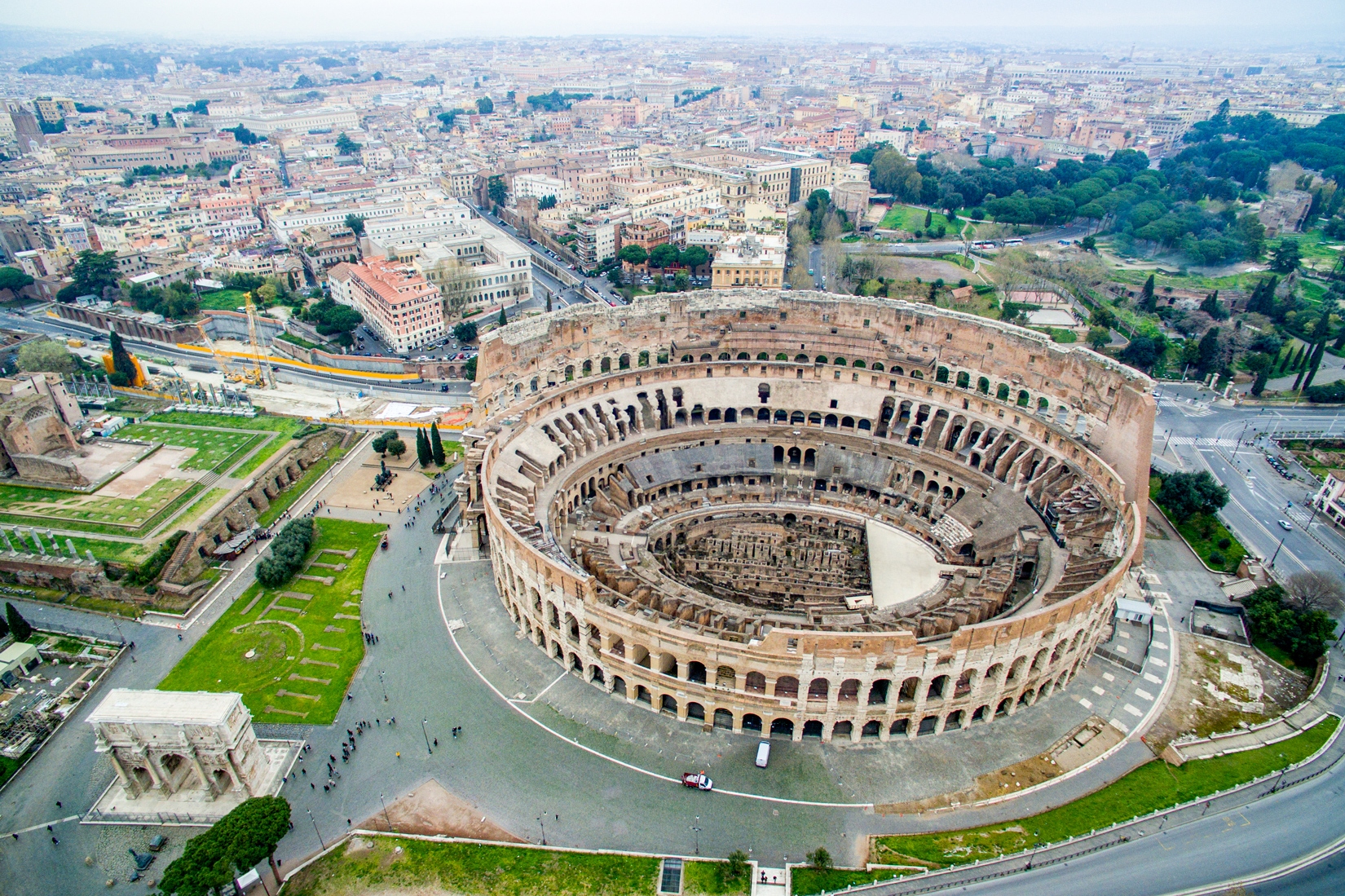
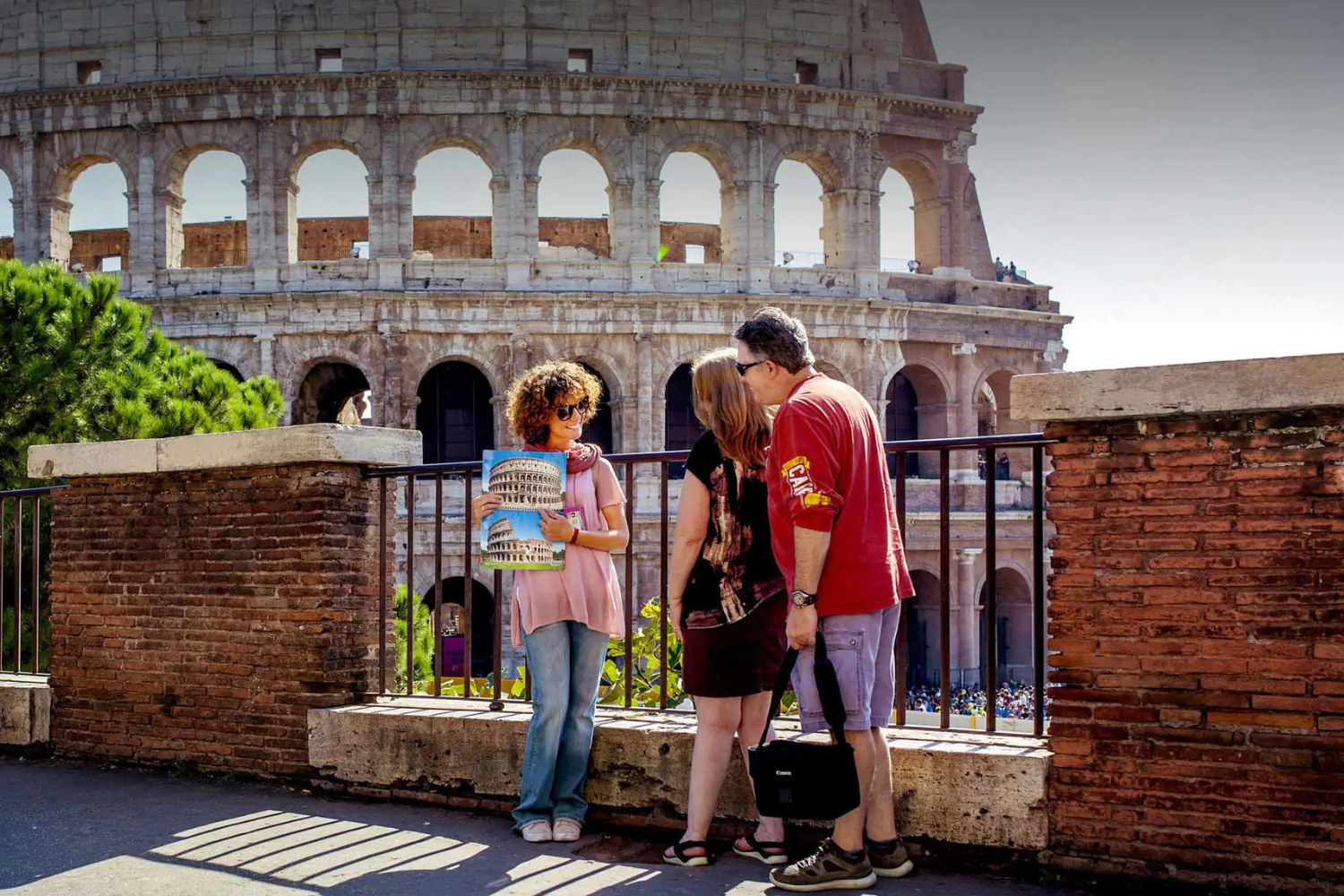
You will be driven by your own personal English speaking Driver inside a comfortable deluxe vehicle as you travel back through distant history and venture through Ancient Rome’s unforgettable ancient wonders: Colosseum, Circus Maximus, Baths of Caracalla, Via Appia, Park of the Acqueducts, Pantheon, and Trajan’s Forum.
REQUIRED INFO TO BOOK:
Pick-Up Hotel, Address
Available options
1 to 3 passengers
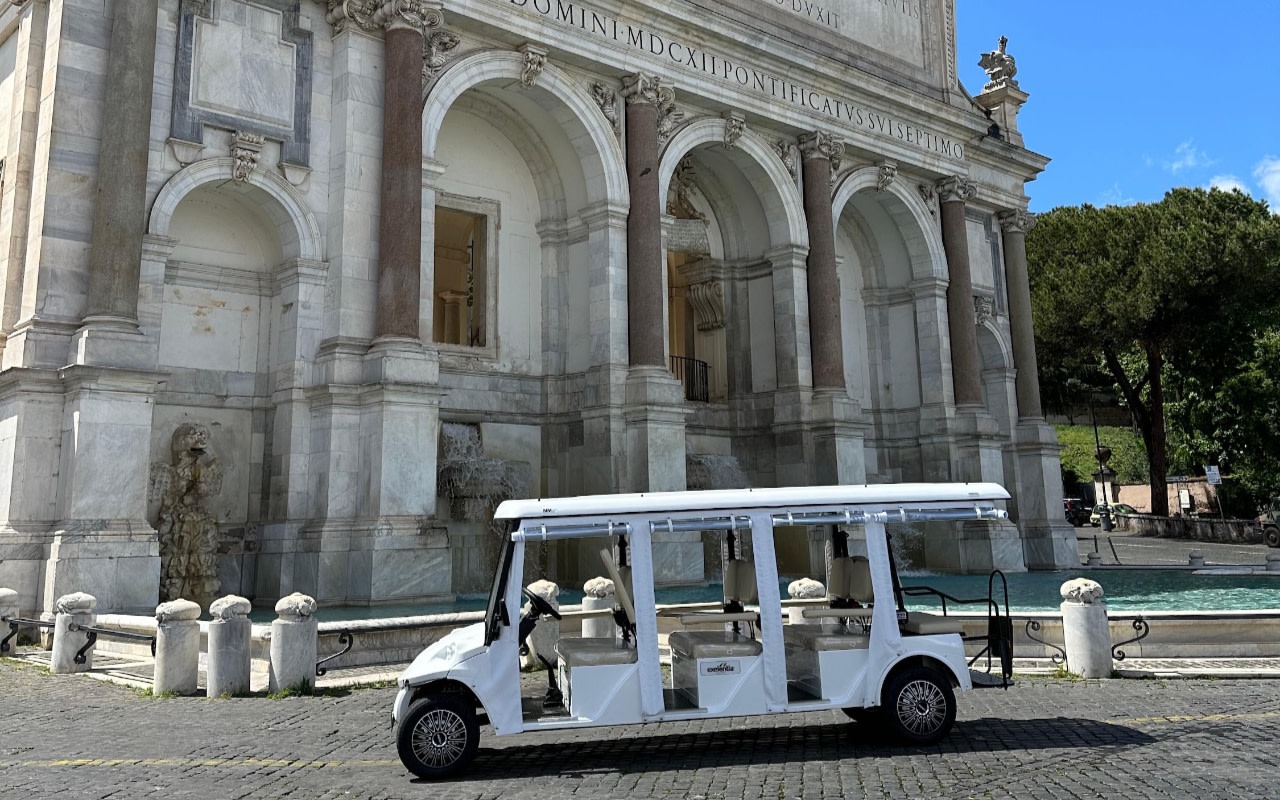
Deluxe Mercedes Benz Vehicle<br/>Pickup included
7 to 8 passengers
Deluxe Mercedes Benz Vehicle<br/>Pickup included
4 to 6 passengers
Deluxe Mercedes Benz Vehicle<br/>Pickup included
What's included
Private transportation
Deluxe Mercedes Benz Vehicle
Bottled water
English Speaking Professional Chaiffeur
Air-conditioned vehicle
Detailed itinerary
1
Stop 1
Marvel at the remains of the first and largest stadium for public games built in the entire Roman Empire, and the model that inspired many more since. At over 2,000 feet long and nearly 400 feet wide, and accommodating more than 150,000 spectators, it continues to hold the prestigious title as the world’s largest stadium ever built.
Famously known for its death defying chariot racing, the stadium also hosted gladiatorial games, animal hunts, plays, religious and public ceremonies, parades, and elaborate parades.
2
Stop 2
The Baths of Caracalla were not just thermal baths, but the most impressive and well preserved surviving example of an Imperial bath and recreational complex in Antiquity.
Built by Emperor Caracalla in approximately 212 AD, the bath complex was able to accommodate up to 10,000 people at a time with 1,600 bathers in a vast area covering approximately 1,000,000 square feet.
The massive complex included an Olympic size swimming pool (natatio), a cold baths (frigidarium), a hot baths (caldarium), and exercise courts (palastrae). Throughout an intricate two level subterranean network of rooms and passageways were service areas that operated the baths, and systems that drained liquid waste into underground sewage channels.
3
Stop 3
There is truth in that during ancient times, “all roads lead to Rome”, as Romans were excellent road builders...and Via Appia (Appian Way) is testament to that. Named after the magistrate who initiated its construction, Appius Claudius Caecus, the road was built to connect Rome to Capua at a time when the region of Campania was forming a joint political existence with Rome. .
Built in 312 B.C., Via Appia is remarkably straight with few exceptions due to topographical factors. During ancient times, surveyors were only able to create straight routes. Along the way, “pit-stops” were created where horses could be changed and travelers could eat and rest.
The Ancient Appian Way is impressively well preserved where you can get an overall idea of what an ancient Roman road used to be like. Within the original stones, you can see the grooves created by chariot and wagon wheels that traveled through here for centuries.
4
Stop 4
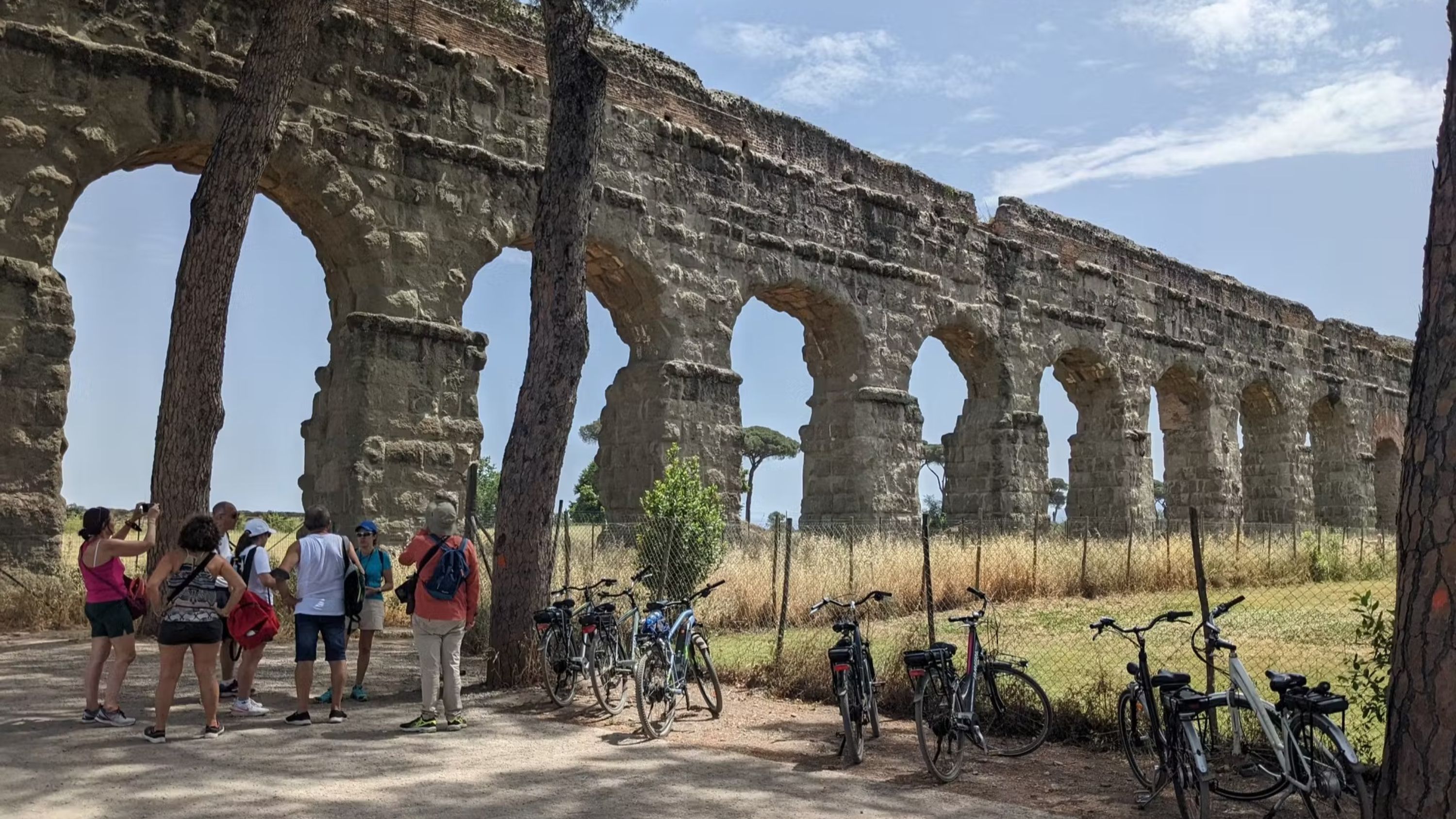
Bringing fresh water to Rome gave the city the possibility to grow and flourish, and this was done through the incredible achievements of aqueducts.
Roman engineers understood the principles necessary to allow water to move uphill and downhill through the aqueducts as it traveled long distances. While large portions of the aqueducts were underground, some were above ground, especially as the aqueducts neared the city of Rome.
Fresh water was brought from the distant hills and it generously poured from Rome’s many public fountains. Some of these ancient aqueducts continue to be in use today in varying capacities.
5
Stop 5
In the charming Piazza della Rotonda you will visit the Pantheon, one of the most impressive architectural monuments of Ancient Rome. After nearly 2,000 years, this ancient monument is also the longest in continuous use in the world, its survival due to its exceptional strength and stability, and its 7th century conversion into the church of St Mary of the Martyrs.
What the Pantheon is most famous for is its impressive dome that has inspired architects for centuries. It was also the largest concrete dome in the world until the 1958 CNIT building in Paris. In the center of the coffered dome is the oculus, a round opening that allows light and the weather to enter inside the circular interior.
Entry tickets to the Pantheon are € 2 per persona and can be bought on site.
6
A testament to Ancient Rome’s golden age of architectural wonders by ambitious Emperors.
Inside this great complex you can see the famous Trajan’s Column, a victory column comprised marble bands that detail Trajan’s successful military campaign against Dacia (present day Romania) whose spoils paid for the construction of the forum. Below you’ll see numerous foundations and columns that once belonged to Greek and Latin libraries, Hall of Liberty, Temple of Trajan, and Basilica Ulpia.
In the background in a semi circle once stood the unprecedented Trajan’s Market, the ancestor of today’s shopping centers that also functioned as civil and administrative centers.
What's not included
Amdission fees and Entry tickets
Gratuities
Lunch
Tour Guide / Walking Tour
Available languages
Guide guide
EN
IT
Reviews breakdown
Tripadvisor
5.0
1 reviews
5★
1
4★
0
3★
0
2★
0
1★
0
Important information
Specialized infant seats are available
Service animals allowed
Infants and small children can ride in a pram or stroller
Suitable for all physical fitness levels
About Rome
Rome, the capital of Italy, is a city of ancient ruins, artistic masterpieces, and vibrant culture. Known as the Eternal City, it is a living museum where every corner tells a story of its rich history spanning over 2,500 years.
Top Attractions
Colosseum
The Colosseum is an iconic symbol of Rome and one of the most famous ancient amphitheaters in the world. It was used for gladiatorial contests and public spectacles.
Historical
1-2 hours
€16 (combined ticket with Roman Forum and Palatine Hill)
Vatican City
Vatican City is an independent city-state enclaved within Rome. It is the spiritual and administrative center of the Roman Catholic Church.
Religious
Half day
€17 (Vatican Museums and Sistine Chapel), Free (St. Peter's Basilica)
Roman Forum
The Roman Forum was the political, commercial, and legal hub of the Roman Republic and Empire. It is a sprawling ruin of temples, basilicas, and arches.
Historical
1-2 hours
€16 (combined ticket with Colosseum and Palatine Hill)
Pantheon
The Pantheon is a former Roman temple, now a church, known for its large dome and oculus. It is one of the best-preserved ancient buildings in Rome.
Historical
30 minutes to 1 hour
Free
Trevi Fountain
The Trevi Fountain is a Baroque masterpiece and the largest fountain in Rome. It is a popular spot for visitors to throw coins and make wishes.
Architecture
15-30 minutes
Free
Must-Try Local Dishes
Cacio e Pepe
A simple yet delicious pasta dish made with Pecorino Romano cheese and black pepper.
Pasta
Vegetarian
Carbonara
A rich pasta dish made with eggs, Pecorino Romano, guanciale (cured pork cheek), and black pepper.
Pasta
Contains pork and eggs
Supplì
Fried rice balls filled with mozzarella and tomato sauce.
Snack
Vegetarian (some variations may contain meat)
Carciofi alla Romana
Artichokes braised with garlic, mint, and olive oil.
Vegetable
Vegetarian
Popular Activities
Hiking in the Appian Way Regional Park
Biking along the Tiber River
Rock climbing in the nearby mountains
Picnicking in Villa Borghese Gardens
Boating on Lake Albano
Enjoying a spa day at a luxury hotel
Visiting the Vatican Museums
Attending an opera at the Teatro dell'Opera di Roma
Best Time to Visit
April to June, September to October
Spring and fall offer pleasant weather and fewer crowds compared to the summer peak. Ideal for sightseeing and outdoor activities.
15-30°C
59-86°F
Practical Information
Language
- Official: Italian
- Widely spoken: English, Spanish, French
- English: Moderately spoken
Currency
Euro (EUR)
Time Zone
GMT+1 (CET), GMT+2 (CEST during daylight saving time)
Electricity
230VV, 50HzHz
Safety Information
Overall Safety Rating: Generally safe
Rome is generally safe for tourists, but pickpocketing and scams can be a problem in crowded areas. Be aware of your surroundings and take precautions to protect your belongings.
Important Precautions:
- • Keep valuables secure and out of sight
- • Use official taxis or ride-sharing services
- • Be cautious of strangers approaching you with petitions or bracelets
Getting there
By air
- Leonardo da Vinci International Airport • 35 km from city center
- Ciampino Airport • 15 km from city center
By train
Roma Termini, Roma Tiburtina
By bus
Tiburtina Bus Station, Roma Termini
Getting around
Public transport
The metro system is efficient and covers major tourist areas. It operates from 5:30 AM to 11:30 PM.
Taxis
Available • Apps: Uber, FreeNow
Rentals
Car, Bike, Scooter
Neighborhoods
Trastevere
Monti
Prancipio
Testaccio
Day trips
Ostia Antica
30 km from Rome • Half day
An ancient Roman port city with well-preserved ruins, including a theater, baths, and mosaics. It offers a glimpse into daily life in ancient Rome.
Tivoli
30 km from Rome • Full day
A picturesque town known for its stunning villas and gardens, including the famous Villa d'Este with its elaborate fountains and gardens.
Orvieto
120 km from Rome • Full day
A charming hilltop town known for its stunning cathedral, underground caves, and local wine. It offers a mix of history, culture, and scenic views.
Festivals
Natale di Roma • April 21
Festa de' Noantri • July
Rome Film Festival • October
Pro tips
- Visit major attractions early in the morning or late in the afternoon to avoid crowds
- Use public transport or walk instead of taking taxis to save money and experience the city like a local
- Try local specialties and ask for recommendations from locals and restaurant staff
- Dress modestly when visiting religious sites and be respectful of local customs and traditions
- Be aware of pickpockets and scams, especially in crowded areas and tourist hotspots
From $25
per person
Price varies by option
Secure booking
Free cancellation available