Barcelona Must-See Private Tour with a Friendly Local Guide
Active
3h
For a full refund, cancel at least 24 hours before the scheduled departure time.
Instant confirmation
Mobile or paper ticket accepted
About this experience
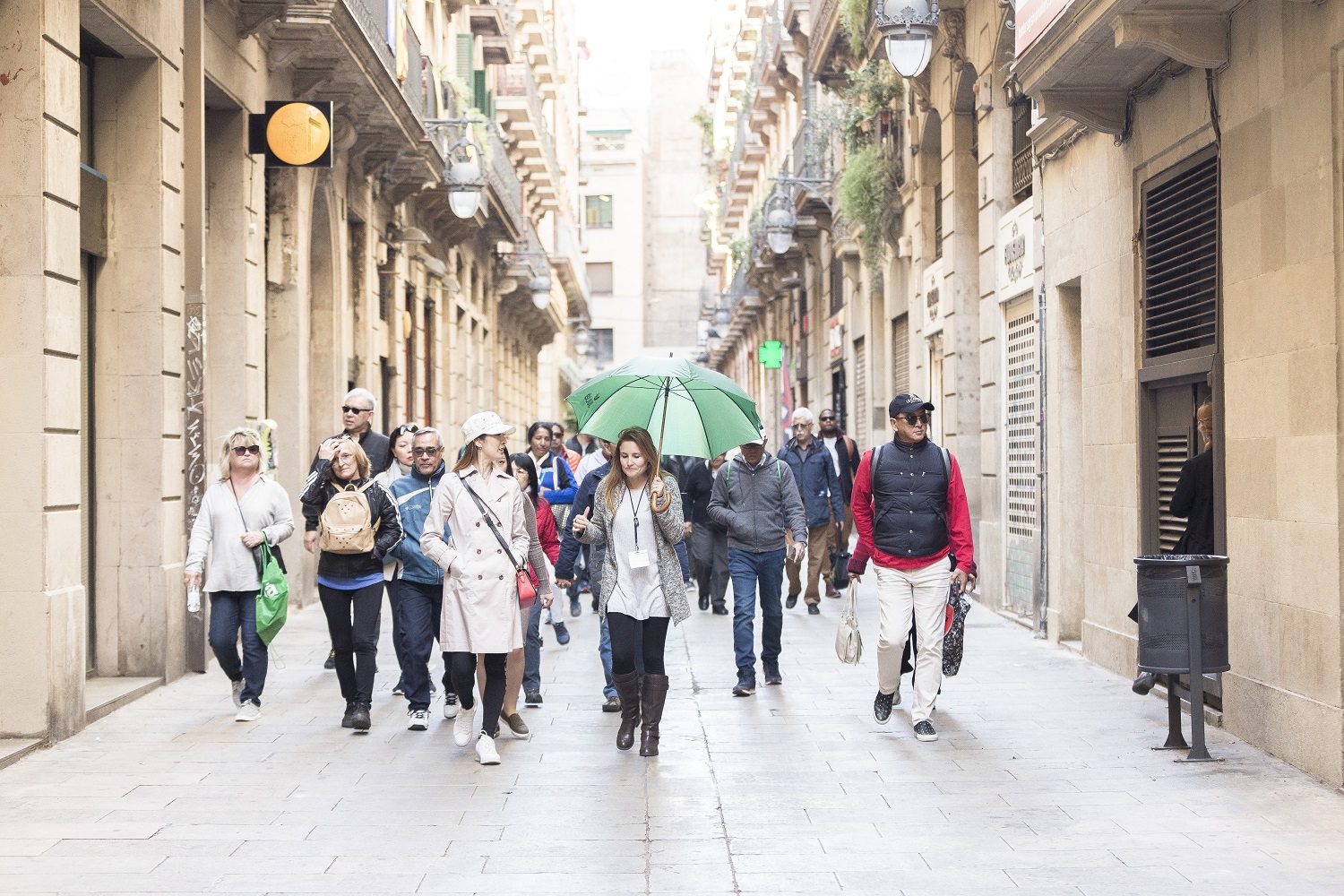
If you want to see the real face of Barcelona, take our 3-hour tour and explore the most famous landmarks. Walking through the historic quarters of Barcelona, you will experience the friendly atmosphere of the Catalan capital, see its main attractions and nooks and hear the legends of the city.
Your private guide will talk about local traditions and customs and how the city developed from the moment of its foundation to the present day.
● Walk through the historic quarters of Barcelona
● Become familiar with the city
● Immerse yourself to Catalonia atmosphere
● Visit attractions which are not usually listed in tour routes
● Choose places which you would like to visit more
Available options
Barcelona Must-See Private Tour with a Friendly Local Guide
What's included
Iconic places for photoshoot
Must see and off the beaten path
Multiple start times available
Private tour
Customizable itinerary
Snacks
All Fees and Taxes
Expert advice where to go and what to do after the tour
Friendly local guide
Bag of churros
Detailed itinerary
1
Being the second largest city in Spain, the capital of the autonomous region of Catalonia, Barcelona amazes with its beauty, grandeur, abundance of cultural and historical values and monuments, as well as its intrinsic elusive atmosphere, which is difficult to find anywhere else in Spain, and perhaps in the world.
Here, traditional values and customs are preserved in a fairly conservative Spanish society are harmoniously intertwined with the local heritage, treasured by the inhabitants of Catalonia.
Barcelona is a real tourist paradise: it is one of the ten most visited destinations in the world and is ranked first among the Spanish cities, which is undoubtedly an outstanding indicator.
Numerous recreational facilities, some of the world's best urban beaches, eight sites officially recognized by UNESCO as world cultural and historical monuments, as well as a first-class tourist infrastructure - this will not leave you indifferent
2
Here you will meet your guide and start your tour over nice Barcelona. It is a Barcelona metro station located under Portal de la Santa Madrona, just off Rambla in Barcelona Ciutat Vella district. It is named after the nearby Royal Palace of Barcelona, the old shipyards that are now home to the Maritim de Barcelona Museum.
3
Stop 3
Starting from metro station Drassanes you will go to Las Ramblas - the center of the boulevard is pedestrian, on its pavement there are sellers of flowers, souvenirs and sweets and mimes, and on both sides of the roadway there are buildings of the 16-18 centuries: museums, theaters, commercial and residential buildings.
The most famous street in Spain, the Ramblas stretches from Plaza Catalunya to the Old Port. There is always a lively atmosphere of fun, festivities and delightful secrets.
4
Stop 4
Then you will visit Palau Guell, the building, erected for the Spanish industrialist Eusebi Güell, became a kind of "ticket to success" of the young architect. In his work on Palau Güell, Gaudi was the first to combine decorative and structural elements, a technique that became the basis for his unique author's style. At the end of the twentieth century, the Palace of Guell, like many other masterpieces of the architect, was included in the UNESCO World Heritage List.
One of the most notable residential buildings in Barcelona, Palau Güell is one of the most famous works of the outstanding architect Antoni Gaudi.
5
Stop 5
Next your stop will be Placa Reial. Once there was a monastery of the Capuchin Order. It was destroyed in the middle of the nineteenth century. The year 1837 can be considered a turning point in the formation of the urban landscape of Barcelona. Then the Spanish government confiscated land belonging to churches and monasteries, and sold them at auction to private hands. Thus, eighty percent of the church lands located within the city limits changed their owners. So residential areas, squares and markets replaced the churches and monasteries.
The square is one of the busiest places in the city. There are many bars, restaurants and nightclubs here. This quarter was the first major urban renewal project in Barcelona.
6
Stop 6
The next place is Gothic Quarter (Barri Gotic), located between Plaza Catalunya and Calle Laetana, the Gothic Quarter, along with La Ribera and El Raval, is part of the Old Town. Its intricate narrow streets and ancient architecture attract millions of tourists to Spain every year.
The Gothic Quarter in Barcelona gets its name from the surviving medieval buildings dating to the 14th to 15th centuries.
7
Stop 7
See the City Hall (Casa de la Ciutat / Ayuntamiento), its neoclassical façade has the Gothic roots of a historic municipality built in the 14th century. The tourism department is located on the ground floor of the building.
Casa de la Ciutat is nothing more than the City Hall of Barcelona. It is located in the heart of the Gothic Quarter on Piazza San Jaume, opposite the Palace of the Government of Catalonia.
8
Stop 8
Check out Barcelona Cathedral. Despite its massiveness, provoking the viewer's thoughts about the unhappy Middle Ages, the cathedral boasts a lot of graceful details - a pompous Gothic "rosette" over the central entrance, slender columns and soaring spires.
Barcelona Cathedral is a strikingly beautiful example of the Gothic style with distinct life-affirming Catalan motives.
9
Next you will visit Roman city wall in Barcelona with Picasso art on it. Explore
The remains of the ancient Roman walls and two large Roman towers that defended the gates of the city wall have survived to this day. On the same square there is a more modern building of the College of Architects, with three facades and friezes on them: "Children's frieze", "Frieze of giants" and "Flag frieze". The friezes are made according to sketches by Picasso.
10
Explore La Barceloneta, which is almost triangular in shape. It is a coastal area stretching along the coastline, bordering the Port Vell, the historic quarter of La Ribera, also part of Barcelona's Old Town.
Barceloneta or Little Barcelona (La Barceloneta) is a popular maritime area that is part of the Old Town of Barcelona.
11
Stop 11
The Port Olímpic. Basilica de Santa Maria del Mar is our next stop. The Church of Santa Maria del Mar was built in the XIV century - it was then that the real heyday of Catalonia took place - the progress of the region was noticeable not only in trade and navigation, but also in architecture.
The Church of Santa Maria del Mar (Santa Maria del Mar) is located in the historic quarter of Barcelona and is a fairly famous monument of Gothic architecture.
12
Stop 12
And the least but not the last place is Palace of Catalan Music
This is the main concert hall in Catalonia, capable of impressing not only a true connoisseur of classical music, but also every tourist interested in visiting unique cultural sites.
The Palace of Catalan Music is located in the El Born area, which belongs to the historic center of Barcelona and borders the Gothic Quarter.
13
You will finish our unforgettable tour at Plaça Urquinaona (SABA).
The proposed walking tour program will show you Barcelona in all its beauty, diversity, splendor and luxury. You will see something that is difficult to find in any other European city - a whimsical and mesmerizing combination of modernity and innovation of architectural creations of Antoni Gaudí with the monumentality and severity of medieval Gothic.
What's not included
Extra food and drinks not included in tour
Available languages
Guide guide
EN
ES
Important information
Public transportation options are available nearby
Travelers should have at least a moderate level of physical fitness
About Barcelona
Barcelona is a vibrant city on the northeastern coast of Spain, known for its rich cultural heritage, stunning architecture, and lively atmosphere. It seamlessly blends medieval history with modernist masterpieces, making it a unique and appealing destination for travelers.
Top Attractions
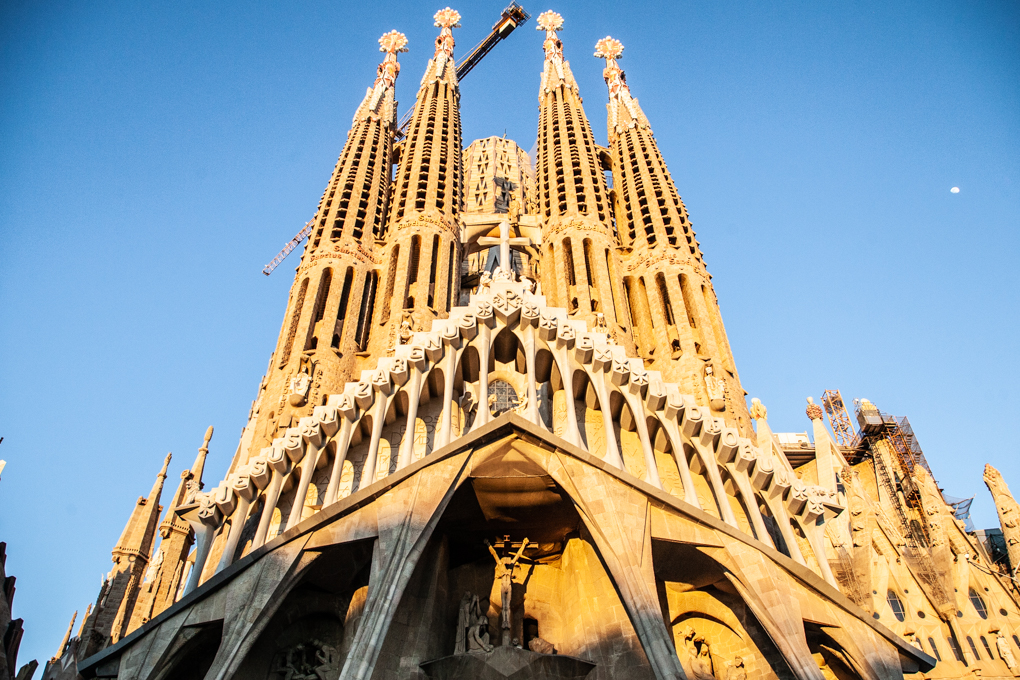
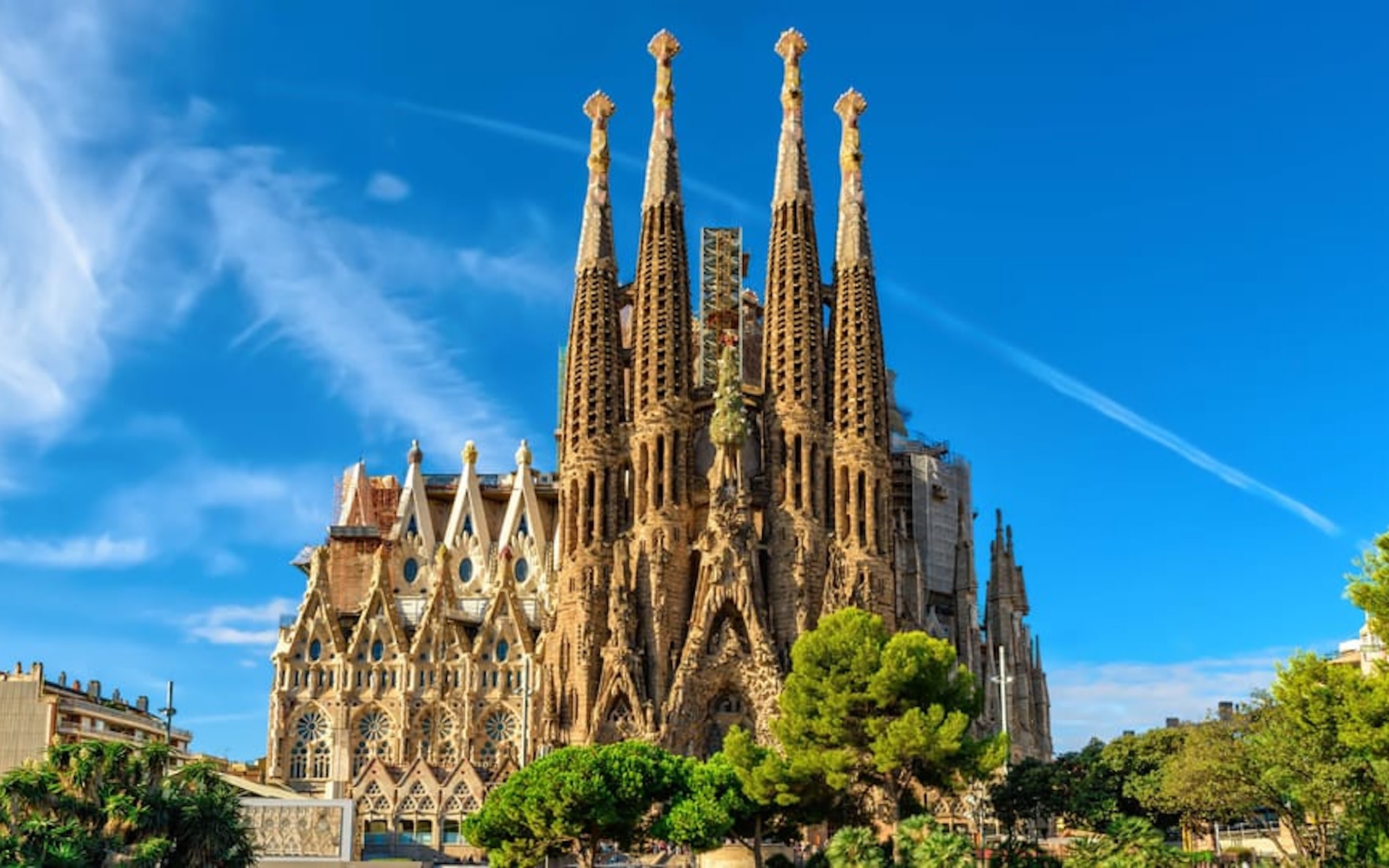
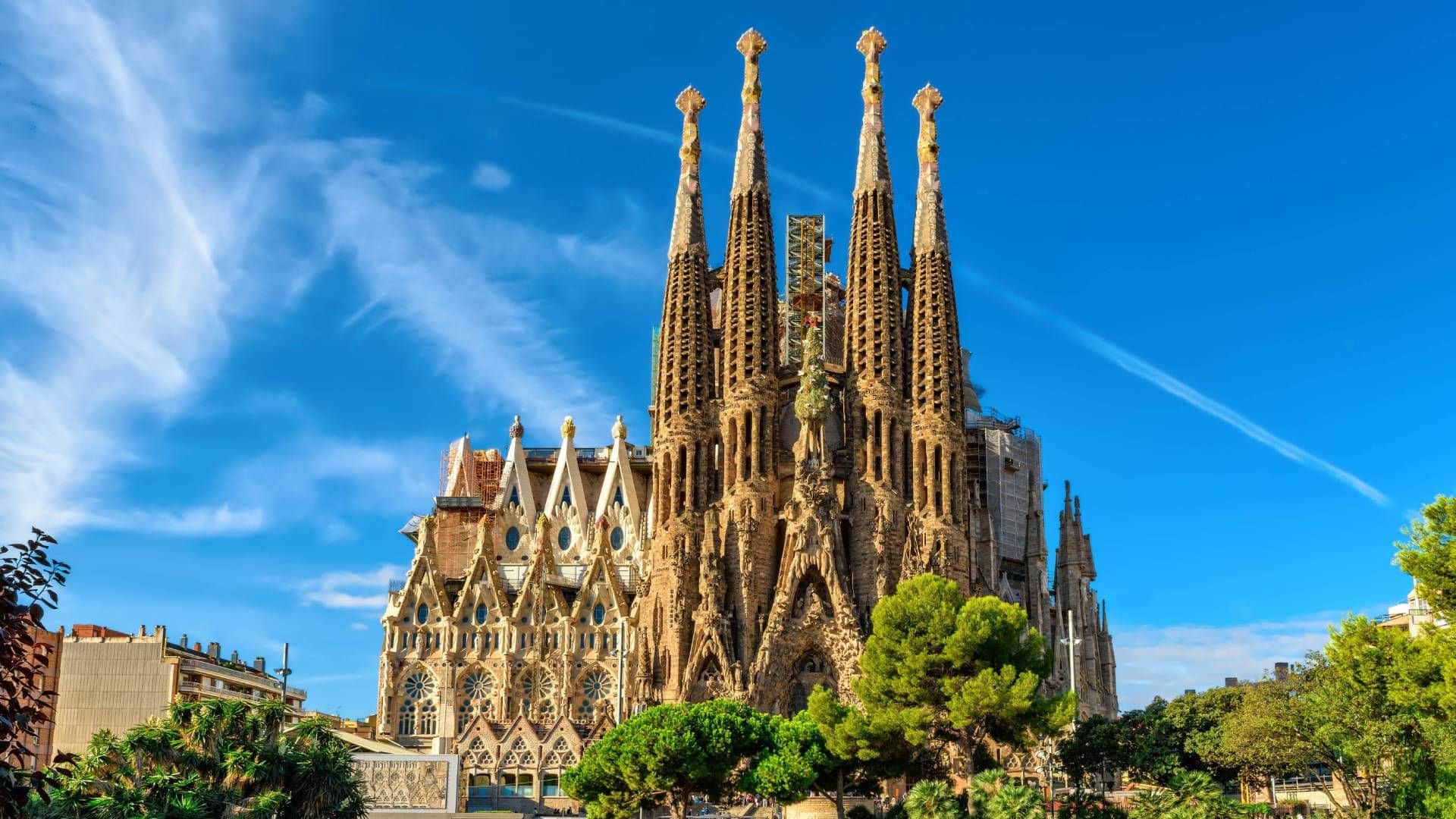
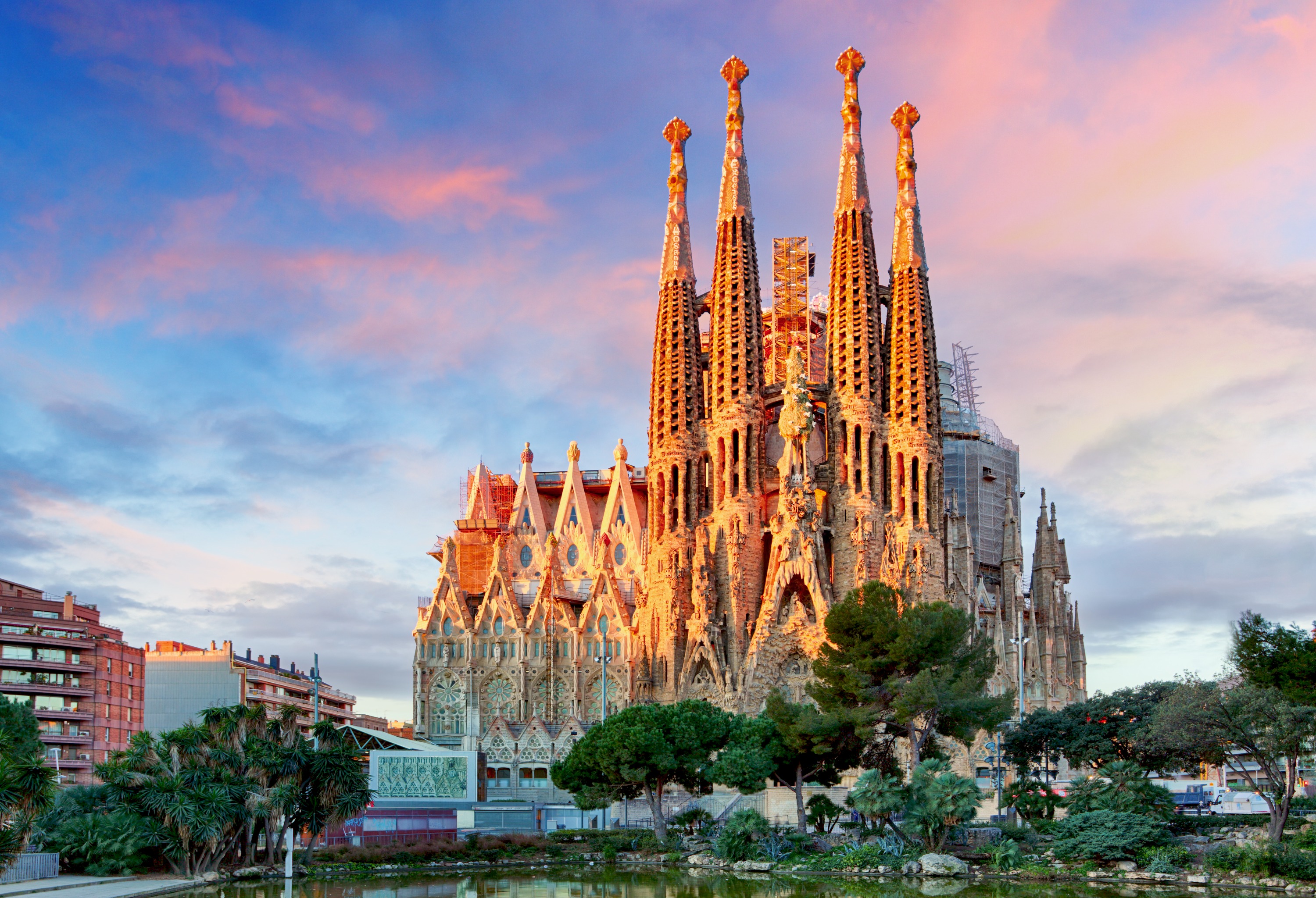
Sagrada Família
Antoni Gaudí's unfinished masterpiece, a stunning basilica that combines Gothic and Art Nouveau forms. It's a UNESCO World Heritage Site and a must-visit.
Architecture
1.5-2.5 hours
€26-€34 (depending on access to towers)
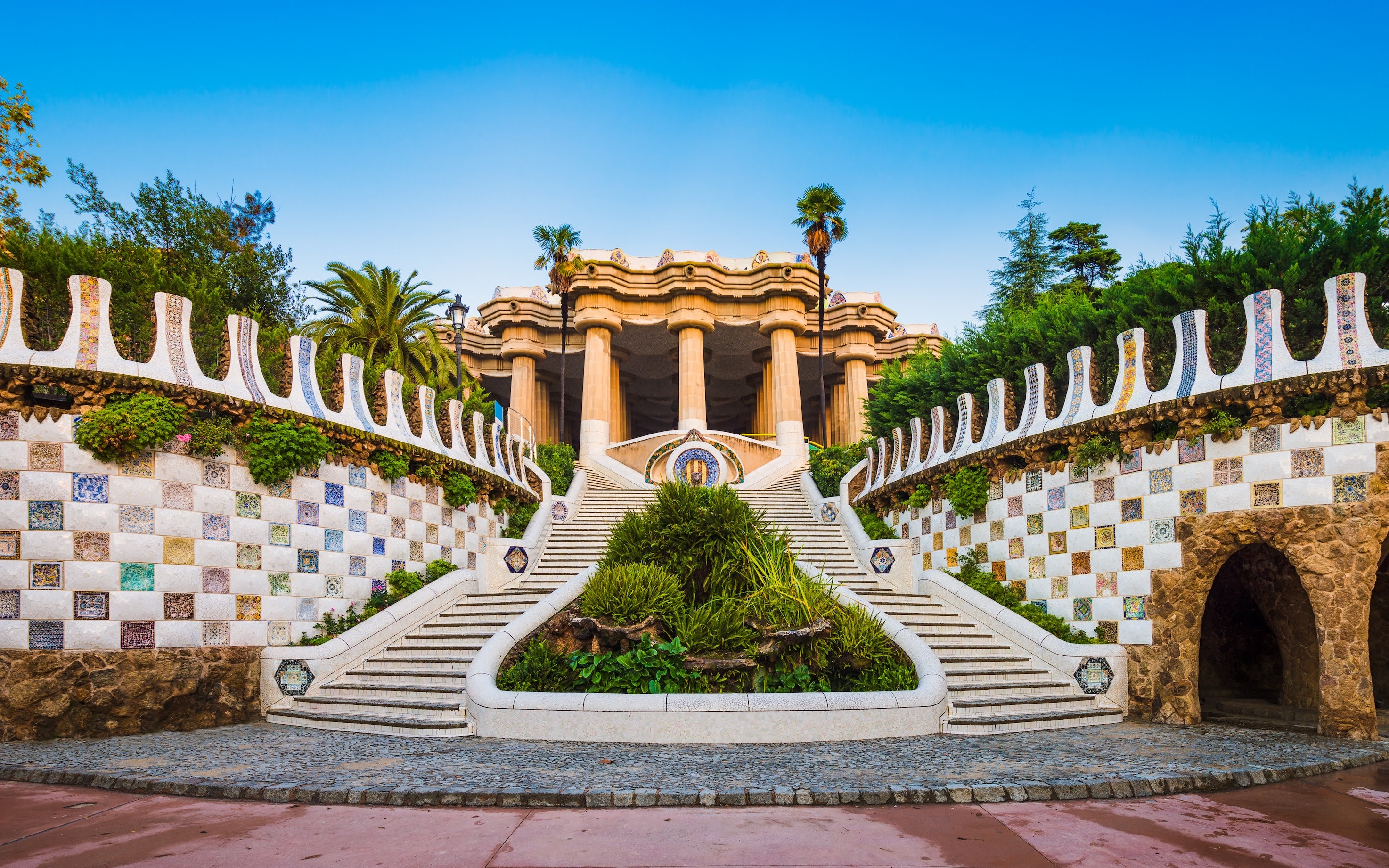
Park Güell
Another Gaudí masterpiece, this park features colorful mosaics, whimsical structures, and beautiful city views.
Architecture
1.5-2 hours
€10 (Monumental Zone)
La Rambla
A famous pedestrian street filled with shops, restaurants, street performers, and the famous La Boqueria market.
Street
1-2 hours
Free (shopping and dining costs vary)
Casa Batlló
A unique building designed by Gaudí, known for its surrealist design and colorful façade.
Architecture
1 hour
€35-€45 (depending on the tour)
Gothic Quarter
The historic heart of Barcelona, filled with medieval streets, ancient buildings, and hidden plazas.
Historical
2-3 hours
Free (some attractions may have entry fees)
Must-Try Local Dishes
Pa amb tomàquet
Bread rubbed with tomato, garlic, and olive oil, often served as an appetizer.
Snack
Vegetarian
Fideuà
A paella-like dish made with short, thin noodles, seafood, and saffron.
Main Course
Contains seafood
Crema Catalana
A Catalan version of crème brûlée, made with egg yolks, sugar, and cinnamon.
Dessert
Vegetarian
Patatas Bravas
Fried potato cubes topped with a spicy tomato sauce and garlic aioli.
Snack
Vegetarian
Popular Activities
Hiking in Montserrat
Water sports in Barceloneta
Rock climbing
Beach lounging in Barceloneta
Spa treatments
Strolling through parks and gardens
Visiting museums and galleries
Attending festivals and events
Best Time to Visit
May to June, September to October
The peak season offers pleasant weather and is ideal for exploring the city's attractions. The crowds are manageable, and the city is vibrant with festivals and events.
20°C to 28°C
68°F to 82°F
Practical Information
Language
- Official: Catalan, Spanish
- Widely spoken: English, French
- English: Moderately spoken
Currency
Euro (EUR)
Time Zone
GMT+1 (CET), GMT+2 (CEST during daylight saving time)
Electricity
230VV, 50HzHz
Safety Information
Overall Safety Rating: Generally safe
Barcelona is generally safe, but like any major city, it has its share of petty crime and scams. Be aware of your surroundings, especially in touristy areas and on public transportation.
Important Precautions:
- • Be cautious of pickpockets, especially in crowded areas and on public transportation.
- • Keep an eye on your belongings, especially in touristy areas and on public transportation.
- • Be cautious of fake petitions or distractions to steal from you.
Getting there
By air
- Barcelona-El Prat Airport • 12 km from city center
By train
Sants Station, Estació de França
By bus
Estació d'Autobusos Sants, Estació d'Autobusos Nord
Getting around
Public transport
The metro system is efficient, clean, and covers most of the city. It's a great way to get around quickly and affordably.
Taxis
Available • Apps: Free Now, Cabify
Rentals
Car, Bike, Scooter
Neighborhoods
Eixample
Gràcia
Barceloneta
Gothic Quarter
El Raval
Day trips
Montserrat
50 km from Barcelona • Half day to full day
A stunning mountain range with a historic monastery, offering hiking, scenic views, and religious sites.
Girona
100 km from Barcelona • Full day
A charming medieval city with a well-preserved Jewish Quarter, a stunning cathedral, and a rich history.
Sitges
40 km from Barcelona • Half day to full day
A picturesque coastal town known for its beaches, nightlife, and historic sites.
Festivals
La Mercè Festival • Late September
Sant Jordi • April 23
Festa Major de Gràcia • Mid-August
Pro tips
- Visit popular attractions like the Sagrada Família and Park Güell early in the morning or late in the afternoon to avoid crowds.
- Explore the city's neighborhoods on foot or by bike to discover hidden gems and local culture.
- Try local specialties like pa amb tomàquet, fideuà, and crema catalana at local markets and restaurants.
- Use the T-Casual pass for unlimited travel on public transportation, which is more cost-effective than single tickets.
- Be cautious of pickpockets, especially in crowded areas and on public transportation, and keep an eye on your belongings.
From $25
per person
Price varies by option
Secure booking
Free cancellation available
Instant confirmation